Reviewed by our editorial team Updated
Why Travel with European Sleeper
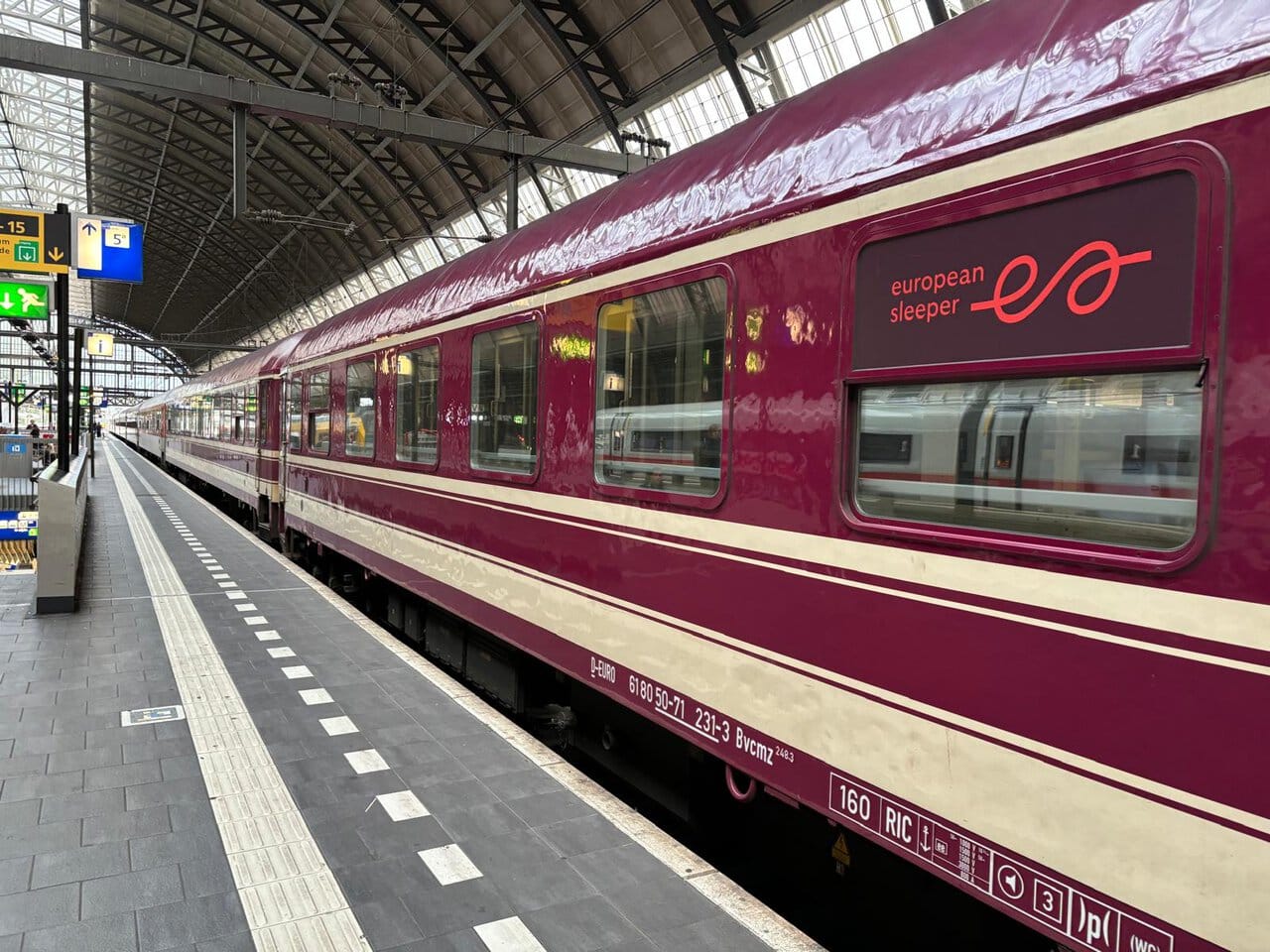
The European Sleeper has quickly become one of the most interesting developments in European rail travel, offering a modern take on overnight train journeys that combines practicality, affordability, and experience.
Unlike some of the older national rail operators, European Sleeper has been built with a clear focus on cross-border connectivity, linking major cities across Northern and Central Europe in a way that feels both efficient and accessible. Its routes are designed to help travellers move between key destinations such as Brussels, Berlin, Prague, and Milan without the need for flights or long daytime journeys.
One of the biggest advantages of travelling with European Sleeper is the ability to combine transport and accommodation into a single journey. Instead of spending time checking into hotels and travelling during the day, you board in the evening and arrive the next morning, ready to explore. This makes it particularly useful for travellers planning multi-city trips, Interrail journeys, or longer European itineraries.
There is also a strong focus on value. Compared to some premium sleeper services, European Sleeper offers a range of accommodation options that make overnight travel more accessible, from budget-friendly shared compartments to more comfortable private cabins. This flexibility allows travellers to choose an experience that matches both their budget and expectations.
What sets European Sleeper apart is its positioning. It sits between traditional state-run services and premium overnight trains, offering a balance of affordability, comfort, and expanding route coverage. As new routes are introduced and the network grows, it is becoming an increasingly important part of the European sleeper train landscape.
European Sleeper Routes and Network
The European Sleeper network is built around a small but expanding set of routes that connect major cities across Europe, with a particular focus on Northern and Central European corridors.
The core route runs between Brussels and Berlin, passing through key hubs such as Antwerp, Rotterdam, Amsterdam, and Dresden. This route forms the backbone of the network and is one of the most practical ways to travel overnight between Western and Central Europe.
From Berlin, services continue east towards Prague, creating a seamless overnight connection between Belgium, the Netherlands, Germany, and the Czech Republic. This extension significantly increases the usefulness of the route, allowing travellers to cover multiple countries in a single journey.
More recently, the network has expanded southwards, introducing services linking Brussels with Milan. This route passes through key cities such as Cologne, Lugano, and Como, offering a long-distance overnight connection between Northern Europe and Italy.
Another important addition is the connection between Paris and Berlin, which strengthens links between France and Germany while integrating into the wider European Sleeper network.
What makes these routes particularly effective is their structure. They are designed to run overnight, with departures in the evening and arrivals the following morning, allowing travellers to maximise time at their destination while minimising travel disruption.
Unlike larger networks, European Sleeper focuses on quality over quantity, offering a smaller number of well-chosen routes that connect major travel corridors. This makes it easier to understand, easier to book, and highly practical for travellers looking to move efficiently across Europe.
| Route | Key Stops | Typical Duration | Days of Operation | Best For |
|---|---|---|---|---|
| Brussels → Prague | Antwerp, Rotterdam, Amsterdam, Berlin, Dresden | ~14–15 hours | Mon, Wed, Fri | Core route, Western ↔ Central Europe |
| Prague → Brussels | Dresden, Berlin, Amsterdam, Rotterdam, Antwerp | ~14–15 hours | Tue, Thu, Sun | Return journeys across Central Europe |
| Paris → Berlin | Brussels, Liège, Hamburg | ~12–13 hours | Tue, Thu, Sun | France ↔ Germany overnight travel |
| Berlin → Paris | Hamburg, Liège, Brussels | ~12–13 hours | Mon, Wed, Fri | Return journeys, Germany ↔ France |
| Brussels → Milan | Cologne, Lugano, Como | ~15–16 hours | Mon, Thu, Sat | Long-distance North ↔ Italy |
| Milan → Brussels | Como, Lugano, Cologne | ~15–16 hours | Wed, Fri, Sun | Return journeys, Italy ↔ North |
Browse hotels and accommodation for your journey.
View staysBrowse apartments, holiday homes and self-catering stays.
View rentalsCompare hotel deals from multiple booking sites in one search.
Compare pricesTimetables and Journey Times
Understanding the timetable structure is essential when planning a journey with European Sleeper, as services do not run daily on all routes. Instead, they operate on set weekly schedules, which need to be factored into your travel plans.
On the Brussels to Prague route, trains typically depart Brussels in the evening on Monday, Wednesday, and Friday, arriving in Prague the following morning. The return journey from Prague operates on Tuesday, Thursday, and Sunday, creating a structured but slightly asymmetric schedule that requires careful planning.
Along the route, the train stops at major cities including Antwerp, Rotterdam, Amsterdam, Berlin, and Dresden, allowing passengers to board or disembark at multiple points. This flexibility makes the service useful not only for end-to-end journeys but also for shorter overnight connections between key cities.
The Paris to Berlin service follows a similar pattern, with departures scheduled on specific days of the week rather than daily operation. Journeys typically begin in the early evening, with arrival in the destination city the following morning, making it a time-efficient alternative to daytime rail or short-haul flights.
For the Brussels to Milan route, the journey is longer and includes stops in cities such as Cologne, Lugano, and Bellinzona, before reaching Milan. This route highlights the potential of overnight travel for longer distances, allowing travellers to cross multiple countries while sleeping.
Journey times vary depending on the route, but most services fall within the range of 10 to 16 hours, making them ideal for overnight travel. The key benefit is that the majority of this time is spent sleeping, meaning you arrive without losing valuable daytime hours.
Because services operate on fixed schedules, it is important to plan ahead and align your itinerary with departure days. When used correctly, these timetables allow for highly efficient travel across multiple countries with minimal disruption.
Cabin Types on European Sleeper
European Sleeper offers a clear and structured range of accommodation options, allowing travellers to choose between budget, mid-range, and more comfortable premium experiences depending on their needs.
At the entry level is the Budget class, which typically involves shared compartments with up to six passengers. This is the most affordable way to travel and is well suited to those prioritising cost over privacy. While basic, it provides a practical overnight solution and remains a popular choice for budget-conscious travellers.
Moving up, the Classic class offers a more comfortable shared experience, usually with fewer passengers per compartment and improved sleeping arrangements. This option strikes a balance between price and comfort, making it ideal for small groups, families, or solo travellers who want a better night’s sleep without moving into premium pricing.
At the higher end, the Comfort range introduces more space, improved bedding, and a greater level of privacy. Options within this category include single, double, and triple compartments, allowing travellers to tailor their experience more precisely. These cabins are particularly attractive for couples or those looking for a more relaxed journey.
The most premium option is Comfort Plus, which offers the highest level of comfort available on European Sleeper services. These compartments provide more space, improved facilities, and a more refined overall experience, making them the closest equivalent to hotel-style travel on rails.
The key difference between these options is not just comfort, but also privacy, space, and overall travel experience. Choosing the right cabin type can significantly impact how enjoyable your journey is, particularly on longer routes.
European Sleeper Prices and Reservation Costs
Pricing on European Sleeper is structured around two key elements: the base ticket price and the reservation cost, particularly if you are travelling with an Interrail or Eurail pass.
Unlike airlines, pricing is relatively transparent, with clearly defined ranges depending on the type of accommodation you choose. The main factor influencing cost is comfort level, followed by distance travelled.
For travellers using a rail pass, the most important cost is the reservation fee, which secures your place on the train and determines your sleeping arrangement.
Reservation Prices (Interrail and Eurail)
| Class | Reservation Cost |
|---|---|
| Budget | €11 – €21 (£9 – £18 / $13 – $24) |
| Classic (shared compartments) | €64 – €74 (£55 – £63 / $74 – $86) |
| Comfort / Comfort Plus | €89 – €179 (£76 – £154 / $104 – $208) |
These reservation fees are fixed year-round, with only small variations depending on distance. This makes it easier to plan costs in advance compared to fully dynamic pricing models.
The key point is that you cannot board the train without a reservation, even if your Interrail or Eurail pass is valid. This is one of the most important rules to understand when planning your journey.
Full Ticket Prices (Without a Rail Pass)
For travellers not using Interrail or Eurail, European Sleeper offers full ticket pricing across several accommodation categories.
| Accommodation Type | Typical Price Range |
|---|---|
| Budget | €14.99 – €169.99 (£13 – £146 / $17 – $198) |
| Classic (5-person shared) | €79.99 – €219.99 (£69 – £189 / $93 – $256) |
| Classic Private (5-person compartment) | €269.99 – €1069.99 (£232 – £918 / $314 – $1244) |
| Comfort Standard (Triple) | €95.99 – €225.99 (£82 – £194 / $112 – $263) |
| Comfort Standard (Double) | €125.99 – €325.99 (£108 – £280 / $147 – $379) |
| Comfort Standard (Single) | €285.99 – €675.99 (£245 – £580 / $333 – $786) |
| Comfort Plus (Triple) | €129.99 – €259.99 (£112 – £223 / $151 – $302) |
| Comfort Plus (Double) | €159.99 – €359.99 (£137 – £309 / $186 – $419) |
| Comfort Plus (Single) | €319.99 – €709.99 (£275 – £609 / $372 – $826) |
These prices reflect the wide range of experiences available, from budget-friendly shared compartments to private, hotel-style cabins.
At the lower end, European Sleeper remains one of the more affordable ways to travel overnight across multiple countries. At the higher end, private cabins can be comparable in price to a hotel and transport combined, particularly on longer routes.

Plan Your Train Journey with Rail Europe
Booking train tickets in Europe can become complicated when different operators, routes, and booking systems are involved. Rail Europe makes it easier to search routes, compare fares, and buy train tickets in one place.
It is especially useful for international rail journeys, European city-to-city travel, and travellers looking to book both regular rail tickets and passes. Instead of checking multiple train operators separately, you can plan your journey faster and book with confidence.

Using Interrail and Eurail with European Sleeper
European Sleeper integrates fully with Interrail and Eurail, making it a highly effective option for pass holders looking to travel overnight across Europe.
However, it is important to understand that international routes require a Global Pass. Because European Sleeper operates between multiple countries such as Belgium, the Netherlands, Germany, and the Czech Republic, a One Country Pass is not valid for these journeys. Travellers must hold a valid Interrail or Eurail Global Pass to use these services.
Your pass covers the base fare of the journey, but you must still pay a reservation fee to secure your accommodation. This reservation is mandatory and must be booked in advance, as spaces are limited.
One important rule is that your pass must be valid on the day of arrival, not just the day of departure. This is a key detail that can catch travellers out if they are not careful when planning their journey.
You must also present both your valid rail pass and your reservation when travelling, along with a valid form of identification if requested by staff.
For those travelling in private compartments, each passenger must hold their own individual pass, as reservations alone are not sufficient for shared travel in these spaces.
Children are subject to the same reservation rules as adults, although younger children may travel free if sharing a bed or seat with an adult, depending on age.
Used correctly, European Sleeper can be a powerful tool within an Interrail itinerary, allowing you to cover large distances overnight, while conserving travel days and reducing accommodation costs.
European Sleeper Pass Explained
European Sleeper also offers its own dedicated pass, which provides access to its network over a fixed period. This is a less widely known option, but it can offer value for travellers planning to use the service multiple times.
The pass allows travel across all European Sleeper routes, but it still requires reservations for each journey, which must be booked separately. This means that while the pass covers the base travel cost, you will still incur additional charges depending on your chosen accommodation.
The main advantage of the pass is flexibility. For travellers planning multiple overnight journeys within the European Sleeper network, it can simplify booking and provide a more structured approach to long-distance travel.
However, it is not always the best option. For many travellers, particularly those making only one or two journeys, standard tickets or Interrail may provide better value.
The European Sleeper pass is best suited to those who are specifically planning to use this operator multiple times, rather than those looking for broader rail coverage across Europe.
Conditions of Use and Important Rules
When travelling with European Sleeper, there are several important conditions that you need to understand before booking, particularly if you are using an Interrail or Eurail pass.
The most important rule is that a valid reservation is required for every journey. Even if you hold a rail pass, you cannot board the train without a confirmed reservation for your seat, couchette, or cabin. This reservation is what guarantees your accommodation and space onboard.
Your rail pass must also be valid on the day of arrival, not just the day of departure. This is a key detail that often catches travellers out, especially on overnight journeys that cross into the following day.
Passengers are required to show both their valid pass and reservation, along with a form of identification if requested by staff. Tickets and passes are non-transferable, meaning they can only be used by the person they were issued to.
Refund policies for reservations are structured but time-sensitive. Reservations are typically fully refundable up to 30 days before departure, and partially refundable up to 15 days before departure, after which refunds may no longer be available. These conditions are part of the operator’s booking terms and should always be checked at the time of booking.
For those travelling in private compartments, each passenger must hold their own valid pass, as sharing a compartment does not remove the requirement for individual travel entitlement.
Children are also subject to specific rules. Younger children may travel free if sharing a bed or seat with an adult, but older children require their own pass and reservation, in line with standard ticketing rules.
Understanding these conditions ensures a smooth journey and avoids unexpected issues when boarding or travelling overnight.
Search flights and useful route combinations in one place.
View flightsChoose an Airalo eSIM and arrange mobile data before you arrive.
Browse eSIMsBook a private airport transfer in advance and have your ride planned before you arrive.
Check transfersHow to Book European Sleeper Trains
Booking a journey with European Sleeper is relatively straightforward once you understand how the system works, but there are a few important steps to follow to ensure everything is arranged correctly.
Tickets and reservations can be booked directly through the European Sleeper booking system, where you can select your route, travel date, and accommodation type. If you are travelling with an Interrail or Eurail pass, it is essential to select the “reservation only” option, as your pass already covers the base fare.
Availability can vary significantly depending on the route and time of year. Popular services, particularly those connecting major cities such as Brussels, Berlin, and Prague, can sell out quickly, especially for private cabins and higher comfort levels. Booking early gives you the best chance of securing your preferred accommodation.
It is also important to ensure that your travel dates align with the fixed operating schedule of European Sleeper services. Because trains do not run daily on all routes, planning your itinerary around available departure days is essential.
Once booked, you will receive confirmation of your reservation, which must be presented alongside your pass or ticket when boarding. Keeping this easily accessible will help ensure a smooth check-in process.
Understanding how the booking system works allows you to secure the right accommodation, avoid unnecessary costs, and plan your journey with confidence.
Is European Sleeper Worth It?
European Sleeper offers a compelling alternative to both flights and traditional daytime rail travel, but whether it is the right choice depends on your travel priorities.
For many travellers, the biggest advantage is efficiency. By travelling overnight, you can save both time and accommodation costs, arriving in your destination ready to start your day. This makes it particularly useful for long-distance journeys between major European cities.
Compared to flights, European Sleeper offers a more relaxed and integrated travel experience. You avoid airport transfers, security queues, and waiting times, and instead travel directly between city centres. While flights may be faster in pure travel time, the overall experience of sleeper travel can be more convenient and less disruptive.
Comfort is another key factor. While budget options are available, higher-tier cabins provide a much more comfortable and private experience, particularly on longer journeys. This flexibility allows you to tailor your journey to your preferences.
However, there are also limitations. The network is still relatively small compared to larger operators such as ÖBB Nightjet, and services do not run daily on all routes. This means that planning is essential, and flexibility is often required.
Overall, European Sleeper is best suited to travellers who value efficiency, experience, and flexibility, and who are comfortable planning their journey around fixed schedules. When used correctly, it offers a highly effective and enjoyable way to travel across Europe.

Rupert’s Handy Travel Tips
Rupert always says that sleeper trains are one of the smartest ways to travel across Europe, especially when you use them to turn long journeys into restful overnight experiences.
- Book early to secure the best cabins and lowest prices
- Plan your journey around fixed departure days
- Choose your cabin type carefully to match your comfort expectations
- Keep your reservation and pass easily accessible when boarding
Want to meet the reindeer behind our travel tips? Find out more in our page Who is Rupert?.




Frequently Asked Questions About European Sleeper
Do I need a reservation for European Sleeper?
Yes. A reservation is mandatory for all passengers, including those travelling with an Interrail or Eurail pass.
Can I use Interrail on European Sleeper?
Yes, but you must still pay a reservation fee to secure your accommodation.
Are European Sleeper cabins private?
Some are. Budget and Classic options are shared, while Comfort and Comfort Plus cabins can offer private compartments depending on your booking.
Do trains run every day?
No. Services operate on fixed weekly schedules, so you need to plan your journey around available departure days.
Is European Sleeper cheaper than flying?
It can be, especially when you factor in saved accommodation costs and city-centre to city-centre travel, but prices vary depending on demand and cabin type.
Can you smoke on the European Sleeper?
No. Onboard smoking is banned throughout the journey, and there is no smoking carriage on any European Sleeper service. Once you are waiting on a platform, the rules depend on the country: the Netherlands and Belgium have banned smoking across all station property, including platforms, while Germany still allows it in a shrinking number of marked “Raucherbereich” zones at some stations. Check local signage before lighting up rather than assuming the same rule applies everywhere on the route.
Further Reading & Related Guides
If you are planning a wider overnight rail journey, our European sleeper trains guide explores the full network across multiple operators, helping you compare routes and plan longer trips. For flexible multi-country travel, our Interrail guides explain how to maximise value and integrate sleeper trains into your itinerary.
For UK-based journeys, our guides to the Caledonian Sleeper and Night Riviera Sleeper show how to extend your trip using overnight rail within Britain. If you are considering alternative operators in Central Europe, our RegioJet guide provides a detailed comparison of routes, pricing, and onboard experience.