
Reviewed by our editorial team Updated
Why Take the Rome to Sicily Sleeper Train
The Rome to Sicily sleeper train is not just a way to travel across Italy. It is one of the most unique railway journeys in Europe, combining long-distance overnight travel with a ferry crossing that quite literally puts the train onto a boat.
For travellers looking to reach Sicily, this route offers a compelling alternative to flying. Instead of navigating airports, security queues, and transfers, you can board in the evening in Rome and wake up in Sicily, having crossed the length of southern Italy while you sleep.
One of the biggest advantages is efficiency. The journey allows you to save both time and accommodation costs, turning what would otherwise be a long day of travel into a single overnight experience. This makes it particularly appealing for travellers planning multi-city itineraries or looking to maximise their time in Italy.
However, the real appeal lies in the experience itself. This is not a standard sleeper train. At one point during the journey, the train is loaded onto a ferry and transported across the Strait of Messina, creating a travel experience that is rare not just in Europe, but globally.
For those who enjoy travel as part of the journey, rather than simply getting from one place to another, this route offers something genuinely different. It combines rail travel, maritime crossing, and overnight comfort into a single continuous journey.
How the Train to Sicily Works (Including the Ferry Crossing)
Understanding how the Rome to Sicily sleeper train works is key to appreciating why it is such a distinctive journey.
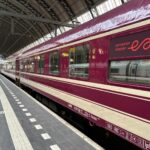
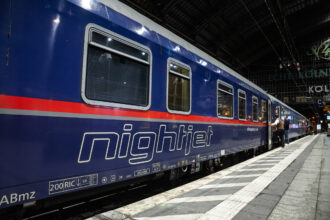
The train departs from Rome in the evening and travels south through Italy during the night, passing through major cities and regions as it makes its way towards the southern tip of the mainland. For most of the journey, it operates like a standard overnight train, with passengers settled into their seats, couchettes, or sleeper cabins.
In the early hours of the morning, the train reaches the port at Villa San Giovanni, located on the mainland opposite Sicily. This is where the journey becomes unique.
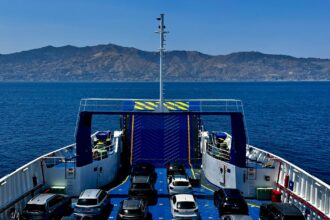
At this point, the train is split into sections and carefully manoeuvred onto a ferry, designed specifically to carry railway carriages. The process is highly coordinated, with the train being rolled directly onto the ship using rail tracks built into the ferry deck.
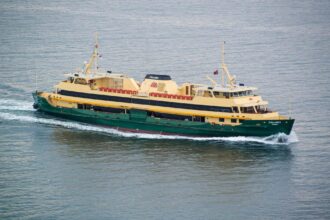
Once onboard, the ferry crosses the Strait of Messina, a relatively short journey that typically takes around 30 to 45 minutes. During this time, passengers may remain in their compartments or step off to experience the crossing, depending on conditions and instructions from staff.
After reaching Sicily, the train carriages are unloaded and reassembled, before continuing their journey across the island. From here, the train splits again, with different sections heading towards Palermo or Catania.
This combination of rail and ferry transport is what makes the journey so distinctive. It is not simply a train ride, but a multi-stage travel experience that seamlessly connects mainland Italy with Sicily.
Compare hotels and other places to stay in Sicily.
Check availabilityBrowse apartments, homes and self-catering accommodation in Sicily.
Browse rentalsCompare prices for Sicily hotels across multiple booking sites.
Check dealsRome to Sicily Sleeper Train Routes
The Rome to Sicily sleeper service operates along two main routes, both connecting the Italian capital with key destinations on the island.
The first route runs from Rome to Palermo, the capital of Sicily. This is one of the most popular options, offering a direct overnight connection to the western side of the island. The journey covers a significant distance, taking you from central Italy all the way to Sicily’s largest city.
The second route connects Rome with Catania, located on the eastern side of the island. This route provides access to a different part of Sicily, including the area around Mount Etna and the island’s eastern coastline.
Both routes follow the same path through mainland Italy and share the ferry crossing at the Strait of Messina. After arriving in Sicily, the train divides, with different carriages continuing to their respective destinations.
This structure allows a single service to cover multiple destinations, making it an efficient way to connect mainland Italy with different parts of Sicily in one journey.
| Route | Main Stops (Mainland) | Ferry Crossing Point | Final Stops (Sicily) | Typical Duration | Best For |
|---|---|---|---|---|---|
| Rome → Palermo | Naples, Salerno, Lamezia Terme | Villa San Giovanni → Messina | Palermo (via Messina) | ~13–14 hours | West Sicily access |
| Rome → Catania | Naples, Salerno, Lamezia Terme | Villa San Giovanni → Messina | Catania (via Messina) | ~12–13 hours | East Sicily + Mount Etna |
| Sicily → Rome (Return) | Messina → ferry → mainland | Messina → Villa San Giovanni | Naples, Rome | ~12–14 hours | Return overnight travel |
Timetable and Journey Duration
The Rome to Sicily sleeper train is designed as a classic overnight service, with departures in the evening and arrivals the following morning.
Trains typically leave Rome in the early evening, allowing passengers to settle into their accommodation before nightfall. As the journey progresses, the train travels south through Italy while most passengers sleep, making efficient use of overnight travel time.
Arrival times vary depending on the final destination, but passengers can generally expect to reach Sicily in the morning, with total journey times ranging from approximately 12 to 14 hours. This includes the ferry crossing and the continuation of the journey across the island.
The service operates regularly, although schedules can vary depending on the time of year and operational factors. As with many sleeper services, it is important to check current timetables in advance, particularly if you are planning connections or onward travel.
What makes the timetable particularly effective is its alignment with overnight travel patterns. By departing in the evening and arriving in the morning, the train allows you to maximise your time at your destination while minimising the impact of travel on your itinerary.
Cabin Types and Comfort Levels
The Rome to Sicily sleeper train offers a range of accommodation options, allowing you to choose between budget travel and a more comfortable overnight experience depending on your priorities.
At the most basic level, there are standard seats, which are the cheapest option but the least suitable for overnight travel. While manageable for shorter journeys, sleeping in a seated position over a 12–14 hour journey can be uncomfortable, so this option is best reserved for those prioritising cost above all else.
A more practical choice is the couchette, which provides a shared sleeping compartment with bunk beds. These compartments typically accommodate four to six passengers, offering a balance between affordability and comfort. For many travellers, this is the most popular option, as it allows for a proper night’s rest without the higher cost of a private cabin.
For a more comfortable journey, sleeper cabins provide significantly improved conditions. These compartments offer proper beds, more space, and a greater level of privacy. Depending on availability, you may be able to book a single, double, or shared sleeper cabin, making this a strong option for couples or those who want a quieter and more relaxed experience.
The key difference between these options is not just comfort, but also privacy and quality of sleep. On a journey of this length, choosing the right accommodation can have a major impact on how you feel when you arrive in Sicily.
For most travellers, couchettes offer the best balance, while sleeper cabins provide the most comfortable and stress-free experience.
Prices and Ticket Options
Prices for the Rome to Sicily sleeper train, operated by Trenitalia, vary depending on the type of accommodation you choose, as well as how early you book.
For travellers on a budget, standard seats are usually the cheapest option, with typical prices ranging from €30 to €70 (£26 to £60 / $35 to $81). While affordable, these are not ideal for overnight travel on a journey of this length.
A more practical option is a couchette in a shared compartment, which generally costs between €50 and €120 (£43 to £103 / $58 to $140). This is one of the most popular choices, offering a balance between price and comfort while allowing you to get a reasonable night’s sleep.
Sleeper cabins provide a more comfortable experience, with shared sleeper compartments typically priced between €80 and €180 (£69 to £154 / $93 to $209). These offer proper beds and a quieter environment, making them a strong option for longer journeys.
For those seeking privacy, private sleeper cabins can cost between €150 and €300 or more (£129 to £257+ / $174 to $349+), depending on availability and demand. While more expensive, this option effectively combines transport and accommodation, which can represent good value compared to booking a flight and hotel separately.
Prices can increase significantly during peak travel periods, and availability for sleeper cabins is often limited. Booking early is the best way to secure both lower prices and better accommodation options.
Overall, the Rome to Sicily sleeper train offers a range of pricing that makes it accessible to different types of travellers, from budget-conscious passengers to those looking for a more comfortable overnight experience.

Plan Your Train Journey with Rail Europe
Booking train tickets in Europe can become complicated when different operators, routes, and booking systems are involved. Rail Europe makes it easier to search routes, compare fares, and buy train tickets in one place.
It is especially useful for international rail journeys, European city-to-city travel, and travellers looking to book both regular rail tickets and passes. Instead of checking multiple train operators separately, you can plan your journey faster and book with confidence.
What Happens During the Ferry Crossing
The ferry crossing is the defining feature of the Rome to Sicily sleeper train and the moment that transforms this journey into something truly unique.
When the train reaches the southern tip of mainland Italy at Villa San Giovanni, it does not simply stop for passengers to transfer to a ferry. Instead, the train itself is loaded directly onto a ship, using rail tracks built into the ferry deck.
This process involves the train being split into smaller sections, which are then carefully manoeuvred onto the ferry. The operation is highly coordinated and has been refined over many years, allowing the transition from rail to sea to take place smoothly.
Once onboard, the ferry crosses the Strait of Messina, a journey that typically takes around 30 to 45 minutes. During this time, passengers may have the option to leave their compartments and go on deck, where they can experience the crossing and take in views of both the mainland and Sicily.
This part of the journey is often the highlight. Watching the coastline approach while knowing that your train is travelling with you across the water creates a rare and memorable travel experience.
After arriving in Sicily, the train carriages are unloaded from the ferry and reassembled before continuing their journey inland. From here, the service splits towards Palermo and Catania, completing the final stage of the journey.
This seamless integration of rail and ferry transport is what makes the route so distinctive. It is not simply a transfer, but a continuous journey that connects two islands of transport in a way few other routes in the world can match.
Is the Rome to Sicily Sleeper Train Worth It?
Whether the Rome to Sicily sleeper train is worth taking depends on what you value most in your travel experience, but for many travellers, it offers a compelling alternative to flying.
From a practical perspective, the journey is highly efficient. By travelling overnight, you can save a full day of travel and avoid the need for additional accommodation, arriving in Sicily ready to begin your trip. This makes it particularly useful for longer itineraries or multi-destination travel.
Compared to flying, the sleeper train offers a more integrated experience. You travel directly between city centres, avoiding airport transfers, security queues, and waiting times. While flights may be faster in terms of total journey time, the overall travel experience can be more convenient and less fragmented.
There is also a clear experiential advantage. The ferry crossing alone makes this journey stand out, offering something that cannot be replicated by other forms of transport. For travellers who value the journey as part of the experience, this route delivers something genuinely different.
However, it is not for everyone. Those prioritising speed above all else may still prefer to fly, particularly if time is limited. Comfort levels also vary depending on the type of accommodation you choose, so selecting the right cabin is important.
Overall, the Rome to Sicily sleeper train is best suited to travellers who value efficiency, experience, and a more relaxed approach to long-distance travel, making it one of the most distinctive journeys available in Europe.
Compare routes and fares for your journey to Sicily.
Compare flightsUse an eSIM to get online without hunting for a local SIM after arrival.
See eSIM optionsArrange a private airport pickup for your trip to Sicily.
Check transfersUsing Interrail on the Rome to Sicily Sleeper Train
The Rome to Sicily sleeper train, operated by Trenitalia, can be used with an Interrail pass, making it a highly useful option for travellers exploring Italy as part of a wider European journey.
Interrail covers the base fare of the journey, but it is important to understand that a reservation is still required for all overnight services. This reservation secures your seat, couchette, or sleeper cabin and must be booked in advance, as availability is limited.
The cost of reservations depends on the level of comfort you choose, with seats being the cheapest option and sleeper cabins costing more. These fees are separate from your pass and must be paid even if your Interrail travel day is valid.
One key detail is that your pass must be valid on the day of departure, as this is when your travel day is counted. This makes sleeper trains particularly useful within an Interrail itinerary, as they allow you to cover long distances overnight while using only a single travel day.
Because this is a popular long-distance route, reservations can sell out quickly, especially during peak travel periods. Booking early is essential if you want access to couchettes or private sleeper cabins, which are in highest demand.
Used correctly, this route is one of the most efficient ways to travel within Italy using Interrail, allowing you to move between the mainland and Sicily without losing valuable daytime hours.
Tips for Taking the Rome to Sicily Sleeper Train
Taking the Rome to Sicily sleeper train is straightforward, but a few practical considerations can make a significant difference to your overall experience.
Planning ahead is essential. Because sleeper cabins and couchettes are limited, booking early gives you the best chance of securing comfortable accommodation at a reasonable price. Last-minute bookings often leave only seats available, which are less suitable for overnight travel.
Choosing the right accommodation is equally important. On a journey of this length, the difference between a seat and a sleeper cabin can be substantial. Opting for at least a couchette ensures that you can rest properly and arrive in Sicily feeling refreshed.
Timing also plays a role. Boarding typically takes place in the evening, giving you time to settle in before the train departs. Having your essentials easily accessible, such as water, snacks, and personal items, helps you avoid unnecessary disruption during the journey.
The ferry crossing is a unique part of the experience, so it is worth being prepared for it. Depending on conditions, you may be able to step off the train and experience the crossing, which is often one of the most memorable parts of the journey.
Approaching the trip with the right expectations is key. This is not a high-speed or luxury experience, but rather a practical and distinctive way to travel, combining rail and sea into a single journey.

Rupert’s Handy Travel Tips
Rupert always says this is one of the rare journeys where the travel itself is just as exciting as the destination, especially when your train rolls straight onto a ship in the middle of the night.
- Book a couchette or sleeper cabin for a much better overnight experience
- Keep an eye out for the ferry crossing if you wake during the night
- Plan your arrival so you can make the most of your first day in Sicily
- Treat the journey as part of your trip, not just a way to get there
Want to meet the reindeer behind our travel tips? Find out more in our page Who is Rupert?.




Frequently Asked Questions About the Rome to Sicily Sleeper Train
Does the train really go on a ferry?
Yes. The train is split into sections and loaded onto a ferry at Villa San Giovanni, where it crosses the Strait of Messina before continuing in Sicily.
Can you get off the train during the ferry crossing?
In many cases, yes. Passengers may be allowed to step off and go on deck during the crossing, depending on conditions and staff instructions.
Is the sleeper train better than flying?
It depends on your priorities. Flying is faster, but the sleeper train offers a more integrated journey, allowing you to travel overnight and arrive directly in the city centre.
Are sleeper cabins private?
Some are. Seats and couchettes are shared, while sleeper cabins can offer private or semi-private compartments, depending on what you book.
How long does the journey take?
The full journey typically takes between 12 and 14 hours, including the ferry crossing.
Can you smoke on the Rome to Sicily sleeper train, or during the ferry crossing?
No. Onboard smoking is banned for the whole journey, including during the ferry crossing at Villa San Giovanni, and there is no smoking carriage on the service. Once you are on an Italian station platform, though, the rules are more relaxed than in most of Europe: smoking on open-air platforms has been permitted since a 2007 rule, so you can usually step outside for a cigarette during a station stop even though you cannot light up on board.
Further Reading & Related Guides
If you are planning more overnight rail travel, our European sleeper trains guide explores routes across the continent, helping you compare operators and build longer journeys. For flexible travel across multiple countries, our Interrail guides explain how to use rail passes effectively and integrate sleeper trains into your itinerary.
If you are exploring Italy further, this route pairs well with onward travel across Sicily, while our broader rail content can help you plan connections beyond Rome. For booking and comparing routes, our train booking apps guide shows how to find the best fares and availability across different operators.
Once you arrive in southern Italy, many travellers continue onward using the Villa San Giovanni to Messina ferry, where trains are loaded directly onto ferries across the Strait of Messina before continuing into Sicily. Our dedicated Villa San Giovanni to Messina Ferry Guide explains crossing times, ticket options, vehicle transport, and how the famous rail ferry system works.