
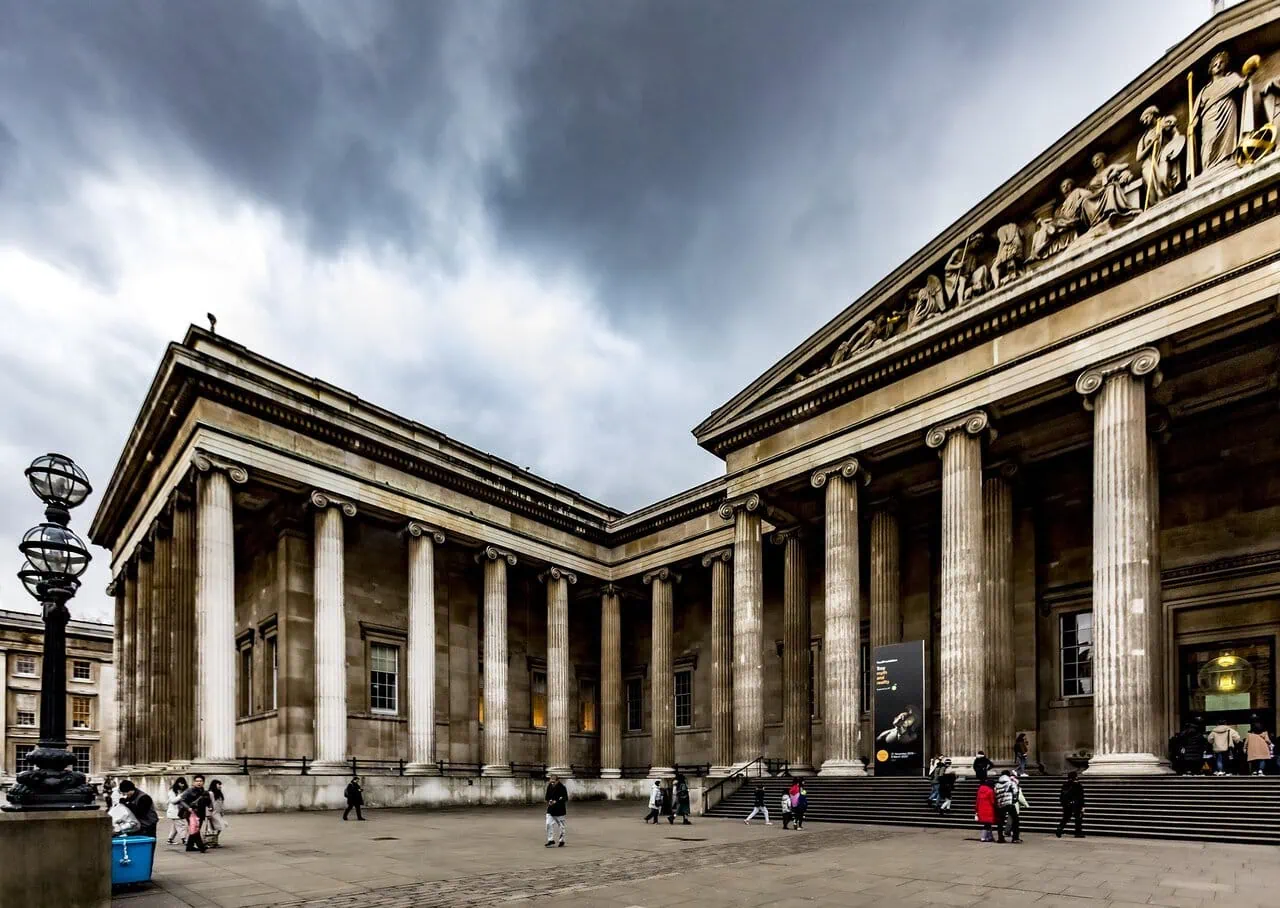
Why the Bayeux Tapestry Coming to London Matters
The arrival of the Bayeux Tapestry at the British Museum is one of the most significant cultural loans Britain has received in decades. For many visitors, this will be the first realistic chance to see the legendary medieval artwork without travelling to Normandy, and interest was intense: the first release sold out within hours on 1 July 2026, well before many visitors had a chance to book.
Far more than an embroidered cloth, the tapestry is one of the world’s most famous visual records of war, political ambition and conquest. Stretching almost 70 metres, it tells the dramatic story of the events leading up to the Battle of Hastings, including the fall of King Harold II and the rise of William the Conqueror. Few surviving medieval objects have shaped the understanding of English history quite so powerfully.
Its temporary display in London is expected to attract huge international attention. Historians, school groups, tourists and casual visitors alike are likely to travel specifically to see it, particularly as the artwork rarely leaves France. The exhibition also gives travellers the chance to combine the tapestry with other major historic sites across the capital, including the Tower of London, Westminster Abbey and the wider collections of the British Museum itself.
For anyone interested in medieval Europe, battlefield history, royal power or the origins of modern England, this is likely to become one of the defining exhibitions of 2026 and 2027.
Quick Exhibition Facts
The Bayeux Tapestry London exhibition is scheduled to run from September 2026 until July 2027 at the British Museum.
Tickets for the first release period (September to December 2026) went on sale on 1 July 2026 and sold out the same day amid record demand, with an online queue that peaked at more than 80,000 people. The next release, covering January to March 2027 dates, opens in October 2026, with a further release for April to July 2027 dates opening in January 2027. Given the international profile of the tapestry, expect strong demand for every release. Sign up to the British Museum’s notification list to be alerted when new dates go live.
The exhibition will be displayed in the museum’s Room 30, inside the Sainsbury Exhibitions Gallery, located close to the centre of the museum complex. The nearest Underground stations are Tottenham Court Road, Holborn, Russell Square and Goodge Street, all within walking distance.
Visitors travelling internationally should remember that the British Museum is one of the busiest museums in the world, attracting millions of visitors every year. Combining the museum’s existing popularity with the arrival of the Bayeux Tapestry means queues and a timed-entry system, so advance booking is essential.
See hotel options and places to stay in London.
Browse hotelsBrowse apartments, homes and self-catering accommodation in London.
Browse rentalsCompare prices for London hotels across multiple booking sites.
Check dealsWhere to See the Bayeux Tapestry in London
The tapestry will be displayed at the British Museum, one of the UK’s most visited cultural institutions and one of the world’s most important museums for archaeology and history.
Located in the heart of Bloomsbury, the museum is easily accessible from across London using the Underground, buses and national rail connections. The exhibition itself will be housed inside the museum’s dedicated temporary exhibition area, the Sainsbury Exhibitions Gallery, which is regularly used for major international displays and blockbuster exhibitions.
For many visitors, seeing the tapestry inside the British Museum will add an extra layer of historical context. The museum already contains extensive collections linked to medieval Europe, Roman Britain, Anglo-Saxon England and the wider history of conquest and empire.
A visit here can easily become a full-day experience rather than simply viewing the tapestry alone. After visiting the exhibition, travellers can continue on foot towards Covent Garden, Soho, Trafalgar Square and the National Gallery.
How to Book Tickets
Tickets for the Bayeux Tapestry London exhibition have already proven to be some of the most sought-after museum tickets in the UK. The first release period, covering September to December 2026, sold out on the day booking opened (1 July 2026), with an online queue that peaked at more than 80,000 people. Standard adult tickets are £33, with off-peak (£27) and super off-peak weekday (£25) pricing, concessions at £25, and under-16s free with a paying adult.
Visitors hoping to secure a place should watch for the next release: dates for January to March 2027 open in October 2026, and dates for April to July 2027 open in January 2027. Given how quickly the first release sold out, book as soon as each new release goes live.
The most reliable way to secure entry will be through the official British Museum website. The exhibition uses timed entry, with visitors assigned a specific arrival slot to help control crowd levels inside the exhibition galleries.
Travellers visiting London from overseas should also avoid assuming tickets will be available on the day. This is not expected to be a normal museum exhibition. The arrival of the Bayeux Tapestry in Britain is being treated as a landmark cultural event, and demand could rival some of the biggest temporary exhibitions the British Museum has hosted in recent years.
About the Bayeux Tapestry
The Bayeux Tapestry is one of the most famous surviving works of medieval art in the world. Created during the 11th century, it tells the story of the events leading up to the Norman conquest of England in 1066, including the rise of William the Conqueror and the dramatic Battle of Hastings.
Despite its name, the artwork is not technically a true tapestry. It is actually an embroidered linen cloth stitched using coloured wool thread. Historians believe it was probably created only a few years after the Norman victory, making it an extraordinarily important historical source from the period itself.
One of the biggest surprises for first-time visitors is the scale of the embroidery. The tapestry stretches for almost 70 metres in length and stands roughly 50 centimetres high, creating a huge continuous visual narrative filled with battle scenes, medieval ships, horses, weapons, feasts and royal ceremonies. Walking alongside it feels less like viewing a normal artwork and more like following a giant illustrated story across an entire gallery wall.
The tapestry normally lives in the Bayeux Museum in the town of Bayeux in Normandy, where it has been displayed for decades as one of France’s most important historical attractions. Because of its age and fragile condition, the embroidery rarely travels internationally, which is one reason the temporary exhibition at the British Museum is considered such a major cultural event.
Its usual museum home in Bayeux closed in 2025 for a major redevelopment project, with a redesigned museum expected to reopen in 2027. During this period, conservation specialists are carrying out preservation work and preparing new display systems intended to better protect the embroidery for future generations.
Even after nearly a thousand years, the tapestry remains remarkably detailed. Visitors examining the embroidery closely can still spot facial expressions, armour styles, sailing ships and small hidden details stitched into the borders surrounding the main scenes. Historians continue studying the work today because it provides one of the clearest surviving visual records of medieval Europe anywhere in the world.
The tapestry’s importance has also been formally recognised by UNESCO, which added it to the organisation’s Memory of the World Register in 2007. Unlike standard UNESCO World Heritage Sites, this programme protects globally significant documentary heritage, placing the embroidery alongside some of the most historically important written and visual records in the world.
What the Bayeux Tapestry Shows
Despite its name, the Bayeux Tapestry is technically an embroidered cloth rather than a true woven tapestry. Created during the 11th century, it presents a detailed visual account of the events leading up to the Norman invasion of England in 1066. Running for almost 70 metres, the artwork combines battle scenes, political negotiations, royal ceremonies and surprisingly vivid everyday details into one continuous narrative.
The story begins with the final years of Edward the Confessor, the English king whose death triggered a succession crisis that would reshape the country forever. From there, the tapestry follows the journey of Harold Godwinson, his controversial meeting with William of Normandy, preparations for invasion, the crossing of the English Channel and finally the bloody fighting at the Battle of Hastings.
One of the reasons the tapestry remains so compelling is the extraordinary amount of detail packed into each scene. Visitors can spot medieval ships, horses, weapons, armour, feasting scenes and even comic moments hidden within the borders. Historians continue to study the embroidery because it provides one of the clearest surviving visual records of medieval life anywhere in Europe.
Modern visitors are often surprised by how cinematic the entire work feels. Rather than a static artwork, the tapestry reads almost like an illustrated medieval documentary, moving scene by scene through betrayal, ambition, war and conquest. Seeing the original in person allows visitors to appreciate the craftsmanship and scale in a way photographs rarely capture properly.
William the Conqueror and the Battle of Hastings
The central figure behind the tapestry is William the Conqueror, the Duke of Normandy who invaded England in 1066 and became the first Norman king of England. His victory at the Battle of Hastings transformed the country politically, culturally and linguistically, with effects that are still visible nearly a thousand years later.
Following the death of Edward the Confessor, several rivals claimed the English throne. The tapestry strongly supports William’s claim, portraying Harold Godwinson as having sworn loyalty to the Norman duke before later taking the crown for himself. Whether this version of events is fully accurate remains heavily debated by historians, which is part of what makes the tapestry so fascinating.
The battle itself took place near the modern town of Hastings on 14 October 1066. William’s forces crossed the Channel from Normandy and met Harold’s exhausted English army after Harold had already fought another major battle in northern England only weeks earlier. By the end of the fighting, Harold was dead and the Norman conquest had effectively begun.
Today, travellers can still visit important locations connected to these events. Battle Abbey is traditionally believed to stand close to the site where Harold fell, while the wider region of East Sussex contains museums, memorials and surviving landscapes linked to the invasion. For many visitors, seeing the tapestry in London naturally leads to exploring the actual battlefield afterwards.
Why the Bayeux Tapestry Is So Important
Few surviving medieval objects carry the historical importance of the Bayeux Tapestry. Beyond its artistic value, it acts as one of the primary visual sources for understanding the Norman conquest of England, a turning point that permanently altered British history.
The conquest changed almost every layer of English society. Norman rulers replaced much of the Anglo-Saxon elite, castles began appearing across the country, French heavily influenced the English language and the political relationship between England and continental Europe shifted dramatically. The tapestry captures the moment this transformation began.
What makes the embroidery especially valuable is the sheer lack of comparable material from the period. Very few large-scale visual records from the 11th century survive in such remarkable condition. Historians use it to study medieval warfare, shipbuilding, clothing, religion, military equipment and royal symbolism.
The tapestry is also deeply important because of the questions it raises. Many historians believe it was created to promote the Norman version of events, effectively making it an early form of political propaganda. Certain scenes remain controversial, while some details appear deliberately ambiguous. This uncertainty keeps the tapestry relevant not just as an artwork, but as an ongoing historical debate.
Compare routes and fares for your journey to London.
Compare flightsChoose an Airalo eSIM and arrange mobile data before you arrive.
Browse eSIMsArrange a private airport pickup for your trip to London.
Check transfersPlanning Your Visit
Visitors planning to see the Bayeux Tapestry at the British Museum should allow more time than they might initially expect. Although the exhibition itself may take around 1 to 2 hours to properly experience, many travellers combine it with the wider museum collections, nearby attractions and cafés across Bloomsbury.
The museum is generally open daily from 10.00 until 17.00, with extended Friday opening hours until 20.30. Last entry is usually 16.45, or 20.15 on Fridays, although visitors should remember that galleries begin closing approximately 10 minutes before official closing time.
Special exhibitions, including the planned tapestry display inside the Sainsbury Exhibitions Gallery, follow the same general opening pattern. Visitors are strongly advised to arrive at the exact time printed on their ticket, as timed-entry systems are in place and admission outside the allocated slot may not be guaranteed during busy periods.
Friday evenings could become one of the best times to visit. Extended opening hours usually mean a slightly calmer atmosphere later in the evening, particularly compared with crowded weekend afternoons during school holidays and peak tourism months.
The museum also has several food and drink options inside the complex. The Court Cafés normally operate daily between 10.00 and 17.00, while the Great Court Restaurant usually opens from 11.30 until 17.00, with final seating around 16.00. Visitors looking for quicker food options can also use the museum’s Pizzeria, Coffee Lounge and outdoor dining areas throughout the day.
Travellers spending a full day around the museum area may find it worthwhile to combine the exhibition with nearby historic pubs, bookshops and cafés across Bloomsbury, particularly around Russell Square and Holborn.
How to Get to the British Museum
The British Museum sits in the heart of Bloomsbury, one of the easiest parts of central London to reach using public transport. Several Underground stations are within walking distance, making the museum accessible from almost every major tourist district in the city.
For most visitors, Tottenham Court Road is usually the most convenient station. Served by the Central Line, Northern Line and the high-speed Elizabeth Line, it provides fast connections from areas including Paddington Station, Liverpool Street Station and Heathrow Airport. The walk from Tottenham Court Road station to the museum normally takes around 8 to 10 minutes depending on which exit you use.
Holborn station is slightly closer geographically and is around 7 to 8 minutes on foot from the museum entrance. It is served by the Central Line and Piccadilly Line, making it particularly useful for visitors arriving from areas such as Covent Garden, South Kensington and King’s Cross Station.
Russell Square is often the easiest station for travellers staying in the Bloomsbury area itself. Served by the Piccadilly Line, it sits roughly 6 to 8 minutes away on foot and offers direct Underground access from Heathrow Airport without needing to change trains.
The closest major national rail hub is probably King’s Cross Station and neighbouring St Pancras International. From there, visitors can either take the Underground for a very short journey or walk to the museum in around 25 to 30 minutes through central London.
Travellers arriving directly from airports should remember that central London road traffic can become extremely slow during busy periods. In most cases, the Underground and Elizabeth Line will be considerably faster and cheaper than taxis or rideshare services. International visitors unfamiliar with London transport should strongly consider using the Citymapper app, which provides excellent real-time routing across the city.
Nearby Attractions and Things to Do
One of the advantages of visiting the tapestry exhibition is its location within one of the most attraction-rich parts of London. The surrounding area allows travellers to build an entire history and culture-focused itinerary without travelling long distances across the city.
Just south of the museum lies Covent Garden, known for its historic market buildings, street performers, theatres and restaurants. A short walk west leads into Soho, an area filled with independent cafés, music venues and nightlife. Meanwhile, heading east brings visitors towards legal London around Royal Courts of Justice and St Paul’s Cathedral.
Travellers interested in broader British history can easily combine the tapestry exhibition with visits to the Tower of London, Westminster Abbey and the Churchill War Rooms. Together, these attractions help visitors trace nearly a thousand years of English political and military history from the Norman conquest onwards.
The area surrounding the museum is also excellent for food. Bloomsbury contains a mixture of traditional pubs, historic cafés and international restaurants catering heavily towards students, academics and museum visitors. Unlike some parts of central London, the district still retains a quieter and more intellectual atmosphere that suits slower sightseeing days.
Compare hostels and lower-cost places to stay in London.
Search hostelsFlying to London? Get fast compensation payouts, eligible lounge benefits and expert help when flights go wrong.
See AirHelp+ benefitsArriving before check-in or leaving later? Store your luggage and make more of your time in London.
Store your bagsBattle of Hastings Sites You Can Still Visit Today
For many travellers, seeing the tapestry naturally creates the urge to visit the locations connected to the actual events of 1066. Fortunately, several important sites linked to the Norman conquest can still be explored today, particularly around Hastings and the nearby town of Battle.
The most important location is Battle Abbey, built on the orders of William the Conqueror after his victory. Tradition states that the abbey high altar was placed on the exact spot where King Harold II died during the fighting. Today, visitors can walk around the surviving abbey ruins and explore the battlefield trails that explain how the conflict unfolded.
The nearby coastline also helps visitors understand why the invasion succeeded. Norman forces landed further east at Pevensey, another historic location containing the remains of a Roman and medieval fortress. Standing along this stretch of coastline gives travellers a much stronger sense of how vulnerable England’s southern shore would have appeared to an invading army crossing from Normandy.
Although these sites are accessible as day trips from London, they are often quieter and less commercialised than many major English attractions. For visitors interested in medieval warfare, English monarchy or battlefield tourism, combining the tapestry exhibition with a visit to the actual battlefield creates a far deeper understanding of the events shown in the embroidery.
Interesting Bayeux Tapestry Facts
One of the most surprising facts about the tapestry is that nobody knows with complete certainty who designed it. Historians generally believe it was commissioned shortly after the Norman conquest, possibly by Bishop Odo of Bayeux, William’s half-brother, but many details surrounding its creation remain debated.
Despite being called a tapestry, the work is actually embroidered onto linen using coloured wool threads. The name survived largely because “tapestry” sounded more prestigious over time. The artwork also contains missing sections, damaged areas and mysteries that historians still argue about today.
Perhaps the most famous debate surrounds the death of King Harold II. Many people believe the tapestry shows Harold being struck in the eye with an arrow, but the exact interpretation of the scene remains controversial. Centuries of restoration and damage have complicated efforts to determine precisely what the original embroidery intended to depict.
The tapestry survived periods of extraordinary danger throughout history. During the French Revolution it narrowly escaped destruction, while during the Second World War it was seized and studied by German researchers fascinated by Germanic and Norman history. Its survival through centuries of war and political upheaval is part of what makes the exhibition in London feel so significant today.
For Visitors Wanting to See the Actual Battlefield
For many travellers, seeing the Bayeux Tapestry creates a strong urge to visit the real locations connected to the events shown in the embroidery. Fortunately, the battlefield itself can still be explored today around the town of Battle in southern England.
The most important site is Battle Abbey, built on the orders of William the Conqueror shortly after his victory in 1066. According to tradition, the abbey altar marks the approximate spot where King Harold II was killed during the fighting. Modern visitors can walk parts of the battlefield route, explore the abbey ruins and learn how the Norman invasion permanently changed England.
Reaching the battlefield from London is relatively straightforward. Direct trains from London Bridge Station and Charing Cross Station connect towards East Sussex, usually requiring a change at Hastings railway station depending on the route. Most journeys take around 1 hour 45 minutes to 2 hours.
Visitors exploring the area can also combine the battlefield with the seaside town of Hastings, nearby Norman sites and stretches of coastline linked to the invasion itself. For history lovers, it makes an excellent extension to the tapestry exhibition in London.
Want to explore the battlefield in more detail? Read our full Battle of Hastings Visitor Guide for transport advice, battlefield highlights, museum information and tips for planning a day trip from London.


Rupert’s Handy Travel Tips
Rupert is genuinely excited about the arrival of the Bayeux Tapestry in London. Seeing one of the world’s most famous medieval artworks displayed at the British Museum feels like one of those rare exhibitions people will still talk about years later. Rupert is especially looking forward to finally seeing the incredible scale of the embroidery in person rather than just in books and documentaries.
- Rupert recommends booking tickets as early as possible because demand is likely to be enormous once international visitors start planning autumn and Christmas trips to London.
- Try to view the tapestry from both close-up and further back. The tiny details are fascinating, but the full uninterrupted length is what really makes the artwork feel extraordinary.
- The surrounding Bloomsbury area is perfect for a museum day, with historic pubs, cafés and bookshops all within walking distance.
- Rupert also recommends eventually visiting Normandy and the battlefield sites around Hastings if the exhibition sparks a deeper interest in the story behind the conquest.
Want to meet the reindeer behind our travel tips? Find out more in our page Who is Rupert?.
Frequently Asked Questions About the Bayeux Tapestry London Exhibition
When will the Bayeux Tapestry be displayed in London?
The exhibition is scheduled to run from September 2026 until July 2027 at the British Museum.
When do tickets go on sale?
The first release (September to December 2026 dates) opened on 1 July 2026 and sold out the same day. The next release, for January to March 2027 dates, opens in October 2026, followed by an April to July 2027 release in January 2027.
How much are tickets?
Standard adult tickets are £33, with off-peak (£27) and super off-peak weekday, 3:30–4:20pm (£25) pricing. Concessions (students, 16-18s, jobseekers, disabled visitors) are £25, and under-16s go free with a paying adult (max 4 per adult).
Where in the British Museum will the exhibition be located?
The tapestry will be displayed in Room 30, inside the Sainsbury Exhibitions Gallery at the British Museum.
How long should I allow for the visit?
Most visitors should allow at least 1 to 2 hours for the exhibition itself, although many people will spend longer examining the details within the embroidery. A full museum visit can easily take most of the day.
Is the Bayeux Tapestry the original?
Yes. The exhibition is expected to feature the genuine medieval embroidery created during the 11th century, not a replica.
Can you photograph the Bayeux Tapestry?
Photography rules will likely depend on museum policy closer to the exhibition opening date. Some temporary exhibitions at the British Museum restrict photography inside galleries containing sensitive or valuable items.
Is the Bayeux Tapestry really a tapestry?
Technically no. The artwork is actually an embroidered linen cloth rather than a woven tapestry, although the traditional name has remained in use for centuries.
Can you visit the Battle of Hastings battlefield today?
Yes. Visitors can explore Battle Abbey and the surrounding battlefield area near Battle in East Sussex, around two hours from central London depending on transport.
Visitors planning a wider trip around London after seeing the Bayeux Tapestry can explore several other useful guides across AppySavvyTraveller. If you want a scenic way to move around the capital after visiting the British Museum, our Uber Boat by Thames Clippers guide explains how to use London’s river services to reach areas such as Tower Bridge, Greenwich and Battersea Power Station.
Travellers looking to stretch their budget should also read our Free Things to Do in London guide, while visitors with limited time can use our London in 1 Day itinerary to connect major landmarks, museums and viewpoints into a single well-planned route across the city. Families travelling together may also find our London with Kids guide useful when planning museum visits, transport and child-friendly attractions.
History lovers wanting to continue the medieval and royal themes of the tapestry exhibition should not miss our detailed Tower of London guide, which explores nearly a thousand years of executions, imprisonment, royal intrigue and military history inside one of Britain’s most famous fortresses. Visitors interested in the actual events shown in the tapestry can also continue with our upcoming Battle of Hastings guide, covering the battlefield itself and the surrounding historic sites in East Sussex.
International travellers arriving in Britain should also consider reading our eSIM Apps guide, which explains the easiest ways to stay connected in the UK without needing a physical SIM card.