Reviewed by our editorial team Updated
Why take the Higham Ferrers Walking Tour?
Looking for a captivating self-guided walking tour of Higham Ferrers that brings its rich medieval heritage and charming local stories to life? This carefully designed route takes you on a roughly 2.3 km loop through the town’s most significant landmarks, blending architectural highlights, centuries-old history, and community life.
From the bustling Market Square and stately Town Hall to the stunning St Mary’s Church, the evocative remains of a Norman castle, and the peaceful gardens of Chichele College, you’ll uncover layers of Higham Ferrers’ past. Along the way, learn about its unique role in England’s ecclesiastical and industrial history, from saffron fields to shoemaking workshops.
Whether you’re a history enthusiast, a local looking to rediscover your town, or a visitor wanting an immersive cultural experience, this tour is your perfect guide. If you’ve got a full afternoon free, the town’s official heritage trail covers considerably more ground in far greater depth, but this route is designed to hit the essential highlights at a relaxed pace.
Expect to spend about 2.75 to 3.25 hours exploring, with plenty of opportunities to pause, take photos, and soak up the atmosphere.
Henry Chichele’s Legacy
One of Higham Ferrers’ most illustrious figures, Henry Chichele (c.1364–1443), rose to become Archbishop of Canterbury and founder of All Souls College, Oxford. His deep ties to the town shaped its spiritual and educational life profoundly. He established the Chichele College, a chantry college dedicated to prayer and learning, and contributed to various charitable and religious institutions. His legacy continues to influence Higham Ferrers’ character and heritage, and many of the sites on this tour bear his mark.
Estimated duration: 2.75–3.25 hours
Distance: ~2.3 km loop
Start point: Market Square (Town Hall)
End point: Higham Ferrers Pocket Park
Stop 1: Market Square & Town Hall
Stop length: 10 minutes
Content type: Civic landmark & market heritage
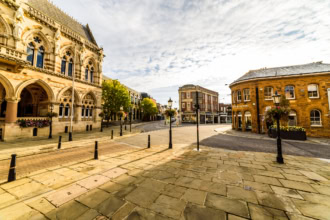
Begin in Market Square, the town’s historic heart. The Town Hall, completed in 1808, replaced a medieval building that housed a lock-up and stocks used for public justice. Today, the Town Hall showcases town regalia and remains central to civic life.
The Market Cross, originally erected in 1280, stood in the square as a symbol of the town’s medieval market rights and governance. Although the original has been moved, its legacy remains visible in the square’s layout.
Fun fact: Queen Elizabeth II and the Duke of Edinburgh visited the square in 1985, marking a royal endorsement of Higham’s enduring charm.
Directions: The War Memorial stands just a few steps north of the Town Hall, on the other side of the square.
Stop 2: Higham Ferrers War Memorial
Stop length: 5 minutes
Content type: War memorial & commemorative site
Just a few steps from the Town Hall stands the Higham Ferrers War Memorial, a Grade II-listed limestone column erected in 1921. Its rusticated pier and moulded cornice rise to a segmental pediment, while a carved relief of Peace, flanked by laurel wreaths, marks the front panel.
The inscription reads: “In memory of gallant men from this town who fell in the Great War 1914–1918,” with the names of the fallen carved into both the front and reverse panels. Listed in 1987 for its architectural and historic value, the memorial remains the focus of the town’s Remembrance Sunday commemorations each November.
Directions: From the War Memorial, walk southeast along Wood Street. Pass local shops and houses for about 400 meters until you reach the junction with Midland Road.
Stop 3: The Manor House
Stop length: 10 minutes
Content type: Residential & local history
The Manor House, on the corner of Wood Street and Midland Road, is Grade II listed and dates from the mid-17th century, with a 19th-century restoration. It is built of squared coursed limestone under a tiled roof, on a T-shaped plan with a gabled cross wing and stone mullioned windows, and it retains fine 17th-century full-height panelling inside.
Deeds record the site as originally part of the Higham Ferrers rectory estate, held in 1567 by Lawrence Washington, a direct ancestor of George Washington, the first President of the United States. The Higham Ferrers rectory came to him through his first wife, Elizabeth, a widow of Northampton, and the couple used the town as an occasional residence in the 1540s. The family’s principal Northamptonshire seat was Sulgrave Manor in the south of the county, and the house standing here today was built after the Washingtons’ time, on land they once held. Though the interior is private, the exterior and its surroundings are well worth admiring.
Directions: Continue along College Street for about 600 meters to reach the Parish Rooms (former library).
Stop 4: Parish Rooms
Stop length: 8 minutes
Content type: Community & wartime heritage
The Parish Rooms, built in 1904, served various community functions. During World War I, the building was converted into a Voluntary Aid Detachment (VAD) hospital, playing a vital role in caring for wounded soldiers.
After the war, the Parish Rooms functioned as part of the County Council library system, serving the community for many years before the library’s closure a few years ago. The building remains a valued local landmark, with its distinctive red brick architecture reflecting early 20th-century civic design and the town’s commitment to public service.
Directions: Continue walking north along College Street for about 400 meters. The former John White Factory building is on the right-hand side just past John White Close on the left.
Stop 5: John White Factory & Railway Heritage
Founded in 1936, the John White Factory gained international recognition for producing shoemaking machinery and notably manufactured boots for the army during World War II. The factory’s brick buildings and large industrial windows are key reminders of Higham Ferrers’ manufacturing legacy.
The Midland Railway built the town’s railway line in 1893, linking Higham Ferrers via Rushden (whose station now serves as a transport museum) to Wellingborough. At Wellingborough, passengers could connect to trains traveling onward to London. Passenger services were withdrawn on 15 June 1959. The line stayed open for freight for another decade, with general goods traffic ending on 3 February 1969 and mineral traffic on 3 November 1969.
The site of the former railway lies behind the John White Factory building, where a modern housing estate now stands. The former railway route has been transformed into a popular walking path known as The Greenway, which leads to Rushden. Along this scenic walk, you can still spot remnants of the railway infrastructure, including an old bridge under which the path passes, a tangible connection to the town’s transportation past.
Directions: Continue down College Street, then turn left onto Kimbolton Road. From Kimbolton Road, enter Castle Fields.
Stop 6: Castle Fields – Motte-and-Bailey Castle
Stop length: 10 minutes
Content type: Norman fortification & historic site
Castle Fields contains the earthworks of a Norman motte-and-bailey castle built shortly after the 1066 Conquest. All original wooden structures, including the keep and palisades, have long disappeared. The raised mound (motte) and the outline of the bailey remain visible as gentle earthworks.
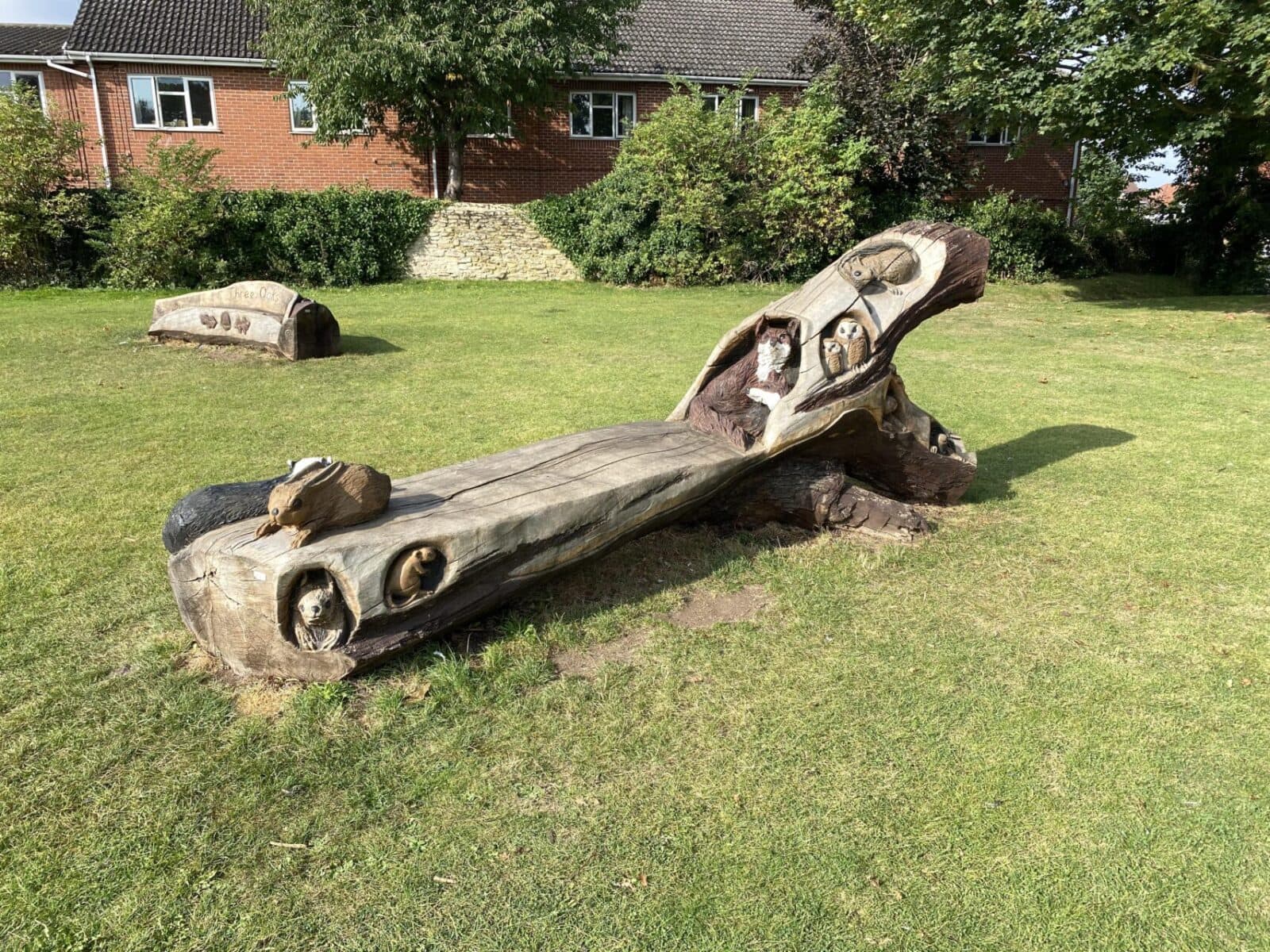
Today, Castle Fields is a peaceful green space and venue for community events.
Directions: Exit Castle Fields at Pear Tree Cottage (Stop 7).
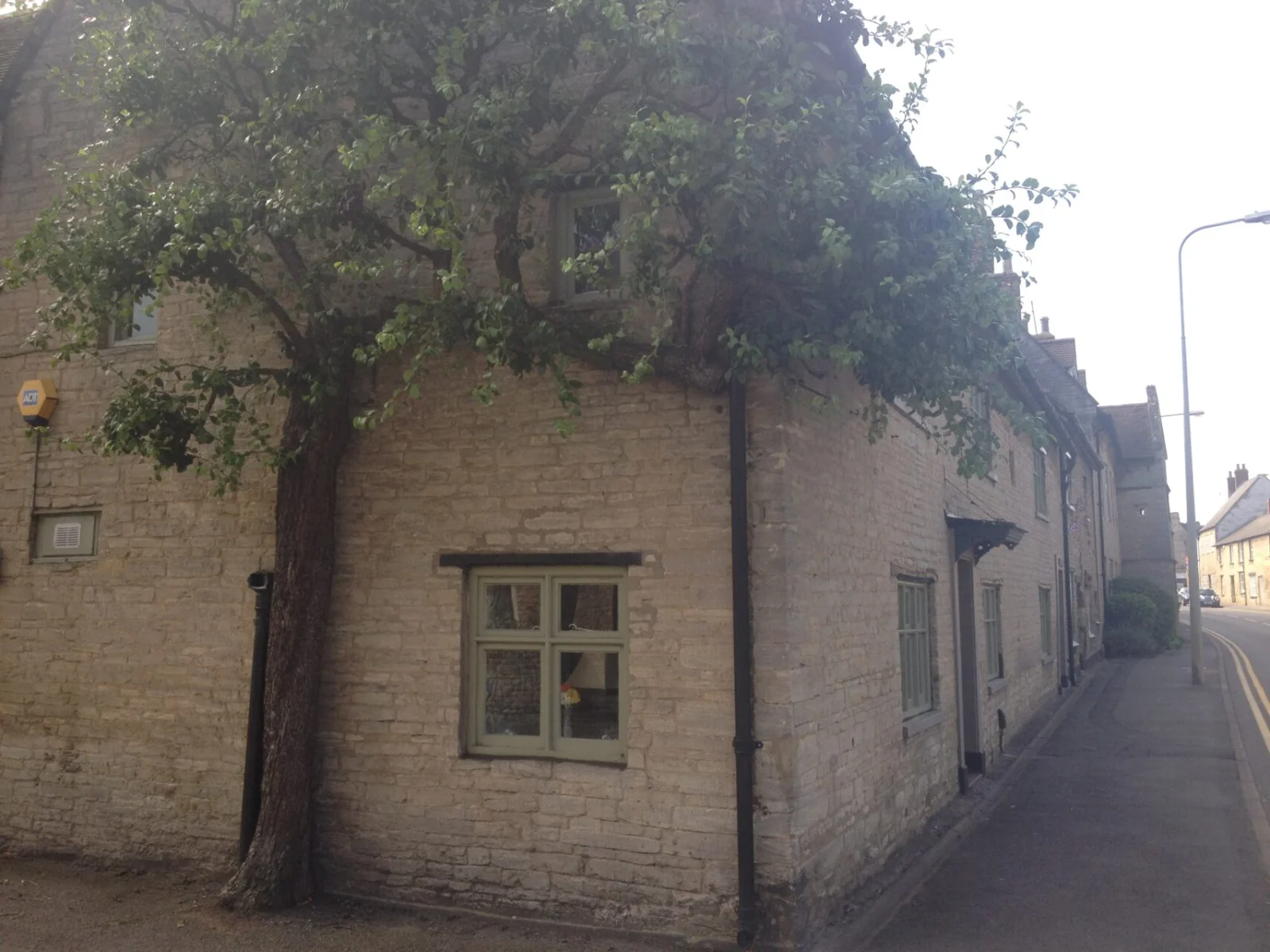
Stop 7: Pear Tree Cottage & Historic Trees
Stop length: 8 minutes
Content type: Historic residence & natural heritage
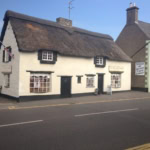
At this stop, you’ll find Pear Tree Cottage, a charming traditional building dating back several centuries. Nearby stands the historic Pear Tree, reportedly planted in 1709, which has long been a significant natural landmark in Higham Ferrers.
The tree and cottage together symbolize the blend of built and natural heritage in the town. The pear tree’s longevity provides a living connection to the town’s past, while the cottage showcases historic architecture and local craftsmanship.
This area reflects how nature and history coexist in Higham Ferrers, offering visitors a unique glimpse into the town’s enduring landscape.
Directions: Cross over Kimbolton Road to reach Chichele College & Gardens.
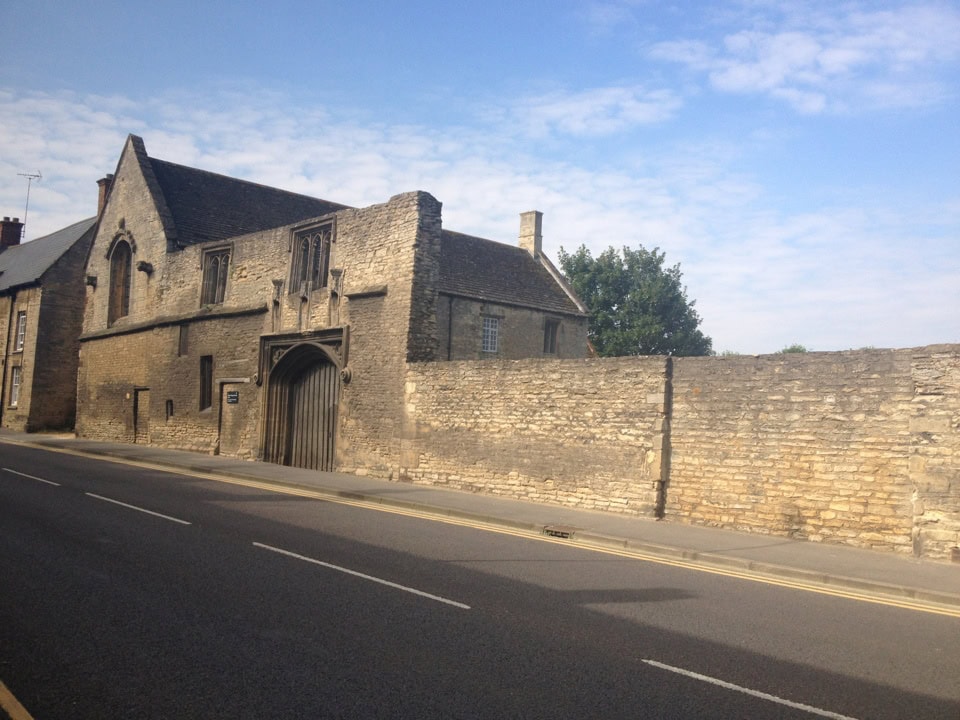
Stop 8: Chichele College & Gardens
Stop length: 15–20 minutes
Content type: Medieval college & community space
Founded in 1422 by Archbishop Henry Chichele, Chichele College was established as a chantry college, a religious institution designed to house priests who would say masses for the souls of the dead. Henry Chichele, who rose to become the Archbishop of Canterbury and was a native son of Higham Ferrers, sought to ensure the spiritual welfare of the town and his family through this foundation. The college was also part of a broader educational mission, serving as a grammar school for local boys, blending religious devotion with learning.
The college complex originally consisted of a chapel, dormitories, cloisters, a refectory, and a library, all surrounded by gardens and agricultural land to sustain the priests. It was built in the Perpendicular Gothic style, characterized by strong vertical lines, large windows, and intricate stone tracery. The architecture and the college’s function reflected the wealth and importance of Higham Ferrers during the late medieval period.
However, the college’s fortunes declined during the Dissolution of the Monasteries under King Henry VIII in the 1530s and 1540s. Like many religious houses, Chichele College was suppressed, its lands confiscated by the Crown, and many of its buildings fell into disrepair or were dismantled. Only a few structures survive today, most notably the gatehouse, parts of the cloisters, and fragments of walls that hint at the former college’s scale and grandeur.
The ruins provide a poignant reminder of the sweeping religious and political changes that transformed England in the 16th century. Despite this, the site retained local significance, and in recent decades, efforts have been made to restore and maintain the gardens, turning the grounds into a peaceful public space. The college is now used for community events, including Tudor re-enactments, art exhibitions, and heritage open days, linking the town’s medieval past with its present.
Visitors can walk among the remains and imagine the daily life of the priests and students who once inhabited this sacred and scholarly place. The gardens offer a tranquil setting, complete with traditional plantings that might have been familiar to the college’s medieval inhabitants.
Chichele College stands as both a historic ruin and a living heritage site, embodying the layers of Higham Ferrers’ history, from medieval piety to modern community spirit.
Directions: From the college entrance, cross over the road and walk back towards the Market Square – stopping at the Green Dragon.
Stop 9: The Green Dragon Inn & Stone Dovecote
Stop length: 15 minutes
Content type: Historic pub, stables & medieval dovecote
Next up is the Green Dragon Inn, one of Higham Ferrers’ most atmospheric and historic landmarks. This timber-framed coaching inn dates back to the early 17th century and has long served as a social hub for the town, welcoming travellers, locals, and traders alike. The pub’s low-beamed ceilings, exposed wooden rafters, and uneven flagstone floors evoke centuries of stories and community gatherings.
Historically, the Green Dragon was an important stop on coaching routes, offering fresh horses and rest for weary travellers. Behind the pub, the historic stables remain, a testament to the building’s original function as a coaching inn. These stables housed mail horses and carriages that were vital to communication and trade during the pre-railway era.
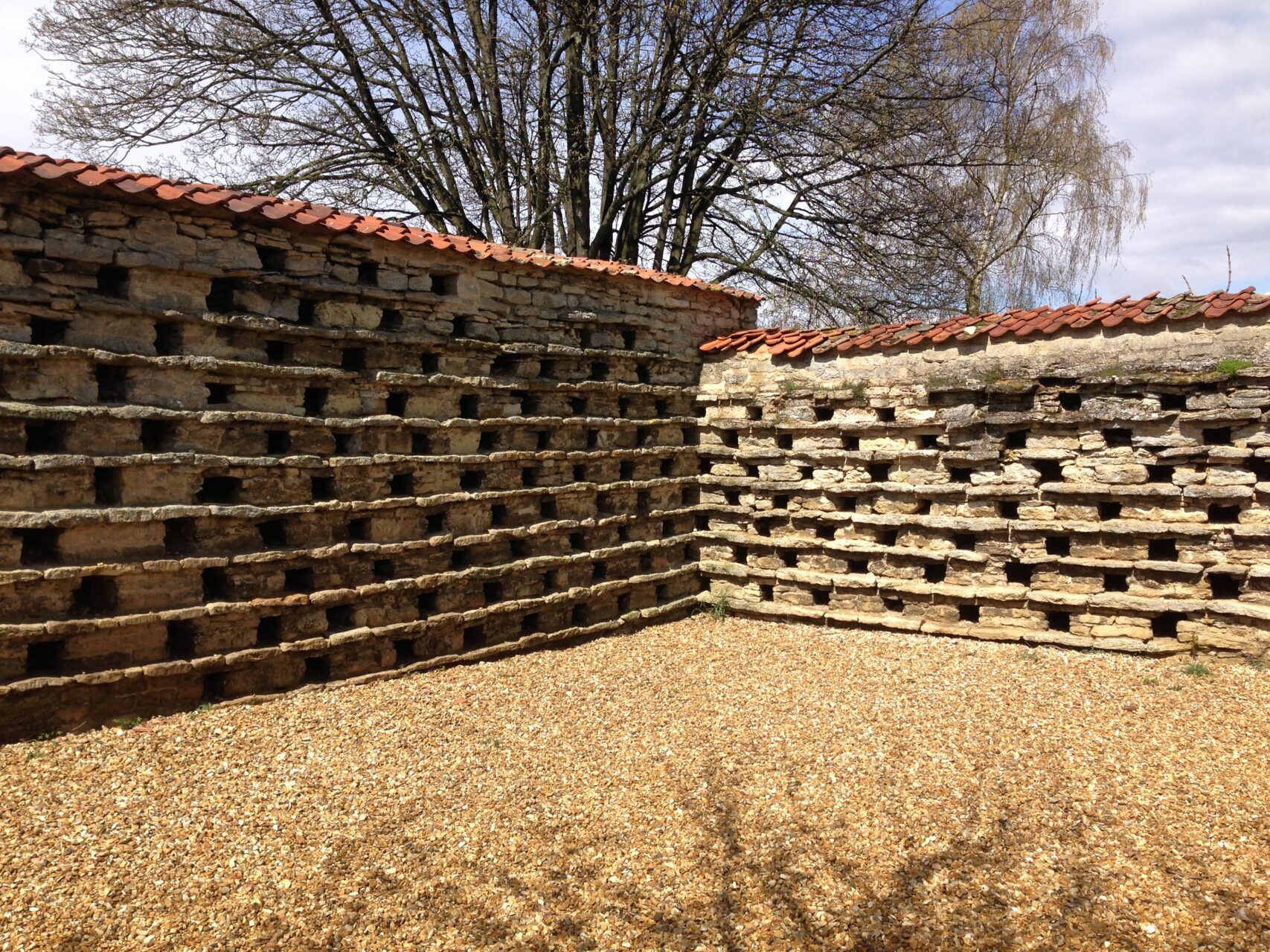
Adjacent to the stables stands the medieval stone dovecote, a distinctive circular structure built from local stone. The dovecote was used to house pigeons and doves, which provided meat, eggs, and valuable fertiliser to the manor estate that once dominated this area. This dovecote is one of the few surviving examples of medieval agricultural architecture in Higham Ferrers and offers a tangible connection to the town’s rural past.
The dovecote’s stone walls are punctuated by numerous small nest holes where pigeons would roost. Though visitors cannot enter, it is clearly visible from the pub’s car park and garden area, making it a fascinating stop for those interested in medieval life and farming practices.
Today, the Green Dragon Inn remains a cherished local establishment, renowned for its real ales, hearty food, and warm atmosphere. It provides an ideal place to relax after your historical exploration, soaking in the ambience and reflecting on the rich layers of Higham Ferrers’ past.
Directions: After visiting the Green Dragon, continue your walk by heading northeast along College Street for approximately 300 meters to reach St Mary’s Church & Bede House (Stop 10).
Stop 10: St Mary’s Church & Bede House
Stop length: 30–35 minutes
Content type: Literary heritage, ecclesiastical architecture & medieval social care
As you leave The Green Dragon Inn, walk northeast along College Street and turn onto Church Walk. Just here you’ll find a charming café housed in a building known as the setting for the novel Sleepless Moon by H.E. Bates.
Although born in nearby Rushden, Bates had strong family connections to Higham Ferrers and frequently drew inspiration from the town and surrounding countryside in his writings. His evocative descriptions of rural life, local characters, and landscapes have immortalized this area in English literature, making this café a fitting literary landmark on your tour.
H.E. Bates and Higham Ferrers
H.E. Bates (1905–1974) was one of England’s most beloved authors of the 20th century, renowned for his evocative short stories, novels, and nature writing. Though born in Rushden, he spent much of his life in the surrounding region, including Higham Ferrers, where his family roots ran deep. His writings often reflect the rhythms of rural Northamptonshire life: the changing seasons, the local folk, and the pastoral landscapes.
Bates’s novel Sleepless Moon captures the essence of this area’s natural beauty and social fabric, blending fictional narratives with real places that residents would recognize. The café you see on Church Walk occupies the very kind of setting Bates described: intimate, historic, and suffused with a quiet charm that continues to inspire visitors and locals alike.
St Mary’s Church
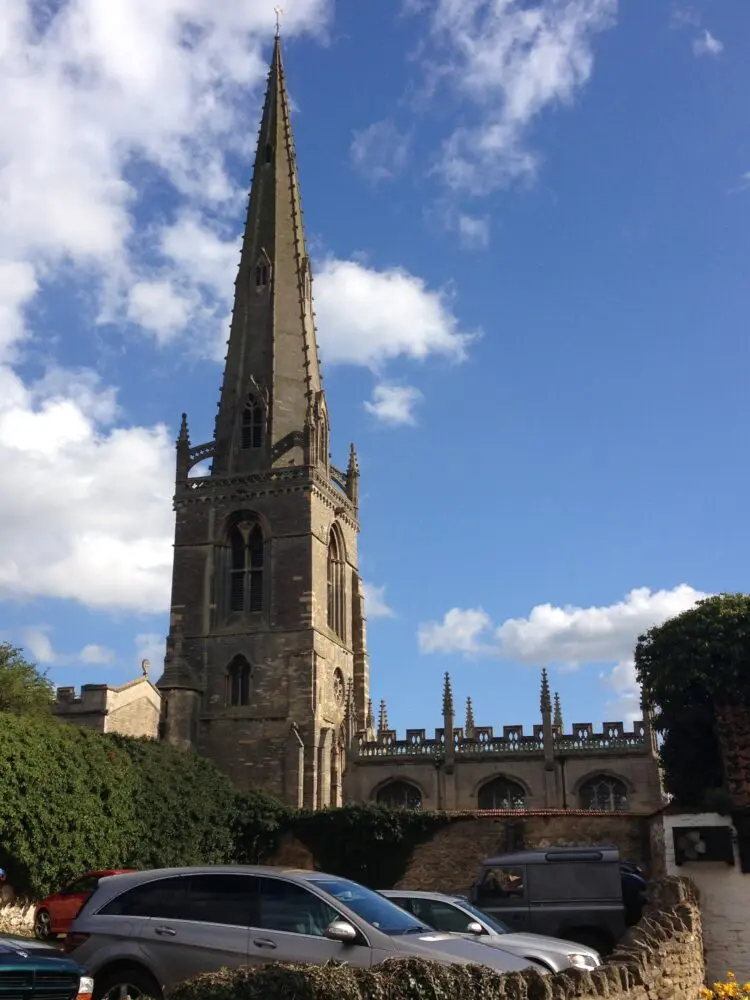
Dominating the skyline of Higham Ferrers, St Mary’s Church is a magnificent example of Perpendicular Gothic architecture, with origins dating back to circa 1220. The church is unique in having a double-naved interior, creating an unusually spacious and bright worship space. Its tall, slender windows with intricate stone tracery bathe the interior in soft natural light, enhancing the grandeur.
The church’s furnishings include exquisitely carved 14th-century misericords, small hinged seats in the choir stalls that provided support for clergy during long services. Several memorial brasses pay tribute to prominent local families who shaped the town’s history.
A notable feature is the Warden’s Cross, an emblem symbolizing the church’s governance and community leadership. The church also boasts a fine collection of stained-glass windows depicting biblical scenes and saints, reflecting centuries of religious artistry.
St Mary’s has played a vital role in the town’s spiritual and social life for over 800 years and remains an active place of worship. The church regularly hosts concerts, community events, and guided tours, inviting visitors to connect with its rich heritage.
Best if you want daily housekeeping and a front desk. Filter by area first, then by price.
Check availabilityBest for longer stays. Whole apartments and houses, so you are not eating out three times a day.
View rentalsBest if you have already picked a hotel. Checks the big booking sites for the same room and shows who is cheapest.
Check dealsBede House
Adjacent to the church stands the Bede House, founded in the early 15th century by Archbishop Henry Chichele as a charitable institution for elderly clergy and poor townsfolk. The Bede House offered shelter, care, and social support at a time when the church was a primary provider of welfare.
Architecturally, the Bede House is notable for its stone and timber construction, with carved doorways and mullioned windows that evoke its medieval origins. It includes a chapel and living quarters, preserving the spirit of community care.
Nearby is the Chantry Chapel, built around 1422, which housed priests who said masses for the souls of the deceased, a practice reflecting medieval beliefs about the afterlife and the efficacy of prayers.
Today, the Bede House remains a symbol of Higham Ferrers’ enduring commitment to social welfare and heritage preservation. It occasionally hosts educational programs and heritage open days, allowing visitors to explore its historic spaces and learn about medieval charitable practice.
Chantry Chapel
The Chantry Chapel, constructed around 1422, is an important medieval building closely associated with St Mary’s Church and the legacy of Archbishop Henry Chichele. Originally, chantry chapels were established to house priests whose primary role was to say masses for the souls of the dead, especially benefactors and prominent local families. This was part of the medieval belief in purgatory, where such prayers were thought to help the deceased attain salvation more swiftly.
Built in the distinctive Perpendicular Gothic style, the Chantry Chapel features finely carved stonework, large traceried windows, and elegant vaulted ceilings. Its architecture reflects both its spiritual purpose and the wealth of its patrons. The chapel would have been richly decorated with religious iconography, though much of this has been lost over the centuries, particularly during the Dissolution of the Monasteries in the 16th century when many religious institutions were suppressed.
Despite this, the chapel remains a remarkably well-preserved example of medieval religious architecture. Its location adjacent to the Bede House emphasizes its role within the community, not just as a place of worship but also as a center for charity and care for the elderly clergy and townsfolk.
Today, the Chantry Chapel is often open during heritage events and serves as a poignant reminder of Higham Ferrers’ medieval spiritual life. Visitors can admire the detailed stone carvings and imagine the quiet devotion of priests who served here centuries ago, maintaining the town’s connection to its rich religious past.
Church House
The Church House is one of Higham Ferrers’ oldest surviving secular buildings and holds a special place in the town’s history. Built in the 15th century, this timber-framed structure originally served as a guildhall and meeting place for the town’s religious and civic organizations. It was a focal point for communal gatherings, celebrations, and sometimes judicial proceedings.
The building is also notable for its connection to the family of George Washington, the first President of the United States, whose ancestors lived in the area. The Church House stands as a testament to the deep historical ties between Higham Ferrers and early American history, adding an international dimension to its local significance.
Architecturally, the Church House features traditional timber framing with exposed beams and wattle-and-daub infill, characteristic of medieval construction techniques. The large, open hall inside would have accommodated town meetings and social functions, making it a hub of community life.
Over the centuries, the Church House has been carefully preserved and restored, allowing visitors to step back in time and experience the ambiance of a medieval meeting place. It continues to be used for cultural events, exhibitions, and educational programs, maintaining its role as a living part of the town’s heritage.
Churchyard Cross
The Churchyard Cross is a prominent medieval monument located within the churchyard of St Mary’s Church. Originally erected in the 13th century, it served both religious and civic functions. As a religious symbol, the cross marked sacred ground and was a focal point for outdoor ceremonies, processions, and preaching before congregants moved inside the church.
The cross also had an important social role. In medieval times, such crosses were often used as meeting points for markets, legal proclamations, and public gatherings, symbolizing the church’s central position in both spiritual and civic life.
The original cross suffered damage over the centuries, particularly during periods of religious turmoil such as the Reformation and Civil War, when many such monuments were defaced or destroyed. In the 20th century, the cross was restored as a war memorial, honoring the fallen of World War I and subsequent conflicts, blending layers of historical meaning.
The restored cross stands on a stepped base with a carved shaft and remains a powerful emblem of the town’s enduring faith and community spirit. It invites reflection on Higham Ferrers’ long history, connecting medieval piety with modern remembrance.
Visitors can view the cross while strolling through the churchyard, appreciating its intricate stonework and the poignant symbolism it carries for generations of townspeople.
Directions: From the churchyard, head towards the High Street and turn down Wharf Road, just around the corner from The Queens Head pub, to reach Stop 11.
Stop 11: Higham Ferrers Pocket Park
Stop length: 10 minutes
Content type: Green space & family-friendly park
Tucked beside the River Nene at the bottom of Wharf Road, Higham Ferrers Pocket Park is a small, community-run green space with play equipment for younger children, a butterfly area, and a wide grassy stretch that’s popular for football and cricket. It’s a modest, low-key stop compared with the medieval sites earlier in the tour, but a welcome change of pace, especially if you’re walking with children.
A footbridge at the park’s edge connects onto the former railway line you passed near the John White Factory, now part of The Greenway path towards Rushden, so it’s a natural place to pause if you’re combining this walk with a longer riverside stroll.
Directions: From the Pocket Park, retrace your steps up Wharf Road to the High Street to head back towards Market Square, or continue with the optional stop below.
Optional Stop: 67 High Street – Former Home of Henry Chichele
As an optional extension to your walking tour, you can continue from the Pocket Park back towards the bustling Market Square via the High Street, the town’s main commercial thoroughfare. This pleasant stroll offers a glimpse of modern Higham Ferrers alongside historic buildings that line the street.
As you walk along High Street heading towards Rushden, you’ll pass a variety of shops, cafés, and local businesses that give the town its vibrant community feel. The street retains much of its historic character with a number of Georgian and Victorian façades standing alongside newer structures, creating a charming blend of old and new.
Just before the junction where the road branches off towards Northampton, you’ll find 67 High Street, a modest but significant building known as the former home of Henry Chichele. Though the current structure has been altered and rebuilt over time, this site marks the birthplace and early residence of the man who would rise to become the Archbishop of Canterbury and one of England’s most influential religious figures in the 15th century.
Henry Chichele’s life began in humble circumstances in Higham Ferrers around 1364, but his ambition, intellect, and devotion propelled him to the highest echelons of the English Church. Beyond his ecclesiastical achievements, Chichele was a patron of education and founder of several important institutions, including All Souls College, Oxford, and of course, the Chichele College in his hometown. His impact on Higham Ferrers remains palpable, with many of the town’s historic sites connected to his legacy.
Visiting 67 High Street offers a tangible connection to this towering historical figure and invites reflection on how one person from a small town shaped national religious and educational history. While the house itself is privately owned and not open to the public, its plaque and location serve as a reminder of Higham Ferrers’ important place in England’s medieval narrative.
From here, you may choose to return to Market Square to conclude your optional extension or continue exploring the neighboring streets, many of which hold their own unique stories and heritage.
Final Stop & Wrap-Up
You’ve now completed a journey through more than 900 years of Higham Ferrers history, from medieval ecclesiastical power to Georgian civic pride and Victorian industry. Whether you’re local or visiting from further afield, this self-guided walking tour offers a compact yet immersive look at the town’s most enduring sites. You’ve stood where archbishops walked, where shoemakers built an industry, and where traders still gather in the market square today.
Your walk finishes at Higham Ferrers Pocket Park, a peaceful riverside green space beside the River Nene, a nice change of pace after the medieval sites earlier in the route. If you fancy a drink or meal, The Green Dragon back along the route is well worth building into your walk, or you can loop back to the market for a snack. And if you’re curious for more, scroll below for suggested extensions and nearby attractions.
Public Toilets
Public toilets are available on Wharf Road, just around the corner from The Queens Head pub. Most local cafés and pubs also allow customer use of facilities, and baby-changing and accessible toilets are available at Pocket Park.

Accessibility & Walking Suitability
This tour is designed to be broadly accessible, covering:
- Approx. 2.3 km loop, mostly on paved or tarmacked paths
- Some mild gradients and cobbled surfaces near St Mary’s Church
- Suitable for manual and powered wheelchairs, though some assistance may be needed in older sections
- Benches available at Chichele College, Market Square, and Higham Ferrers Pocket Park
Note: The interior of some heritage buildings may have limited step-free access.
Food & Drink Suggestions Along the Route
Need a break or bite along the way? Try these locally recommended spots:
The Green Dragon Inn serves traditional pub meals and real ales in a historic setting, while The Motte & Fig is a good pick for coffee and light bites near Market Square.
For something quicker, Market Square Bakery is a locally loved spot for snacks and takeaway treats, and Georgia’s Fish Bar on Westfield Terrace remains a popular chippy with residents.

Rupert’s Fun Facts & Trivia
Higham Ferrers is full of curious stories and historical gems. Here are some of my favourite fun facts:
- Henry Chichele: Born in Higham Ferrers, he became Archbishop of Canterbury and co-founded All Souls College at Oxford.
- The dovecote: Behind The Green Dragon sits a medieval dovecote with over 300 nest holes, possibly dating back to the 14th century.
- Market charter: Granted in 1251, and technically, it has never been formally lapsed.
- Saffron dye: Once produced here and exported for luxury textiles and church vestments across Europe.
- The Town Hall lock-up: Said to have held overnight prisoners for minor offences like drunkenness and debt.
Want to meet the reindeer behind our fun facts? Find out more in our page Who is Rupert?.




Nearby Attractions or Route Extensions
If you’re extending your stay, here are some great additions. The Rushden Transport Museum is 1.5 km south, with vintage buses, trams, and heritage rail on display, while Stanwick Lakes offers scenic walking and cycling trails, a visitor centre, and an adventure playground about a 10-minute drive away.
Further afield, the Chelveston Airfield Heritage Trail is a WWII-era airfield with interpretive boards and memorials roughly 5 km east, and the Irthlingborough Viaduct Walk is an easy riverside trail with great views, 4 km west of town.
Official Higham Ferrers Town Council App
Stay connected with everything happening in Higham Ferrers with the official Town Council app. Whether you’re a visitor or a local, the app provides up-to-date information on community events, council news, parking, and local services. It’s your handy guide to making the most of your time in this historic market town.

App availability and prices vary by country. Some of these may not appear in your local App Store or Google Play.
Helpful Navigation Apps
Use Citymapper or Google Maps to navigate between stops or find local footpaths.

App availability and prices vary by country. Some of these may not appear in your local App Store or Google Play.

App availability and prices vary by country. Some of these may not appear in your local App Store or Google Play.
Best for finding routes the airlines do not sell as a single ticket. Combines carriers to bring the fare down.
Search flightsBest for anyone whose home plan charges by the megabyte abroad. Pay a fixed price up front.
Check eSIMsBest after a long flight or a late landing. Price agreed before you travel, and no taxi queue.
Check transfersFurther Reading & Related Guides
Want to make the most of your visit to Higham Ferrers and the surrounding Northamptonshire countryside? For more on the town itself, our Higham Ferrers Travel Guide covers markets, dining and seasonal events in more depth, while the Rushden & Rushden Lakes Guide is worth a look for the neighbouring town’s shops and restaurants. For a wider trip, our Northamptonshire Travel Guide rounds up the county’s best days out.
A few practical tools can make the walk itself easier too. Find your way offline with our Maps & Offline Maps Apps Guide, or check bus and coach routes onward with our Coach Company Apps Guide. Our Translation Apps Guide can help overcome any language barriers along the way.
Before you set off, it’s worth planning ahead with local forecasts using our Weather Apps Guide, since much of this tour is outdoors. And for peace of mind on any UK trip, our Travel Insurance Apps Guide is worth a read before you travel.
App availability note: If a download link looks broken on this page, it’s usually not an error on our side. Some apps are geo-locked in the Apple App Store or Google Play Store and only appear if your account region or SIM matches the country. This is common where apps rely on local payment systems, regulations, or developer resources. Once you’re in the right region, the app will normally work as expected.