
Welcome to Lisbon
Perched across seven hills overlooking the broad River Tagus, Lisbon is one of Europe’s most rewarding capital cities. Colourful streets, historic trams, magnificent viewpoints and centuries of maritime history combine with excellent food, lively neighbourhoods and a relaxed atmosphere to create a destination that appeals to almost every type of traveller.
Portugal’s capital has reinvented itself in recent years without losing its historic charm. Alongside medieval districts such as Alfama, you’ll discover stylish shopping streets in Chiado, vibrant nightlife in Bairro Alto, world-class museums, modern architecture in Parque das Nações and the impressive riverside monuments of Belém. Whether you’re interested in history, food, architecture, photography or simply wandering picturesque streets, Lisbon offers far more than most visitors expect.
One of the city’s greatest strengths is that many of its major attractions are surprisingly close together. It’s possible to spend the morning exploring a medieval castle, enjoy lunch overlooking the river, ride a historic tram through the city’s steep streets and finish the day watching the sunset from a riverside terrace.
Lisbon is also an excellent base for exploring the rest of Portugal. Destinations such as Sintra, Cascais, Óbidos, Fátima and even the beaches of the Atlantic coast are all within easy reach, making the capital ideal for both short city breaks and longer holidays.
Whether you’re visiting for a weekend or spending a week discovering Portugal, Lisbon rewards travellers who take their time to explore beyond the obvious landmarks.
Explore Alfama
No neighbourhood captures the spirit of Lisbon quite like Alfama. As the city’s oldest district, it survived the devastating 1755 earthquake that destroyed much of central Lisbon, leaving behind a maze of winding alleyways, hidden courtyards and steep cobbled streets that still retain their medieval character.
Exploring Alfama is less about following a fixed route and more about allowing yourself to get pleasantly lost. Around almost every corner you’ll discover colourful houses decorated with traditional azulejo tiles, small family-run cafés, tiny churches and washing hanging from balconies above narrow lanes that have changed little for centuries.
The district is also famous as the birthplace of Fado, Portugal’s soulful traditional music. During the evening, restaurants and taverns fill with the sound of live performances, creating one of Lisbon’s most authentic cultural experiences. Even during the day, the atmosphere is unlike anywhere else in the city.
Alfama is also home to several spectacular miradouros (viewpoints), where you’ll enjoy panoramic views across Lisbon’s rooftops, the River Tagus and the famous red suspension bridge stretching across the water. These viewpoints are particularly popular at sunrise and sunset, when the city’s warm colours are at their most photogenic.
Although the neighbourhood’s steep hills can be challenging, exploring Alfama on foot remains one of the very best things to do in Lisbon.
Visit Lisbon Cathedral (Sé de Lisboa)
Standing proudly on the edge of Alfama, Lisbon Cathedral, usually known simply as the Sé, is the oldest church in the city and one of its most important historic landmarks. Construction began in 1147, shortly after Lisbon was recaptured from the Moors, and the cathedral has watched over the city for almost nine centuries.
From the outside, the cathedral resembles a fortress, with its imposing towers and thick stone walls reflecting the turbulent history of medieval Portugal. Inside, visitors discover beautiful Gothic chapels, Romanesque architecture, impressive stained-glass windows and peaceful cloisters that reveal archaeological remains dating back to Roman and Islamic Lisbon.
The cathedral has survived earthquakes, wars and centuries of rebuilding, resulting in a fascinating mixture of architectural styles that tell the story of Lisbon’s development over hundreds of years. Visitors interested in history will find plenty to admire, while photographers are drawn to the striking contrast between the ancient stone building and the colourful trams that regularly pass outside.
Thanks to its central location, the cathedral is an easy stop while exploring Alfama, Tram 28 or São Jorge Castle, making it one of Lisbon’s essential historic attractions.
Check Lisbon hotel availability
See hotel options and places to stay in Lisbon.
Browse hotelsBook your own place in Lisbon
Browse apartments, holiday homes and self-catering stays in Lisbon.
View rentalsCompare rates for Lisbon
See hotel prices from multiple booking sites in one search.
Compare ratesRide Lisbon’s Historic Elevadores
One of the most memorable things to do in Lisbon is ride its famous elevadores and funicular railways. Built during the late nineteenth and early twentieth centuries, these ingenious transport systems were designed to help residents navigate Lisbon’s famously steep hills long before cars became common. Today they’re still part of the city’s public transport network, while also serving as some of Lisbon’s most photographed attractions.
Many first-time visitors assume there’s only one historic lift, but there are actually four different elevadores, each offering a unique journey through the city. Hunting them down can become a sightseeing adventure in itself, taking you through neighbourhoods you might otherwise never discover.
The most famous is the Santa Justa Lift, an elegant wrought-iron elevator linking the streets of Baixa with the higher Carmo district. Designed in a striking Neo-Gothic style, it’s unlike any other city lift in Europe. From the viewing platform at the top you’ll enjoy panoramic views across Rossio, Baixa, São Jorge Castle and the rooftops stretching towards the River Tagus. Because it’s one of Lisbon’s best-known attractions, queues can become quite long during the middle of the day, so arriving early in the morning or later in the afternoon usually means a much shorter wait.
The Glória Funicular climbs from Restauradores Square to the São Pedro de Alcântara Viewpoint, carrying passengers up one of the city’s steepest streets. The viewpoint at the top is one of Lisbon’s finest, offering spectacular views across the castle, the old city and the river. Many visitors ride the funicular up before exploring Bairro Alto and Chiado on foot.
Perhaps the most picturesque is the Bica Funicular, which travels along a remarkably steep, narrow street lined with colourful houses. The bright yellow tram climbing between rows of traditional buildings has become one of Lisbon’s defining postcard images, and photographers often gather here to capture the classic view looking downhill towards the River Tagus.
The fourth and often overlooked attraction is the Lavra Funicular, Lisbon’s oldest. Opened in 1884, it serves a quieter residential area away from the main tourist routes. Although it receives fewer visitors than the other three, riding it provides an authentic glimpse into everyday Lisbon and is well worth seeking out if you have extra time.
Finding all four isn’t always as straightforward as it sounds. They’re spread across different neighbourhoods rather than clustered together, and it’s surprisingly easy to walk straight past them without realising. Many visitors end up discovering one or two by accident while exploring the city, before setting off to find the remaining elevadores later in their trip.
Whether you ride just one or challenge yourself to experience all four, they’re far more than simple transport. They form part of Lisbon’s history, offer access to some of the city’s best viewpoints and provide a fun way to avoid climbing countless hills. If you’re planning to use several during your visit, the Lisbon Card includes unlimited travel on the Metro, buses, trams and these historic elevadores, making it one of the best-value sightseeing passes available in the Portuguese capital.
| Elevador | Where to Find It | Connects | Why Visit? |
|---|---|---|---|
| Santa Justa Lift | Rua do Ouro / Rua de Santa Justa, Baixa (near Rossio Square) | Baixa ↔ Largo do Carmo | The most famous elevador with an observation deck offering panoramic views across Lisbon. |
| Glória Funicular | Praça dos Restauradores | Restauradores ↔ São Pedro de Alcântara Viewpoint | The quickest way to one of Lisbon’s best viewpoints and the Bairro Alto district. |
| Bica Funicular | Rua de São Paulo / Rua da Bica de Duarte Belo (near Time Out Market & Cais do Sodré) | Cais do Sodré ↔ Bairro Alto | Lisbon’s most photographed funicular, climbing a narrow street lined with colourful buildings. |
| Lavra Funicular | Largo da Anunciada (near Avenida da Liberdade) | Anunciada ↔ Rua Câmara Pestana | Lisbon’s oldest funicular and the quietest of the four, offering a more local experience. |
Save Money with the Lisbon Card
If you’re planning to visit several of Lisbon’s biggest attractions, the Lisbon Card is one of the easiest ways to save both time and money. Available as a 24, 48 or 72-hour pass, it combines unlimited public transport with free entry to many of the city’s most popular attractions, making it particularly worthwhile for first-time visitors.
One of the biggest advantages of the card is the freedom it gives you to explore without constantly buying tickets. During its validity, you can travel as often as you like on Lisbon’s Metro, buses, trams, funiculars and the Santa Justa Lift, making it easy to move between the city’s many hills and neighbourhoods. It also includes travel on CP trains to Sintra and Cascais, two of Portugal’s most popular day trips.
For sightseeing, the Lisbon Card includes free admission to more than 50 museums and historic attractions, with additional discounts at many others. If your itinerary includes places such as Jerónimos Monastery, museums in Belém or several historic sites across the city, the savings can quickly outweigh the cost of the pass.
The card is especially useful if you’re staying in Lisbon for two or three days and intend to see as much as possible. Instead of worrying about individual transport fares or attraction tickets, you can simply board the next tram or Metro and continue exploring.
One important point to remember is that advance reservations are now required for both Jerónimos Monastery and Belém Tower, even if you’re using a Lisbon Card. Once you’ve exchanged your voucher for the physical card, you’ll be able to reserve your entry time online before visiting.
Ride the Famous Tram 28
Few experiences are more closely associated with Lisbon than riding the famous Tram 28. Its vintage yellow carriages weave through some of the oldest parts of the city, squeezing through impossibly narrow streets, climbing steep hills and passing many of Lisbon’s best-known landmarks along the way.
Rather than simply being a tourist attraction, Tram 28 remains an active part of Lisbon’s public transport network, used every day by both commuters and visitors. Riding it offers a unique perspective on the city that simply isn’t possible from a coach or sightseeing bus.
The route passes through many of Lisbon’s most historic neighbourhoods, including Graça, Alfama, Baixa and Estrela, giving passengers an excellent introduction to the city’s character. Along the journey you’ll pass attractions such as Lisbon Cathedral, São Jorge Castle, beautiful viewpoints, traditional cafés and countless narrow streets lined with colourful buildings.
Because of its popularity, queues for Tram 28 can become extremely long, particularly during the summer months. This experience includes not only your Tram 28 ticket, but also a 24-hour public transport pass, access to Lisbon’s historic funiculars and the Santa Justa Lift, plus an informative audio guide explaining the history of the route and the attractions you’ll pass during the journey.
For many visitors, Tram 28 is best experienced early in the morning or later in the afternoon when the crowds are smaller and it’s easier to find a seat. Even if you don’t ride the entire route, travelling just part of the line is one of Lisbon’s classic experiences.
Explore Lisbon by Hop-on Hop-off Bus
For first-time visitors, a Hop-on Hop-off Bus is one of the easiest ways to get your bearings in Lisbon. The city is larger than many people expect, its attractions are spread across several districts, and its famous hills can quickly become tiring on foot. An open-top sightseeing bus allows you to cover much more ground while enjoying panoramic views and informative commentary along the way.
Unlike many city tours that simply circle the historic centre, Lisbon’s Yellow Bus network is divided into two distinct routes, each focusing on a different side of the capital. This makes the experience much more comprehensive than a single sightseeing loop.
The Belém Lisbon Route concentrates on the city’s historic heart and Portugal’s Age of Discovery. Starting from Restauradores Square, it passes Rossio, Marquês de Pombal, Eduardo VII Park, Amoreiras, Basílica da Estrela, before following the River Tagus towards the monuments of Belém. Along this route you’ll find many of Lisbon’s most famous attractions, including the Coach Museum, Jerónimos Monastery, Belém Tower, the Monument to the Discoveries, the futuristic MAAT Museum and the lively waterfront around the former docks.
If you’re interested in Lisbon’s history, architecture and iconic landmarks, you could easily spend an entire day hopping on and off this route alone.
The Modern Lisbon Route explores a completely different side of the city. Instead of focusing on historic neighbourhoods, it heads east towards the redeveloped Parque das Nações, the site of Expo ’98. Along the way it passes Graça, the National Pantheon, Lisbon Cruise Terminal, the fascinating National Tile Museum, the creative district of Beato, Marvila, the spectacular Oceanário de Lisboa, Vasco da Gama Shopping Centre, the exhibition complex at FIL, and the striking Vasco da Gama Tower overlooking the Tagus.
Many visitors are surprised by just how modern this part of Lisbon feels. Wide boulevards, contemporary architecture and riverside promenades provide a complete contrast to the narrow medieval streets of Alfama, making the second route well worth exploring.
The flexibility is what makes this ticket particularly useful. You can stay on the bus for the full circuit to enjoy an excellent introduction to Lisbon or hop off whenever something catches your eye before simply boarding the next bus when you’re ready to continue. Buses run approximately every 30 minutes, making it easy to explore at your own pace.
Another major advantage is that the ticket also includes access to Lisbon’s public trams during its validity, allowing you to combine the sightseeing bus with independent travel around the city. Many travellers use the Hop-on Hop-off Bus on their first day to identify the attractions they want to revisit later, then spend the following day exploring those areas in greater depth.
If you’re only in Lisbon for a short break, or arriving by cruise ship with limited time, it’s one of the most efficient ways to experience both the historic city centre and Lisbon’s modern waterfront without spending the entire day navigating public transport.
Discover Lisbon’s Best Viewpoints
Lisbon is often called the City of Seven Hills, and one of the greatest pleasures of exploring the Portuguese capital is discovering its spectacular miradouros, or viewpoints. Almost every hill rewards visitors with a different perspective, whether you’re looking across the terracotta rooftops of Alfama, towards the sparkling River Tagus, or across the elegant avenues of the modern city.
Among the most famous is Miradouro de Santa Luzia, where flowering bougainvillea frames one of Lisbon’s classic postcard views. Looking out across the rooftops of Alfama towards the river, it’s an especially beautiful place to visit during the early morning before the crowds arrive.
Just a short walk away, Miradouro das Portas do Sol offers another outstanding panorama over Lisbon’s oldest neighbourhood. Street musicians often perform here while cafés spill onto the terrace, creating a wonderfully relaxed atmosphere that’s perfect for taking a break from sightseeing.
For many locals, Miradouro da Senhora do Monte provides the finest view in the entire city. Perched on one of Lisbon’s highest hills, it offers sweeping views across São Jorge Castle, the Baixa district, the River Tagus and, on clear days, all the way to the 25 de Abril Bridge and Cristo Rei.
Another favourite is Miradouro de São Pedro de Alcântara, located beside Bairro Alto. Split across two landscaped terraces, it looks directly towards São Jorge Castle and is particularly magical after dark when the city lights begin to sparkle below.
Finally, don’t overlook the Adamastor Viewpoint (Miradouro de Santa Catarina). Popular with students and locals alike, it’s one of Lisbon’s favourite sunset spots, where people gather with drinks to watch ferries crossing the Tagus as the sun slowly disappears beyond the horizon.
Wherever you wander in Lisbon, you’ll never be far from another incredible viewpoint. Taking time to pause and admire the scenery is one of the city’s greatest pleasures and a reminder that sometimes the best attractions don’t require an entrance ticket at all.
Discover Lisbon by Tuk Tuk
Lisbon’s steep hills, winding streets and hidden viewpoints make it one of Europe’s most rewarding cities to explore, but they can also make sightseeing surprisingly tiring. A private Tuk Tuk tour offers a comfortable alternative, allowing you to reach places that larger vehicles simply can’t access while avoiding many of the city’s toughest climbs.
Travelling with a knowledgeable local guide, you’ll explore districts such as Alfama, Graça and the historic city centre, stopping regularly at panoramic viewpoints, famous monuments and hidden corners that many visitors never discover on their own. Because the tour is private, your guide can also tailor the route to suit your interests and the amount of time you have available.
For visitors spending just a day or two in Lisbon, a Tuk Tuk tour is often one of the quickest ways to understand how the city fits together. Rather than constantly checking maps or climbing endless hills, you can relax while your guide shares stories about Lisbon’s history, architecture and daily life, with plenty of opportunities to stop for photographs along the way.
Whether you’re travelling as a couple, with family or simply want a relaxed introduction to Portugal’s capital, it’s a memorable way to experience the city from a completely different perspective.
Explore Belém
No visit to Lisbon is complete without spending time in Belém, the historic riverside district that celebrates Portugal’s remarkable Age of Discovery. Situated around 6 kilometres west of the city centre, Belém was once the departure point for many of the world’s greatest explorers, including Vasco da Gama, who sailed from here in search of a sea route to India.
Today, Belém remains one of Lisbon’s most visited neighbourhoods, combining magnificent UNESCO World Heritage Sites with museums, wide riverside promenades, beautiful gardens and some of the city’s finest cafés. It’s a wonderful place to slow down for a few hours, enjoying the open spaces that contrast so dramatically with the narrow streets of Alfama and Baixa.
Most visitors begin around the Jerónimos Monastery, before walking through the gardens to the Monument to the Discoveries, continuing along the River Tagus towards the famous Belém Tower. Along the way you’ll also pass the striking modern architecture of the MAAT (Museum of Art, Architecture and Technology), the excellent National Coach Museum, riverside cafés and numerous viewpoints overlooking the busy river.
Belém is easy to reach using Tram 15, local buses, the Hop-on Hop-off Bus or by train from Cais do Sodré. Thanks to its compact layout, most of the district’s major attractions can comfortably be explored on foot once you arrive.
Although some visitors try to squeeze Belém into a couple of hours, it’s worth allowing at least half a day. Between the museums, monuments, riverside walks and famous bakeries, there’s easily enough here to fill an entire morning or afternoon.
Try the Famous Pastéis de Belém
No food is more closely associated with Lisbon than the famous Pastéis de Belém. These delicious Portuguese custard tarts have become one of the city’s most iconic treats, attracting visitors from around the world who come to taste the original recipe that has remained a closely guarded secret for almost two centuries.
The story begins at the nearby Jerónimos Monastery, where monks once produced sweet pastries using surplus egg yolks left over from starching their robes. Following the dissolution of Portugal’s monasteries in the nineteenth century, the secret recipe was sold to a local sugar refinery, which opened the Pastéis de Belém bakery in 1837. Remarkably, the bakery still uses the original recipe today.
Although you’ll find pastéis de nata in cafés throughout Portugal, only pastries produced by this historic bakery are legally allowed to be called Pastéis de Belém. The exact recipe remains known by only a handful of master pastry chefs, adding to the bakery’s enduring appeal.
Visitors can watch trays of freshly baked tarts emerging from the ovens throughout the day before enjoying them warm, lightly dusted with cinnamon and icing sugar. The combination of crisp, flaky pastry and rich creamy custard is difficult to beat, and many people return more than once during their stay in Lisbon.
The bakery itself is much larger than it first appears from the outside. Behind its famous blue-and-white frontage lies a maze of traditional dining rooms where thousands of visitors are served every day. Even during busy periods, the queue for takeaway pastries often moves surprisingly quickly.
If you’re already exploring Jerónimos Monastery, Belém Tower or the riverside, stopping here is an essential part of the Belém experience and one of the most enjoyable culinary traditions in Lisbon.

Visit Jerónimos Monastery
Few buildings capture the spirit of Portugal’s Age of Discovery quite like the magnificent Jerónimos Monastery. Built during the early sixteenth century using wealth generated from the spice trade, this extraordinary masterpiece of Manueline architecture is now recognised as a UNESCO World Heritage Site and ranks among the finest historic buildings anywhere in Europe.
The monastery was commissioned by King Manuel I to celebrate Vasco da Gama’s successful voyage to India. For centuries it served both as a monastery and as a place where sailors prayed before embarking on dangerous expeditions across unknown oceans.
Today, visitors are greeted by intricately carved stonework unlike almost anything else in Europe. Every column, arch and doorway is decorated with elaborate maritime symbols, twisted ropes, exotic plants and religious motifs reflecting Portugal’s golden era of exploration.
Inside, the peaceful cloisters are the undisputed highlight. Their elegant two-storey galleries surround a beautifully landscaped courtyard and are widely considered among the finest examples of Renaissance architecture in Portugal. It’s easy to spend an hour simply admiring the extraordinary craftsmanship.
The monastery is also the final resting place of Vasco da Gama, making it an important pilgrimage site for those interested in maritime history.
Because Jerónimos Monastery is one of Lisbon’s most visited attractions, queues can become very long during peak season. Booking in advance allows you to skip the ticket purchase queue, although all visitors still pass through the mandatory security screening before entering. If you’re using the Lisbon Card, remember that you must still reserve your timed entry slot before arriving.
Visit Belém Tower
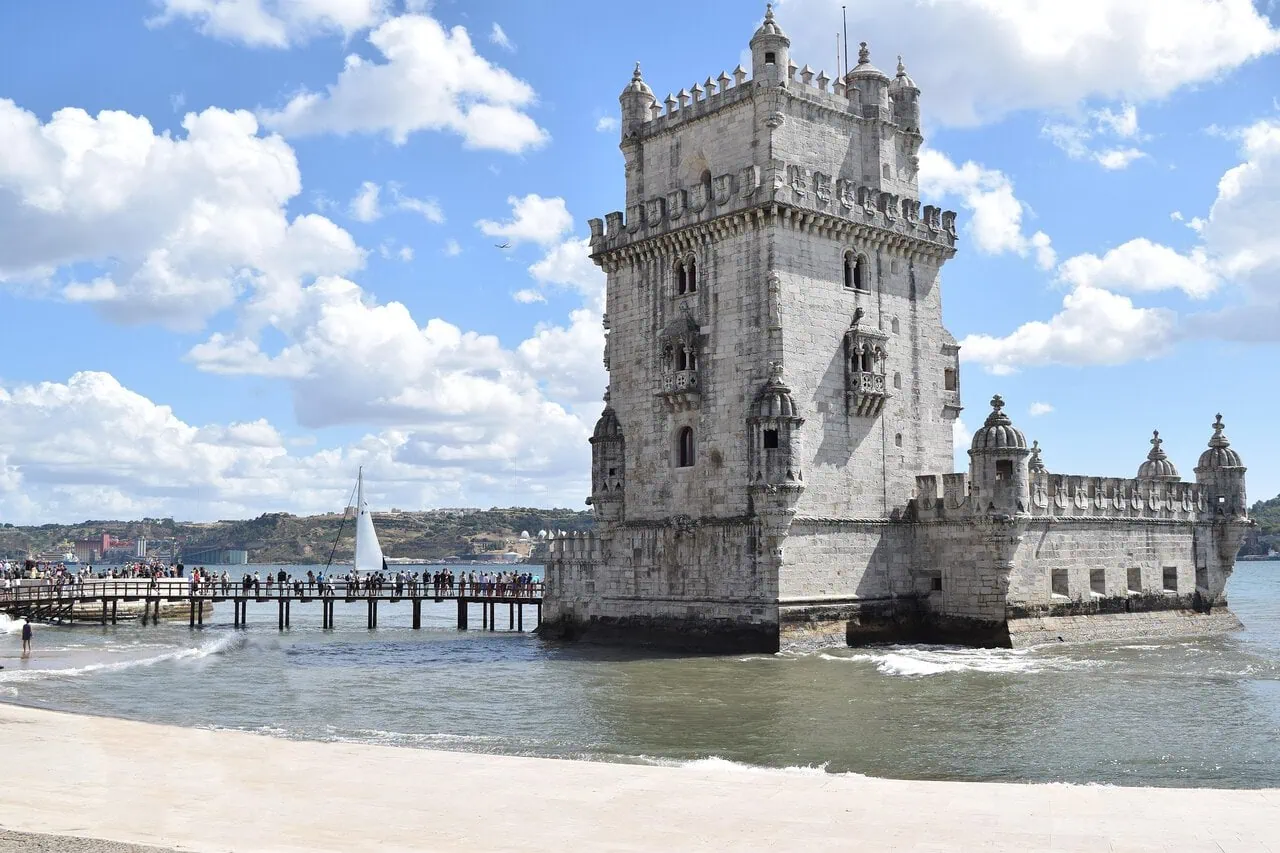
Standing proudly on a small island beside the River Tagus, Belém Tower has become the symbol of Lisbon and one of Portugal’s most recognisable landmarks. Built in 1515, the elegant limestone fortress originally defended the entrance to the city’s harbour while also welcoming returning explorers after their voyages across the Atlantic and beyond.
Like the nearby monastery, the tower is recognised as a UNESCO World Heritage Site and is considered one of the greatest surviving examples of Manueline architecture. Maritime carvings, decorative balconies, watchtowers and intricate stone details celebrate Portugal’s remarkable achievements during the Age of Discovery.
Inside, visitors can explore several historic levels connected by narrow spiral staircases. Former gun emplacements, royal chambers and defensive positions provide an insight into the tower’s military history, while the upper terraces reward those who make the climb with panoramic views across the River Tagus, the Monument to the Discoveries, Jerónimos Monastery and the Belém waterfront.
Although the tower isn’t especially large, its unique location and beautiful architecture make it one of Lisbon’s essential attractions. It’s also one of the city’s busiest monuments, and waiting times can become considerable during the summer months. Arriving early in the morning usually offers the shortest queues and the best opportunity to enjoy the views before larger tour groups arrive.
Belém Tower combines perfectly with a visit to Jerónimos Monastery, the riverside promenade and a stop for freshly baked Pastéis de Belém, creating one of the most rewarding days out anywhere in Lisbon.
Experience Authentic Fado Music
Few experiences capture the soul of Portugal quite like Fado. Recognised by UNESCO as Intangible Cultural Heritage, this deeply emotional style of music tells stories of love, longing, loss and everyday life, often performed with little more than a singer accompanied by the distinctive sound of the Portuguese guitar.
The tradition has its roots in Lisbon’s historic districts, particularly Alfama and Mouraria, where small taverns and intimate restaurants continue to host performances almost every evening. Unlike large concerts, Fado is designed to be listened to in silence, allowing every lyric and every note to fill the room.
Many performances take place during dinner, with guests enjoying traditional Portuguese dishes while musicians move between the tables. It’s common for the lights to dim as the performance begins, creating an atmosphere that’s both intimate and unforgettable.
Even if you don’t understand Portuguese, the emotion behind the music is impossible to miss. The haunting melodies and expressive singing have the remarkable ability to communicate feelings that transcend language, making Fado one of Lisbon’s most memorable cultural experiences.
If you’re spending an evening in the city, attending a live Fado performance is one of the best ways to understand Portugal’s culture beyond its famous landmarks.
Cruise Along the River Tagus
Seeing Lisbon from the River Tagus offers a completely different perspective from exploring on foot. From the water, the city’s colourful neighbourhoods rise dramatically across the hills, historic monuments stand proudly along the waterfront, and the skyline stretches from the medieval streets of Alfama to the modern architecture of Parque das Nações.
A Tagus River Cruise is one of the most relaxing ways to experience the Portuguese capital. Instead of climbing Lisbon’s famous hills, you can simply sit back with a complimentary welcome drink and enjoy uninterrupted views as your boat glides gently along the river.
Departing from Estação Fluvial Sul e Sueste, the cruise first passes the elegant waterfront around Praça do Comércio, once the grand entrance to Lisbon for merchants arriving by sea. Looking back towards the city, you’ll see the colourful houses of Alfama stacked above the waterfront, providing one of Lisbon’s most recognisable views.
As the boat continues west, you’ll sail beneath the enormous 25 de Abril Bridge, often compared to San Francisco’s Golden Gate Bridge thanks to its distinctive red colour. From beneath the bridge, you’ll also enjoy excellent views of the towering Cristo Rei monument standing high on the opposite bank of the river.
The cruise then continues towards the magnificent monuments of Belém, passing the Monument to the Discoveries before reaching the iconic Belém Tower, one of Portugal’s greatest historic landmarks. Seeing these monuments from the water gives you the same viewpoint that sailors would have experienced centuries ago as they departed on voyages of exploration.
Throughout the journey, passengers can listen to an audio guide using the Blue Cruises app, providing fascinating stories about Lisbon’s maritime history and the landmarks visible from the boat. Whether you’re interested in photography, architecture or simply relaxing after a busy day of sightseeing, the cruise offers an enjoyable change of pace.
Lasting around 1 hour and 40 minutes, it’s also an ideal activity if you’ve already spent the morning exploring the city on foot. The spacious vessel provides comfortable seating both inside and on the open deck, while an onboard bar offers additional drinks and snacks throughout the journey.
For many visitors, a Tagus cruise becomes one of the highlights of their stay in Lisbon, combining spectacular scenery with a peaceful atmosphere that’s difficult to find elsewhere in the city.
Watch the Sunset Over Lisbon
If there’s one time of day when Lisbon is at its most beautiful, it’s sunset. As the evening light reflects across the waters of the River Tagus, the city’s famous yellow buildings take on warm shades of gold and orange while the historic skyline begins to glow.
A Tagus River Sunset Cruise combines all of the highlights of the daytime sailing with an even more memorable atmosphere. Departing in the late afternoon, the boat follows the river past Praça do Comércio, Alfama, the 25 de Abril Bridge, the Monument to the Discoveries and Belém Tower, but this time beneath the soft colours of the setting sun.
The changing light creates superb photography opportunities, particularly as the bridge casts its reflection across the river and the silhouette of Cristo Rei begins to dominate the southern skyline. It’s easy to understand why this has become one of Lisbon’s most popular evening experiences.
Unlike many sunset cruises that simply offer a drink, this experience also includes a selection of Portuguese snacks, including traditional cake, fresh bread, local jams, butter, olives and dried fruit, accompanied by your choice of Portuguese wine, beer, water or orange juice. It’s not intended to replace dinner, but it provides a pleasant taste of local flavours while you relax on board.
The atmosphere is calm and unhurried, making the cruise particularly popular with couples, although families and solo travellers also enjoy the unique perspective of seeing Lisbon gradually illuminated as daylight fades.
If you’re looking for a memorable way to finish your day in Lisbon, few experiences rival watching the sun disappear beyond the western skyline while drifting peacefully along one of Europe’s great rivers.
Discover Parque das Nações
While much of Lisbon is famous for its medieval streets and historic architecture, Parque das Nações reveals an entirely different side of the Portuguese capital. Developed for Expo ’98, this modern riverside district transformed former docklands into one of Lisbon’s most attractive public spaces and has since become a favourite destination for both visitors and locals.
Wide pedestrian promenades replace narrow cobbled streets, contemporary architecture sits beside landscaped gardens, and cafés and restaurants overlook the River Tagus. It’s a refreshing contrast to districts such as Alfama and Baixa, offering plenty of space to relax while enjoying views across the water.
Parque das Nações is also home to several of Lisbon’s biggest attractions, including the outstanding Oceanário de Lisboa, the Telecabine cable car, the impressive Vasco da Gama Tower, the FIL Exhibition Centre and the vast Vasco da Gama Shopping Centre. Families particularly enjoy spending a full day here, combining several attractions with lunch beside the river.
The district is easy to reach using the Red Metro Line to Oriente Station, while the Hop-on Hop-off Bus also stops here. Thanks to its flat streets and spacious layout, it’s one of the easiest parts of Lisbon to explore on foot.
Whether you’re interested in modern architecture, shopping, family attractions or simply escaping the crowds of the historic centre, Parque das Nações offers a completely different but equally enjoyable Lisbon experience.
Visit the Oceanário de Lisboa
Frequently ranked among the finest aquariums in Europe, the Oceanário de Lisboa is much more than a family attraction. Home to over 8,000 marine animals representing around 500 species, it offers one of the most impressive underwater experiences anywhere on the continent.
The highlight is the enormous central ocean tank, cleverly designed so that it appears to connect all four surrounding marine habitats. As you move around the building you’ll see sharks, rays, colourful tropical fish and many other species swimming through what feels like one vast ocean.
Surrounding this spectacular centrepiece are four carefully recreated ecosystems representing the North Atlantic, Antarctic, Temperate Pacific and Tropical Indian Ocean. Each habitat contains animals and plant life specifically chosen to reflect that region of the world, creating an educational journey through Earth’s oceans.
Among the most popular residents are the playful sea otters, graceful penguins, jellyfish, seahorses and countless colourful reef fish. Large viewing windows and thoughtfully designed exhibits make it easy to spend several hours exploring without ever feeling crowded.
Located in Parque das Nações, the Oceanarium combines perfectly with a ride on the nearby Telecabine cable car, lunch beside the river or a visit to the shopping centre. Most visitors should allow two to three hours to explore everything properly.
Whether you’re travelling with children or simply have an interest in marine life, the Oceanário consistently ranks as one of Lisbon’s highest-rated attractions and is well worth including in your itinerary.
Stay for less in Lisbon
Compare hostels and budget-friendly accommodation around Lisbon.
Browse hostelsFlying to Lisbon? Be ready for disruption
Get help with compensation, eligible lounge access and disruption support.
Explore AirHelp+Make the most of your time in Lisbon
Leave your luggage somewhere convenient and enjoy Lisbon hands-free.
View storageSoar Above Lisbon on the Nations Park Cable Car
One of the best ways to appreciate the scale of modern Lisbon is from the Nations Park Gondola Lift, also known as the Telecabine Lisboa. Gliding silently above the banks of the River Tagus, this cable car offers spectacular panoramic views across Parque das Nações, providing a completely different perspective from the city’s historic districts.
Originally built for Expo ’98, the cable car remains one of the area’s most popular attractions. The round-trip journey lasts around 12 minutes, travelling approximately 1.2 kilometres between two stations while floating around 30 metres above the river. Although the ride is relatively short, the constantly changing scenery makes it well worth including in your visit.
From your cabin you’ll enjoy uninterrupted views of some of Lisbon’s most recognisable modern landmarks, including the impressive Oceanário de Lisboa, the striking Portugal Pavilion, the distinctive Vasco da Gama Tower, the MEO Arena, and Europe’s longest bridge, the Vasco da Gama Bridge, stretching across the Tagus estuary in the distance.
Unlike many city cable cars that climb steep hills, Lisbon’s Telecabine follows the riverfront, giving passengers a bird’s-eye view of landscaped gardens, marinas and the contemporary architecture that transformed this former industrial area into one of Lisbon’s most attractive neighbourhoods.
The cabins are fully enclosed, comfortable and suitable for visitors of all ages, making this an excellent activity for couples, families and photographers alike. It also combines perfectly with a visit to the nearby Oceanário de Lisboa, allowing you to experience two of Parque das Nações’ biggest attractions in a single afternoon.
Whether you’re looking for fantastic photographs, a relaxing break from sightseeing or simply want to admire a different side of Lisbon, the Nations Park Gondola Lift is one of the city’s hidden gems.
Wander Through Lisbon’s Historic Neighbourhoods
One of the greatest joys of visiting Lisbon is simply getting lost among its historic neighbourhoods. Each district has its own distinctive character, and walking between them reveals a city that’s constantly changing from one street to the next.
Alfama is Lisbon’s oldest neighbourhood, a maze of narrow lanes, colourful houses, hidden courtyards and tiny cafés that survived the devastating earthquake of 1755. It’s here you’ll discover many of the city’s best viewpoints, traditional Fado houses and quiet residential streets where everyday life continues much as it has for generations.
At the foot of the hills lies Baixa, the elegant heart of Lisbon rebuilt after the earthquake. Wide boulevards, grand squares and symmetrical streets create a striking contrast with the twisting alleys of Alfama. This is the city’s main shopping district and home to landmarks such as Praça do Comércio and Rossio Square.
Just uphill, Chiado combines historic charm with sophisticated cafés, theatres and designer shops. It’s one of Lisbon’s best areas for browsing independent boutiques, enjoying a coffee or simply watching the world go by from a traditional terrace café.
As evening approaches, neighbouring Bairro Alto comes alive. During the day its streets appear quiet, but after sunset hundreds of bars, restaurants and live music venues transform the district into the centre of Lisbon’s nightlife.
Finally, Mouraria, the birthplace of Fado, remains one of Lisbon’s most multicultural districts. Colourful murals, independent restaurants and lively local squares make it one of the most rewarding neighbourhoods to explore away from the busiest tourist routes.
Rather than rushing between attractions, allow yourself time to simply wander. Some of Lisbon’s most memorable discoveries are found not inside museums, but around unexpected street corners.
See Lisbon by Land and Water on an Amphibious Tour
If you’re looking for one of Lisbon’s most unusual sightseeing experiences, an amphibious tour offers something completely different. Combining a city tour with a river cruise, these specially designed vehicles drive through Lisbon’s streets before dramatically splashing into the River Tagus, allowing you to continue the journey without ever changing vehicles.
The adventure begins on land, where your guide introduces many of Lisbon’s best-known landmarks while sharing entertaining stories, local legends and fascinating facts about Portuguese history. Rather than delivering a formal commentary, the guides keep the atmosphere light-hearted, encouraging plenty of audience participation and laughter throughout the journey.
The real highlight comes when the vehicle leaves the road and enters the Tagus. As the wheels disappear beneath the water and the boat begins to sail, you’ll enjoy panoramic views of Lisbon’s skyline, the historic Belém district and many of the city’s famous riverside monuments from a completely different perspective.
The tour is particularly popular with families, although adults often enjoy it just as much thanks to the humorous guides and unique format. Even visitors who have already explored Lisbon on foot or by tram often discover a completely new appreciation for the city when viewing it from both land and water.
Lasting around 90 minutes, it’s an entertaining alternative to a traditional sightseeing tour and a memorable experience that combines history, humour and some spectacular views along the way.
Discover the Home of Benfica
Football plays a huge role in Portuguese culture, and no club is more successful than Sport Lisboa e Benfica. Even if you’re not a lifelong supporter, visiting the Benfica Museum offers a fascinating insight into one of Europe’s most famous football clubs and the passion the sport inspires throughout Portugal.
Named after legendary player Cosme Damião, the museum traces Benfica’s remarkable history from its foundation through to its domestic and European successes. Interactive exhibits, multimedia displays and historic memorabilia tell the story of legendary players including Eusébio, widely regarded as one of the greatest footballers of all time.
Alongside countless trophies and medals, the museum also explores Benfica’s role within Portuguese society, placing the club’s achievements alongside major moments in the country’s modern history. It’s an engaging experience even for visitors with only a casual interest in football.
Interactive displays allow visitors to test their skills, including the chance to take a virtual penalty, while modern technology helps bring some of Benfica’s greatest moments to life. Every visitor also receives a Benfica souvenir scarf, making a great keepsake from your visit.
Located beside the impressive Estádio da Luz, which has hosted both UEFA Champions League Finals and matches during Euro 2004, the museum can easily be combined with a stadium visit if you’re a serious football fan.
Whether you’re travelling with children, following Portuguese football or simply looking to discover another side of Lisbon’s culture, Benfica’s museum is one of the city’s most enjoyable sporting attractions.
Explore LX Factory and Lisbon’s Creative Side
Not every attraction in Lisbon dates back hundreds of years. Tucked beneath the 25 de Abril Bridge, LX Factory has become one of the city’s most creative destinations, transforming a former industrial complex into a lively hub of independent shops, cafés, restaurants, galleries and street art.
The old factory buildings have been carefully preserved, creating an atmosphere that feels completely different from the historic centre. Colourful murals cover many of the walls, while converted warehouses now house artisan bakeries, craft breweries, design studios and unique boutiques selling everything from handmade jewellery to Portuguese fashion.
One of the biggest attractions is Ler Devagar, regularly described as one of the world’s most beautiful bookshops. Set inside a former printing works, its towering bookshelves, suspended flying bicycle sculpture and industrial architecture make it worth visiting even if you don’t plan to buy a book.
LX Factory is also one of Lisbon’s best places to stop for lunch or dinner. The wide choice of restaurants means you’ll find everything from traditional Portuguese dishes to international cuisine, often served in stylish converted factory spaces or sunny outdoor courtyards.
If you’re visiting at the weekend, keep an eye out for the popular Sunday market, where local designers and artists sell handmade products, vintage clothing and artwork.
For visitors wanting to experience a more contemporary side of Lisbon, LX Factory perfectly complements the city’s historic attractions, proving that Portugal’s capital continues to reinvent itself while celebrating its industrial heritage.
Experience Lisbon’s Floating Sunset Party
As the sun begins to set over Lisbon, the atmosphere along the River Tagus changes completely. While some visitors choose a peaceful evening cruise, others prefer something far more energetic — a Sunset Boat Party combining spectacular views with music, dancing and an open bar.
Departing as the city is bathed in golden light, the cruise sails past many of Lisbon’s most famous landmarks, including Praça do Comércio, the 25 de Abril Bridge, Belém Tower and the Monument to the Discoveries. As daylight fades, the illuminated skyline provides a spectacular backdrop while the onboard DJ transforms the boat into a floating nightclub.
Your ticket includes an open bar serving beer, wine, sangria and soft drinks, allowing you to relax with a drink while enjoying the music and meeting fellow travellers from around the world. The atmosphere is sociable rather than formal, making it especially popular with younger visitors, couples and groups of friends celebrating holidays or special occasions.
Unlike a traditional nightclub, the constantly changing scenery means you’re never far from another fantastic photo opportunity. Watching the sun disappear behind the western skyline before the lights of Lisbon begin reflecting across the river creates a memorable end to any day in the city.
If you’re looking for a lively evening that’s a little different from Lisbon’s bars and clubs, a sunset boat party combines sightseeing, music and nightlife into one unforgettable experience.

Rupert’s Handy Travel Tips
Planning to explore Lisbon? Here are a few tips that will help you make the most of your visit:
- Buy a Lisbon Card if you’re sightseeing. It includes unlimited travel on Lisbon’s trams, Metro, buses and funiculars, plus free or discounted entry to many of the city’s biggest attractions.
- Start early in Belém. Jerónimos Monastery, Belém Tower and Pastéis de Belém become extremely busy by late morning, particularly during weekends and the summer months.
- Don’t rely on walking everywhere. Lisbon’s steep hills are beautiful but demanding. Mix walking with the Metro, historic trams and funicular railways to save both time and energy.
- Keep some time unplanned. Lisbon’s greatest charm often comes from wandering through Alfama, discovering hidden viewpoints, colourful streets and traditional cafés rather than rushing between attractions.
Want to meet the reindeer behind our travel tips? Find out more in our page Who is Rupert?.
Frequently Asked Questions
Is Lisbon worth visiting?
Yes. Lisbon combines historic neighbourhoods, iconic trams, riverside scenery, excellent food and a relaxed atmosphere, making it one of Europe’s most rewarding city break destinations.
How many days do you need in Lisbon?
Three days is ideal for most visitors. This gives you enough time to explore the historic centre, visit Belém, enjoy a river cruise and include attractions such as São Jorge Castle or the Oceanário.
Is the Lisbon Card worth buying?
If you plan to visit several attractions and use public transport regularly, the Lisbon Card usually offers excellent value. It includes unlimited travel on the Metro, trams, buses and funiculars, plus free or discounted entry to many major attractions.
What is the best way to get around Lisbon?
The Metro is the fastest way to travel longer distances, while the historic trams, funiculars and buses are perfect for exploring the city centre. Many visitors combine walking with public transport because of Lisbon’s steep hills.
What is Tram 28?
Tram 28 is Lisbon’s most famous historic tram route. It passes through districts including Graça, Alfama, Baixa and Estrela, making it one of the city’s most popular sightseeing experiences.
What should I not miss in Lisbon?
Highlights include Jerónimos Monastery, Belém Tower, São Jorge Castle, Alfama, Tram 28, the city’s viewpoints, a Tagus River cruise and trying the famous Pastéis de Belém.
Is Lisbon expensive?
Compared with many Western European capitals, Lisbon offers good value for accommodation, food and attractions, although prices in the busiest tourist areas have increased in recent years.
When is the best time to visit Lisbon?
Spring and autumn offer pleasant temperatures and fewer crowds, while summer brings longer days and festivals but also much busier attractions.
Further Reading & Related Guides
Planning a trip around Portugal? Our Portugal Interrail Pass Guide and Portugal Rail Pass Guide help you decide whether a rail pass is worthwhile for your journey.
If you’re flying into the city, don’t miss our Lisbon Airport Transfers Guide, and if you’re arriving by sea, our Lisbon Cruise Terminal Guide explains everything you need to know before you dock.
Looking to explore beyond the capital? Our Day Trips from Lisbon Guide covers popular destinations including Sintra, Cascais, Óbidos, Fátima and many more.
Heading north afterwards? Our Best Things to Do in Porto and Porto Airport Transfers Guide will help you plan your visit to Portugal’s second city.
Finally, don’t forget to stay connected during your trip by reading our Best eSIM Apps Guide, where we compare the leading eSIM providers for travellers.