Reviewed by our editorial team Updated
Why Dublin Airport Is Ireland’s Main International Gateway
Dublin Airport transfers are an essential part of millions of journeys every year. Located approximately 10 kilometres north of Dublin city centre, Dublin Airport is the busiest airport in Ireland and serves as the country’s principal international gateway. Whether arriving for a city break in Dublin, a tour of the Wild Atlantic Way, a visit to Northern Ireland, or a wider trip across Europe, most international visitors begin their journey here.
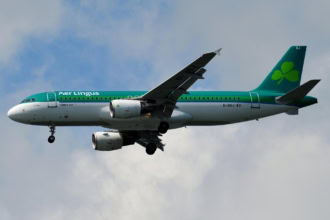
The airport handles tens of millions of passengers annually and offers flights throughout Europe, North America, the Middle East, and beyond. Airlines operating from Dublin include Aer Lingus, Ryanair, Lufthansa, Air France, British Airways and many others, making Dublin one of the best-connected airports in Europe.
Unlike many major European airports, Dublin Airport does not currently have a direct rail station. This is one of the most important things visitors should understand before arriving. Instead, passengers rely on a combination of airport buses, coaches, taxis, and private transfers to reach the city centre, railway stations, ferry terminals, and destinations throughout Ireland.
Fortunately, Dublin has developed a strong network of airport bus services that provide frequent connections into the city. Operators such as Dublin Express and Aircoach offer direct routes to many of the most important locations in Dublin, while taxis provide fast door-to-door transport throughout the city and beyond.
Whether you’re heading to Temple Bar, Trinity College Dublin, Dublin Port, Connolly Station, Heuston Station, Belfast, Galway, or Cork, Dublin Airport provides excellent onward transport options and serves as the ideal starting point for exploring Ireland.
Transfer Options at a Glance
| Destination | Best Option | Typical Journey Time |
|---|---|---|
| Dublin City Centre | Dublin Express | 20–40 minutes |
| Temple Bar | Dublin Express | 25–45 minutes |
| Trinity College Dublin | Dublin Express | 25–45 minutes |
| Connolly Station | Dublin Express | 25–45 minutes |
| Heuston Station | Bus or Taxi | 30–50 minutes |
| Dublin Port | Taxi | 20–35 minutes |
| Belfast | Coach or Train Connection | 3–4 hours |
| Galway | Train via Heuston Station | 3–4 hours |
| Cork | Train via Heuston Station | 3–4 hours |
For most visitors, airport coaches provide the best balance of cost, convenience, and speed. Travellers carrying large amounts of luggage, arriving late at night, or travelling in groups may prefer a taxi or private transfer.
Best for a short trip. Compare rooms by neighbourhood, price and guest rating before you book.
Compare hotelsBest for families, or any stay past about four nights. A kitchen and a washing machine start paying for themselves.
Browse rentalsBest for double-checking. Runs the same Dublin search across several booking sites so you are not leaving money behind.
Compare pricesAirport Buses to Dublin City Centre
For most visitors, airport buses provide the best balance of cost, frequency, and convenience when completing Dublin Airport transfers. Because Dublin Airport does not currently have a railway station, dedicated airport coach services form the backbone of public transport connections between the airport and Dublin city centre.
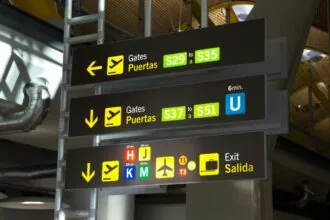
The two principal airport coach operators are Dublin Express and Aircoach. Both operate from clearly signposted stops outside Terminal 1 and Terminal 2, making them easy to find after leaving arrivals. Airport signs throughout both terminals direct passengers towards the coach departure area.
For most tourists visiting central Dublin, Dublin Express Route 782 is usually the most convenient service. Coaches operate frequently throughout the day and provide direct connections between the airport and central locations including Custom House Quay, George’s Quay, O’Connell Street, and areas within easy walking distance of Temple Bar, Trinity College Dublin, Grafton Street, and many city-centre hotels. The route also runs via Heuston Station, so travellers connecting onward by rail can often stay on board rather than changing again in the city. Under normal conditions, journeys typically take between 20 and 30 minutes, although traffic can extend this during busy periods. A single fare costs €10 (£9 / $11), or €13 (£11 / $14) return.
Aircoach Route 700 provides a similar service and is one of Ireland’s best-known airport coach routes. It connects the airport with central Dublin before continuing towards destinations in South Dublin. Stops include locations close to O’Connell Street, Trinity College Dublin, St Stephen’s Green, and Leeson Street. Aircoach coaches offer comfortable seating, luggage storage, onboard Wi-Fi on many services, and operate throughout much of the day and night, with a single fare of €10 (£9 / $11).
Tickets for both operators can be purchased online before travel, through mobile apps, at airport sales desks when available, or directly from the driver before boarding. Contactless card payments are widely accepted, making ticket purchases straightforward for international visitors.
For travellers looking to minimise costs, standard Dublin Bus services also operate from the airport. The most useful routes are Route 16 and Route 41.
Route 16 connects Dublin Airport with the city centre before continuing south through the city towards areas including O’Connell Street, Dame Street, St Stephen’s Green, Rathmines, and Ballinteer. It can be useful for visitors staying outside the immediate city centre, but the large number of stops means journeys are significantly slower than the dedicated airport coaches.
Route 41 operates between Dublin Airport and the city centre via Drumcondra and O’Connell Street. This is often the most useful standard Dublin Bus service for visitors heading into central Dublin. During quieter periods, journey times can be around 35 to 45 minutes, but heavy traffic can extend this considerably.
The main advantage of Dublin Bus is cost. Fares are generally lower than those charged by the dedicated airport coach operators. However, passengers should expect less luggage space, more frequent stops, and longer journey times. Travellers carrying large suitcases may find the airport coaches significantly more comfortable.
For most first-time visitors, the choice is relatively simple. If your destination is central Dublin, Dublin Express is generally the quickest option. If your hotel is located further south in the city, Aircoach may offer a more convenient stop. Budget-conscious travellers who are not carrying significant luggage may find Dublin Bus Routes 16 or 41 provide excellent value, albeit with a slower journey into the city.

Plan Your Dublin Bus Journey with Busbud
Planning a bus or coach journey involving Dublin? Busbud lets you compare routes, departure times and ticket options from different operators in one place.
It can make planning easier when several companies serve the same route or when local booking systems are unfamiliar.
Taxis from Dublin Airport
For visitors seeking a simple, direct journey, taxis remain one of the most popular Dublin Airport transfer options. Official taxi ranks are located immediately outside both Terminal 1 and Terminal 2, allowing passengers to continue their journey almost immediately after leaving arrivals. FreeNow, Uber, and Bolt all operate in Dublin too, but all three simply dispatch the same pool of licensed taxis at NTA-regulated meter rates rather than running a separate private-hire fleet, so app fares are not typically cheaper than hailing a cab at the rank. App-booked pickups are usually directed to a designated pickup zone a short walk from arrivals, whereas the official rank is right outside the terminal doors, which is worth bearing in mind when travelling with heavy luggage.
Taxis provide door-to-door transport throughout Dublin, making them particularly useful for travellers staying in hotels, apartments, or accommodation located away from major public transport routes. Areas such as Temple Bar, Trinity College Dublin, St Stephen’s Green, Dublin Castle, and the city’s major railway stations can all be reached directly without changing vehicles.
Journey times to central Dublin typically range from 20 to 30 minutes, although this can increase during weekday rush hours. Connections to Dublin Port, Connolly Station, Heuston Station, and destinations throughout the wider Dublin region are also straightforward.
Taxis are especially popular with families, groups, business travellers, and passengers carrying large amounts of luggage. While they are generally more expensive than airport buses, the convenience of direct transport often makes them worthwhile, particularly when the cost is shared between multiple passengers.
Visitors travelling beyond Dublin can also use taxis for direct transfers to nearby towns and transport hubs. However, for longer journeys to destinations such as Galway, Cork, or Belfast, rail or coach travel is usually significantly more economical.
For travellers prioritising convenience, comfort, and simplicity, taxis remain one of the easiest ways to complete a Dublin Airport transfer.
Private Transfers from Dublin Airport
Travellers looking for the most seamless arrival experience may wish to book a private transfer from Dublin Airport. These services are typically arranged before travel and provide a professional driver who meets passengers in the arrivals hall before escorting them directly to their vehicle.
Private transfers are particularly popular with business travellers, families travelling with children, cruise passengers connecting to Dublin Port, and visitors arriving after long-haul flights. Because everything is arranged in advance, passengers can avoid ticket machines, taxi queues, and the uncertainty of navigating public transport after arrival.
Most transfer providers monitor incoming flight information and automatically adjust pickup times if flights are delayed. This can be particularly valuable during the winter months or periods of airport disruption when arrival times may change unexpectedly.
Private transfers can be arranged to destinations throughout Dublin, including hotels, railway stations, ferry terminals, and visitor attractions. Many operators also provide long-distance transfers to destinations such as Belfast, Galway, Cork, Limerick, and other locations across Ireland.
Although private transfers generally cost more than airport buses or standard taxis, they offer the highest level of convenience. For travellers who value a smooth, stress-free arrival, they remain one of the best Dublin Airport transfer options available.
Book Your Dublin Airport Transfer with Welcome Pickups
Arriving in Dublin? You can arrange your airport transfer with Welcome Pickups before you travel, so your driver is ready when your flight arrives.
Pre-booking can be especially convenient after a late flight or when visiting Dublin for the first time, giving you a direct journey from the airport to your accommodation.
Compare transfer options for Dublin. You can also check another transfer provider before booking.
Reaching Dublin’s Railway Stations
Because Dublin Airport does not have its own railway station, passengers travelling onwards by train must first transfer into the city. Fortunately, Ireland’s two most important railway stations, Connolly Station and Heuston Station, are both relatively easy to reach using airport coaches, buses, taxis, or private transfers.
For travellers heading towards Belfast, Drogheda, Dundalk, Rosslare Europort, or Sligo, the station you need is Connolly Station. Located on the north side of Dublin city centre, Connolly is the departure point for the famous Enterprise service linking Dublin and Belfast, one of the most popular rail routes on the island.
The easiest way to reach Connolly Station from the airport is usually via Dublin Express Route 782 or Aircoach Route 700. Both serve stops within central Dublin that are either within walking distance of the station or a short taxi ride away. If travelling with luggage, a direct taxi from the airport normally takes around 20 to 30 minutes, depending on traffic. During busy periods, allow up to 45 minutes.
Travellers heading towards Cork, Galway, Limerick, Waterford, Kilkenny, or much of western and southern Ireland will usually need Heuston Station instead. This is Ireland’s principal intercity rail hub and handles many of the country’s busiest long-distance services.
A direct taxi usually takes between 25 and 35 minutes under normal traffic conditions. Public transport is also possible: Dublin Express Route 782 actually runs via Heuston Station on its way into the city, so travellers using that service can stay on board rather than changing again. Aircoach’s route doesn’t call at Heuston, so those passengers can instead connect to the LUAS Red Line, which serves the station directly. Although public transport is often cheaper than a taxi, allow between 40 and 60 minutes depending on traffic and waiting times if changing onto the LUAS.
When planning rail connections, visitors should remember that journeys from the airport are subject to road traffic. Unlike airports with integrated rail stations, reaching Ireland’s rail network requires an additional transfer. If you are connecting to a long-distance train, especially services towards Cork, Galway, or Belfast, allowing at least 90 minutes between your flight’s scheduled arrival and train departure is generally sensible.
The extra transfer is a minor inconvenience, but Ireland’s rail network remains one of the most comfortable ways to explore the country. Services offer spacious seating, city-centre stations, scenic routes, and direct connections to many of Ireland’s most popular destinations, making train travel an excellent option for visitors continuing beyond Dublin.
Getting to Dublin Port
For passengers connecting between Dublin Airport and Dublin Port, the journey is relatively straightforward. This route is particularly popular with travellers boarding ferries operated by Irish Ferries and Stena Line, as well as cruise passengers beginning or ending a voyage in the Irish capital.
The quickest and most convenient option is usually a taxi. Dublin Port is located approximately 12 kilometres from the airport, and most journeys take between 20 and 35 minutes depending on traffic conditions. Taxis depart directly from the official ranks outside both terminals and can take passengers directly to the appropriate ferry terminal. This is particularly useful because Dublin Port is a large working harbour with multiple passenger facilities rather than a single central terminal building.
Public transport is possible but generally less convenient. Most routes require passengers to travel into Dublin city centre before connecting to local buses serving the port area. While this can reduce costs, it often increases total journey times significantly and may be challenging for travellers carrying luggage.
Passengers travelling to Irish Ferries or Stena Line departures should always allow extra time for check-in procedures. Foot passengers are normally required to arrive before departure, while motorists often have earlier check-in requirements. During busy holiday periods, traffic around both the airport and the port can be heavier than usual.
For most travellers, especially those carrying luggage or travelling with family, a direct taxi remains the simplest and most reliable transfer option between Dublin Airport and Dublin Port. If you’re continuing your journey by sea, don’t miss our dedicated Dublin Port Transfers Guide, which explains the port layout, ferry terminals, and onward transport options in detail.
Car Hire at Dublin Airport
For many visitors, Dublin Airport is the starting point for an unforgettable road trip around Ireland. While it’s easy to reach Dublin city centre by coach or bus, hiring a car opens up the rest of the country, allowing you to explore the Wicklow Mountains, the Wild Atlantic Way, the Ring of Kerry, Galway, Kilkenny, Cork, and countless castles, beaches and villages that are difficult to reach by public transport alone.
Dublin Airport has one of the largest selections of car hire companies in Ireland. Confirmed operators include Avis, Budget, Enterprise, Europcar, Hertz, and SIXT, alongside other local providers, operating from the airport. Most rental desks are located in the Arrivals Halls of both Terminal 1 and Terminal 2, while vehicle collection takes place in dedicated nearby car hire facilities, with shuttle buses available where required. As Ireland’s busiest airport, demand for rental cars can be particularly high during the summer, school holidays and major sporting events, so booking in advance is strongly recommended.
Rather than accepting the first price you find, it’s worth comparing several rental companies before you travel. Rates can vary significantly depending on the supplier, while insurance cover, fuel policies, mileage limits and optional extras such as additional drivers or child seats can all affect the final price. Spending a few minutes comparing offers often results in a better deal and a wider choice of vehicles.
If your visit is centred on Dublin, hiring a car may not be necessary. The city has an extensive network of buses, trams and commuter trains, and traffic and parking can be challenging, particularly in the city centre. However, if you’re planning to explore Ireland beyond the capital, collecting a hire car at Dublin Airport gives you complete freedom to travel wherever you choose, whether that’s following the dramatic Atlantic coastline, discovering Ireland’s Ancient East or simply enjoying the flexibility to stop whenever something catches your eye.
Compare Car Hire Prices in Dublin
If you are planning to explore beyond Dublin, hiring a car can give you much more flexibility over where you go and how long you spend there.
Compare prices through Discover Cars and EconomyBookings to check vehicles, rental conditions and offers from multiple car hire companies before you book.
Best for finding routes the airlines do not sell as a single ticket. Combines carriers to bring the fare down.
Search flightsBest for anyone whose home plan charges by the megabyte abroad. Pay a fixed price up front.
Check eSIMsBest when public transport has stopped, or when you are travelling with children and bags.
Book a transferOnward Journeys Across Ireland
One of the biggest advantages of arriving through Dublin Airport is the ease with which visitors can continue their journey across the island. Thanks to Ireland’s road, rail, and coach networks, destinations throughout both the Republic of Ireland and Northern Ireland are accessible directly from the airport.
Travellers heading to Belfast can choose between direct coach services or rail connections via Connolly Station. Direct airport coaches often provide the simplest solution because they avoid the need to transfer into Dublin city centre first. Typical journey times range between 2 and 3 hours, depending on traffic and the service selected. Belfast remains one of the most popular onward destinations for international visitors arriving into Ireland.
Visitors travelling west towards Galway generally reach the city via Heuston Station or long-distance coach services. Rail journeys take approximately 2.5 hours, while coach services can take slightly longer depending on traffic conditions. Galway’s position on the Wild Atlantic Way makes it one of Ireland’s most popular tourism destinations.
Those continuing south to Cork will normally travel via Heuston Station, where regular intercity services connect Dublin with Ireland’s second-largest city. Rail journeys generally take around 2.5 to 3 hours, providing a comfortable alternative to driving. Cork also serves as a gateway to destinations such as Kinsale, West Cork, and the southern coastline.
Travellers heading towards Limerick, Waterford, Kilkenny, and other regional destinations can also connect easily via Dublin’s rail and coach networks. Because the airport acts as Ireland’s primary international gateway, transport providers have developed extensive services designed specifically to help passengers continue their journeys without needing to stay overnight in Dublin.
Whether your destination lies on the Causeway Coast, along the Wild Atlantic Way, or in one of Ireland’s historic cities, Dublin Airport provides an excellent starting point for exploring the island.

Rupert’s Handy Travel Tips
Flying into Dublin? Here are a few useful tips to make your arrival smoother:
- Book airport coaches in advance: Services such as Dublin Express and Aircoach often offer cheaper fares when booked online before travel.
- Allow extra time for rail connections: Because Dublin Airport has no railway station, passengers connecting to trains should allow at least 90 minutes between flight arrival and train departure.
- Know which station you need: Use Connolly Station for Belfast, Sligo, and Rosslare services, and Heuston Station for Galway, Cork, Limerick, Waterford, and much of western Ireland.
- Consider a Leap Card: If you plan to use public transport around Dublin, a Leap Card can reduce costs on buses, trams, and local rail services.
Want to meet the reindeer behind our travel tips? Find out more in our page Who is Rupert?.




Frequently Asked Questions About Dublin Airport Transfers
How far is Dublin Airport from Dublin city centre?
Dublin Airport is located approximately 10 kilometres north of Dublin city centre. Journey times typically range from 20 to 40 minutes, depending on traffic conditions and the transport option selected.
Does Dublin Airport have a train station?
No. Unlike many major European airports, Dublin Airport does not currently have a railway station. Passengers travelling by train must first transfer to either Connolly Station or Heuston Station using a bus, taxi, or private transfer.
What is the cheapest way to get from Dublin Airport to the city centre?
The cheapest option is usually Dublin Bus Route 16 or Route 41. These services cost less than the dedicated airport coaches but make more stops and generally take longer to reach the city centre.
What is the fastest way to get from Dublin Airport to Dublin city centre?
For most travellers, a taxi provides the fastest door-to-door option. However, during heavy traffic periods, Dublin Express can sometimes offer similar journey times at a lower cost.
Where do Dublin Express buses leave from?
Dublin Express coaches depart from clearly signposted stops outside both Terminal 1 and Terminal 2. Airport signage directs passengers towards the coach departure area immediately after leaving arrivals.
Where do Aircoach buses leave from?
Aircoach services also depart from designated stops outside both terminal buildings. The stops are well signposted and located within a short walk of the arrivals areas.
How do I get from Dublin Airport to Belfast?
Travellers can either use direct coach services operating between the airport and Belfast or travel into the city centre and connect with an Enterprise train from Connolly Station. Direct coaches are usually the simplest option.
How do I get from Dublin Airport to Dublin Port?
A taxi is normally the easiest option, with journey times typically between 20 and 35 minutes. Public transport is possible but usually requires travelling through the city centre first.
Which railway station should I use for Galway and Cork?
Passengers travelling to Galway, Cork, Limerick, Waterford, and much of western and southern Ireland should normally use Heuston Station.
Which railway station should I use for Belfast?
Passengers travelling to Belfast should normally travel to Connolly Station, which serves the popular Enterprise train linking the capitals of Ireland and Northern Ireland.
Further Reading & Related Guides
If you are flying into Dublin Airport, our Dublin Port Guide and Dublin Port Transfers Guide are useful if your journey also involves ferries, cruises or onward Irish Sea travel. Travellers arriving from Britain should also read our Holyhead to Dublin Ferry Guide, especially if they are comparing air and ferry options.
For onward journeys across Ireland, our Ireland Rail Network Guide explains how Dublin connects with Belfast, Cork, Galway, Limerick, Waterford and other major destinations. If you plan to use a rail pass, our Interrail Ireland Guide will help you decide whether it offers good value.
For flight planning, our Aer Lingus Guide is a natural companion to this page. If you are staying in the capital, our Things to Do in Dublin Guide will help with sightseeing, neighbourhoods and attractions, while the eSIM Apps Guide covers mobile data for maps, tickets and transport apps.