
Why Visit Suomenlinna Helsinki
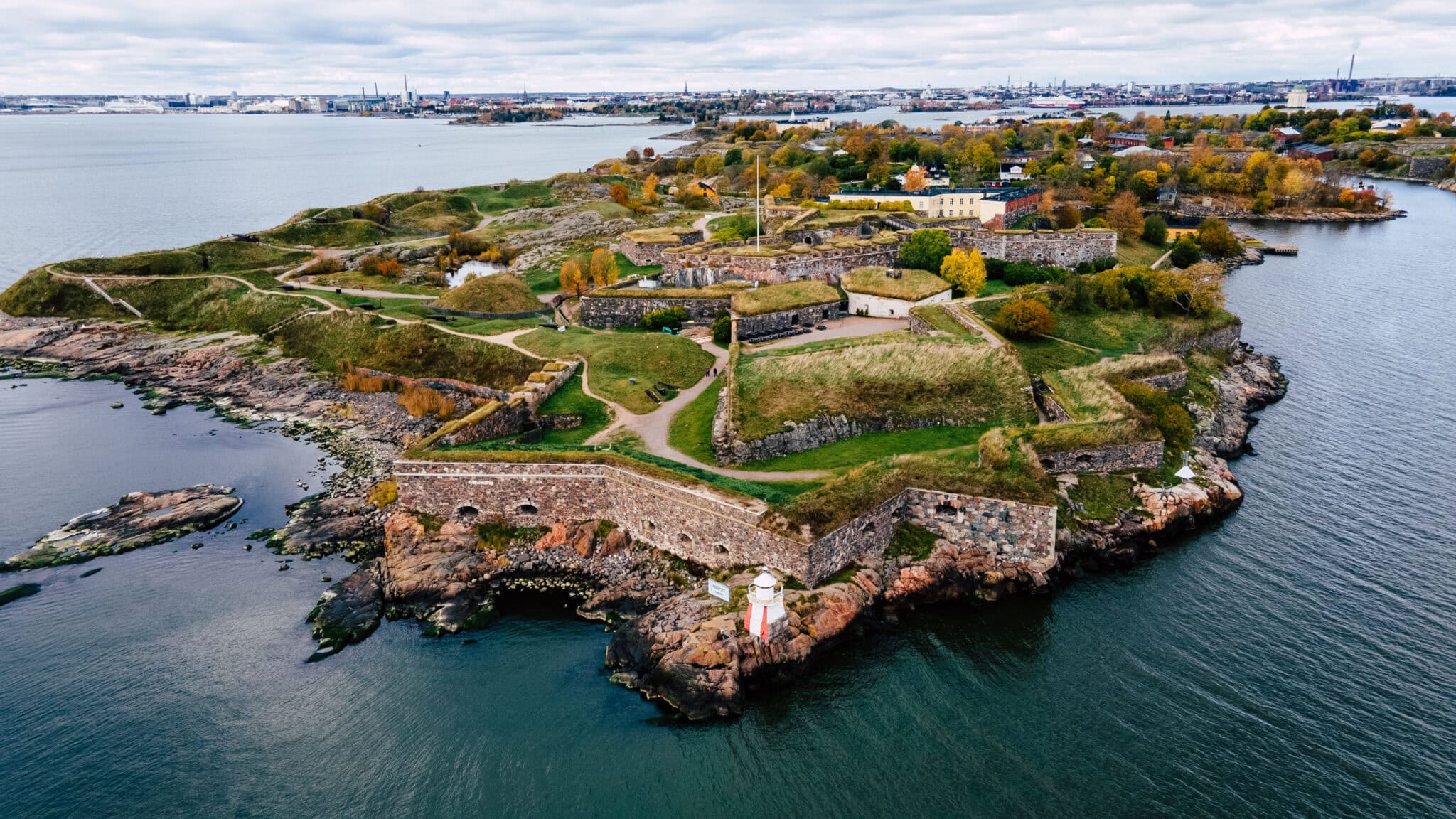
Suomenlinna is one of the most interesting places you can visit in Finland and is easily one of the best day trips from Helsinki. Sitting across the water from the city centre, this historic sea fortress is spread across several islands and combines history, museums, walking trails, sea views, cafés, and quiet residential areas all in one place.
The reason many travellers love visiting is that it doesn’t feel like a typical tourist attraction. People actually live here, children go to school here, and locals come for picnics, walks and swimming in summer. That makes it feel more like a small coastal village than a museum site.
The fortress itself was originally built by the Swedish in the 18th century and later used by the Russians before Finland became independent. Today it is a UNESCO World Heritage Site, and you can still see the original defensive walls, cannons, tunnels and docks.
One of the best things about visiting is how easy it is to reach. The ferry from central Helsinki takes only about 15–20 minutes, making it one of the simplest and most enjoyable short trips you can do while staying in the city. If you are planning a Helsinki trip, this should be very high on your list.
Many people expect to spend an hour here, but in reality you should allow at least half a day, and ideally most of a day if the weather is good. There is far more to see than most people expect.
| Key Information | Details |
|---|---|
| Location | Suomenlinna, Helsinki, Finland |
| UNESCO Status | Yes |
| Ferry Duration | 15 to 20 minutes |
| Departure Point | Helsinki Market Square |
| Nearest Tram Stop | Kauppatori / Market Square |
| Suggested Visit Time | Half day |
| Best Season | Late spring to early autumn |
| Main Highlights | Sea fortress, museums, coastal walks |
UNESCO World Heritage Status
Suomenlinna is one of the most important historic sites in Finland and has been recognised as a UNESCO World Heritage Site since 1991. The fortress was added to the UNESCO list because of its exceptional military architecture and its importance in the history of Northern Europe and the Baltic region.
Originally constructed during the eighteenth century when Finland formed part of the Kingdom of Sweden, Suomenlinna was designed as a massive sea fortress intended to defend the Swedish realm against Russian expansion in the Baltic. Its strategic position outside Helsinki allowed it to control important maritime approaches and protect trade and naval routes across the region.
What makes Suomenlinna especially significant is the scale and complexity of the fortress design. Instead of being built as a single structure, the defensive system spreads across multiple interconnected islands, combining walls, bastions, docks, tunnels, artillery positions, military buildings, and protected harbours into one enormous fortified complex.
UNESCO recognises the fortress as one of the best surviving examples of European military architecture from the period. The site also reflects several different historical eras because the fortress was successively controlled by the Swedes, the Russian Empire, and eventually independent Finland. Walking around the islands today, visitors can still clearly see traces of these different periods in the architecture, military structures, and layout of the fortress.
One particularly important area is the historic dry dock, which remains one of the oldest surviving dry docks still in operation anywhere in the world. This section of the fortress highlights how Suomenlinna functioned not only as a defensive stronghold but also as a major naval base and shipbuilding centre.
Unlike some UNESCO sites that feel heavily commercialised or preserved purely as museums, Suomenlinna remains a living community. People still live on the islands, local services continue operating, and parts of the fortress remain integrated into everyday life in Helsinki. This combination of active community life and preserved military history is part of what makes the site feel unusually authentic compared with many other historic attractions in Europe.
Today, the UNESCO designation helps protect the fortress while also recognising its importance as one of Finland’s greatest cultural and historic landmarks. For many travellers visiting Helsinki, Suomenlinna becomes not only a scenic ferry trip but also an opportunity to experience one of the most historically significant sites in the entire Nordic region.
Learn More from UNESCO
This destination is connected to a UNESCO World Heritage Site, recognised for its outstanding cultural, historical, or natural importance. You can explore official listings, background information, and protected heritage sites through UNESCO’s global database.
Check Helsinki hotel availability
See hotel options and places to stay in Helsinki.
Browse hotelsBook your own place in Helsinki
Browse apartments, holiday homes and self-catering stays in Helsinki.
View rentalsCheck Helsinki hotel deals
Compare prices for Helsinki hotels across multiple booking sites.
Check dealsHistory of Suomenlinna
The history of Suomenlinna is closely tied to the wider history of Finland itself. Over the centuries, the fortress has been controlled by the Swedes, the Russian Empire, and eventually independent Finland, with each period leaving visible traces across the islands that visitors still explore today.
Construction of the fortress began in 1748, when Finland formed part of the Kingdom of Sweden. At the time, Sweden was increasingly concerned about Russian expansion in the Baltic region following several military defeats and territorial losses. The Swedish authorities decided to build a major sea fortress outside Helsinki to strengthen coastal defences and protect important naval routes across the eastern Baltic.
Originally, the fortress was known as Sveaborg, meaning “Castle of Sweden.” It was designed as an enormous defensive complex spread across several islands rather than a single fortification. Defensive walls, artillery positions, docks, military barracks, tunnels, and protected harbours were gradually constructed, turning the islands into one of the largest military projects in the Nordic region during the eighteenth century.
The fortress soon became strategically important for controlling access to Helsinki and the surrounding coastline. Large numbers of soldiers, naval personnel, craftsmen, and workers lived and operated on the islands as the fortress expanded.
However, the Swedish period ended during the Finnish War of 1808–1809 between Sweden and Russia. After a siege, Sveaborg surrendered to Russian forces, an event that dramatically changed the future of Finland. Shortly afterwards, Finland became part of the Russian Empire as the autonomous Grand Duchy of Finland.
Under Russian control, the fortress continued operating as a military base for much of the nineteenth century. Russian forces modified and expanded parts of the defensive system, while Helsinki itself grew in importance as the new capital of Finland under Russian administration.
During the Crimean War in the 1850s, the fortress came under attack from British and French naval forces during bombardments in the Baltic. Although parts of the fortress suffered damage, much of the structure survived and continued functioning afterwards.
Following Finnish independence in 1917, the fortress eventually became known as Suomenlinna, meaning “Castle of Finland.” The islands later played roles during the turbulent years surrounding the Finnish Civil War, including periods when prison camps operated on the site.
Over time, the military importance of Suomenlinna gradually declined, and attention shifted towards preservation, restoration, and cultural heritage. Rather than becoming abandoned ruins, the islands evolved into a protected historic district that still functions as a living community today.
Modern visitors can still clearly see evidence of the fortress’s different historical periods while walking around the islands. Swedish era defensive walls stand beside Russian military structures, while historic docks, tunnels, cannons, and barracks continue overlooking the Baltic Sea centuries after they were first constructed.
In 1991, Suomenlinna received official recognition as a UNESCO World Heritage Site, acknowledging its importance as one of the best preserved sea fortresses in Europe and one of Finland’s most historically significant landmarks.
How to Get to Suomenlinna (Ferry Guide)
Getting to Suomenlinna is part of the experience, and the ferry journey from Helsinki is both simple to use and incredibly scenic.
The ferry departs from Helsinki Market Square, one of the most central and well-known locations in the city. The specific departure point is Keisarinluodon laituri pier, located close to the harbour and easy to reach on foot from most central areas. Clear signage is in place, and you should look for red FRS Finland flags and “Suomenlinna Lonna” markings, which make the correct departure point easy to identify.
The crossing itself takes approximately 20 to 25 minutes, making it a quick and efficient journey while still offering excellent views across Helsinki’s waterfront and surrounding islands. During the trip, you can choose to sit inside or head out onto the open deck, where you can take in the sea air and enjoy the scenery.
Ferries run regularly, with departures approximately every 30 minutes, meaning you have a high level of flexibility when planning your visit. This frequent service makes it easy to travel to and from the island without needing to carefully structure your day around transport.
Onboard, you will find comfortable seating areas and a café service, where you can purchase drinks such as coffee or even a beer while enjoying the crossing. The journey is short but designed to be relaxed and enjoyable, rather than purely functional.
One key advantage of using the FRS service is that the ferry arrives directly next to the main museum area at Artillery Bay, meaning there is no long walk required to reach the starting point of the guided tour. This makes the overall experience more efficient, particularly for visitors on a tighter schedule.
Overall, the ferry is not just a means of transport. It is an integral part of the Suomenlinna experience, combining convenience with scenic views and a smooth connection to the island’s main attractions.
What to See and Do in Suomenlinna
Suomenlinna is much larger than most people expect, and the main thing to do is simply walk around and explore the different islands connected by bridges.
The most famous areas include the King’s Gate, which is one of the main historic entrances to the fortress, and the Great Courtyard, where you’ll find old military buildings and open spaces. Walking along the fortress walls is one of the highlights because you get views across the Baltic Sea and back towards Helsinki.
There are also several museums on the island, including the Suomenlinna Museum, which explains the history of the fortress, and the Vesikko Submarine, where you can go inside a real World War II submarine during the summer months.
Aside from museums and history, many people come here simply to relax. There are walking trails, picnic areas, small beaches, cafés and quiet spots by the sea. In summer, locals often swim or sunbathe here, and in winter the island becomes quiet and atmospheric.
The island is also a residential area, so you will see colourful wooden houses, small gardens, and local residents going about daily life, which makes it feel very different from most tourist attractions.
If you like photography, this is one of the best places in Helsinki for coastal views, old buildings, boats and sunsets.
Guided Ferry and Walking Tour: The Easiest Way to Experience Suomenlinna
For visitors who want a structured, informative, and completely stress-free visit, combining the ferry with a guided walking tour of Suomenlinna is one of the best options available.
This experience includes return ferry transport from Helsinki, along with a 1-hour guided walking tour led by an authorised Suomenlinna guide, giving you a much deeper understanding of the fortress than exploring alone.
The tour takes you through the key areas of the island, explaining the history of this UNESCO World Heritage Site and placing it within the wider context of Finnish and Northern European history. Instead of simply walking past landmarks, you gain real insight into the events, people, and strategic importance of the fortress.
One of the biggest advantages of this option is how well-organised the entire experience is. The ferry arrives right next to the starting point of the tour at Artillery Bay, meaning there is no confusion or unnecessary walking before the tour begins. You simply disembark and meet your guide inside the nearby museum.
The total experience lasts around 2 hours, including the ferry crossing and guided tour, after which you are free to continue exploring the island at your own pace or return to Helsinki using one of the frequent ferry departures.
While it is perfectly possible to visit independently, this option removes all uncertainty and ensures you see the most important parts of the fortress without missing key details.
For many visitors, especially those visiting Helsinki for a short time, this is the most effective way to experience Suomenlinna in a single visit.
How Long to Spend in Suomenlinna
One of the biggest mistakes visitors make when planning a trip to Suomenlinna is assuming it is a quick attraction that can be seen in under an hour. In reality, the fortress is spread across multiple islands connected by bridges, and the experience is far more enjoyable when explored slowly rather than rushed.
For a shorter visit, most travellers spend around 2 to 3 hours exploring the main fortress areas, walking along the sea walls, visiting the Great Courtyard, and seeing landmarks such as the King’s Gate. This is usually enough time to experience the highlights and enjoy the ferry crossing from Helsinki.
A more relaxed visit normally takes around 4 to 5 hours. This gives you enough time to walk across several islands, stop at cafés, visit museums, sit by the waterfront, and explore some of the quieter residential areas that many tourists never reach. Because the island is much larger than most people expect, extra time makes a huge difference to the overall experience.
Travellers interested in museums, photography, coastal walks, or simply relaxing by the sea can easily spend half a day or even a full day on the island. Many visitors bring snacks or lunch from Helsinki Market Square and treat Suomenlinna as a peaceful escape from the city rather than a traditional sightseeing stop.
The amount of time you should allow also depends heavily on the season. During summer, the island becomes one of the most enjoyable outdoor spaces in Helsinki, with long daylight hours, busy cafés, picnic areas, and people swimming or relaxing along the coastline. Even when ferry arrivals are busy, the island quickly feels quieter once you walk beyond the main tourist areas near the harbour.
Winter visits are usually shorter because strong Baltic winds and colder temperatures make long outdoor walks less comfortable. However, winter also creates a completely different atmosphere, with snow covered fortress walls, frozen sea views, and far fewer visitors than during the busy summer months.
For most travellers, one of the best ways to structure the day is to spend the morning exploring central Helsinki, take the ferry around lunchtime, enjoy the afternoon wandering around Suomenlinna, then return to the city during the evening. This creates a relaxed and very manageable day without feeling rushed.
Best Time to Visit Suomenlinna
Suomenlinna can be visited all year, but the experience is very different depending on the season. The best time to visit really depends on whether you prefer warm weather, fewer crowds, or winter scenery.
Summer is the most popular time to visit. From June to August the weather is usually mild, the ferries run frequently, museums are open longer, and cafés and outdoor areas are busy. This is when the island feels most alive, with people having picnics, walking along the sea walls and swimming in some of the quieter areas. If you visit in summer, try to go early in the morning or later in the afternoon to avoid the busiest ferry times.
Spring and autumn are actually excellent times to visit because there are fewer tourists and the island feels quieter and more atmospheric. The colours in autumn can be very nice, and you can explore the fortress without crowds. Many travellers who visit in September or October say this is the best time because the island feels more authentic and peaceful.
Winter is very different but still worth doing if you are visiting Helsinki at that time of year. The sea may freeze, snow often covers the fortress walls, and the ferry ride through icy water is something you don’t experience in many places. Some museums and cafés have shorter opening hours, but the island becomes quiet, dramatic and very scenic.
If you want the best overall experience, late spring to early autumn is ideal, but there really isn’t a bad time to visit.
Museums and Attractions on the Island
Although many visitors come to Suomenlinna simply to walk around the islands and enjoy the coastal scenery, there are also several museums, military structures, and historic buildings that help explain why this fortress became one of the most important defensive sites in Northern Europe.
The main museum on the island is the Suomenlinna Museum, located near the centre of the fortress area. This museum explains the full history of the site, beginning with its construction during Swedish rule in the eighteenth century, continuing through the Russian period, and eventually leading into Finnish independence. One of the highlights is the short introductory film, which gives useful historical context before you start exploring the islands themselves. Watching it early in your visit makes many of the fortress walls, tunnels, docks, and defensive structures much easier to understand as you walk around.
One of the most unusual attractions on the island is the Vesikko Submarine, a genuine World War II submarine that visitors can enter during the summer season. The submarine gives a fascinating insight into the cramped conditions experienced by naval crews and remains one of the most popular attractions on Suomenlinna, particularly for travellers interested in military history or maritime engineering.
As you move around the islands, you will also encounter large numbers of original military structures scattered throughout the fortress. Historic cannons still face out towards the Baltic Sea, while thick stone defensive walls run along the coastline in several areas. Old tunnels, barracks buildings, storage areas, and fortifications are spread across the islands, creating the feeling of an enormous open-air military complex rather than a traditional museum site.
The dry dock area is especially interesting because it is one of the oldest surviving dry docks still operating anywhere in the world. Originally constructed during the Swedish era, it played an important role in naval shipbuilding and repairs for centuries. Even today, the dock area remains visually impressive and helps visitors understand how strategically important Suomenlinna once was for controlling Baltic Sea access.
One of the best things about visiting Suomenlinna is that many of the most memorable attractions are outdoors rather than hidden inside museum buildings. Simply walking along the fortress walls, exploring quiet pathways between islands, and discovering old military positions overlooking the sea gives you a strong sense of the site’s history and atmosphere.
Because the fortress remains partially residential, the historic setting also feels unusually authentic compared with many other European heritage sites. Traditional wooden houses, gardens, workshops, and quiet residential corners sit alongside the military structures, creating a much more lived in atmosphere than visitors often expect from a UNESCO World Heritage Site.
Walking Route Around Suomenlinna
The best way to experience Suomenlinna is simply to explore it on foot. The fortress is spread across several interconnected islands linked by bridges and walking paths, and much of the enjoyment comes from wandering slowly between historic buildings, coastal viewpoints, sea walls, and quieter residential corners.
The walking routes around the island are generally very easy to follow. Signposts are placed throughout the fortress, while the main visitor paths naturally guide most travellers between the major historic landmarks and scenic areas. Because the islands are relatively compact, it is difficult to get seriously lost, although there are many smaller side paths and hidden corners worth exploring away from the busiest tourist areas.
After arriving by ferry from Helsinki, most visitors begin near the harbour area and walk towards the distinctive Suomenlinna Church, one of the island’s best known landmarks. From there, the route usually continues towards the historic Great Courtyard, which once formed the administrative centre of the fortress and still contains several important military buildings and open gathering spaces.
Continuing southwards brings you towards the famous King’s Gate, one of the most photographed areas on the island and the symbolic historic entrance to the fortress. The coastal scenery around this section is particularly impressive, with views across the Baltic Sea, rocky shorelines, and passing ferries entering and leaving Helsinki.
A typical walking route through the fortress usually follows this general order:
| Suggested Walking Route | Main Highlights |
|---|---|
| Ferry Terminal | Arrival harbour and waterfront views |
| Suomenlinna Church | Historic landmark and central square |
| Great Courtyard | Military buildings and fortress centre |
| Museum Area | Suomenlinna Museum and Vesikko Submarine |
| King’s Gate | Historic entrance and sea views |
| Coastal Walking Paths | Fortress walls and Baltic scenery |
| Return Route | Residential areas and quieter paths |
This route allows visitors to experience most of the island’s major highlights while also passing through quieter residential sections that many tourists overlook. The full circular walk across the main islands and back usually takes around 2 to 3 hours, although many visitors spend much longer once they begin stopping at viewpoints, cafés, museums, or picnic areas.
One of the nicest aspects of walking around Suomenlinna is that the sea is almost always visible somewhere nearby. Coastal paths run close to the water in several areas, and there are countless places where visitors can sit on rocks, grassy banks, or old fortress walls while watching ferries, cruise ships, and smaller boats move through Helsinki Harbour.
The atmosphere also changes noticeably as you move further from the ferry terminal. While the arrival area can feel busy during summer afternoons, many parts of the island quickly become quiet and peaceful once you continue deeper into the fortress complex.
Comfortable footwear is strongly recommended because some areas contain gravel paths, uneven stone surfaces, steep inclines, and historic steps near the old defensive structures. This becomes especially important during wet weather or winter, when parts of the fortress paths can become slippery.
Cafés, Restaurants and Facilities
There are several cafés and small restaurants on the island, so you do not need to bring food unless you want to have a picnic. Prices are slightly higher than in Helsinki city centre, but not dramatically so.
You will find cafés near the ferry terminal, restaurants in old historic buildings, small kiosks, and picnic areas around the island. In summer, many people buy coffee or snacks and sit by the sea walls or grassy areas.
There are also public toilets near the ferry terminal and some museum areas, which is useful to know because the island is quite large.
If you want a proper meal, there are a few restaurants on the island that serve Finnish and Nordic food, often in historic buildings. Eating on the island in the evening can be very nice, especially if you take a later ferry back to Helsinki.
One useful tip is that supermarkets are not really available on the island, so if you want a picnic, it is best to buy food in Helsinki Market Square before taking the ferry.
Overall, the island is very well set up for visitors, and you can easily spend several hours here without needing to return to Helsinki for food or facilities.

Rupert’s Handy Travel Tips
Heading to Suomenlinna? Here are a few useful tips to make your visit smoother:
- Plan your ferry timing: The Suomenlinna ferry runs regularly, but queues can be long in summer afternoons. Morning ferries are usually quieter.
- Bring snacks or a picnic: Food on the island is good but slightly expensive, so many visitors bring lunch from Helsinki Market Square.
- Wear proper shoes: Paths include gravel, grass and old stone surfaces, so trainers are much better than sandals.
- Walk further than the main square: Most tourists stay near the ferry area, but the best sea views and quiet spots are further across the islands.
Want to meet the reindeer behind our travel tips? Find out more in our page Who is Rupert?.
Check Helsinki hostel options
Compare hostels and lower-cost places to stay in Helsinki.
Search hostelsMake disruption on your Helsinki trip less painful
Access compensation support, eligible lounge benefits and faster payouts when flights go wrong.
See the benefitsMake the most of your time in Helsinki
Leave your luggage somewhere convenient and enjoy Helsinki hands-free.
View storageFrequently Asked Questions About Visiting Suomenlinna
How long does the ferry to Suomenlinna take?
The ferry journey takes around 15 minutes from Helsinki Market Square to the main ferry pier on Suomenlinna. Ferries run regularly throughout the day and are part of Helsinki’s public transport system.
Is the Suomenlinna ferry included in a Helsinki travel pass?
Yes, the public ferry is included in Helsinki public transport tickets and day passes, which makes visiting very affordable if you are already using public transport in the city.
Is Suomenlinna worth visiting in winter?
Yes, visiting in winter is very different but still worth it. The island is quiet, often covered in snow, and the ferry ride through icy water is a unique experience. Just be prepared for cold wind near the sea.
Can you swim at Suomenlinna?
Yes, there are some small beaches and swimming spots on the island, especially in summer. The water is cold most of the year, but locals do swim here during warmer months.
Are there restaurants and toilets on the island?
Yes, there are cafés, restaurants and public toilets near the ferry terminal and museum areas, so you can comfortably spend several hours on the island.
Further Reading & Related Travel Guides
Planning more travel in Finland? These guides will help you explore Helsinki, travel across the country and plan day trips, trains and unique experiences.
If you want to explore the Finnish capital on foot, our Helsinki walking tour covers the cathedrals, harbour and design district, and pairs well with a Suomenlinna visit. For a broader look at excursions from the city, our best day trips from Helsinki guide compares options by train and ferry, including two of the most popular: a day trip from Helsinki to Tallinn, or in the other direction, a day trip from Tallinn to Helsinki.
Before you arrive, it is worth checking whether the Helsinki City Card is good value for your trip, since it covers many museums, transport and the Suomenlinna ferry itself. Our Finnair airline guide explains routes, fleet and the onboard experience if you are flying into the city.
If your trip extends beyond Helsinki, our guides to Helsinki to Turku, Helsinki to Tampere and Porvoo from Helsinki cover Finland’s most rewarding day trips by train, bus and ferry, while the Interrail Finland Pass guide is useful if you plan to explore the country by rail. If you are heading north afterwards, visiting Santa in Lapland is a completely different side of Finland worth adding to your itinerary.