Reviewed by our editorial team Updated
Why You Should Book Leaning Tower of Pisa Tickets in Advance
The Leaning Tower of Pisa is one of the most visited landmarks in Europe, attracting millions of visitors every year who come specifically to see and climb this iconic leaning structure. Because of this demand, access to the tower is strictly limited, and understanding how entry works is essential if you want to avoid disappointment.
The key issue is capacity. The tower’s narrow internal staircase, combined with its age and structural sensitivity, means only a small number of visitors can be inside at any one time. Entry is controlled through a fixed timed ticket system, and once those slots are full, no additional visitors are admitted, regardless of how long you are willing to wait.
This is where many travellers get caught out. Arriving without a ticket might seem flexible, but during peak travel periods, especially in spring, summer, and weekends, tickets often sell out early in the day. By late morning, it is common for the next available entry time to be several hours later, or completely unavailable. Visitors can spend 30 to 60 minutes queuing at the ticket office in Piazza dei Miracoli, only to find that they cannot climb the tower at all.
Booking your Leaning Tower of Pisa tickets in advance removes that risk completely. You choose a specific entry time, arrive knowing your place is secured, and avoid wasting time in unpredictable queues. This allows you to structure your visit properly, planning around your tower climb rather than reacting to availability on the day.
There is also a clear practical benefit. Once your ticket is booked, you can explore the cathedral, baptistery, and surrounding square at a relaxed pace, knowing your climb is already scheduled. Instead of rushing or waiting, your visit becomes organised, efficient, and far more enjoyable.
For most travellers, pre-booking is not just helpful, it is the difference between a smooth, well-planned experience and a frustrating, time-consuming visit.
If you want to understand how visitor access works in detail, the official monument authority explains the conservation measures used to protect the tower on the Opera della Primaziale Pisana website.
https://www.opapisa.it/en/
For most travellers, reserving Leaning Tower of Pisa tickets online simply makes the visit smoother, faster, and far less stressful.
How Leaning Tower of Pisa Timed Entry Works
Climbing the Leaning Tower of Pisa is a structured and carefully controlled experience, designed to protect the monument while allowing visitors to access it safely. Unlike typical attractions, you cannot simply walk in when you arrive. Entry is managed through a strict timed system, and understanding how this works will make your visit significantly easier.
Each ticket is linked to a specific time slot, and visitors are only allowed to enter during that window. These slots run throughout the day at regular intervals, with limited numbers per group, ensuring the tower never becomes overcrowded. This is essential because the interior is narrow, enclosed, and physically uneven due to the tower’s famous lean.
When your time approaches, you will be directed to the entrance, where your ticket is checked before beginning the climb. From there, you will ascend approximately 294 worn marble steps, following a spiral staircase that tilts with the structure itself. The climb usually takes around 10 to 15 minutes, although many visitors slow down to adjust to the unusual angles and take in the details of the historic interior.
The sensation inside the tower is one of the most memorable parts of the experience. As you move upward, you will feel the floor subtly shifting beneath your feet, with the staircase curving unevenly from one side to the other. This creates a distinctly disorientating but fascinating climb, completely different from a standard vertical tower.
At the top, visitors are given time to enjoy wide panoramic views across Pisa, the surrounding Tuscan landscape, and the full layout of Piazza dei Miracoli below. The experience is not rushed, but it is still time-limited, with most visitors spending around 30 minutes in total inside the tower before descending.
Because the system runs on fixed timings, punctuality is critical. Arriving late can mean losing your slot entirely, as entry groups move continuously throughout the day. Allowing extra time to arrive, store any bags, and reach the entrance ensures the experience begins smoothly.
In practical terms, the timed entry system may feel restrictive at first, but it is what allows visitors to experience the tower in a controlled, safe, and enjoyable way, without overcrowding or long delays inside the structure.
Compare hotels and other places to stay in Pisa.
Check availabilityBrowse apartments, holiday homes and self-catering stays in Pisa.
View rentalsSee hotel prices from multiple booking sites in one search.
Compare ratesBest Skip the Line Leaning Tower of Pisa Tickets
Choosing the right Leaning Tower of Pisa tickets has a direct impact on how smooth and enjoyable your visit feels. While all tickets ultimately give access to the same tower, the way you book and what is included can significantly change your experience on the day.
The simplest option is a standard timed entry ticket, which allows you to climb the tower at a pre-selected time. This is the most common choice and works well if you are confident planning your visit independently. However, availability is limited, and these tickets are often the first to sell out during busy travel periods, particularly in spring and summer.
Many travellers now prefer to book through skip-the-line platforms, which allow you to reserve your entry in advance without needing to queue at the ticket office. These tickets provide the same access to the tower but remove the uncertainty of availability, which is one of the biggest frustrations when visiting Piazza dei Miracoli.
There are also combined ticket options that include access to the wider monument complex. These typically cover the cathedral, baptistery, and Camposanto cemetery, allowing you to turn a single attraction visit into a more complete experience of the square. For first-time visitors, this is often the best-value option, as the surrounding buildings are just as historically significant as the tower itself.
For those who want deeper insight, guided tours are available. These provide context on the tower’s construction, the reasons behind its famous lean, and the engineering work that has kept it standing. While the climb itself remains the same, the added explanation can make the visit feel more meaningful rather than simply visual.
In practical terms, the best ticket is the one that guarantees your entry at a time that fits your plan. For most visitors, booking in advance with a confirmed time slot is the most effective way to avoid queues, secure availability, and ensure the visit runs smoothly.
What Is Included with Pisa Tower Tickets
When you purchase Leaning Tower of Pisa tickets, you are gaining access to far more than just a staircase. The ticket allows you to experience one of Europe’s most recognisable monuments from the inside, as well as its wider historical setting.
The tower itself is the bell tower of Pisa Cathedral, constructed between the 12th and 14th centuries, and standing at approximately 56 metres tall. Its famous lean, caused by unstable ground during construction, has been carefully stabilised, allowing visitors to safely climb to the top today.
Inside, the most immediate feature is the spiral marble staircase, worn smooth by centuries of use. This is not just a functional route to the top, but a visible record of the tower’s long history. The uneven surfaces and subtle tilt make the climb feel unique from the first step.
As you ascend, the structure opens up at different levels, allowing glimpses of the interior architecture before reaching the upper gallery. From the top, the reward is a set of panoramic views across Pisa, including the surrounding rooftops, historic centre, and the wider Tuscan landscape. On clear days, the view extends well beyond the city, giving a sense of the tower’s position within the region.
At the summit, you will also encounter the original bells, which were historically used for religious and civic purposes. These remain an important part of the tower’s identity and link it directly to the nearby cathedral.
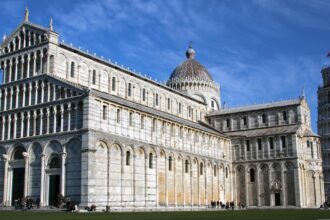
In many cases, tickets also include entry to Pisa Cathedral, located immediately beside the tower. The cathedral interior features detailed marble work, columns, and artwork that reflect the wealth and influence of medieval Pisa.
The wider square, including the baptistery and Camposanto, forms a complete architectural complex that is recognised as a UNESCO World Heritage Site. Visiting the tower therefore becomes part of a larger historical experience, rather than an isolated attraction.
Is Climbing the Leaning Tower of Pisa Worth It
For many visitors, the Leaning Tower of Pisa begins as a photo opportunity, but climbing it transforms the experience into something far more memorable. While the view from the outside is iconic, the real value comes from stepping inside and understanding the structure from within.
The climb itself is what sets the experience apart. Walking up the tilted spiral staircase creates a sensation that most people have never encountered before. The uneven angles and shifting balance make the ascent feel unusual from the very first steps, adding a physical dimension that goes beyond sightseeing.
Although there are nearly 300 steps, the climb is manageable for most visitors. The pace is steady, and the staircase allows for short pauses along the way. For anyone reasonably comfortable walking, the ascent is achievable and does not require a high level of fitness.
Reaching the top provides one of the best viewpoints in Pisa, with uninterrupted views across Piazza dei Miracoli and the surrounding city. From this perspective, the layout of the square becomes clear, and the scale of the cathedral complex is easier to appreciate.
Beyond the views, the experience carries a strong sense of history. The worn marble steps, the exposed structure, and the visible imperfections all reflect centuries of use and adaptation. You are not simply visiting a monument, but moving through a piece of living architectural history.
For travellers with limited time, climbing the tower is what elevates the visit from a quick stop to a standout experience. While it is possible to enjoy the square without entering, the climb adds depth, perspective, and a level of engagement that cannot be replicated from the ground.
Best Time to Visit the Leaning Tower
Timing plays a crucial role in how enjoyable your visit to the Leaning Tower of Pisa feels. While the attraction is open throughout the year, visitor numbers fluctuate significantly depending on the time of day and season.
The quietest and most comfortable time to visit is typically early in the morning, shortly after opening. At this point, the square is less crowded, the atmosphere is calmer, and you have more space to move freely around Piazza dei Miracoli. This is also one of the best times for photography, as the light is softer and the crowds have not yet built up.
Another strong option is late afternoon, when many day-trippers begin to leave the city. During this period, the square gradually becomes less congested, and the lighting improves again, creating better conditions for both viewing and photography.
The most challenging time to visit is between late morning and mid-afternoon, when the majority of tour groups arrive. This is when the square is at its busiest, queues are longest, and the overall experience can feel crowded. In summer, this period also coincides with higher temperatures, which can make the climb less comfortable.
Seasonality also has an impact. During peak months from May to September, demand is high, and tickets sell out quickly. Booking in advance becomes essential during this period. In contrast, shoulder seasons such as spring and autumn offer a better balance between weather and crowd levels, making them ideal times to visit.
In winter, visitor numbers drop significantly, and availability is less of an issue. However, shorter daylight hours and cooler conditions can affect the overall experience.
In practical terms, the best strategy is to combine early or late time slots with advance booking, ensuring you avoid the busiest periods while still securing your place inside the tower.
Rules for Climbing the Pisa Tower
Climbing the Leaning Tower of Pisa is tightly controlled, and understanding the rules in advance will save time and prevent unnecessary stress on the day. These restrictions are not arbitrary. They exist to protect both visitors and the structure itself, which remains a delicate historic monument.
One of the most important rules concerns bags and personal belongings. You cannot take backpacks, handbags, or large items inside the tower. All belongings must be deposited in the free cloakroom located near Piazza dei Miracoli before your entry. This process is straightforward, but it does take time, so arriving early is essential.
There are also strict age restrictions. Children under the age of eight are not permitted to climb, and visitors aged between eight and eighteen must be accompanied by an adult. This is due to the narrow, uneven staircase and the physical nature of the climb.
The structure itself creates additional considerations. The staircase is made of worn marble steps, which can become slippery, particularly during busy periods. While there is no formal dress code, wearing comfortable and stable footwear is strongly recommended.
Inside the tower, the space is narrow and enclosed, and visitors move in both directions along the same staircase. This can slow progress slightly, especially during peak times, but it is part of the experience and is carefully managed by staff.
Perhaps the most important rule is punctuality. Entry is based on a fixed time slot, and missing your allocated time can mean losing access entirely. Staff operate to a strict schedule, and flexibility is limited due to capacity controls.
In practical terms, the best approach is simple. Arrive early, travel light, and be prepared for a structured visit. Doing so ensures that your experience inside the tower is smooth and focused on the climb itself rather than logistics.
How to Get to Piazza dei Miracoli
Reaching the Leaning Tower of Pisa is straightforward once you understand the layout of the city. The tower sits within Piazza dei Miracoli, just outside the historic centre, and is easily accessible from both the train station and the airport.
Most travellers arrive via Pisa Centrale railway station, which connects Pisa with cities such as Florence, Lucca, and Rome. From here, the most straightforward option is to walk to the square, which takes approximately 20 to 25 minutes. This route passes through parts of the historic centre and offers a more complete introduction to the city before reaching the main attraction.
For those who prefer not to walk, local buses run regularly between the station and the square. These services stop close to the entrance, reducing walking time significantly. Tickets can be purchased at kiosks, machines, or through transport apps, making this a simple and cost-effective option.
Visitors arriving by air will land at Pisa International Airport, located just a short distance from the city. From the airport, the PisaMover shuttle train connects directly to Pisa Centrale in a matter of minutes, after which you can continue to the square on foot or by bus.
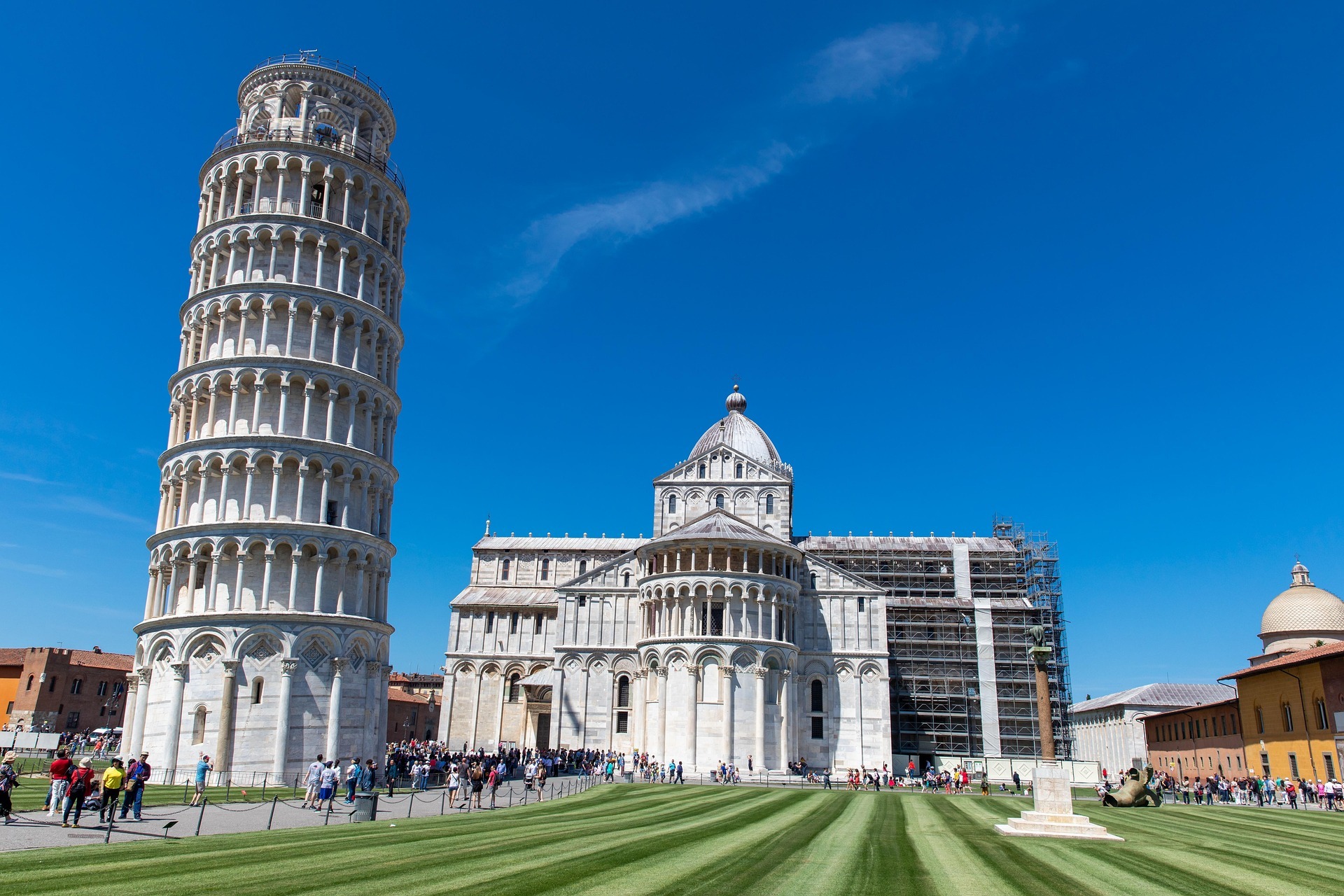
Once you arrive at the square, the tower is immediately visible, rising above the surrounding monuments. The entire area is pedestrianised, which makes it easy to move between the tower, cathedral, and other historic buildings without dealing with traffic.
In practical terms, walking remains the best option for most visitors. It is direct, scenic, and avoids the need to coordinate transport, especially if you are already arriving via the train station.
Search routes and flight options for your trip to Pisa.
Search flightsChoose an Airalo eSIM and arrange mobile data before you arrive.
Browse eSIMsArrange a private airport pickup for your trip to Pisa.
Check transfersWhat Is the Leaning Tower of Pisa
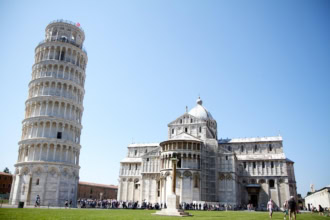
The Leaning Tower of Pisa is one of the most recognisable landmarks in the world, but it is often misunderstood as a standalone attraction. In reality, it is the bell tower of Pisa Cathedral, built as part of the wider Piazza dei Miracoli complex, one of the most important historic sites in Italy.
Construction began in 1173, during a period when Pisa was a powerful maritime republic, using architecture to demonstrate its wealth and influence. Almost immediately, the project ran into problems. The soft, unstable ground beneath the foundations caused the tower to begin leaning during construction, a structural flaw that would ultimately become its defining feature.
Work continued over nearly 200 years, with builders attempting to correct the tilt by subtly adjusting each new level. This is why the tower has a slight curve rather than a straight lean, a detail that many visitors only notice up close. Today, the structure stands at around 56 metres tall, with its famous tilt now carefully stabilised through modern engineering work.
What makes the tower truly unique is not just how it looks, but how it feels inside. The spiral staircase follows the angle of the lean, creating a noticeably uneven and disorientating climb that is completely different from a standard tower. This physical experience is a major part of what makes visiting so memorable.
At the top, you are rewarded with panoramic views across Pisa, the surrounding Tuscan countryside, and the full layout of Piazza dei Miracoli below. However, the real significance comes from understanding the tower as part of a larger whole. Together with the cathedral, baptistery, and cemetery, it forms a UNESCO World Heritage Site, representing the architectural ambition and cultural power of medieval Pisa.
For most travellers, the Leaning Tower is not just something to photograph from the outside. It is a historic structure you can enter, climb, and experience firsthand, offering a rare opportunity to engage directly with one of the world’s most famous buildings.
UNESCO Status of the Leaning Tower of Pisa
The Leaning Tower of Pisa is part of the Piazza dei Miracoli, which was inscribed as a UNESCO World Heritage Site in 1987. While the tower is the most famous landmark, it is officially recognised as part of a wider group of historic buildings rather than as a standalone site.
The UNESCO designation covers the entire square, including the cathedral, baptistery, and Camposanto, all of which together represent one of the most important examples of medieval architecture in Italy. The Leaning Tower itself serves as the bell tower of the cathedral and is one of the most recognisable structures in the world.
What makes the tower unique is not just its tilt, but the engineering challenge it represents. Built on unstable ground, it began leaning during construction in the 12th century, and over time became a symbol of both architectural ambition and structural adaptation. Extensive stabilisation work has since ensured it remains safe to visit.
For visitors, this means you are not just seeing an isolated landmark, but part of a carefully preserved UNESCO-listed complex where each building contributes to the overall significance of the site.
Learn More from UNESCO
This destination is connected to a UNESCO World Heritage Site, recognised for its outstanding cultural, historical, or natural importance. You can explore official listings, background information, and protected heritage sites through UNESCO’s global database.
Tips for Visiting the Leaning Tower of Pisa
A visit to the Leaning Tower of Pisa may seem simple on the surface, but small decisions can make a significant difference to how smooth and enjoyable the experience feels. With large visitor numbers and strict entry controls, preparation is key.
One of the most effective strategies is to arrive well before your scheduled entry time. Even with pre-booked tickets, you will need to pass through the square, locate the cloakroom, and store any belongings before entering. Allowing extra time removes pressure and ensures you do not risk missing your slot.
Another important approach is to treat the tower as part of a larger visit to Piazza dei Miracoli rather than a standalone attraction. The surrounding buildings, including Pisa Cathedral, the baptistery, and the cemetery, are all historically significant and add depth to your visit. Exploring these either before or after your climb helps make the experience feel complete.
Photography is another key part of the visit, but it is worth thinking beyond the standard poses. The central pathways are often crowded, but moving slightly around the perimeter of the square provides better angles, fewer people, and more balanced views of the tower and cathedral together.
Crowd management is also important. The square is one of the most visited locations in Italy, and it can feel busy throughout much of the day. Adjusting your timing, either early in the morning or later in the afternoon, can significantly improve the atmosphere.
Finally, consider how long you plan to stay in Pisa. Many travellers treat it as a quick stop, but spending additional time exploring the historic centre beyond the square can turn a rushed visit into a more rounded experience.
In practical terms, the key is to slow down, plan your timing, and use the square as a starting point rather than the entire visit.
Frequently Asked Questions
How long does it take to climb the Leaning Tower of Pisa?
Most visitors spend around 30 minutes inside the tower, which includes climbing the staircase, enjoying the views from the top, and descending back to ground level.
How many steps are there in the Leaning Tower?
The climb consists of approximately 294 steps arranged in a spiral staircase that winds upwards through the interior of the tower.
Do Leaning Tower of Pisa tickets sell out?
Yes. Because the tower uses a timed entry system with limited capacity, tickets regularly sell out during busy months, particularly in spring and summer.
Can children climb the tower?
Children under the age of eight are not allowed to enter the tower. Visitors aged 8–18 must be accompanied by an adult.
Are bags allowed during the climb?
No. Bags and backpacks must be left at the free cloakroom near the tower entrance before entering.
How long should I spend in Piazza dei Miracoli?
Most visitors spend between 1.5 and 3 hours exploring the tower, cathedral and surrounding monuments.
Further Reading & Related App Guides
Want to plan the rest of your trip to Pisa and the surrounding region? These guides will help you organise transport, stay connected and discover more destinations nearby.
Plan your stay with our complete city overview → Discover Pisa: Your Essential Pisa Travel Guide for 2025
Plan your arrival in Tuscany with our guide → Pisa Airport to City Centre: Walk, Pisa Mover, Bus & Taxi (2026)
Plan a classic Tuscany excursion with our guide → Pisa Day Trip from Florence: Trains, Tips & Itinerary (2026)
Travelling around Italy by train? Our guide explains routes, prices and how the pass works → Interrail Italy Pass Guide
Discover one of Europe’s smallest and most fascinating countries → San Marino Travel Guide
Stay connected abroad with mobile data anywhere in the world → eSIM Apps Guide
Navigate the city easily with real-time routes and tickets → Local Transport Apps Guide