Reviewed by our editorial team Updated
Discover the Limerick Region
The Limerick region rarely gets the same fanfare as Dublin or the Wild Atlantic Way, yet it packs an extraordinary amount into a relatively compact stretch of the mid-west of Ireland. This is Shannon country, a patchwork of medieval castles, thatched villages, prehistoric monuments and a great tidal estuary that shaped Irish and transatlantic history alike. Because the whole area is served by a single gateway, Shannon Airport, it makes sense to think of Limerick city, County Clare and rural County Limerick as one connected region rather than a single-city break, and that is exactly how this guide is built.
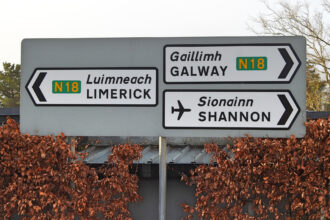
Most visitors land at Shannon Airport, which handles well over 1.5 million passengers a year and sits roughly 26 kilometres from Limerick city, about a 30-minute drive. If you are arriving by air, it is worth reading our dedicated Shannon Airport Transfers guide before you travel, since it covers car hire desks, bus links into the city and the practicalities of picking up a rental car for the wider region. Getting that first leg right sets the tone for the rest of the trip, particularly because so many of the best sights here are scattered across the countryside rather than clustered in one town centre.
Limerick city itself, with a population of just over 102,000 according to the 2022 census, is Ireland’s third-largest urban area and sits at the point where the River Shannon widens into its long tidal estuary on its way to the Atlantic. From the Norman stronghold of King John’s Castle to the thatched charm of Adare, the medieval banqueting halls of Bunratty and the 9,000-year-old story told at Lough Gur, this region rewards travellers who are willing to hire a car and explore beyond the city limits. The sections below work through each major stop in turn, before a practical planning section on how to piece it all together.
Distances and Public Transport at a Glance
Before diving into each stop in detail, here is how far everything sits from Limerick city, and whether public transport is a realistic option or whether you will need your own car.
| Place | Distance from Limerick City | Typical Drive Time | Public Transport |
|---|---|---|---|
| King John’s Castle | In the city centre | Walkable | N/A, already in Limerick city |
| Adare | 16 km | 20 minutes | Yes, hourly Dublin Coach service via the M7 Express |
| Bunratty Castle | 16 km | 20 minutes | Yes, Bus Éireann Route 343 runs at least twice an hour |
| Lough Gur | 21 km | 25 to 30 minutes | Very limited, a car is effectively essential |
| Foynes | 40 km | 45 minutes | Limited, Bus Éireann Route 314 runs roughly every four hours |
| Craggaunowen | 26 km | 35 minutes | None, a car is required |
| Ennis | 35 km | 35 to 40 minutes | Yes, frequent Bus Éireann and Dublin Coach services |
| Kilmallock & the Collegiate Church | 34 km | 33 to 35 minutes | Yes, Bus Éireann Route 329 runs roughly every four hours |
| Cliffs of Moher | Approx. 110 km via Ennis | 75 minutes | Seasonal, summer coach and Bus Éireann services from Limerick and Ennis |
As the table makes clear, a handful of stops, Adare, Bunratty, Ennis and Kilmallock, are genuinely reachable without a car, if you are happy to work around a limited timetable. Lough Gur and Craggaunowen, however, effectively require your own transport, since neither sits on a useful public route.
Browse hotels and accommodation for your visit to Limerick.
View staysBrowse apartments, homes and self-catering accommodation in Limerick.
Browse rentalsSee hotel prices from multiple booking sites in one search.
Compare ratesExplore King John’s Castle
Standing on King’s Island in the heart of Limerick city, King John’s Castle is one of the best-preserved Anglo-Norman fortifications in Ireland. King John ordered its construction around 1200, on a site that had already been a fortified Viking trading post for centuries, with the city itself founded by Scandinavian settlers as far back as 812 AD. The castle’s curtain walls, twin drum towers and gatehouse have witnessed centuries of conflict, including a notable siege in 1642 during which Confederate forces under Garret Barry managed to undermine and collapse sections of the walls.
What makes a visit worthwhile today is the way the castle blends genuine medieval fabric with a modern interpretive centre, built following a €5.7 million restoration completed in 2014. Excavated Viking house foundations sit beneath glass flooring, siege engines and interactive exhibits explain the castle’s turbulent past, and the wall walks give sweeping views over the Shannon and the rooftops of Limerick’s old town. Costumed guides and audio-visual displays help bring the Norman conquest of Munster to life for visitors of all ages.
The castle is open daily, with summer hours (1 April to 30 September) running from 9:30am to 6pm and winter hours (1 October to 31 March) from 9:30am to 5pm; it closes only around Christmas and New Year. Adult admission is €16.50, children aged 4 to 14 pay €11, and family tickets start from around €49. Allow at least 90 minutes to do the exhibits and towers justice, and combine it with a short stroll to nearby St Mary’s Cathedral, one of Limerick’s oldest buildings, while you are on King’s Island.
Visit Beautiful Adare
Regularly described as one of Ireland’s prettiest villages, Adare sits around 16 kilometres southwest of Limerick city on the banks of the River Maigue. Its famous row of golden thatched cottages dates back to the 1820s, when the Earl of Dunraven laid out the village’s streets and townhouses to house workers on the Dunraven estate, including staff at the local cigarette factory. Those cottages, several of which now house craft shops, cafes and restaurants, give Adare’s main street its unmistakable postcard look.
Adare’s history runs far deeper than the Georgian village though. The ruins of an Augustinian Friary, founded in 1316 by John FitzThomas FitzGerald, 1st Earl of Kildare, still stand near the entrance to Adare Manor, and a medieval Franciscan friary and a Trinitarian abbey add further layers of monastic history to the village. Walking between these ruins, the thatched cottages and the parish church gives a genuine sense of a settlement that has been continuously inhabited for over 700 years.
Adare Manor, the former Dunraven family seat turned five-star resort, anchors the village and its championship golf course will host the 2027 Ryder Cup, putting Adare firmly on the global sporting map. Even without a stay at the manor, visitors can walk its parkland and admire the neo-Gothic building from the grounds. Between the friary ruins, the thatched streetscape and easy access to good food, Adare is worth at least a half-day stop, and its central location makes it a natural base for exploring the wider Limerick and Shannon region by car.
Step Back in Time at Bunratty Castle
Bunratty Castle, just off the N18 in County Clare and only a short drive from Shannon Airport, is the most complete and authentically furnished medieval castle in Ireland. The structure visitors climb today is the fourth castle built on this strategic spot beside the Owenogarney River, where it meets the Shannon Estuary, and it was raised by the powerful MacNamara clan around 1425 before later passing to the O’Brien Earls of Thomond. After centuries of decline, the castle was extensively restored in 1954 and reopened to the public in 1960, filled with fifteenth and sixteenth-century furniture, tapestries and art.
Climbing the castle’s narrow spiral staircases to the Great Hall and battlements is genuinely atmospheric, and the surrounding 26-acre Folk Park recreates a nineteenth-century Irish village, complete with a working farmhouse, a blacksmith’s forge, a school room and village shops staffed by costumed guides. It is one of the most popular family attractions in the mid-west, and the castle’s famous medieval banquets, a four-course meal accompanied by traditional song, have entertained an estimated three million guests since they began.
Bunratty Castle and Folk Park is open daily, typically from 9:30am to 5:30pm, with last admission to the castle around 4pm; adult admission runs to roughly €20, with reduced rates for children and families, so it is worth booking online in advance for the best price. Given its location roughly midway between Shannon Airport and Limerick city, Bunratty works well as a first or last stop on a regional itinerary, and it pairs naturally with a visit to the nearby Shannon Estuary shoreline.

Discover Lough Gur
South of Limerick city, close to the village of Bruff, Lough Gur is one of Ireland’s richest archaeological landscapes, with evidence of continuous human activity stretching back some 9,000 years. The horseshoe-shaped lake is ringed by an extraordinary concentration of prehistoric monuments, with an estimated 2,000 archaeological sites recorded within a five-kilometre radius, including standing stones, burial mounds and the remains of Neolithic and Bronze Age settlements.
The undoubted highlight is the Grange Stone Circle, widely regarded as Ireland’s largest and oldest stone circle, a huge ring of upright stones that predates Stonehenge’s famous sarsen circle. The Lough Gur Visitor Centre presents finds from the surrounding sites and explains how successive communities farmed, buried their dead and worshipped around this single lake for millennia, making it one of the most important prehistoric landscapes anywhere in Europe.
The Visitor Centre is generally open daily from 10am to 5pm, extending to 6pm in the height of summer and reducing to Tuesday-to-Sunday opening between November and January. Admission is inexpensive by regional standards, with adult tickets around €5, concessions around €4, children roughly €3, and a family ticket for around €15. Guided and self-guided walks around the lakeshore range from a brisk 30 minutes to a leisurely three hours, making Lough Gur an easy and inexpensive half-day addition to a Limerick itinerary, particularly for anyone with an interest in Ireland’s prehistory.
Experience Foynes Flying Boat Museum
The small Shannon Estuary village of Foynes, about 40 kilometres west of Limerick city, was once one of the most important aviation hubs on earth. Between the late 1930s and the mid-1940s, giant transatlantic flying boats such as the famous Yankee Clipper, which landed here in 1939, used the sheltered waters of the estuary as their eastern terminus, making Foynes the last stop in Europe for passengers crossing the Atlantic by air. The Foynes Flying Boat and Maritime Museum, which opened in 1989 with actress and local connection Maureen O’Hara cutting the ribbon, now tells that extraordinary story in the original terminal building.
Inside, visitors can see a full-size replica flying boat, the original 1940s radio and weather room used to guide transatlantic flights, and exhibits on the passengers and pilots who passed through. Just as memorably, Foynes is the birthplace of Irish coffee: in 1943, chef Joe Sheridan warmed a group of weary transatlantic passengers with a mix of coffee, whiskey and sugared cream, a drink that went on to become one of Ireland’s best-known culinary exports. The museum’s dedicated Irish Coffee Centre lets visitors learn the story and sample the real thing.
The Foynes Flying Boat and Maritime Museum is open daily from 10am to 5pm, with last admission at 4pm. Adult tickets cost around €18, seniors and students €16, children aged 5 to 17 €10, and a family ticket (two adults, two children) is priced at roughly €42. Combined with a stop along the Shannon Estuary shoreline, Foynes makes for a fascinating and slightly unexpected detour that few visitors to the region know about in advance.
Explore the Shannon Estuary
The Shannon Estuary stretches for roughly 102 kilometres from Limerick city out to the Atlantic between Loop Head in County Clare and Kerry Head in County Kerry, making it by far the longest estuary in Ireland. It was this deep, sheltered stretch of tidal water that made the region so important to twentieth-century aviation in the first place: a site at Rineanna on the estuary’s northern shore was chosen in 1936 as Ireland’s first transatlantic airport, eventually growing into today’s Shannon Airport once runway extensions in the 1940s allowed land-based aircraft to bypass the flying boats of Foynes altogether.
Beyond its aviation history, the estuary is one of Ireland’s most important wildlife habitats, home to the country’s only known resident population of bottlenose dolphins, regularly spotted from boat tours departing towns like Carrigaholt on the Clare side. Quiet villages such as Foynes, Glin and Tarbert dot its shores, along with working ports and, further downstream, dramatic views back toward the Atlantic. A slow drive or boat trip along the estuary shoreline is a peaceful counterpoint to the region’s busier castles and museums, and it ties together many of the sights covered in this guide, since Limerick city, Bunratty, Foynes and Shannon Airport all sit along or close to its banks.
Compare routes and fares for your journey to Limerick.
Compare flightsUse an eSIM to get online without hunting for a local SIM after arrival.
See eSIM optionsHave a private airport pickup arranged before you travel.
Book a transferVenture into County Clare
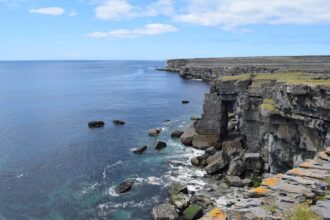
Once you are based around Shannon, the rest of County Clare opens up easily by car. The world-famous Cliffs of Moher are around 75 minutes’ drive from Limerick city via Ennis and Ennistymon, rising to over 200 metres above the Atlantic at their highest point, while the limestone landscape of the Burren spreads across much of the county’s northwest, famous for its unique flora and ancient portal tombs such as Poulnabrone. Both are covered in far more detail in our Wild Atlantic Way Guide, which is worth reading alongside this one if County Clare’s coastline is on your list.
Clare also sits within easy striking distance of Galway city, and many visitors choose to explore the Burren and the Cliffs of Moher as part of a loop that starts or ends in Galway rather than Limerick. Our Day Trips from Galway guide covers exactly that route in more depth, so whichever end of the region you are travelling from, there is a dedicated guide to help you plan the Clare leg of the journey properly.
Discover Craggaunowen, the Living Past
Tucked into the quiet countryside near Quin and Kilmurry in County Clare, roughly 26 kilometres from Limerick city and around a 35-minute drive, Craggaunowen is one of Ireland’s more unusual attractions, an open-air experimental archaeology park built around a restored sixteenth-century tower house. The castle itself was raised around 1550 by the MacNamara family, but it was the antiquarian John Hunt who transformed the site into a museum of prehistoric and early medieval Irish life after acquiring it, opening Craggaunowen, often billed as “the Living Past”, to the public in 1965.
The reconstructions scattered through the surrounding woodland and lake are what set Craggaunowen apart. A rebuilt crannog, a timber lake dwelling of a type Irish communities used from the Bronze Age through into the early medieval period, sits out over the water on its own artificial island, while a reconstructed ring fort nearby shows how a farming family would have lived and defended their homestead in a later era. Costumed guides and craftspeople are often on hand around the site to demonstrate traditional skills, from basket weaving to blacksmithing, that these structures would once have supported.
The site’s most famous exhibit is the Brendan Boat, the leather-hulled currach that explorer Tim Severin sailed across the North Atlantic between 1976 and 1977 to test whether the sixth-century monk St Brendan could genuinely have reached North America centuries before Columbus. Built from Irish ash and oak lashed together and covered in tanned ox hides, the boat now sits on permanent display at Craggaunowen. The park generally opens daily from Easter through September, from 10am to 5pm with last admission an hour before closing, and adult tickets cost around €9, making it an easy and inexpensive half-day addition to a County Clare itinerary.
Visit Ennis Friary
The county town of Clare, Ennis, sits around 35 kilometres north of Limerick city, roughly a 35-minute drive, and at its heart stands one of the finest surviving medieval religious houses in Ireland. Ennis Friary was founded in the mid-thirteenth century, traditionally around 1241, by Donnchadh Cairbreach O’Brien, King of Thomond, who invited the Franciscan order to establish a house on an island in the River Fergus. The friary grew rapidly in the centuries that followed, and by 1375 it is said to have supported some 350 friars alongside a renowned school of 600 pupils.
What survives today, including a graceful bell tower added around 1475 and a cloister and transept dating from about 1400, reflects centuries of continuous building and rebuilding. The friary is particularly known for its collection of fifteenth and sixteenth-century carved stone sculpture, among the finest of its kind in Ireland, and for a striking ribbed vault in the sacristy. Ennis Friary is now a National Monument cared for by Ireland’s Office of Public Works (OPW), and it is generally open to visitors from mid-March to early November, from 10am to 6pm with last admission at 5:15pm; adult tickets cost around €5, with reduced rates for seniors, students and children, and a family ticket priced at roughly €13.
Visit the Collegiate Church of SS Peter & Paul
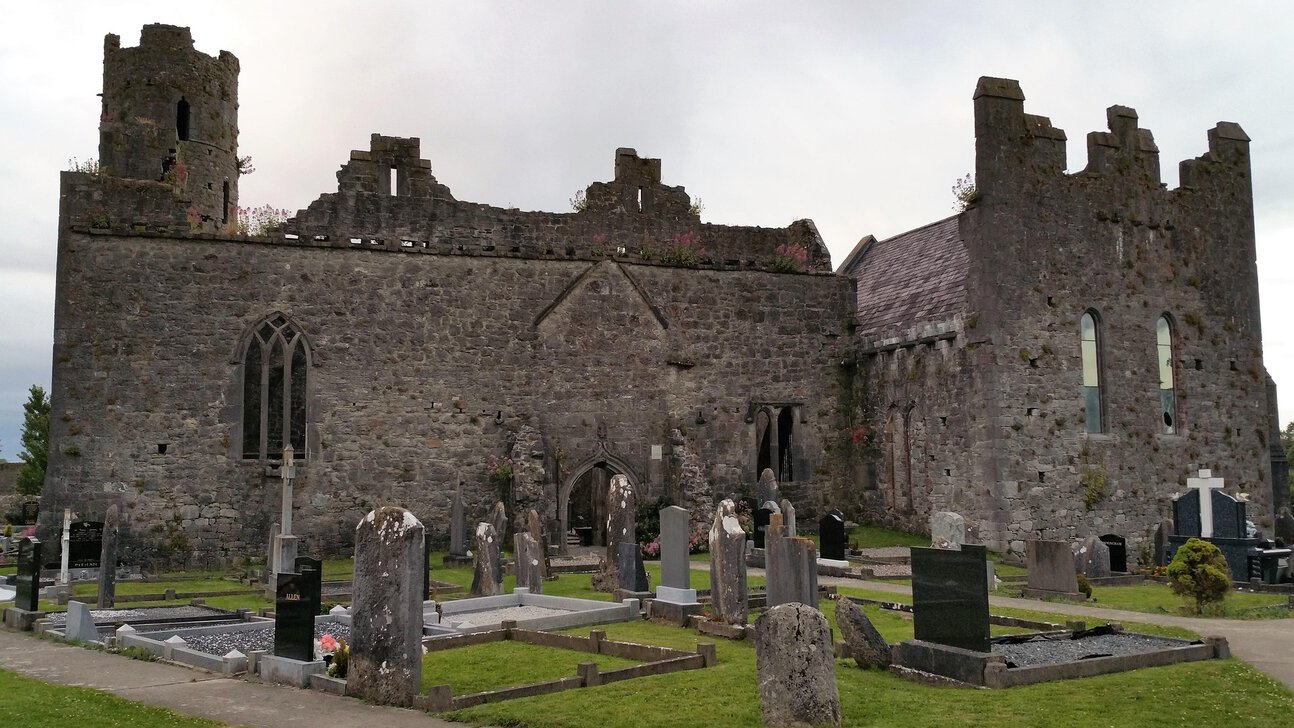
The medieval walled town of Kilmallock, around 34 kilometres south of Limerick city and roughly a 33 to 35-minute drive, is often nicknamed the “Irish Baalbek” for the sheer density of ruined medieval fabric packed into its narrow streets, and its finest surviving building is the Collegiate Church of SS Peter & Paul. The town itself began life in the early seventh century, when the abbot and bishop St Mocheallóg founded a small monastic church here on the banks of the River Loobagh, a name that survives today in the town’s Irish form, Cill Mocheallóg.
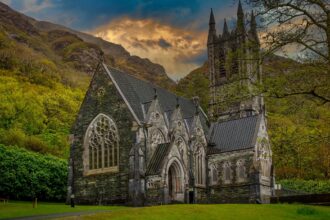
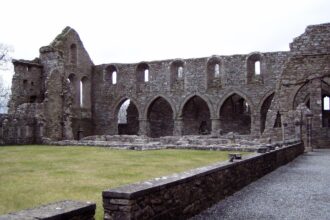
The church that stands on the site now was largely complete by 1241, and formally dedicated to Saints Peter and Paul in 1410. It takes its “collegiate” name from the community of secular clerics who served it, distinct from a monastic order bound by a religious rule. Three aisles, a chancel and a north transept survive, along with a fine thirteenth-century door in the south wall and a five-light west window regarded as one of the most beautiful of its kind anywhere in Ireland. A circular tower at the west end may incorporate the base of an even older round tower dating from the tenth or eleventh century, a physical link back to the original early monastic settlement on this spot.
Kilmallock’s long history has not always been a peaceful one. The town was sacked during the First Desmond Rebellion in 1571, and in 1579 the bodies of two Catholic martyrs, Bishop Patrick O’Hely and Friar Conn O’Rourke, were displayed on the town gate for a fortnight as a warning to the local population. The Collegiate Church itself was substantially destroyed by Cromwell’s forces during the wars of the seventeenth century, and what remained of its roof was lost to fire in 1935, after which the Church of Ireland congregation relocated and the building passed into state care as the atmospheric ruin visitors explore today.
The Collegiate Church is a National Monument managed by the OPW and is an unguided site, freely accessible year-round, though visitors should take sensible care underfoot given the uneven ground and lack of on-site staff. While you are in Kilmallock, the town’s medieval walls, a ruined Dominican priory and the tower house of King John’s Castle, a smaller and separate structure from its more famous namesake in Limerick city, are all within easy walking distance and worth combining into a single visit.
Make the Most of the OPW Heritage Card
Ireland’s Office of Public Works (OPW) manages 173 heritage sites across the country, and two of the best in this guide fall directly under its care: Ennis Friary and the Collegiate Church of SS Peter & Paul in Kilmallock. Both are genuinely worth visiting in their own right, and both are covered by the OPW Heritage Card, an annual pass giving unlimited admission to every participating site nationwide.
It is worth being clear about what the card does and does not cover in this particular region, since it is easy to assume it applies more broadly than it actually does. Bunratty Castle and Folk Park, King John’s Castle in Limerick city and Craggaunowen are all run by Shannon Heritage, a separate operator, and none of them accept the OPW Heritage Card. The card’s real value in the Limerick region, then, comes from combining Ennis Friary and the Collegiate Church with OPW sites elsewhere in the country, rather than from this region alone.
Pricing for the card runs from €40 for an adult and €30 for a senior, down to €10 for students and for children aged 12 to 18, with a family card priced at €90 and free entry for under-12s. Whether it pays for itself depends heavily on how many OPW sites you plan to visit during your wider Irish trip, since the entry fees at individual sites like Ennis Friary and the Collegiate Church are modest on their own.
If your itinerary extends beyond the Limerick region into other parts of Ireland with a heavier concentration of OPW properties, such as several of the country’s best-known castles, abbeys and gardens, the card can add up to genuine savings. Our full OPW Heritage Card guide breaks down current pricing, the complete list of participating sites, and a worked example of how many visits it typically takes to break even, so it is worth reading before you decide whether to buy one for your trip.
Planning Your Journey Around the Region
Unlike a single-city break, the Limerick region genuinely rewards having your own transport. Attractions such as Bunratty, Adare, Lough Gur, Foynes and Kilmallock are all between 15 and 40 kilometres from Limerick city in different directions, and while public transport reaches several of them, as the table earlier in this guide shows, timetables are limited enough that a rental car picked up at Shannon Airport or in Limerick city itself remains by far the most practical option for covering more than one or two stops in a day. Our Shannon Airport Transfers guide covers car hire desks and pick-up logistics if you are arriving by air and want to get moving straight away.
As a rough guide, allow at least three full days to do the region justice: one for Limerick city and King John’s Castle, one for Adare and Bunratty together (they sit only around 20 minutes apart by car), and one for Lough Gur, Foynes or Kilmallock, which lie in different directions from the city and are best treated as separate half-day trips. Add a fourth or fifth day if you plan to push on into County Clare for the Cliffs of Moher and the Burren, since those sights alone can easily fill a full day given the driving distances involved. Booking castle and museum tickets online in advance, particularly for Bunratty’s medieval banquets, is worth doing during the busy summer months.

Rupert’s Handy Travel Tips
The Limerick region is spread out, so a little planning goes a long way toward making the most of your time here.
- Hire a car at Shannon: most of the region’s best attractions are between 15 and 40 kilometres apart, and public transport connections between them are limited.
- Pair up nearby sights: Adare and Bunratty sit only around 20 minutes apart by car, so combine them into a single day rather than treating them as separate trips.
- Book Bunratty’s medieval banquet ahead: the castle’s evening banquets are hugely popular in summer and often sell out days in advance.
- Wear comfortable shoes for the castles: both King John’s Castle and Bunratty Castle involve narrow, uneven spiral staircases up to their towers.
- Check last admission times: several attractions, including King John’s Castle and Foynes Flying Boat Museum, stop admitting visitors an hour before closing.
- Know before you buy the OPW card: Bunratty, King John’s Castle and Craggaunowen don’t accept it, so it only pays off here if your wider trip includes more OPW sites elsewhere in Ireland.
Want to meet the reindeer behind our travel tips? Find out more in our page Who is Rupert?.




Frequently Asked Questions
How do I get from Shannon Airport to Limerick city?
Limerick city is around 26 kilometres from Shannon Airport, roughly a 30-minute drive by car or taxi, with regular bus services also connecting the two.
Do I need a car to explore the Limerick region?
Yes, ideally. Attractions like Bunratty, Adare, Lough Gur and Foynes are spread across the county, and while public transport reaches some of them, a rental car makes exploring far easier.
How far is Adare from Limerick city?
Adare is about 16 kilometres southwest of Limerick city, roughly a 20-minute drive.
Can I visit both King John’s Castle and Bunratty Castle in one day?
Yes, they are around 20 kilometres apart, so it is entirely possible to combine a morning at King John’s Castle with an afternoon at Bunratty, though an overnight stay lets you enjoy Bunratty’s evening medieval banquet without rushing.
Is the Cliffs of Moher within reach of the Limerick region?
Yes, the Cliffs of Moher are about 75 minutes’ drive from Limerick city, making them an achievable, if long, day trip from a Limerick base.
Does the OPW Heritage Card cover Bunratty Castle or King John’s Castle?
No, both are run by Shannon Heritage rather than the OPW. In this region, the card only covers Ennis Friary and the Collegiate Church of SS Peter & Paul in Kilmallock.
Further Reading
If you are flying into the region, start with our Shannon Airport Transfers guide, which covers car hire, taxis and buses so you can get straight into exploring Limerick, Clare and the wider Shannon area without wasted time at the airport.
For the coastal side of County Clare, including the Cliffs of Moher and the Burren, our Wild Atlantic Way Guide picks up where this page leaves off, with detailed route planning along Ireland’s west coast.
Travellers approaching from the north might also find our Day Trips from Galway guide useful, since it covers many of the same Clare attractions from the opposite direction, making it easy to plan a loop between Galway and Limerick.
And if visiting several historic sites during your wider trip, our OPW Heritage Card guide covers whether the annual pass is worth buying.