Reviewed by our editorial team Updated
Planning a Family Day in Dublin
Dublin is one of Europe’s most manageable capital cities to explore with children, and that is precisely why it works so well as a family destination. The city centre is compact, the major sights sit within walking distance or a short bus ride of one another, and there is a genuine mix of hands-on museums, green space, and quirky tours built with young visitors in mind. Families flying in typically land at Dublin Airport, and sorting out Dublin Airport Transfers in advance takes a lot of the stress out of arriving with tired kids and a mountain of luggage.
Once you are settled in, getting around is straightforward. Dublin Bus, the Luas tram network, and the DART rail line all connect the main family attractions, and children under a certain age travel free or at reduced fares on most services, so it is worth reading our Dublin Public Transport Guide before you set off each morning. Many of the attractions in this guide, including Dublin Zoo and the National Museum, sit close to Phoenix Park or the city centre, meaning a single Leap Card can cover most of a week’s outings.
This page focuses specifically on the attractions, tours, and practical details that make Dublin work for families with younger children, but it forms part of a wider guide to the city. If you want the full picture of what Dublin has to offer beyond the kid-focused stops, our broader roundup of Things to Do in Dublin is a useful companion piece, covering everything from historic sites to shopping streets that older children and teenagers might enjoy just as much as the attractions listed below.
Meet the Animals at Dublin Zoo
Dublin Zoo sits inside Phoenix Park and has been welcoming visitors since it first opened its gates on 1 September 1831, making it one of the oldest zoos in the world. The grounds cover roughly 28 hectares (69 acres), and the zoo’s restored Cottage Orné entrance is believed to be the oldest surviving zoo entrance still in use anywhere. Today the collection spans African Plains elephants and giraffes, an Asian forest trail with tigers and orangutans, and a dedicated Family Farm area where younger children can get close to goats, sheep, and other familiar animals in a gentler setting than the larger enclosures.
Dublin Zoo is open daily from 9:30am to 6pm, with last admission at 5pm and the African Plains section closing slightly earlier at 5:30pm. Booking online in advance is the cheaper route, with adult tickets from around €22.50 and children aged three to fifteen from around €17, while a family ticket for two adults and two children starts at approximately €62.50 when booked online. Children under three are admitted free of charge, and prices rise noticeably if you buy at the gate on the day, so pre-booking is worth the few minutes it takes.
Because the zoo sits within Phoenix Park itself, it pairs naturally with a wider morning or afternoon in the park, and many families combine the two into a single, low-stress day out. Buggies are welcome throughout, there are several cafes and picnic spots dotted across the grounds, and the paths are flat and buggy-friendly, which makes it one of the least tiring full-day outings on this list for parents pushing a pram around after a long flight.
See hotel options and places to stay in Dublin.
Browse hotelsBrowse apartments, holiday homes and self-catering stays in Dublin.
View rentalsCompare prices for Dublin hotels across multiple booking sites.
Check dealsExplore Imaginosity
Imaginosity is Dublin’s dedicated children’s museum, based at the Beacon South Quarter in Sandyford on the southern edge of the city. Unlike the larger institutions on this list, Imaginosity is built entirely around imaginative, hands-on play, with a scaled-down supermarket, a construction zone, a pretend clinic, and a water play area all designed to let children learn through role play rather than through display cases. It is squarely aimed at younger children, with the museum describing itself as an interactive space for children under nine years of age, which makes it one of the better options in the city for families with toddlers or preschoolers who are too young to get much out of a traditional museum.
Admission is priced by age band rather than a flat family rate. Adults and children aged three and over are charged around €8 each, toddlers between one and two years old cost around €6, and babies between six and twelve months are admitted for a nominal €2. Because the whole experience is play-based rather than a walk-through exhibition, most families find that an hour and a half to two hours is enough time on site, which makes it easy to combine with lunch nearby or another activity later in the day.
Sandyford is on the Luas Green Line, so it is a straightforward tram journey from the city centre rather than a car trip, and the Beacon South Quarter development around the museum has several cafes if you need a coffee while the children burn off energy inside. It is a good rainy-day fallback given Dublin’s changeable weather, since the entire experience takes place indoors.
Discover EPIC with Children
EPIC The Irish Emigration Museum is housed in the vaults of the CHQ Building on Custom House Quay, right on the Liffey in Dublin’s docklands. It tells the story of Irish emigration through twenty entirely digital, interactive galleries rather than physical artefacts behind glass, which in practice means a lot of touchscreens, projections, and sound-based exhibits that hold children’s attention far better than a traditional history museum would. Kids can record their own accent, step into a green screen challenge, and touch-screen their way through Irish history in a format that feels more like an activity centre than a museum, even though the underlying content is genuinely educational.
EPIC is open seven days a week from 10am to 6:45pm, with last admission at 5pm. Adult tickets are priced at around €22, children’s tickets at around €11, and a family ticket for two adults and two children comes to roughly €57. Every ticket includes a free return visit within ten days of purchase, which is a useful detail for families staying in Dublin for a week who want to split the experience across two shorter visits rather than trying to power through it all in one go with younger children.
The CHQ Building itself is worth a mention, since it also houses shops and cafes, and the museum sits close to the Jeanie Johnston famine ship and the Samuel Beckett Bridge, both of which make for an easy add-on walk along the river afterwards. It is an easy stop to combine with a wider day exploring the docklands on foot before hopping back on the Luas or a bus into the city centre.
Burn Off Energy in Phoenix Park
Phoenix Park is one of the largest enclosed public parks in Europe, covering around 707 hectares (1,750 acres) on the western edge of Dublin city centre, which makes it more than double the size of London’s Hyde Park and Central Park in New York combined. For families, its sheer scale means there is always somewhere quieter to escape to even on a busy weekend, and the flat, well-maintained paths make it easy to cover ground with a buggy, scooters, or bikes.
The park’s best-known residents are its wild fallow deer, with a herd of roughly 400 to 450 animals descended from deer first introduced to the park in the 1660s. They roam freely across the open grassland near the Phoenix Monument and are usually easy to spot from a respectful distance, particularly in the early morning or late afternoon, and seeing genuinely wild deer wandering a city park is often a highlight for younger children who have never encountered anything like it. Dublin Zoo, discussed above, sits within the park’s boundaries, as does Áras an Uachtaráin, the official residence of Ireland’s president, which offers free guided tours on most Saturdays.
Beyond the deer, the park has several playgrounds, wide open fields for ball games, and the Victorian People’s Flower Garden near the Parkgate Street entrance, which has a pond and a smaller, gentler landscape that suits toddlers. There is no admission charge to enter the park itself, and it is served by several Dublin Bus routes, so it is easy to build into a low-cost, low-effort afternoon between busier paid attractions elsewhere in the city.
Experience Ireland’s National Sports at Croke Park
If your family enjoys sport, a visit to Croke Park offers one of the most memorable experiences in Dublin. As the home of the Gaelic Athletic Association (GAA), this iconic stadium has been at the heart of Irish sporting life for more than a century and provides a fascinating introduction to Gaelic football and hurling – two sports that are uniquely Irish.
The 90-minute guided stadium tour takes visitors behind the scenes, giving families access to areas normally reserved for players and officials. You’ll walk through the players’ tunnel, visit the dressing rooms, explore the VIP areas, stand pitchside, and enjoy spectacular panoramic views from the upper tier of one of Europe’s largest stadiums. Throughout the tour, knowledgeable local guides share stories about the history of the stadium, unforgettable All-Ireland Finals and the important role Gaelic games continue to play in Irish culture.
Admission also includes entry to the excellent GAA Museum, where children and adults can learn more about Ireland’s national sports through interactive exhibits and hands-on activities. Young visitors can test their skills in the interactive games zone, trying their hand at hurling, football passing challenges and reaction tests, making this much more than a traditional museum visit. There are also opportunities to pose for photos with the famous Sam Maguire Cup and Liam MacCarthy Cup, two of the most iconic trophies in Irish sport.
Whether your children are already sports fans or simply enjoy trying something new, Croke Park provides an entertaining mix of history, culture and interactive fun. It’s a great way for families to discover an important part of Irish identity while enjoying one of Dublin’s most impressive sporting venues.
Enjoy Viking Splash Tours
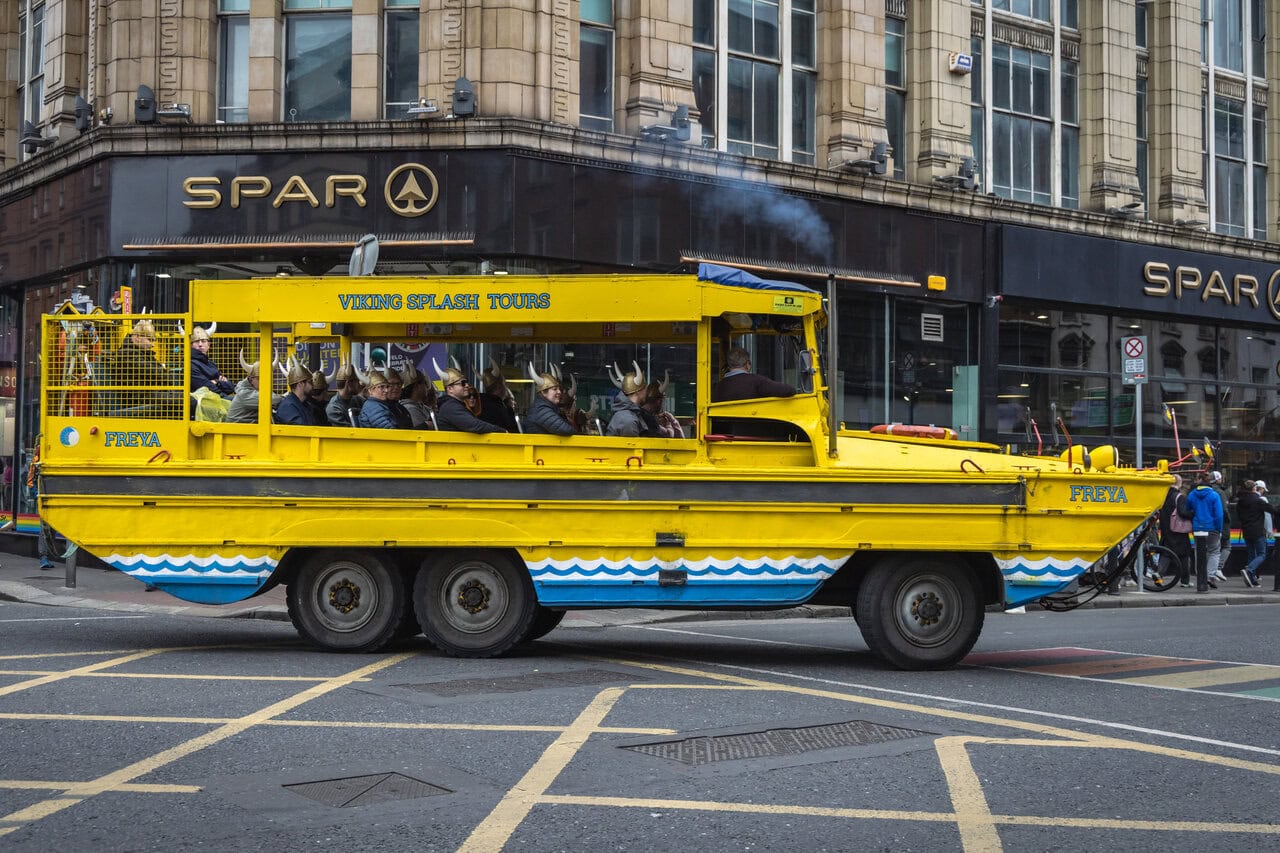
Viking Splash Tours is one of Dublin’s most distinctive family experiences, and usually one of the ones children remember longest. The tours use restored World War Two-era amphibious vehicles known as DUKWs, each seating around 28 passengers, which drive through Dublin’s city streets past landmarks such as Trinity College and St Stephen’s Green before splashing directly into the water at the Grand Canal Docks and continuing the tour afloat. Guides lead passengers in Viking roars along the way, and children are usually handed horned helmets to wear for the duration, which tends to be the moment that wins over even reluctant teenagers.
Tours depart from St Stephen’s Green North, opposite The Shelbourne Hotel, and run roughly every half hour during the summer season. The full experience lasts approximately one hour and fifteen minutes, combining a city sightseeing route with around fifteen to twenty minutes afloat on the water. Adult tickets are priced at around €37, children aged three to fourteen at around €31, and a family ticket for two adults and two children comes to roughly €118.
Because the tour covers a lot of the city centre’s key sights from a moving vehicle, it doubles as a handy orientation trip if you have just arrived and want the children to get their bearings before tackling individual attractions on foot over the following days. Book ahead in peak summer months, since seats on the more popular departure times sell out.
Visit the National Museum
The National Museum of Ireland’s Archaeology branch on Kildare Street is one of the best value family outings in Dublin, largely because admission is free. It sits in the city centre a short walk from St Stephen’s Green and Trinity College, and its collection includes some of the most striking archaeological finds in Europe, from Bronze Age gold ornaments in the Ór – Ireland’s Gold exhibit to the preserved Iron Age bog bodies displayed in the Kingship and Sacrifice gallery, both of which tend to fascinate older children in a way that quieter museums rarely manage.
Opening hours run Tuesday to Saturday from 10am to 5pm, with slightly shorter hours on Sunday and Monday from 1pm to 5pm. The museum’s Victorian rotunda entrance hall is a sight in itself, and the galleries are laid out over a manageable single main floor, so it is realistic to see the highlights in an hour or two without exhausting younger visitors. Buggies are permitted, and there are baby-changing facilities on site.
Because admission costs nothing, it is an easy museum to build into a wet-weather afternoon or to slot in for just thirty minutes if that is all your schedule allows. It also makes a good pairing with a walk through Trinity College’s grounds nearby, and if your trip stretches beyond the city itself, our guide to Day Trips from Dublin covers historic sites such as Newgrange that connect directly to some of the artefacts on display here.
Compare routes and fares for your journey to Dublin.
Compare flightsChoose an Airalo eSIM and arrange mobile data before you arrive.
Browse eSIMsArrange a private airport pickup for your trip to Dublin.
Check transfersEnjoy Dublin’s Best Free Things to Do with Kids
Dublin’s paid attractions get most of the attention, but the city has a genuinely strong lineup of completely free options that can fill several days on their own, which matters a lot on a family budget once flights, accommodation and the odd Guinness Storehouse-style splurge are accounted for. Beyond the National Museum of Ireland’s Archaeology branch and Phoenix Park, both already covered above, several more of Dublin’s best family stops do not charge a cent for entry.
The National Museum of Ireland – Natural History, on Merrion Street a short walk from the Archaeology branch, is nicknamed the “Dead Zoo” and has changed remarkably little since it opened in 1857. It is as much a museum about Victorian Dublin as it is about the animal skeletons and taxidermy displays inside, including an 11,000-year-old giant deer skeleton, and its old-fashioned glass cases genuinely delight children in a way a more modern, screen-heavy museum sometimes does not. It is free to enter, with no need to book ahead.
The National Gallery of Ireland on Merrion Square is free for its permanent collection and works harder than most galleries to make itself genuinely welcoming to children, with a dedicated kids’ audio tour, a Family Pack of drawing materials available to borrow, and a hands-on Atrium Creative Space for younger visitors who need a break from looking at paintings. Free guided tours run at set times through the week, and the gallery’s Jack B. Yeats collection and rediscovered Caravaggio are worth the visit even for parents who thought a full day of art might be a hard sell to the kids.
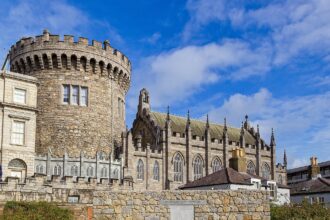
The Chester Beatty Library, tucked inside the grounds of Dublin Castle, is free to enter and offers family activity packs and workshops aimed at engaging children with world cultures, generally recommended from around age four upward. Its collection of manuscripts, illuminated Qurans and Japanese woodblock prints is genuinely world class, and since Dublin Castle’s grounds themselves are free to walk around even without paying for the State Apartments, it is easy to combine a stop here with a wander past Dublinia and Christ Church Cathedral nearby.
Together with Phoenix Park’s playgrounds and deer, and the free National Museum of Archaeology, this gives families a genuinely strong run of no-cost days, or half-days to slot in between paid attractions, without ever feeling like the cheap option is also the weaker one.
Experience Family-Friendly Museums
Beyond the headline attractions, Dublin has several smaller museums that work well with children in tow. Dublinia, opposite Christ Church Cathedral on St Michael’s Hill, focuses on Viking and medieval Dublin through reconstructed streets, a mock archaeological dig, and costumed characters rather than static displays, and it connects directly to the cathedral itself via a covered bridge, making the two an easy combined visit. Adult admission runs around €15, children aged three to twelve around €8.50, and a family ticket for two adults and two children comes to roughly €40.
The Little Museum of Dublin, on the north side of St Stephen’s Green, takes a different approach, offering a guided tour through twentieth-century Dublin history using donated objects and photographs. It runs a Big Little Treasure Hunt map specifically for younger visitors to follow during the tour, which helps keep children engaged even though the format is more guided and less hands-on than Dublinia or Imaginosity. It is open daily from 9:30am to 5pm, with last entry at 4:30pm, and a family ticket covering two adults and up to three children costs around €45.
Both museums sit within easy walking distance of the city centre attractions covered elsewhere on this page, so it is realistic to combine either one with the National Museum or a Viking Splash Tour departure without needing to plan a separate day around them. Booking ahead is recommended for both, particularly the Little Museum’s guided tour slots, which do sell out during busy periods.
Finding Places to Eat with Kids
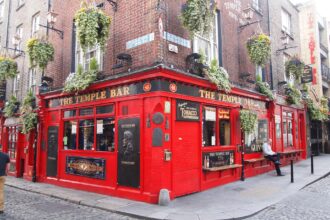
Dublin has become considerably more family-friendly on the dining front over the past decade, and most casual restaurants in the city centre now expect and cater for children rather than treating them as an inconvenience. High chairs are standard in cafes and casual restaurants, and children’s menus are common in the family pub restaurants dotted around Temple Bar, the docklands, and the streets around St Stephen’s Green, many of which also have space for buggies without needing to squeeze between tightly packed tables.
For a lower-stress option than a sit-down restaurant, the food halls and markets scattered around the city let everyone in the family pick something different, which avoids the usual argument over where to eat. Many of the attractions in this guide also have their own cafes, including Dublin Zoo and EPIC, so building lunch into the attraction itself rather than hunting for somewhere separate afterwards can save a lot of time and hassle with tired children in tow.
If you are staying somewhere self-catered, Dublin’s supermarkets are well stocked for familiar snacks and lunch supplies, and picnicking in Phoenix Park or the People’s Flower Garden is a free, flexible option on a fine day. Whatever route you choose, booking ahead for dinner in the city centre on weekend evenings is worth doing in peak season, since the most popular family-friendly spots do fill up.

Rupert’s Handy Travel Tips
I have trotted round Dublin with plenty of families in tow, and a little planning goes a long way when small legs and shorter attention spans are involved.
- Book Dublin Zoo online: pre-booking your Dublin Zoo tickets the night before saves a noticeable amount off the gate price and lets you walk straight past any queue.
- Pack for four seasons in one day: Dublin’s weather turns quickly, so bring layers and a compact rain cover for the buggy even if the morning looks bright.
- Use a Leap Card from day one: loading a Leap Card for the family cuts the cost of buses, the Luas, and the DART, and saves fumbling for coins with a toddler on your hip.
- Stack the free museums on a tight-budget day: the National Museum, the Natural History Museum, the National Gallery and the Chester Beatty Library all sit within easy walking distance of one another in the city centre.
- Pair Phoenix Park with the zoo: arrive early, spot the deer near the Phoenix Monument first while everyone still has energy, then head into Dublin Zoo for the afternoon.
Want to meet the reindeer behind our travel tips? Find out more in our page Who is Rupert?.




Frequently Asked Questions
What is the best age range for a family trip to Dublin?
Dublin suits a wide age range because attractions like Imaginosity cater to toddlers while the National Museum, EPIC, and Dublinia hold the attention of older children and teenagers, so most families with children from around one year old upward find plenty to do.
How much does a family day at Dublin Zoo cost?
A family ticket covering two adults and two children starts at around €62.50 when booked online in advance, rising to around €75 if purchased at the gate on the day.
Is the National Museum of Ireland really free to visit?
Yes, admission to the National Museum of Ireland’s Archaeology branch on Kildare Street is free, though the museum does welcome voluntary donations to support its work.
How long does a Viking Splash Tour take?
The full tour lasts approximately one hour and fifteen minutes, combining a road route through the city centre with roughly fifteen to twenty minutes afloat at the Grand Canal Docks.
What is the best rainy-day activity for kids in Dublin?
Imaginosity in Sandyford and EPIC The Irish Emigration Museum are both fully indoor and interactive, making them the most reliable choices when Dublin’s weather turns, alongside the free National Museum of Ireland, the Natural History Museum, the National Gallery and the Chester Beatty Library.
What are the best free things to do in Dublin with kids?
The National Museum of Ireland’s Archaeology and Natural History branches, the National Gallery of Ireland, the Chester Beatty Library, and Phoenix Park with its wild deer and playgrounds are all free to enter and genuinely worthwhile with children.
Further Reading
This page is part of a broader Ireland travel content cluster, and there is plenty more to explore once you have the family-friendly attractions covered. For a wider view of what the city has to offer beyond kid-focused stops, take a look at our full guide to Things to Do in Dublin, which covers historic streets, shopping, and sights that suit older children and adults alike.
If you are still working out logistics, our Dublin Public Transport Guide explains how the bus, Luas, and DART networks fit together, and our Dublin Airport Transfers page walks through the easiest ways to get the family from the airport into the city without a stressful start to the trip.
Families staying longer than a few days should also consider venturing beyond the capital, and our guide to Day Trips from Dublin covers destinations that pair naturally with the museums and history on this page, giving older children a chance to see some of the sites behind the artefacts they encountered at the National Museum.