
Reviewed by our editorial team Updated
Why choose the Benelux Pass?
The Interrail Benelux Pass is one of the most efficient and rewarding rail passes in Europe. Covering Belgium, the Netherlands, and Luxembourg, it unlocks a region where distances are short, trains are frequent, and every journey delivers something new. Unlike larger countries where travel days are often consumed by long journeys, this pass is built for high-impact, short-distance travel, allowing you to see more in less time.
What makes this pass stand out is density. Within just a few hours, you can move between Amsterdam, Rotterdam, Antwerp, Brussels, Bruges, and Luxembourg City, each offering a completely different experience. Instead of spending hours sitting on trains, you are stepping straight into canal districts, medieval squares, EU institutions, coastal towns, and historic centres, often more than once in the same day.
Speed is another major advantage. Most intercity journeys take under two hours, and many are closer to one hour or less. This changes how you travel. You are not planning your day around long connections. You are treating the rail network as a fast-moving connector between cities, making spontaneous day trips and flexible itineraries far easier to manage.
The pass also gives you control over how you travel. You can use reservation-free regional and intercity trains for complete flexibility, or choose faster Eurostar services when you want to reduce journey times. This balance between flexibility and speed makes it easier to match your travel style and budget.
Another key strength is variety. Few regions in Europe offer this much contrast in such a small area. In one trip, you can experience modern architecture in Rotterdam, medieval streets in Bruges, political centres in Brussels, and quiet countryside in Luxembourg, all connected by a reliable and frequent rail network.
The Interrail Benelux Pass is not about covering distance. It is about maximising what you can experience on each travel day. If you want a trip that feels full, varied, and easy to navigate, this is one of the smartest Interrail options available.
Quick Facts About the Interrail Benelux Pass
The Interrail Benelux Pass gives you unlimited train travel across Belgium, the Netherlands, and Luxembourg using a single ticket. It is designed for European residents, while non-European travellers use the Eurail equivalent, but the experience on the ground is identical.
This is a Flexi Pass, which means you choose a set number of travel days within a one-month window. On each active day, you can take as many trains as you like, making it ideal for combining multiple cities in a single day or spreading journeys across a longer trip.
The pass is available in 1st class and 2nd class, with pricing split into Youth, Adult, and Senior categories. Youth and Senior travellers benefit from reduced pricing, while families gain strong value since children under 12 can often travel free when accompanied by an adult.
One of the biggest advantages is low reservation requirements. Most regional and intercity trains require no booking at all, so you can simply turn up and travel. Faster Eurostar services, including the Brussels to Amsterdam route that used to be branded Thalys, do require paid reservations, but these are optional rather than essential.
The pass is now primarily mobile-based, stored in the Interrail Rail Planner app, where you activate travel days, track journeys, and display your ticket. This removes the need for paper tickets and makes it much easier to adapt your plans in real time.
Best for a short trip. Compare rooms by neighbourhood, price and guest rating before you book.
Compare hotelsBest for families, or any stay past about four nights. A kitchen and a washing machine start paying for themselves.
Browse rentalsBest if you have already picked a hotel. Checks the big booking sites for the same room and shows who is cheapest.
Check dealsKey Operators and Rail Network Size
The Interrail Benelux Pass covers three highly efficient rail systems, creating one of the densest and most reliable networks in Europe. Services are operated by SNCB/NMBS in Belgium, NS in the Netherlands, and CFL in Luxembourg, all of which are known for high frequency and strong reliability.
Belgium’s network spans around 3,600 kilometres, connecting Brussels, Antwerp, Ghent, and Bruges with smaller towns and regional centres. Trains run multiple times per hour on major routes, making it easy to travel without strict planning.
The Netherlands adds another 3,200 kilometres of track, with extremely frequent services between Amsterdam, Rotterdam, Utrecht, and The Hague. Journey times are short, often under one hour, and the flat geography allows for fast and smooth travel across the entire country.
Luxembourg’s network is smaller at around 275 kilometres, but it plays an important role in connecting the region. It links Luxembourg City with Belgium, France, and Germany, while also opening up access to the Ardennes countryside. A key advantage here is that public transport within Luxembourg is free in second class, although first-class rail travel is excluded from the scheme and the pass is still needed for cross-border travel. The government scheme for free mobility across Luxembourg covers buses, trams and second-class train travel throughout the country.
The real strength of this combined network is not size, but density and connectivity. You are never far from a station, and you are rarely waiting long for a train. This makes the Benelux Pass one of the easiest Interrail products to actually use in practice.
Transport Hubs and Major Routes
Travel across the Benelux region revolves around a small number of highly connected transport hubs, each acting as a gateway between cities and countries.
Amsterdam Centraal is one of the most important starting points, linking the Netherlands with Belgium and Germany. Its central location and frequent services make it ideal for building flexible itineraries.
In Belgium, Brussels Midi is the key hub. It handles both domestic services across Belgium and major international routes, including high-speed connections to Paris, London, and Amsterdam. From Brussels, cities like Antwerp, Ghent, and Bruges are all under one hour away, making it the most strategic base in the region.
If you plan to continue overnight beyond the Benelux region from here, our Night Trains from Brussels guide covers sleeper connections onward to Berlin, Prague, Vienna and Milan.
Luxembourg City station is smaller but still critical. It connects the country with Belgium and France while also providing access to scenic countryside routes and quieter destinations beyond the main tourist circuit.
The main travel corridors are short, fast, and easy to combine. The busiest route links Amsterdam, Rotterdam, Antwerp, and Brussels, forming the backbone of cross-border travel. Another popular route runs from Brussels to Bruges and the Belgian coast, while the Brussels to Luxembourg City line offers a slower but more scenic journey.
Because distances are so compact, you can move between multiple major cities in a single day without feeling rushed. This is where the Benelux Pass delivers real value.
How the Benelux Pass Works
The Interrail Benelux Pass is designed to be simple, flexible, and fast to use. Once purchased, it is stored digitally in the Interrail Rail Planner app, which becomes your ticket, planner, and travel log in one place.
You activate the pass by selecting your first travel day. From that point, you have one month to use your chosen number of travel days. Each travel day runs from midnight to midnight, and during that time you can take unlimited train journeys across all three countries.
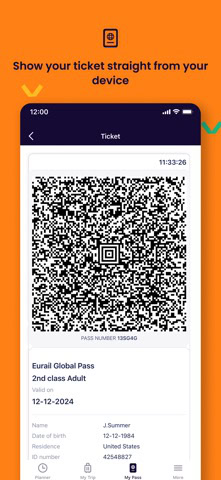
Using the pass is straightforward. Before boarding a train, you add the journey in the app and activate it. The app generates a QR code, which is scanned by ticket inspectors. There is no need to print tickets or visit ticket offices, which makes the whole process far more efficient.
Most trains can be boarded freely, especially regional and intercity services, which require no reservations. This gives you complete flexibility to change plans, take earlier or later trains, and make spontaneous stops along the way.
If you choose to use faster Eurostar services, you will need to book a seat reservation and pay a supplement. These are optional upgrades rather than requirements, meaning you can always fall back on slower, fully covered routes.
In practice, the Benelux Pass works like a region-wide travel key. Instead of thinking about tickets, prices, or restrictions, you simply choose where to go and get on the next train.

Where You Can Travel with the Benelux Pass
The Interrail Benelux Pass opens up a region that is compact in size but incredibly diverse in experience. With one ticket, you can move freely between Belgium, the Netherlands, and Luxembourg, exploring everything from major capitals to smaller, less-visited towns.
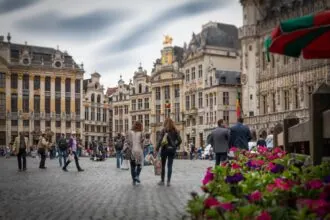
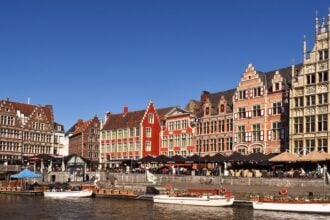
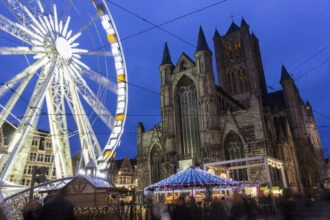
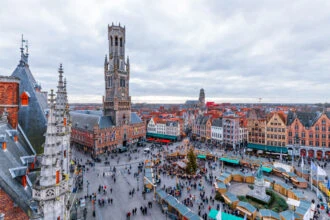
In Belgium, the pass gives you access to some of Europe’s most characterful cities. Brussels offers a mix of political importance and historic charm, while Bruges and Ghent deliver medieval streets, canals, and striking architecture. Antwerp adds a completely different feel, with its focus on fashion, art, and the diamond trade. All of these cities are connected by fast, frequent trains, making it easy to visit several in a short time.
In the Netherlands, the network connects major destinations such as Amsterdam, Rotterdam, Utrecht, and The Hague. Amsterdam is known for its canals and museums, Rotterdam stands out for its modern skyline and architecture, Utrecht offers a more relaxed historic centre, and The Hague combines government buildings with easy access to the coast. Travel between these cities is quick, often taking less than one hour, which makes day trips extremely easy.
In Luxembourg, the pass allows you to explore both the capital and the surrounding countryside. Luxembourg City blends a dramatic historic setting with modern European institutions, while regional trains take you into the Ardennes, where you’ll find castles, valleys, and quieter landscapes.
What makes the Benelux Pass particularly powerful is how easily these destinations connect. You are not limited to one country at a time. You can move between them freely, building a trip that feels varied without becoming complicated. In practical terms, this means you can start your day in Amsterdam, have lunch in Antwerp, and spend the evening in Brussels, all using the same pass.
Top Routes and Itineraries with the Benelux Pass
One of the biggest strengths of the Interrail Benelux Pass is how easily it supports multi-city itineraries without long travel times. The region is built for movement, which means you can see a lot without feeling rushed.
A classic route begins in Amsterdam, where you can spend a few days exploring canals, museums, and neighbourhoods. From there, a short journey takes you to Rotterdam, where the focus shifts to modern design and architecture. Continuing south, you can reach Antwerp and then Brussels, both within easy travel distance and each offering a completely different atmosphere.
From Brussels, many travellers head to Bruges or Ghent, both of which are known for their historic centres and walkable streets. These cities are close enough to visit as day trips, but also rewarding enough to justify an overnight stay.
To extend your journey, you can continue to Luxembourg City, where the pace slows down and the scenery becomes more dramatic. This adds a different dimension to the trip, combining urban exploration with countryside views.
Because travel times are short, the pass also works extremely well for day trip-based itineraries. You can base yourself in Amsterdam or Brussels and take regular trips to surrounding cities such as Utrecht, Leuven, Delft, or Dinant, returning the same day without needing additional tickets.
The flexibility of the pass means you do not need to fix your route in advance. You can adapt as you go, extending stays in places you enjoy and skipping those that do not match your expectations.
Seat Reservations and Supplements
One of the key advantages of travelling in the Benelux region is that most trains do not require seat reservations. This gives you a level of flexibility that is harder to find in countries with stricter booking systems.
On regional and intercity trains, which form the majority of services in Belgium, the Netherlands, and Luxembourg, you can simply board with your pass and find a seat. There is no need to pre-book, which makes it easy to change plans, catch earlier trains, or take spontaneous detours.
The main exceptions are high-speed international services. If you choose to travel on Eurostar, which absorbed the former Thalys network when that brand was retired in 2023, you will need to pay for a seat reservation and, in some cases, an additional supplement. These services offer faster journey times, but they come at a cost and can sell out during busy periods.
There are also a small number of international routes, such as ICE services into Germany or TGV services into France, where reservations are either recommended or required. These are less relevant for purely Benelux-focused travel but are worth noting if you plan to extend your journey.
If you want to avoid extra costs altogether, you can rely entirely on reservation-free services, which are frequent and well-connected. The trade-off is slightly longer journey times, but in such a compact region, the difference is usually minimal.
In practice, this means you can decide between speed and savings on a journey-by-journey basis, which is one of the biggest strengths of the Benelux Pass.
Best for finding routes the airlines do not sell as a single ticket. Combines carriers to bring the fare down.
Search flightsBest for short trips. Install the eSIM at home and arrive with working data, no shop queue.
Browse eSIMsBest when public transport has stopped, or when you are travelling with children and bags.
Book a transferExample Ticket Prices vs Pass Value
Understanding the value of the Interrail Benelux Pass comes down to comparing it with the cost of individual tickets, especially when travelling flexibly or at short notice.
A typical journey between Amsterdam and Brussels can cost anywhere between €25 and €65 one way (£22 to £57 / $27 to $70), depending on timing and demand. Even standard intercity services often sit around the €25 to €30 range (£22 to £26 / $27 to $32). A return trip alone can therefore account for a significant portion of the cost of a short-duration pass.
Another common route, Brussels to Luxembourg City, usually costs €25 to €35 each way (£22 to £30 / $27 to $38), meaning a return journey can easily exceed €50 (£44 / $54). Adding just one more intercity journey puts you close to the price of a 3 or 4-day pass, especially for Youth or Senior travellers.
Even shorter journeys begin to add up. Amsterdam to Rotterdam is often around €15 to €20 (£13 to £17 / $16 to $22), while Brussels to Bruges typically costs €15 each way (£13 / $16). If you make multiple trips in a single day, the total quickly exceeds the daily value of the pass.
The Benelux Pass becomes particularly valuable when you are making multiple journeys across different countries, especially if you are not booking far in advance. It removes the need to search for the cheapest ticket, worry about fixed departure times, or pay higher last-minute fares.
It is also valuable for travellers who prioritise flexibility. Instead of committing to specific trains, you can decide your route on the day, change direction if needed, and take additional trips without increasing your costs.
In simple terms, the more you move, the more the pass works in your favour. For travellers planning four or more intercity journeys, or combining several cities within a short trip, the Benelux Pass is often the smarter financial choice.
How to Buy the Interrail Benelux Pass
Buying the Interrail Benelux Pass is straightforward, and the easiest option is to purchase it directly through the official Interrail website. This gives you access to the latest prices, current conditions, and any seasonal promotions that may be running.
Most travellers should choose the mobile pass, which is stored in the Rail Planner app. After purchase, you receive a pass code, load it into the app, and manage everything digitally. This includes activating travel days, adding journeys, and showing your QR code during ticket inspections.
When buying the pass, you will need to choose your travel class, your number of travel days, and your passenger category. The pass is available in 1st class or 2nd class, with options for Youth, Adult, and Senior travellers. Families should also check the child travel rules, as children under 12 can often travel free when linked to an adult pass holder.
It is worth buying the pass before your trip, especially if you plan to use high-speed trains such as Eurostar, as these require separate reservations. Buying early gives you time to compare routes, secure reservations where needed, and decide whether slower reservation-free services may offer better value.
You can also buy the pass through authorised resellers, but the official Interrail site is usually the cleanest option for most travellers. Paper passes are far less common now, and the mobile pass is much easier to manage if your plans change.
In short, the best approach is to buy the mobile pass in advance, load it into the Rail Planner app, and then use the app to manage your travel days as you move through Belgium, the Netherlands, and Luxembourg.

Explore Europe by Train with Rail Passes
Travelling by train in Europe can quickly become expensive if you book individual tickets. Rail passes offer a flexible way to travel across one or multiple countries with a single ticket, making it easier to plan your journey.
Rail Europe allows you to compare and buy a wide range of rail passes, including Interrail-style options, helping you choose the best pass for your route and travel style.
Benefits of the Benelux Pass
The Interrail Benelux Pass delivers a combination of flexibility, speed, and simplicity that is difficult to match with individual tickets. Its biggest strength is the ability to travel without being locked into fixed plans. On each travel day, you can take unlimited trains, which means you are free to adjust your route, extend your stay, or add extra stops without worrying about additional costs.
Another major advantage is the compact geography of the region. Unlike larger countries where travel days can be consumed by long journeys, most Benelux routes take between one and two hours. This allows you to spend more time exploring cities and less time in transit, making every travel day far more productive.
The pass also simplifies cross-border travel. Instead of buying separate tickets for Belgium, the Netherlands, and Luxembourg, you have one single pass that works across all three. This removes friction from your journey and makes it much easier to move between countries without thinking about pricing or ticket rules.
Cost control is another key benefit. When travelling at short notice, train tickets in this region can become expensive. The pass gives you predictable costs, allowing you to travel freely without worrying about price increases or availability.
Finally, the Benelux Pass encourages deeper exploration. Because travel is already covered, you are more likely to visit smaller cities and less obvious destinations, rather than sticking only to major hubs. This often leads to a richer and more varied trip overall.

Drawbacks and Limitations
While the Interrail Benelux Pass offers strong value, it is not always the cheapest option for every traveller. The main limitation is that individual train tickets in this region can be relatively affordable, especially if booked in advance. If you are only planning one or two journeys, buying tickets separately will often cost less than a pass.
Another consideration is the cost of high-speed train reservations. Eurostar services require paid reservations, which can add to your overall travel cost. If you rely heavily on these faster trains, the savings from the pass may be reduced.
The pass also does not cover local urban transport. Metro systems, trams, and buses in cities such as Amsterdam and Brussels require separate tickets. While these are usually inexpensive, they still need to be factored into your overall travel budget.
There is also a learning curve for first-time users. Understanding how to activate travel days, add journeys, and manage reservations takes a little time. Once you are familiar with the system, it becomes straightforward, but it can feel unfamiliar at the start.
Overall, the pass works best when you are travelling frequently and across multiple cities. If your itinerary is limited or highly fixed, other options may be more cost-effective.
Who the Benelux Pass Is Best For
The Interrail Benelux Pass is particularly well suited to travellers who want to see multiple cities in a short period of time without overplanning every detail.
It is an excellent choice for backpackers and younger travellers, especially those in the Youth category, who benefit from discounted pricing and tend to travel more spontaneously. The ability to change plans on the day fits perfectly with this style of travel.
Couples and small groups also benefit from the simplicity of the pass. Instead of coordinating multiple tickets, everyone can travel using the same structure, making it easier to plan and move together.
For senior travellers, the pass offers both convenience and value. The discounted fares and the ability to avoid ticket machines or language barriers make it a more comfortable way to explore the region at a relaxed pace.
Families gain strong value as well, particularly because children under 12 can often travel free when accompanied by an adult. This reduces overall travel costs while keeping the itinerary flexible.
The pass is especially effective for travellers who enjoy short journeys and dense sightseeing. If you want to experience several cities without long travel days, this region is one of the best places in Europe to do it.
Tips for Using the Benelux Pass
To get the most value from the Interrail Benelux Pass, a few practical habits make a significant difference.
It is important to plan around travel days rather than calendar days. Since each travel day allows unlimited journeys, you should aim to group multiple trips together. This maximises the value of each activated day.
When using high-speed Eurostar services, it is best to book reservations early. These trains can sell out, and prices increase closer to departure.
A smart approach is to combine high-speed and regional travel. Use faster trains when time matters, but rely on reservation-free services for flexibility and cost control. In a region this compact, slower routes are often only slightly longer.
Travelling outside peak commuter hours will make your journey more comfortable. Mid-morning and early afternoon trains tend to be quieter, especially on busy routes between major cities.
It is also worth using one city as a base. Staying in Amsterdam or Brussels and taking day trips allows you to reduce hotel changes while still seeing multiple destinations.
Finally, always keep your Rail Planner app updated and ready, as it is essential for activating travel days and showing your ticket during inspections.
Best for short city stops where being central matters more than the room. Dorms and private rooms both listed.
See hostelsBest arranged before you fly rather than after. Covers claim handling, plus lounge access on eligible delays.
Explore AirHelp+Best for the gap between checking out and your train. Drop bags at a shop or hotel nearby and carry on.
Store your bagsAlternatives to the Benelux Pass
While the Interrail Benelux Pass is a strong option, it is not always the best choice for every traveller. The right alternative depends on how much you plan to travel and how fixed your itinerary is.
If you are only making one or two journeys, buying point-to-point train tickets is often cheaper, and the systems behind those tickets have changed recently in places. Belgium overhauled its entire domestic ticketing structure between October 2025 and January 2026, scrapping its old multi-journey passes in favour of automatic distance-based pricing and an optional Train+ discount card. If your trip is staying inside Belgium, our Belgium Train Tickets Explained guide breaks down when the new fares beat a pass.
For trips confined to the Netherlands, two NS products are also worth comparing before buying a multi-day pass. The NS Day Ticket, priced around €66.60, covers unlimited train-only travel for a single day and can beat the Benelux Pass if you are only exploring Dutch cities, as explained in our NS Day Ticket guide. If you also want trams, buses, and the metro included, the Holland Travel Ticket, priced around €79 (or €54 off-peak), adds that coverage, and is covered in our Holland Travel Ticket guide. Travellers based specifically around the Aachen, Maastricht, and Liège border region should also look at the Euregio Ticket, a roughly €23.50 day ticket covering cross-border regional trains and buses across Germany, the Netherlands, and Belgium.
Another option is the Interrail Global Pass, which becomes more attractive if your trip extends beyond the Benelux region. If you are planning to continue into France, Germany, or beyond, a Global Pass can remove the need to switch between multiple country passes and may offer better overall value.
For travellers focused mainly on cities, local transport passes can also play a role. Systems in places like Amsterdam and Brussels provide easy access to trams, buses, and metro lines. While these do not replace intercity rail, they can reduce the need to use a pass for shorter journeys.
Some travellers also consider flying between cities, particularly on longer European routes. However, within the Benelux region, flights rarely make sense. Once you factor in airport transfers, security checks, and waiting times, trains are usually faster, more convenient, and far more central.
In practice, the Benelux Pass sits in the middle. It offers more flexibility than fixed tickets and more focus than a Global Pass. If you are travelling frequently across all three countries, it remains one of the most balanced options available.
Final Verdict
The Interrail Benelux Pass is one of the most practical and efficient rail passes in Europe. It is not designed for long-distance travel or slow cross-country journeys. Instead, it excels in a region where cities are close together and trains run constantly.
Its biggest advantage is how much you can experience in a short time. With most journeys taking under two hours, you can visit multiple destinations without losing entire days to travel. This makes it ideal for travellers who want a fast-moving, varied itinerary without the stress of booking individual tickets.
The pass delivers the most value when you are moving frequently, especially across borders. It removes pricing uncertainty, allows spontaneous decisions, and makes it easier to explore places you might otherwise skip.
It is not the cheapest option for minimal travel. If you are only visiting one or two cities, individual tickets will usually cost less. High-speed train reservations can also add extra costs if you rely on them heavily.
For everyone else, the balance is clear. If your plan involves multiple cities, flexible travel, and cross-border movement, the Interrail Benelux Pass is a smart and reliable choice. It simplifies your trip and allows you to focus on the experience rather than the logistics.
Apps for Benelux Train Travel
Using the right apps alongside the Interrail Benelux Pass makes a noticeable difference to how smoothly your trip runs. While the pass itself gives you access to trains, apps give you real-time control, planning, and flexibility.
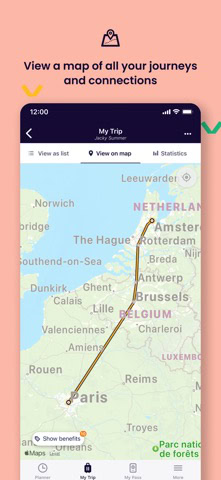
The most important tool is the Rail Planner app, developed by Interrail. This is where your mobile pass is stored, where you activate travel days, and where your QR code ticket is generated. It also provides timetables across Europe, making it your central hub for planning journeys. However, its data is not always fully up to date, so it works best when paired with local apps.
For travel within the Netherlands, the NS app is essential. It provides live departure boards, platform changes, and delay information, which is especially useful in a network where trains run frequently and changes can happen quickly.
In Belgium, the SNCB/NMBS app offers similar functionality, allowing you to check real-time schedules and disruptions. It is particularly useful when navigating connections through Brussels or planning trips to cities like Bruges and Ghent.
For Luxembourg, the CFL app helps with planning routes and checking train times, although the country’s free public transport system means you will often use it more for information than ticketing.
When it comes to international routes or reservations, apps like Trainline and Omio are valuable. They allow you to compare routes, check availability, and book reservations for services that are not fully handled inside the Interrail system, particularly high-speed trains.
For getting around once you arrive, Google Maps works extremely well across the Benelux region. It integrates train, tram, and bus data, helping you move from stations to your accommodation or attractions without confusion.
In practice, the best setup is simple. Use Rail Planner for your pass and core journeys, and combine it with local rail apps for real-time accuracy. This approach gives you both broad planning and live updates, ensuring your travel experience stays smooth and flexible.

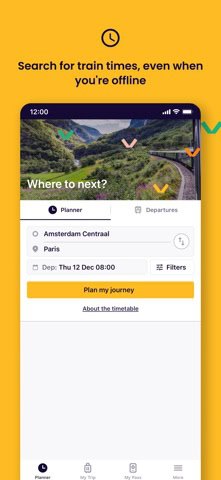
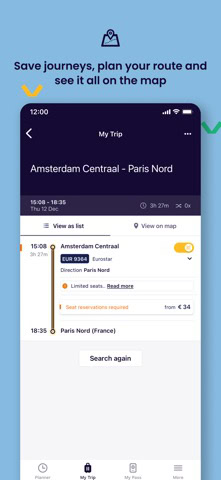
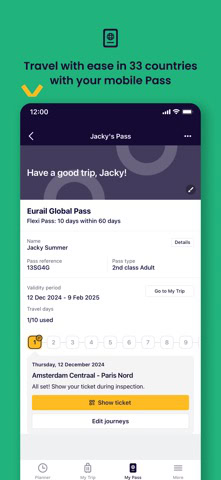
App availability and prices vary by country. Some of these may not appear in your local App Store or Google Play.

Rupert’s Handy Travel Tips
The Benelux region is small enough that a single travel day can take you through three countries, so a little planning turns a good trip into a brilliant one. Here are my favourite ways to get more out of a Belgium, Netherlands and Luxembourg Interrail Pass.
- Save the high-speed trains for the big hops: Eurostar, which took over the former Thalys services, links Brussels and Amsterdam in under two hours, handy if your days are tight, but reservation-free intercity trains cover the same route in around three hours for no extra cost.
- Treat each travel day as a day-trip day: because the region is so compact, one activated day can easily cover three or four cities, so group your journeys together rather than spreading them thin across the month.
- Budget separately for city transit: trams, metro and buses in Amsterdam, Brussels and Rotterdam aren’t included in the pass, so keep a contactless card or local app to hand. Luxembourg is the one exception, where public transport is free in second class.
- Pick one hub and take day trips from it: basing yourself in Brussels or Amsterdam and travelling out to Bruges, Ghent, Utrecht or Delft saves you repacking every night while still covering the whole region.
- Book high-speed reservations early: Eurostar seats sell out fast on Fridays, weekends and around school holidays, so lock those in as soon as you know your dates, even if the rest of your itinerary stays flexible.
Want to meet the reindeer behind our travel tips? Find out more in our page Who is Rupert?.





Frequently Asked Questions about the Interrail Benelux Pass
Do I need to reserve seats on Benelux trains?
Most regional and intercity trains in Belgium, the Netherlands, and Luxembourg don’t require reservations. High-speed Eurostar services do require advance booking and a supplement.
Can I use the pass for city transport like metros or trams?
No. The pass covers national and regional trains, but local transport such as metros, trams, and buses usually require separate tickets. An exception is Luxembourg, where public transport is free in second class, with first-class rail travel excluded.
Is the Benelux Pass cheaper than point-to-point tickets?
It depends on your itinerary. If you plan several journeys across three countries, the pass usually saves money and offers flexibility. For only one or two trips, individual tickets may be cheaper.
How do I activate travel days?
With the mobile pass, you activate each travel day through the Interrail Rail Planner app, which generates a QR code to show on board. For the paper version, you enter the date manually in the pass.
Can children travel for free?
Yes. Up to two children under 12 can travel free with each paying adult who holds a valid pass, making it a family-friendly option.
Further Reading & Related App Guides
Want to prepare for every part of your journey? These related guides will help you stay informed, connected, and ready to travel with confidence.
If the Benelux region is one leg of a longer trip, our Interrail Global Pass Guide compares pass types and routes to help you work out how it all fits together. Staying online as you move between Amsterdam, Brussels, and Luxembourg City matters too, and our eSIM Apps Guide covers the easiest ways to keep data working without swapping physical SIM cards.
If Brussels forms a key stop on your Benelux itinerary, our Things to Do in Brussels guide covers the city’s museums, historic squares and free attractions in full, while our Brussels Airport Transfers guide and Brussels Public Transport Guide cover arriving and getting around. If you have time to explore further, our Day Trips from Brussels guide and dedicated Things to Do in Bruges and Things to Do in Ghent guides go deeper on the two cities most travellers pair with Brussels on this pass.
When it comes to mealtimes on the move, our Food Delivery Apps Guide rounds up the apps worth having installed in Belgian, Dutch, and Luxembourgish cities. Since regional weather can shift quickly, it is also worth checking our Weather Apps Guide before setting off, particularly for day trips to the coast or the Ardennes.