Reviewed by our editorial team Updated
Why Choose the Spain Interrail Pass
The Interrail Spain Pass is one of the most powerful rail passes in Europe because Spain combines huge distances, world-class high-speed trains, and a wide range of regions that feel completely different from one another. For travellers who want to move between Madrid, Barcelona, Seville, Valencia, Málaga, Bilbao, or Santiago de Compostela without constantly buying separate tickets, the pass can be a very practical and flexible choice.
Spain’s greatest rail strength is its AVE high-speed network. These trains can turn journeys that once took most of a day into fast, comfortable city-to-city hops. You can travel from Madrid to Barcelona in around 2 hours 30 minutes, from Madrid to Seville in around 2 hours 30 minutes, and from Madrid to Valencia in less than 2 hours. That speed makes rail a serious alternative to domestic flights, especially once airport transfers, security, and baggage time are considered.
The pass is not only useful for headline cities. It also opens access to regional routes, medium-distance services, and Cercanías commuter trains in major urban areas. This means travellers can combine big cultural stops with smaller destinations such as Toledo, Córdoba, Zaragoza, Girona, Alicante, or San Sebastián, depending on the route and reservation availability.
The biggest reason many travellers choose the Spain rail pass is cost control. Spanish long-distance tickets can vary heavily depending on demand, route, and booking timing. Last-minute fares on major AVE routes can become expensive, especially during summer, public holidays, and busy weekends. With the pass, your main travel cost is fixed, although you still need to budget for mandatory seat reservations on most long-distance trains.
Comfort is another major benefit. Spanish trains are generally modern, clean, air-conditioned, and well organised. Many long-distance services offer reserved seating, food options, luggage space, and a smoother experience than long coach journeys.
For travellers who want speed, comfort, regional variety, and the ability to connect Spain’s major cultural centres in one trip, the Interrail Spain Pass is a strong option. It works especially well for travellers planning multiple long-distance routes rather than staying in just one region.
Quick Facts / Pass Overview
The Interrail Spain Pass is a One Country Flexi Pass that gives travellers a set number of rail travel days to use within one month. It is designed for non-Spanish residents who want to explore Spain by train using the national rail network operated mainly by Renfe.
The pass is available for Youth, Adult, and Senior travellers, with children under 12 usually travelling free when accompanied by an eligible adult pass holder. Travellers can normally choose between 3, 4, 5, 6, or 8 travel days within the one-month validity period.
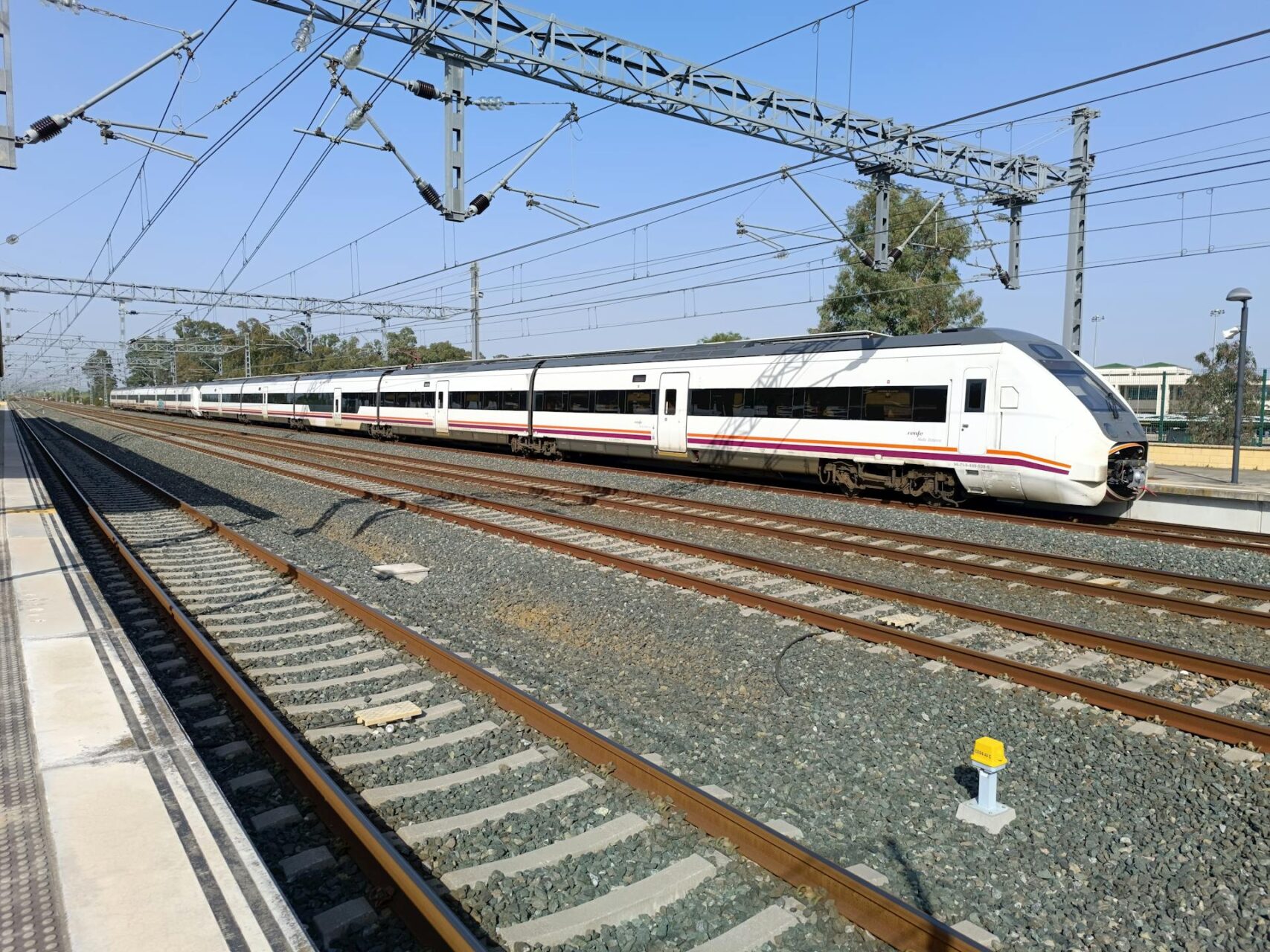
Coverage is broad across Renfe-operated trains, including AVE high-speed services, Alvia, Intercity, Euromed, Media Distancia regional trains, and many Cercanías commuter networks in cities such as Madrid, Barcelona, Valencia, Málaga, and Bilbao. This makes the pass useful for both long-distance travel and some short local rail connections.
The most important thing to understand is that Spain is a reservation-heavy Interrail country. Most long-distance services require a separate seat reservation before boarding. This includes most AVE, Alvia, Euromed, and Intercity trains. These reservations are not included in the pass price and usually cost around €10–€15 (£9–£13 / $11–$16) for standard daytime services.
This makes the Spain Pass slightly less spontaneous than passes in countries where reservations are rare. However, the trade-off is access to one of the fastest and most extensive high-speed networks in the world.
The pass is strongest for travellers covering long distances between major regions, especially routes involving Madrid, Barcelona, Andalusia, Valencia, Galicia, or the Basque Country. It is less useful for travellers staying only in one city or relying mainly on local buses, metros, or regional transport not operated by Renfe.
In practical terms, the Spain train travel pass is best viewed as a flexible high-speed rail tool. Used well, it can turn Spain’s size into an advantage by making long journeys fast, comfortable, and easier to manage.
See hotel options and places to stay in Spain.
Browse hotelsBrowse apartments, holiday homes and self-catering stays in Spain.
View rentalsCompare hotel deals in Spain from multiple booking sites.
Compare pricesKey Operators and Rail Network Size
The Interrail Spain Pass is built around Renfe, Spain’s national railway operator. Renfe runs the majority of the country’s long-distance, regional, and suburban services, making pass coverage relatively straightforward compared with countries that have many competing rail companies.
The most important part of the Spanish network is the AVE high-speed system, which is one of the largest in the world. Spain has built thousands of kilometres of high-speed track, connecting the capital with major cities across the country. For travellers, this means Madrid functions as the central hub for fast journeys towards Barcelona, Seville, Málaga, Valencia, Alicante, León, and other key destinations.
Renfe also operates Alvia trains, which are especially useful because they can run on both high-speed and conventional tracks. This allows travellers to reach cities that are not served entirely by AVE lines, including parts of northern Spain and Galicia.
Intercity and Media Distancia services add important regional coverage. These trains are slower than AVE services but useful for reaching smaller cities, towns, and areas beyond the main high-speed corridors.
The Cercanías networks are another useful inclusion. These commuter rail systems operate around major cities and can help travellers connect airports, suburbs, and nearby towns without buying separate tickets. In cities such as Madrid, Barcelona, Valencia, Málaga, and Bilbao, Cercanías trains can be genuinely useful for short-distance rail travel.
Spain’s rail network covers more than 12,000 kilometres, with high-speed lines forming the headline attraction. However, coverage is not equally dense everywhere. Central, eastern, and southern Spain benefit from strong high-speed connections, while some rural regions and smaller towns still rely more heavily on buses.
The pass is strongest where Renfe’s long-distance network is strongest. Routes between Madrid, Barcelona, Andalusia, Valencia, and parts of the north provide the best combination of speed, comfort, and pass value.
For travellers focused on major cities and regional highlights, Spain’s rail network is one of the most effective in Europe. For travellers wanting remote villages or rural national parks, buses and local transfers may still be needed.
Transport Hubs and Major Routes
Spain’s rail system is heavily centred on Madrid, making the capital the natural starting point for many Interrail itineraries. The country’s geography and high-speed network both reinforce Madrid’s role as the main national hub, with fast routes radiating out towards almost every major region.
Madrid Puerta de Atocha is the most important station for high-speed services heading south and east. From here, travellers can reach Seville, Córdoba, Málaga, Granada, Valencia, Alicante, Zaragoza, and Barcelona using AVE, Alvia, or other long-distance services. For cultural itineraries, Atocha is one of the most useful stations in Europe.
Madrid Chamartín handles many northern and northwestern routes, including services towards León, Burgos, Galicia, Asturias, and parts of the Basque region. Travellers heading towards Santiago de Compostela, A Coruña, or northern Spain often use Chamartín rather than Atocha.
Barcelona Sants is Spain’s second major rail hub. It provides fast links to Madrid, Zaragoza, Valencia, Girona, and international routes into France. It is also the main station for travellers combining Spain with onward rail travel towards Perpignan, Lyon, Marseille, or Paris.
In the south, Seville Santa Justa, Málaga María Zambrano, and Córdoba Central form the backbone of Andalusian high-speed travel. These stations make it easy to combine Seville, Córdoba, Granada, and Málaga within one itinerary.
On the east coast, Valencia Joaquín Sorolla is a key high-speed station linking the Mediterranean with Madrid and Barcelona. In the north, Bilbao Abando, San Sebastián, and Santiago de Compostela are important gateways for travellers exploring greener, Atlantic-influenced Spain.
The most valuable routes for pass holders are usually the major high-speed corridors. Madrid to Barcelona, Madrid to Seville, Madrid to Valencia, Madrid to Málaga, and Barcelona to Valencia all offer strong pass value because individual tickets can become expensive.
These hubs and routes make the Interrail Spain Pass especially useful for travellers who want to cover several regions in one trip while avoiding domestic flights and long road journeys.
Example Ticket Prices vs Pass Value
Spain’s rail network is modern and extremely fast, but standard ticket prices can become expensive surprisingly quickly, particularly on the country’s famous AVE high-speed trains. This is where the Interrail Spain Pass can deliver significant value for travellers planning multiple long-distance journeys.
One of the busiest routes in Europe is the journey between Madrid and Barcelona. Advance tickets can sometimes be found cheaply during promotional periods, but normal fares regularly sit between €60 (£52 / $65) and €120 (£104 / $130) one way, especially when booked close to departure. During holidays, weekends, and summer travel peaks, prices can climb even higher.
Routes towards southern Spain are similarly expensive. A standard Madrid to Seville AVE ticket often costs between €50 (£44 / $54) and €90 (£78 / $97), while journeys towards Málaga or Granada frequently reach similar levels. Travellers covering several Andalusian cities during one trip can quickly accumulate substantial transport costs.
The Mediterranean corridor is another expensive area for last-minute travel. Journeys between Barcelona, Valencia, and Alicante often range from €35 (£30 / $38) to €80 (£70 / $86), depending on timing and train type. Cross-country routes such as Barcelona to Málaga can exceed €100 (£87 / $108) on high-speed services.
Northern Spain also adds up quickly. Routes from Madrid to Bilbao, San Sebastián, or Santiago de Compostela frequently cost between €35 (£30 / $38) and €80 (£70 / $86) individually, especially on faster Alvia services.
When combined together, just three or four major journeys can easily exceed €200–€300 (£174–£261 / $216–$324) in standalone ticket costs. By comparison, the Interrail Spain Pass spreads that cost across multiple travel days while offering far greater flexibility.
The biggest financial advantage appears when plans change. Spain’s rail pricing behaves similarly to airline pricing, meaning tickets become progressively more expensive closer to departure. Travellers relying solely on point-to-point fares often feel pressure to commit to fixed schedules early.
With the Spain rail pass, the core transport cost is already covered. Although reservations are still required on most long-distance services, travellers avoid the worst of Spain’s fluctuating high-speed pricing structure.
The pass becomes particularly valuable for travellers combining Madrid, Barcelona, Andalusia, and one northern or coastal region within the same itinerary. At that point, the overall savings and flexibility often outweigh the additional reservation fees.
For travellers planning extensive rail exploration rather than one or two isolated journeys, the Spain Interrail ticket can provide both strong financial value and a much more relaxed travel experience.

Interrail Spain Pass Prices (Flexi Passes)
The Interrail Spain Pass is sold as a Flexi Pass, allowing travellers to choose a fixed number of travel days to use within a one-month period. This structure works especially well in Spain because many travellers combine intense high-speed travel days with slower sightseeing days spent exploring cities locally.
Travellers can normally choose between 3, 4, 5, 6, or 8 travel days within one month. The pass is available in Youth, Adult, and Senior categories, with children under 12 generally travelling free alongside an eligible adult pass holder.
Adult pricing for 2025 starts at approximately €105 (£91 / $113) for 3 travel days. A 4-day pass usually costs around €129 (£112 / $139), while a 5-day pass rises to roughly €152 (£132 / $164). The larger 6-day and 8-day options normally sit near €169 (£147 / $183) and €194 (£169 / $210) respectively.
Youth travellers receive particularly strong discounts, often reducing pass prices by around 20–25%. This makes the Spain pass especially attractive for backpackers and younger travellers attempting wider European Interrail trips that include Spain.
Senior travellers aged 60 and above also receive discounted pricing, helping reduce the cost of longer, more comfortable rail-based itineraries around the country.
The most popular choices are generally the 5-day and 6-day passes. These allow enough flexibility to connect Spain’s major regions without feeling rushed. A traveller could comfortably cover Madrid, Barcelona, Valencia, Seville, and Málaga using a 5-day structure while still leaving time for sightseeing between travel days.
The larger 8-day pass becomes more attractive for travellers extending into Galicia, the Basque Country, or the quieter corners of Andalusia and Aragón.
Although reservation fees must still be added separately, the overall value remains strong compared with buying multiple last-minute AVE tickets individually.
For travellers planning several long-distance journeys rather than a single-region holiday, the Spain train travel pass usually becomes financially worthwhile relatively quickly.
How the Spain Pass Works
The Interrail Spain Pass works using a flexible travel-day system. Instead of offering unlimited daily travel for a continuous period, travellers receive a selected number of rail travel days that can be used freely within a one-month validity window.
On each activated travel day, pass holders can take unlimited included trains across the Spanish rail network operated by Renfe. This means travellers can combine multiple journeys on the same day without paying additional base fares.
The pass is available as both a mobile pass and a paper pass, although the mobile version is now by far the most popular option. Mobile passes operate through the official Rail Planner App, where travellers activate travel days, add journeys, and display the QR code scanned by onboard ticket inspectors.
The mobile version is especially useful in Spain because plans often change due to reservation availability, weather, or shifting itineraries. Travel days can normally be activated shortly before departure, adding useful flexibility.
However, Spain differs from many Interrail-friendly countries because reservations are almost always compulsory on long-distance services. Most AVE, Alvia, Intercity, and many other fast trains require a paid reservation before boarding.
Without a reservation, travellers cannot board these services even if they hold a valid pass.
Reservation fees typically range between €10 (£9 / $11) and €15 (£13 / $16) for standard high-speed routes, although premium trains, international services, and sleeper options can cost more.
Reservations can usually be booked through Renfe ticket offices, some self-service machines, selected travel agencies, and in certain cases online. Many travellers prefer arranging reservations directly at major stations after arriving in Spain.
Regional and commuter services are generally more flexible. Many Media Distancia and Cercanías routes either have low reservation requirements or none at all, making them useful for shorter spontaneous journeys.
The key to using the Spain rail pass effectively is understanding that it functions best as a flexible long-distance transport tool rather than a completely spontaneous hop-on system.
Used strategically, it allows travellers to cover enormous distances across Spain comfortably while avoiding the unpredictability of last-minute high-speed ticket pricing.
Where You Can Travel with the Spain Pass
The Interrail Spain Pass provides extensive access across Spain’s national railway network, connecting major cities, coastal regions, historic centres, and large parts of the country through high-speed and regional services.
At the centre of the network is Madrid, which acts as Spain’s main rail hub. From the capital, travellers can reach almost every major region quickly using AVE and Alvia services. Routes towards Barcelona, Seville, Valencia, Málaga, Alicante, Bilbao, Zaragoza, and Galicia form the backbone of the pass experience.
The eastern corridor is especially strong. Travellers can move easily between Barcelona, Valencia, and Alicante, combining Mediterranean cities, beaches, and cultural destinations using fast rail connections.
Southern Spain is another major highlight. The pass works extremely well for exploring Andalusia, allowing travellers to connect Seville, Córdoba, Málaga, and Granada far more efficiently than by road. Spain’s southern AVE network dramatically reduces travel times across the region.
Northern Spain offers a very different experience. Routes towards Bilbao, San Sebastián, León, Oviedo, and Santiago de Compostela provide access to greener Atlantic landscapes, Basque culture, mountain scenery, and coastal routes less associated with stereotypical Spanish tourism.
The pass also covers many Cercanías commuter networks, which can be useful for airport access and shorter suburban trips around major urban areas.
One thing the pass does not cover is international travel. The Spain Pass is a One Country Pass, so it is valid only within Spain. Cross-border services from Barcelona towards Perpignan, Marseille, Lyon, or Paris need a separate ticket, or an Interrail Global Pass if France forms part of a wider trip.
However, travellers should understand that some rural regions still have weaker rail coverage. Areas dependent mainly on buses or local transport may require additional tickets outside the pass network.
Overall, the Spain Interrail ticket works best for travellers focusing on major cities, cultural centres, coastal routes, and medium-to-long-distance rail travel rather than highly rural exploration.
Search flights and useful route combinations for your trip.
View flightsBrowse Airalo eSIM options for convenient travel data.
Check eSIMsHave a private airport pickup arranged before you travel.
Book a transferHow to Buy the Interrail Spain Pass
Buying the Interrail Spain Pass is relatively straightforward, and most travellers now choose to purchase it online before arriving in Spain. The easiest and most reliable option is through the official Interrail website, where you can compare pass types, select travel days, and choose between mobile or paper delivery formats.
The majority of travellers now use the mobile pass, which is delivered digitally through the Rail Planner App. This avoids shipping delays, removes the risk of losing paper tickets, and allows travel days to be activated directly from your phone. For travellers moving between multiple countries, the mobile option is usually the most convenient.
Paper passes are still available for those who prefer physical tickets, particularly some older travellers or people concerned about battery life during long journeys. These are posted to your home address before departure and require manual entry of travel details during use.
When purchasing the pass, you’ll need to decide how many travel days you require. Spain works particularly well with the 5-day and 6-day pass structures because the country is geographically large and many travellers combine several long-distance routes in one trip.
You’ll also choose between 2nd class and 1st class travel. Spain’s standard class is already comfortable, with air conditioning and reserved seating, but 1st class offers wider seats, quieter carriages, and sometimes lounge access in major stations such as Madrid Atocha and Barcelona Sants.
Youth and senior discounts are available automatically during the booking process. Travellers 27 or under usually receive the largest reductions, making the pass especially attractive for younger Interrail users.
One important thing to understand is that buying the pass itself does not automatically reserve seats on Spanish trains. After purchasing the pass, you’ll still need to arrange reservations separately for most long-distance services.
Reservations can often be handled after arriving in Spain at Renfe ticket offices, although many experienced travellers prefer booking important routes in advance during busy seasons.
Spain’s online reservation system used to be awkward for Interrail users, often meaning an international phone call or an in-person visit to a Renfe ticket window just to book a seat. That is no longer the case. Interrail’s own reservation service now sells seats on Spanish high-speed trains, including AVE, so most reservations can be booked online before you travel, and station ticket offices remain an option once you arrive. A few services still have to be arranged at the station, notably Avant. Even so, many Interrail users deliberately build some flexibility into their itinerary rather than trying to pre-plan every train weeks ahead.
For travellers covering multiple regions, the combination of the pass plus selective reservations usually remains considerably cheaper than buying fully flexible point-to-point AVE tickets individually.

Explore Europe by Train with Rail Passes
Travelling by train in Europe can quickly become expensive if you book individual tickets. Rail passes offer a flexible way to travel across one or multiple countries with a single ticket, making it easier to plan your journey.
Rail Europe allows you to compare and buy a wide range of rail passes, including Interrail-style options, helping you choose the best pass for your route and travel style.
Top Routes and Itineraries with the Spain Pass
One of the biggest strengths of the Interrail Spain Pass is the sheer variety of routes it unlocks. Spain’s high-speed rail network allows travellers to combine major cities, coastal regions, mountain scenery, and historic towns surprisingly efficiently.
The classic first-time Spain itinerary normally centres around the country’s three biggest tourism anchors: Madrid, Barcelona, and Andalusia.
A highly popular route begins in Barcelona, continues south-west towards Madrid, then heads onwards to Córdoba, Seville, and Málaga. This route combines modern cities, Moorish architecture, Mediterranean beaches, and some of Spain’s most famous cultural landmarks.
Another strong option is the Mediterranean corridor, running from Barcelona through Valencia, Alicante, and eventually into Murcia or Málaga. This itinerary works especially well for travellers wanting a mix of rail travel and coastal relaxation.
Northern Spain offers a completely different atmosphere. Travellers can use the pass to explore Bilbao, San Sebastián, Oviedo, León, and Santiago de Compostela, experiencing Atlantic coastlines, mountain scenery, and the food culture of the Basque Country and Galicia.
For travellers interested in pilgrimage history, the rail network also works well alongside sections of the Camino de Santiago, allowing flexible movement between walking stages or major northern cities. The cathedral’s Pilgrim’s Reception Office in Santiago de Compostela issues the Compostela certificate to walkers and cyclists who complete a qualifying stage.
Onward connections are worth planning for as well. Barcelona links easily into southern France and wider European itineraries, with popular onward destinations including Marseille, Lyon, and Paris. Those cross-border legs sit outside the Spain Pass and need their own ticket, or a Global Pass.
Spain also works extremely well for hub-based travel. Many travellers use Madrid as a central base because AVE services radiate outward in almost every direction. Day trips to Toledo, Segovia, Córdoba, or Valencia become very manageable using high-speed services.
Meanwhile, Barcelona serves as an excellent gateway for both Catalonia and southern France.
Travellers wanting scenic variety often combine the fast AVE routes with slower regional services through wine regions, mountain areas, and smaller towns. This balance helps avoid turning the trip into simply a sequence of major cities.
The flexibility of the Spain rail pass means itineraries can remain fluid. If weather changes, accommodation plans shift, or a city becomes more interesting than expected, travellers can usually adapt without suffering the huge ticket price penalties associated with Spain’s dynamic rail pricing system.
Seat Reservations and Supplements
Seat reservations are one of the most important things to understand before using the Interrail Spain Pass. Spain operates a far more reservation-heavy system than many other European countries, particularly on long-distance and high-speed routes.
Almost all major services require reservations. This includes AVE high-speed trains, Alvia, Euromed, Intercity, and most premium long-distance routes across the country.
Without a reservation, boarding is not permitted even if you hold a valid pass.
Reservation costs usually range between €10 (£9 / $11) and €15 (£13 / $16) for standard AVE services, although some international trains and sleeper services can cost more depending on route and comfort level.
The good news is that Spain’s reservation fees are still usually cheaper than buying fully flexible standalone tickets. Even after adding reservation supplements, the overall savings from the pass can remain substantial for travellers making multiple long-distance journeys.
Reservations become especially important during summer holidays, Easter, weekends, and major Spanish festivals. Routes such as Madrid to Barcelona, Madrid to Seville, and Barcelona to Valencia can sell out days in advance during busy periods.
This means travellers using the Spain Interrail ticket need slightly more planning than in countries like Germany or Austria where spontaneous boarding is easier.
Reservations can normally be arranged directly through Renfe ticket offices, selected station machines, and in some cases online. However, Spain’s online reservation system can occasionally be frustrating for Interrail users, leading many travellers to reserve key journeys after arriving at major stations.
Regional trains are more flexible. Many Media Distancia services either have low-cost reservations or no reservations at all, making them useful for shorter or more spontaneous travel.
Commuter networks such as Cercanías around Madrid, Barcelona, Valencia, and Málaga are included in the pass without reservations entirely.
Night trains operate differently again. Sleeper routes require additional supplements depending on whether you choose a reclining seat, couchette, or private cabin. While more expensive, they can offset hotel costs and save daytime travel hours.
Overall, travellers should approach Spain’s reservation system as part of the country’s rail culture rather than a flaw. Once understood, the system is manageable, and the quality and speed of the trains generally justify the extra organisation required.
Benefits of the Spain Pass
The Interrail Spain Pass offers several major advantages that make it one of the strongest rail passes in southern Europe, particularly for travellers covering multiple cities and regions.
The biggest benefit is access to Spain’s exceptional AVE high-speed rail network. Spain possesses one of the world’s largest high-speed systems, allowing travellers to cross huge distances rapidly and comfortably. Journeys that once took most of a day can now be completed in just a few hours.
This transforms how travellers experience the country. It becomes realistic to combine Barcelona, Madrid, Seville, Valencia, Málaga, and even northern Spain within a single itinerary without needing internal flights.
Another major advantage is flexibility. Spain’s normal ticket pricing behaves much like airline pricing, with fares increasing significantly closer to departure. The pass removes much of that pressure by covering the base fare regardless of when you travel.
The pass also provides excellent comfort value. Spanish trains are modern, air-conditioned, spacious, and often equipped with Wi-Fi and food services. Stations are generally central, meaning rail travel often feels considerably less stressful than flying domestically.
Regional coverage is another underrated strength. Although the AVE network gets most attention, the pass also works on slower regional and commuter services, helping travellers reach smaller destinations beyond the major tourism circuit.
Spain also slots neatly into a larger trip. Direct rail links with France make it easy to combine a Spain Pass with a separate ticket or a Global Pass for the onward journey.
For environmentally conscious travellers, the pass also offers a much lower-carbon alternative to repeated domestic flights across Spain’s enormous geography.
Perhaps most importantly, the Spain rail pass allows travellers to experience Spain gradually rather than simply “jumping” between airports. Watching landscapes change from the plains around Madrid to Mediterranean coastlines or northern mountains becomes part of the journey itself.
For travellers who value flexibility, comfort, speed, and wide regional access, the pass remains one of the most practical ways to explore Spain comprehensively by rail.
Drawbacks and Limitations
While the Interrail Spain Pass offers strong value and excellent coverage, it is not a perfect product for every traveller. Understanding the limitations beforehand helps avoid frustration once you arrive in Spain.
The biggest drawback is unquestionably the mandatory reservation system. Spain’s rail network is heavily reservation-based, particularly on long-distance and high-speed services. Unlike countries such as Germany or Austria, where you can often board freely with an Interrail pass, Spain requires advance bookings for most important routes.
This reduces spontaneity. If you suddenly decide to travel from Madrid to Barcelona on a busy Friday afternoon, there may be no remaining reservation availability even though your pass itself is valid.
The reservation fees also add up. Paying €10–€15 (£9–£13 / $11–$16) repeatedly across multiple journeys can significantly increase total trip costs. While still often cheaper than full-price AVE tickets, travellers expecting completely “free” train travel are sometimes surprised by the additional charges.
Another limitation is uneven regional coverage. Spain’s high-speed system is exceptional between major cities, but some rural areas still have relatively limited rail service. Regions such as parts of Extremadura, inland Castilla-La Mancha, and smaller mountain communities may require buses or rental cars to reach properly.
The structure of Spain’s network also remains highly centralised around Madrid. Cross-country journeys between secondary cities sometimes require awkward backtracking through the capital, which can increase travel times unexpectedly.
Spain’s geography itself presents another challenge. The country is extremely large. Even with high-speed trains, some journeys remain lengthy. Routes towards Galicia, the Basque Country, or deep southern Andalusia can still take many hours despite modern infrastructure.
During summer holidays and major festivals, reservation shortages become a genuine issue. Popular routes may fully book out days in advance, particularly around Easter, August holidays, and Christmas.
International booking integration can also occasionally feel clunky. While Spain is connected to France, reservation systems for cross-border trains are not always as seamless as travellers expect.
Finally, travellers focused entirely on one region may find that ordinary point-to-point tickets or regional discount schemes work out cheaper than the pass itself.
Despite these limitations, the Spain Interrail ticket still offers excellent value for travellers covering multiple cities and long-distance routes, provided they understand the reservation culture and plan accordingly.
Who the Pass is Best For
The Interrail Spain Pass is best suited to travellers who want to explore multiple regions of Spain while maintaining flexibility and avoiding expensive last-minute ticket prices.
It works especially well for travellers planning classic multi-city itineraries involving places such as Madrid, Barcelona, Seville, Valencia, Málaga, and Bilbao. Because Spain is geographically large, covering these distances individually can become extremely expensive without a pass.
The pass is particularly strong for travellers who value speed and efficiency. Spain’s AVE network dramatically reduces travel times, allowing ambitious itineraries without excessive travel fatigue.
Backpackers and younger travellers benefit heavily from the youth discount structure. The flexibility to alter plans while travelling is often more valuable to this group than strict cost optimisation.
The pass also suits cultural travellers extremely well. Spain’s rail system links many of the country’s most important historic destinations, including Granada, Córdoba, Toledo, and Santiago de Compostela. This makes it easy to build journeys around architecture, food, history, or UNESCO sites.
Food-focused travellers also gain huge value. The rail network allows easy movement between Spain’s major culinary regions, from Basque pintxos culture in the north to Andalusian tapas in the south.
The pass is equally attractive for environmentally conscious travellers who want to avoid domestic flights. Rail travel in Spain is significantly lower-carbon while often remaining just as time-efficient once airport transfers and security checks are considered.
International Interrail travellers benefit too. Spain integrates naturally into wider European rail itineraries through connections into France, particularly via Barcelona.
However, the pass is less suitable for travellers remaining mostly within one city or region. If you plan to spend an entire holiday only in Andalusia or Catalonia, standard advance-purchase tickets may work out cheaper.
It is also less ideal for travellers uncomfortable with reservation systems or those wanting completely spontaneous “hop-on” rail travel.
Overall, the Spain rail pass is best for travellers covering substantial distances, visiting multiple cities, and wanting the balance of flexibility, speed, and comfort that Spain’s modern rail network provides.
Browse hostels and budget-friendly stays around Spain.
See hostelsGet help with compensation, eligible lounge access and disruption support.
Explore AirHelp+Arriving before check-in or leaving later? Store your luggage and make more of your time in Spain.
Store your bagsTips for Using the Spain Pass
Using the Interrail Spain Pass successfully requires slightly more planning than some other European countries, but a few smart strategies can dramatically improve the experience.
The most important tip is to reserve trains as early as reasonably possible. High-demand AVE routes such as Madrid–Barcelona and Madrid–Seville frequently fill up during weekends and holidays. Waiting until the last minute can leave you with inconvenient departure times or no availability at all.
At the same time, avoid over-planning every detail weeks in advance. Spain’s rail network is large and efficient enough that leaving some flexibility in your itinerary often improves the overall experience.
Another useful tactic is combining high-speed services with slower regional trains. AVE trains are excellent for crossing long distances quickly, while regional services allow cheaper reservations and more scenic journeys through smaller towns and countryside areas.
Travellers should also think carefully about how they use travel days. Since the pass provides unlimited travel on active days, it makes sense to group multiple long journeys together where practical.
For example, you might travel from Madrid to Córdoba in the morning, continue onwards to Seville later the same day, and fully maximise a single pass day.
Using night trains strategically can also save money on accommodation, particularly on longer northern or cross-country routes.
When travelling during summer, try to avoid Friday afternoons and Sunday evenings where possible. These are peak domestic travel periods in Spain and trains become significantly busier.
Keeping some flexibility around accommodation also helps. Spain’s rail system allows relatively spontaneous city changes if weather, festivals, or personal preferences shift during your trip.
Travellers should additionally budget realistically for reservations. While the pass reduces overall transport costs substantially, Spain’s mandatory booking culture means you should still expect meaningful additional rail expenses.
Downloading the Rail Planner App and the official Renfe app before arrival makes journey management far easier. Having offline access to tickets, schedules, and reservations becomes especially useful during longer travel days.
Finally, do not underestimate how tiring constant long-distance movement can become. Spain’s high-speed network makes huge distances feel deceptively easy, but allowing slower days between major journeys generally creates a more enjoyable overall trip.
Apps for Train Travel
Using the right apps alongside the Interrail Spain Pass can make travelling around Spain significantly smoother, particularly because of the country’s reservation-heavy system.
The most important tool is the Rail Planner App, the official Interrail application. This app stores your mobile pass, activates travel days, tracks journeys, and provides European-wide timetable information.
Because the app works offline once journeys are saved, it remains extremely useful even in areas with weaker mobile signal.
Alongside Rail Planner, the official Renfe app is essential for Spain specifically. It allows travellers to check live train times, monitor delays, and most importantly manage reservations for AVE and long-distance services.
Renfe is particularly valuable because Spain’s reservation rules are stricter than many other European countries.
The app also helps travellers navigate platform information at large stations such as Madrid Atocha and Barcelona Sants, which can otherwise feel overwhelming during busy travel periods.
For urban travel, local transport apps become useful complements to the rail pass. Cities such as Madrid, Barcelona, and Valencia operate extensive metro and bus systems that connect seamlessly with long-distance rail arrivals.
General navigation tools like Google Maps and Moovit remain extremely effective in Spain for handling local connections after arriving by train.
Accommodation apps are also valuable companions to the flexibility offered by the pass. Many travellers using Interrail deliberately keep itineraries semi-flexible, making platforms like Booking.com useful for last-minute stays.
Travellers heading into rural regions sometimes additionally use regional transport apps where available, particularly in Catalonia or the Basque Country.
Overall, combining the Rail Planner App, the official Renfe app, and reliable local navigation tools creates a far smoother experience when using the Spain rail pass, particularly during busy travel periods or complex multi-city itineraries.


App availability and prices vary by country. Some of these may not appear in your local App Store or Google Play.

Rupert’s Handy Travel Tips
Rupert has criss-crossed Spain by AVE more times than he can count, and these are the tips he wishes he’d known before his first Interrail Spain Pass trip.
- Reserve AVE seats early: Spain’s high-speed trains, especially Madrid to Barcelona, can sell out days in advance during summer and holiday weekends, so book your seat reservation as soon as your plans are firm.
- Use the fixed RENFE online booking process: since April 2025, Rail Europe has fixed the online reservation system for Interrail and Eurail pass holders, so most RENFE seat reservations can now be booked from your phone instead of phoning up or queuing at a station counter.
- Mix AVE with Media Distancia trains: regional Media Distancia services often need no reservation at all, so use them for shorter hops and save your paid AVE reservations for the long-distance legs.
- Download the Renfe app: it shows live departures, platform numbers, and delays, and is the easiest way to manage reservations once you’re travelling around Spain.
- Avoid Friday afternoons and Sunday evenings: these are the busiest windows on Spain’s domestic network, so travelling slightly outside peak times makes it much easier to find reservation availability.
Want to meet the reindeer behind our travel tips? Find out more in our page Who is Rupert?.


Frequently Asked Questions about the Interrail Spain Pass
Do I need to reserve seats on Spanish trains?
Yes. Almost all AVE, Alvia, Intercity, and Euromed trains require reservations. These usually cost €10–€15 (£9–£13 / $11–$16) and must be booked separately from your pass.
Are commuter trains included in the pass?
Yes. Cercanías commuter services in cities like Madrid, Barcelona, Valencia, and Málaga are included. They don’t require reservations and can be boarded freely.
Can I use the Spain Interrail ticket on international routes?
No. A One Country Pass is only valid within the one country indicated on the Pass, so the Spain Pass covers journeys inside Spain only. Cross-border trains such as Barcelona–Paris need a separate ticket, or an Interrail Global Pass, which does cover international journeys.
Is the mobile pass better than the paper pass?
Most travellers find the mobile pass more convenient. It stores everything in the Rail Planner App, lets you activate travel days easily, and removes the risk of losing your ticket.
How many days should I buy for Spain?
A 5-day pass works well for visiting Madrid, Barcelona, Valencia, Seville, and Córdoba. If you want to add Galicia or the Basque Country, consider a 6- or 8-day pass.
Further Reading & Related App Guides
Want to prepare for every part of your journey? These related guides will help you stay informed, connected, and ready to travel with confidence.
If Spain is one leg of a wider Iberian adventure, our Portugal Interrail Pass Guide covers the full country next door, and our Train Booking Apps Guide compares the best European train booking tools for AVE and Media Distancia reservations.
Staying connected while you travel matters too, and our eSIM Apps Guide covers the easiest ways to keep data working without swapping physical SIM cards. Our Local Transport Apps Guide rounds up the best apps for planning your route once you arrive, and our Travel Insurance Apps Guide helps you protect your trip with the right coverage.