
Why Visiting Santa in Lapland Is a Unique Trip
A trip based around Visiting Santa in Lapland is very different from a normal winter city break or Christmas market trip. Lapland is located in the far north of Finland, inside the Arctic Circle, and during winter it becomes one of the most festive and unusual travel destinations in Europe. Snow-covered forests, frozen lakes, reindeer, husky sleds and wooden cabins make it feel like a real Christmas landscape rather than a decorated city centre.
One of the main reasons people travel to Lapland is to meet Santa Claus in his official hometown, which is generally considered to be Rovaniemi in Finnish Lapland. However, the trip is usually about much more than just meeting Santa. Most visitors also go for winter activities, snow experiences and the chance to see the Northern Lights.
Lapland trips are popular with families, but they are not just for children. Many adults visit Lapland for winter scenery, snow activities, glass igloo hotels, and Arctic experiences. Staying in a cabin in the snow, going on a husky sled ride, or seeing the Northern Lights can make Lapland a very memorable winter trip even without visiting Santa.
It is important to understand that Lapland trips are usually more expensive than normal European city breaks, mainly because of flights, winter activities and remote locations. However, many people consider it a once-in-a-lifetime trip rather than a normal holiday.
Most people visit Lapland between late November and March, when snow is almost guaranteed and winter activities are running. December is the most popular and expensive time because it is the Christmas season, but January and February are often cheaper and still have deep snow and good Northern Lights chances.
Santa Claus Village Rovaniemi Guide
Santa Claus Village is the main attraction for most people Visiting Santa in Lapland, and it is located just outside the city of Rovaniemi. The village is built directly on the Arctic Circle, and one of the most popular things to do is cross the Arctic Circle line, which is marked across the village.
The main attraction is meeting Santa Claus in his official office. Visitors can meet Santa, talk to him, and take photos. There is usually a queue during busy periods in December, but the experience is well organised and runs throughout the winter season.
Another popular attraction is Santa’s Post Office, where letters from around the world are sent. Visitors can send postcards from the Arctic Circle, and they can be stamped and delivered at Christmas time.
There are also many winter activities available in and around Santa Claus Village, including reindeer sleigh rides, husky sled rides, snowmobile tours and snow activities. Many visitors book these activities in advance, especially during the busy Christmas period.
Restaurants, cafés and gift shops are also located around the village, so it is easy to spend several hours there. Most visitors spend half a day to a full day at Santa Claus Village depending on how many activities they book.
Santa Claus Village is open throughout winter and is usually one of the highlights of any Lapland trip.
Browse hotels
Compare hotels and other places to stay for your trip.
Check availabilityChoose a holiday rental
Browse apartments, homes and self-catering accommodation.
Browse rentalsCompare hotel prices
Compare hotel deals from multiple booking sites in one search.
Compare pricesWhere to Visit Santa in Lapland
One of the most important things travellers should understand when planning a Lapland Santa trip is that Santa experiences are concentrated in a relatively small number of destinations rather than spread evenly across northern Finland.
For most first-time visitors, Rovaniemi is the obvious starting point because it is officially marketed as the hometown of Santa Claus and offers the largest concentration of winter attractions, organised excursions and family-friendly Arctic activities anywhere in Finnish Lapland.
The centrepiece is Santa Claus Village, located directly on the Arctic Circle just outside Rovaniemi. Families can meet Santa throughout the entire year, cross the Arctic Circle line, send postcards from the famous Arctic post office and join major winter activities including reindeer safaris, husky sledding, snowmobiling and Northern Lights excursions.
Also near Rovaniemi is Santa Park, an indoor Christmas-themed attraction built inside a cave. It is more focused on families with younger children and includes shows, workshops and activities away from the winter cold.
For many travellers, Rovaniemi works best because everything feels simple and well organised. The airport sits close to the town, transfer times are short and many of the major attractions are specifically designed around international winter tourism.
However, not everyone wants the busiest or most famous destination.
Levi offers a very different atmosphere. While Santa experiences still exist, the overall feel is more focused around a proper Arctic ski resort rather than a dedicated Christmas village. Many visitors consider Levi more scenic, calmer and more immersive during winter because the surrounding snowy landscapes feel less urban and more wilderness-oriented.
Levi is especially popular with travellers wanting to combine skiing, luxury cabins, Northern Lights viewing and Santa experiences together within one trip.
Further north, Saariselkä appeals strongly to travellers looking for a quieter and more atmospheric Arctic experience. The area has become particularly well known for its glass igloos, remote winter scenery and strong aurora viewing conditions.
Unlike Rovaniemi, Santa experiences in Saariselkä are usually organised as guided excursions rather than centred around one permanent Santa attraction village. That creates a more secluded wilderness feeling which many couples and Northern Lights travellers prefer.
Smaller destinations including Ylläs, Pyhä, Luosto and Kittilä also appear frequently in British package holidays. These resorts often focus more heavily on snowy forest experiences, winter lodges and organised Santa excursions hidden within the wilderness rather than major tourist villages.
In practice, most first-time families still choose Rovaniemi because it combines the easiest logistics with the strongest overall concentration of Santa attractions, winter activities and Arctic infrastructure.
Travellers looking for a quieter winter-wonderland atmosphere often lean more towards Levi or Saariselkä, especially if the trip is focused as much on Arctic scenery and relaxation as meeting Santa himself.
Many trips combine both approaches by staying in a resort area such as Levi or Saariselkä and visiting Santa Claus Village as a day trip, giving travellers quieter Arctic scenery without missing the classic Rovaniemi experience.
How to Get to Lapland
Getting to Lapland is far easier than many first-time visitors initially expect, especially during the winter season when airlines dramatically increase direct services into northern Finland.
The main international gateway for Santa tourism is usually Rovaniemi, served by Rovaniemi Airport, which sits only around 10 minutes from both the town centre and Santa Claus Village itself.
Travellers heading towards Levi normally fly into Kittilä Airport, while visitors staying in Saariselkä generally use Ivalo Airport, located much further north inside Arctic Finland.
During the busiest winter months, direct flights operate from multiple British airports including London, Manchester, Birmingham and occasionally Bristol depending on seasonal demand.
Airlines including Finnair, easyJet, Ryanair and major package operators such as TUI frequently operate winter Lapland services.
One thing that surprises many travellers is how short the journey actually feels. Flight times between the UK and Finnish Lapland are usually only around 3 to 3.5 hours, making Lapland geographically closer than many Mediterranean holiday destinations.
Travellers unable to find suitable direct flights often route through Helsinki before continuing north either by domestic flight or using the famous Santa Claus Express overnight sleeper train.
For many visitors, the overnight train becomes one of the highlights of the entire trip rather than simply a transport connection. Boarding in Helsinki during the evening before waking up surrounded by Arctic snow deep inside Lapland creates a dramatically more atmospheric arrival than flying.
Once inside Lapland itself, onward transport is generally straightforward. Hotels, winter resorts and Santa villages are heavily geared towards tourism, so airport transfers, shuttle buses and organised excursion transport are widely available throughout the winter season.
One critical thing travellers should understand is how rapidly prices rise approaching mid-December and Christmas week. Lapland operates on an intensely seasonal tourism cycle, and flight prices often surge dramatically from early autumn onwards.
Travelling during late November, early December or between January and March often provides a far better balance between snow conditions, Arctic atmosphere and realistic pricing.
Lapland Activities Beyond Visiting Santa
Although meeting Santa Claus is usually the headline attraction, most travellers quickly discover that a Lapland winter holiday is really about the wider Arctic experience rather than a single Santa visit.
For many visitors, the snowy landscapes, winter wilderness and outdoor Arctic activities become the most memorable parts of the trip.
One of the biggest highlights across Finnish Lapland is husky sledding, where teams of energetic huskies pull sleds across frozen lakes and snow-covered forests beneath Arctic skies. For many travellers, this becomes the defining image of Lapland itself.
The atmosphere feels completely different from ordinary winter tourism elsewhere in Europe because the landscapes are genuinely Arctic in scale, silence and remoteness.
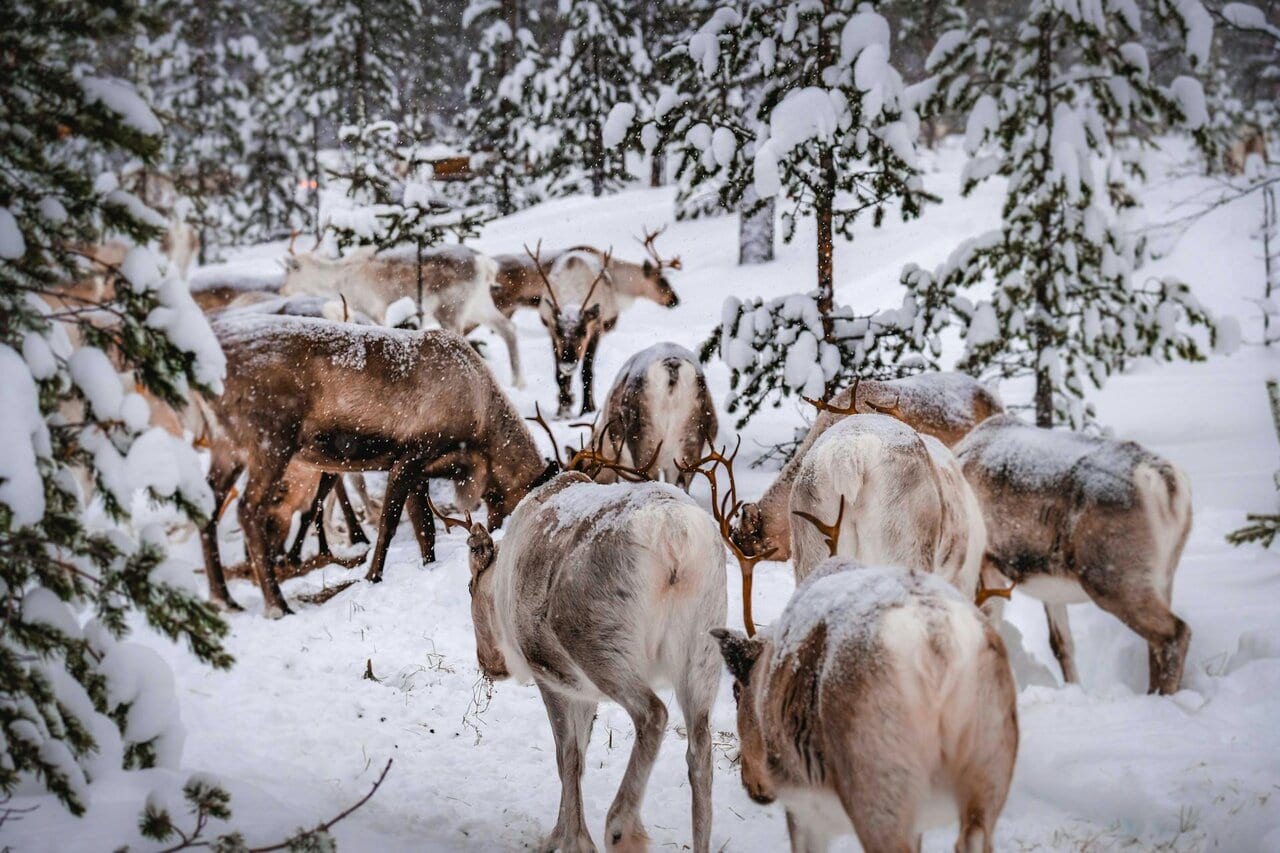
Reindeer sleigh rides provide a slower and more traditional experience strongly connected with indigenous Sámi culture and Lapland storytelling. These excursions are especially popular with families because they fit naturally into the wider Santa mythology surrounding the region.
For adults and adventure-focused travellers, snowmobiling is often one of the biggest attractions anywhere in Lapland. Guided snowmobile safaris travel across frozen rivers, forests and Arctic wilderness routes that would be inaccessible during much of the year without winter snow conditions.
Many evening snowmobile tours also incorporate Northern Lights hunting, which has become one of the largest tourism drivers across northern Finland.
Between roughly December and March, Lapland offers some of the strongest aurora viewing conditions anywhere in Europe because of the combination of long dark nights, low population density and relatively stable Arctic weather patterns.
Other popular Arctic experiences include staying inside glass igloos, visiting ice hotels, trying ice swimming, relaxing in traditional Finnish saunas, exploring snow hotels, skiing around Levi, snowshoe walking, ice fishing, tobogganing and frozen lake walks, and visiting Arctic wildlife parks.
Because of this enormous range of winter activities, Lapland usually feels far more like a complete Arctic adventure holiday than a simple Christmas attraction destination.
That broader experience is one of the main reasons many travellers consider Lapland one of the most unforgettable winter trips available anywhere in Europe.

How Many Days You Need in Lapland
One of the most common mistakes travellers make when booking a Santa trip to Lapland is simply not staying long enough.
Short one-day visits and overnight package trips do exist, particularly during the busy Christmas season, but many travellers find these extremely rushed once flights, transfers and organised excursions are taken into account.
For most visitors, especially families travelling with children, the ideal balance is usually around 3 to 4 nights in Lapland.
That length of stay provides enough time to properly enjoy the Arctic environment, experience multiple winter activities and still keep the overall cost within a relatively manageable range.
Very short trips often become dominated by airport logistics and tightly scheduled excursions rather than allowing travellers to actually enjoy the atmosphere of Lapland itself.
A typical well-balanced itinerary usually combines a full Santa experience with several Arctic activities spread across different days. Travellers often spend one day visiting Santa Claus Village, another focusing on husky sledding or snowmobiling, while evenings are frequently reserved for Northern Lights excursions or quieter time enjoying the snowy surroundings.
Longer stays also dramatically improve the chances of actually seeing the Northern Lights, since aurora visibility depends heavily on weather conditions and cloud cover.
Families travelling with younger children generally find 3 nights provides the strongest overall balance between experience quality, travel fatigue and budget control.
Couples and Northern Lights travellers sometimes stay longer, especially in destinations such as Saariselkä or remote wilderness lodges where the focus extends beyond Santa tourism into broader Arctic experiences.
One major advantage of slightly longer trips is that Lapland starts to feel far less rushed and commercial. Travellers have more time to enjoy the forests, snow landscapes and winter atmosphere rather than simply moving rapidly between organised activities.
For many visitors, the most memorable moments are often the quieter ones, including snowy evening walks, sitting beside cabin fires or watching Arctic forests pass outside the windows of Finland’s overnight sleeper trains.
Lapland Trip Costs Breakdown
A proper Lapland winter trip is rarely cheap, especially during the peak Christmas season, but understanding where the money goes makes it far easier to plan realistically and avoid nasty surprises later.
The biggest costs usually come from flights, Arctic accommodation, organised winter excursions and seasonal demand around Christmas and New Year.
Flights into Rovaniemi, Kittilä and Ivalo can vary dramatically depending on booking timing. Travellers booking early for January or March sometimes find return flights for around €175–€290 (£150–£250), while peak Christmas week departures can easily rise beyond €470–€820 per person (£400–£700).
Accommodation pricing changes just as aggressively. Standard hotels and apartments in Lapland often start around €120–€175 per night (£100–£150), while high-demand winter cabins, luxury lodges and famous glass igloos regularly exceed €350–€935 per night (£300–£800) during peak festive periods.
The major Arctic excursions also add up quickly once combined together.
A typical husky safari usually costs around €120–€210 per person (£100–£180), depending on duration and location, while snowmobile safaris often range between €140–€235 (£120–£200). Traditional reindeer sleigh rides are normally slightly cheaper, often costing around €45–€95 (£40–£80), while organised Northern Lights tours commonly sit between €80–€175 (£70–£150) depending on transport, guide quality and excursion length.
Families visiting Santa Claus Village should also budget carefully for optional activities, professional photographs, souvenirs and organised Santa experiences, since these smaller purchases can increase overall costs surprisingly quickly.
Food costs in Lapland are also higher than many visitors initially expect because of the region’s remote Arctic location. Casual meals often cost around €18–€29 (£15–£25), while restaurant dining inside major winter resorts can easily rise beyond €35–€58 per person (£30–£50) during peak periods.
In practice, a realistic budget Lapland trip usually starts around €700–€1,050 per person (£600–£900), particularly for travellers using cheaper accommodation and travelling outside Christmas week.
A more typical mid-range winter trip involving decent accommodation, organised excursions and Arctic activities often lands closer to €1,050–€1,635 per person (£900–£1,400) once everything is included.
Luxury Arctic holidays involving premium cabins, glass igloos, private excursions and peak festive dates can very easily exceed €1,750–€3,500 per person (£1,500–£3,000), especially during Christmas and New Year.
The single most expensive period is normally between roughly mid-December and early January, when international demand for Santa trips reaches its absolute peak.
Travelling slightly outside that festive window often changes the pricing dramatically.
Many travellers do not realise that January, February and even March still provide excellent snow conditions, strong Northern Lights potential and full Arctic scenery while often costing significantly less than Christmas departures.
For travellers wanting the strongest balance between price, snow and atmosphere, late November, early December and the post-Christmas winter period usually provide the best overall value across Finnish Lapland.
Tips for Visiting Santa in Lapland
If you are planning a Santa trip to Lapland, a few simple tips can make a big difference to cost, crowds and overall experience.
Book early. Lapland trips sell out every year, especially family cabins and Santa packages. Booking flights and accommodation early can save hundreds of pounds.
Avoid peak Christmas week if possible. Early December often has the same experience but lower prices and fewer crowds.
Dress properly. Lapland temperatures can be between -5°C and -25°C. Most activity providers give thermal suits and boots, but you still need gloves, hats, layers and warm socks.
Plan activities in advance. Husky safaris and snowmobile trips often sell out, especially in December.
Don’t expect lots of daylight. In December there are only a few hours of daylight, but the snow reflects light and it is still beautiful.
Consider staying in a cabin rather than a hotel. Many Lapland cabins have saunas and feel much more like a winter experience.
Look for Northern Lights away from towns. Light pollution reduces your chances, so guided tours often give the best opportunity.
Most importantly, remember that Lapland is more about the overall experience than just meeting Santa. The snow, forests, animals and Arctic atmosphere are what make the trip special.

Rupert’s Handy Travel Tips
Planning a Santa trip to Lapland? Rupert has a few tips to help you stay warm, organised and ready for the Arctic:
- Dress in proper thermal layers: a base layer, warm mid-layer and windproof outer shell matter more than one thick coat in Arctic cold.
- Book Santa visits well ahead: slots at Santa Claus Village sell out fast during December, so reserve early.
- Arrange Rovaniemi airport transfers in advance: pre-booking a transfer saves time and hassle after a long winter flight.
- Carry spare camera batteries: extreme cold drains batteries quickly, so keep spares in an inside pocket.
- Check aurora timing if chasing the lights: late evening into the early hours usually gives the best chance of a clear sighting.
Want to meet the reindeer behind our travel tips? Find out more in our page Who is Rupert?.
Frequently Asked Questions
When is the best time to visit Santa in Lapland?
Most travellers visit between late November and March. December is the most festive and popular but also the most expensive, while January and February offer deep snow, good Northern Lights chances and lower prices.
How do I book a meeting with Santa?
Most visitors book through Santa Claus Village or as part of a package holiday. Slots can be reserved online in advance, and booking early is strongly recommended during the busy Christmas period.
How many days should I spend in Lapland?
Around 3 to 4 nights gives most travellers enough time to enjoy Santa Claus Village alongside other activities such as husky sledding or snowmobiling without the trip feeling rushed.
What should I pack for the weather?
Temperatures can range from around -5°C to -25°C, so proper thermal layers, insulated boots, gloves and a warm hat are essential. Many activity providers also supply thermal suits and boots.
What are the flight options to Lapland?
Direct winter flights run from several British airports to Rovaniemi, Kittilä and Ivalo. Travellers who cannot find a direct flight often connect through Helsinki, sometimes continuing north on the overnight Santa Claus Express sleeper train.
Further Reading & Related Travel Guides
Travelling to Lapland becomes even more memorable when combined with wider Arctic rail journeys and winter experiences across northern Europe. Our detailed guide to Finland Sleeper Trains explains how the famous Santa Claus Express connects Helsinki with Rovaniemi and the Arctic north through one of Europe’s most atmospheric overnight rail journeys.
Travellers planning wider Scandinavian rail adventures should also read our dedicated Interrail Finland Pass guide, which covers Arctic routes, sleeper train reservations, northern rail connections and how to explore Finland entirely by train during both winter and summer.
Many visitors heading into Lapland also dream of seeing the aurora, so our guide explains the best viewing seasons, strongest Arctic regions and practical advice for maximising your chances of seeing the Northern Lights during your trip.
If you are combining Lapland with a wider festive trip, our European Christmas Markets Guide covers the best festive cities, market dates and winter travel ideas across the continent, while our UK Christmas Markets Guide highlights the best festive cities across England, Scotland and beyond, including market dates and where to stay. For more winter inspiration, our roundup of the best places to visit in December covers winter sun, snow and festive destinations beyond Lapland.