Reviewed by our editorial team Updated
Why the City of New Orleans Is One of Amtrak’s Classic Overnight Journeys
Made famous by the folk song of the same name, the City of New Orleans runs 934 miles between Chicago, Illinois, and New Orleans, Louisiana, tracing the Illinois Central Railroad’s historic route down the Mississippi Valley. It’s one of Amtrak’s most culturally storied trains despite being a relatively short overnight journey.
Unlike the great western trains that take two or three nights to complete, the City of New Orleans covers its route in around 19 hours, running daily in each direction. That makes it an accessible, single-overnight introduction to long-distance Amtrak sleeper travel.
The route passes through Illinois, Kentucky, Tennessee, Mississippi and Louisiana, calling at cities including Memphis and Jackson along the way. It’s often described as tracing the heart of American musical heritage, running close to the roots of blues, jazz and country music all the way to New Orleans.
Southbound departures leave Chicago in the evening, meaning passengers wake up around Memphis, take in Mississippi through the morning, and arrive in New Orleans by mid-afternoon, a genuinely well-paced way to see this stretch of the country.
Northbound departures from New Orleans follow a similar overnight pattern in reverse, leaving in the afternoon and arriving into Chicago the following morning, giving passengers a comfortable night’s sleep between the two cities.
This guide covers the full route, the sleeper cabins and dining options, how it compares with the alternative route into New Orleans via the Crescent, and the practical details you’ll want before booking.
The route it follows today traces the historic Illinois Central Railroad mainline, which for decades connected Chicago with the Deep South and carried countless musicians and workers north during the Great Migration.
That history adds a genuine layer of meaning to the journey. Riding the City of New Orleans today follows almost exactly the same corridor that shaped the movement of people, music and culture between Chicago and the Deep South for more than a century.
City of New Orleans Route at a Glance
The City of New Orleans runs between Chicago Union Station and New Orleans Union Passenger Terminal, covering 934 miles in approximately 19 hours, running daily in both directions. The train crosses Illinois, Kentucky, Tennessee, Mississippi and Louisiana, with major stops at Champaign-Urbana, Carbondale, Memphis and Jackson.
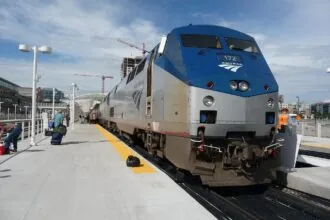
The train uses Amtrak’s Superliner bi-level equipment, offering Coach seating, Roomettes and Bedrooms, along with a Sightseer Lounge and Flexible Dining service. Compared with routes like the California Zephyr or Sunset Limited, this is a relatively compact and manageable overnight trip.
That single-overnight length is one of the route’s biggest selling points. It’s long enough to enjoy a proper sleeper experience, complete with a Roomette, dinner and breakfast, without committing to two or three nights onboard like the western long-distance trains.
Because the train runs daily in both directions, it’s also one of the more flexible long-distance routes to plan around, with far fewer scheduling constraints than tri-weekly services elsewhere on the Amtrak network.
For travellers with limited time, this route also pairs naturally with a short city break in either Chicago or New Orleans, since the overnight schedule effectively delivers you to your destination without losing a full day to travel.
With the essentials covered, the sections below walk through the route segment by segment, from the Illinois prairie to the Louisiana wetlands surrounding New Orleans.
Best for two or three nights. The widest choice of rooms, with filters for free cancellation and included breakfast.
View staysBest for families, or any stay past about four nights. A kitchen and a washing machine start paying for themselves.
Browse rentalsBest for double-checking. Runs the same search across several booking sites so you are not leaving money behind.
Compare pricesChicago to Carbondale: Illinois Farmland and the Prairie
Leaving Chicago Union Station in the early evening, the City of New Orleans heads south through the suburbs before settling into open Illinois farmland. Early stops include Homewood and Kankakee, both still firmly within Chicago’s wider commuter reach.
The evening departure time means the first hour or so still catches some daylight over the Illinois countryside, especially during the longer days of late spring and summer.
The train continues to Champaign-Urbana, home to the University of Illinois, before passing through Mattoon and Effingham, smaller communities set among the state’s characteristic wheat and corn fields.
This stretch of central Illinois is classic Midwest farmland, with grain elevators and small-town water towers marking the horizon in a landscape that stays remarkably flat for the entire first few hours of the journey.
By the time the train reaches Centralia and Carbondale, home to Southern Illinois University, it’s usually early evening or later, meaning much of this stretch passes in fading light or darkness depending on the time of year.
Carbondale is also a useful reference point for gauging progress on the journey, marking roughly the point where southern Illinois gives way to the more forested terrain leading towards the Kentucky border.
Southern Illinois around Carbondale is known locally as Little Egypt, a nickname tied to the region’s agricultural history, and the countryside here already looks noticeably different from the flat prairie further north.
This opening section is a gentle introduction to the journey, with flat farmland gradually giving way to slightly more rolling terrain as southern Illinois approaches the Kentucky border.
Passengers boarding in the evening often use this first stretch to settle into their Roomette or coach seat, grab dinner from Flexible Dining, and get comfortable before the overnight hours through Kentucky and Tennessee begin.
Carbondale to Memphis: Crossing into the South
South of Carbondale, the City of New Orleans crosses into Kentucky, calling at Fulton, before continuing into Tennessee and reaching Newbern-Dyersburg. This overnight stretch is when most passengers are asleep, especially those in sleeper accommodation.
This section of the route sees relatively little development, with the train passing through rural western Kentucky and northwestern Tennessee largely in darkness on the southbound overnight run.
Travellers riding northbound from New Orleans experience this same stretch during the evening instead, giving a different perspective on the same rural landscape as daylight fades over western Kentucky.
The train arrives into Memphis in the early morning hours, one of the most significant stops on the entire route and a city inseparable from American musical history, home to Beale Street, Sun Studio and Elvis Presley’s Graceland.
Many passengers deliberately try to be awake for the Memphis stop, even on an overnight journey, since it’s one of the most culturally significant cities the train passes through and the platform time offers a brief taste of the city.
The Memphis station stop is typically long enough for a quick breath of fresh air on the platform, though most passengers save proper exploration of the city for a dedicated stopover on a future trip.
Memphis also sits directly on the Mississippi River, and the approach into the city offers glimpses of the river before the train continues its journey south into the Mississippi Delta.
If your schedule allows a longer stopover, Memphis is one of the most rewarding places to break the journey on this route, given its outsized influence on American music history relative to its size.
Memphis to Jackson: The Mississippi Delta and the Blues Highway
South of Memphis, the City of New Orleans enters the Mississippi Delta, one of the most historically and musically significant regions in the country, often called the birthplace of the blues. Stops include Marks, Greenwood and Yazoo City, all deep in cotton-growing country.
This stretch typically runs through the morning on the southbound journey, giving passengers a proper daylight look at the flat, fertile Delta landscape, dotted with cotton fields and small rail towns that have changed relatively little in decades.
Breakfast in the Flexible Dining service is often served during this stretch, giving passengers a comfortable window to enjoy the Delta scenery while eating rather than rushing between the sleeping car and the dining area.
The train continues to Jackson, the Mississippi state capital, arriving around lunchtime on the southbound service. Jackson is a significant stop both operationally and as a gateway to the wider Mississippi music and civil rights heritage trail.
Southbound sleeper passengers who receive lunch as part of their Flexible Dining package will typically be served around this point in the journey, timed naturally to the mid-morning arrival into Jackson.
This entire stretch is sometimes referred to as running along the Blues Highway, a nod to the route’s parallel path with Highway 61, historically travelled by musicians moving between Mississippi Delta towns and Memphis or Chicago.
The flat Delta terrain makes for easy, relaxed viewing from the Sightseer Lounge, with cotton fields and small towns stretching to the horizon in a landscape quite different from the hillier Ozark or Appalachian scenery on other Amtrak routes.

Turn the City of New Orleans into an American Music Journey
Few Amtrak routes connect places with as much influence on American music as the City of New Orleans. Rather than simply travelling from Chicago to Louisiana overnight, you can use the train to build an itinerary through cities and landscapes associated with blues, jazz, soul, gospel and rock ‘n’ roll.
Chicago makes an appropriate starting point. The city’s blues scene was transformed during the twentieth century as musicians travelled north from Mississippi during the Great Migration, taking Delta blues with them and helping create the distinctive electric Chicago blues sound.
The most obvious stopover is Memphis. Leave the train here and you can explore Beale Street, Sun Studio and Graceland, along with the city’s wider blues and soul heritage. Rather than treating the early-morning Memphis call as something to glimpse through a train window, spending a couple of nights here turns it into one of the highlights of the journey.
South of Memphis, the train crosses the Mississippi Delta, the landscape most closely associated with the origins of the blues. Places such as Greenwood and Yazoo City sit within a region where small towns, churches, juke joints and cotton plantations all played a part in the development of the music.
You can also break the journey in Jackson, giving you more time to explore Mississippi’s musical and civil rights history before continuing south.
Finally, the train reaches New Orleans, one of the world’s great music cities and a place inseparable from the development of jazz. Live music remains part of everyday life here, from clubs and bars to street performances and traditional jazz venues.
A journey built around Chicago → Memphis → Mississippi → New Orleans therefore becomes much more than an overnight train ride. It effectively traces the movement of American music along the same north-south corridor that carried musicians and communities between the Deep South and Chicago for generations.
Is Memphis Worth a Stopover on the City of New Orleans?
If you’re going to break the City of New Orleans journey anywhere, Memphis is the obvious choice. The train stops directly in one of America’s great music cities, making it possible to turn what would otherwise be an overnight station call into a proper part of your trip.
The biggest attractions are closely connected to the city’s musical history. Beale Street remains the centre of Memphis nightlife, while Sun Studio tells the story of recordings by artists including Elvis Presley, Johnny Cash and Jerry Lee Lewis. Elvis fans can also visit Graceland, south of the city centre.
Memphis has another major advantage: the City of New Orleans runs every day. Unlike stopovers on one of Amtrak’s three-times-weekly routes, you aren’t necessarily committing yourself to several days in the city simply because you’ve left the train.
It can also make the complete Chicago to New Orleans journey easier to manage. Instead of spending around 19 hours travelling continuously, you could take the train from Chicago to Memphis, stay for a couple of nights, and then continue from Memphis to New Orleans on a later departure.
You’ll need to book the journeys appropriately rather than simply getting off a through train and expecting to use the same reservation later. Check the current departure times carefully as well, as the City of New Orleans can serve Memphis at inconvenient hours depending on your direction of travel.
For anyone interested in American music, we’d strongly consider the stop. Combining Chicago, Memphis and New Orleans by train creates one of the most distinctive multi-city itineraries anywhere on the Amtrak network.
Jackson to New Orleans: The Final Approach to Louisiana
From Jackson, the train continues south through Hazlehurst, Brookhaven and McComb, smaller Mississippi communities that mark the final stretch before the Louisiana state line.
This section of southern Mississippi feels noticeably different from the flat Delta further north, with slightly more rolling terrain and denser pine forest lining parts of the route.
By this point in the journey, most passengers have finished breakfast and are settling in for the final stretch, with New Orleans now only an hour or two away depending on the day’s schedule.
Crossing into Louisiana, the City of New Orleans calls at Hammond before making its final approach into New Orleans Union Passenger Terminal, typically arriving in the mid-afternoon on the southbound service.
The scenery shifts noticeably in this final stretch, with the drier farmland of southern Mississippi giving way to the low-lying wetlands and bayous that define southern Louisiana as the train nears its destination.
Passengers who kept an eye out through Hammond and the final approach are rewarded with early glimpses of the wetlands and waterways that make southern Louisiana so distinct from the rest of the route.
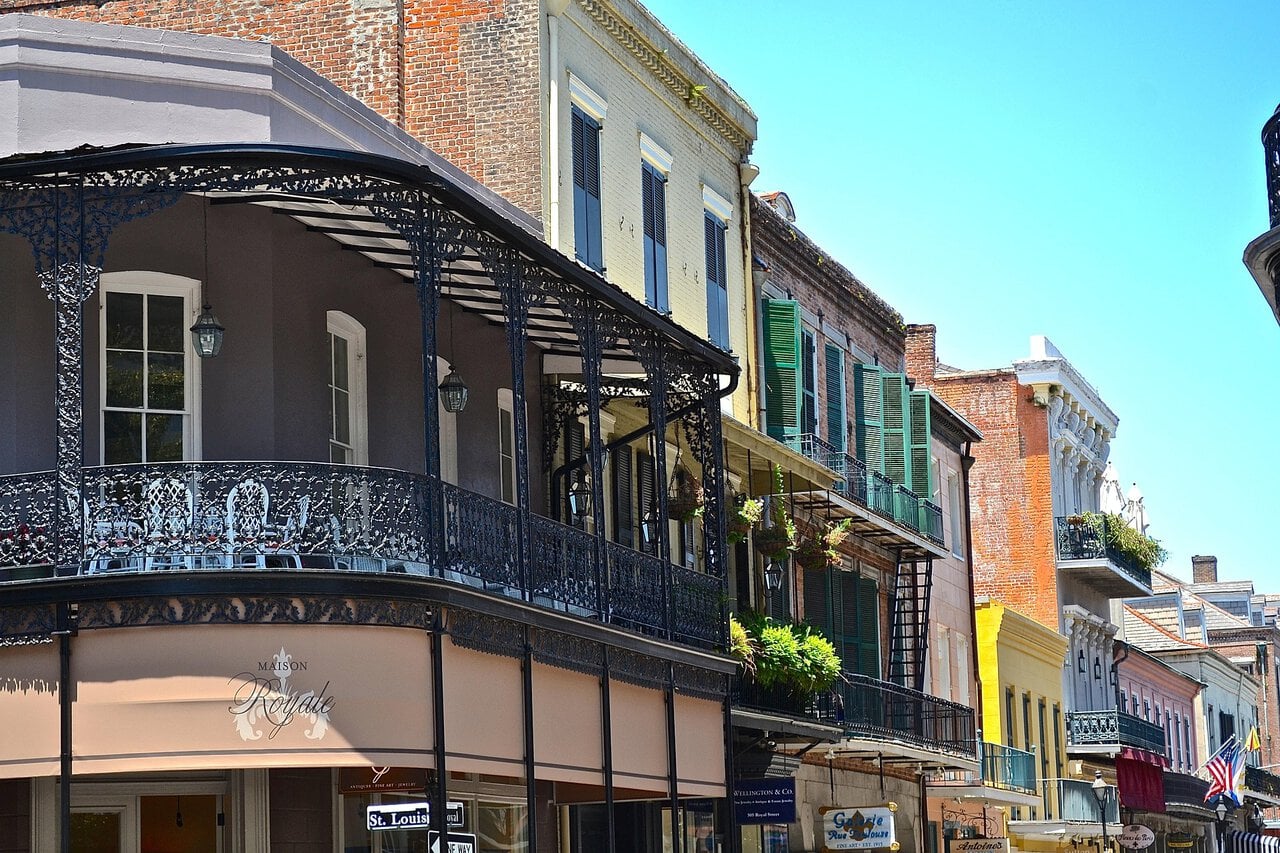
Arriving into New Orleans, passengers have easy access to the French Quarter and the city’s famous music and food scene, a fitting end to a journey themed around America’s musical heritage.
Mid-afternoon arrivals also leave plenty of the day ahead, making it easy to check into a hotel and be out exploring the French Quarter or enjoying dinner before the evening is over.
New Orleans Union Passenger Terminal is also the arrival point for the Sunset Limited and Crescent, making it a genuine crossroads for travellers combining multiple Amtrak long-distance routes into a single itinerary.
Best if you can move a day either way. Shows how the fare changes across the month.
Compare flightsBest for short trips. Install the eSIM at home and arrive with working data, no shop queue.
Browse eSIMsBest after a long flight or a late landing. Price agreed before you travel, and no taxi queue.
Check transfersBooking City of New Orleans Tickets with Omio
You can search for City of New Orleans tickets through Omio, making it easy to compare the Amtrak journey with other transport options and keep your bookings together in one place.
For the complete journey, search Chicago to New Orleans, but you can also use the train for shorter sections of the route. Journeys such as Chicago to Memphis, Memphis to New Orleans or Chicago to Jackson can all be searched separately if you’re building a multi-city itinerary.
The City of New Orleans is particularly well suited to an overnight rail journey because it takes around 19 hours rather than the two or three nights required by some of Amtrak’s western trains. That makes it worth comparing the cost of a train ticket with flying once you factor in the possibility of travelling overnight rather than paying for an additional hotel night.
Before booking, check exactly which accommodation you’re buying. Coach provides a reclining seat for the night, while a Roomette gives you private accommodation and a proper bed. On a single-night journey, either can be a realistic choice depending on your budget.
If the City of New Orleans is just one part of a larger Amtrak trip, also compare individual fares with the Amtrak USA Rail Pass before booking. The train’s daily schedule makes it particularly easy to incorporate into a multi-route itinerary.

Book Amtrak Tickets and Sleeper Trains
Travelling by train in the United States can be a memorable way to cover long distances, especially on scenic routes and overnight journeys. Amtrak lets you book rail tickets, long-distance services, and sleeper train journeys across the country.
It is ideal for city-to-city travel, cross-country rail trips, and travellers who want a slower, more comfortable alternative to flying. Sleeper trains can also make long journeys easier by combining transport and overnight accommodation.
Sleeper Cabins on the City of New Orleans
The City of New Orleans uses Amtrak’s Superliner bi-level equipment, the same family of cars used on the California Zephyr and Sunset Limited. Given the journey takes around 19 hours, a single overnight, many passengers still choose to upgrade from Coach for a more comfortable trip.
The Roomette remains the most popular choice, suited to one or two passengers, with two facing seats converting into a lower bed and a fold-down upper bunk, along with complimentary meals and access to shared shower facilities.
Given the single overnight length of this route, a Roomette is a relatively affordable way to try Amtrak’s sleeper product for the first time, without the multi-night cost of a longer western route.
Couples or solo travellers who want privacy without the expense of a full Bedroom will generally find the Roomette strikes the right balance for a single overnight journey of this length.
For extra space, the Bedroom includes a private toilet and shower, while Family Bedrooms and Accessible Bedrooms are also available, both located on the lower level of the Superliner sleeper car.
Booking a Roomette or Bedroom includes meals through Flexible Dining for the duration of your journey, along with bedding, towels and access to shared shower facilities for Roomette guests.
Because this is a single-night journey rather than a multi-night trip, some travellers find Coach perfectly manageable, particularly if they’re comfortable sleeping upright, though a Roomette still meaningfully improves comfort for a full night onboard.
The lower level of the Superliner sleeping car, where Family and Accessible Bedrooms are located, sits close to ground level, which some passengers find easier for boarding with luggage or reduced mobility.
This makes the City of New Orleans a genuinely good route for first-time sleeper travellers to try a Roomette without a huge financial commitment, given the shorter overall journey compared with two or three-night western routes.
Sleeper cabins on this route sell out less predictably than on the longer western trains, but booking a few weeks ahead is still sensible, particularly around holidays or major New Orleans events.
Coach seating on the City of New Orleans is generally spacious and comfortable, with reclining seats and leg rests, making it a genuinely viable option even for the full overnight journey if you’re travelling on a tighter budget.
| Feature | Coach Class | Roomette | Bedroom |
|---|---|---|---|
| Private accommodation | ❌ | ✅ | ✅ |
| Bed for sleeping | ❌ (reclining seat only) | ✅ Upper & lower bunks | ✅ Full-sized beds |
| Meals included | ❌ | ✅ | ✅ |
| Private toilet & shower | ❌ | ❌ (shared facilities) | ✅ |
| Sightseer Lounge access | ✅ | ✅ | ✅ |
| Best for | Budget travellers | Couples & solo travellers | Maximum comfort |
Dining and Café Service
The City of New Orleans uses Amtrak’s Flexible Dining service rather than a traditional sit-down Dining Car. Sleeper passengers choose from a rotating menu, with meals served in a designated dining area or brought to their cabin.
Because the journey is overnight, the exact meals included depend on your direction of travel: northbound passengers typically receive dinner and breakfast, while southbound passengers can receive dinner, breakfast and lunch, given the longer daylight portion of that direction.
The Flexible Dining menu typically rotates between a small number of hot entrée choices alongside lighter salads and sandwiches, giving sleeper passengers reasonable variety without a full multi-course sit-down format.
Coach passengers can use the Café Car throughout the journey, offering sandwiches, snacks, hot and cold drinks, beer and wine, available to purchase at any time regardless of ticket type.
The Café Car is a useful option even for sleeper passengers who want a lighter snack outside their scheduled Flexible Dining meal times, particularly during the evening before settling in for the night.
Prices in the Café Car are broadly in line with other Amtrak long-distance routes, and card payment is standard, so there’s no need to carry cash for onboard purchases.
Given the single overnight nature of the trip, dining is a more compact affair than on longer western routes, but it’s still a pleasant way to break up the evening before settling in for the night.
Vegetarian, vegan and gluten-free requirements can usually be accommodated with advance notice given at the time of booking.
Passengers who prefer flexibility over a set dining schedule often appreciate the Flexible Dining format, since it doesn’t require committing to a specific sitting time the way a traditional Dining Car reservation would.
Given the shorter overall journey, dining on the City of New Orleans is a more compact affair than the multi-day dining experience on routes like the California Zephyr, but it still adds a pleasant social element to the trip.
Meal timings are announced onboard rather than fixed to a strict clock, so keep an ear out for updates from the crew as the train progresses through the evening and following morning.
The Sightseer Lounge
Every City of New Orleans train includes a Sightseer Lounge car, with large windows offering wide views of the passing landscape. It’s open to all passengers, regardless of whether they’re travelling in Coach or a sleeper cabin.
Given the overnight schedule, the lounge is at its best during the daylight hours of your trip, whether that’s the early evening departure from Chicago or the morning and early afternoon approach into New Orleans through the Mississippi Delta.
Coach passengers without their own cabin often use the lounge as a comfortable base during the evening hours before settling into their seat for the overnight portion of the trip.
Because the journey is relatively short compared with Amtrak’s longer western trains, the lounge doesn’t see quite the same all-day use, but it remains a pleasant space to socialise or simply relax with a book.
The Sightseer Lounge also typically sells snacks and drinks, making it a comfortable place to relax before or after sleeping, particularly for passengers wanting to watch the transition from Mississippi farmland into Louisiana wetlands near journey’s end.
On the southbound journey, the lounge is a good place to be positioned as the train approaches Memphis in the early morning, offering the best available views of the Mississippi River crossing.
City of New Orleans vs Crescent: Two Ways to Reach New Orleans
The City of New Orleans isn’t the only Amtrak route ending in the city. The Crescent also terminates in New Orleans, but arrives from an entirely different direction, starting in New York and travelling via Washington DC, Atlanta and Birmingham.
The choice between the two really comes down to where you’re starting your trip. Travellers coming from Chicago or the Midwest naturally choose the City of New Orleans, while those starting from the East Coast will find the Crescent the more direct option.
The scenery also differs considerably: the City of New Orleans traces the flat Mississippi Valley through farmland and the Delta, while the Crescent passes through the Appalachian foothills and Southern Piedmont on its way from the East Coast.
The City of New Orleans is also considerably shorter, at around 19 hours and 934 miles, compared with the Crescent’s much longer haul from New York, which takes over 30 hours across a greater distance.
For travellers building a bigger Amtrak itinerary, it’s entirely possible to arrive in New Orleans on one train and depart on the other, effectively riding a loop between Chicago and the East Coast with New Orleans as the midpoint.
Neither route is objectively better; they simply serve different starting points. If you’re already in Chicago, the City of New Orleans is the obvious, shorter choice, while East Coast travellers will find the Crescent more convenient despite its longer overall journey time.
Both trains use Amtrak’s long-distance equipment with sleeper accommodation and dining service, so the onboard comfort level is broadly comparable even though the surrounding landscapes and states crossed are quite different.
Journey time is another practical factor: at around 19 hours, the City of New Orleans is one of Amtrak’s more approachable overnight trips, while the Crescent’s longer duration suits travellers happy to commit to a longer haul from the East Coast.
Best Time of Year to Ride the City of New Orleans
The City of New Orleans passes through the Mississippi Delta and Louisiana, both of which see hot, humid summers. Summer temperatures in Mississippi and Louisiana regularly climb into the 90s Fahrenheit (32°C+), though the air-conditioned train itself stays comfortable throughout.
Many travellers prefer spring or autumn, when temperatures across Illinois, Tennessee, Mississippi and Louisiana are all more comfortable, and station stops feel less oppressive than during peak summer humidity.
Hurricane season, roughly June through November, is worth watching if your journey starts or ends in New Orleans, since severe Gulf Coast weather can occasionally disrupt the southern end of the route.
Spring brings pleasant travelling conditions across the entire route and coincides with festival season in New Orleans, making it a popular time to combine the train journey with a longer stay in the city.
Autumn similarly offers comfortable temperatures throughout, with the added benefit of cooler evenings in Chicago at the northern end of the route, a pleasant contrast to the warmer Louisiana climate at journey’s end.
Whatever season you choose, the relatively short overnight length of this route means weather disruptions tend to be less consequential here than on Amtrak’s longer, multi-day western trains.
Checking the forecast for both Chicago and New Orleans before departure is still worthwhile, given how differently the climate behaves at the two ends of this 934-mile route.
Winter travel through Illinois can bring snow and occasional delays, though the route generally sees fewer weather disruptions overall than some of Amtrak’s longer western routes given its shorter overall length.
Because the entire journey takes place within a single overnight window, seasonal daylight changes matter less here than on longer routes, though summer’s earlier sunrise does mean a bit more daylight through the Mississippi Delta on the southbound run.
| Season | Conditions | Good For |
|---|---|---|
| Spring (Mar–May) | Mild temperatures throughout the route | Comfortable travel, fewer crowds |
| Summer (Jun–Aug) | Hot, humid conditions in Mississippi and Louisiana | Lower fares, longer daylight hours |
| Autumn (Sep–Nov) | Cooling temperatures, clearer skies | Comfortable travel through the Delta |
| Winter (Dec–Feb) | Cool in Illinois, mild further south | Crisp light, quieter trains |
Best for short city stops where being central matters more than the room. Dorms and private rooms both listed.
See hostelsBest for anyone flying more than once or twice a year. Handles the compensation claim so you are not chasing the airline.
See AirHelp+Best for a day with a suitcase and nowhere to put it. Find a storage point near where you already are.
View storageAmtrak USA Rail Pass and the City of New Orleans
If the City of New Orleans is one leg of a bigger American rail adventure, it’s worth checking whether the Amtrak USA Rail Pass makes sense before booking individual tickets. The route can be included as a Coach segment, subject to availability.
Because it runs daily and only takes around 19 hours, it’s one of the easier long-distance routes to slot into a flexible Rail Pass itinerary compared with tri-weekly services like the Sunset Limited.
Sleeper accommodation isn’t included with the standard Rail Pass and must be booked separately, so factor that into your budget if you’d like a Roomette rather than Coach for the overnight journey.
This route’s relatively short length also makes it an efficient way to use a single segment of your Rail Pass allowance, covering five states in less than a day while leaving plenty of segments for longer western trains.
Travellers combining this route with the Crescent on a Rail Pass should check segment allowances carefully, since a Chicago-New Orleans-New York loop uses up two long-distance segments rather than one.
A Rail Pass itinerary might combine the City of New Orleans with the Crescent for the return leg, creating an efficient loop between Chicago and the East Coast via New Orleans. Our full Amtrak USA Rail Pass Guide covers segment rules, current pricing tiers and whether the pass makes financial sense compared with booking individual tickets.
Given the relatively short 19-hour journey, this route also works well as a single segment within a larger pass itinerary that includes longer western trains like the California Zephyr or Southwest Chief.
Practical Tips for Riding the City of New Orleans
Since the journey is a single overnight, pack a small bag with essentials, pyjamas, toiletries and any medication, so you don’t need to dig through checked luggage during the night.
If you specifically want to see Memphis from the train, check the current timetable carefully, since the exact arrival time can shift and the stop happens during the early morning hours on the southbound service.
Set an alarm if you don’t want to miss the Memphis stop, since it’s easy to sleep through given the early hour, especially for passengers in Coach who may already be dozing.
Download entertainment and offline maps before boarding, since onboard Wi-Fi is inconsistent and mobile signal can weaken through rural stretches of southern Illinois and the Mississippi Delta.
Pack a light layer even in summer, since onboard air conditioning can feel strong compared with the humid conditions outside in Mississippi and Louisiana.
Book your sleeper accommodation as early as possible around major holidays or New Orleans festival dates, since demand for this route rises considerably around events like Mardi Gras and Jazz Fest.
If you’re planning to continue onward from New Orleans, whether by rail, road or air, check your connection times against the train’s scheduled arrival rather than assuming an exact on-time arrival.
Consider a small travel pillow and eye mask if you’re in Coach, since overhead lighting in the shared car stays on for other passengers even after most of the cabin has settled in for the night.
Finally, if you’re connecting onward to the Crescent or exploring New Orleans before a return trip, build in enough buffer time at the New Orleans terminal in case of minor delays along the route.
Bring a light blanket or travel pillow if you’re in Coach, since even the shorter overnight length of this route benefits from a little extra comfort during the sleeping hours through Kentucky and Tennessee.

Rupert’s Handy Travel Tips
A single overnight makes the City of New Orleans a great starter sleeper trip, here’s how to make the most of it.
- Pack an overnight bag: Keep essentials handy rather than digging through checked luggage during the night.
- Try to catch Memphis: The early morning stop is a highlight, even if it means setting an alarm.
- Consider the Crescent for a loop trip: Arrive in New Orleans on one train and depart on the other for an efficient Chicago-to-East-Coast itinerary.
- Book sleepers early for holidays: This route’s daily schedule usually keeps things flexible, but peak season fills up fast.
Want to meet the reindeer behind our travel tips? Find out more in our page Who is Rupert?.




Frequently Asked Questions
How long does the City of New Orleans take?
The journey between Chicago and New Orleans takes approximately 19 hours, covering 934 miles across five states, and runs daily in each direction.
Which cities does the City of New Orleans stop at?
Major stops include Champaign-Urbana, Carbondale, Memphis and Jackson, with smaller stations throughout Illinois, Kentucky, Tennessee, Mississippi and Louisiana.
What kind of dining is offered?
The train uses Flexible Dining, with meals included for sleeper passengers. Coach passengers can use the Café Car throughout the journey.
What equipment does the City of New Orleans use?
The train uses Amtrak’s Superliner bi-level cars, offering Coach seating, Roomettes, Bedrooms, Family Bedrooms and Accessible Bedrooms.
What’s the difference between the City of New Orleans and the Crescent?
The City of New Orleans runs from Chicago via Memphis, while the Crescent runs from New York via Atlanta. Both end in New Orleans but approach from opposite directions.
How far in advance should I book?
Booking a few weeks ahead is generally sufficient for this route, though earlier booking is recommended around holidays or major New Orleans events like Mardi Gras and Jazz Fest.
Will I see Memphis from the train?
Yes, the train stops in Memphis during the early morning hours on the southbound service, offering a brief taste of the city even if you don’t disembark.
Is a Roomette worth it for a single overnight trip?
Many travellers find a Roomette worthwhile even for one night, since it includes a proper bed, meals and shower access, though Coach is a reasonable budget option for this shorter route.
Does the City of New Orleans run every day?
Yes, it operates daily in both directions between Chicago and New Orleans, making it easier to plan around than some of Amtrak’s reduced-frequency routes.
Can I book the City of New Orleans with the Amtrak USA Rail Pass?
Yes, in Coach, subject to seat availability and pass rules. The daily schedule makes it relatively easy to fit into a flexible Rail Pass itinerary.
What’s the best time of year to ride this route?
Most travellers prefer spring or autumn, when temperatures across Illinois, Tennessee, Mississippi and Louisiana are all comfortable, avoiding the peak summer humidity of the Deep South.
Does the City of New Orleans have Wi-Fi?
Onboard Wi-Fi exists but can be inconsistent, particularly through rural stretches of southern Illinois and the Mississippi Delta, so download entertainment before boarding.
Does the City of New Orleans have an observation or lounge car?
Yes, every train includes a Sightseer Lounge with large windows, open to all passengers, ideal for watching the Mississippi Delta and the approach into Memphis or New Orleans.
Should I choose the City of New Orleans or the Crescent to reach New Orleans?
It depends on your starting point. Choose the City of New Orleans from Chicago, or the Crescent if you’re travelling from New York, Washington DC or Atlanta.
Can you smoke on the City of New Orleans?
No, smoking is banned throughout the train, in line with every Amtrak service. The early-morning stop in Memphis is long enough for most passengers to step onto the platform for fresh air, and crews sometimes extend that into a smoke break if the schedule allows, but you must stay right beside the train and reboard the moment the horn sounds, since the window can shrink or disappear if the train is running late.
Further Reading
If you’re planning a longer Amtrak adventure around the City of New Orleans, these guides can help you decide what to ride next.
Arriving in New Orleans and continuing west? Our Sunset Limited Guide covers the onward route through Texas and the Southwest all the way to Los Angeles.
For the alternative East Coast route into New Orleans, see our Crescent Guide, covering the journey from New York via Washington DC and Atlanta.
If you’re deciding between different long-distance trains, our Amtrak Routes Guide compares every major route, while our Amtrak Sleeper Train Guide explains cabin types and whether upgrading from Coach is worth it.
Building a bigger itinerary? Our Amtrak USA Rail Pass Guide explains how the pass works, and our Texas Eagle Guide covers another train departing from the same Chicago Union Station hub.
Interested in Amtrak’s great western long-distance trains too? Our California Zephyr Guide covers another classic route departing from the same Chicago hub, heading west instead of south.
Want to check whether the reduced weekly schedule affects onward travel from New Orleans? Our Sunset Limited Guide explains the three-times-weekly service continuing west towards Texas and California.