Reviewed by our editorial team Updated
Why the Crescent Is One of Amtrak’s Great North-South Journeys
The Crescent is Amtrak’s classic overnight link between the Northeast and the Deep South, running daily for roughly 30 hours between New York and New Orleans. Named after the historic Crescent City itself, the train follows a route that once belonged to the legendary Southern Railway, tracing a long diagonal line clear across the eastern United States and connecting two very different halves of the country in a single continuous overnight journey.
Covering close to 1,377 miles (2,216 km), the Crescent crosses twelve states: New York, New Jersey, Pennsylvania, Delaware, Maryland, Virginia, North Carolina, South Carolina, Georgia, Alabama, Mississippi and Louisiana. Few single Amtrak trains touch so many states in one uninterrupted journey, making it a genuine cross-section of American geography, climate, accents and regional cooking, all in the space of a day and a half.
Unlike the big western trains, the Crescent doesn’t rely on snow-capped mountains for its appeal. Instead it offers a rolling tour through Virginia’s Piedmont, the Blue Ridge foothills of the Carolinas and Georgia, the college towns of Alabama, and finally the pine forests and bayous of Mississippi and Louisiana before arriving in one of America’s most atmospheric and musical cities.
The Crescent runs on Viewliner equipment rather than the double-deck Superliners used out west, giving the train a slightly different feel: single-level cars, Roomettes and Bedrooms at eye level with the platform, and a more intimate, low-slung onboard atmosphere throughout the journey than you’ll find on the larger bi-level western trains.
For travellers heading to Atlanta, Birmingham or New Orleans, it’s also a genuinely practical alternative to flying, departing daily from New York, Philadelphia and Washington DC with no airport transfers, security queues or restrictive baggage allowances to worry about along the way.
Because so many mid-sized Southern cities along the route have little or no commercial air service, the Crescent also functions as genuine regional transport, not just a tourist experience, carrying business travellers, university students and families alongside rail enthusiasts who are riding purely for the journey itself.
Whether you’re booking the full New York to New Orleans run or just a shorter segment through Virginia or the Carolinas, this guide covers the route, the stations, the cabins, the dining and everything else you need to plan a Crescent journey with real confidence.
The Crescent tends to attract a broad mix of passengers: long-distance leisure travellers riding for the experience, students moving between college towns along the route, and locals making shorter regional hops that would otherwise mean a long, tiring drive on rural interstate highways.
Crescent Route at a Glance
Before boarding, it helps to see the whole journey in context. The table below summarises the Crescent’s route, distance, journey time and onboard facilities in one place, and it’s worth comparing against the sibling Silver Meteor and Silver Star services if a Florida extension is also part of your wider itinerary.
The figures below reflect a typical daily departure in each direction. Actual journey times can vary slightly depending on freight traffic, seasonal timetable adjustments and ongoing engineering work along the route, so it’s always worth double-checking the live Amtrak schedule closer to your intended travel date before finalising plans.
| Feature | Details |
|---|---|
| Route | New York, NY to New Orleans, LA (via Washington DC and Atlanta) |
| Distance | Approximately 1,377 miles (2,216 km) |
| Journey Time | Around 30 hours |
| States Crossed | New York, New Jersey, Pennsylvania, Delaware, Maryland, Virginia, North Carolina, South Carolina, Georgia, Alabama, Mississippi and Louisiana |
| Major Cities | New York, Washington DC, Charlotte, Atlanta, Birmingham, New Orleans |
| Equipment | Viewliner sleeping cars and Amfleet II coaches |
| Sleeper Accommodation | Yes, Roomette, Bedroom, Bedroom Suite and Accessible Bedroom |
| Dining | Flexible Dining for sleeper passengers, Café Car for all passengers |
| Lounge Car | No Sightseer Lounge; the Café Car doubles as the onboard lounge |
| Frequency | Daily in each direction |
| Best Time to Travel | Spring and autumn for mild weather across the Deep South |
Browse hotels and accommodation for your journey.
View staysExplore holiday homes and apartments for your trip.
See holiday homesCompare hotel prices across multiple booking sites.
Compare ratesNew York to Washington DC: Leaving the Northeast Corridor
The Crescent begins at New York’s Moynihan Train Hall, sharing tracks with the busy Northeast Corridor for its opening stretch. After crossing under the Hudson River, the train calls at Newark and Trenton before reaching Philadelphia’s 30th Street Station, one of Amtrak’s grandest terminals and a major hub for onward connections across Pennsylvania and beyond.
South of Philadelphia the train crosses into Delaware at Wilmington, then continues through Maryland towards Baltimore, passing through the state’s industrial suburbs. This section is fast and frequent, shared with dozens of Acela and Northeast Regional services every single day, so the Crescent feels much like any other Northeast Corridor train for its first few hours.
The approach into Washington DC crosses the Potomac River, offering brief glimpses of the capital’s skyline and monuments before the train pulls into the grand, marble-columned Washington Union Station. For many passengers joining south of New York, this is where the true Crescent experience really begins in earnest.
Washington DC also marks a practical milestone for the crew and equipment. Some passengers deliberately choose to board here specifically to skip the busier, more crowded Northeast Corridor and start their journey directly into Virginia and the Carolinas instead of joining further north.
South of Washington the train calls at Alexandria and Manassas, passing through countryside once fought over during the Civil War, before the pace of the journey slows and the scenery becomes noticeably greener, quieter and more rural with every passing mile.
This opening leg typically takes around six hours from New York to Washington DC, making it entirely possible to treat the Crescent as a same-day option for shorter Northeast-to-Virginia trips as well as booking the full overnight run all the way south.
Because this stretch runs on the same busy tracks as the Acela and Northeast Regional trains, it’s also the section of the journey most likely to feel crowded, particularly on Friday afternoons and around major holiday weekends throughout the year.
Washington DC to Charlotte: Virginia’s Piedmont and the Blue Ridge Foothills
Beyond Manassas the Crescent reaches Culpeper and then Charlottesville, home to the University of Virginia and sitting right at the edge of the Blue Ridge Mountains. Passengers seated on the western side of the train can often spot the ridgeline in the distance on clear afternoons, especially during the crisp days of autumn.
From Charlottesville the route continues south to Lynchburg and Danville, tracing the rolling hills of Virginia’s Piedmont region. Old tobacco warehouses, small-town main streets and wide river crossings define this stretch, a world away from the dense, fast-paced Northeast Corridor just a few hours earlier in the trip.
Crossing into North Carolina, the Crescent calls at Greensboro, Winston-Salem’s High Point, and Salisbury before reaching Charlotte, the state’s largest city and an important stop for passengers connecting within the wider Carolinas region.
Many of these Piedmont towns grew up directly alongside the railway during the nineteenth century, and their historic downtown stations, several of them beautifully restored in recent years, still sit within easy walking distance of the main street shops, diners and antique stores.
Charlotte itself sits roughly halfway through the journey timewise, and its modern, well-lit station makes a natural point to stretch your legs if you’re travelling the full New York to New Orleans route overnight without a proper overnight break.
This whole segment, from Washington DC to Charlotte, generally takes around seven to eight hours, much of it after dark on the southbound overnight departure, so travellers hoping to see the Piedmont scenery in daylight should check the current timetable carefully before booking.
This corridor also carries a lot of railway heritage. Much of the trackage between Washington DC and Charlotte was originally built by the Southern Railway and the Richmond, Fredericksburg and Potomac Railroad, companies whose engineering decisions from more than a century ago still shape the Crescent’s route today.
Small college towns punctuate this stretch too, and passengers heading to universities in Charlottesville, Lynchburg or Greensboro often find the Crescent a far less stressful option than driving or flying into a small regional airport.
Charlotte to Atlanta: Into the Southern Blue Ridge
South of Charlotte the Crescent crosses into South Carolina at Gastonia, then climbs gently through Spartanburg, Greenville and Clemson, a corridor known locally as the Upstate. The Blue Ridge Escarpment rises to the north here, its wooded foothills clearly visible from the train on clear days.
The train then enters Georgia at Toccoa, close to the dramatic Toccoa Falls, before continuing on to Gainesville near Lake Lanier. This particular stretch is one of the most scenic on the entire route, with rolling farmland gradually giving way to pine-covered ridges and quiet valleys.
Many regular travellers consider the Upstate South Carolina and North Georgia section the visual highlight of the whole Crescent journey, particularly in October and November when the hardwood forests along the escarpment turn brilliant shades of red, orange and gold.
Arriving in Atlanta marks the approximate halfway point of the Crescent‘s journey, both geographically and symbolically, and represents the transition from the Appalachian South into the flatter, hotter Deep South proper.
Atlanta‘s Peachtree Station is a useful overnight break point for travellers wanting to explore Georgia’s booming capital before continuing south, and it’s also where the onboard crew typically changes for the remainder of the journey towards Alabama and Mississippi.
Together, the Charlotte to Atlanta leg takes roughly six hours, crossing two states and passing through some of the prettiest, most varied countryside found anywhere on the Crescent’s entire route.
Keep a camera handy on the western side of the train through the Upstate, since the combination of farmland, forest and distant mountain ridges rarely lasts more than a few minutes before the scenery shifts again.

Best Places to Break Your Crescent Journey
Riding all the way from New York to New Orleans gives you the complete Crescent experience, but the route also lends itself particularly well to a multi-city journey. Several stops are interesting enough to justify leaving the train and continuing south on another day.
Washington DC is the easiest major stopover, particularly if you’re beginning in New York. You could spend several days exploring the US capital before rejoining the Crescent for the overnight journey into the South.
Further along the route, Charlottesville provides a very different experience. The city sits close to the Blue Ridge Mountains and makes an attractive break between the Northeast and the larger Southern cities further down the line.
Atlanta is the most obvious major stop. Rather than spending the entire 30-hour journey aboard one train, breaking here creates two much more manageable rail journeys and gives you time to explore one of the biggest cities in the American South.
Birmingham offers another possibility before the Crescent enters Mississippi and Louisiana. Its industrial heritage and civil rights history make it much more than simply another station on the timetable, particularly for travellers interested in twentieth-century American history.
You could therefore turn the Crescent into a journey such as New York → Washington DC → Charlottesville → Atlanta → Birmingham → New Orleans, staying for one or more nights at whichever destinations interest you most.
Remember that a stopover isn’t the same as briefly stepping off the train during a station stop. Once you leave the Crescent to spend time in a destination, you’ll need a reservation on a later service to continue your journey.
Atlanta to Meridian: Alabama and the Mississippi Pine Belt
Leaving Atlanta, the Crescent heads west into Alabama, calling first at Anniston before reaching Birmingham, the state’s largest city and once the undisputed heart of its steel industry. The skyline here still carries reminders of that industrial history, including the giant Vulcan statue overlooking downtown.
From Birmingham the train continues on to Tuscaloosa, home to the University of Alabama, before crossing into Mississippi. The landscape flattens noticeably here, with dense pine forests steadily replacing the rolling hills that defined the earlier stages of the journey.
Meridian, Mississippi, is an important stop both for the Crescent and for Amtrak more broadly, sitting close to the junction with several other historic Southern rail lines. Onward from Meridian the train calls at Laurel and Hattiesburg, both classic Deep South railroad towns with proud rail heritage.
This section of the journey often falls overnight on the southbound run, meaning many passengers experience Alabama and central Mississippi largely in darkness, waking instead to the final scenic approach into Louisiana the following morning.
For rail history enthusiasts, this stretch traces some of the oldest continuously used passenger routes anywhere in the American South, dating back well over a century before Amtrak took over intercity rail service nationwide in 1971.
Freight traffic is heavier through this section than almost anywhere else on the route, since the Crescent shares track with CSX and Norfolk Southern operations, which occasionally causes brief delays that even a well-planned itinerary should sensibly allow for.
Alabama‘s rolling hills give way gradually to Mississippi‘s flatter pine belt somewhere around the state line, and travellers watching closely will notice small rural stations, timber yards and the occasional catfish farm pond reflecting the sky as the train rolls steadily west.
Arriving in New Orleans
The final stage of the journey passes through Picayune, Mississippi, before crossing into Louisiana at Slidell, on the north shore of Lake Pontchartrain. From here the train follows the lake’s edge closely as it curves towards the city itself.
One of the most memorable moments of the whole trip comes as the Crescent crosses Lake Pontchartrain on a long rail trestle, offering wide-open water views on both sides of the train, quite different from anything seen earlier in the journey.
The surrounding wetlands are also home to herons, egrets and, depending on the season, the occasional alligator basking near the water’s edge, offering a small taste of Louisiana‘s famous bayou country before the train finally reaches the city itself.
The train terminates at New Orleans Union Passenger Terminal, a short taxi or streetcar ride from the French Quarter, making it a genuinely easy transition from a long railway journey into full city sightseeing.
Arriving after roughly 30 hours onboard, most passengers are more than ready to explore, and New Orleans rewards that effort with some of the best food, live music and historic architecture found anywhere in the United States.
For travellers continuing their trip, New Orleans is also the southern terminus of Amtrak’s separate City of New Orleans service from Chicago, making the city a genuine crossroads for anyone building a wider American rail itinerary.
Union Passenger Terminal itself is a functional, air-conditioned modern station rather than a grand historic building, but it’s within easy reach of the Superdome, the Central Business District and the streetcar lines running towards the Garden District.
Compare routes and fares for your next trip.
Compare flightsUse an eSIM to get online without hunting for a local SIM after arrival.
See eSIM optionsCheck private airport pickup options and plan the first part of your journey in advance.
View transfersBooking Crescent Tickets with Omio
You can search for Amtrak Crescent tickets through Omio, which is particularly useful if the train forms part of a wider journey and you want to keep different transport bookings together in one place.
Rather than searching only for the Crescent by name, enter your actual departure and destination, such as New York to New Orleans, Washington DC to Atlanta, Charlotte to Atlanta or Birmingham to New Orleans. This makes it easier to find the Amtrak journey that matches the section of the route you actually want to travel.
The Crescent can be useful for much more than the complete overnight journey. Intermediate journeys between cities such as Washington DC, Charlottesville, Charlotte, Atlanta and Birmingham can all make sense, particularly where the alternative would involve driving or travelling to an airport.
If you’re travelling overnight, pay particular attention to the accommodation being offered. A Coach seat is considerably cheaper, but spending a night in Coach is a very different experience from having your own Roomette or Bedroom. Check exactly which accommodation and inclusions apply before completing your booking.
Travellers building a longer US rail itinerary should also compare individual fares with the Amtrak USA Rail Pass. If the Crescent is only one of several long-distance trains you’re planning to use, buying each journey separately won’t necessarily provide the best overall value.

Book Amtrak Tickets and Sleeper Trains
Travelling by train in the United States can be a memorable way to cover long distances, especially on scenic routes and overnight journeys. Amtrak lets you book rail tickets, long-distance services, and sleeper train journeys across the country.
It is ideal for city-to-city travel, cross-country rail trips, and travellers who want a slower, more comfortable alternative to flying. Sleeper trains can also make long journeys easier by combining transport and overnight accommodation.
Sleeper Cabins on the Crescent
Because the Crescent operates overnight in both directions, many passengers choose to upgrade from Coach to one of Amtrak’s Viewliner sleeper cabins. Unlike the double-deck Superliners used on western trains, Viewliner cars are single-level throughout, so there’s no stair climbing required to reach your room.
The most popular option is the Roomette, suitable for one or two passengers travelling together. By day it offers two forward-facing seats, and at night these convert into a lower bed with a second berth folding down from above. Roomette passengers share toilet and shower facilities located elsewhere in the same sleeping car.
Bedrooms offer considerably more space, including a private toilet and shower, a sofa that converts into a bed, and an upper berth for a second passenger. They suit couples or solo travellers wanting extra privacy and comfort on the longer overnight legs of the journey.
Larger groups can book a Bedroom Suite, created by combining two adjoining Bedrooms into one connecting space, ideal for families travelling together. An Accessible Bedroom is also available, designed for passengers with reduced mobility and situated on the lower level of the sleeping car.
All sleeping car passengers receive complimentary Flexible Dining meals, bottled water, and priority access to the onboard lounge area, benefits that make the upgrade from Coach feel genuinely worthwhile on a journey of this length.
Fares for sleeper accommodation are priced separately from the base Coach fare and rise steadily with demand, so booking well ahead of busy travel periods such as Thanksgiving or spring break usually secures both a lower price and a wider choice of cabins.
Coach seating remains a perfectly comfortable option for shorter segments, such as New York to Washington DC or Atlanta to Birmingham, but for the full overnight haul to New Orleans, most experienced Crescent travellers recommend booking at least a Roomette.
Luggage space in Viewliner sleeper cabins is more limited than in a Superliner Bedroom, so it’s worth packing efficiently, especially if you’re carrying a large suitcase, since most of it will need to be stowed near the door rather than inside the room itself.
| Feature | Coach | Roomette | Bedroom |
|---|---|---|---|
| Private accommodation | ❌ | ✅ | ✅ |
| Bed for sleeping | ❌ (reclining seat only) | ✅ Upper & lower berths | ✅ Full-sized beds |
| Meals included | ❌ | ✅ | ✅ |
| Private toilet | ❌ | ❌ (shared facilities) | ✅ |
| Private shower | ❌ | ❌ (shared facilities) | ✅ |
| Café Car access | ✅ | ✅ | ✅ |
| Best for | Budget travellers | Couples & solo travellers | Families & maximum comfort |
Dining and Café Car
Dining on the Crescent reflects Amtrak’s modern Flexible Dining programme, used across its eastern Viewliner-equipped long-distance trains. Sleeping car passengers receive complimentary meals, typically a hot entree for lunch and dinner plus a lighter breakfast, served either in the dining car or brought directly to your cabin.
Menus rotate periodically but generally include options such as grilled chicken, pasta, a vegetarian dish and a hot sandwich, alongside sides, desserts and a decent selection of drinks. It’s simpler than the multi-course service found on some western trains, but still a welcome break from station food.
Coach passengers can purchase food from the Café Car, which stocks sandwiches, salads, snacks, beer, wine and coffee throughout the journey. It’s a genuinely convenient option if you’d rather eat on your own schedule than at fixed mealtimes.
Because the Crescent doesn’t carry a dedicated Sightseer Lounge like the western Superliner trains, the Café Car also functions as the closest thing to a social space onboard, with a handful of table seats where passengers gather to eat, chat and watch the scenery.
Meal times are typically announced over the intercom for sleeper passengers, and it’s worth arriving reasonably promptly, particularly for dinner, as dining car seating on a single-level Viewliner car is noticeably more limited than on the bigger western trains.
If you have dietary requirements, it’s worth notifying Amtrak when booking, particularly for vegetarian, vegan or gluten-free requests, so the onboard crew can plan accordingly and have suitable options ready before meal service begins each day.
Prices in the Café Car are generally comparable to airport concessions rather than supermarket prices, so budget travellers relying on Coach seating may want to bring at least some of their own food and drink for a journey of this length.
Card payments are accepted throughout the train, and the Café Car typically opens shortly after departure and closes late in the evening, reopening again for breakfast the following morning on the longer overnight legs.

City of New Orleans vs Crescent: Two Ways to Reach New Orleans
New Orleans is unusual among Amtrak’s long-distance destinations in that two entirely different trains, arriving from two entirely different directions, both terminate there. The Crescent arrives from the East Coast via Washington DC and Atlanta, while the City of New Orleans arrives from the Midwest, running overnight from Chicago via Memphis and the Mississippi Delta.
The two routes couldn’t feel more different from one another. The Crescent‘s journey builds through Virginia’s Piedmont, the Blue Ridge foothills of the Carolinas and Georgia, and the pine forests of Alabama and Mississippi. The City of New Orleans instead follows the Mississippi River valley south from Illinois, through the heart of Delta blues country.
Both trains use broadly similar sleeper accommodation and Flexible Dining service, so the choice between them usually comes down to where your journey starts rather than any real difference in onboard comfort or facilities.
Journey times are also fairly similar in character, with the City of New Orleans typically taking around 19 hours from Chicago compared with the Crescent’s 30 hours from New York, a difference that reflects the shorter overall distance rather than any real gap in average speed.
For travellers building a longer American rail itinerary, this overlap is genuinely useful. You could ride the Crescent south from New York, spend a few days exploring New Orleans, then continue north to Chicago on the City of New Orleans, completing a loop through two very different halves of the country.
If Chicago rather than New York is your starting point, our City of New Orleans Guide covers that route’s stations, sleeper cabins and scenery in full detail.
A handful of travellers each year attempt both trains back to back purely for the novelty of arriving in, and departing from, the same city from two completely different directions within the space of a single week.
Continuing Your Rail Journey from New Orleans
Reaching New Orleans doesn’t necessarily have to be the end of your Amtrak journey. The city is an unusually useful point for building a much larger American rail itinerary because several long-distance services meet at New Orleans Union Passenger Terminal.
The most obvious connection is the City of New Orleans, which runs north towards Memphis and Chicago. That creates an excellent rail itinerary in which you travel south from New York aboard the Crescent, spend several days in New Orleans and then continue north through the Mississippi Delta rather than retracing the same route.
New Orleans also provides access to Amtrak’s route heading west towards Houston, San Antonio and ultimately Los Angeles, opening up the possibility of continuing across the southern United States rather than returning north.
This makes the Crescent particularly interesting for travellers planning a multi-route Amtrak holiday. New York to New Orleans can become merely the first stage of a much larger journey, with Chicago or the American Southwest added afterwards.
Don’t plan these as tight same-day connections unless the timetable makes them genuinely comfortable. Long-distance Amtrak services can accumulate delays, and New Orleans deserves a stopover anyway, so spending at least a night or two in the city creates a much more relaxed itinerary.
For travellers using several of these trains, this is also where the Amtrak USA Rail Pass becomes worth investigating. A Crescent journey combined with another long-distance route can use multiple segments, so compare the pass with the price of buying each Coach journey separately before booking.
Should You Ride the Crescent Northbound or Southbound?
Because the Crescent runs overnight in both directions, the choice of direction matters rather less for scenery than it does on daytime western trains, but there are still a few practical differences genuinely worth considering before booking.
Travelling southbound from New York, you’ll typically see the Northeast Corridor and much of Virginia in daylight before darkness falls somewhere around the Carolinas, meaning Alabama, Mississippi and the arrival in New Orleans often happen after sunrise the following morning.
Travelling northbound from New Orleans, the pattern reverses entirely: the Gulf Coast and Deep South pass by in darkness, while Virginia, Washington DC and the final approach into New York fall during comfortable daylight hours instead.
Neither direction is objectively better, and your choice will likely depend on which city you’re starting from and whether you’d personally rather see the Blue Ridge foothills or the Gulf Coast countryside in good daylight.
Seasonal daylight hours also shift things slightly throughout the year. In summer, when days are longer, southbound travellers are more likely to catch the Charlotte-to-Atlanta section in good light, while winter’s shorter days push more of the middle section into darkness regardless of direction chosen.
Whichever direction you choose, allow some flexibility around arrival times. Long-distance trains sharing freight-owned track can occasionally run behind schedule, so it’s wise to avoid booking especially tight onward connections immediately after arrival.
Compare hostels and lower-cost accommodation for your trip.
Search hostelsGet help with compensation, eligible lounge access and disruption support.
Explore AirHelp+Leave your luggage somewhere convenient and explore hands-free.
View storageBest Time of Year to Ride the Crescent
The Crescent operates daily throughout the year, and unlike the high-altitude western trains, its route rarely faces serious winter weather disruption, making it a genuinely reliable year-round option for travellers of all kinds.
Spring brings mild, comfortable temperatures across Virginia, the Carolinas and Georgia, along with blooming dogwoods and azaleas throughout the South, making it a particularly pleasant season to watch the Piedmont countryside slide past the window.
Summer is popular for family travel but also the most humid season across the Deep South, with Alabama, Mississippi and Louisiana regularly reaching high temperatures and heavy afternoon storms, though the train itself remains fully air-conditioned throughout the journey.
Autumn offers some of the best conditions of the entire year, with cooler temperatures, changing leaves in the Blue Ridge foothills, and generally reliable weather from Virginia all the way through to Georgia, making it the season many repeat riders quietly recommend.
Winter is quieter and often cheaper, though occasional snow or ice in Virginia and the Carolinas can cause minor delays. New Orleans itself rarely sees serious winter weather, making a winter Crescent trip a sensible way to escape colder northern climates altogether.
Holiday periods such as Thanksgiving, Christmas and Mardi Gras in New Orleans see the heaviest demand of the entire year, and sleeper cabins in particular can sell out many weeks in advance, so plan well ahead if your trip lines up with any of these dates.
Hurricane season, which runs roughly from June through November along the Gulf Coast, can occasionally disrupt the final Louisiana leg of the journey, though the Crescent has an inland route through Mississippi that is generally less affected than coastal routes further south.
| Season | What to Expect | Best For |
|---|---|---|
| Spring | Mild temperatures, blooming dogwoods and azaleas | Comfortable sightseeing through Virginia and the Carolinas |
| Summer | Hot, humid conditions across the Deep South | Family travel and a full timetable of connections |
| Autumn | Cooler weather and changing leaves in the Blue Ridge foothills | Scenic travel and fewer crowds |
| Winter | Quieter trains, lower fares, occasional weather delays | Budget travellers and escaping northern winters |
Is the Crescent Worth It?
The Crescent won’t dazzle you with the high-altitude scenery of the California Zephyr or Coast Starlight, but it offers something genuinely different: an interesting cross-section of the eastern United States, from the Northeast Corridor to the Deep South, in a single overnight journey.
It’s particularly worth considering if you’re travelling between cities that are awkward to connect by air, such as Charlottesville, Lynchburg, Anniston or Tuscaloosa, none of which have major commercial airports, but all of which sit directly on the Crescent’s route.
The train also appeals strongly to travellers who simply enjoy long-distance rail travel, with comfortable sleeper cabins, included meals for sleeping car passengers, and the chance to watch ten states slide past the window over the course of a day and a half.
Families and small groups often find it a practical way to combine a Northeast departure point with a Deep South destination without the hassle of connecting flights or the fatigue of a very long road trip along Interstate 85 or 95.
That said, if your only goal is reaching New Orleans from New York as quickly as possible, flying will always be considerably faster and often cheaper too. The Crescent rewards travellers who genuinely have the time to enjoy the journey itself.
For anyone building a wider Southern or East Coast rail trip, combining the Crescent with our Silver Meteor, Silver Star or City of New Orleans guides can help you plan smooth connections across the whole region.
First-time long-distance rail travellers often find the Crescent an approachable introduction to sleeper train travel too, since the journey is shorter than the big transcontinental routes but still long enough to properly experience a night in a Roomette or Bedroom.
Using the Amtrak USA Rail Pass on the Crescent
If the Crescent is only one leg of a longer American rail adventure, it’s well worth looking at the Amtrak USA Rail Pass before booking each individual ticket separately.
Rather than paying for each journey on its own, the Rail Pass allows travel across a set number of segments within a fixed period, which can work out considerably cheaper if you’re planning to combine the Crescent with other long-distance routes.
Many travellers pair the Crescent with the Silver Meteor or Silver Star for a wider East Coast itinerary, or combine it with the City of New Orleans to complete a full loop through New Orleans from both the East Coast and the Midwest.
If you’re weighing up the pass against separate tickets, it’s worth pricing both options for your exact dates before committing, since promotional Coach fares booked well in advance can sometimes undercut the pass on a simple one-way Crescent journey.
Some travellers also use the pass to add a western route such as the California Zephyr or Southwest Chief to the same overall trip, turning a single point-to-point booking into a much broader coast-to-coast rail adventure.
It’s worth remembering that the Rail Pass covers Coach travel only. Sleeper accommodation, including Crescent Roomettes and Bedrooms, requires an additional supplement that’s always paid separately.
Our full Amtrak USA Rail Pass Guide explains current pricing, segment rules and whether the pass genuinely makes sense for your specific planned itinerary.
As a rough guide, the Rail Pass tends to make the most financial sense once your itinerary includes three or more separate long-distance segments, rather than a single point-to-point booking like a standalone Crescent ticket.

Practical Tips for Riding the Crescent
A little preparation goes a long way on a journey lasting close to 30 hours, even though the Crescent is generally a comfortable, relaxed and well-run way to travel.
Book sleeper cabins early if you’re travelling during spring or autumn, when demand is highest and Roomettes and Bedrooms can genuinely sell out weeks in advance of departure.
Pack snacks and entertainment, since Wi-Fi can be unreliable through rural stretches of Virginia, Alabama and Mississippi, and the Café Car’s selection, while decent, is limited compared with a full grocery store back home.
Bring a light jacket even in summer. Onboard air conditioning can feel surprisingly cold compared with the humid conditions outside, especially through Georgia, Alabama and Louisiana.
Allow flexible connection times at both ends of the journey, since the Crescent shares track with heavy freight traffic for much of its route south of Washington DC.
Check baggage rules in advance if you’re travelling with bicycles or larger luggage, since checked baggage service isn’t available at every station along the route.
Finally, both Atlanta and New Orleans have good public transit connections from their Amtrak stations, making a rental car largely unnecessary at either end for most city-centre visits.
If you’re travelling with young children, ask onboard staff about the best times to visit the Café Car, since it’s generally quieter mid-morning and mid-afternoon than immediately around the main lunch and dinner service windows.

Rupert’s Handy Travel Tips
If you’re planning to ride the Crescent from New York to New Orleans, here are a few tips to help you get the most from the journey:
- Book sleeper cabins early: Roomettes and Bedrooms are limited in number and sell out quickly during spring and autumn.
- Pack for the Deep South climate: expect humidity in Georgia, Alabama and Mississippi even outside summer, so pack accordingly.
- Download entertainment in advance: Wi-Fi and mobile signal can drop out for long stretches through rural Virginia and Mississippi.
- Allow time in New Orleans: after 30 hours onboard, most travellers want at least a couple of days to explore before continuing their trip.
Want to meet the reindeer behind our travel tips? Find out more in our page Who is Rupert?.




Frequently Asked Questions
How long does the Crescent take from New York to New Orleans?
The full journey takes approximately 30 hours, covering 1,377 miles (2,216 km) across ten states, from the Northeast Corridor down to the Gulf Coast.
Does the Crescent have an observation or Sightseer Lounge car?
No. The Crescent uses single-level Viewliner equipment rather than the double-deck Superliners found on western trains, so there’s no Sightseer Lounge onboard. The Café Car serves as the onboard social space instead.
Is the Crescent the same train as the historic Southern Crescent?
It’s directly descended from Southern Railway’s Crescent and the earlier Southerner, with Amtrak taking over full operation of the entire route in 1979.
Are meals included on the Crescent?
Yes, for sleeping car passengers, who receive complimentary Flexible Dining meals throughout the journey. Coach passengers can purchase food from the Café Car instead.
Can I book just part of the Crescent route, such as New York to Washington DC?
Yes, shorter segments are very common and the Crescent is regularly used for point-to-point trips within the Northeast Corridor and Virginia.
Which is better, the Crescent or flying to New Orleans?
Flying is considerably faster, but the Crescent offers a relaxed, scenic and comfortable alternative for travellers who value the journey as much as the destination itself.
Can you connect from the Crescent to other Amtrak routes?
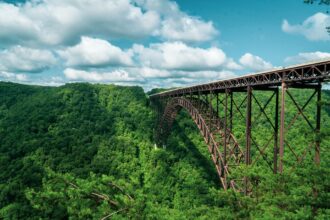
Yes. At Washington DC, passengers can transfer onto the Cardinal for a scenic route through the New River Gorge, while New Orleans connects onward with the City of New Orleans towards Chicago.
Is Wi-Fi reliable on the Crescent?
Onboard Wi-Fi is available but can be genuinely inconsistent through rural stretches of Virginia, Alabama and Mississippi, so it’s sensible to download anything you need before boarding.
Does the Crescent allow bicycles?
Bicycles can usually be checked as baggage at stations offering that service, though it’s worth confirming availability at your specific boarding and arrival stations before travelling.
Does the Crescent operate every day of the year?
Yes, the Crescent runs daily in both directions, with occasional exceptions during major holidays or severe weather, when Amtrak may adjust the schedule slightly.
Is the Crescent accessible for passengers with reduced mobility?
Yes. Accessible Bedrooms are available in the Viewliner sleeping cars, and most stations along the route offer step-free boarding assistance when requested in advance.
Can you smoke on the Crescent?
No, the Crescent is non-smoking throughout, including the Viewliner sleepers and the Café Car. On longer stops such as Charlotte, roughly the halfway point of the New York to New Orleans run, crews sometimes announce a platform smoke break if time allows, but you need to stay close to the train and reboard the instant the horn sounds, since a late-running train can see the stop shortened or dropped entirely.
Further Reading
If you’re planning a wider rail holiday across the United States, these guides can help you build out a fuller itinerary around the Crescent’s route.
Our Amtrak Routes Guide compares every major long-distance route across the country, while our Amtrak Sleeper Train Guide explains the different cabin types available and whether upgrading from Coach is genuinely worthwhile. If you’re planning multiple journeys, our Amtrak USA Rail Pass Guide shows exactly how the pass works and who it suits best.
Since New Orleans is also served by a second long-distance train arriving from the Midwest, our City of New Orleans Guide is well worth reading if you’re arriving from, or continuing onward towards, Chicago.
If Florida rather than Louisiana is part of your plans, our Silver Meteor Guide and Silver Star Guide cover Amtrak’s two other overnight departures from New York and Washington DC down the East Coast, and our California Zephyr Guide is a great place to start if you’re also curious about Amtrak’s great western long-distance routes.