Reviewed by our editorial team Published
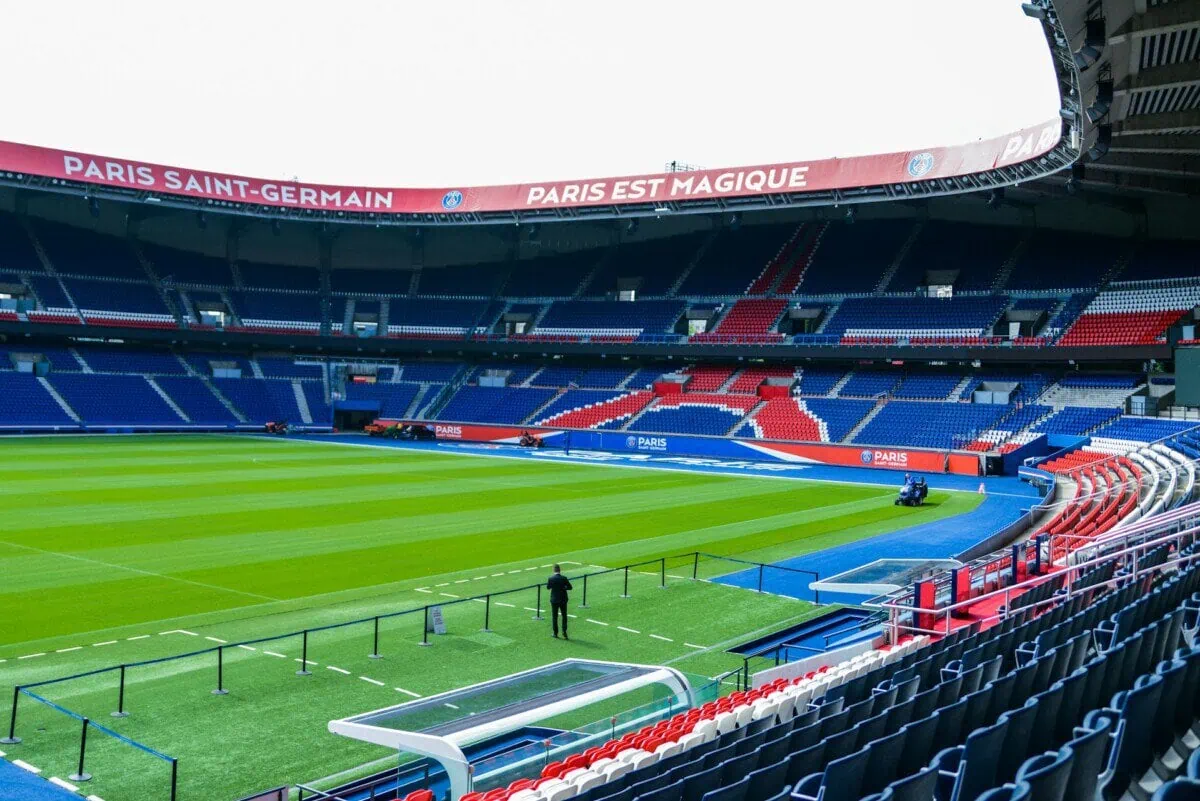
Paris Saint-Germain play their home matches at the Parc des Princes, a compact, fully covered stadium tucked into the city’s affluent 16th arrondissement on the western edge of Paris. Unlike many of Europe’s newest super-stadiums, the ground holds a relatively tight 47,929 spectators, a capacity that keeps the noise close to the pitch even for the biggest Ligue 1 and Champions League nights.
PSG have called the Parc des Princes home since their first match there in November 1973, though the current stadium itself, the fourth built on this site near the Bois de Boulogne, opened a year later under President Georges Pompidou. The ground is owned outright by the City of Paris rather than by the club, an arrangement that shapes a genuine, ongoing conversation about the stadium’s long-term future covered later in this guide.
Long before PSG turned it into one of European football’s most recognisable arenas, the Parc des Princes had already hosted European Cup finals, a European Championship final, and a Rugby World Cup. That history sits alongside the club’s own recent trophy-laden era, giving the ground a genuine sense of occasion that goes beyond any single team’s success.
This guide covers how to actually get to the Parc des Princes, not just which métro line happens to run nearby: a realistic door-to-seat journey from central Paris, what genuinely happens once matchday crowds converge on a residential corner of the 16th arrondissement, and an honest look at driving, parking and buying a ticket.
It also covers what the ground offers beyond ninety minutes of football, from official stadium tours to the genuinely live question of whether PSG stay at the Parc des Princes at all in the years ahead. None of this is complicated to plan around, but knowing what to expect before setting off makes for a considerably smoother matchday.
| Club | Stadium | Capacity | Nearest Station | League (2026/27) |
|---|---|---|---|---|
| Paris Saint-Germain | Parc des Princes | 47,929 | Porte de Saint-Cloud (Line 9) | Ligue 1 & UEFA Champions League |
Transport at a Glance: Nearest Stops for the Parc des Princes
Before the full breakdown below, here is every practical way of reaching the Parc des Princes in one place, since the ground sits on a quiet residential corner of the 16th arrondissement rather than beside a major transport interchange.
| Mode | Stop / Station | Line(s) | Walk Time to Stadium |
|---|---|---|---|
| Métro | Porte de Saint-Cloud | Line 9 | ~350m, around 5 to 8 minutes |
| Métro | Porte d’Auteuil | Line 10 | Short walk, opposite side of the ground |
| RER | Javel or Pont du Garigliano | RER C | 15 to 20 minute walk, or a bus connection |
| Bus | Porte de Saint-Cloud | 22, 62, 72 | Same walk as the Line 9 exit |
| Bus | Porte d’Auteuil | 32, 52 | Same walk as the Line 10 exit |
Getting to Parc des Princes by Métro and RER
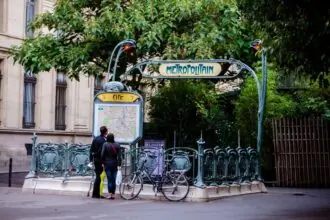
The single most useful fact to know before a matchday at the Parc des Princes is that almost everyone arrives via the same line. Line 9 of the Paris Métro stops directly at Porte de Saint-Cloud, a station roughly 350 metres from the stadium gates, according to RATP’s own official directions page.
A second option exists for anyone travelling to the opposite side of the ground. Line 10 stops at Porte d’Auteuil, a similarly short walk away, and it is worth checking that station against your actual seat block before choosing which exit to head for.
For anyone arriving on the RER, line C calls at Javel or Pont du Garigliano, both a genuine 15 to 20 minute walk from the stadium rather than a direct arrival, so a connecting bus or the métro is usually the smarter finish to the journey. This is worth getting right in advance, since it catches out visitors expecting the RER to drop them at the gates the way it does at some other Paris venues.
A realistic door-to-seat estimate from central Paris is worth building in rather than trusting the headline métro journey time alone. The fastest route from Châtelet, for example, takes around 33 minutes with a single change onto Line 9, and once the walk from the platform and the queue through security are added, budget on 40 to 45 minutes gate to gate on a normal matchday.
One detail worth flagging before you set off: despite Tramway T3a running along the southern edge of Paris not far from here, the Parc des Princes has no direct tram connection at all. Anyone assuming a tram stop sits near the ground should plan around the métro and RER options above instead.
Best for a short trip. Compare rooms by neighbourhood, price and guest rating before you book.
Compare hotelsBest for longer stays. Whole apartments and houses, so you are not eating out three times a day.
View rentalsBest if you have already picked a hotel. Checks the big booking sites for the same room and shows who is cheapest.
Check dealsWhat Matchday Crowds at Porte de Saint-Cloud Actually Look Like
A 47,929-seat stadium empties into a single suburban métro station, and Porte de Saint-Cloud gets genuinely packed for twenty to thirty minutes either side of kickoff and full time. Anyone travelling with children or reduced mobility should expect to stand on a crowded platform rather than step straight onto a comfortable, empty train home.
PSG’s own access guidance is blunt about the reality on a matchday: it warns that getting around the outside of the stadium can be tricky because of the security barriers deployed on the surrounding streets. That single line is worth taking seriously rather than assuming your usual walking route will stay open right up to kickoff.
RATP typically runs a denser service on Line 9 around a full house, and extra staff are a routine sight at Porte de Saint-Cloud managing the flow of tens of thousands of fans through a station that otherwise serves a fairly quiet stretch of the 16th arrondissement. There is no dedicated shuttle-bus network beyond the existing routes, since the métro and RER capacity is generally considered enough for a ground this size.
Leaving right on the final whistle rarely produces the quick getaway it promises. The smarter move is either lingering near the ground for ten to fifteen minutes while the first surge clears the platform, or accepting a slower, more crowded ride home as simply part of the experience.
Arriving early, ideally 60 minutes or more before kickoff, is the simplest way to avoid both the inbound crush and any last-minute security queue at the turnstiles. It also leaves time to see the ground’s exterior and the surrounding streets properly, rather than sprinting the last few hundred metres from the métro.
What You Can’t Bring: Parc des Princes Matchday Rules and Prohibited Items
The Parc des Princes runs a noticeably tighter bag policy than most stadiums covered on this site. Officially, only bags up to A4 in size are allowed inside following a search at the gate, and since there’s no left-luggage facility for anything bigger, oversized bags are best left at the hotel.
Backpacks and suitcases fall outside that allowance entirely and are turned away regardless of what’s inside them. Handbags, small satchels and clutch-style bags are the safest bet for a matchday at Porte de Saint-Cloud.
PSG’s official stadium regulations set out a long list of banned items beyond bags. Knives and other sharp or blunt objects, glass bottles, drinks cans and anything that could double as a projectile are all confiscated on the way in.
Fire and safety hazards get the same treatment. Pyrotechnic articles and flammable substances, motorcycle helmets, laser pointers and poles or canes without a protective cap are all prohibited, alongside any alcoholic drink brought from outside the ground.
Flags are actually welcome inside, within limits. A flag can measure up to 2m by 1.5m, carried on a pole no longer than a metre and no thicker than a centimetre, and a portable charger is fine as long as it’s roughly phone-sized.
Umbrellas, sound-amplification devices and any banner, badge or leaflet carrying a political, religious or discriminatory message are barred too, along with animals other than registered service dogs. Food and drink bought outside the stadium perimeter isn’t allowed in either, so it’s worth eating before reaching Porte de Saint-Cloud.
PSG publishes the full regulations on its official ticketing site, and enforcement tends to tighten for the biggest fixtures. The rules run noticeably stricter here than at the Stade de France, where fans get a 15-litre backpack allowance rather than a strict A4 limit.
Driving to Parc des Princes: Why the Ground Discourages It
Driving to the Parc des Princes is technically possible, but the ground itself is upfront about the limits of that option. The Parc des Princes has no partner parking lot of its own, unlike some larger European grounds built with thousands of dedicated matchday spaces.
Two independent car parks operate near the stadium instead, but neither is run or guaranteed by PSG, and both fill quickly for a sell-out fixture in a residential part of the 16th arrondissement where street parking is limited at the best of times. Treating a parking space as a certainty rather than a hope is the mistake most first-time drivers make here.
Traffic around the ground on matchdays is genuinely difficult, largely because of the security roadblocks put in place on the streets immediately surrounding the stadium. These restrictions are there to keep pedestrian routes from the métro clear, not to make life easy for anyone hoping to pull up close to a gate.
The straightforward reality is this: unless you are arriving from well outside Paris’s rail network with no realistic alternative, Line 9 or the RER will get you there faster and with considerably less stress than a car on matchday. Ride-hailing apps do operate in the area, but drivers are often reluctant to enter the closed-off streets during the pre- and post-match crush, so a pickup a short walk away is usually quicker than waiting for one at the door.
Buying PSG Tickets: Prices and Genuine Availability
Buying a ticket for a Paris Saint-Germain match is not as simple as picking a date and checking out, particularly for a club that regularly competes for domestic and European silverware. The club’s own official ticket shop is the sensible starting point for almost every visiting fan, rather than a third-party resale site.
Where prices are published, single-match tickets typically range from around €20 (£17/$23) for seats behind the goal in the Virage sections up to roughly €80 (£70/$93) for seats along the touchline in the Tribune Paris and Tribune Borelli stands, though pricing varies by opponent and competition. Matches against smaller Ligue 1 sides are generally the most affordable way to see a game at the Parc des Princes.
Demand regularly outstrips supply for anything involving a genuine title rival or a Champions League knockout tie, and PSG’s own membership scheme gives priority access to those fixtures well before general sale opens. Assuming a big club automatically means tickets stay available right up to matchday is a costly assumption to make here.
For fans without a spare ticket to buy directly, the club runs its own Ticketplace resale system, letting members and season-ticket holders pass on unused seats through a channel PSG itself recognises. Relying on unofficial resale listings outside that system carries a real risk, since a ticket bought that way is not guaranteed to be valid at the turnstile.
The plain advice here is to check the official ticket shop as soon as a fixture is confirmed, especially for a Paris derby, a title six-pointer, or anything in the Champions League. Waiting until the week of the match is the single most common way visiting fans end up without a seat.
Stadium Tours: Seeing Parc des Princes Without a Match Ticket
The Parc des Princes runs a genuine visitor programme on non-matchdays, run directly by PSG rather than a third party, for anyone who wants to see the ground without a ticket for a fixture. A Classic Tour offers self-guided access to the stands, the players’ tunnel and pitchside areas, while a Guided Tour adds a small-group host who walks visitors through the same route with commentary.
For genuine enthusiasts, a Matchday Tour offers behind-the-scenes access to the stadium in the hours before a real PSG fixture, and a Premium Tour option adds a more exclusive route through areas a standard visit does not reach. Group visits for schools, companies and associations are also bookable separately, alongside dedicated birthday packages built around the stadium tour itself.
Booking is handled entirely through the official Stadium Tour website, where a live calendar shows current availability and pricing for each format, and PSG members and season-ticket holders get preferential rates when logged into their account. Since prices and available dates change with the fixture list, checking the official booking calendar directly is more reliable than any third-party estimate.
Tours are not available on matchdays themselves, or in the hours immediately before major fixtures, since the areas covered are in active use by the club and its players. Booking a slot on a genuinely quiet day, rather than trying to combine a tour with a matchday visit, is the simplest way to guarantee access to the full route.
Food, Drink and the Area Around the Ground
The Parc des Princes sits in a genuinely residential corner of the 16th arrondissement, closer in character to the quiet streets around the Bois de Boulogne than to a built-up fan-pub district. Visitors expecting a cluster of matchday bars right outside the gates, the way some English or German grounds offer, will find comparatively little immediately around the stadium itself.
The official PSG store, with a flagship boutique on the Champs-Élysées as well as a shop inside the stadium itself, is the reliable place to pick up a shirt or scarf before kickoff. Inside the ground, standard concourse catering covers the usual matchday basics, though it is worth carrying cash or a card rather than assuming every kiosk takes both.
Most visiting fans do their proper pre-match eating and drinking in central Paris rather than immediately around Porte de Saint-Cloud, then make the short métro journey out for kickoff. The nearby Boulogne-Billancourt side of the boundary has a handful of genuine local cafés and brasseries, but nothing built specifically around a matchday crowd.
Treating the walk from the métro as the last leg of the day, rather than the start of a pre-match ritual, is generally the realistic approach here. Planning food and drink for before you set off, or for after the final whistle back in a livelier part of the city, tends to work better than hoping for options right by the turnstiles.
Best for long or awkward journeys. Builds one itinerary out of separate flights.
View flightsBest for anyone whose home plan charges by the megabyte abroad. Pay a fixed price up front.
Check eSIMsBest if you would rather not work out the transport on arrival. Book it now and forget it.
View transfersA Stadium That Has Hosted Finals Before PSG Ever Played There
The Parc des Princes is not just a modern football ground built around one club’s success. The current stadium, the fourth built on this site since 1897, opened in 1972 under President Georges Pompidou, and PSG played their first match there in November 1973, beating Red Star 3-1 in front of a crowd that grew past 30,000 by the final whistle.
Long before that, the ground had already hosted some of European football’s biggest occasions. It staged the European Cup final three times, in 1956, 1975 and 1981, and later hosted the final of Euro 1984, when host nation France beat Spain 2-0 to win the tournament on home soil.
The stadium’s history extends well beyond football too. It hosted matches at the 2007 Rugby World Cup, including France’s third-place play-off, and later staged group and round-of-16 matches at Euro 2016. Football returned again in 2024, when the ground hosted matches across both the men’s and women’s tournaments at the Paris Olympics.
That layered history is part of what makes a Parc des Princes matchday feel different from a stadium built purely around one modern club. Very few grounds anywhere in Europe combine a genuinely famous European final pedigree with a stadium still hosting a continental power’s home fixtures week after week.
What’s Next for Parc des Princes: The Stadium Question
Unlike most of the grounds covered elsewhere in this site’s stadium guides, the Parc des Princes’ long-term future is genuinely unresolved. The stadium is owned by the City of Paris rather than by PSG, and the club has spent several years exploring whether to stay, buy and redevelop the existing ground, or build somewhere new entirely.
PSG first confirmed plans to leave the Parc des Princes and build a new stadium in February 2024, after the Council of Paris rejected an earlier bid from the club to purchase the ground outright. That decision reopened the question rather than settling it, and talks between the two sides have continued since.
As of April 2026, the Council of Paris formally approved reopening negotiations with PSG over the stadium’s future, with three scenarios reportedly still on the table: PSG purchasing and modernising the existing Parc des Princes, folding a redevelopment into the wider Porte de Saint-Cloud district plan, or building an entirely new venue outside Paris, with sites near Poissy and Massy said to remain under review. A final decision was reportedly expected later in 2026.
For now, none of that changes anything about planning a visit. PSG continues to play its Ligue 1 and Champions League home fixtures at the Parc des Princes, and nothing in the reporting so far points to an imminent move. It is genuinely worth knowing the situation is live, though, since anyone planning a trip around this specific stadium years into the future should check for a firmer update closer to the time.

Rupert’s Handy Travel Tips
Heading to a PSG matchday? Rupert has a few tips that can save both time and a lot of standing around:
- Take Line 9 to Porte de Saint-Cloud, not the RER: the walk from RER C’s nearest stations runs to 15 to 20 minutes, while the métro drops you around 350 metres from the gates.
- Check your ticket’s stand before picking a station: Porte de Saint-Cloud and Porte d’Auteuil sit on opposite sides of the ground, so the wrong exit adds a genuine walk.
- Skip driving on matchday: there is no official stadium parking, and the security roadblocks around the ground make a car more hassle than it is worth.
- Eat and drink before you set off: the streets right around the Parc des Princes are residential, so a proper pre-match meal is easier to find back in central Paris.
- Book a stadium tour on a genuinely quiet day: tours do not run on matchdays or in the hours before a fixture, so do not try to combine the two.
- Buy through the official ticket shop only: demand regularly outstrips supply for the biggest fixtures, and unofficial resale tickets are not guaranteed to work at the turnstile.
Want to meet the reindeer behind our travel tips? Find out more in our page Who is Rupert?.




Frequently Asked Questions About Getting to the Parc des Princes
How do I get to the Parc des Princes from central Paris?
Take Line 9 of the métro to Porte de Saint-Cloud, around 350 metres from the stadium, or Line 10 to Porte d’Auteuil on the opposite side of the ground.
Does the RER go to the Parc des Princes?
Not directly. RER C calls at Javel or Pont du Garigliano, both a genuine 15 to 20 minute walk from the stadium, so the métro is generally the quicker option.
Is there a tram stop at the Parc des Princes?
No. Despite Tramway T3a running along the southern edge of Paris nearby, the stadium has no direct tram connection according to RATP’s own guidance.
Should I drive to a PSG match?
It is best avoided. The Parc des Princes has no official partner parking, and security roadblocks around the ground on matchdays make the métro or RER considerably faster.
How much do PSG tickets cost?
Single-match tickets typically range from around €20 (£17/$23) behind the goal up to roughly €80 (£70/$93) along the touchline, though prices vary by opponent and competition.
Can I visit the Parc des Princes without a match ticket?
Yes. PSG runs several stadium tour formats, from a self-guided Classic Tour to guided and matchday options, bookable through the official Stadium Tour website on non-matchdays.
Is PSG planning to leave the Parc des Princes?
The situation is genuinely unresolved. Talks between PSG and the City of Paris reopened in April 2026 over three scenarios, including buying and modernising the current ground, and a decision was reportedly expected later in 2026.
What is the capacity of the Parc des Princes?
The stadium holds 47,929 spectators, making it comfortably smaller than several other major European grounds despite hosting Ligue 1, Champions League and past international finals.

Further Reading & Related Guides
Landing in Paris before a match? Our Paris Public Transport guide covers the métro, RER, buses and trams in full, including the ticketing changes rolling out through 2026 that affect the journey to Porte de Saint-Cloud. Our Things to Do in Paris guide rounds up the landmarks, museums and day trips worth prioritising around a matchday visit.
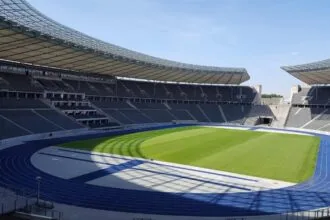
This is far from the only ground on the site with its own dedicated transport breakdown. Our Berlin Stadium Guide covers the same kind of door-to-seat planning for Hertha BSC and Union Berlin’s very different home grounds, worth a look if a wider European football trip is on the cards.
Travelling from London for a fixture, our London to Paris Day Trip guide sets out what a single same-day visit can realistically cover if you are only in the city for kickoff.