Reviewed by our editorial team Published
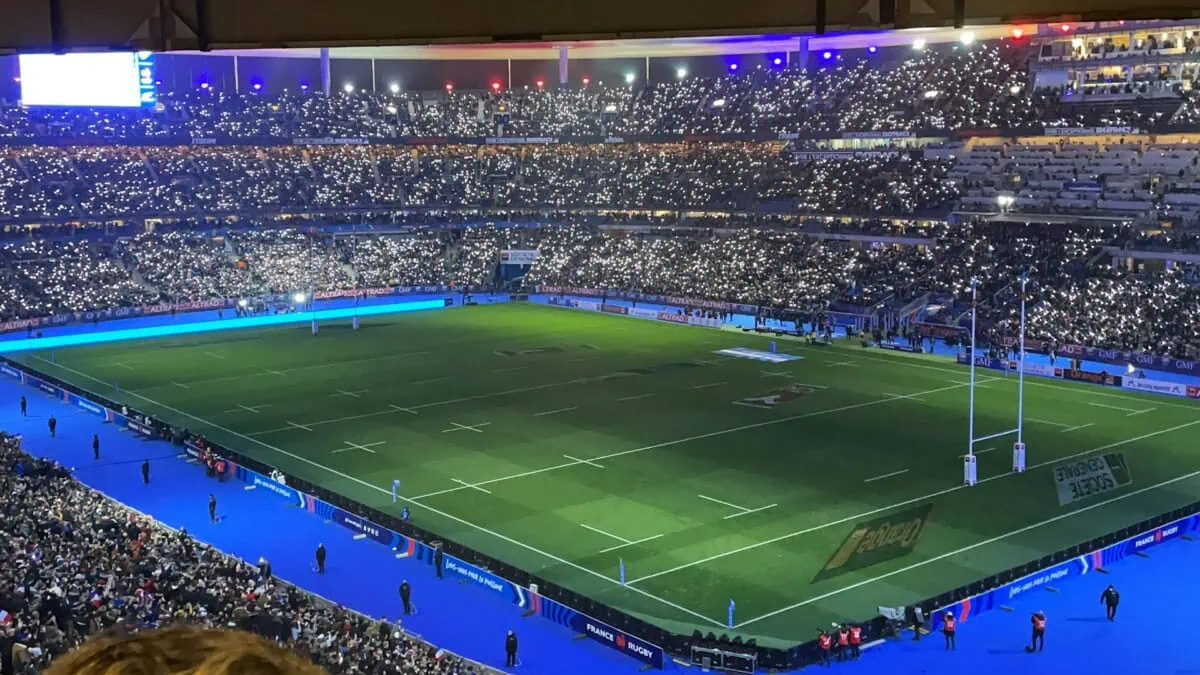
The Stade de France sits in Saint-Denis, a commune just north of central Paris, and has been the country’s national stadium since it opened for the 1998 World Cup. With a capacity of just over 80,000, it ranks among the largest stadiums in Europe, and a matchday here rarely feels like a modest occasion.
Unlike a club ground built around one team, the Stade de France genuinely does it all. It is the regular home of the French national football and rugby union teams for their biggest fixtures, hosts the Coupe de France final and major concerts, and served as the principal stadium for the Paris 2024 Olympic and Paralympic Games.
That variety is exactly why getting there is worth planning properly rather than assuming it works like any other Paris landmark. Saint-Denis sits outside the historic centre, and a realistic door-to-seat journey depends on which of several RER and Metro stations a visitor actually chooses.
This guide walks through the practical side of a visit: which train line and station genuinely gets you there fastest, what happens once tens of thousands of fans and concertgoers converge on the same few streets, and an honest look at driving and parking. It also covers how ticket buying works for football, rugby and concerts, and what else is worth building into the day around it.
None of this is complicated once the basic shape of a visit is clear, but knowing where the Stade de France actually sits, and why the trains work so much better than a car, makes for a considerably smoother day. Saint-Denis itself is worth a little time too, home to a genuinely significant medieval landmark just a short ride from the stadium gates.
| Stadium | Location | Capacity | Nearest Stations | Primary Uses |
|---|---|---|---|---|
| Stade de France | Saint-Denis | 81,338 (football/rugby) | RER B La Plaine–Stade de France; RER D Stade de France–Saint-Denis; M13 Saint-Denis–Porte de Paris | French national football & rugby, Coupe de France final, major concerts |
Transport at a Glance: Every Station Worth Knowing
Before the full breakdown below, here is every practical way of reaching the Stade de France in one place, since Saint-Denis is served by more than one rail line and it helps to see them side by side.
| Mode | Station | Line | Journey from Central Paris | Walk Time to Stadium |
|---|---|---|---|---|
| RER | La Plaine–Stade de France | RER B | ~4 min from Gare du Nord, ~8 min from Châtelet | ~10 min |
| RER | Stade de France–Saint-Denis | RER D | ~5 min from Gare du Nord, ~9 min from Châtelet | ~15 min |
| Metro | Saint-Denis–Porte de Paris | Line 13 | ~16 min from Saint-Lazare, ~25 min from Montparnasse | ~10 min |
| Metro | Aubervilliers–Saint-Denis–Front Populaire | Line 12 | ~15 min from Saint-Lazare | Onward walk |
| Metro | Stade de France–Pleyel | Line 14 | ~10 min from Saint-Lazare, ~18 min from Gare de Lyon | Onward walk |
| Tram | Saint-Denis–Porte de Paris | T8 | Connects from northern suburbs | ~10 min |
Getting to the Stade de France by RER B and RER D
Two RER lines serve the Stade de France directly, each with its own dedicated station right beside the ground. RER B stops at La Plaine–Stade de France, a journey of around four minutes from Gare du Nord and eight minutes from Châtelet, according to the stadium’s own official directions page.
From La Plaine, the walk to the nearest gates takes about ten minutes along Avenue du Stade de France, making it one of the two closest stations to the ground. RER D calls at its own Stade de France–Saint-Denis station, a similarly quick five minutes from Gare du Nord and nine minutes from Châtelet, though the walk from there runs longer, around fifteen minutes via Rue F. Mitterrand and Rue Président Wilson to the north gates.
Both lines run noticeably more often around a major fixture, with RER B trains departing roughly every three minutes and RER D every six minutes once an event is under way. For a realistic door-to-seat estimate from central Paris, budget on twenty to thirty minutes covering the train, the walk from the platform, and the security queue.
Choosing RER B over RER D generally works out better for a first-time visitor, since the shorter walk from La Plaine outweighs the small difference in train frequency. A standard zone 1 ticket does not cover this trip, since the stadium sits several zones beyond central Paris.
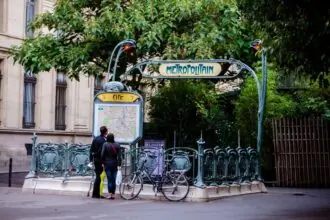
Our Paris Public Transport guide covers the zone system in full, and loading a Navigo Easy card with the right ticket before leaving the hotel avoids an awkward moment at the barrier.
Best for a short trip. Compare rooms by neighbourhood, price and guest rating before you book.
Compare hotelsBest for longer stays. Whole apartments and houses, so you are not eating out three times a day.
View rentalsBest as a last check before booking. Compares Paris hotel rates across several sites in one search.
Compare ratesMetro Line 13: The Walking-Distance Alternative
Metro Line 13 offers a genuine alternative to the RER, stopping at Saint-Denis–Porte de Paris on the same branch that continues on to the Basilica further into town. From central interchange stations, the journey runs to around sixteen minutes from Saint-Lazare, twenty minutes from Invalides, and twenty-five minutes from Montparnasse.
The walk from Porte de Paris to the stadium’s north entrance takes about ten minutes, crossing the canal on a dedicated footbridge rather than following city streets. That makes it comparable in total journey time to the RER B route from central stations further west, and a sensible choice for anyone already near one of Line 13’s southern stops.
Two further Metro lines reach the wider area without stopping quite as close to the ground. Line 12 runs to Aubervilliers–Saint-Denis–Front Populaire, roughly fifteen minutes from Saint-Lazare, while Line 14 calls at Stade de France–Pleyel, about ten minutes from Saint-Lazare and eighteen minutes from Gare de Lyon.
Line 13 is notorious among Parisians for overcrowding at the best of times, and a major fixture pushes an already busy line closer to its limit. Arriving a little earlier than the RER schedule alone would suggest is sensible for anyone relying on Metro 13, simply because the trains themselves can fill up before reaching Saint-Denis.
Trams T1 and T8 also serve the stadium precinct for visitors coming from elsewhere in the northern suburbs, stopping at Hôpital Delafontaine and Saint-Denis–Porte de Paris respectively. Neither is the default route from central Paris, but both are worth knowing about for a visitor already staying north of the city.
Matchday Crowds: What Tens of Thousands of Fans Actually Look Like
An 80,000-capacity stadium empties fast, and the approach roads and station forecourts around Saint-Denis genuinely fill for twenty to thirty minutes either side of kickoff. Anyone travelling with children or reduced mobility should expect a properly crowded platform rather than an easy, immediate ride back into the city.
RATP and SNCF typically run a denser service on the RER B and D lines around a major football, rugby or concert date, and extra staff are a routine sight managing the flow through La Plaine and the Stade de France–Saint-Denis station. There is no dedicated shuttle-bus network beyond the existing RER and Metro routes, since rail capacity is considered sufficient for a stadium of this size.
Arriving at least sixty minutes before kickoff is the simplest way to avoid both the inbound crush and any last-minute security queue at the gates. It also leaves enough time to find the right entrance, since the stadium’s gates are spread widely around its full circumference and a wrong turn can mean a long extra walk.
Leaving straight on the final whistle rarely produces the quick getaway it promises, and the smarter move is often to linger for ten or fifteen minutes while the first surge of the crowd clears through the station. Building in that extra slack after the final whistle, rather than sprinting for the very next train, avoids the worst of the standing-room-only platform experience that follows almost every sell-out fixture here.
What You Can’t Bring: Stade de France Prohibited Items and Bag Rules
Before heading out to Saint-Denis, it’s worth knowing what the Stade de France will and won’t let through the gates. The venue runs a strict bag policy, turning away backpacks over 15 litres, sports bags, hiking bags and tote bags, along with suitcases of any size.
Anyone hoping to shoot proper footage of the match should also travel light. Professional cameras with removable lenses or lenses longer than 15cm are banned, and so are GoPros, tripods, monopods, selfie sticks and standalone audio recorders.
Safety-related items are treated just as strictly. Knives and other sharp objects, glass bottles and glassware, motorcycle helmets, foghorns, laser pointers and any water bottle over 50cl are all confiscated at the gate, along with rigid or oversized flagpoles.
Fireworks and flares of every kind sit on the same list, from sparklers and bangers to smoke bombs and rockets. The stadium also keeps a firm no-alcohol policy inside the bowl itself, so any alcoholic drink is turned away regardless of where it was bought.
A handful of everyday items catch out first-time visitors too. Umbrellas, laptops, tablets and walkie-talkies aren’t allowed inside, and the same goes for animals other than registered guide dogs, plus any banner or leaflet carrying a political, commercial or ideological message.
The stadium is upfront that this list isn’t exhaustive and can change depending on the event, so it’s worth checking the official prohibited items page before travelling. Rules differ noticeably elsewhere in the city too, and our Parc des Princes guide covers a considerably tighter bag allowance at PSG’s home ground.
Driving and Parking: Book Ahead or Don’t Bother
Driving to the Stade de France is entirely possible, with the stadium accessible from the A1 motorway at exit 2 and the A86 at exit 9, both clearly signed on approach. Purpose-built car parks labelled P1, P2 and P3 sit directly around the ground, with height restrictions of around two metres applying to some of them.
The genuinely important detail is timing: parking tickets are not sold on the day of an event at all, and the stadium’s own guidance is explicit that a space must be booked online in advance rather than assumed on arrival. Turning up without a pre-booked ticket on a matchday means no legal way to park in the official car parks whatsoever.
Car parks generally open around 8am and stay open until roughly 1am after an evening fixture, or 9pm following an afternoon one, giving some flexibility either side of the match itself. Even with a booking secured, the roads immediately around Saint-Denis see significant congestion in the hour before kickoff and again once the final whistle sends tens of thousands of vehicles toward the same limited road network at once.
For anyone within reach of the RER or Metro network, the trains are simply the faster and less stressful option once the post-match queue to actually leave the car park is factored in. Driving really only makes sense here for a visitor travelling from well outside the city with no realistic public transport alternative, or one needing a car for accessibility reasons.
Buying Tickets for Football, Rugby and Concerts
Buying a ticket for the Stade de France depends entirely on what is actually on: football and rugby internationals sell through the French Football Federation and the Fédération Française de Rugby respectively, while the Coupe de France final, concerts and other one-off events are sold directly through the stadium’s own official ticket office.
It is genuinely worth double-checking the venue itself before booking anything else around a France football fixture specifically. The team’s home matches moved away from the Stade de France for a period during a pricing dispute with the stadium’s operator, playing instead at Parc des Princes, with a return to Saint-Denis targeted from the first international break of 2026, so confirming the actual venue on the official fixture page before locking in flights or hotels is a sensible precaution.
Demand regularly outstrips the roughly 80,000 seats available for a major France international, a Coupe de France final, or a headline concert, and popular dates can sell out well before general sale even opens. The plain advice here is to buy through the official channel for whichever event it is, rather than a resale marketplace, since unauthorised resale tickets are not guaranteed to be valid at the turnstile.
Booking early matters more for this stadium than for most club grounds, simply because it hosts so many genuinely different, high-demand events rather than one team’s regular home fixtures. Treating the ticket as the first thing to secure, before travel or accommodation, is the sensible order to do things in.
Stadium Tours and the Museum: Worth the Trip Beyond a Match
Beyond matchday, the Stade de France runs a genuine year-round visitor attraction in its own right. The Stadium Tour, roughly ninety minutes long, takes visitors through the players’ changing rooms and the official players’ tunnel out onto the edge of the pitch itself, alongside a permanent exhibition covering the ground’s history and biggest events.
Adult tickets cost around €16 (£14/$18), with a reduced rate for children aged five to eighteen and a family rate covering two adults and two children. Tours run in French and English as standard, with Spanish, German and Dutch available on request depending on availability, and booking is handled through the stadium’s official ticket partner rather than at the door.
Tours do not run on event days, so anyone hoping to combine a stadium visit with a matchday should plan for two separate trips rather than one. Booking a slot a few days ahead is sensible, particularly around weekends when the tour understandably gets busier.
What makes the tour worth the detour is the sheer range of history packed into one building: a 1998 World Cup final, a Rugby World Cup final, a Champions League final relocated here at short notice in 2022, and the closing ceremonies of the Paris 2024 Olympic and Paralympic Games. Few stadiums anywhere combine that breadth of major sporting occasions with the world’s biggest touring concerts on the very same pitch.
Best if you can move a day either way. Shows how the fare to Paris changes across the month.
Compare flightsBest for anyone whose home plan charges by the megabyte abroad. Pay a fixed price up front.
Check eSIMsBest when public transport has stopped, or when you are travelling with children and bags.
Book a transferEating, Drinking and the Basilica of Saint-Denis
Saint-Denis is not the kind of built-up city-centre neighbourhood some stadiums sit inside, so most matchday food and drink happens either well before travelling out or close to the RER and Metro stations themselves. A cluster of chain restaurants and cafes sits around the Millénaire shopping centre a short ride from the stadium, a practical option for a pre-match meal without needing to detour into central Paris.
Inside the stadium itself, standard concourse catering covers the usual mix of hot food, snacks and drinks at kiosks spread around the concourses, with card payment accepted throughout. Queues build fastest in the thirty minutes before kickoff and again at half-time, so buying early or waiting it out is generally the better move.
Saint-Denis town centre itself is genuinely worth the short extra trip on a non-matchday, built around the Basilica of Saint-Denis, the burial place of nearly every French king and queen from the tenth century onward and one of the earliest true examples of Gothic architecture anywhere. It sits a couple of Metro 13 stops beyond Saint-Denis–Porte de Paris, making it an easy add-on before or after a stadium visit.
Pairing a stadium tour with an hour at the Basilica turns a single-purpose trip out to Saint-Denis into a genuinely worthwhile half-day, rather than a there-and-back errand purely for the football or rugby. Few visitors realise how much history sits just a few minutes beyond the stadium gates.
Rugby, Football and Concerts: What’s Actually On
The Stade de France hosts a genuinely wide spread of events across a typical year, and what is actually on shapes both crowd size and how far ahead tickets need booking. France’s Six Nations rugby fixtures typically fall between early February and mid-March, and a home match against a major rival routinely sells close to capacity.
French football internationals are scheduled around the calendar’s regular international breaks, generally in March, June, September, October and November, with the team’s return to playing home matches at the Stade de France itself worth confirming on the official fixture list given the recent change of venue covered above. The Coupe de France final, French domestic football’s showpiece cup match, is played here most seasons in the closing weeks of the campaign.
Concerts fill much of the remaining calendar, and the venue has hosted some of the biggest touring artists in the world, including a show in 2026 that set a new record for attendance at the stadium. The Stade de France is also due to host its first-ever NFL regular-season game on French soil in October 2026, a fixture that will bring an entirely different crowd and matchday culture to Saint-Denis for one weekend.
Because the calendar mixes football, rugby, cup finals and concerts so heavily, it is worth checking exactly what is on, and how big a draw it is, before assuming a quiet midweek date will mean an easy, uncrowded visit.

Rupert’s Handy Travel Tips
Heading out to Saint-Denis for a match or a concert? Rupert has a few tips that can save both time and a lot of standing around:
- Take RER B to La Plaine, not RER D: the walk from the platform to the nearest gates is around five minutes shorter.
- Load the right zone ticket before you set off: Saint-Denis sits well beyond the zone 1 ticket most short-stay visitors carry.
- Double-check the venue for a France football fixture: the team has shuttled between the Stade de France and Parc des Princes, so confirm before booking flights.
- Book your parking space online in advance if you’re driving: tickets are not sold at the gate on the day of an event.
- Pair a non-matchday visit with the Basilica of Saint-Denis: it is a couple of Metro stops further and holds the tombs of nearly every French monarch.
Want to meet the reindeer behind our travel tips? Find out more in our page Who is Rupert?.




Frequently Asked Questions About Getting to the Stade de France
How do I get to the Stade de France from central Paris?
Take RER B to La Plaine–Stade de France, around four minutes from Gare du Nord, or RER D to the dedicated Stade de France–Saint-Denis station, both followed by a ten to fifteen minute walk to the gates.
Can I walk to the Stade de France from the Metro?
Yes. Metro Line 13 stops at Saint-Denis–Porte de Paris, around a ten-minute walk from the stadium’s north entrance across a dedicated footbridge.
Is it worth driving to the Stade de France on a matchday?
Generally not. Parking tickets must be booked online in advance since none are sold at the gate on the day, and the surrounding roads see heavy congestion before and after every major event.
Where does the French national football team actually play?
The Stade de France is the team’s traditional home, though matches were played at Parc des Princes for a period during a pricing dispute, with a return to Saint-Denis targeted from 2026, so it is worth confirming the venue on the official fixture page.
What is the capacity of the Stade de France?
The stadium holds 81,338 spectators for football and rugby fixtures, making it one of the largest stadiums in Europe.
Can I visit the Stade de France without a match ticket?
Yes. A roughly ninety-minute Stadium Tour runs on non-event days, taking in the changing rooms, players’ tunnel and pitchside, alongside a permanent history exhibition.
What else has the Stade de France hosted?
Beyond football and rugby, it has hosted the 1998 World Cup final, a Rugby World Cup final, the 2022 Champions League final, the closing ceremonies of the Paris 2024 Olympic and Paralympic Games, and record-breaking concerts.
Is the Stade de France in Paris itself?
Not quite. It sits in Saint-Denis, a separate commune just north of the city boundary, though it is easily reached from central Paris by RER or Metro.
Further Reading & Related Guides
Working out the wider transport picture before your visit? Our Paris Public Transport guide covers the Métro, RER, buses and trams in full, including the zone system that determines which ticket actually covers a trip out to Saint-Denis.
Building a match or concert visit into a wider city trip? Our Things to Do in Paris guide rounds up the landmarks, museums and day trips worth prioritising around the rest of your stay.
If football or a stadium tour is a running theme of your travels, our Munich Stadium Guide covers the same kind of door-to-seat planning for Bayern Munich’s Allianz Arena, one of several stadium guides this site runs city by city. It is a useful comparison for how differently two of Europe’s biggest football grounds handle a matchday crowd.
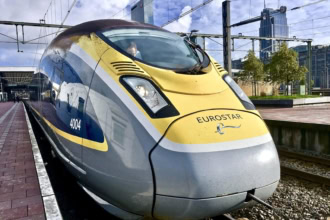
Travelling from London for the occasion, our Eurostar Trains Guide covers routes, tickets and the journey into Gare du Nord, a short RER B ride from the stadium itself.