Reviewed by our editorial team Published
Paris holds more world-class museums per square mile than almost any other city on earth, and narrowing that down to a manageable list is already an exercise in restraint. This guide walks roughly west to east across the city, from the Eiffel Tower and the gilded dome of Les Invalides through the Louvre’s glass pyramid to the ossuaries beneath Montparnasse.
Some of the sights below carry a bookable skip-the-line ticket because that is genuinely the easiest way to get inside without losing half a morning to a queue. Others, including the Louvre itself, are described in full with a link to the museum’s own website, since booking direct is often just as sensible for those.
Every price quoted here uses the same tri-currency conversion (€1 = £0.86 = $1.17) and reflects the standard, full-price rate rather than any temporary discount that happens to be running. Reservations matter more in Paris than in most capitals, particularly at Notre-Dame and the Louvre, where timed entry slots can sell out days in advance during peak season.
Getting into the city is its own decision, and travellers arriving from London increasingly plan this as a same-day trip by Eurostar rather than flying. From Gare du Nord, most of the sixteen places below sit within a comfortable Métro ride or a scenic walk along the Seine.
Paris Museums at a Glance
| Venue | Price | Suggested Visit Time | Why Go |
|---|---|---|---|
| Eiffel Tower | From €14.80 (£13/$17.32) | 1.5–2 hours | Paris’s most recognisable skyline view, and it sparkles for five minutes every hour after dark |
| Les Invalides | €17.44 (£15/$20.41) | 2–3 hours | Napoleon’s tomb beneath a golden dome, next to Europe’s largest military history collection |
| Musée Rodin | €14 (£12/$16.38) | 1.5 hours | A sculpture garden built around The Thinker, minus the Louvre-sized crowds |
| Musée d’Orsay | €12.79 (£11/$14.97) | 2.5–3 hours | The world’s tightest one-stop Impressionist collection, inside a converted railway station |
| The Louvre | €22 EEA / €32 non-EEA (£19–27.52/$25.74–37.44) | 3–4+ hours | Three wings’ worth of the world’s largest art collection, and there’s far more than the Mona Lisa |
| Musée de l’Orangerie | €13.95 (£12/$16.33) | 1–1.5 hours | Monet’s Water Lilies, displayed exactly as he designed them to be seen |
| Sainte-Chapelle | €16 EEA / €22 non-EEA (£14–19/$18.72–25.74) | 45 minutes–1 hour | The most complete stretch of medieval stained glass surviving anywhere in Europe |
| Notre-Dame | Free entry (guided ticket from €10.47/£9/$12.24) | 1 hour | A reborn Gothic masterpiece, brighter now than before the 2019 fire |
| Centre Pompidou | Closed until 2030 | N/A | An architectural icon worth knowing about, even while its galleries stay shut |
| Picasso Museum | €6.98 (£6/$8.16) | 1–1.5 hours | The world’s largest Picasso collection, inside the mansion a tax bill built |
| Panthéon | €16 summer / €13 winter (£11–14/$15.21–18.72) | 1–1.5 hours | Where France buries its heroes, under one of the city’s best rooftop views |
| Catacombs of Paris | €31 (£27/$36.27) | 45 minutes–1 hour | Six million Parisians’ remains, arranged into an unforgettable underground walk |
| Cité des Sciences et de l’Industrie | From €15 (£13/$17.55) | 2–3 hours | Europe’s largest science museum, with a dedicated hands-on wing built specifically for children |
| Musée des Arts Forains | €18 (£15/$21.06) | 1.5 hours (guided) | A private fairground collection where visitors actually get to ride the antique attractions |
| Musée des Égouts de Paris | €9 (£8/$10.53) | 45 minutes–1 hour | A genuine walk through Paris’s working sewer tunnels, unlike anywhere else in the city |
| Musée Marmottan Monet | €14 (£12/$16.38) | 1.5–2 hours | The world’s largest Monet collection, in a quiet mansion far from the main museum crowds |
Climbing an Icon: Inside a Visit to the Eiffel Tower
Gustave Eiffel’s engineering firm built the Eiffel Tower for the 1889 World’s Fair, and Parisians were meant to tear it down after twenty years. It survived thanks to its usefulness as a radio antenna, and today it stands roughly 330 metres tall across three public levels, including the summit.
The first two levels hold restaurants and exhibition space, and a glass floor panel on the first level lets visitors look straight down through 57 metres of open air to the ground below.
Booking a timed slot directly through the tower’s official website remains the most reliable way to climb it without an extended wait at the base. The structure sparkles for five minutes on the hour after dark, a detail that catches out visitors who assume the lights stay fixed all evening.
Adult tickets start from €14.80 (£13/$17.32) for the stairs to the second floor, rising to €36.70 (£32/$42.94) for the lift all the way to the summit. Taking the stairs works out considerably cheaper than the lift, and climbing the 674 steps to the second floor is a genuinely manageable challenge for most visitors.
The Champ de Mars gardens beneath the tower make a natural stop before or after a museum-heavy day elsewhere in the city, and the RER and Métro both stop within a short walk. Anyone travelling with children often finds the stairs to the second floor, rather than the lift, a cheaper and more memorable way up.
The closest Métro station is Bir-Hakeim on Line 6, roughly a five-minute walk across the river from the tower’s base. Trocadéro, served by Lines 6 and 9, sits on the opposite bank and gives the classic postcard view, while RER C stops directly beneath the tower at Champ de Mars–Tour Eiffel.
Full ticket options and current visitor rules sit on the tower’s official website, which is worth checking before travelling since access rules occasionally change around major events.
Best if you want daily housekeeping and a front desk. Filter by area first, then by price.
Check availabilityBest for longer stays. Whole apartments and houses, so you are not eating out three times a day.
View rentalsBest as a last check before booking. Compares Paris hotel rates across several sites in one search.
Compare ratesLes Invalides: Napoleon’s Tomb & Army Museum
Louis XIV commissioned Les Invalides in the 1670s as a hospital and residence for wounded and elderly soldiers, and its gilded dome remains one of the most recognisable skyline features on the Left Bank. Napoleon’s remains were moved here in 1861 and rest inside a colossal red porphyry sarcophagus directly beneath that dome.
The attached Musée de l’Armée ranks among the largest military history collections anywhere, spanning medieval armour through both World Wars in a single continuous visit. Napoleon’s own campaign tent and uniform sit alongside genuinely moving personal artefacts from soldiers on every side of twentieth-century conflicts.
Beyond the tomb, the complex’s courtyard displays historic artillery pieces spanning several centuries, and the adjoining Cathedral of Saint-Louis-des-Invalides adds a second, quieter place of worship beneath its own dome. Regimental flags captured in battle still hang from the cathedral’s vaulted ceiling, a detail many visitors walk straight past on their way to Napoleon’s tomb.
This is the guide’s top pick among the museums covered here, rated 4.6 stars from 10,849 reviews with one day of validity once activated. It costs €17.44 (£15/$20.41) and is worth booking ahead during the busier summer months, when the dome courtyard gets genuinely crowded by mid-morning.
The complex sits directly above Invalides station, served by Métro Lines 8 and 13 as well as RER C, making it one of the easiest major sights in Paris to reach without changing lines. Anyone coming from the Eiffel Tower or Musée Rodin can cover the distance along the esplanade on foot in well under fifteen minutes.
Where Rodin Lived and Worked: Inside the Musée Rodin
The Musée Rodin occupies the Hôtel Biron, an eighteenth-century mansion where Auguste Rodin lived and worked during his final years. He struck a deal with the French state in 1916, donating his entire body of work in exchange for a museum being created there after his death, and it opened to the public in 1919.
The sculpture garden alone justifies a visit, with a full-size cast of The Thinker presiding over rose beds a short walk from Les Invalides. Inside, The Gates of Hell and The Kiss sit among plaster studies and marble pieces that trace how Rodin actually built his most famous compositions.
A 2015 renovation restored the mansion’s original oak parquet and stripped back decades of clutter, giving the paintings and drawings on the upper floor considerably more breathing room than before. The museum also holds important pieces by Camille Claudel, Rodin’s student and collaborator, whose own dramatic sculptures often get overlooked in the shadow of his fame.
Full museum entry costs €14 (£12/$16.38), while a cheaper garden-only ticket exists for anyone short on time between other Left Bank sights. There is no need to book a commercial ticket product for a visit here, and same-day tickets are rarely a problem outside peak summer weekends.
Varenne station, served by Métro Line 13, sits directly outside the museum’s gates and is only two stops from Invalides. The platform itself even features reproductions of two Rodin sculptures, a small detail that rewards anyone paying attention on the way in.
Opening times and admission prices are kept current on the museum’s official website, including its occasional late-evening openings in summer.
From Railway Station to Impressionist Treasure House: The Musée d’Orsay
The Orsay Museum occupies the former Gare d’Orsay, a Beaux-Arts railway station completed in 1900 and converted into a museum in 1986 after standing empty for years. Its soaring glass-vaulted hall, still crowned by the station’s original ornate clock, now houses one of the world’s finest collections of nineteenth-century art.
The permanent collection covers French art from roughly 1848 to 1914, including major holdings of Monet, Degas, Van Gogh, Renoir and Cézanne that bridge the gap between the Louvre’s older masters and the Pompidou’s modern galleries. Few museums anywhere pack this much Impressionist and Post-Impressionist work into one building.
The museum’s giant station clock has become one of the most photographed features in Paris, and a small platform directly behind its glass face offers an unusual framed view out across the Seine toward Montmartre. Sculpture fills the central nave at ground level, while paintings climb chronologically through the galleries on the upper floors.
This is the most reviewed product covered in this guide, rated 4.7 stars from 27,987 reviews, and it comes strongly recommended for a first visit. The top-rated, fast-track entry ticket is valid for one day and costs €12.79 (£11/$14.97).
Travellers who want curator-level context alongside their visit can instead choose the Orsay Museum Entry Ticket and Digital Audio Guide App, also valid for one day, rated 4.4 stars from 4,833 reviews at €27.91 (£24/$32.65). It is the same museum, simply with narrated commentary built into a companion app for anyone who would rather not queue at an audio guide desk.
The nearest Métro station is Solférino on Line 12, a five-minute walk along Rue de Bellechasse, while RER C stops right beside the museum at its own Musée d’Orsay station. Travellers coming from the Louvre or the Orangerie can just as easily follow the river on foot, a scenic fifteen-minute walk that skips the Métro altogether.
Beyond the Mona Lisa: What Else the Louvre Actually Holds
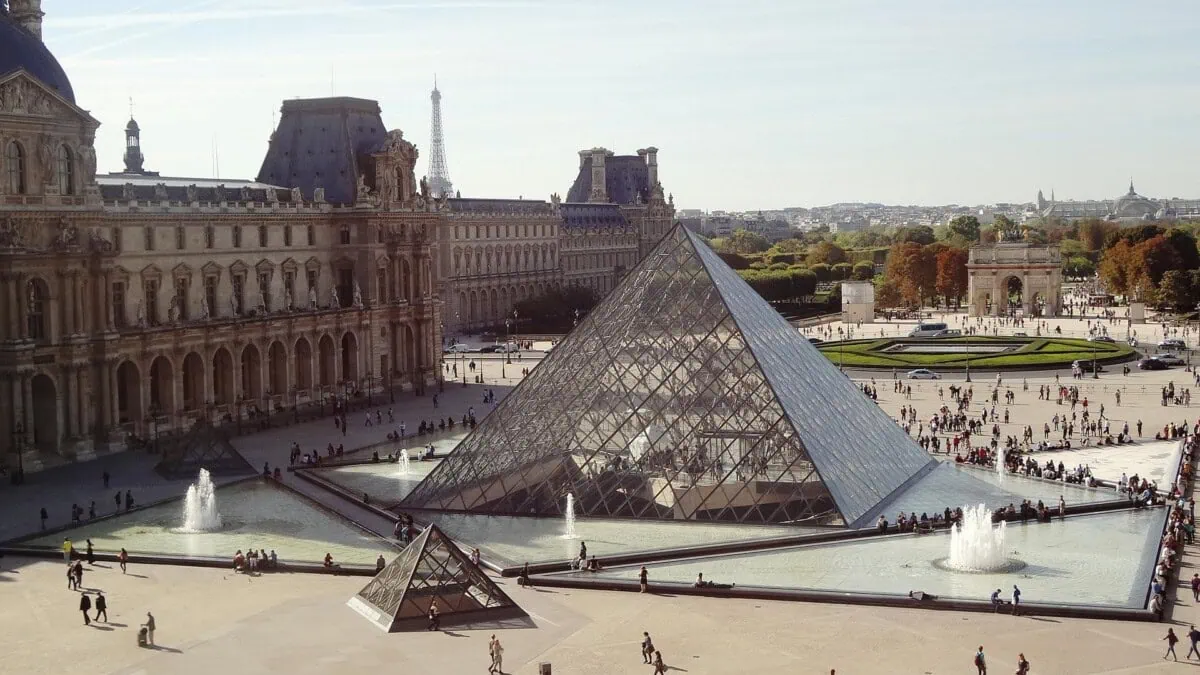
The Louvre is the world’s largest art museum by gallery space, a former royal palace that has been open to the public in some form since 1793. Its glass Pyramid entrance, added in 1989 by architect I. M. Pei, remains one of the most photographed structures in Paris despite decades of initial controversy.
Roughly 35,000 works are on display at any one time, but most visitors come for three pieces in particular: the Mona Lisa, the Venus de Milo, and the Winged Victory of Samothrace. Leonardo’s small portrait draws the thickest crowds of any single artwork in the building by a wide margin.
The museum splits into three wings, Denon, Sully and Richelieu, and each could realistically fill a full day on its own without ever feeling repetitive. The Sully wing’s Egyptian antiquities and the gilded Napoleon III apartments in Richelieu draw far smaller crowds than the paintings galleries yet reward the detour handsomely.
France announced a ten-year “Louvre New Renaissance” renovation plan in January 2025, which will eventually give the Mona Lisa a dedicated room of her own and add a new entrance near the Seine. None of that affects a visit today, since the museum continues to operate its full galleries on its normal daily schedule.
Standard adult admission costs €22 (£19/$25.74) for EEA residents and €32 (£27.52/$37.44) for visitors from outside the EEA, a two-tier pricing system introduced in 2026. The museum closes every Tuesday, a detail that trips up more itineraries than almost anything else on this list.
Booking a timed entry slot through the official Louvre website is the standard route in, and arriving through the smaller Porte des Lions or Carrousel entrances usually beats the queue at the Pyramid itself. Arriving right as the doors open also meaningfully cuts down the crowd around the Mona Lisa, which builds steadily as the morning goes on.
The main entrance sits a short walk from Palais-Royal–Musée du Louvre station, served by Métro Lines 1 and 7, with an exit that leads almost directly into the underground Carrousel entrance.
Full ticket options, gallery maps and current opening hours are all on the official Louvre website. Given the sheer scale of the place, picking two or three wings in advance works far better than trying to see everything in one visit.
Monet’s Water Lilies in Their Own Purpose-Built Rooms: The Musée de l’Orangerie
The Musée de l’Orangerie began life in 1852 as a greenhouse for the Tuileries Gardens’ orange trees before being converted into a gallery in the early twentieth century. Its most famous contents arrived through a personal gift from Claude Monet himself, made shortly after the armistice that ended the First World War.
Monet donated his Water Lilies cycle, the Nymphéas, to the French state as a gesture of peace, and personally oversaw the design of two oval rooms built specifically to display them in natural light. The panels were installed exactly as he intended and unveiled to the public in 1927, the year after his death.
Each oval room holds four continuous panels that wrap almost entirely around the walls, an arrangement Monet designed so visitors would feel surrounded by water and reflected sky rather than looking at a conventional framed painting. Natural light still filters in through the ceiling exactly as he specified, changing the mood of the panels through the course of the day.
Downstairs, the Walter-Guillaume collection adds a strong run of Cézanne, Renoir, Matisse, Picasso and Modigliani, making this a genuinely two-part museum rather than a single-room attraction. Most visitors still come primarily for the Monet rooms, and rightly so.
This top-rated, reserved-entrance ticket is rated 4.7 stars from 7,213 reviews and covers one day of validity. It costs €13.95 (£12/$16.33) and removes the need to queue separately for a same-day slot.
Concorde, served by Métro Lines 1, 8 and 12, sits right at the edge of the Tuileries Gardens with an exit signposted directly toward the museum. It is a genuinely short walk from the Orsay too, making the two museums an easy pairing on the same afternoon.
Thirteen Windows, Six Centuries of Glass: Inside Sainte-Chapelle
Sainte-Chapelle was built astonishingly fast, completed in under six years between 1242 and 1248 on the orders of King Louis IX to house relics he had acquired, including the Crown of Thorns. It sits within the Palais de la Cité complex on the Île de la Cité, the same site that still houses part of the Paris law courts.
The upper chapel is the reason people come, with fifteen stained-glass windows containing more than 1,100 individual biblical scenes across roughly 600 square metres of glass. Nearly two-thirds of it is original thirteenth-century work, making it one of the most complete surviving examples of medieval stained glass anywhere in Europe.
A steep spiral staircase climbs from the plain lower chapel, once reserved for palace staff, into the upper chapel’s soaring colour, a deliberate contrast that still catches first-time visitors off guard. Adult tickets cost €16 (£14/$18.72) for EEA residents and €22 (£19/$25.74) for visitors from outside the EEA, the same two-tier system now used across several national monuments in Paris.
Security screening here is shared with the surrounding judicial buildings, so queues can move slower than the modest size of the chapel suggests. Visiting outside midday, when tour groups tend to cluster, gives the glass room to breathe and makes the light patterns across the floor easier to appreciate.
Cité station on Métro Line 4 sits at the edge of the island, a two-minute walk from the chapel’s entrance through the Palais de Justice complex. Saint-Michel, served by RER B and C plus Line 4, works just as well for anyone approaching from the Left Bank.
It pairs naturally with a Notre-Dame visit given the short walk between them, and full ticket and opening-hour details sit on the chapel’s official website.
Best for long or awkward journeys. Builds one itinerary out of separate flights.
View flightsBest for short trips. Install the eSIM at home and arrive in Paris with working data, no shop queue.
Browse eSIMsBest when public transport has stopped, or when you are travelling with children and bags.
Book a transferNotre-Dame: The Restored Masterpiece
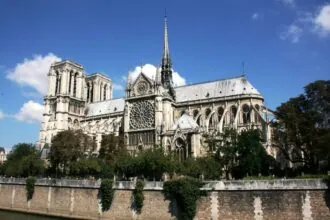
A fire tore through Notre-Dame on 15 April 2019, destroying the spire and most of the oak-framed roof and shocking a global audience watching live. What followed was a roughly five-year restoration that rebuilt the spire to Viollet-le-Duc’s nineteenth-century design and replaced the entire timber roof structure by hand.
The cathedral reopened on 7 December 2024, with the public first admitted two days later and normal opening hours resuming by 16 December. Centuries of accumulated grime were cleaned from the limestone walls during the works, and visitors now consistently describe the interior as noticeably brighter than before the fire.
Carpenters used medieval techniques and traditional hand tools to rebuild the spire’s oak frame, deliberately avoiding modern machinery to match the cathedral’s original construction methods as closely as possible. The new stained-glass windows planned for several side chapels remain a separate, ongoing project, so parts of the interior will keep changing for several more years yet.
Basic entry to the cathedral remains free of charge, but timed slots book out days ahead during peak season, which is exactly the gap a guided ticket like this one is designed to fill. The 45-minute tour is rated 4.5 stars from 4,962 reviews and explains the restoration in detail as you move through the nave.
This guided access ticket costs €10.47 (£9/$12.24), and booking ahead matters here more than almost anywhere else on this list given how quickly free entry slots vanish.
Cité, on Métro Line 4, sits directly behind the cathedral on the same island, while Saint-Michel–Notre-Dame handles both RER B and RER C a short walk across the square. Both options put visitors within two or three minutes of the cathedral’s main entrance.
Closed Until 2030: What to Know About the Centre Pompidou Right Now
The Centre Pompidou turned architecture inside out when it opened in 1977, with its escalators, pipes and structural frame deliberately left exposed on the building’s exterior by architects Renzo Piano and Richard Rogers. Inside sits the largest collection of modern and contemporary art in Europe, spanning Matisse and Picasso through to major postwar and contemporary names.
The building closed to the public on 22 September 2025 for a major renovation addressing asbestos removal, structural corrosion and outdated building systems, and it is not expected to reopen until 2030. In the meantime, a touring programme called Constellation is dispersing selected exhibitions and events to partner venues in France and abroad rather than leaving the collection entirely inaccessible.
The building’s famous external escalator tube, wrapped in clear plastic tubing that climbs diagonally up the west facade, will remain a recognisable Paris landmark throughout the works even with the galleries themselves closed. Scaffolding and hoarding now cover much of the plaza, so anyone walking past should expect a building site rather than the open piazza regulars remember.
There is no ticket to book here right now, since the museum itself is shut for the duration of the works, so it earns its place on this list as a landmark worth knowing about rather than one to plan a visit around this year. Anyone with a longer Paris trip may still catch part of its collection at a partner venue elsewhere.
Rambuteau, served by Métro Line 11, has an exit named directly for the museum and sits right beside the plaza even while the building is closed. Hôtel de Ville, on Lines 1 and 11, and the larger Châtelet interchange both work as alternatives a few minutes further on foot.
The Centre Pompidou’s own website is the best place to check progress on the renovation and find out where its Constellation programme is currently showing.
A Tax Bill That Built a Museum: Inside the Musée Picasso
The Picasso Museum occupies the Hôtel Salé, a seventeenth-century Marais mansion, and exists because of an unusual piece of French tax law. Picasso’s heirs settled a substantial inheritance tax bill in 1979 by donating a huge body of his work to the state instead, a system known as dation, and the museum opened in 1985.
The result is the largest public collection of Picasso’s own work anywhere, tracing his shifts from Blue Period melancholy through Cubism and into his looser late-career style within a single building. A smaller side collection shows pieces he personally owned by Cézanne, Matisse and other contemporaries, offering a glimpse of his own taste as a collector.
The mansion itself is worth lingering over, with a grand stone staircase and carved ceilings that survive from its original construction for a wealthy salt tax collector, which is where the “Hôtel Salé” name comes from. A rooftop terrace, added during a major 2014 renovation, gives an unusual view back across the Marais rooftops that most visitors never discover.
Entry here is a simple fifteen-minute timed-entry ticket rather than a guided experience, certified by GetYourGuide and rated 4.5 stars from 1,569 reviews. It costs €6.98 (£6/$8.16), making it one of the cheaper bookable products covered in this guide.
Saint-Sébastien-Froissart, on Métro Line 8, has an exit signposted directly for the museum and sits barely two minutes’ walk from the entrance. Chemin Vert, also on Line 8, and Saint-Paul on Line 1 both work as easy alternatives from elsewhere in the Marais.

Where France Buries Its Heroes: Inside the Panthéon
Louis XV commissioned the Panthéon as a church dedicated to Sainte Geneviève after recovering from a serious illness, though it was completed only in 1790, just as revolutionary politics turned the building toward a very different purpose. Instead of a working church, it became a secular mausoleum honouring the nation’s great figures.
Voltaire, Rousseau and Victor Hugo all rest inside, alongside Marie Curie, the first woman inducted on her own scientific merit rather than as someone’s spouse. A working replica of Léon Foucault’s original 1851 pendulum still swings in the central nave, a genuinely elegant demonstration of the Earth’s rotation.
Adult admission costs €16 (£14/$18.72) during the busier summer months, dropping to €13 (£11/$15.21) over autumn and winter, with a separate supplement required for dome access. The building’s neoclassical facade, modelled deliberately on Rome’s Pantheon, still carries the dedication “to the great men, a grateful homeland” above its columns.
A separate ticket grants access to the dome’s viewing platform, which opens up one of the better panoramic views in the city across the Latin Quarter and toward Notre-Dame. The crypt beneath the main hall extends the visit further, a quieter and noticeably cooler space that holds most of the tombs themselves.
Cardinal Lemoine, on Métro Line 10, sits closest to the entrance, with Maubert-Mutualité, also on Line 10, working just as well from the other side. RER B stops at Luxembourg, a short walk through the Latin Quarter’s narrow streets for anyone arriving from south of the city.
Opening hours and the current schedule for dome access sit on the Panthéon’s official website, since the platform occasionally closes in poor weather.
Six Million Skeletons Beneath the Streets: The Catacombs of Paris
The Catacombs of Paris began as limestone quarries that supplied stone for much of the city above before being repurposed in the late eighteenth century to solve an overflowing cemetery crisis. The remains of more than six million Parisians were transferred underground, and workers arranged the bones into the deliberate walls and patterns visitors see today.
The site closed for renovation on 3 November 2025 to replace ageing electrical and air-handling systems and improve conditions for the roughly two thousand daily visitors the tunnels receive. It reopened on 8 April 2026 with an updated tour route and a new audio guide system, so anyone who visited years ago will find some details genuinely different this time.
The visitable route covers roughly 1.5 kilometres of tunnel and takes most visitors between 45 minutes and an hour to walk, ending with a steep climb of 112 steps back up to street level. Adult admission costs €31 (£27/$36.27), and the ticket includes an audio guide as standard following the 2026 refurbishment.
Daily capacity remains limited by the narrow tunnels, and same-day walk-up tickets frequently sell out, so booking a slot in advance is worth doing before travel rather than on arrival. The entrance sits at Denfert-Rochereau in the 14th arrondissement, a manageable Métro ride south of the Seine.
Denfert-Rochereau station itself is served by Métro Lines 4 and 6 as well as RER B, putting the entrance within a minute’s walk of the platforms. The distinctive green Guimard entrance kiosk, a listed historic monument since 2016, makes the entrance easy to spot from the square outside.
Full ticket and route details are on the official Catacombs website, and it makes a fitting final stop after a day spent among the city’s grander museums.
Where Kids Actually Get to Touch Things: The Cité des Sciences et de l’Industrie
The Cité des Sciences et de l’Industrie sits inside Parc de la Villette in a converted nineteenth-century cattle market hall, and it is Europe’s largest science museum by floor space. Unlike the marble-and-gilt museums further south, this one was built specifically to be interactive, with almost every exhibit designed for visitors to press, climb or operate themselves.
The museum’s dedicated Cité des Enfants wing splits into two age-appropriate zones, one for children aged two to six and another for five to ten, each built around hands-on stations. Kids can direct water through a canal system, staff a miniature television studio, or take apart a construction site model, with staff on hand to let them experiment rather than just look.
Beyond the children’s wing, the wider museum holds a planetarium, a real decommissioned Argonaute submarine moored outside for visitors to walk through, and La Géode, a mirrored dome housing a giant-screen cinema. Older children and teenagers tend to gravitate here once they outgrow the Cité des Enfants stations.
Paris’s other big family science option, the Palais de la Découverte, has been closed for renovation since 2020 and is not expected to reopen until 2027, making the Cité des Sciences the safer family choice right now. Booking a timed Cité des Enfants slot ahead is worth doing during school holidays, when sessions sell out by mid-morning.
General exhibition entry costs €15 (£13/$17.55), while a combined ticket covering both the Cité des Enfants and the main exhibitions costs €19 (£16/$22.23). Reduced rates apply for visitors aged two to twenty-five, and under-twos go free alongside a paying adult.
The closest station is Porte de la Villette on Métro Line 7, which sits right at the park’s edge and puts the main entrance within a two-minute walk. Corentin Cariou, one stop earlier on the same line, offers a slightly longer but equally straightforward approach through the park itself.
Best for a short stop where being central matters more than the room. Dorms and private rooms both listed.
See hostelsBest for anyone flying more than once or twice a year. Handles the compensation claim so you are not chasing the airline.
See AirHelp+Best if your room is not ready yet. Left luggage booked in advance, so you are not hunting for a locker.
Check storageA Museum You Actually Get to Ride: The Musée des Arts Forains
The Musée des Arts Forains occupies a nineteenth-century wine warehouse in the Pavillons de Bercy, and it holds one of the world’s most complete private collections of antique fairground rides, games and automata. Collector Jean Paul Favand assembled it over several decades, and the result feels less like a museum and more like a Belle Époque funfair that never closed.
What sets this collection apart is that almost nothing sits behind glass. Visitors ride a genuine early-1900s bicycle-powered carousel, spin through a gilded Venetian salon carousel, and try carnival games that were originally built for travelling fairs, all as part of a single guided visit.
A guide leads every visit through themed rooms recreating Belle Époque Paris and Venice, along with a theatrical cabinet of curiosities built from genuine antique automata. Tours run mostly in French, though the visual spectacle carries the experience even for visitors who do not follow every word.
Entry is by advance reservation only, since the museum operates as a private venue rather than a walk-up attraction, and a standard guided tour runs roughly ninety minutes. The one exception is the Festival du Merveilleux, held over the Christmas period, when visitors can explore the pavilions independently without a guide.
Adult tickets cost €18 (£15/$21.06), with under-elevens at €12 (£10/$14.04) and under-fours admitted free. Booking ahead is essential, since group tour slots are limited and popular dates during school holidays fill up weeks in advance.
The nearest stop is Cour Saint-Émilion on Métro Line 14, right beside the Bercy Village shopping quarter, putting the museum within a five-minute walk of the platform. It makes a genuinely different afternoon from the city’s grander collections, and one that younger visitors in particular tend to remember longest.
Down Where the City Actually Works: The Musée des Égouts de Paris
The Musée des Égouts de Paris is built directly inside a working stretch of the city’s sewer network, close to the Pont de l’Alma, and it remains one of the strangest museums operating in any major capital. Visitors walk along a real maintenance gallery beside flowing wastewater, with the tunnel’s original nineteenth-century brickwork still overhead.
The sewer system itself dates to Baron Haussmann’s mid-nineteenth-century rebuilding of Paris, engineered by Eugène Belgrand to solve the city’s chronic cholera and flooding problems. Sections were opened to curious Parisians as early as the 1867 World’s Fair, making this one of the oldest continuously running visitor attractions in the city, even if it rarely gets mentioned alongside the Louvre or Notre-Dame.
Display panels along the route explain how the network actually functions, from the giant scouring balls once used to clear blockages from the pipes to the modern pumping stations that keep the system running today. The experience is damp, occasionally pungent, and entirely unlike anything else on this list, which is exactly the point.
Adult admission costs €9 (£8/$10.53), dropping to €7 (£6/$8.19) for reduced-rate visitors, while under-eighteens and EU residents under twenty-six enter free. The museum runs Tuesday to Sunday and is best treated as a short, novelty stop rather than a half-day outing.
The nearest access is via Pont de l’Alma on RER C, with Alma-Marceau on Métro Line 9 a short walk further back from the river. Anyone pairing a Seine-side walk near the Eiffel Tower with something genuinely different should build in twenty minutes here before moving on.
Where Impressionism Actually Began: The Musée Marmottan Monet
The Musée Marmottan Monet occupies a former hunting lodge in the quiet residential streets near the Bois de Boulogne, a considerable walk from the crowds around the Louvre or the Orsay. It holds the single largest collection of Claude Monet’s work anywhere in the world, donated in stages by the artist’s son and a family friend during the twentieth century.
Among its holdings hangs Impression, Sunrise, the 1872 harbour painting that gave the entire Impressionist movement its name after a hostile critic used the word as an insult. Seeing the actual canvas that sparked the label, rather than a reproduction, is the kind of moment that gets genuinely lost among the Orsay’s larger crowds.
The collection extends well beyond Monet, with a strong holding of Berthe Morisot, one of Impressionism’s founding members and long overshadowed by her male contemporaries, alongside medieval illuminated manuscripts and Napoleonic-era furniture upstairs. Few visitors expect that range once they step past the museum’s unassuming entrance.
Because it sits outside the central museum cluster, the Marmottan rarely sees the queues that build at the Orsay or the Orangerie, even in peak summer. Adult admission costs €14 (£12/$16.38), with reduced rates for visitors aged eighteen to twenty-five and students.
The nearest station is La Muette on Métro Line 9, a five-minute walk through residential streets and a small park before reaching the museum’s gates. Ranelagh, on the same line, works just as well as an alternative approach from the other side of the gardens.

Rupert’s Handy Travel Tips
I have hopped between more Paris museum queues than I can count on this migration route home, and a few of these lessons only sank in after standing in the wrong one at the wrong time.
- Book the night before, not the morning of: Timed slots at the Louvre and Notre-Dame genuinely sell out during peak months, and same-day availability is the exception rather than the rule.
- Mind the weekly closures: The Louvre shuts every Tuesday and the Orsay every Monday, a pairing that catches out more two-day itineraries than anything else on this page.
- Only add the Orsay audio guide if you will actually use it: The plain entry ticket covers the same museum for less, and the upgrade only earns its price for visitors who genuinely want narrated context gallery by gallery.
- Book the Catacombs well ahead: Capacity is limited by the tunnels themselves, not by ticket allocation, and walk-up availability since the site’s reopening has been thin.
- Do not build a day around the Centre Pompidou this year: It is closed until 2030, so treat it as background reading rather than a stop on your route.
- Work out the Museum Pass maths before buying one: It only pays for itself once you are genuinely covering four or five full-price entries within a couple of days.
Want to meet the reindeer behind our travel tips? Find out more in our page Who is Rupert?.




Frequently Asked Questions
How many days do you need to see the best Paris museums?
Two to three focused days covers the highlights in this guide without exhausting yourself, since the Louvre alone deserves a half day and the Orsay and Orangerie sit close enough together to pair on one afternoon. Trying to fit everything into a single day usually means seeing very little of any of it properly.
Is the Louvre or the Orsay better for a first visit to Paris?
The Louvre suits anyone who wants breadth, from ancient Egypt to the Mona Lisa, while the Orsay offers a tighter, more manageable collection built almost entirely around Impressionist and Post-Impressionist painting. Many first-time visitors end up doing both on separate days rather than choosing between them.
Do I need to book Notre-Dame tickets in advance?
Basic entry to the cathedral is free, but timed slots fill up quickly during busy periods, so booking a guided ticket like the one covered in this guide removes that uncertainty. Turning up with no reservation at all during peak season risks a long wait or no entry that day.
Is the Centre Pompidou open right now?
No, the building closed on 22 September 2025 for a major renovation and is not expected to reopen until 2030, though its Constellation programme is touring selected exhibitions to other venues in the meantime. Check the museum’s own website before planning a trip around it this year.
Is the Paris Museum Pass worth buying?
It can be worth it for a fast-paced trip covering several paid sites on this list within two to four days, since the maths works in your favour once you pass roughly four or five full-price entries. For a slower trip focused on just two or three museums, paying individual entry usually works out cheaper.
Further Reading
Anyone planning the wider journey rather than just the museum-hopping itself should start with our Eurostar Trains Guide, which covers routes, ticket types, the app and how the service compares with flying into Charles de Gaulle. It is the most practical starting point for anyone travelling from London or elsewhere in the UK.
Paris also makes a natural base for exploring northern France, and two cities in particular reward a side trip by train. Lille, reachable in about an hour, holds the Palais des Beaux-Arts, France’s second-largest art collection after the Louvre, and our guide to Visiting Lille covers it in full alongside the city’s Flemish old town.
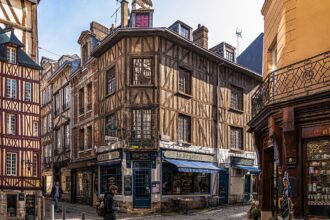
Rouen, in Normandy, offers a very different kind of day out built around Gothic architecture and Joan of Arc history rather than museum galleries. Our guide to Visiting Rouen lays out the cathedral, the medieval old town and how to fit it into a longer French itinerary.
If the Museum Pass maths in the FAQ above looks tempting, our dedicated Paris City Card guide runs the real break-even numbers across all six competing products, not just the official pass. It is the natural next stop for anyone still weighing up whether a pass genuinely beats paying for entries one by one.