Reviewed by our editorial team Published
Discover Taormina
Taormina sits on a hilltop terrace on Sicily’s east coast, looking out over the Ionian Sea with Mount Etna smoking away in the background. It has drawn visitors since antiquity, and its combination of Greek ruins, medieval streets and coastal views has made it one of Sicily’s most visited towns.
The town’s centrepiece is its Ancient Greek Theatre, framed dramatically by the volcano and the coastline below, but Taormina’s appeal extends well beyond a single ruin. Its pedestrianised main street, hidden viewpoints and clifftop neighbour Castelmola all reward a slower pace than a rushed day trip allows.
Below the hilltop, a short cable car ride opens up a string of beaches at Mazzarò and Isola Bella, letting visitors combine sightseeing with swimming in a way few Sicilian hill towns manage. The pairing of history and coastline is a large part of Taormina’s enduring appeal.
Taormina is also a genuinely popular stop for cruise excursions and coach tours, and its main streets can feel overwhelmed by midday in peak season. An overnight stay, even a single night, changes the experience considerably once the day-trippers head back down the hill.
This guide covers Taormina’s essential sights, its beaches, shopping, food, nightlife and getting up and down the hill, along with practical notes for anyone weighing a day trip against staying longer.
| Attraction | Area | Best For | Approx Time Needed |
|---|---|---|---|
| Ancient Greek Theatre | Hilltop old town | Ancient ruins and views | 1 to 1.5 hours |
| Corso Umberto and Piazza IX Aprile | Old town spine | Shopping and people-watching | 1 to 2 hours |
| Villa Comunale and the Duomo | Old town | Gardens, churches and free sights | 1 hour |
| Isola Bella and Mazzarò | Coast below town | Swimming and beaches | Half day |
| Castelmola | Hilltop above Taormina | Views, quiet streets and sunset | 2 to 3 hours |
| Funivia cable car | Town to coast | Getting down to the beaches | 5 minutes each way |
The Ancient Greek Theatre
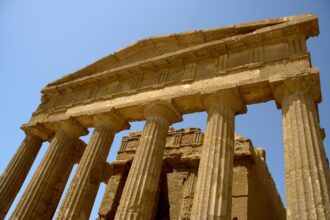
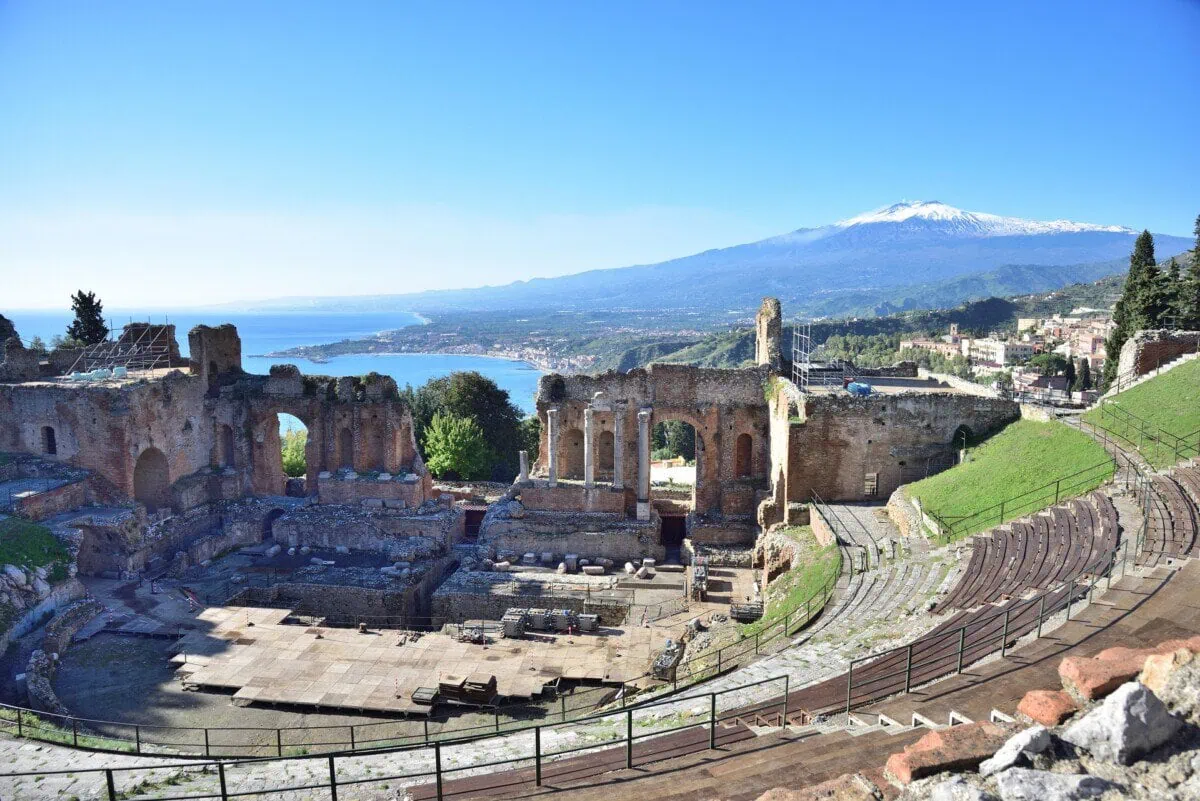
Built in the third century BC and later rebuilt by the Romans, the Teatro Antico di Taormina is one of the most spectacular ancient theatres anywhere in the Mediterranean, its stone cavea framed by Mount Etna on one side and the sea on the other.
Full-price entry costs €12 (£10/$14), with a reduced rate of €6 (£5/$7) for EU citizens aged 18 to 25. The theatre is still used for concerts and forms part of the setting for the annual Taormina Film Fest.
Arriving early in the morning, before the coach tours reach the site, gives both a quieter visit and softer light for photographs. The theatre’s upper tiers offer the best combined view of Etna, the coastline and the stage below.
Even visitors with limited time in Taormina should prioritise the theatre above almost everything else in town, since the combination of ancient architecture and natural backdrop is genuinely unlike anywhere else on the island.
The site has very little shade, so a hat and water are worth carrying in summer, and the uneven stone seating means flat, sturdy shoes make the climb to the upper rows considerably easier.
Best for a short trip. Compare rooms by neighbourhood, price and guest rating before you book.
Compare hotelsBest for groups who want one address and separate bedrooms rather than three hotel rooms.
See holiday homesBest as a last check before booking. Compares hotel rates across several sites in one search.
Compare ratesWine Tasting on the Slopes of Etna
Though it lies outside Taormina itself and is best planned as a separate excursion, Mount Etna‘s lower and middle slopes carry their own DOC wine region, one of the more distinctive in Italy, with vineyards planted in volcanic ash and pumice at altitudes most Sicilian wine country never reaches. The result is a set of reds and whites with a mineral edge that reflects the soil underneath them.
Native grapes dominate the region, particularly Nerello Mascalese for reds and Carricante for whites, and many of the wineries open to visitors sit on small family-run estates rather than large commercial operations. Several combine old bush-trained vines with modern cellar techniques.
A guided half-day tasting tour typically collects visitors from Taormina in the morning, drives up through the wine belt to one or two estates, and pairs a tasting flight with local produce such as cheese, cured meats and olive oil. Most trips return by early afternoon.
The setting is as much a part of the appeal as the wine itself, since many tasting terraces look straight back down over the coast towards Taormina, making it an easy pairing with a morning at the Greek Theatre and an evening back in town.
Booking ahead is worth it in peak season, since the better-known estates run limited group sizes and can fill up days in advance during the busiest summer weeks.
For visitors who would rather leave the driving and scheduling to someone else, a guided Etna wine tasting half-day tour from Taormina covers exactly this itinerary, collecting guests in town and returning them by early afternoon.
Corso Umberto and Piazza IX Aprile
Corso Umberto is Taormina’s pedestrianised main street, running the length of the old town and lined with boutiques, cafés and baroque churches. It is the natural spine for exploring on foot, linking most of the town’s other sights.
Midway along sits Piazza IX Aprile, often described as Taormina’s terrace, with black-and-white checkerboard paving and sweeping views over the bay. The square’s clocktower gate, the Torre dell’Orologio, marks the entrance to the older part of town.
Cafés around the piazza make an obvious spot to pause, though prices here run higher than elsewhere in town given the view on offer. Even so, watching the light change over the bay from one of its terraces is a classic Taormina moment.
Corso Umberto gets genuinely congested with day-trippers from late morning to mid-afternoon, so an early or evening walk along its length shows the street at a far more relaxed pace.
The street also runs through three old town gates, Porta Messina, the Torre dell’Orologio and Porta Catania, which makes it easy to navigate even without a map since each gate marks a clear stage along the walk.
Day Trip Combos: Etna and the Alcantara Gorges
The Alcantara Gorges (Gole dell’Alcantara) are a dramatic basalt canyon carved by the Alcantara river through cooled lava flows, with tall, geometrically fractured black rock walls rising on either side of the fast, cold water.
Wooden walkways and viewing platforms give access to the main gorge for free, while wading further into the river itself requires waders and a helmet, available to rent on site for visitors wanting to get closer to the rock formations.
Because the gorges sit roughly thirty minutes from Taormina and Etna’s southern access points lie a little further on, several operators combine both into a single full-day tour, often with lunch included at a countryside restaurant en route.
Pairing the two sites makes sense logistically, since a self-drive visit to both in one day is awkward without a car, and a guided tour removes the need to work out parking and timing between two very different landscapes.
The river water stays cold even in high summer, so even visitors who only paddle at the edge should expect a genuine shock the first time they step in.
Visitors wanting both sites covered in a single booking can join a full-day Etna and Alcantara Gorges tour with lunch included, which handles the transport, timing and parking involved in visiting two very different landscapes in one trip.

Villa Comunale and the Duomo
The Villa Comunale, also known as the Parco Duca di Cesarò, is Taormina’s English-style public garden, planted with exotic species and dotted with quirky Victorian-era garden follies known locally as the Beehives.
The gardens open up views over the sea and Etna, and entry is free, making them a good spot to rest between sightseeing without spending anything beyond the walk itself. Shaded benches make it a welcome stop in the height of summer.
On Piazza Duomo, the fortress-like Duomo di Taormina (Cattedrale San Nicolò) dates to the thirteenth century, fronted by a baroque fountain topped with a centaur, one of the town’s odder small landmarks.
Nearby, the small Odeon, a modest Roman-era theatre, and Palazzo Corvaja, a medieval palace mixing Arab, Norman and Gothic styles, both make quick, free-to-view additions to a walk through the old town.
All four sights sit within a few minutes’ walk of one another just off Corso Umberto, which makes this corner of the old town an easy loop to fit in between the theatre and lunch without much backtracking.
Climbing to Etna’s Upper Craters
Beyond the wine country and the gorges, the more adventurous option is a trip to Etna’s upper craters, reached from the southern refuge of Rifugio Sapienza by cable car and then a guided 4×4 minibus ride up the volcano’s flank.
Guided tours typically climb to around 2,900 metres, close to but below the currently active summit craters, since access above that altitude is restricted to licensed volcanological guides and depends entirely on current activity levels.
Temperatures at altitude run well below those on the coast even in midsummer, and wind at the crater rim can be sharp, so a warm layer and proper closed shoes are essential even for visitors arriving from a hot Taormina morning.
The excursion is a full day from Taormina once travel time up and down the volcano is factored in, and cloud cover or high wind can occasionally close the upper cable car section at short notice.
For visitors who only have time for one Etna excursion from Taormina, this is the one that gets closest to the volcano’s active summit, rather than viewing it from a distance across the bay.
For visitors set on reaching the summit area itself rather than viewing it from town, a guided Etna Upper Craters day tour handles the cable car and 4×4 transfer up the volcano’s flank in a single organised trip from Taormina.
Isola Bella and the Beaches Below
Isola Bella is a small islet and nature reserve connected to the mainland by a narrow sand-and-pebble tombolo, its cove framed by cliffs and considered one of Sicily’s most photographed beaches.
Beach access is free, while the small museum inside the islet’s villa costs €6 (£5/$7) and closes on Mondays. The cove gets very crowded by midday in peak summer, so an early morning swim is worth the earlier start.
A short walk or cable car ride away, Mazzarò is Taormina’s closest beach cove, with clear water and a mix of paid lido clubs and smaller free stretches of sand and pebble. Several beach clubs rent sunbeds for the day.
Further south, Giardini Naxos offers a longer, more spacious sandy beach and a lively seafront promenade, generally less pricey than Taormina’s own lidos and popular with families.
Sunbed and umbrella hire at the paid lidos typically runs from around €15 to €25 (£13 to £21/$18 to $30) a day depending on the season and the section of beach, so bringing a towel and using the free stretches is the budget option.
Best for long or awkward journeys. Builds one itinerary out of separate flights.
View flightsBest if you want maps and messaging working the moment you switch your phone on.
See eSIM plansBest when public transport has stopped, or when you are travelling with children and bags.
Book a transferThe Funivia Down to the Coast
Taormina’s Funivia, or cable car, links the hilltop town to the coast at Mazzarò in around five minutes, running roughly from 8am to 1:30am in summer with shorter hours through the winter months.
A one-way ticket costs €8 (£7/$9) for visitors, with a round trip priced at €15 (£13/$18); discounted resident rates displayed locally do not apply to tourists. Departures run roughly every fifteen minutes.
The cable car makes it entirely realistic to split a day between the hilltop’s historic sights and an afternoon swim at Mazzarò, without needing a car or a long walk down the switchback road.
Queues can build at peak times in summer, particularly early afternoon, so building in some flexibility around the ride is worth it if the plan depends on a specific beach or dinner reservation.
The lower station sits a short, flat walk from Mazzarò’s beachfront, while the upper station opens directly onto Via Pirandello, close to Porta Messina and the eastern end of Corso Umberto.
Tickets are sold at both stations and can also be bought as part of a combined pass with some tour operators, which is worth checking before buying single fares if a Mazzarò swim is already part of the day’s plan.
Castelmola: A Hilltop Village Above Town
Perched even higher than Taormina itself, Castelmola is a small hilltop village reachable by bus, taxi or a genuinely steep walk, crowned by the ruins of a Saracen castle and sweeping views back down over Taormina and the coast.
The village’s historic Caffè Turrisi, decorated throughout with skull motifs, is a quirky local institution worth a stop for a coffee or a glass of the village’s own almond wine, a local speciality.
Castelmola sees far fewer visitors than Taormina itself, making it a good escape from the crowds below, particularly in the late afternoon when the light over the bay is at its best.
A visit here pairs naturally with sunset, since the climb back down is easiest by bus or taxi once the light has faded, rather than attempting the steep road on foot in the dark.
The castle ruins themselves are a short, free climb above the village and open at all hours, offering a still wider panorama than the village piazza below on a clear day.
Buses to Castelmola run regularly from Taormina’s bus terminal near Porta Catania, and the short ride takes under fifteen minutes, making the village an easy half-morning or pre-dinner addition rather than a full day commitment.
Shopping on Corso Umberto
Taormina’s shopping is concentrated almost entirely along Corso Umberto, where boutiques, jewellers and craft shops run the length of the old town between Porta Messina and Porta Catania. It is a genuinely walkable, browsable street rather than a mall-style shopping district.
Sicilian ceramics are the classic souvenir, from hand-painted plates and decorative tiles to the moor’s head planters (teste di moro) seen across the island, and quieter side streets near the theatre hold smaller workshops selling handmade pieces at fairer prices than the busiest stretch of the Corso.
Food and drink make easy, packable souvenirs too, particularly Bronte pistachios, Etna wines, citrus liqueurs, capers and local honey, most of which are sold in small specialist shops rather than supermarkets.
Fashion boutiques along the Corso lean towards Sicilian-made accessories, silk scarves, sandals and linen clothing, with a handful of higher-end names sitting alongside more affordable independent shops, so prices vary considerably from one storefront to the next.
Shops generally keep a midday closure typical of small-town Sicily, reopening in the late afternoon and staying open into the evening, which suits an after-dinner browse as much as a daytime shopping trip.
Bargaining is not really expected on the Corso itself, but the smaller ceramics workshops away from the main strip are often more open to a modest discount on larger pieces, particularly outside the busiest summer weeks.
Taormina’s Food Scene
Taormina’s restaurant scene ranges from simple trattorias tucked down side streets to smart terrace dining with sea views, and prices climb noticeably the closer a table sits to Piazza IX Aprile or the theatre itself.
Sicilian staples appear on most menus, including pasta alla Norma, swordfish involtini and caponata, alongside granita served with a soft brioche col tuppo for breakfast, a habit worth adopting rather than saving for an afternoon treat.
For a cheaper meal, side streets just off Corso Umberto hold small bakeries selling arancini and other savoury pastries to take away, a reliable way to eat well without paying resort-town prices for a full sit-down lunch.
Wine lists in Taormina lean heavily on Etna wines, both red and white, given the volcano’s vineyards sit only a short drive inland, and many restaurants are happy to recommend a bottle to match the evening’s menu.
Booking ahead for dinner is worth it in high season, particularly for tables with a view, since Taormina’s better-known restaurants fill quickly once the evening passeggiata gets underway.
Vegetarian and pescatarian diners are well catered for given Sicily’s produce-driven cooking, with caponata, grilled vegetables and the island’s abundant seafood appearing on almost every menu without needing to ask for substitutions.
What to Do on a Rainy Day
Taormina copes reasonably well with wet weather, since a large share of its sights sit indoors or under cover, starting with the Duomo, the Odeon’s covered display areas and Palazzo Corvaja, all free or low-cost and within a few minutes of each other.
The Ancient Greek Theatre itself is open-air, but a covered visit is still possible with an umbrella outside the busiest hours, and rain often clears the coach-tour crowds, leaving the site notably quieter than on a sunny morning.
Corso Umberto’s boutiques and covered arcades make for an easy wet-weather alternative to outdoor sightseeing, and a slow afternoon of shopping and café-hopping along the street works just as well in the rain as in sunshine.
For a longer indoor option, the guided Etna wine tasting tour described above runs largely under cover in cellar and tasting rooms, making it a reasonable choice when the coast itself is too wet or windy for the beach.
Rain in Taormina tends to arrive as short, heavy showers rather than settling in all day, particularly in shoulder season, so building in some flexibility around a rained-off morning is usually enough to still fit in an afternoon outdoors.
A short taxi ride to Giardini Naxos also opens up its own small archaeological museum, a useful fallback on a wet morning when the open-air sites above Taormina are best left for drier weather.
Taormina’s Nightlife
Evenings in Taormina centre on Piazza IX Aprile, where the historic Caffè Wunderbar has served aperitivos since the 1950s, once a haunt of visiting celebrities, with tables looking straight down over the coast and Etna beyond.
Several rooftop bars around the old town, including venues set above hotels near the theatre, offer panoramic views over the bay along with DJ sets later in the evening, and tend to fill up fastest around sunset.
For something more affordable, bars closer to the cable car station away from the piazza itself pour noticeably cheaper aperitivo drinks than the terraces with the best views, without much of a walk from the old town.
Taormina’s own nightlife winds down earlier than a big city’s, with most bars in the old town closing by 1am or 2am, though a handful of cocktail lounges keep later hours through the busiest summer weekends.
Visitors after proper late-night dancing generally head down to Giardini Naxos, a short taxi or bus ride away, where the clubs stay open well past the hour Taormina’s own bars have called it a night.
Wine bars scattered through the side streets off Corso Umberto offer a quieter alternative to the piazza scene, pouring Etna reds and whites by the glass for visitors who would rather sit with a bottle than join the aperitivo crowds.
Best for solo travellers and anyone watching the budget. Dorm beds and private rooms in the same search.
Browse hostelsBest arranged before you fly rather than after. Covers claim handling, plus lounge access on eligible delays.
Explore AirHelp+Best for the gap between checking out and your train. Drop bags at a shop or hotel nearby and carry on.
Store your bagsGetting There and When to Visit
The nearest airport is Catania, around 45 to 55 minutes away by road, with direct airport buses run by operators including Interbus connecting the airport to Taormina’s bus terminal. Taxis and private transfers are also available.
The coastal Taormina-Giardini railway station sits well below the hilltop town, on the Messina to Catania to Syracuse line. From there, a local bus climbs the switchback road up to Taormina’s bus terminal near Porta Catania.
The historic centre has virtually no visitor parking, and driving into it is not realistic; drivers should use paid lots below the town and walk or bus in rather than attempting to reach a hotel by car.
Shoulder seasons, April to June and September to October, offer warm weather with noticeably fewer crowds than the peak heat and volume of July and August, when both the streets and the beaches below get seriously busy.
How Many Days Do You Need in Taormina
A single day is enough to see Taormina’s headline sights, the Ancient Greek Theatre, Corso Umberto and Piazza IX Aprile, but it leaves little room for the beaches below or a proper evening in town once the coach tours have gone. Most cruise and coach excursions allow roughly this much time.
Two days is a more comfortable minimum for a first visit, pairing a morning at the theatre with an afternoon swim at Mazzarò or Isola Bella, and leaving a second day free for Castelmola, a wander through the old town’s quieter corners, or one of the wine or gorge excursions up towards Etna.
Travellers wanting to add an Etna or Alcantara Gorges day trip, both realistically full-day outings once travel time is included, should budget three days in total, since fitting a volcano excursion into the same day as sightseeing in town leaves both feeling rushed.
Anyone staying purely to relax, rather than to tick off sights, could easily fill four or five days, using the extra time for slower mornings on the beach, a second visit to Castelmola at a different time of day, or simply enjoying Corso Umberto once the day-trippers have gone.
Getting Around Taormina Without a Car
Taormina is a genuinely easy town to visit without a car, and in the historic centre a car is actively unhelpful rather than merely unnecessary. The old town itself is entirely walkable, with Corso Umberto running its length and every major sight within a fifteen-minute stroll of the next.
Arriving without a car is equally straightforward. Interbus and other operators run direct services from Catania Airport to Taormina’s bus terminal, and the coastal railway station at Taormina-Giardini connects onward by local bus up the switchback road into town, so neither flying in nor arriving by train requires renting a vehicle.
Getting down to the coast and back up again is handled by the Funivia cable car, which removes any need for a car to reach Mazzarò or Isola Bella, and local buses cover Castelmola and Giardini Naxos for anyone wanting to range a little further.
Even the day trips further afield, to Etna or the Alcantara Gorges, are more straightforward on a guided tour than by self-drive, since both involve parking and timing that a hire car makes more complicated rather than less. For most visitors, Taormina works better without a car than with one.

Rupert’s Handy Travel Tips
Planning a trip to Taormina? Rupert has a few tips that can save both time and money:
- Visit the Greek Theatre first thing in the morning: it’s far quieter before the coach tours arrive, and the light is better for photos.
- Swim at Isola Bella early: the cove gets genuinely crowded by midday in peak summer.
- Don’t try to drive into the historic centre: there’s virtually no visitor parking, so use a lot below town and bus or walk in.
- Book an overnight stay if you can: Corso Umberto is a different, calmer place once the day-trippers head back down the hill.
- Take the bus back down from Castelmola: the road is steep and best avoided on foot after dark.
- Check the Film Fest dates before booking: accommodation prices rise and theatre access can be limited during the festival.
- Shop the side streets near the theatre: ceramics and crafts there tend to be cheaper than the busiest stretch of Corso Umberto.
Want to meet the reindeer behind our travel tips? Find out more in our page Who is Rupert?.





Frequently Asked Questions About Taormina
Is Taormina worth visiting as a day trip?
Yes, though the town gets very crowded with day-trippers from late morning, so an overnight stay shows it at a far calmer pace.
How much does the Ancient Greek Theatre cost?
Full-price entry costs €12 (£10/$14), with a reduced rate of €6 (£5/$7) for EU citizens aged 18 to 25.
What is the nearest airport to Taormina?
Catania Airport, around 45 to 55 minutes away by road, with direct buses connecting the airport to Taormina’s bus terminal.
Can you drive into Taormina’s old town?
Not realistically. The historic centre has virtually no visitor parking, so drivers should park below town and walk or bus in.
How do you get to the beach from Taormina?
The Funivia cable car reaches Mazzarò beach in around five minutes, costing €8 (£7/$9) one-way or €15 (£13/$18) round trip.
Is Castelmola worth visiting?
Yes. The hilltop village above Taormina sees far fewer visitors and offers sweeping views back down over the town and coast.
What should I eat in Taormina?
Pasta alla Norma, swordfish involtini and granita with brioche are local staples, with Etna wines a natural pairing for dinner.
Where is the best nightlife in Taormina?
Piazza IX Aprile and the streets around it hold most of the town’s bars, with Giardini Naxos the nearest option for late-night clubs.
Further Reading & Related Guides
Arriving via Catania? Our Catania Things to Do guide covers Sicily’s second city, just down the coast, and our Catania Airport Transfers guide explains getting from the airport onward.
Exploring more of Sicily? Our Mount Etna guide covers the volcano visible from Taormina’s theatre, and our Sicily UNESCO Sites guide covers the island’s other listed sites.
Planning onward travel? Our Sicily Train Guide and Sicily Ferry Guide cover getting around and beyond the island.