Reviewed by our editorial team Published
Discover Catania
Catania is Sicily’s second city, a dense, dark-stone port on the island’s east coast built almost entirely from the lava of the volcano looming above it. Its streets carry the scars and the swagger of a city that has been levelled and rebuilt more than once, most dramatically after the catastrophic earthquake of 1693.
That rebuilding produced a unified baroque centre, designed largely by the architect Giovanni Battista Vaccarini using local volcanic stone, which is why Catania looks and feels distinct from Sicily’s other historic towns. The city’s baroque core forms part of the UNESCO-listed Val di Noto group.
Unlike some of Sicily’s more manicured resort towns, Catania is a genuine working city, loud and chaotic in places, with a market culture and a street-food scene that rewards visitors willing to dive in rather than stand back. Mount Etna is visible from many of its streets and squares on a clear day.
The historic centre is compact and highly walkable, with most of the sights below sitting within a fifteen to twenty minute walk of each other. Catania also works well as a base for day trips up Etna itself, which we cover only briefly here since a dedicated guide to the volcano already exists on this site.
This guide rounds up the sights worth prioritising in Catania’s centre, from its baroque showpiece square to its underground Roman ruins, along with practical notes on shopping, food, nightlife and the best time of year to visit.
| Attraction | Area | Best For | Approx Time Needed |
|---|---|---|---|
| Piazza del Duomo | Old town centre | Baroque architecture and orientation | 45 minutes to 1 hour |
| Cathedral and Badia di Sant’Agata | Piazza del Duomo | Churches and elevated views | 45 minutes |
| La Pescheria | Behind the cathedral | Fish market and street food | 45 minutes to 1 hour, mornings only |
| Via Etnea | Old town spine | Shopping and cafes | 1 to 2 hours |
| Castello Ursino | Southwest of centre | Medieval fortress exterior | 30 to 45 minutes |
| Roman Theatre and Odeon | Old town backstreets | Ancient ruins | 45 minutes |
| Terme Achilliane | Near the cathedral | Underground Roman baths | 30 to 45 minutes |
| Monastero dei Benedettini and Via Crociferi | North of centre | Baroque architecture and guided tours | 1.5 to 2 hours |
| Villa Bellini and Piazza Università | Off Via Etnea | Parks and squares | 1 hour |
| Porta Uzeda and Ognina | Seafront edge | Harbour views and a quieter pace | 1 to 2 hours |
Piazza del Duomo and the Elephant Fountain
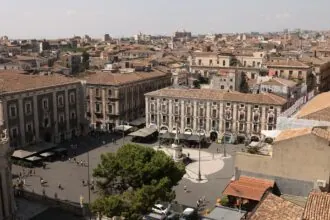
Piazza del Duomo is Catania’s baroque showpiece and the natural starting point for any walk through the historic centre. Rebuilt after the 1693 earthquake, the square is ringed by grand palazzi and anchored by the city’s unofficial mascot.
At its centre stands the Elephant Fountain, known locally as u Liotru, a black lava-stone elephant topped with an Egyptian obelisk. The statue has represented Catania since at least medieval times and remains the city’s most photographed landmark.
The square sits directly above one of the city’s underground Roman sites, and its position between the cathedral, the fish market and the old town’s main streets makes it a natural hub for orienting a first visit. Cafés around its edges make a good spot to pause.
Piazza del Duomo is at its liveliest in the early evening, when locals gather for a passeggiata and the baroque facades catch the last of the light. Visiting once by day and once after dark gives a genuinely different feel for the square.
The square also hosts occasional markets and civic events, and it forms the starting point of the Feast of Sant’Agata procession each February, one of the largest religious festivals in Italy.
Best for two or three nights. The widest choice of rooms, with filters for free cancellation and included breakfast.
View staysBest for longer stays. Whole apartments and houses, so you are not eating out three times a day.
View rentalsBest if you have already picked a hotel. Checks the big booking sites for the same room and shows who is cheapest.
Check dealsEtna and the Alcantara Gorges from Catania
Catania sits closer to Mount Etna than almost anywhere else on the coast, with the main southern access point at Rifugio Sapienza only around fifty minutes away by road, making a combined day trip an easy add-on to a stay in the city.
The Alcantara Gorges (Gole dell’Alcantara), a basalt canyon carved through cooled lava by the Alcantara river, sit further north towards Taormina, with tall fractured rock walls and fast, cold water accessible by wooden walkways or, with rented waders, directly in the riverbed.
Because the two sites are roughly an hour apart from each other rather than from Catania itself, most visitors join a guided full-day tour that handles both stops and usually includes lunch, rather than attempting to self-drive between them.
A guided day covering both sites removes the need to plan two separate outings from the city, and it suits visitors who want a broad taste of the volcano’s landscape alongside its geology in a single trip.
Tours typically depart early from central pickup points, so booking a hotel near the historic centre makes the pickup logistics considerably simpler than staying further out.
Catania Cathedral and the Badia di Sant’Agata
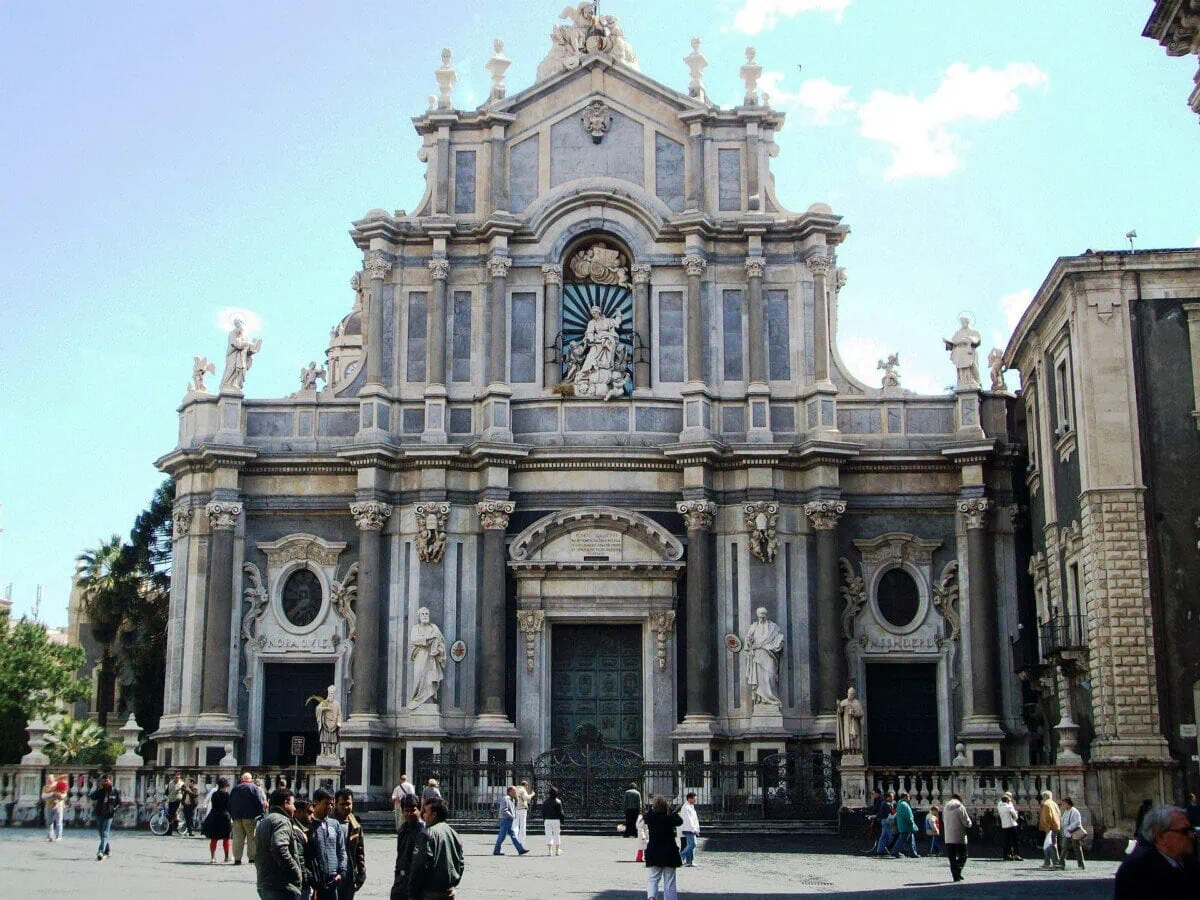
Dedicated to the city’s patron saint, Catania Cathedral (Duomo di Sant’Agata) combines Norman-era foundations with a baroque facade rebuilt after the earthquake. It houses the relics of Sant’Agata and the tomb of the composer Vincenzo Bellini, Catania’s most famous son.
Entry to the cathedral itself is free, and the interior is worth a slower look for its side chapels and the choir stalls depicting scenes from Sant’Agata’s life. The cathedral anchors Catania’s Feast of Sant’Agata each February, one of Italy’s largest religious festivals.
Beside the cathedral stands the Badia di Sant’Agata, a striking baroque church designed by Vaccarini, notable for its dramatically curved facade. Where accessible, its rooftop terrace offers one of the better elevated views over the historic centre.
Together, the two buildings frame the southern edge of Piazza del Duomo and make an easy combined stop before continuing on to the fish market or Via Etnea.
Modest dress, covering shoulders and knees, is expected inside both buildings, and this is worth bearing in mind on a hot summer day when it can be tempting to visit straight from the beach.
Sailing the Cyclops Coast
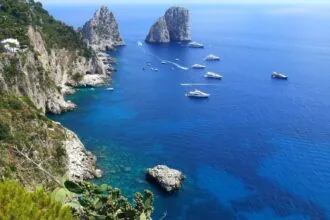
North of Catania, the Riviera dei Ciclopi, or Cyclops Coast, takes its name from Homer’s Odyssey, where the blinded giant Polyphemus is said to have hurled boulders into the sea at the fleeing Ulysses, forming the jagged sea stacks still visible today.
Those stacks, the Faraglioni dei Ciclopi, rise just offshore from the fishing village of Aci Trezza, and a short boat trip from Catania’s marina is the easiest way to see them properly rather than viewing them only from the shore.
Half-day sailing trips typically combine the rock stacks with a stop for swimming or snorkelling in clear coastal water, finishing with a Sicilian aperitif on board as the boat heads back towards the harbour in the late afternoon.
The coastline here is noticeably different from Taormina’s cliffs further north, with low black volcanic rock meeting the water and small fishing harbours rather than resort beaches lining the shore.
Sailings generally run from spring through early autumn, weather permitting, and departure points are an easy taxi ride from the historic centre rather than requiring a transfer out of the city.

La Pescheria and the Fontana dell’Amenano
Just behind Piazza del Duomo, La Pescheria is Catania’s daily fish market and one of the most atmospheric in Italy. Stalls piled with swordfish, sea urchins and shellfish spill into the surrounding lanes, with vendors calling out prices in thick Catanese dialect.
The market marks the entrance to the wider old town and runs each morning except Sunday, at its busiest and most photogenic before midday. Even for visitors not buying anything, it is a genuine sensory introduction to the city.
The market’s entrance is marked by the Fontana dell’Amenano, a small fountain fed by the underground river of the same name, which still flows beneath much of the city centre. It is a quick but essential landmark for finding the market’s edge.
Several no-frills seafood restaurants and street-food stalls cluster around the market’s edges, making it a natural lunch stop after a morning of sightseeing around the cathedral and Piazza del Duomo.
Trekking to Etna’s Craters at 3000 Metres
For a closer look at Etna’s active summit, guided treks run from Rifugio Sapienza up to around 2,900 to 3,000 metres, combining a cable car ride with a guided 4×4 minibus transfer and a short walk across the upper slopes.
A licensed volcanological guide accompanies every group above the cable car’s upper station, since conditions and access near the active craters change with current activity and are not safe to approach independently.
Warm, windproof layers and sturdy closed shoes are essential even in summer, since temperatures at altitude sit well below those in Catania, and the exposed rim of the crater area can be genuinely cold and windy.
Round-trip travel time from central Catania runs to roughly two hours each way once the drive to Rifugio Sapienza is included, making this a full-day excursion rather than a quick half-day add-on.
Weather can close the upper sections at short notice, so building in a spare day before flying home is sensible for anyone whose trip depends on reaching the summit craters specifically.
Via Etnea: Catania’s Grand Boulevard
Via Etnea is Catania’s principal shopping street, running arrow-straight from Piazza del Duomo towards the slopes of Mount Etna itself. On a clear day, the volcano appears to loom directly at the end of the street, a striking visual anchor for the whole city.
The street is lined with shops, cafés and grand baroque palazzi, and it passes several of the sights covered elsewhere in this guide, including Villa Bellini and Piazza Università, making it a natural spine for exploring the centre on foot.
Historic cafés along Via Etnea serve Catania’s own take on Sicilian breakfast: granita paired with a soft brioche col tuppo, best enjoyed the way locals do, sitting outside in the morning rather than as an afternoon treat.
The street gets genuinely busy in the early evening, when it becomes the focus of Catania’s passeggiata, and pausing at one of its cafés is as good a way as any to take the measure of the city’s rhythm.
Best for long or awkward journeys. Builds one itinerary out of separate flights.
View flightsBest if you want maps and messaging working the moment you switch your phone on.
See eSIM plansBest after a long flight or a late landing. Price agreed before you travel, and no taxi queue.
Check transfersCastello Ursino
Castello Ursino is a squat, powerful thirteenth-century fortress built by Frederick II, once standing directly on the shoreline before lava flows and later development pushed the sea back and left it stranded inland.
The castle’s civic museum, which normally displays a collection of paintings, archaeology and sculpture, is currently closed for renovation, with a reopening expected in 2027 according to local reporting. It is worth checking the museum’s current status before planning a visit around the collection.
Even with the museum closed, the castle’s exterior and courtyard remain a striking stop, and its thick, windowless walls give a good sense of how defensive Sicilian architecture looked before the baroque rebuilding transformed the rest of the city.
The castle sits a short walk southwest of Piazza del Duomo, in a quieter part of the centre away from the main tourist flow, and makes a good stop for anyone wanting a break from the busier streets.
Valley of the Temples and the Turkish Steps
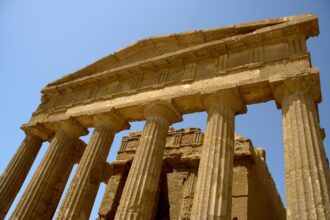
Further afield, Agrigento’s Valley of the Temples is one of the best-preserved groups of Greek temples anywhere outside Greece itself, a UNESCO-listed archaeological park with Doric temples including the near-intact Temple of Concordia.
Nearby, the Scala dei Turchi, or Turkish Steps, is a striking staircase-like cliff of pale white marl jutting into the sea near Realmonte, named for the Ottoman raiders who once used it as a landing point.
Because Agrigento sits roughly two hours from Catania by road, this makes for a genuinely long full day out, and organised tours that include lunch and handle the driving are generally more practical than a self-drive round trip.
The temples and the cliffs sit on opposite sides of Agrigento, so a combined itinerary needs a reasonably early start from Catania to fit both in comfortably before the drive back.
Summer heat on the exposed temple site can be intense with little shade, so sun protection and an early or late visit are worth planning around if the day trip falls in July or August.
The Roman Theatre and Odeon
Tucked into the backstreets of the historic centre, Catania’s Roman Theatre is a well-preserved second-century structure built over an earlier Greek theatre, with a smaller adjoining Odeon once used for music and rehearsals.
A single ticket to the Teatro Romano e Odeon costs €8 (£7/$9) full price or €4 (£3/$5) reduced, and an integrated ticket adding two nearby Roman bath sites costs €10 (£9/$12) full or €5 (£4/$6) reduced.
The site’s location, wedged between ordinary residential buildings just a few streets from Via Etnea, makes for one of Catania’s more surprising sightseeing moments, since the ruins are easy to miss without knowing they are there.
The theatre is a good stop for anyone interested in seeing how thoroughly the Roman-era city underlies the baroque one, and it pairs naturally with a visit to the underground baths near the cathedral.

Catania Underground: The Terme Achilliane
Beneath and around Piazza del Duomo lie the Terme Achilliane, underground Roman-era thermal bath ruins accessible near the cathedral. They form part of a wider network of sites known collectively as Catania sotterranea, or underground Catania.
These subterranean sites reveal how much of the Roman and even earlier city survives directly beneath the current baroque streets, buried by successive lava flows and rebuilding over the centuries rather than lost entirely.
Visiting the baths alongside the Roman Theatre gives a fuller picture of Catania’s Roman-era footprint than either site manages alone, and the integrated ticket covering both makes combining them straightforward.
The contrast between the baroque city above and the Roman one below is one of Catania’s more distinctive sightseeing experiences, and it rewards visitors who make time for at least one underground site alongside the street-level sights. A small-group guided tour covering the Terme Achilliane and connecting cisterns runs regularly from meeting points near the cathedral, and it is worth booking ahead so the site is properly lit and explained rather than visited alone.
Monastero dei Benedettini and Via Crociferi
The Monastero dei Benedettini is one of the largest Benedictine monasteries in Europe, a sprawling baroque and rococo complex now home to part of the University of Catania. Guided tours reveal hidden cloisters, an ornate library and lava-stone architecture throughout.
Most of the complex is only accessible on a guided tour, and ticket prices are best confirmed directly with the monastery or its ticketing office before visiting, since they are subject to change. The monastery forms part of Catania’s UNESCO-listed baroque heritage.
A short walk away, Via Crociferi is widely considered Catania’s finest baroque streetscape, an unbroken run of seventeenth and eighteenth-century church facades that is itself part of the city’s UNESCO listing.
Walking the length of Via Crociferi in the late afternoon, when the light catches the carved stonework, is one of the simplest and most rewarding things to do in Catania’s old town.
Villa Bellini and Piazza Università
Villa Bellini is Catania’s grand nineteenth-century public park, with manicured flowerbeds, fountains and a bandstand offering a shaded escape from the summer heat. On clear days, the gardens open up views towards Mount Etna over the rooftops.
The park sits just off Via Etnea and makes an easy, free stop between sightseeing further south and a wander through the streets to the north of the centre. Locals use it much as any city park, for a jog, a picnic or simply a bench in the shade.
Nearby, Piazza Università is an elegant baroque square fronting the University of Catania’s main building, lively with student life during term time and lit by ornate lampposts once evening falls.
Both spots work well as a pause between the busier sights, and together they show a quieter, more everyday side of Catania away from the market crowds and cathedral square.
Best for short city stops where being central matters more than the room. Dorms and private rooms both listed.
See hostelsBest for anyone flying more than once or twice a year. Handles the compensation claim so you are not chasing the airline.
See AirHelp+Best if your room is not ready yet. Left luggage booked in advance, so you are not hunting for a locker.
Check storagePorta Uzeda and Ognina Harbour
Porta Uzeda is a monumental eighteenth-century gate near the cathedral, part of the post-earthquake baroque rebuild, linking Piazza del Duomo to the seafront and the fish market beyond. Passing through it makes a natural transition from the historic centre towards the coast.
A few kilometres north of the centre, Ognina is a former fishing village turned marina, offering a quieter, sea-facing contrast to the density of the old town. Its small harbour and waterfront bars make a pleasant escape from the midday crowds.
Ognina is reachable by bus or taxi from the centre and rewards an unhurried visit rather than a rushed stop, particularly around sunset when the harbour empties of day-trippers and fills with locals instead.
Together, the two spots bookend a visit to Catania nicely: one marking the formal edge of the baroque centre, the other showing the more relaxed, maritime side of the city beyond it.
Shopping on Via Etnea
Catania’s main shopping runs the length of Via Etnea, a mix of international chains, department stores and independent boutiques stretching roughly three kilometres from Piazza del Duomo towards Etna’s lower slopes, with a partly pedestrianised central stretch.
For food shopping, La Pescheria and the smaller stalls around it sell fresh fish, cheese and produce each morning, while specialist shops nearby stock Bronte pistachios, capers, olive oil and Etna wines that travel well as souvenirs.
Craft souvenirs worth seeking out include lava-stone jewellery and decorative objects carved from Etna’s own volcanic rock, along with traditionally styled Sicilian marionettes, or pupi, sold in a handful of workshops around the old town.
For a more local experience away from souvenir shops near the cathedral, the Fera o’ Luni flea market held on Mondays draws Catanese bargain-hunters browsing everything from antiques to secondhand clothing, well off the usual tourist circuit.
Shops generally close for a midday break and reopen into the evening, so timing a shopping trip around the passeggiata hours makes the most of Via Etnea’s atmosphere as well as its stores.
Bargaining is unusual on Via Etnea itself, though the smaller workshops around Via Crociferi and the flea market are generally more open to a modest discount, particularly on larger lava-stone pieces bought in pairs.
Catania’s Food Scene: Street Food, Restaurants and Local Specialties
Catania’s street food runs on arancini, but the shape matters: tradition holds that a conical arancino signals a meat ragù filling, while a round one points to butter and ham, a distinction older bakeries along Via Etnea still take seriously.
Beyond arancini, look out for cartocciata, a savoury puff pastry filled with tomato, mozzarella and ham, and, after dark, grilled polpette di cavallo, horse meat meatballs sold from street stalls along Via Plebiscito into the small hours.
For sit-down meals, the streets around La Pescheria hold Catania’s best concentration of no-frills seafood restaurants, serving whatever the morning market brought in, often at prices well below the tourist-facing spots on Piazza del Duomo.
Historic pasticcerie along Via Etnea remain the place for granita, served in a glass with a warm brioche col tuppo for dunking, a breakfast ritual locals treat as seriously as an espresso elsewhere in Italy.
Fine dining has grown considerably in Catania in recent years, with a small but genuine cluster of ambitious restaurants reinterpreting Sicilian ingredients, so the city rewards both a street-food crawl and a proper sit-down dinner in the same visit.
Vegetarian diners are well served here too, since Sicilian cooking leans heavily on aubergine, tomato and ricotta, and dishes like caponata and pasta alla Norma appear on almost every menu without needing modification.

What to Do on a Rainy Day
Catania copes well with wet weather, since several of its best sights sit fully underground or indoors to begin with, starting with the Terme Achilliane and the wider network of underground Catania near the cathedral.
A guided tour of the Monastero dei Benedettini makes for a substantial indoor outing in its own right, taking in cloisters, an ornate library and lava-stone corridors well away from any weather outside.
Catania Cathedral and the Badia di Sant’Agata offer a quieter indoor stop, while Castello Ursino’s covered gateway and thick-walled courtyard give some shelter even with its civic museum closed for renovation.
Via Etnea’s shops and covered arcades make an easy fallback for a wet afternoon, and pairing a browse with a long, warm granita and brioche stop at one of its historic cafés turns rain into an excuse rather than a problem.
Rain in Catania tends to fall in short, intense bursts rather than settling in for the whole day, particularly outside deep winter, so a rained-off morning rarely rules out an outdoor afternoon.
A short taxi ride out to the Plaia coastline also puts a handful of indoor spa and wellness centres within reach, a less obvious wet-weather option for visitors who have already covered the main historic sights.
Catania’s Nightlife
Catania’s main evening scene centres on Piazza Bellini and the surrounding bar strip along Via Gemmellaro and Via Landolina, where outdoor tables fill from around 10pm with a young, largely student crowd.
Many bars here run a proper aperitivo hour between roughly 7pm and 10pm, with a drink purchase including a spread of Sicilian snacks, an easy way to eat lightly before a later dinner or a longer night out.
The San Berillo district, once neglected, has been reclaimed in recent years by street art and a handful of creative bars, offering an alternative, less polished nightlife scene close to Via Etnea.
Street food stalls along Via Plebiscito keep serving well into the night, making it a natural stop between bars for anyone still hungry after 1am, when much of the rest of the city has gone quiet.
In summer, beach clubs along the Plaia coastline south of the city add a late-night outdoor option, with entry fees and a more resort-style crowd than the student bars of the centre.
Wine bars scattered through the streets near Piazza Università offer a calmer alternative to the Piazza Bellini crowd, pouring Etna reds and whites by the glass for visitors who prefer conversation to a packed terrace.
Mount Etna Day Trips and When to Visit
Mount Etna looms directly behind the city and is easily reached as a day trip, roughly 50 to 60 minutes by road from central Catania to the main southern access point at Rifugio Sapienza. A dedicated Mount Etna guide on this site covers cable cars, craters and tours in full.
An AST public bus runs once daily from Catania towards Etna for around €6.60 (£6/$8) return, though it fills up quickly, while organised half-day and full-day tours with hotel pickup offer a more flexible alternative for anyone wanting a summit visit.
Visitors short on time can also see Etna without leaving the city, since the volcano is visible from Via Etnea, Villa Bellini and several other elevated points on a clear day, even without a dedicated excursion.
Spring and early autumn generally offer the best balance of warm weather for the city and clear conditions for an Etna excursion, avoiding the most intense heat of the Sicilian summer.
Winter brings snow to Etna’s upper slopes, which closes some of the higher trekking routes but adds a striking backdrop to the city itself, and February’s Feast of Sant’Agata makes it a genuinely lively time to be in Catania despite the cooler weather.

Catania or Taormina: Choosing Your Base
Travellers splitting time in eastern Sicily often have to choose between basing themselves in Catania or in Taormina, and the two towns suit fairly different trips. Catania is a genuine working city, cheaper, louder and closer to the airport, while Taormina is the polished resort town with hilltop views and a slower, more curated pace.
Cost is one of the clearest differences. Hotels and restaurants in Catania generally run noticeably cheaper than Taormina’s, particularly in high season, when Taormina’s clifftop views and boutique hotels command a real premium over anything comparable in Catania’s old town.
For anyone flying in or out, Catania’s location is the practical choice, sitting only a short taxi or bus ride from the airport, against roughly 45 to 55 minutes from Catania Airport to Taormina by road. Catania also sits closer to Etna’s southern access points and the Alcantara Gorges than Taormina does. For the full breakdown of routes and costs from arrival to hotel, see our dedicated Catania Airport Transfers guide.
Taormina’s appeal is the trade-off worth paying for: sea views, a walkable hilltop centre and a beach cable car that Catania simply does not have. Visitors wanting nightlife and street food on a budget tend to prefer Catania as a base, while those prioritising scenery and a resort feel usually choose Taormina, even at the higher price.
How Many Days Do You Need in Catania
The historic centre’s core sights, Piazza del Duomo, the cathedral, La Pescheria and Via Etnea, can be covered comfortably in a single busy day, though it leaves little time for the underground Roman sites or a proper wander through Via Crociferi.
Two full days suits most visitors better, splitting the baroque centre and market from a slower second day taking in Castello Ursino, the Roman Theatre, Terme Achilliane and Villa Bellini at a more relaxed pace, with room left over for a long lunch near La Pescheria.
Anyone planning an Etna excursion from the city should add a third day, since both the cable car route and the Alcantara Gorges combination realistically take a full day once travel time is included, and fitting a volcano trip around a day of city sightseeing leaves both rushed.
Catania also works well as a multi-night base for exploring further afield, whether that means Taormina up the coast, the Cyclops Coast villages just north of the city, or a long day trip to Agrigento’s Valley of the Temples, so travellers using it as a hub might reasonably stay four days or more.

Rupert’s Handy Travel Tips
Exploring Catania? Rupert has a few tips that can save both time and money:
- Visit La Pescheria before midday: the fish market is at its busiest and most atmospheric in the morning, and closed entirely on Sundays.
- Check Castello Ursino’s museum status first: the civic museum is currently closed for renovation, though the exterior and courtyard remain visitable.
- Buy the integrated Roman Theatre ticket: it adds nearby Roman bath sites for only a small extra cost over the standalone ticket.
- Try granita the local way: order it for breakfast with a brioche col tuppo, the way Catanese locals do, rather than as an afternoon treat.
- Book the AST Etna bus in advance: the once-daily service fills up quickly, especially in peak season.
- Walk Via Crociferi in the late afternoon: the light on the baroque facades is noticeably better than at midday.
- Skip the souvenir shops right on Piazza del Duomo: the Monday Fera o’ Luni flea market and the smaller shops near Via Crociferi are better value.
Want to meet the reindeer behind our travel tips? Find out more in our page Who is Rupert?.




Frequently Asked Questions About Catania
Is Catania worth visiting?
Yes. Catania’s baroque centre, underground Roman ruins and position below Mount Etna make it one of Sicily’s most rewarding cities to explore on foot.
How many days do you need in Catania?
Two full days covers the historic centre comfortably, with a third day useful for an Etna excursion.
Is Castello Ursino open to visitors?
The castle exterior and courtyard remain accessible, though its civic museum is currently closed for renovation, with reopening expected in 2027.
Can you see Mount Etna from Catania?
Yes, the volcano is visible from many streets and squares in the city, including the end of Via Etnea, on clear days.
What is Catania’s signature dish?
Pasta alla Norma, made with tomato sauce, fried aubergine, ricotta salata and basil, named after Bellini’s opera Norma.
Is La Pescheria open every day?
No. Catania’s fish market runs each morning except Sunday, and is busiest and most photogenic before midday.
Where is the best nightlife in Catania?
Piazza Bellini and the bar strip along Via Gemmellaro and Via Landolina hold most of the city’s evening scene, with San Berillo as a quieter alternative.
What should I buy in Catania?
Lava-stone crafts, Bronte pistachios, Etna wines and Sicilian marionettes make good souvenirs, best bought away from the shops directly on Piazza del Duomo.

Further Reading & Related Guides
Heading up the volcano behind the city? Our Mount Etna guide covers cable cars, craters and tours in full, while our Catania Airport Transfers guide explains getting into the city from arrival.
Exploring more of the island? Our Sicily UNESCO Sites guide covers Catania’s baroque heritage alongside the island’s other listed sites, and our Sicily Train Guide explains rail travel between Sicilian cities.
Continuing along the coast? Our Things to Do in Taormina guide covers the hilltop resort just up the coast from Catania, and our Sicily Ferry Guide covers routes across and beyond the island.