Reviewed by our editorial team Published
Genoa rarely gets the same billing as Rome, Florence or Venice, and that is exactly what makes it worth the detour. This is Italy’s largest historic port city, a place that grew rich on maritime trade for centuries and still carries the palaces, churches and fortifications to prove it, all packed into one of Europe’s biggest and best-preserved medieval old towns.
The city’s shape takes some getting used to. A tight tangle of caruggi, the narrow medieval alleys that give the old town its character, opens suddenly onto grand Renaissance streets lined with the palaces of Genoa’s old banking families, then spills out onto a working waterfront that has been reinvented as one of Italy’s more successful pieces of modern urban design.
Genoa’s maritime identity runs through almost everything on this list. The Aquarium of Genoa on the old port is the largest in Europe, the Galata Maritime Museum tells the story of the city’s seafaring past in real ships and real detail, and even the fishing village feel of neighbourhoods like Boccadasse survives within the city limits rather than existing only in postcards.
This guide rounds up the sights genuinely worth building a Genoa visit around, from the Gothic cathedral and the UNESCO-listed palaces of Via Giuseppe Garibaldi to the quieter pleasures of Nervi’s coastal walk and the view from Spianata Castelletto. Whether the plan is a single day between a cruise call and departure or a longer stay exploring the wider Ligurian coast, there is enough here to fill it properly.
Genoa at a Glance
With so many sights spread across the old town, the waterfront and the hills above, it helps to see everything in one place before setting out. The table below lines up each attraction covered in this guide against its area, who it suits best, and roughly how long it takes, so a rough itinerary can be sketched out before the walking starts.
| Attraction | Area | Best For | Approx Time Needed |
|---|---|---|---|
| Piazza De Ferrari | City centre | First orientation, evening atmosphere | 15 minutes |
| The Caruggi | Old town | Aimless wandering, local life | 2 hours |
| Cattedrale di San Lorenzo | Old town edge | Gothic architecture, curious relics | 30 minutes |
| Palazzo Ducale | Piazza Matteotti | Art exhibitions, grand courtyards | 1-2 hours |
| Via Giuseppe Garibaldi | City centre | Renaissance palaces, UNESCO street | 2-3 hours |
| Porto Antico | Waterfront | Families, evenings by the water | Half a day |
| Acquario di Genova | Porto Antico | Marine life, families with children | 2-3 hours |
| Galata Museo del Mare | Porto Antico | Maritime history, real ships | 2 hours |
| Boccadasse | Eastern seafront | Fishing village charm, sunset | Under 1 hour |
| La Lanterna | Port promontory | Historic lighthouse, harbour views | 45 minutes |
| Porta Soprana | Old town edge | Medieval towers, Columbus’s house | 20 minutes |
| Castello D’Albertis | Hillside above the port | World cultures museum, panoramic terrace | 90 minutes |
| Nervi | Eastern edge of the city | Coastal walk, botanical parks | Half a day |
| Whale Watching (Pelagos Sanctuary) | Porto Antico (departure) | Wildlife cruise, marine biologist guide | 4-5 hours |
| Mercato Orientale | City centre | Local food, everyday Genoese life | 30-45 minutes |
| Spianata Castelletto | Hillside above the old town | The single best panoramic view | 30 minutes |
Piazza De Ferrari: Genoa’s Grand Stage
Piazza De Ferrari is where Genoa’s grandest buildings meet, and it works as a natural starting point for exploring the rest of the city. The bronze fountain at its centre, added in 1936, throws water twelve metres into the air and has become the square’s unofficial symbol.
The square is ringed by some of the city’s most important institutions. The Carlo Felice Theatre, Genoa’s opera house, sits on one side, while the Doge’s Palace and the domed Palazzo della Borsa, the city’s former stock exchange, close in the other edges.
This is also where the medieval old town gives way to the more expansive nineteenth-century city, so it is a useful point to get oriented before heading into the caruggi. Several of Genoa’s bus and metro lines converge nearby, making it a sensible meeting point for anyone splitting up for the day.
In the evening, the square’s cafes and restaurants fill with locals rather than just tourists, giving it a genuinely lived-in feel once the day-trippers head back to their ships or hotels. The fountain is lit after dark, which makes a return visit after dinner worthwhile even for anyone who has already passed through once that day.
No admission is needed to enjoy the square itself, and fifteen minutes is enough to take it in properly, though most visitors end up passing through several times over the course of a stay given how central it sits.
Best if you want daily housekeeping and a front desk. Filter by area first, then by price.
Check availabilityBest for longer stays. Whole apartments and houses, so you are not eating out three times a day.
View rentalsBest if you have already picked a hotel. Checks the big booking sites for the same room and shows who is cheapest.
Check dealsThe Caruggi: Getting Lost in Genoa’s Medieval Alleys
The caruggi are Genoa’s defining feature, a dense web of narrow medieval alleys that together form one of the largest and best-preserved historic centres in Europe. Some stretches are barely wide enough for two people to pass, with tall buildings on either side blocking out most of the daylight.
Getting genuinely lost here is not a risk but the point, since the alleys reward aimless wandering more than any fixed route. Small workshops, old-fashioned delicatessens and family-run trattorias sit tucked between grander doorways, and a surprising number of them have been trading from the same spot for generations.
The area does have a reputation for feeling rough around the edges after dark in a handful of specific streets, mostly close to the port. Sticking to the busier, better-lit routes in the evening, and treating it the way any dense old European city centre deserves, is enough for most visitors to enjoy it without any real issue.
Look up rather than just ahead, since much of the caruggi’s real character sits in the painted facades, carved stone doorways and shrine niches several storeys above street level. A free walk through the area easily fills a couple of hours, and it connects naturally to several of the other attractions on this list.
This is best treated as a backdrop to explore between fixed sights rather than a single destination with a start and end point, so budgeting loose time to wander rather than a strict itinerary slot tends to work best.
Cattedrale di San Lorenzo: Genoa’s Striped Cathedral
Genoa’s cathedral is impossible to mistake for anywhere else, thanks to the bold black and white marble stripes covering its Gothic facade. Consecrated in the twelfth century and rebuilt in stages afterwards, it mixes Romanesque, Gothic and Renaissance elements into one genuinely striking whole.
Inside, the cathedral holds a mix of relics and curiosities that reward a proper look rather than a quick pass-through. The Museo del Tesoro, housed beneath the cathedral, displays treasures including what is claimed to be a fragment of the platter used to present the head of John the Baptist.
An unexploded British naval shell from a 1941 bombardment still sits inside the cathedral, left in place deliberately as a reminder of the building’s survival through the war. It is a small, sobering detail that most first-time visitors do not expect to find inside a working church.
Entry to the main body of the cathedral is free, while the treasury museum charges a modest admission of around €6 (£5/$7). The cathedral sits right at the edge of the caruggi, making it an easy stop to fold into a wider wander through the old town.
Half an hour comfortably covers the cathedral and treasury together, and it is worth timing a visit for when the sun catches the striped facade directly, which brings out the contrast far more vividly than an overcast morning.
The Genoa City Pass: Is It Worth Buying?
The official Genova City Pass bundles several of the city’s museums with the AMT public transport network, covering buses, the metro and the public lifts and funiculars, into a single card valid for a set number of hours from first use. It is sold in a handful of versions rather than one fixed product, each weighted slightly differently towards museums, transport or guided tours.
The simplest 24-hour version costs around €20 (£17/$23) and focuses on unlimited transport plus entry to a rotating set of municipal sights, while the 48-hour Van Dyck card, priced from roughly €35 (£30/$41), adds Palazzo Reale and the Strada Nuova museums on Via Giuseppe Garibaldi. Longer versions cost a little more again for anyone staying several days.
Whether it pays off depends entirely on how many paid sights are actually planned. Travellers intending to see Palazzo Ducale, the Strada Nuova palaces and the Galata Maritime Museum in a short stay, while also hopping on buses rather than walking everywhere, tend to come out ahead compared with buying each ticket separately.
It is worth noting that the pass generally does not cover the Aquarium, which is privately run and sells its own tickets, so factor that cost in separately when weighing up whether a pass makes sense for a particular itinerary.

Palazzo Ducale: The Doge’s Old Seat of Power
Palazzo Ducale was once the seat of the Doge of Genoa, the elected head of the old maritime republic, and it now works as the city’s main venue for major art exhibitions. The building itself, remodelled extensively in the eighteenth century, is worth the visit even between shows.
The interior courtyards and grand staircases give a real sense of the republic’s former wealth and ambition, and the building’s scale still feels imposing set against the tighter streets around it. Temporary exhibitions here have covered everyone from major Renaissance names to contemporary photographers, so it is worth checking what is showing before visiting.
Admission depends entirely on the exhibition running at the time, typically somewhere between €10 and €16 (£9-14/$12-19) for a full-price adult ticket, with the courtyards themselves usually free to walk through even without a ticket.
The palazzo sits directly on Piazza Matteotti, a short walk from both the cathedral and Piazza De Ferrari, which makes it easy to combine with either on the same outing. A rooftop terrace, accessible on a separate ticket, gives a genuinely good view back over the old town’s rooftops.
An hour is enough for the building and courtyards alone, rising to two or more if a major exhibition is on and worth the extra time.
Via Giuseppe Garibaldi and the Rolli Palaces
Via Giuseppe Garibaldi is Genoa’s grandest street, a short run of sixteenth-century palaces built by the city’s wealthiest banking families that earned the whole street a place on the UNESCO World Heritage list in 2006. It is a genuinely different Genoa from the caruggi just streets away.
Several of the palaces are open to the public as museums under the collective name Musei di Strada Nuova, principally Palazzo Rosso, Palazzo Bianco and Palazzo Tursi, all linked by a combined ticket and holding genuinely strong collections of Genoese and European painting.
A combined ticket for all three Strada Nuova palaces costs around €9 (£8/$11) for a full-price adult, and it is comfortably the best value way to see the interiors rather than paying for each separately. Palazzo Tursi, Genoa’s town hall, also displays one of Paganini’s own violins.
Even without going inside a single building, walking the street itself is worthwhile purely for the facades, since the palaces were deliberately built to impress visiting dignitaries with painted trompe-l’oeil detail and elaborate stone doorways. Evening light along the street is particularly flattering to the architecture.
Budget two to three hours to see the street and at least one of the museums properly, and go earlier in the day if photographing the facades without heavy pedestrian traffic in the shot matters.
Porto Antico: Genoa’s Reinvented Waterfront
Porto Antico, the Old Port, was a genuinely rundown working dock until architect Renzo Piano, a Genoa native, redesigned it for the city’s 1992 Expo. The transformation turned a stretch of industrial waterfront into one of Italy’s more successful pieces of modern public space.
The centrepiece is the Bigo, a crane-like structure with a rotating panoramic lift that Piano modelled on the cranes once used to load and unload cargo ships. A ride up costs around €6 (£5/$7) and gives a genuinely good overview of the harbour and old town together.
Beyond the Bigo, the waterfront holds restaurants, a multiplex cinema, an ice rink in winter, and the departure point for harbour boat tours that loop out past the breakwater. It is also the drop-off point for cruise ships, so it tends to be busiest whenever a large vessel is in port.
The area connects directly to both the Aquarium and the Galata Maritime Museum, making it a natural hub for a half day rather than a single quick stop. Free public space along the water makes it easy to spend time here without spending money, beyond the Bigo or a harbour cruise.
Evenings here are genuinely pleasant, with the marina lit up and plenty of outdoor seating for a drink or dinner looking back at the old town’s skyline.
Best for finding routes the airlines do not sell as a single ticket. Combines carriers to bring the fare down.
Search flightsBest if you want maps and messaging working the moment you switch your phone on.
See eSIM plansBest when public transport has stopped, or when you are travelling with children and bags.
Book a transferAcquario di Genova: Europe’s Largest Aquarium
The Aquarium of Genoa sits right on Porto Antico and ranks as the largest aquarium in Europe, and one of the largest anywhere outside Japan and the United States. It was itself built for the 1992 Expo, in the shape of a ship moored alongside the harbour.
Inside, roughly 70 tanks hold everything from dolphins and sharks to penguins and manatees, laid out across several floors that loosely follow a journey from Ligurian coastal waters out to tropical reefs. The scale genuinely rewards a proper visit rather than a rushed hour.
Standard adult admission runs to around €29 (£25/$34), with reduced pricing for children, and it is comfortably the most expensive single attraction in this guide. Booking online in advance is worth doing in peak season, since ticket queues at the entrance can run long on busy weekends.
A visit genuinely needs two to three hours to do justice to the scale of the place, and families with children should budget even longer given how popular the dolphin and seal areas are. Arriving right at opening is the most reliable way to beat the crowds that build through the middle of the day.
Galata Museo del Mare: A Maritime Museum Built Around a Real Ship
The Galata Maritime Museum is the largest maritime museum in the Mediterranean, and it tells Genoa’s seafaring story through genuine ships rather than models behind glass. A full-scale reconstruction of a seventeenth-century galley forms the centrepiece, complete with rowing benches visitors can sit on.
Beyond the galley, the museum covers everything from the age of sail through to twentieth-century transatlantic emigration, a subject with real weight in a city that sent enormous numbers of Italians to the Americas. A submarine, the S518 Nazario Sauro, is docked alongside and open to tour separately.
Standard admission costs around €18 (£15/$21) for the museum alone, rising to roughly €22 (£19/$26) for a combined ticket that includes the submarine tour, which is well worth the small extra cost for anyone with a genuine interest.
The museum sits a short walk from the Aquarium along the same stretch of waterfront, making the two a natural pairing for a full day focused on Genoa’s maritime heritage. Interactive exhibits throughout make it a genuinely engaging stop for children as well as adults.
Budget around two hours for the main galleries, longer if the submarine tour is included, and note that the submarine involves some narrow passages and steps that are not well suited to limited mobility.
Boccadasse: A Fishing Village Inside the City
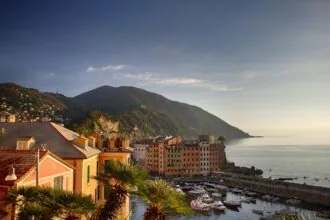
Boccadasse feels like a small fishing village that somehow ended up attached to a major city, with pastel-coloured houses crowding a tiny pebble bay just east of central Genoa. Fishing boats still pull up on the beach here, alongside sunbathers and gelato-eating visitors in equal number.
The neighbourhood is small enough to see properly in under an hour, with a handful of narrow lanes running back from the bay and a scattering of cafes and gelaterias facing the water. Corso Italia, Genoa’s seafront promenade, runs directly from the city centre to Boccadasse and makes a pleasant approach on foot or bike.
There is no admission charge and nothing that strictly needs booking, which makes Boccadasse an easy, low-effort addition to a longer day rather than a destination requiring its own dedicated planning. Regular city buses also run here directly from the centre for anyone who would rather not walk the whole promenade.
Late afternoon is the best time to visit, when the light softens and the small beach empties out a little, leaving space to actually sit and enjoy the setting rather than squeezing onto a crowded strip of pebbles.
Sunset here, looking back along the coast towards Nervi, is one of the better free views anywhere in the city.

Seeing Genoa by Hop-On Hop-Off Bus
For visitors who would rather get an overview from a seat than on foot, or who are short on time between a cruise call and departure, an open-top hop-on hop-off bus loops around the city on two linked routes. The red line sticks to the historic centre, calling at Piazza Caricamento, Via Giuseppe Garibaldi and Piazza De Ferrari before looping back past the main train stations.
The blue line extends further east to reach Boccadasse and the Waterfront di Levante, making it a genuinely useful option for anyone who wants to see the fishing village without walking the whole promenade there and back. Between the two routes, around ten to twelve stops cover most of this guide’s central and waterfront sights.
Buses run roughly every 30 to 50 minutes between 10am and 4:30pm, with a full loop taking about an hour, and onboard audio guides are available in seven languages covering the city’s history as it passes. Hopping off at any stop and rejoining a later bus is included in the ticket price.
A 24-hour ticket costs around €19 (£16/$22) for an adult, rising to roughly €25 (£21/$29) for 48 hours, with reduced pricing for children. It suits a first orientation lap far more than a substitute for walking the caruggi properly on foot.
La Lanterna: Genoa’s Historic Lighthouse
The Lanterna is Genoa’s lighthouse and unofficial city symbol, standing at around 77 metres and generally reckoned to be the tallest historic lighthouse still in operation anywhere in the world. Parts of the current structure date back to the sixteenth century, though a lighthouse has stood on this spot since the twelfth.
It sits on a promontory near the port, at a slight remove from the main sightseeing route through the old town, which keeps visitor numbers noticeably lower than the sights closer to the centre. A small on-site museum covers the lighthouse’s long history and its role guiding ships into Genoa’s harbour.
Guided tours climbing partway up the tower run on a limited schedule and typically cost around €8 (£7/$9), and it is worth checking current opening days before making the trip out, since access is more restricted than most attractions on this list.
Even without a tour booked, the walk out to the base of the lighthouse along the harbourside path gives good views back towards the port and the old town, and it makes a decent extension to a Porto Antico visit for anyone with an extra half hour.
Allow around 45 minutes for the walk out, around the base, and back, longer if a guided climb is included.
Porta Soprana and Christopher Columbus’s House
Porta Soprana is a pair of imposing twelfth-century defensive towers that once marked the eastern edge of the medieval city walls, and they still frame the approach into the old town dramatically. The towers are free to view from outside and offer good photo opportunities from the small park alongside them.
Immediately below the towers sits a small ivy-covered ruin popularly identified as the childhood home of Christopher Columbus, Genoa’s most famous son. Historians debate how reliable the attribution actually is, but it remains a popular stop regardless and costs nothing to view from the street.
Nearby, the cloister of Sant’Andrea, a fragment of a demolished medieval monastery, adds a further quiet corner worth a few minutes if passing directly by. The whole cluster of sights sits within a couple of minutes’ walk of each other.
This makes a natural final or opening stop on a walk through the caruggi, since it sits right at the old town’s edge closest to Brignole railway station, useful for anyone arriving or leaving that way.
Twenty minutes is enough to see the towers, house and cloister together, making this an easy addition rather than a dedicated stop on its own.
Best if you would rather spend the money on the trip than on the room. Compare hostels by location and rating.
Search hostelsBest for anyone flying more than once or twice a year. Handles the compensation claim so you are not chasing the airline.
See AirHelp+Best if your room is not ready yet. Left luggage booked in advance, so you are not hunting for a locker.
Check storageCastello D’Albertis: A Castle Built by a Sea Captain
Castello D’Albertis is a genuinely eccentric nineteenth-century castle built for Captain Enrico Alberto D’Albertis, an explorer and sea captain who filled it with objects gathered on his travels around the world. It now operates as the Museum of World Cultures, sitting high on a hill above the port.
The collections cover indigenous artefacts from the Americas, Africa, Asia and Oceania, gathered during D’Albertis’s own voyages, alongside displays connecting Genoa’s own history of exploration and migration to the wider world. The building itself, part castle and part private folly, is as interesting as anything inside it.
A dedicated lift, the Castello D’Albertis-Montegalletto funicular, connects the castle directly to the Principe railway station area below, saving a genuinely steep climb on foot. Standard museum admission costs around €8 (£7/$9) for a full-price adult ticket.
The terrace and gardens around the castle give one of the better panoramic views over the port and old town anywhere in the city, and they are worth lingering in even for visitors who find the collections themselves only moderately interesting.
Budget around 90 minutes including the funicular ride up and down, and go on a clear day if the view is the main draw.
Nervi: Seafront Promenade and Botanical Parks
Nervi, on Genoa’s eastern edge, swaps the density of the old town for a genuinely relaxed seaside atmosphere built around one of Italy’s best coastal walks. It is reachable in around 20 minutes from the city centre by regional train or a longer ride along the coast by bus.
The Passeggiata Anita Garibaldi runs for roughly two kilometres along dramatic cliffside rock, with the sea crashing directly below the path in places. It is free to walk and manageable for most fitness levels, with benches at regular intervals for anyone wanting to stop and take in the view.
Inland from the promenade, the Parchi di Nervi string together three connected historic villa gardens into one of the largest public parks in Genoa, including a respected rose garden and a modern art museum housed in one of the former villas. Entry to the parks themselves is free.
The combination of a proper coastal walk and genuinely peaceful gardens makes Nervi a good counterpoint to a day or two spent in the denser old town, and it is popular with locals rather than feeling purely tourist-oriented.
A half day covers the promenade and a proper walk through the parks, and it pairs naturally with lunch at one of Nervi’s own seafront restaurants.
Whale Watching in the Pelagos Sanctuary
Genoa sits on the edge of the Pelagos Sanctuary, a protected marine area of around 87,500 square kilometres shared between Italian, French and Monégasque waters and established in 1999 specifically to safeguard the Ligurian Sea’s resident whales and dolphins. Few visitors realise a genuine wildlife cruise is possible directly from the same harbour as the Aquarium.
Boats depart from the ticket office at Ponte Spinola, right by the Aquarium on Porto Antico, for a cruise lasting around four and a half hours out into open water where sightings are genuinely possible rather than staged. Fin whales, sperm whales and pods of bottlenose dolphins are the species most regularly spotted, though nothing in open water is ever guaranteed.
A qualified marine biologist guides the trip throughout, opening with a briefing on the sanctuary’s conservation work before pointing out wildlife and explaining the non-disturbance rules that keep boats a respectful distance from any animals encountered. Commentary usually runs in both Italian and English.
Prices start from around €40 (£34/$46) per person, with some operators offering a partial refund if nothing is sighted on the day. It is a genuinely different way to spend a half day away from the old town, and one that directly supports ongoing research in the sanctuary.

Mercato Orientale: Genoa’s Everyday Market
The Mercato Orientale is Genoa’s main covered market, housed inside a former Augustinian convent since the late nineteenth century, and it gives a genuinely useful window into everyday Genoese life away from the main sightseeing route. Despite the name, it is a general produce and food market rather than anything specifically Asian.
Stalls sell fresh fish, vegetables, cheese, cured meats and Ligurian specialities including pesto, focaccia and farinata, and it is a good spot to pick up ingredients for a picnic or simply wander and watch the city go about its shopping. Prices are noticeably lower than in the more tourist-facing parts of the old town.
The market runs Monday to Saturday, with the busiest and freshest stalls generally in the morning hours, and it thins out considerably by mid-afternoon as vendors start packing up. There is no admission charge, and browsing without buying is entirely normal here.
It sits close to Via XX Settembre, one of Genoa’s main shopping streets, and its elegant nineteenth-century arcade, making it easy to combine the market with a wider stroll through that part of the city.
Thirty to forty-five minutes is enough for a proper look around, and going hungry is recommended given how much good food is on display.
Spianata Castelletto: Genoa’s Best Viewpoint
Spianata Castelletto is a terraced viewpoint set on a hill directly above the old town, and it gives what is generally agreed to be the single best panoramic view over Genoa’s rooftops, port and coastline. On a clear day, the view stretches well out along the Riviera in both directions.
The easiest way up is the Castelletto lift, a public elevator built in 1909 that rises directly from the Portello area near Piazza Corvetto and covers most of the climb in under a minute. It runs on the standard city transport ticket rather than charging a separate fare.
The terrace itself is free to visit and rarely feels crowded compared with more famous European viewpoints, which makes it a genuinely peaceful spot to sit for a while rather than a quick photo stop. A small cafe nearby sells drinks for anyone wanting to linger.
Sunset is the obvious time to visit, when the light catches the terracotta rooftops of the old town and the harbour beyond, though the view is genuinely worthwhile at any hour the weather cooperates.
Allow around 30 minutes including the lift ride, and treat it as a natural way to close out a day spent lower down in the caruggi.
Which Genoa Sights Should You Prioritise?
With only a single day in Genoa, prioritise a walk through the caruggi ending at the cathedral, followed by Via Giuseppe Garibaldi and a stop at Porto Antico. That combination covers the medieval old town, the grand Renaissance city, and the modern waterfront in one manageable loop.
Families and anyone travelling with children should build extra time around the Aquarium and the Galata Maritime Museum, both genuinely engaging for younger visitors and easily worth a full day together given the scale of the collections involved.
Travellers with two or three days should add Boccadasse and Nervi for a change of pace from the old town’s density, along with Castello D’Albertis and the view from Spianata Castelletto for a proper sense of the city’s layout from above.
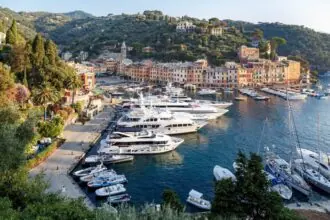
Genoa also works well as a base for the wider Ligurian coast, so anyone with extra time should weigh a day here against a day out to Portofino, Camogli or the Cinque Terre, all realistic day trips covered in full in our dedicated guide.
Whichever combination fits the trip, comfortable shoes matter more here than in most Italian cities, given how much of Genoa genuinely rewards exploring on foot, uphill, through narrow alleys.

A Genoa Itinerary for Cruise Passengers with One Day in Port
Genoa’s cruise terminals, Ponte dei Mille and Ponte Andrea Doria, sit close enough to the historic centre that a single day ashore is genuinely workable without booking a ship’s excursion. The walk from either terminal to Piazza Caricamento and the edge of the caruggi takes well under half an hour, leaving most of a full day free once the ship has actually docked.
A realistic loop for six or seven hours ashore starts with the caruggi and Cattedrale di San Lorenzo, continues to Piazza De Ferrari and Via Giuseppe Garibaldi for the Renaissance palaces, then finishes at Porto Antico, close enough to walk back to the terminal in good time. Trying to add Boccadasse or Nervi on the same day usually means cutting something else short.
The single biggest risk on a cruise day is misjudging the return walk against the ship’s all-aboard deadline, so building in a comfortable buffer matters more than squeezing in one extra sight. Checking which of the two terminals the ship is actually using, since Ponte dei Mille and Ponte Andrea Doria sit a short distance apart, avoids a stressful last-minute dash to the wrong pier.
For anyone who would rather not navigate alone, the hop-on hop-off bus covered earlier in this guide loops past most of the same sights and returns close to the port, which suits passengers nervous about timing against a fixed sailing time. Either approach comfortably fits within a single day ashore, provided the walk back to the correct terminal is planned in advance.
One Day in Genoa Without a Ship’s Deadline
A visitor with a genuine free day, rather than a fixed sailing time, can afford a slower pace than the cruise itinerary above. A sensible morning starts at Piazza De Ferrari for orientation, then heads into the caruggi and on to the striped cathedral, allowing the wandering itself to take longer than any strict schedule would permit.
The afternoon suits Via Giuseppe Garibaldi and at least one of the Strada Nuova palaces, before dropping down to Porto Antico, where the Aquarium or the Galata Maritime Museum can fill the remaining hours for anyone travelling with children or a genuine interest in maritime history.
With no ship to catch, the day can stretch into evening at Boccadasse for sunset over the pebble bay, or up to Spianata Castelletto for the city’s best panoramic view as the light fades. Either closing stop rounds out the day far better than heading straight back to a hotel.
The key difference from the cruise itinerary is flexibility rather than the sights themselves, since a non-cruise visitor is not tied to returning to one fixed point by a set hour. An early start even leaves room to stretch as far as Nervi’s coastal promenade, covered earlier, for anyone genuinely determined to make the most of a single day.
Is Genoa Worth Visiting Over Portofino or the Cinque Terre?
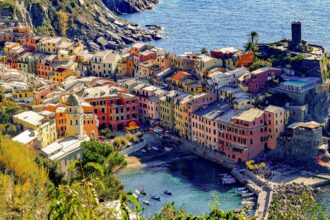
Genoa rarely photographs as prettily as Portofino’s yacht-lined harbour or the stacked, colourful villages of the Cinque Terre, and it is honest to say so upfront. What it offers instead is scale and substance: a genuinely vast, lived-in old town, serious museums, and a maritime history that the smaller Riviera resorts simply cannot match in the same depth.
Travellers chasing the classic postcard Riviera, pastel houses, a small harbour, a single photogenic view, are usually better served prioritising Portofino, Camogli or the Cinque Terre villages over extra time in Genoa itself. Those looking for real Italian city life, food markets, grand architecture and genuine history tend to find Genoa the more rewarding stop.
Genoa’s other advantage is position rather than looks alone, since its airport, stations and cruise terminals make it the natural gateway to every other destination in this guide. Even a visitor set on prioritising the Cinque Terre or Portofino will likely pass through Genoa regardless, which makes a half or full day here close to free in planning terms.
On balance, Genoa is worth at least a half day for almost anyone already in the region, and a full day or more for travellers drawn to history and food over beaches and postcard views. Anyone with only one day for the whole trip and a strong preference for classic Riviera scenery should still lean towards Portofino or the Cinque Terre instead.

Rupert’s Handy Travel Tips
Genoa rewards a bit of local know-how, so here are a few things worth knowing before you set off exploring:
- Book Aquarium tickets online in peak season: queues at the door can run long on busy weekends, and an online ticket skips straight past them.
- Wear proper shoes, not sandals: the caruggi and the hills above Porto Antico are steeper and more uneven underfoot than they look on a map.
- Use the public lifts and funiculars: the Castelletto lift and the Castello D’Albertis funicular both run on standard transport tickets and save a genuinely steep climb.
- Time the cathedral for good light: the black and white striped facade looks best in direct sun rather than under cloud.
- Save the Strada Nuova palaces for one visit: the combined ticket for Palazzo Rosso, Palazzo Bianco and Palazzo Tursi is far better value than paying for each separately.
- Eat where the market shops: the trattorias just off Mercato Orientale are consistently better value than anywhere directly on the main tourist routes.
Want to meet the reindeer behind our travel tips? Find out more in our page Who is Rupert?.





Frequently Asked Questions About Things to Do in Genoa
What is Genoa most famous for?
Genoa is best known for its historic port, the UNESCO-listed Renaissance palaces of Via Giuseppe Garibaldi, and one of the largest medieval old towns anywhere in Europe.
Is the Aquarium of Genoa worth visiting?
Yes, it is the largest aquarium in Europe, with around 70 tanks covering everything from Ligurian coastal species to dolphins and penguins, and it easily fills half a day.
How many days do you need in Genoa?
A single full day covers the old town’s main sights, but two or three days allow time for Boccadasse, Nervi, Castello D’Albertis and the wider Ligurian coast beyond the city.
Is Genoa’s old town safe to walk around?
Yes for the most part, though a handful of specific streets near the port have a rougher reputation after dark, so sticking to busier, better-lit routes in the evening is sensible.
What is the best view over Genoa?
Spianata Castelletto, reached by a public lift from the Portello area, gives the best panoramic view over the old town, port and coastline.
Is Christopher Columbus’s house in Genoa real?
The small ruin near Porta Soprana is popularly identified as his childhood home, though historians debate how reliable that attribution genuinely is.
What is Boccadasse?
Boccadasse is a small former fishing village on Genoa’s eastern seafront, with pastel houses around a pebble bay, reachable on foot or by bus from the city centre.
Do I need to book the Strada Nuova palaces in advance?
Not usually, though buying the combined ticket covering Palazzo Rosso, Palazzo Bianco and Palazzo Tursi together is better value than separate entries.
Further Reading
Landing at Cristoforo Colombo before exploring any of the sights above? Our Genoa Airport Transfers guide covers the Volabus shuttle, taxis and every other realistic way of reaching the city centre from GOA.
Ready to explore beyond the city itself? Our Day Trips from Genoa guide covers Portofino, Camogli and the rest of the Italian Riviera, all realistically reachable by train, bus or ferry.
Continuing on to the Cinque Terre from Genoa? Our How to Get to Cinque Terre guide covers the route from Genoa specifically, our Complete Guide to Cinque Terre works through each of the five villages in detail, and our Cinque Terre by Train guide explains how the regional Cinque Terre Express links them all together once you have arrived.
Planning a longer stay along this coast? Our Italia in Tour Pass guide explains whether a multi-day regional rail pass beats buying single fares, a genuinely useful comparison for anyone combining Genoa with several of the day trips above.