Reviewed by our editorial team Updated
Why the Cinque Terre Express Is the Best Way to Explore
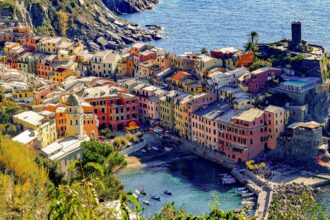
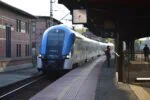
The Cinque Terre Express is genuinely the single most important piece of infrastructure for anyone visiting this stretch of Ligurian coastline, since it’s the fast, frequent regional train that stitches all five villages together into a single, easily explorable region. Understanding exactly how this line works is arguably more useful than any other piece of planning advice we can offer.
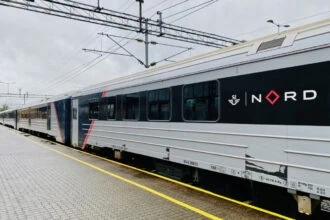
Unlike the steep hiking trails or seasonal boat services covered elsewhere on this site, the train runs reliably year round, connecting La Spezia, Riomaggiore, Manarola, Corniglia, Vernazza, Monterosso al Mare and Levanto with journeys between neighbouring stations often taking only a few minutes. During peak season, trains run as frequently as every fifteen minutes, making spontaneous village hopping genuinely effortless.
Given how central the train is to any Cinque Terre visit, this guide goes considerably deeper than our wider Complete Guide to Visiting Cinque Terre, covering every individual station along the line, how the Cinque Terre Train Card actually works, how wider Italian rail passes including Interrail, the Italia in Tour Pass and the Trenitalia Pass interact with this specific stretch of railway, and practical realities around luggage, accessibility and avoiding the worst of the summer crowds.
Whether you’re planning to buy single tickets for a short visit or working out whether a multi day Train Card genuinely pays for itself, this guide is built to answer every practical question about riding the Cinque Terre Express, station by station, ticket by ticket, without leaving anything important to guesswork.
Understanding the Line: La Spezia to Levanto
The Cinque Terre Express runs along a single stretch of regional railway line connecting La Spezia Centrale in the south to Levanto in the north, calling at all five villages plus both gateway towns along the way. The full end to end journey covers a distance of only around twenty five kilometres, yet packs in some of the most dramatic coastal scenery found anywhere on Italy’s rail network.
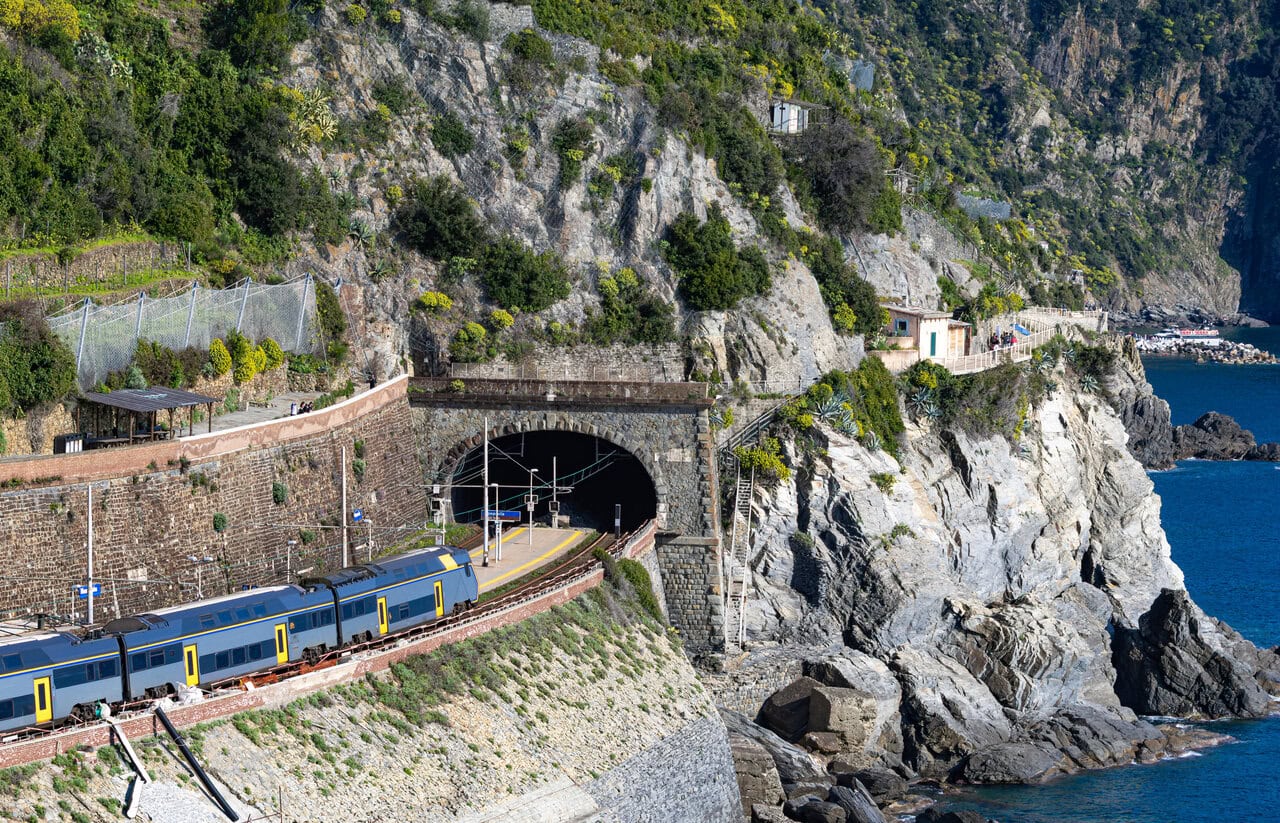
Much of the line runs through tunnels bored directly into the cliffs separating each village, since the terrain along this stretch of coast is simply too steep and rugged for an open route to be practical. This means the train itself offers relatively few scenic views compared with the boat or hiking trail alternatives, though the sheer convenience of moving between villages in a matter of minutes more than compensates for the lack of window gazing.
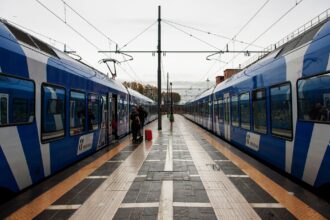
Services are operated by Trenitalia as part of its regional network, running at their most frequent during peak season, roughly mid March through early November, when departures can come as often as every fifteen minutes throughout the day. Outside this period, trains still run reliably but at a reduced frequency, typically every thirty minutes, since visitor numbers drop considerably during the quieter winter months.
Every station along the line sits within the same fare zone, meaning tickets between any two adjacent stops cost roughly the same regardless of which specific villages you’re travelling between. This simplicity, combined with the sheer frequency of service, is exactly what makes the Cinque Terre genuinely explorable without a car, and precisely why understanding this single railway line matters so much to your overall visit.
During the main tourist season, which typically runs from mid-March until early November, the dedicated Cinque Terre Express operates approximately every 20 minutes between La Spezia and Levanto, stopping at all five villages. This frequent service makes it easy to hop on and off throughout the day without planning every journey in advance.
Outside the main tourist season, the dedicated Cinque Terre Express does not operate. However, regular Trenitalia regional trains continue to serve the route throughout the year, although services are generally less frequent. If you’re travelling during the winter months, it’s worth checking the timetable before setting out.
See hotel options and places to stay for your trip.
Browse hotelsBrowse apartments, homes and self-catering accommodation.
Browse rentalsCompare prices from multiple hotel booking sites.
Check dealsEvery Station on the Line
Before diving into each individual station in detail, it genuinely helps to see how they all line up along the route, since journey times between neighbouring stops are almost universally short. The table below gives approximate travel time from La Spezia Centrale to each stop, along with a note on what makes each station’s character genuinely distinct.
Note that these times reflect the train journey itself only, and do not include the additional time needed to actually reach each village’s centre from its station platform. Corniglia in particular requires considerably more effort than the raw train time suggests, given its clifftop position above the railway line.
As a general rule, journeys between any two adjacent stations along this line take only a few minutes, meaning the overall shape of your day matters far more than the specific train times themselves. Missing one departure rarely causes serious disruption to your plans given how frequently the next service typically arrives.
Use this table as a quick reference, then read the individual station sections that follow for genuinely useful detail on accessibility, station facilities and what to expect the moment you step off the train at each specific stop along the Cinque Terre Express, before committing to a firm itinerary.
| Station | Approx. Time from La Spezia | Station Character |
|---|---|---|
| La Spezia Centrale | Start point | Main gateway, large station, full facilities |
| Riomaggiore | ~10 minutes | Most accessible, lift to street level |
| Manarola | ~13 minutes | Short downhill walk to harbour |
| Corniglia | ~18 minutes | Steep, 300+ steps or shuttle bus required |
| Vernazza | ~22 minutes | Opens directly onto village square |
| Monterosso al Mare | ~28 minutes | Flat, central, beach access |
| Levanto | ~35 minutes | Northern gateway, flat, long beach |
La Spezia Centrale
La Spezia Centrale serves as the southern anchor of the Cinque Terre Express line and, for most visitors arriving from Florence, Pisa, Rome or elsewhere in Italy, this is genuinely where your journey into the National Park itself begins. As the busier of the two gateway stations, La Spezia Centrale sits on Italy’s main coastal rail line, with regular connections to Genoa, Milan and the wider network heading south.
The station itself is considerably larger and better equipped than any of the five village stops further along the line, with multiple platforms, ticket offices, waiting areas and a proper concourse, none of which the smaller village stations genuinely offer. Given this, La Spezia Centrale is also where most visitors will buy their Cinque Terre Train Card or single tickets if they haven’t already purchased online.
Trains departing La Spezia towards the villages generally leave from clearly signed platforms, though during peak season the station can genuinely feel crowded, particularly in the hour or two before the busiest daytime departures. Arriving with a little extra time to navigate the station, especially if this is your first Italian rail journey, is genuinely worth building into your schedule rather than cutting things fine.
Given its role as a proper transport hub rather than simply a village stop, La Spezia Centrale also connects onward to Portovenere by bus and to seasonal boat services along the coast, making it a genuinely useful base station even beyond its role funnelling visitors into the Cinque Terre Express itself throughout the day.
Riomaggiore Station
Riomaggiore station, the first stop reached from La Spezia and the closest village to the gateway town, sits at the base of the village itself, connected to the main street above by a short tunnel and, genuinely usefully, a lift for visitors unable to manage stairs comfortably. This makes Riomaggiore the single most accessible station anywhere along the entire Cinque Terre Express line, and genuinely the easiest starting point for anyone with limited mobility.
Stepping off the platform, most visitors pass through a pedestrian tunnel leading directly towards Via Colombo, the village’s main street, with the harbour itself only a short, mostly level walk beyond. Compared with several of its neighbours, reaching Riomaggiore’s centre from the station involves genuinely minimal elevation change, a detail worth knowing if mobility is a concern for anyone in your travelling party.
Riomaggiore’s station also marks the starting point for the famous Via dell’Amore coastal walkway towards Manarola, and the entrance to this path sits close enough to the station itself that combining a train arrival with an immediate walk onward is genuinely straightforward for visitors who have already booked their timed entry slot.
Given its position as the first stop from La Spezia, Riomaggiore also tends to see the earliest wave of day trip crowds each morning, arriving before the villages further along the line. Visitors hoping to experience the village at its quietest are genuinely better served arriving either very early or considerably later in the day, once the first rush of the morning has moved on towards Manarola and beyond it.

Manarola Station
Manarola station sits at the base of the village’s ravine, with a short but genuinely noticeable downhill walk connecting the platform to the village’s main street and onward to the harbour where its famous rocks and sunset views await. The walk itself is manageable for most visitors, though it does involve a modest incline that some travellers with mobility concerns may find more challenging than Riomaggiore’s flatter approach.
Given Manarola’s relatively small scale, the walk from station to harbour rarely takes more than ten minutes even at a leisurely pace, making it genuinely one of the more straightforward villages to explore quickly if your schedule is tight that day. The station itself is unstaffed for much of the day, similar to most of the smaller stops along this line, so buying tickets in advance or online genuinely saves time and avoids any last minute scramble.
Manarola marks the opposite end of the Via dell’Amore walkway from Riomaggiore, meaning visitors completing this popular coastal walk will naturally arrive back at the station here, ready to continue onward towards Corniglia, Vernazza or Monterosso by train, or back towards La Spezia if heading home for the day.
Given its position as the second stop along the line from La Spezia, Manarola also tends to fill up relatively early in the day, though generally with slightly fewer crowds than Riomaggiore itself, making it a genuinely pleasant second stop on a multi village day out before the crowds properly build later in the morning.
Corniglia Station
Corniglia station is genuinely the most physically demanding stop along the entire Cinque Terre Express line, given the village’s unusual clifftop position roughly one hundred metres above the railway itself. Visitors have two options for reaching the village centre: climbing the Lardarina, a staircase of well over three hundred steps, or catching the small shuttle bus that runs between the station and the village.
For visitors with any concerns about mobility, luggage or simply energy levels, the shuttle bus is genuinely the sensible choice, running regularly enough that waiting times rarely become a significant burden. The bus typically requires a small additional fare or the Cinque Terre Card, and tickets can usually be bought directly from the driver or at the station itself without any advance booking required.
Corniglia’s station also lacks some of the amenities found at busier stops, given how much smaller the daily passenger volume genuinely is compared with Riomaggiore or Manarola. This relative quiet, while occasionally inconvenient for facilities, also means Corniglia rarely feels as overwhelmed by day trip crowds as its more accessible neighbours, particularly around the station itself during the busiest midday hours.
Given the extra effort required to actually reach Corniglia’s centre, many visitors treat it as a shorter stop compared with the other four villages, seeing the highlights before returning to the station and continuing onward, rather than lingering for a full meal or extended wander the way they genuinely might in Manarola or Vernazza further along the line.
Vernazza Station
Vernazza station opens directly onto a small square right at the edge of the village, making it genuinely one of the most immediate and dramatic arrivals along the entire Cinque Terre Express line. Within moments of stepping off the platform, you’re already standing amid Vernazza’s narrow streets, with the famous harbour only a short, gently sloping walk further down towards the water.
Given how central the station sits within the village itself, Vernazza requires considerably less walking to reach its main attractions than Corniglia or even Manarola, making it a genuinely convenient stop for visitors with limited time or mobility concerns. The main street, Via Roma, leads directly from the station square down towards the harbour, passing shops, restaurants and gelaterias along the way.
Vernazza’s popularity as the most photogenic of the five villages means its station can become genuinely crowded during peak arrival and departure times, particularly in the hour or two either side of sunset when day trippers converge to capture the harbour at its most photogenic. Arriving outside these peak windows genuinely rewards visitors with a calmer, more relaxed first impression of the village overall.
Given its position roughly in the middle of the line, Vernazza also makes a genuinely sensible base station for visitors planning to explore in both directions across multiple days, since neighbouring villages in either direction remain only a few minutes away by train, without ever needing a lengthy connection.
Search routes and flight options for your journey.
Search flightsChoose an Airalo eSIM and arrange mobile data before you arrive.
Browse eSIMsCheck private airport pickup options and plan the first part of your journey in advance.
View transfersMonterosso al Mare Station
Monterosso al Mare station sits directly between the village’s two halves, the old town on one side and Fegina, the newer beach district, on the other, connected by a short tunnel running beneath the headland separating them. This central position makes Monterosso genuinely one of the most convenient stations along the whole line for visitors wanting immediate access to a beach.
Compared with the steep approaches found at Corniglia or the ravine walk down into Manarola, Monterosso’s station is refreshingly flat, reflecting the village’s status as the largest and most level of the five settlements. This makes it a genuinely popular arrival point for families, older visitors or anyone travelling with heavier luggage who would rather avoid stairs entirely.
Given its position at the western end of the villages, closest to Levanto, Monterosso also tends to see slightly different crowd patterns than the villages further south, with beach visitors adding to the usual day trip traffic during the warmer months. Summer weekends in particular can bring genuinely busy platforms as both sightseers and beachgoers converge on the station simultaneously, especially around midday and again in the late afternoon.
Monterosso’s station also connects directly to the local buses covering the village’s two halves, along with onward regional services continuing north towards Levanto and beyond, making it a genuinely practical stop whether you’re staying here overnight or simply passing through for the day on your way further along the line.
Levanto Station
Levanto station sits just north of Monterosso, marking the opposite end of the Cinque Terre Express line from La Spezia and serving as the region’s second gateway town for visitors arriving from Genoa, Milan or the wider Ligurian Riviera. Levanto itself lies technically outside the National Park boundary, though it functions as an entirely practical base for exploring the five villages.
The station connects to Levanto’s own town centre via a short, flat walk, considerably easier than several of the village stations further south, and leads towards the town’s long sandy beach, one of the main reasons many visitors choose to base themselves here rather than within the villages themselves. This makes Levanto a genuinely comfortable arrival point for anyone travelling with heavier luggage or mobility concerns of any kind.
As the less busy of the two gateway stations, Levanto also tends to feel considerably calmer than La Spezia Centrale, particularly outside the absolute peak of summer, making it a genuinely pleasant place to begin or end a day exploring the villages without the crowds that build up further south along the line.
Given its position, Levanto also works well as a base for visitors wanting easier access to Monterosso specifically, since the two towns sit only a few minutes apart by train, letting you enjoy Levanto’s wider choice of accommodation and restaurants while still keeping the closest village within easy reach for a day of sightseeing.
Buying Single Tickets
Buying single tickets for the Cinque Terre Express is genuinely straightforward, and remains the sensible option for visitors only planning one or two train journeys during their stay rather than hopping repeatedly between villages. A standard single fare between any two adjacent stations typically costs somewhere between five and ten euros for adults during peak season, roughly halving during the quieter winter months.
Tickets can be bought at station ticket machines, staffed counters where available, or through the Trenitalia app, which genuinely simplifies the process for visitors unfamiliar with Italian rail systems. Given how small many of the village stations are, buying tickets online in advance is worth doing, particularly since several stops have no staffed ticket office at all outside the busiest hours.
Unlike many metro or rail systems elsewhere in Europe, Cinque Terre stations have no turnstiles, meaning you can walk freely onto any platform without needing to tap in or scan a ticket first. This convenience comes with an important catch: paper tickets must be validated at the green or yellow machines found on station platforms before boarding, since failing to do so can result in a genuinely steep fine if an inspector checks during your journey.
Tickets bought digitally through the Trenitalia app or website are generally pre-validated and don’t require this additional step, making them the genuinely easier option for visitors unfamiliar with the validation requirement. If you do buy a paper ticket at a station, validating it before boarding is a habit genuinely worth building immediately.
The Cinque Terre Train Card Explained
The Cinque Terre Train Card, sometimes called the Treno MS Card, bundles unlimited second class travel on the Cinque Terre Express between La Spezia and Levanto together with access to the hiking trails and local shuttle buses covered in our wider Complete Guide to Visiting Cinque Terre. For visitors planning to hop between more than two villages in a single day, this card genuinely starts paying for itself quickly.
Pricing follows a seasonal banding system, split into green, yellow and red days reflecting low, average and peak demand respectively. A single day card typically ranges from around twenty euros on a quiet green day up to considerably more on a busy red weekend during peak summer, with two and three day versions available at a proportional, if not always exactly linear, increase in price.
Crucially, the Train Card only covers regional and fast regional trains between Levanto and La Spezia specifically. Intercity, Intercity Notte and Frecciabianca services, along with any train travel beyond these two gateway stations, are explicitly excluded, meaning the card genuinely only makes sense for movement within the National Park itself rather than onward travel to Genoa, Pisa or elsewhere.
The Cinque Terre Train Card can be purchased online through the official Cinque Terre National Park website, via the Trenitalia app, or in person at park information points, ticket offices and self-service ticket machines at La Spezia, Riomaggiore, Manarola, Corniglia, Vernazza, Monterosso and Levanto.
If you’re using the Trenitalia app, open the main menu and select Promotions and Services, then choose 5 Terre Card. From there, simply select your travel date, choose the type of card you need and complete your purchase. The digital ticket is stored within the app and can be shown to ticket inspectors during your journey.
Buying online in advance is worthwhile during the busiest periods, particularly during weekends and the summer holidays, when queues at ticket offices in La Spezia and Monterosso can become quite long.
Using Interrail and Eurail Passes
Travellers holding an Interrail or Eurail Pass will genuinely be pleased to learn that the Cinque Terre Express is fully covered as part of Italy’s regional rail network, meaning you can board any train between La Spezia and Levanto without purchasing a separate ticket or activating an additional travel day beyond what your pass already requires.
Unlike some of Italy’s high-speed Frecciarossa or Frecciargento services, which often require paid seat reservations even for pass holders, regional trains including the Cinque Terre Express genuinely don’t require any advance reservation at all. This means Interrail and Eurail travellers can simply turn up at any station along the line and board the next available train without any additional planning or paperwork to worry about.
One important detail worth understanding is that the Interrail or Eurail Pass itself only covers the train travel between stations, not the hiking trails, shuttle buses or other services bundled into the separate Cinque Terre Card. If you’re planning to hike any of the paid coastal trail sections, including the Via dell’Amore, you’ll still need to purchase the relevant trail access separately, regardless of which rail pass you’re holding.
Given how simple and inclusive Interrail and Eurail coverage genuinely is here, many pass holders find the Cinque Terre a genuinely relaxing stop on a wider European rail itinerary, since there’s no need to plan reservations or worry about ticket validation the way single ticket purchasers genuinely must throughout their stay.
Can I use the Italia in Tour Pass?
Travellers holding the Italia in Tour Pass, covered in detail in our dedicated guide, should understand one important exclusion before arriving in the Cinque Terre: the pass is explicitly not valid on regional trains operating within the Cinque Terre National Park itself, specifically the stretch between Levanto and La Spezia Centrale.
This exclusion sits alongside a handful of other geographical restrictions built into the Italia in Tour Pass, and genuinely catches some travellers off guard given how comprehensive the pass otherwise is across the rest of Italy’s regional network. Visitors arriving in Levanto or La Spezia using their Italia in Tour Pass will find the journey there fully covered, but will need a separate ticket or the Cinque Terre Card for the final stretch into the villages themselves.
Given this exclusion, travellers relying on the Italia in Tour Pass for a wider Italian rail holiday should genuinely budget separately for their time within the Cinque Terre, either buying individual tickets for the handful of journeys they’re planning between villages, or purchasing a Cinque Terre Train Card if they’re planning to hop between several villages across a single day or two.
This restriction doesn’t meaningfully reduce the pass’s overall value elsewhere in Italy, but it’s genuinely worth knowing about in advance so you’re not caught by surprise at the ticket barrier, or more accurately, by an inspector checking tickets on board a Cinque Terre Express service you assumed was already fully covered by your existing pass.
Compare hostels and lower-cost accommodation for your trip.
Search hostelsGet help with compensation, eligible lounge access and disruption support.
Explore AirHelp+Use convenient luggage storage between arrival, check-in and departure.
Check storageInformation about the Trenitalia Pass
The Trenitalia Pass, covered in full in our dedicated guide, is designed primarily around Italy’s high-speed and long-distance network, including Frecciarossa, Frecciargento and Intercity services connecting the country’s major cities. Given this focus, the pass genuinely doesn’t provide meaningful coverage for the short, local regional journeys that make up the Cinque Terre Express itself.
In practice, this means travellers holding a Trenitalia Pass will still need to purchase separate tickets, or the Cinque Terre Card, for movement between the villages, since the pass is built around covering longer distance travel between cities like Rome, Florence, Milan and Naples rather than the kind of short regional hops that define transport within the National Park.
This distinction matters most for travellers combining a wider Italian rail holiday, perhaps using the Trenitalia Pass to travel between Rome, Florence and onward towards Genoa or Milan, with a dedicated stop in the Cinque Terre along the way. The pass will genuinely serve you well for the longer legs of that journey, but budgeting separately for your time actually within the villages remains essential.
Given the relatively modest cost of Cinque Terre train tickets or the Train Card compared with the value the Trenitalia Pass offers on longer routes, this exclusion rarely causes genuine frustration once travellers understand it well in advance of arriving. Simply treat your Cinque Terre stop as a separate, self-contained leg of your journey requiring its own ticketing arrangement, and the rest of your itinerary continues to run smoothly.
Luggage and Accessibility on the Cinque Terre Express
Understanding the genuine accessibility limitations of the Cinque Terre Express before you travel is genuinely worth doing, particularly for visitors with mobility concerns or anyone travelling with substantial luggage. While the trains themselves are part of Trenitalia’s regional network and generally include designated wheelchair spaces, boarding is often considerably more difficult in practice than the official provisions suggest.
Platform heights along this line vary noticeably, and on several services the gap between platform and train genuinely requires stepping up, sometimes by several steps, rather than a smooth level boarding. Riomaggiore is widely considered the most wheelchair accessible station on the entire line, with a lift connecting the platform to street level, though visitors requiring this level of accessibility should still expect to need assistance boarding the train itself at busier times.
For travellers with heavier luggage, the combination of narrow platforms, occasional steps between platform and carriage, and the crowds that build during peak season genuinely makes travelling light a sensible strategy here. Considering a luggage transfer service between accommodation stops, or simply packing a smaller bag for your Cinque Terre leg specifically, removes a genuine source of stress from what should otherwise be an easy, scenic journey.
Given these practical realities, visitors with genuine mobility needs are often better served combining train travel with the seasonal boat services covered in our dedicated Cinque Terre Boat and Ferry Guide, since boarding a boat at harbour level frequently proves considerably more straightforward than navigating station steps and platform gaps.
Avoiding Peak-Hour Crowds
Avoiding the worst of the peak-hour crowds on the Cinque Terre Express genuinely transforms the experience of riding this line, since summer trains can become uncomfortably packed during the busiest windows of the day. Understanding the typical rhythm of visitor traffic helps considerably with planning a more comfortable journey.
Mid morning through early afternoon, roughly ten until four, tends to bring the heaviest crowds, as day trippers arriving from Florence, Pisa, Milan and cruise ship excursions all converge on the villages simultaneously. Trains during this window can become standing room only, particularly on the shorter hops between the busiest villages like Riomaggiore and Manarola.
Travelling either genuinely early, before nine in the morning, or later in the afternoon and into the evening, rewards visitors with considerably quieter trains and platforms, along with the added bonus of experiencing the villages themselves in their calmer, more atmospheric early or late hours. Visitors staying overnight within the National Park hold a genuine advantage here, since they can plan their village hopping around these quieter windows rather than being tied to a single rushed day trip.
Weekends throughout the summer months, along with any Italian public holiday, genuinely intensify crowding across the entire line, so where your schedule allows flexibility, favouring weekdays for your most ambitious village hopping plans is worth prioritising. Given how short most individual journeys are, even standing for a few minutes during the busiest periods rarely proves genuinely unbearable, though it’s certainly not the relaxed experience the Cinque Terre’s reputation might suggest.

Rupert’s Handy Travel Tips
The Cinque Terre Express rewards a bit of planning, so here’s what I’d want to know before boarding.
- Always validate paper tickets before boarding: there are no turnstiles, but fines for unvalidated paper tickets are genuinely steep.
- Buy digital tickets through the Trenitalia app where possible: they’re pre-validated, removing one thing to worry about.
- Take the shuttle bus at Corniglia if stairs aren’t for you: the Lardarina staircase runs to well over three hundred steps.
- Check your rail pass exclusions before arriving: the Italia in Tour Pass and Trenitalia Pass don’t cover the Cinque Terre Express.
- Travel before nine or after four to dodge the worst crowds: mid morning to mid afternoon is genuinely the busiest window.
Want to meet the reindeer behind our travel tips? Find out more in our page Who is Rupert?.



Frequently Asked Questions
How often does the Cinque Terre Express run?
As frequently as every fifteen minutes during peak season, roughly mid March to early November, and around every thirty minutes outside this period.
Do I need the Cinque Terre Train Card?
Only if you plan to hop between more than two villages in a day or hike the paid trail sections. For one or two journeys, single tickets are usually cheaper.
Is the Cinque Terre Express covered by Interrail or Eurail?
Yes, fully, with no seat reservation required, unlike many of Italy’s high-speed services.
Can I use the Italia in Tour Pass in the Cinque Terre?
No. The pass explicitly excludes regional trains between Levanto and La Spezia within the National Park.
Which station is most wheelchair accessible?
Riomaggiore, thanks to a lift connecting the platform to street level, though boarding the train itself can still require assistance.
Do I need to validate my train ticket?
Yes, if it’s a paper ticket. Validate it at the green or yellow machines on the platform before boarding, or buy digitally to skip this step entirely.
Further Reading
For an overview of the whole region, including each village and how the train fits into your wider visit, our Complete Guide to Visiting Cinque Terre is the best place to start. Our How to Get to Cinque Terre guide covers routes from Florence, Pisa, Milan and Genoa, while our Cinque Terre Boat and Ferry Guide covers the seasonal alternative to the train.
If your time is limited, our Cinque Terre Day Trip Guide explains how to make the most of a single day visit from Florence, Pisa or elsewhere in Italy.
Exploring more of Italy by rail? Our Trenitalia Pass Italy guide, Italia in Tour Pass guide and Interrail Italy Pass guide explain each pass in full detail.
If you’re travelling around Italy more widely, our Best eSIM Apps Guide and Train Booking Apps Guide will help you stay connected and book rail journeys with confidence.