Reviewed by our editorial team Published
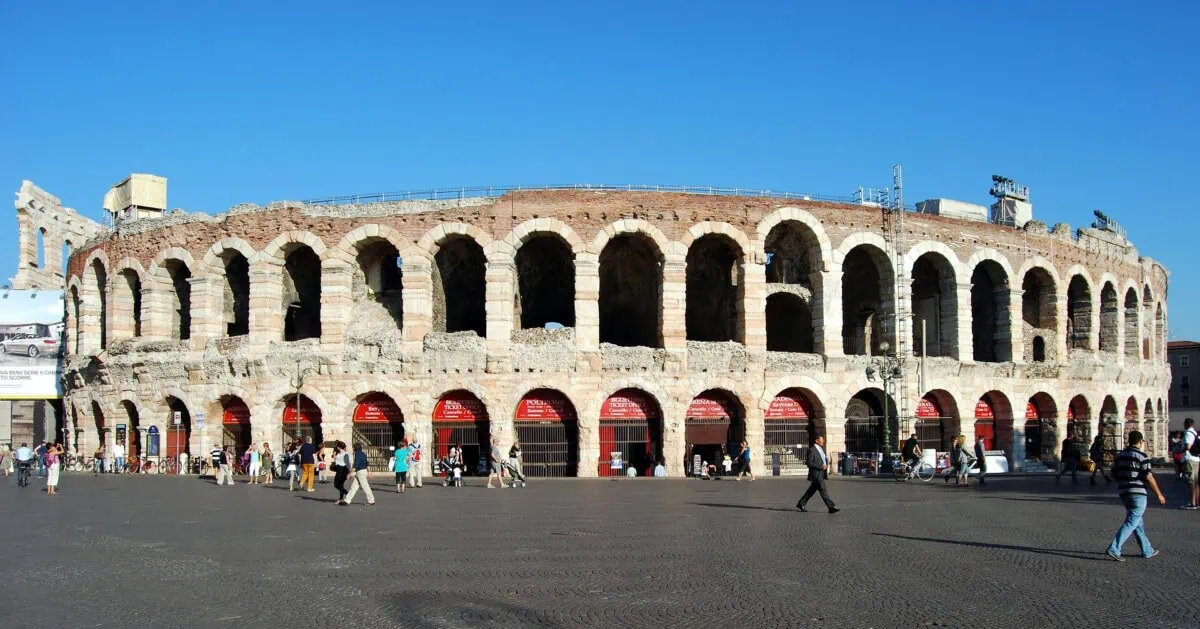
Verona trades on two very different kinds of fame, and both turn out to be genuinely worth the trip. This is the setting Shakespeare chose for Romeo and Juliet, a story that draws visitors to a balcony that was never really Juliet’s, and it is also a proper Roman city, with an amphitheatre nearly two thousand years old that still hosts a full opera season every summer.
What makes Verona work so well as a destination is how compact the old town actually is. Almost everything in this guide sits within a comfortable walk of Piazza Bra, the wide square at the Arena’s doorstep, so a single day here rarely feels rushed the way a bigger city visit often does.
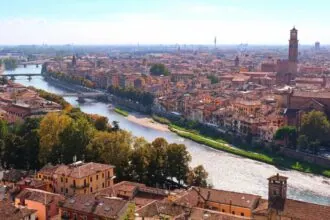
The Adige river loops around the old town on three sides, and several of Verona’s best sights sit specifically on that riverside boundary, from the Roman bridge at Ponte Pietra to the hilltop fortress at Castel San Pietro looking back down over the rooftops. Crossing back and forth over the water is part of what gives Verona its distinctive shape.
This guide rounds up the sights genuinely worth building a Verona visit around, from the Arena and Juliet’s House to the quieter pleasures of Giardino Giusti and the Roman Theatre across the river. Whether the plan is a single day between train connections or a longer stay exploring the wider Veneto, there is enough here to fill it properly.
Verona Things to Do at a Glance
| Attraction | Area | Best For | Time Needed |
|---|---|---|---|
| Verona Arena | Piazza Bra | Roman history and summer opera | 1 hour (longer for opera) |
| Piazza Bra | Old town entrance | Meeting point and evening drinks | 15-20 minutes |
| Casa di Giulietta | Via Cappello | The Romeo and Juliet legend | 20-30 minutes |
| Piazza delle Erbe | Old town centre | Market atmosphere and photos | 30 minutes |
| Torre dei Lamberti | Piazza delle Erbe | Best central viewpoint | 30-45 minutes |
| Piazza dei Signori | Old town centre | Medieval architecture | 20 minutes |
| Scaliger Tombs | Piazza dei Signori | Gothic funerary monuments | 15-20 minutes |
| Verona Cathedral | Riverside, near Ponte Pietra | Titian altarpiece and architecture | 30-45 minutes |
| Santa Anastasia | Old town, near the cathedral | Frescoes and quieter crowds | 30-45 minutes |
| Ponte Pietra | River Adige | Free views and photos | 15 minutes |
| Castel San Pietro | Across the river | Best panoramic view over Verona | 30 minutes |
| Castelvecchio | Edge of the old town, by the river | Medieval fortress and art museum | 60-90 minutes |
| Giardino Giusti | Eastern edge of the old town | Renaissance garden and maze | 1 hour |
| San Zeno Basilica | Western edge, Piazza San Zeno | Romanesque architecture | 30-45 minutes |
| Roman Theatre and Museum | Across the river | Quieter Roman ruins | 1 hour |
Verona Arena: A Roman Amphitheatre Still in Use
The Verona Arena is the city’s single most impressive sight, a Roman amphitheatre completed in the first century AD that ranks among the best preserved anywhere in the world. Unlike Rome’s Colosseum, most of its outer ring still stands, and the arena remains a genuinely working performance venue rather than a ruin behind rope barriers.
Every summer, the Arena hosts a full open-air opera season, with tens of thousands of visitors filling its stone tiers across the warmer months for productions of Aida, Carmen and other classics staged on a genuinely epic scale. Tickets for a stone-tier seat start from around €35 (£30/$41), rising considerably for numbered seating closer to the stage.
Outside opera season, daytime admission to walk the tiers and explore the amphitheatre’s structure costs around €12 (£10/$14) for a full-price adult ticket, with reduced rates for students and over-65s. The scale is best appreciated from the upper rows, where the sheer size of the original Roman structure becomes properly clear.
An hour is enough for a daytime visit, though anyone attending an evening opera performance should budget the whole evening, arrive early to find a seat, and bring a cushion, since the stone tiers are exactly as hard as they look.
Best for a short trip. Compare rooms by neighbourhood, price and guest rating before you book.
Compare hotelsBest for groups who want one address and separate bedrooms rather than three hotel rooms.
See holiday homesBest for double-checking. Runs the same search across several booking sites so you are not leaving money behind.
Compare pricesPiazza Bra: Verona’s Grand Front Room
Piazza Bra is the wide, elegant square that fronts the Arena, and it works as Verona’s natural gathering point at almost any hour of the day. The square’s name comes from a dialect word for a wide open space, and it has served that purpose since medieval times.
A broad pedestrian promenade called the Liston runs along one side of the square, lined with cafes and restaurants that make a natural spot to sit and watch the crowds heading to and from the Arena. In the evening, this becomes one of the liveliest stretches of the whole city.
The square also holds a scattering of grander buildings worth a glance, including the neoclassical Palazzo Barbieri, Verona’s town hall, and a public garden with a bandstand at its centre. No admission is needed to enjoy the square itself.
Because almost every walking route through the old town passes through or near Piazza Bra at some point, it works well as a meeting point for anyone splitting up for the day, and as a natural place to return to for an evening drink after exploring the rest of the city.
Fifteen to twenty minutes covers the square properly, though most visitors pass through several times over the course of a stay given how central it sits.
Casa di Giulietta: Juliet’s House and Balcony
Casa di Giulietta, or Juliet’s House, is Verona’s most visited single attraction and also its most debated. There is no real historical evidence the Capulet family ever lived here, or that Shakespeare’s fictional Juliet has any genuine connection to the building, but the city has embraced the legend fully regardless.
The courtyard’s famous bronze statue of Juliet and the balcony above it, added to a genuine thirteenth-century building in the 1930s specifically to match the story, draw a steady stream of visitors year-round. A long-running tradition holds that touching the statue’s right arm brings luck in love.
Entry to the courtyard itself is free, while climbing up to stand on the balcony and see inside the house costs around €6 (£5/$7) for a full-price adult ticket. The walls of the passage leading into the courtyard are covered in visitor graffiti and love notes, a tradition the city has largely tolerated despite periodic clean-up efforts.
The courtyard gets genuinely crowded by mid-morning, particularly in peak season, so visiting right when it opens gives a noticeably better experience than fighting through tour groups later in the day. It sits just off Via Cappello, a short walk from Piazza delle Erbe.
Twenty to thirty minutes covers the courtyard and balcony together, and it is worth treating the visit for what it genuinely is, a piece of romantic theatre rather than a historical site, to get the most enjoyment from it.
Piazza delle Erbe: A Market Square Since Roman Times
Piazza delle Erbe has functioned as Verona’s main market square since the Roman era, when it served as the forum, and it remains the genuine heart of the old town today. Colourful market stalls, cafes and grand medieval buildings ring the square on every side.
At the square’s centre stands a fourteenth-century fountain topped by a Roman statue known locally as the Madonna Verona, alongside a stone column bearing the winged lion of St. Mark, a reminder of Verona’s centuries under Venetian rule. Frescoed facades on several surrounding buildings add further colour.
The market itself runs daily, mixing fresh produce stalls with souvenir sellers, and it is worth a slow wander rather than a quick pass-through given how much history is packed into such a small space. No admission charge applies to the square itself.
The square connects directly to Piazza dei Signori through a narrow archway, making the two a natural pairing on the same walk, and several of the surrounding cafes offer good vantage points for people-watching over a coffee or aperitivo.
Thirty minutes is enough for a proper look, though the square’s cafes make it an easy spot to linger considerably longer if time allows.

The VeronaCard: One Pass for the Arena, Juliet’s House and Public Transport
Anyone planning to visit several of the sights covered in this guide, rather than picking just one or two, might find the VeronaCard works out better value than paying separately at each door. The card bundles priority entrance to the Arena with free or reduced admission to dozens of the city’s other museums and monuments, including Juliet’s House, Torre dei Lamberti, Castelvecchio and San Zeno Basilica.
Unlimited use of Verona’s ATV city buses is included as well, which is genuinely useful for reaching sights like San Zeno or Giardino Giusti that sit a little further from the old town’s central squares. A downloadable digital audio guide covering the main sights is bundled in too, working through a smartphone app rather than a separate hired device.
The card comes in 24-hour and 48-hour versions, and the 48-hour option is the more realistic choice for anyone planning to actually get around to more than four or five of the included sights rather than rushing through the biggest names alone. It can be bought online in advance or picked up at tourist information points, participating museums and some tobacconists around the city.
Priority entrance is the real headline benefit at the Arena specifically, letting cardholders bypass the regular ticket queue during the busiest parts of the day. For a first visit built around ticking off Verona’s biggest sights within a single 24 or 48-hour window, it is worth working out in advance whether the combined value of the included attractions comfortably beats paying for entry individually.
Torre dei Lamberti: A Medieval Tower Above the Rooftops
Torre dei Lamberti rises 84 metres above Piazza delle Erbe, making it the tallest structure in Verona’s historic centre and the best viewpoint over the old town short of the hilltop at Castel San Pietro. Construction began in 1172, though the tower reached its current height only after several later additions.
A lift covers most of the climb, with a short final stretch of stairs to reach the top viewing platform, making it noticeably more accessible than many Italian bell towers of similar height. Standard admission costs around €8 (£7/$9) for a full-price adult ticket, including the lift.
From the top, the view takes in Piazza delle Erbe directly below, the Adige river looping around the old town, and the hills beyond Castel San Pietro on a clear day. It is a genuinely useful way to get oriented early in a visit, before exploring the streets below at ground level.
The tower’s entrance sits tucked just off the main square, easy to miss on a first pass, and it is worth timing a visit for either early morning or late afternoon, when the light is best for photographs over the rooftops.
Thirty to forty-five minutes covers the climb, the viewing platform and the way back down, making this an easy addition to a walk through the surrounding squares.
Seeing Verona by Hop-On Hop-Off Bus
For anyone who would rather cover ground by bus than on foot, particularly on a hot afternoon or with limited time, a hop-on hop-off bus tour loops around Verona on two separate open-top routes with multilingual audio commentary built in. It suits visitors wanting an overview of the wider city rather than a slow, on-foot exploration of the old town alone.
The red route runs nine stops including Piazza Bra, San Zeno Basilica, the Roman Theatre and Juliet’s House, while the blue route covers another nine, taking in Via Pallone, Castel San Pietro and the cathedral. Between the two, most of the sights covered elsewhere in this guide are reachable without much walking at all.
Buses run roughly hourly through the day, generally between about 10am and 6pm depending on the season, and tickets are sold as either a 24-hour or 48-hour pass, with the two-day option working out better value for anyone planning to hop on and off more than once. Fares start from around €24 (£21/$28) per adult.
This suits travellers with mobility considerations, families with young children who tire of walking, or anyone squeezing Verona into a single day between train connections who wants a quick overview before committing to seeing specific sights on foot. It is a genuinely different way to see the city rather than a replacement for walking the old town’s central squares.
Best for finding routes the airlines do not sell as a single ticket. Combines carriers to bring the fare down.
Search flightsBest for anyone whose home plan charges by the megabyte abroad. Pay a fixed price up front.
Check eSIMsBest after a long flight or a late landing. Price agreed before you travel, and no taxi queue.
Check transfersPiazza dei Signori: Verona’s Old Political Heart
Piazza dei Signori was once the political centre of medieval Verona, and its ring of grand civic buildings still gives it a noticeably more formal, austere feel than the market bustle of Piazza delle Erbe next door. A statue of Dante Alighieri, who spent part of his exile in Verona, stands at the square’s centre.
The square is bordered by the Palazzo della Ragione, Verona’s former courthouse, the Loggia del Consiglio, a Renaissance council chamber, and the Palazzo del Governo, once home to the ruling Scaliger family. Together they give a strong sense of the power once concentrated in this single small space.
A covered stone staircase called the Scala della Ragione climbs the side of the Palazzo della Ragione and is worth a look for its own architectural detail. No admission is needed to enjoy the square, though the Palazzo della Ragione’s own galleries occasionally host paid exhibitions.
The square sits directly beside the Scaliger Tombs, making the two a natural single stop on a walk through this part of the old town, and it is noticeably quieter than Piazza delle Erbe even at the height of the day.
Twenty minutes is enough to see the square properly, longer if a temporary exhibition inside the Palazzo della Ragione is worth the extra time.
The Scaliger Tombs: Gothic Monuments to Verona’s Rulers
The Scaliger Tombs, or Arche Scaligere, are a cluster of elaborate Gothic funerary monuments built for the Della Scala family, who ruled Verona for much of the thirteenth and fourteenth centuries. They sit fenced in a small courtyard beside the church of Santa Maria Antica, right in the historic centre.
The tombs are genuinely striking, with intricate stone canopies, spires and equestrian statues topping several of the individual monuments, most notably the tomb of Cangrande I della Scala, the family’s most powerful ruler. The iron gate around the complex is itself decorated with the family’s ladder emblem.
Viewing the tombs from outside the railings is free, while a paid ticket, often combined with other Verona museums, allows closer access inside the courtyard itself. Standard combined admission runs to around €6 (£5/$7) where sold alongside nearby sites.
The tombs sit only a couple of minutes from both Piazza dei Signori and Piazza delle Erbe, making them an easy addition to a walk through that cluster of central squares rather than a separate dedicated trip.
Fifteen to twenty minutes is enough to appreciate the detail on the monuments, and the site rewards visitors with even a passing interest in medieval Italian history.
Palazzo Maffei: A Baroque Palace Full of Modern Art
Standing at one end of Piazza delle Erbe, Palazzo Maffei is easy to spot for its ornate seventeenth-century Baroque facade, topped by a balustrade lined with statues of Olympian deities looking down over the market square below. Inside, frescoed ceilings and a striking helical staircase running the full height of the building are almost as memorable as the collection they house.
That collection, built by local businessman Luigi Carlon, runs to more than 650 works spanning seven centuries, deliberately arranged without a strict chronological order. A fourteenth-century Crucifixion sits within sight of a 1960s Lucio Fontana canvas, and the wider holdings include Picasso, Modigliani, Magritte, Kandinsky and Warhol alongside Futurist, Surrealist and Pop Art pieces.
Standard admission runs to around €15 (£13/$18) for a full-price adult ticket, with reduced rates for Verona residents, under-26s and several other categories, and the museum opens Monday and Wednesday through Sunday, closing on Tuesdays. A separate small charge covers access to the building’s rooftop terrace.
Because it sits directly on Piazza delle Erbe, Palazzo Maffei is easy to fold into a walk around the market square and Piazza dei Signori next door, and it offers a genuinely different kind of visit from Verona’s Roman and medieval sights, appealing especially to anyone with an interest in twentieth-century art.

Verona Cathedral: Gothic Architecture and a Titian Masterpiece
Verona Cathedral, or the Duomo, sits a short walk north of Piazza delle Erbe on the bank of the Adige, and it draws considerably fewer crowds than the city’s more famous sights despite genuinely rewarding a visit. The current building dates largely from the twelfth century, blending Romanesque and Gothic elements.
Inside, pink-tinged marble columns support a richly decorated interior, and the cathedral holds a genuine Titian altarpiece, The Assumption of the Virgin, in one of its side chapels. Excavations beneath the building have also revealed remains of an earlier Roman-era structure, visible on a separate ticket.
Standard admission costs around €3.50 (£3/$4) for a full-price adult ticket, making it one of the cheapest paid sights in this whole guide relative to what it offers. A combined ticket covering several of Verona’s churches, including the cathedral, works out better value for anyone planning to visit more than one.
The cathedral’s riverside setting, with Ponte Pietra visible just downstream, makes the walk there as pleasant as the building itself, and it is worth combining with a stroll along the Adige’s near bank on the same outing.
Thirty to forty-five minutes covers the cathedral properly, including the archaeological remains below, for anyone with even a passing interest in the extra ticket.
A Guided Tour Combining the Arena, the Cable Car and Juliet’s House
For visitors who would rather have a guide handle the logistics than piece together tickets and directions independently, a small-group walking tour bundles several of this guide’s biggest sights into a single guided outing. Pre-reserved entry to the Arena avoids a separate queue at the ticket office, and a local guide leads the group through the historic centre’s main squares along the way.
The tour also includes a one-way ride on the funicular up to Castel San Pietro, covered earlier in this guide as the best panoramic viewpoint over the old town, saving the walk back up the hillside path. An optional add-on covers admission to Casa di Giulietta for anyone who wants Juliet’s balcony folded into the same outing rather than visited separately.
Group sizes are kept deliberately small, which suits travellers who would rather avoid a large coach-tour crowd while still getting the benefit of a guide’s commentary on the Arena’s history and the old town’s layout. Prices start from around €68 (£57/$79) per person, reflecting the combination of pre-booked tickets, the cable car ride and the guide’s time.
This suits a first-time visitor wanting an efficient introduction to Verona’s Roman and Shakespearean sides in one go, particularly anyone with limited time who would rather not work out the funicular and ticket queues independently. Anyone who has already read the Castel San Pietro and Casa di Giulietta sections above will recognise most of what the tour covers.
Basilica di Santa Anastasia: Verona’s Largest Church
Santa Anastasia is Verona’s largest church by floor space, a genuinely imposing Gothic basilica begun in the thirteenth century, though its facade was never fully completed. Despite ranking among the city’s most significant buildings, it sees a fraction of the visitors that pile into the Arena or Juliet’s House.
Inside, the basilica holds a genuinely strong collection of frescoes and religious artwork spanning several centuries, including Pisanello’s celebrated fresco of Saint George and the Princess above one of the side chapels. Two small hunchbacked figures, known locally as the gobbi, support holy water fonts near the entrance and have become an unofficial mascot of sorts.
Standard admission costs around €3.50 (£3/$4) for a full-price adult ticket, again making it excellent value relative to the scale and quality of what is inside. The church sits only a short walk from both the cathedral and Ponte Pietra.
Because it draws noticeably fewer crowds than the more famous sights in the city, Santa Anastasia offers a genuinely peaceful contrast to a morning spent around Piazza delle Erbe, and it rewards taking real time to look properly rather than rushing through.
Thirty to forty-five minutes is enough for a proper visit, and pairing it with the cathedral and Ponte Pietra makes a natural riverside loop through this quieter side of the old town.
Best for solo travellers and anyone watching the budget. Dorm beds and private rooms in the same search.
Browse hostelsBest if you have ever given up on a claim. AirHelp checks whether the flight qualifies and pursues it for you.
See the benefitsBest for the gap between checking out and your train. Drop bags at a shop or hotel nearby and carry on.
Store your bagsPonte Pietra: Verona’s Roman Bridge
Ponte Pietra is the oldest bridge in Verona, with sections dating back to Roman times, though much of what stands today is a careful postwar reconstruction. Retreating German forces destroyed the bridge in 1945, and Verona rebuilt it using original stones recovered from the riverbed wherever possible.
The bridge connects the main old town to the quieter district beneath Castel San Pietro, and it offers one of the best free views in the city, looking back along the Adige towards the cathedral and the rest of the historic centre. Evening light here is particularly good for photographs.
There is no admission charge to walk the bridge, and it forms a natural link on the way to or from Castel San Pietro and the Roman Theatre on the opposite bank. Pedestrian traffic here is generally lighter than the more crowded streets around Piazza delle Erbe.
Stopping in the middle of the bridge to look both ways along the river is worth the few extra minutes it takes, since the view genuinely differs depending on which direction is faced, and it captures Verona’s layered history from Roman stone to medieval towers in a single glance.
Fifteen minutes covers the crossing itself, though the view is good enough that many visitors end up lingering considerably longer.
Castel San Pietro: The Best View Over Verona
Castel San Pietro sits on a hill directly across the river from the old town, and it gives what is generally agreed to be the single best panoramic view over Verona’s rooftops, the Adige and the hills beyond. The current building, largely nineteenth-century Austrian barracks, replaced a series of earlier fortifications on the same commanding site.
A funicular departing from near Ponte Pietra covers most of the climb in only a couple of minutes, a considerably easier option than the stepped path up the hillside for anyone short on time or energy. A return ticket costs around €3 (£3/$4).
The terrace at the top is free to visit, and the building itself is not generally open to the public, so most visitors come specifically for the view rather than the structure. On a clear day, the panorama stretches well beyond the old town towards the surrounding Veneto countryside.
Sunset is the obvious time to visit, when the light catches the terracotta rooftops and the Arena in the distance, though the view is worthwhile at any hour the weather cooperates. The funicular does not run late into the evening, so anyone timing a sunset visit should check current hours first.
Allow around thirty minutes including the funicular ride, and treat it as a natural way to close out a day spent lower down in the old town.
Castelvecchio and the Ponte Scaligero
Castelvecchio is Verona’s medieval fortress, built in the fourteenth century by the ruling Della Scala family both to defend the city and to keep a firm eye on it from within. It now houses one of the Veneto’s better regional art museums, spread across the castle’s original halls and towers.
The museum’s collection covers medieval sculpture and painting through to the Venetian Renaissance, with the fortified architecture itself, restored by celebrated architect Carlo Scarpa in the 1960s, almost as much a draw as the artwork on display. Standard admission costs around €6 (£5/$7) for a full-price adult ticket.
Attached directly to the castle, the fortified Ponte Scaligero crosses the Adige on tall brick arches, built for the same defensive purpose and offering genuinely striking views along the river. Like Ponte Pietra, it was destroyed in 1945 and carefully rebuilt using recovered original stone.
The bridge is free to cross, and walking it in combination with the castle museum makes a natural pairing on the same visit. The castle sits a short walk west of Piazza Bra, on the edge of the historic centre nearest the river.
An hour to ninety minutes covers the museum and bridge together, longer for anyone with a genuine interest in the medieval and Renaissance collections inside.

Giardino Giusti: A Renaissance Garden With a Maze
Giardino Giusti is a genuinely well-preserved sixteenth-century Italian Renaissance garden, laid out on a hillside on the eastern edge of the old town and still owned by the same family that created it. It ranks among the best surviving examples of its kind anywhere in Italy.
Formal box hedges, cypress-lined avenues and a genuine garden maze fill the lower terraces, while a steep path climbs through wilder, more naturalistic planting to a belvedere at the top of the hill. The climb is worth the effort for the panoramic view back over Verona’s rooftops.
Standard admission costs around €10 (£9/$12) for a full-price adult ticket, and the gardens sit a genuine ten-minute walk from the historic centre’s busier streets, close to the Roman Theatre and the Archaeological Museum.
Because it sits slightly off the main sightseeing route, Giardino Giusti draws noticeably fewer visitors than the sights clustered around Piazza delle Erbe, making it a genuinely peaceful stop for anyone wanting a break from the busier parts of the city.
An hour is enough to walk the terraces, tackle the maze and climb to the belvedere at a comfortable pace.
San Zeno Basilica: A Romanesque Masterpiece
San Zeno Maggiore sits a little further from the main old town than most sights in this guide, but it ranks among the finest Romanesque churches anywhere in northern Italy and genuinely rewards the extra walk. Construction began in the twelfth century over the tomb of Verona’s patron saint.
The basilica’s striped stone and brick facade, elaborate bronze doors covered in medieval relief panels, and a genuinely soaring, austere interior all combine to make it one of the most architecturally significant buildings in the whole city. A rose window known as the Wheel of Fortune sits above the main entrance.
Standard admission costs around €4 (£3/$5) for a full-price adult ticket, and it is often included on combined church tickets covering several of Verona’s major religious buildings, which works out better value for anyone visiting more than one.
The surrounding square, Piazza San Zeno, has its own relaxed, local character quite different from the busier tourist streets closer to Piazza delle Erbe, and it is worth a coffee stop here before heading back towards the centre.
Thirty to forty-five minutes covers the basilica properly, and it suits travellers with two or more days in Verona more than a single rushed visit.
The Roman Theatre and Archaeological Museum
Verona’s Roman Theatre, sitting on the hillside beneath Castel San Pietro across the river from the old town, predates the Arena and gives a genuinely different sense of Roman Verona from the more famous amphitheatre. It remains in use today for a summer season of theatre and jazz performances.
An archaeological museum, housed in a former monastery built directly into the hillside above the theatre, displays mosaics, bronzes and other finds from Roman Verona, and it is reached by a scenic path that winds up past the ancient seating tiers themselves. Standard combined admission costs around €4.50 (£4/$5).
The theatre and museum sit at the foot of the same hill as Castel San Pietro, making the two a natural pairing on the same crossing of Ponte Pietra, rather than a separate trip across the river. Views from the monastery’s terraces back over the old town are genuinely excellent.
This side of the river sees noticeably fewer visitors than the main old town, giving the whole area a quieter, more local feel even in peak season, and it rewards visitors who make the short effort to cross the bridge.
An hour covers the theatre and museum together, and it combines naturally with Castel San Pietro for a half day spent on this quieter side of the Adige.

Which Verona Sights Should You Prioritise?
With only a single day in Verona, prioritise the Arena, Piazza delle Erbe and Piazza dei Signori, followed by a crossing of Ponte Pietra to take in the view from Castel San Pietro. That combination covers the Roman city, the medieval centre and the best panoramic view in one manageable loop.
Anyone travelling specifically for the Romeo and Juliet connection should build time around Casa di Giulietta early in the day, before the courtyard fills with tour groups, and consider a Castelvecchio visit for a genuine sense of the medieval power behind the city’s famous story.
Travellers with two or three days should add San Zeno Basilica and Giardino Giusti for a change of pace from the busier central squares, along with the Roman Theatre for a proper look at Verona’s older, quieter side of the river.
Verona also works well as a base for the wider Veneto, so anyone with extra time should weigh a day here against a day out to Lake Garda, Venice or Vicenza, all realistic day trips covered in full in our dedicated guide.
Whichever combination fits the trip, comfortable shoes and a willingness to cross the river more than once will get the most out of a Verona visit, given how much of the city’s best rewards a proper walk rather than a fixed itinerary.
One Day in Verona: A Practical Itinerary
A single day in Verona works best as one continuous loop through the old town rather than criss-crossing back and forth, since nearly every sight in this guide sits within a comfortable walk of Piazza Bra. The order below keeps walking to a minimum and gets to the busiest stop, Casa di Giulietta, before the mid-morning crowds arrive.
- Start at the Verona Arena for an early look at the amphitheatre’s Roman engineering before its daytime tiers open to the general crush of visitors.
- Walk to Casa di Giulietta right when it opens, well before the courtyard fills with tour groups.
- Continue to Piazza delle Erbe and Piazza dei Signori for the market square, the Scaliger Tombs and Verona’s medieval civic heart.
- Cross Ponte Pietra and ride the funicular up to Castel San Pietro for the best panoramic view over the rooftops, ideally timed for late afternoon light.
- Finish back at Piazza Bra’s Liston for an evening drink as the square fills up for the night.
This route covers Verona’s two headline stories, its Roman past at the Arena and the Shakespearean legend at Juliet’s balcony, in a single manageable afternoon. It leaves the quieter riverside sights and San Zeno Basilica for a longer stay, since trying to add much more than this to a single day tends to feel rushed rather than enjoyable.
Two Days in Verona: Making Time for the Quieter Sights
A second day in Verona is best spent on the sights that get overlooked on a rushed single visit, mostly across the river from the old town’s busiest squares. Castelvecchio, the Roman Theatre and San Zeno Basilica all sit slightly off the main sightseeing route, and together they show a genuinely different, quieter side of the city.
- Start at Castelvecchio and cross the fortified Ponte Scaligero for a proper look at Verona’s medieval defences and Renaissance art collection.
- Head to the Roman Theatre and its hillside archaeological museum for a quieter counterpart to the Arena, with genuinely good views back over the old town.
- Walk to San Zeno Basilica for one of northern Italy’s finest Romanesque churches, then loop back through Giardino Giusti’s Renaissance garden and maze before the day ends.
Because these three sights sit further apart than the Piazza Bra cluster covered on day one, a second day genuinely rewards comfortable shoes rather than a tight schedule, and it suits anyone with even a passing interest in medieval architecture and Renaissance gardens over the city’s more famous Roman and Shakespearean sights.

What Genuinely Needs Advance Booking in Verona
Most of Verona’s sights can be visited on a walk-up basis, but a handful genuinely benefit from booking ahead, particularly in peak season. Arena opera tickets are the clearest example, since the most affordable stone-tier seats for popular productions like Aida sell out well before the performance date, especially for weekend shows in July and August.
Small-group guided tours combining the Arena, the funicular and Casa di Giulietta run to fixed departure times and limited numbers, so these need reserving ahead rather than turning up on the day, unlike the sights they visit individually. The hop-on hop-off bus, by contrast, sells tickets on the day without any real risk of selling out.
Casa di Giulietta itself rarely requires advance booking for individual visitors, though arriving right at opening avoids the worst of the mid-morning queue rather than needing a timed slot. The VeronaCard can be bought online in advance or picked up on arrival, so pre-booking it is a convenience rather than a necessity.
As a general rule, anything involving a scheduled performance or a guided group, the Arena’s opera season and small-group tours, is worth booking ahead, while the city’s museums, churches and viewpoints can be visited on a walk-up basis without much risk of being turned away.

Rupert’s Handy Travel Tips
Verona rewards a bit of local know-how, so here are a few things worth knowing before you set off exploring:
- Visit Casa di Giulietta right at opening: the courtyard fills with tour groups by mid-morning, and an early visit means far more space to actually see it.
- Bring a cushion to an Arena opera performance: the original stone tiers are exactly as hard as they look across a multi-hour production.
- Use the funicular for Castel San Pietro: it covers the climb in a couple of minutes and is far easier than the stepped path up the hillside.
- Buy a combined church ticket if visiting more than one: the cathedral, Santa Anastasia and San Zeno are all better value together than paid separately.
- Cross the river for a quieter side of the city: the Roman Theatre and Castel San Pietro see far fewer visitors than the main old town squares.
- Check opera season dates before booking a summer trip: the Arena’s schedule affects both crowd levels and the price of nearby accommodation.
Want to meet the reindeer behind our travel tips? Find out more in our page Who is Rupert?.




Frequently Asked Questions About Things to Do in Verona
What is Verona most famous for?
Verona is best known as the setting for Shakespeare’s Romeo and Juliet and for its Roman Arena, one of the best preserved amphitheatres anywhere in the world.
Is Casa di Giulietta actually Juliet’s house?
No, there is no real historical evidence the Capulet family lived there, and the famous balcony was added in the 1930s specifically to match the legend.
How many days do you need in Verona?
A single full day covers the old town’s main sights, but two days allow time for San Zeno Basilica, Giardino Giusti and the quieter Roman Theatre across the river.
Can you go inside the Verona Arena?
Yes, daytime admission lets visitors explore the tiers and structure, and the Arena also hosts a full open-air opera season every summer.
What is the best view over Verona?
Castel San Pietro, reached by a short funicular from near Ponte Pietra, gives the best panoramic view over the old town and the Adige river.
Is Verona walkable?
Yes, almost every sight in this guide sits within a comfortable walk of Piazza Bra, making Verona one of the more compact major Italian cities to explore on foot.
Do I need to book Verona Arena opera tickets in advance?
Yes, particularly for popular productions in peak summer months, since the most affordable stone-tier seats sell out well ahead of performance dates.
Further Reading
Landing at Villafranca before exploring any of the sights above? Our Verona Airport Transfers guide covers the Aerobus shuttle, taxis and every other realistic way of reaching the city centre from VRN.
Ready to explore beyond the city itself? Our Day Trips from Verona guide covers Vicenza, Mantua and Padua alongside a full day out at Lake Garda, and our dedicated Lake Garda Things to Do guide goes much deeper into Sirmione, the ferries and the rest of the shoreline than a single day trip ever could.
Continuing on to Venice itself? Our Venice Things to Do guide and Day Trips from Venice guide, which already covers Verona as one of its own excursions, are useful next stops for a wider Veneto itinerary.
Planning several rail-based days around the wider region? Our Italia in Tour Pass guide explains when unlimited regional travel beats buying single tickets for a longer stretch through Verona, Venice and the rest of the Veneto.