Reviewed by our editorial team Updated
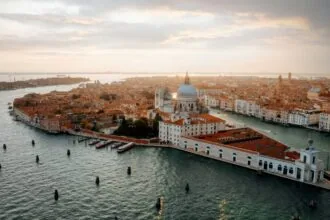
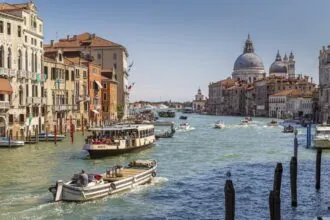
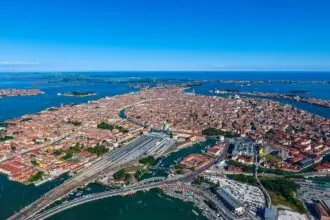
Venice’s train stations make it one of the easiest bases in Italy for a run of genuine mainland excursions. Santa Lucia station sits right at the edge of the historic center, and its mainland twin, Venezia Mestre, often has the same trains stopping just a few minutes earlier or later with far less of a crowd at the platform.
This guide is deliberately about the mainland: Verona, Padua, Vicenza, Bologna, Ferrara, Trieste and the Dolomites, all reachable by train or coach without a boat in sight. The lagoon islands of Murano, Burano and Torcello get their own dedicated coverage on our Things to Do in Venice hub, so they are not repeated here.
What follows is an honest split between trips that slot comfortably into a single day and trips that are more of a stretch, the same way we flag Cinque Terre as better suited to an overnight from Milan. Padua, Vicenza and Verona are all straightforward, well-served rail hops that leave time to actually enjoy the destination rather than just tick it off.
Bologna and Trieste push the travel time further, and both reward an early start and a realistic plan for what you will skip. The Dolomites around Cortina d’Ampezzo are the biggest ask of all, a genuinely spectacular landscape that sits roughly three hours each way by coach, which makes it a long day rather than a relaxed one.
Every fare and journey time below was checked against current train operator listings, but Italian rail pricing moves with demand the same way flight prices do, so treat the figures as a realistic guide rather than a fixed quote. Booking a specific train a few days ahead, rather than turning up and buying on the day, is usually where the savings are.
How the Day Trips Compare
The table below lines up all seven destinations side by side, from the fifteen-minute hop to Padua through to the full day that Cortina and the Dolomites demand. Use the “time needed” column as a floor rather than a ceiling: it is easy to spend longer in Verona or Bologna than the minimum listed here.
| Destination | Journey Time | Typical Fare (one way) | Time Needed | Best For |
|---|---|---|---|---|
| Padua | 15 to 25 minutes | €5 to €9 (£4 to £8 / $5 to $10) | Half day | Giotto’s frescoes in the Scrovegni Chapel |
| Vicenza | 30 to 40 minutes | €6 to €10 (£5 to £9 / $6 to $11) | Half day | Palladian architecture and a quieter piazza |
| Verona | 55 minutes to 1 hour 15 | €10 to €16 (£9 to £14 / $11 to $17) | Full day | The Roman Arena and Shakespeare’s setting |
| Ferrara | 50 minutes to 1 hour 15 | €6 to €13 (£5 to £11 / $6 to $14) | Half to full day | Renaissance streets without the crowds |
| Bologna | 1 hour 15 to 1 hour 40 | €13 to €40 (£11 to £35 / $14 to $43) | Full day | Food, towers and porticoed streets |
| Trieste | 1 hour 35 to 2 hours 5 | €9 to €30 (£8 to £26 / $10 to $32) | Full day, ambitious | Habsburg seafront and coffeehouse culture |
| Cortina / Dolomites | Around 3 hours each way by coach | €9 to €30 (£8 to £26 / $10 to $32) | Full day, genuine stretch | Alpine scenery, better as an overnight |
Padua: The Closest Cultural Heavyweight
Padua is the easiest possible introduction to mainland day trips, and its main draw is one of the most important fresco cycles in Italian art. The Scrovegni Chapel houses Giotto’s early fourteenth century cycle depicting the lives of Mary and Christ, painted with a naturalism that genuinely changed the direction of Western painting.
Visiting is not casual: entry is by timed slot only, with no same-day bookings, and every visitor first spends around fifteen minutes in a climate-controlled anteroom before the doors to the chapel itself open. A full-price ticket runs to €15 plus a €1 booking fee, so budget around €16 (£14/$17) and reserve online at least a day ahead, ideally longer in peak season.
Beyond the chapel, Padua rewards a slow wander rather than a checklist. The Basilica of St Anthony is free to enter and holds the saint’s tomb along with bronze reliefs by Donatello, while Prato della Valle, one of the largest squares in Europe, makes a pleasant spot to sit once the museum-going is done.
Trains from Venice are frequent, with dozens running each day and the fastest regionale services covering the distance in around fifteen minutes. This is genuinely one of those trips where the travel barely counts as travel, so it pairs naturally as a half day if you want to combine it with Vicenza or simply return to Venice for the evening.
Because the chapel booking window can fill up on weekends and in summer, it is worth reserving your slot first before you fix the rest of your day around it. Once that is locked in, everything else in Padua can be arranged loosely around it without much risk of missing anything.
Best if you want daily housekeeping and a front desk. Filter by area first, then by price.
Check availabilityBest for longer stays. Whole apartments and houses, so you are not eating out three times a day.
View rentalsBest for double-checking. Runs the same search across several booking sites so you are not leaving money behind.
Compare pricesVicenza: Palladio’s Showcase City
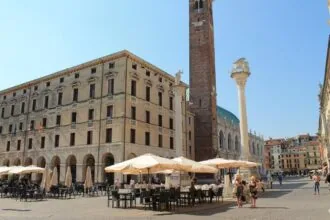
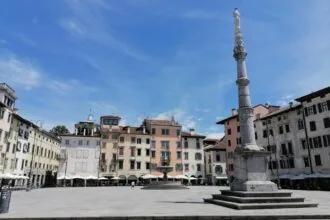
Vicenza is the least visited of the three closest towns, which is precisely its appeal for anyone who has already seen Padua or Verona get busy. The city is essentially an open-air museum of work by Andrea Palladio, the Renaissance architect whose classical style went on to influence buildings from Saint Petersburg to Washington DC.
The centerpiece is the Basilica Palladiana on Piazza dei Signori, a covered loggia that still functions as the city’s civic hall, and the Teatro Olimpico nearby, the oldest surviving indoor theatre in the world with a permanent trompe l’oeil stage set worth the ticket alone.
Outside the historic center, Villa La Rotonda is the villa that most influenced later neoclassical architecture worldwide, though its opening days are limited to weekends from March to November, with a slightly longer Friday to Sunday window from April to October. Standard admission is €15 (£13/$16) and no advance booking is required, which is unusual for a sight this significant.
Trains from Venice run around forty times a day, and the fastest services cover the route in roughly half an hour, making Vicenza just as easy a hop as Padua. It works well either as its own half day or slotted onto a longer day that also takes in Verona, since the two sit on the same line.
The trade-off for Vicenza’s quieter streets is a shorter list of headline sights, so it suits travelers with a genuine interest in architecture more than those chasing a single postcard image. That said, an afternoon spent simply walking the arcaded main street is one of the more relaxed experiences on this list.
Verona: Roman Ruins and Shakespeare’s Setting
Verona is the day trip most people picture when they think of mainland Italy near Venice, and it earns that reputation on the strength of the Arena di Verona, a first-century Roman amphitheatre that still hosts a summer opera season and remains one of the best-preserved of its kind anywhere in the world. Outside performance evenings, standard daytime admission runs to around €10 (£9/$11), and the amphitheatre is open Tuesday to Sunday from 9am to 7pm.
The city’s other famous draw, Juliet’s House and its courtyard balcony, is worth being honest about: the balcony itself is a twentieth-century addition with no real connection to Shakespeare’s fictional characters, and the courtyard can feel more like a photo queue than a historic site. It is free to look at from the courtyard, so it is worth a quick detour rather than a dedicated stop.
More rewarding are Piazza delle Erbe, Verona’s ancient market square lined with frescoed buildings, and Castelvecchio, the riverside fortress built by the ruling Della Scala family that now houses a well-regarded art museum. Both sit within easy walking distance of the arena and each other.
Trains run frequently throughout the day, with the fastest high-speed services covering the route in under an hour and regionale trains taking closer to an hour and a quarter. A one-way fare typically falls between €10 and €16 (£9 to £14/$11 to $17) depending on train type and how far ahead you book.
Because Verona rewards unhurried wandering as much as sightseeing, it is the one destination on this list that genuinely fills a full day without feeling rushed. Arriving on an early train and building in time for a long lunch in one of the squares tends to work better than trying to see everything on a tight schedule.
GetYourGuide – Venice: Day Trip to Verona by Train with Guided Walking Tour
Ferrara: The Quiet Renaissance City
Ferrara is the least famous name on this list, and that is exactly why it tends to surprise people who make the trip. The Este Castle, a moated fortress right in the city center, was home to the ruling Este family for centuries and its dungeons, courtyards and frescoed apartments are all open to visitors.
The city was one of the first in Europe to be deliberately planned rather than grow organically, and UNESCO recognized the resulting Renaissance street layout as a World Heritage Site. Ferrara’s cathedral, with its striking pink and white marble facade, anchors the medieval core just a short walk from the castle.
What sets Ferrara apart from the busier stops on this list is its bicycle culture: locals cycle everywhere, the streets are largely flat, and several rental points near the station make it easy to cover more ground than on foot. It is genuinely one of the most bike-friendly cities in Italy.
Journey times from Venice run between around fifty minutes and just over an hour, with fares typically landing between €6 and €13 (£5 to £11/$6 to $14) depending on the service. Some connections are direct while others involve a short change, so it is worth checking the specific train rather than assuming a straight run.
Ferrara suits travelers who have already done the bigger names and want somewhere calmer, or anyone who simply prefers wandering without crowds. A half day covers the castle and cathedral comfortably, while a full day leaves room to cycle out along the old city walls.
Bologna: Food, Towers and Porticoed Streets
Bologna sits further from Venice than the previous stops, but direct high-speed trains make it workable as a genuine, if full, day out. The city’s food reputation is well earned, and wandering the Quadrilatero market district for lunch is arguably as good a reason to come as any single monument.
Piazza Maggiore is the obvious anchor, flanked by the unfinished facade of the Basilica di San Petronio, one of the largest churches in the world, and the porticoed streets radiating out from it give Bologna over forty kilometers of covered walkways, useful in both summer heat and winter rain.
The Two Towers are the city’s other emblem, though only one is currently open to visitors: the Asinelli Tower can be climbed via a timed, online-only ticket costing around €5 (£4/$5), while its shorter neighbor, the Garisenda Tower, has been fenced off since 2023 while engineers assess its stability.
Direct trains from Venice take between roughly an hour and fifteen minutes on the fastest Frecciarossa and Italo services and around an hour and forty minutes on slower connections. Fares vary widely with how far ahead you book, from around €13 (£11/$14) on an advance regional or Intercity fare up to €40 (£35/$43) or more for a same-day high-speed ticket.
Given the travel time in both directions, Bologna works best with an early outbound train and a realistic acceptance that you will see the historic center well rather than everything the wider city offers. It rewards travelers who prioritize food and atmosphere over trying to tick off every sight.
Trieste: An Ambitious Reach to the Adriatic’s Edge
Trieste is the most honest stretch on this list among the rail-based options, sitting close to the Slovenian border and carrying a distinctly Habsburg feel left over from its decades as the Austro-Hungarian Empire’s main port. Piazza Unità d’Italia, one of Europe’s largest seafront squares, opens straight onto the Adriatic and is worth the journey on its own.
The city’s coffeehouse culture runs deep, a legacy of its trading past, and historic cafes like Caffè San Marco still serve the kind of unhurried coffee culture that has largely vanished from more touristed Italian cities. Miramare Castle, a nineteenth-century seafront residence a short bus ride from the center, adds a further reason to stay if time allows.
The honest catch is travel time: the fastest high-speed trains take around an hour and thirty-five minutes, but the average journey runs closer to two hours, and that is before factoring in the return leg. A round trip can easily consume four hours or more of a single day purely in transit.
Fares range from around €9 (£8/$10) on a well-booked advance ticket up to €30 (£26/$32) or higher for a flexible same-day fare on the fastest services. With roughly twenty-five trains a day on the route, there is enough frequency to build a workable schedule even with a late start.
Trieste comfortably fills a full day if you commit to an early departure and accept that Miramare Castle may need to be traded off against extra time in the old town. It is a rewarding trip, but one better suited to travelers who are comfortable spending a large chunk of the day simply on trains. For a fuller look at what to prioritize once there, our separate Trieste Things to Do guide covers Piazza Unità, Miramare Castle and the city’s historic cafes in more depth.
The Dolomites and Cortina d’Ampezzo: A Genuine Stretch
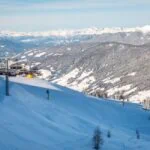
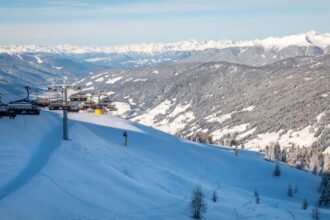
Cortina d’Ampezzo and the surrounding Dolomites are the most spectacular scenery within reach of Venice, and also the biggest ask on this list. There is no direct rail line into the mountains, so the standard route is a coach, run by operators including ATVO, taking around three hours each way from Piazzale Roma or Venice’s airport.
That means a round trip of roughly six hours purely in transit, out of a day that only has so many daylight hours to give. It is the same trade-off we flag for Cinque Terre as a day trip from Milan: technically possible, but an overnight in Cortina turns a rushed dash into an actual mountain break.
For those still set on a single day, the reward is real: jagged limestone peaks, alpine lakes and hiking trails that feel entirely disconnected from Venice’s canals, all within a town that hosted the 1956 Winter Olympics and still carries that alpine-resort polish. Coach fares typically start from around €9 (£8/$10) one way on standard scheduled services booked ahead, rising well past €25 (£22/$27) for last-minute or premium seating.
Anyone attempting this as a day trip should build the schedule around the coach timetable first, since services run only a handful of times daily and missing the return leg is a genuinely expensive mistake to make in a mountain town. Checking the exact departure points at Piazzale Roma, Mestre and Venice’s airport in advance saves confusion on the morning itself.
If your schedule allows even one night away, splitting this into an overnight rather than a single exhausting day will let you actually enjoy the mountains rather than mostly experience them through a coach window. This is the one destination on the whole page where we would genuinely recommend staying over if you can.
Best for long or awkward journeys. Builds one itinerary out of separate flights.
View flightsBest for short trips. Install the eSIM at home and arrive with working data, no shop queue.
Browse eSIMsBest when public transport has stopped, or when you are travelling with children and bags.
Book a transferUsing a Trenitalia Pass or Italia in Tour Pass for Day Trips
Anyone stacking up several of Padua, Vicenza, Verona, Ferrara, Bologna and Trieste into one Venice stay is effectively buying that many separate train tickets. That is exactly where a multi-journey rail pass can genuinely pay for itself.
The two passes work in different ways, so the right one depends on which towns you want to reach. The Trenitalia Pass sells a fixed number of journeys, either 3, 4, 7 or 10, used within a set window once your first trip is booked.
That structure suits the longer hops on this list, since high-speed fares to Bologna and Trieste climb fastest the closer you book. It is not valid on Italo trains, so it only pays off on Trenitalia’s own Frecciarossa and Intercity services.
The Italia in Tour Pass works differently, giving unlimited regional and Regionale Veloce travel for three or five consecutive days from around €35 (£30/$40). That suits Padua, Vicenza and Ferrara well, since none of those trips need a high-speed ticket.
It excludes Frecciarossa, Intercity and Italo services entirely, which is exactly where the Trenitalia Pass earns its keep instead. The choice really comes down to whether your trips are short regional hops or the longer stretches to Bologna and Trieste.
For one or two day trips, an ordinary ticket booked a few days ahead is usually cheaper than either pass. Once a stay stretches to three or four mainland excursions, our Trenitalia Pass Italy guide and Italia in Tour Pass guide break down full pricing for both.
Planning Your Day Trip from Venice
Two Venice stations serve mainland trains, and choosing the right one can save real time. Venezia Santa Lucia sits inside the historic center and is the obvious choice if you are staying on the islands, while Venezia Mestre on the mainland is often quicker to reach if your hotel is near the airport or you simply want to avoid the vaporetto queue with a morning train to catch.
Trenitalia and Italo both run the high-speed and regional services covered in this guide, and checking exact times and fares directly through Trenitalia’s official timetable before you travel is the most reliable way to confirm what is actually running that day. Regional trains, marked Regionale or Regionale Veloce, are cheaper and fine for short hops like Padua and Vicenza, while the longer runs to Bologna and Trieste are far more comfortable on a Frecciarossa or Italo high-speed service.
Buying tickets a few days ahead rather than on the morning of travel tends to unlock noticeably lower fares on the high-speed routes, since pricing works on a dynamic, flight-style model. Regional train tickets, by contrast, are fixed-price and can be bought right up until departure without a price penalty.
Left luggage is available at both Santa Lucia and Mestre stations, which is worth knowing if you are day-tripping on the same day as checking out of accommodation. It removes the need to drag bags around Verona or Bologna for the whole day.
Finally, always check the platform number shown on the departure boards rather than relying on what a ticket said when you booked it, since Italian stations do shift platforms at short notice. Arriving ten minutes before departure gives enough buffer to adjust without any real stress.

Rupert’s Handy Travel Tips
I’ve hopped on and off enough mainland trains from Venice to know that a little planning turns a rushed dash into a proper day out, so here’s what I’d tell a friend before they head for the platform.
- Book the Scrovegni Chapel first: if Padua is on your list, reserve your timed entry before planning anything else, since slots really do sell out on weekends.
- Pick Mestre over Santa Lucia when it saves time: if your hotel is near the airport or on the mainland side, boarding at Venezia Mestre avoids an unnecessary trip into the historic center first.
- Book high-speed tickets a few days ahead: Frecciarossa and Italo fares to Bologna and Trieste climb fast closer to departure, while regional tickets stay the same price whenever you buy them.
- Don’t force the Dolomites into one day if you can help it: the six-hour round trip by coach is real, and one night in Cortina turns an exhausting dash into an actual mountain escape.
- Skip Juliet’s balcony if you’re short on time in Verona: it’s a modern addition with no real Shakespeare connection, so the Arena and Piazza delle Erbe are the better use of a limited afternoon.
Want to meet the reindeer behind our travel tips? Find out more in our page Who is Rupert?.



Frequently Asked Questions
Which day trip from Venice is easiest for a first-timer?
Padua is the simplest option, with a journey of around fifteen minutes each way and enough to see in half a day, including one of the most important fresco cycles in Italian art.
Can I visit two mainland towns in one day?
Yes, Padua and Vicenza sit on the same rail line and are both short hops from Venice, so combining them into one day is realistic if you start early and keep each stop focused.
Is the Dolomites day trip actually worth attempting?
It is worth doing if you genuinely cannot manage an overnight, but the six-hour round trip by coach means an actual overnight stay in Cortina will give you a far better experience of the mountains.
Do I need to book train tickets in advance?
Regional trains to Padua, Vicenza and Ferrara are fixed-price and can be bought on the day, but high-speed tickets to Verona, Bologna and Trieste get noticeably more expensive the closer you book to departure.
Should I leave from Santa Lucia or Mestre station?
Santa Lucia is more convenient if you are staying in the historic center, while Venezia Mestre can save time if your accommodation is near the airport or mainland side of the city.
Is Juliet’s balcony in Verona worth visiting?
It is free and quick to see from the courtyard, but it is a twentieth-century addition with no genuine link to Shakespeare, so it is better treated as a five-minute detour than a headline sight.
Further Reading
Once the mainland trips are sorted, the rest of a Venice stay tends to come down to what to do inside the city and lagoon itself. We have a dedicated guide to things to do in Venice covering the lagoon islands of Murano, Burano and Torcello along with the city’s own major sights, which pairs naturally with any of the destinations covered above.
Getting around the lagoon by vaporetto works quite differently from mainland trains, so our separate guide to getting around Venice is worth a read before you settle on a day-trip itinerary, particularly if you are weighing up how much time a lagoon detour would cost against a mainland train. Anyone flying in or out should also check our guide to Venice’s airports, since it covers the practical differences between Marco Polo and Treviso that affect how easily you can reach the mainland rail network.
Finally, travelers planning several days in Venice itself, rather than just day trips out of it, should look at our guide to the Venezia Unica City Pass, which bundles transport and museum entry in ways that can make sense alongside the train-based excursions in this guide.
Travelers making the Cortina and Dolomites trip specifically for the skiing rather than a single day out should also look at our dedicated Venice Airport to Ski Resorts guide, which covers the direct coach services to Cortina d’Ampezzo and Alta Badia in far more depth than a single day-trip section can.