Reviewed by our editorial team Published
Venice packs an extraordinary amount of sightseeing into a very small footprint, and most first-time visitors end up paying for museum tickets, church admission, and vaporetto rides as three separate transactions without ever realising a single card bundles all of it together. The Venezia Unica City Pass is the official all-in-one pass for the city, combining entry to the Doge’s Palace, three other civic museums, sixteen churches, and unlimited public transport into one purchase with a fixed validity window.
It comes in three duration tiers rather than a fixed number of attractions, so the choice is really about how long you plan to keep moving around the city rather than how many sights you want to tick off. A visitor spending a rushed overnight stop will get very different value from the pass than someone based in Venice for three full days, and the maths genuinely changes depending on which tier is bought.
What makes Venice unusual compared with other Italian city passes is how much confusion surrounds what is and is not included. Plenty of visitors assume the pass gets them into St Mark’s Basilica, and it does not, which causes more frustration at the door than almost any other Venice ticketing mix-up.
This guide sets out exactly what the current Venezia Unica City Pass covers, what it deliberately leaves out, and how the numbers stack up against buying a transport pass, a museum ticket, and a church pass separately. Every price below has been checked against current official sources rather than carried over from an older edition of this guide.
There is also a look at whether Venice has a genuine second competing pass in the way that some other Italian cities do. The short answer is that the landscape is lopsided rather than a straight two-way choice, and that distinction matters for anyone trying to decide where to spend their money.
What the Venezia Unica City Pass includes
The core of the pass is entry to the Doge’s Palace, including the interior walk across the Bridge of Sighs, which is one of the most photographed but least understood parts of a Doge’s Palace visit. The same ticket also covers Museo Correr, the National Archaeological Museum, and the Monumental Rooms of the Marciana National Library, all of which sit around St Mark’s Square and are normally sold together as a single combined museum ticket anyway.
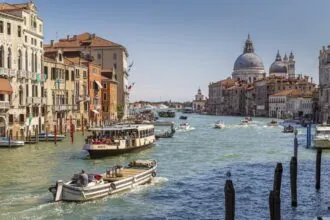
Public transport is where the pass earns its keep for most travellers, since it grants unlimited rides on the ACTV network of waterbuses and buses for the entire validity period, starting from first use rather than from midnight. That covers the vaporetto lines along the Grand Canal, connections out to Murano, Burano, and the Lido, and the bus link between Piazzale Roma and Venezia Mestre.
The pass also folds in the Chorus Pass, a separate scheme run by the Chorus Association that gives access to sixteen historic churches across the city, including well-known stops like Santa Maria Gloriosa dei Frari and Santa Maria della Salute. On its own the Chorus Pass is a modest add-on price, but bundling it in saves a second purchase and a second queue.
In practice the pass works as a QR-coded voucher that gets converted into individual tickets at the first point of use, whether that is a vaporetto stop validator or a museum ticket desk. There is no physical card to collect in advance, and no need to visit a Venezia Unica point of sale before arriving, which makes the activation process simpler than some city cards elsewhere in Italy.
Because the museum, church, and transport elements are normally sold as three unrelated products, the City Pass is really a convenience bundle as much as a discount. Whether it actually saves money comes down to how many rides and how many of the included sights a given visitor would use anyway, which the maths section further down works through properly.
What the pass does not cover
The single biggest point of confusion is St Mark’s Basilica. Entry to the Basilica itself is free because it remains a working church, but the paid areas inside, the Museum, the Treasury, and the Golden Altarpiece, are run separately by the Basilica’s own administration and are not part of the Venezia Unica City Pass under any tier.
Anyone hoping to skip the Basilica queue on the strength of the City Pass alone will be turned away at that specific ticket line, even though the same pass works perfectly well at the Doge’s Palace a few steps away. It is worth booking a separate timed Basilica ticket in advance if that visit matters, rather than assuming the City Pass covers it.
The pass also stops well short of anything involving a private boat. Gondola rides, private water taxis, and organised boat tours out on the lagoon are all excluded, since these are run by independent operators and cooperatives rather than by ACTV or the city’s museum system.
Airport transfers sit in a slightly different category again. The standard City Pass does not include a ride on the Alilaguna airport water bus, and travellers who assume it does are often caught out trying to board at Marco Polo Airport with a pass that simply is not valid on that specific service.
None of these exclusions make the pass a bad product, since transport, museums, and churches were always going to be the realistic core of any citywide bundle. They just need to be understood before arrival so nobody is left arguing at a ticket barrier over something the pass was never designed to cover.
Best for a short trip. Compare rooms by neighbourhood, price and guest rating before you book.
Compare hotelsBest for groups who want one address and separate bedrooms rather than three hotel rooms.
See holiday homesBest for double-checking. Runs the same search across several booking sites so you are not leaving money behind.
Compare pricesVenice City Pass price tiers compared
The Venezia Unica City Pass is sold in three duration tiers for adults, and the price step between them is deliberately shallow, since the extra cost of the longer tiers is mostly covering additional transport rides rather than additional attractions. The table below sets out the current adult pricing, without the optional Alilaguna add-on, alongside what each tier is realistically best suited for.
| Tier | Duration | Adult price | Transport included | Attractions included | Best for |
|---|---|---|---|---|---|
| City Pass 24h | 24 hours | €51 (£44/$59) | Unlimited ACTV waterbuses and buses for 24 hours | Doge’s Palace, Museo Correr, Archaeological Museum, Marciana Library, 16 Chorus churches | A single very packed day, or an overnight stop with one full day either side |
| City Pass 48h | 48 hours | €61 (£52/$70) | Unlimited ACTV waterbuses and buses for 48 hours | Same museums, library and 16 churches as the 24h tier | A short two or three-night city break with two full sightseeing days |
| City Pass 72h | 72 hours | €71 (£61/$82) | Unlimited ACTV waterbuses and buses for 72 hours | Same museums, library and 16 churches as the shorter tiers | A longer stay of four nights or more, or a slower-paced trip with day trips to Murano and Burano |
Because the attraction list stays identical across all three tiers, the decision between them is almost entirely about how many transport rides will actually be taken. Someone based in a hotel a short walk from St Mark’s Square who barely touches a vaporetto is a poor candidate for any tier of the pass, regardless of how many museums they plan to visit.
The wider Venezia Unica museum pass with transport included
Alongside the three duration tiers already compared above, Venezia Unica also lists a separate one-day pass through international booking platforms that pulls in a far longer museum list. It is run directly by Vela Spa, the same body behind the standard City Pass, rather than by an outside reseller.
Where the tiered pass covers four sights, Doge’s Palace, the Correr Museum, the Archaeological Museum and the Marciana Library, this version adds a further eight venues on top. Ca’ Rezzonico, Ca’ Pesaro, Palazzo Mocenigo, the Fortuny Museum, Carlo Goldoni’s house and the Natural History Museum all join the list, alongside the Glass Museum on Murano and the Lace Museum on Burano.
That breadth comes at the cost of the church allowance, since this ticket does not carry the sixteen-church Chorus Pass that every tier of the standard City Pass includes. Public transport on the ACTV network is folded into the price instead, listed at €62.90 (£54/$72) per adult on the booking page checked for this guide.
Doge’s Palace entry is fixed to a single afternoon slot between noon and 6pm on the date chosen, after which the remaining museums can be used within six months of that first visit. St Mark’s Basilica, the campanile, and gondola rides sit outside this pass in exactly the same way as they sit outside every other pass on this page.
This wider option suits a visitor with a genuine interest in Venice’s smaller civic museums rather than just the headline Doge’s Palace visit, someone happy to spend an afternoon in Palazzo Mocenigo’s costume rooms or Ca’ Rezzonico’s furnished apartments. Anyone mainly after a short, practical transport-and-sightseeing combination is still better matched to the standard tiered pass compared earlier in this guide.
A slimmed-down St Mark’s Square ticket without transport
This next listing, also issued by Vela Spa, trims the museum list back down to the same core sights covered by the standard City Pass tiers. It bundles Doge’s Palace with the Correr Museum, the Archaeological Museum and the Marciana Library, then adds two further venues, the Scuola Grande dei Carmini and the Querini Stampalia Foundation.
Unlike the wider museum pass above, public transport is not built into the price by default here. It can be added as an optional extra at checkout, which makes this version closer to a pure museum ticket than a citywide bundle.
Pricing on this listing runs to roughly €44 (£38/$51) per adult before any transport add-on, sitting below the standard tiers precisely because it skips both the automatic transport allowance and the sixteen-church Chorus Pass. It is worth checking the current price at booking, since third-party listings shift more often than the official tiers do.
St Mark’s Basilica, the bell tower, and gondola rides are excluded here in exactly the same way as they are excluded from every other pass covered on this page. That consistency is worth remembering, since none of the four widgets on this page unlock the Basilica’s paid areas.
This ticket suits a visitor staying close to St Mark’s Square who does not expect to use the vaporetto much and would rather add transport separately only on the days it is actually needed. Anyone planning to move around the city regularly on most days is still better served by one of the transport-inclusive tiers covered earlier in this guide.
A third-party museum ticket outside the official Venezia Unica system
This listing comes from a different source altogether. It is sold as the Venice Museum Pass & Doge’s Palace Entrance Ticket through the tour operator Bucintoro Viaggi rather than through Vela Spa, though it draws on the same San Marco museum group as the passes above.
The core inclusion is Doge’s Palace together with the Correr Museum, the Archaeological Museum and the Marciana Library, with the option to add further civic museums at booking, up to around twelve venues on the fuller version. It is a straightforward museum-only ticket, carrying no transport allowance, no church access, and no route into the Basilica at any level.
Pricing on this listing sits at roughly €33 (£28/$38) per adult, the cheapest of the four widgets on this page, though that reflects how narrowly it is scoped. The voucher stays valid for 180 days after it is exchanged in Venice, which gives some flexibility over exactly when the Doge’s Palace visit happens.
Reserved ticket holders skip the general admission queue at the museums involved, though everyone still passes through the same security screening at the door. That skip-the-line element is really the main advantage this version offers over simply buying tickets on arrival.
This option suits a visitor who has already sorted transport and church access separately, whether on foot or with a standalone ACTV card, and just wants the museum side of a Venice trip covered at the lowest price available. It is not a substitute for the tiered City Pass covered earlier, since it leaves out everything beyond the museum circuit itself.
Turbopass Venice again, the alternative pass covered further down this guide
This widget is not a fifth, unrelated option. It is a direct booking link for Turbopass Venice, the same broader alternative pass discussed later in this guide under the heading asking whether Venice has a real alternative to Venezia Unica.
The listing here bundles priority entry to the Doge’s Palace with around twenty further sights, including Ca’ Rezzonico, the Correr Museum, the Archaeological Museum, Palazzo Mocenigo, the Fortuny Museum and Carlo Goldoni’s house, plus a Grand Canal gondola ride and an island tour covering Murano, Burano and Torcello. It also throws in an audio guide for St Mark’s Basilica, with a skip-the-line guided Basilica tour and a public transport ticket both available as optional extras.
This particular booking option is priced at €117 (£101/$135), which sits toward the lower end of the €119.90 to €174.90 range quoted for Turbopass Venice’s standard tiers in the comparison section below. It is worth checking the exact tier and duration at booking, since Turbopass prices move around depending on the length of stay selected.
Booking through this widget only makes sense for the same reasons already set out further down this guide, wanting the gondola ride, the Basilica access, and the island excursions pre-bundled into one purchase. It remains several times the cost of any Venezia Unica City Pass tier and is really answering a different question to the rest of this page.
Anyone reading this mainly for the standard City Pass should treat this widget as a bookmark for later rather than a genuinely new product to weigh up from scratch. It is the exact same Turbopass Venice pass already compared against Venezia Unica in the section below.
Does the Venice City Pass actually pay off
Working out whether the pass earns its price means pricing up the same day using standalone tickets instead. A single ACTV vaporetto ticket currently costs €9.50 (£8/$11) and is valid for 75 minutes, which sounds cheap in isolation but adds up fast once several rides are needed across a day.
ACTV also sells its own standalone transport-only travel cards, priced at €25 (£21/$29) for 24 hours, €35 (£30/$40) for 48 hours, and €45 (£39/$52) for 72 hours. Comparing those figures against the City Pass tiers shows the museum, library, and church bundle is effectively being added on top of the transport pass price for roughly €26 extra across every tier.
The Doge’s Palace, Correr Museum, Archaeological Museum, and Marciana Library are already sold together as a single standalone combined ticket priced at €35 (£30/$40) at the door, or €30 (£26/$34) when booked online at least thirty days ahead. Add a standalone Chorus Pass for the churches at €10 (£9/$11) and the separate total comes to roughly €45 (£39/$52) before a single transport ride is factored in.
Put that against the City Pass 24h tier at €51, and the pass pays for itself once four or five vaporetto rides are added to a museum-and-churches day, which is a realistic total for anyone moving between St Mark’s Square, the Rialto, and back to a hotel or the station. Skip the museums entirely and the sums flip the other way, since the standalone 24-hour transport card alone is a full €26 cheaper than the City Pass.
The longer tiers make the case more comfortably, since the museum and church allowance does not need repeating on day two or three while the transport savings keep compounding. A traveller staying three nights, visiting the Doge’s Palace once, dipping into two or three churches, and riding the vaporetto most days will very likely come out ahead of buying separately, even before counting the convenience of one purchase instead of several queues.
Best for long or awkward journeys. Builds one itinerary out of separate flights.
View flightsBest for short trips. Install the eSIM at home and arrive with working data, no shop queue.
Browse eSIMsBest if you would rather not work out the transport on arrival. Book it now and forget it.
View transfersAdding airport transfers with Alilaguna
Marco Polo Airport sits out on the mainland side of the lagoon, and one of the more scenic ways into the city is the Alilaguna airport water bus, which drops passengers directly at stops around Venice rather than requiring a bus-then-boat combination. It is not part of the standard City Pass tiers by default, which surprises a fair number of travellers who assume all Venice transport is lumped into one product.
A standalone one-way Alilaguna ticket currently runs to €18 (£15/$21), with a round trip priced at €32 (£27/$37), and neither fare is covered by riding on an ordinary ACTV vaporetto ticket or pass. The pass purchase process allows Alilaguna to be added as an extra option alongside the City Pass itself, which is worth doing at the point of booking rather than trying to sort out after landing.
Travellers on a tighter budget sometimes skip Alilaguna altogether in favour of the ATVO airport bus into Piazzale Roma, followed by a vaporetto covered under the City Pass from there. It is a longer, less scenic route, but it avoids paying twice for two different types of water transport on the same trip.
Whichever route gets chosen, it is worth deciding before arrival rather than at the airport arrivals hall, since queues for both Alilaguna and the ATVO bus can be long during peak season. Checking the add-on price at the same time as buying the City Pass itself avoids a second transaction once bags are already in hand.
Is there a real alternative to Venezia Unica
Unlike some Italian cities that have two closely matched passes competing head to head, Venice does not really have a second product built on the same idea. There is no direct rival that bundles the same core museums, the same transport network, and the same church circuit into a comparable duration-based tier system.
The closest thing to a competitor is Turbopass Venice, a digitally delivered attraction bundle that takes a completely different approach. Rather than pricing by transport duration, it sells day-based tiers running from one day up to seven, and its attraction list is considerably wider, folding in St Mark’s Basilica access, a gondola ride, and island excursions to Murano, Burano, and Torcello.
That breadth comes at a very different price point. Turbopass Venice starts at roughly €119.90 (£103/$138) for its base one-day option and rises to around €174.90 (£150/$201) for seven days, with a premium version that adds public transport pushing the range up to about €239.90 (£206/$276) at the top end.
That puts it several times the cost of any Venezia Unica City Pass tier, and it is really answering a different question. It suits someone who wants a gondola ride, the Basilica’s paid areas, and a full day out on the islands all pre-booked in one go, rather than someone who mainly needs museum and transport coverage for a short, practical city stay.
For most visitors the honest conclusion is that Venezia Unica remains the sensible default rather than one half of a genuine two-horse race. It is worth treating Turbopass as a separate, premium add-on-heavy product to consider only if the gondola ride and island tours were already on the itinerary anyway, not as a like-for-like swap.
Buying and activating the pass
The City Pass is bought online through the official Venezia Unica website, and paying at least a few weeks ahead of arrival occasionally unlocks a small discount compared with buying it on the day. Confirmation arrives as a digital voucher, which needs converting into an actual QR-coded ticket before it can be used at a museum turnstile or transport validator.
Conversion happens either at one of the Venezia Unica points of sale scattered around the city, including desks at Piazzale Roma and Marco Polo Airport, or in some cases directly through the confirmation email depending on how the booking was made. It is worth doing this conversion on the first day of the trip rather than leaving it until the validity window has already started ticking down.
Once converted, the transport element activates from the moment of first validation on a vaporetto or bus rather than from midnight, which gives a little flexibility over exactly when the clock starts. Museum and church entries, by contrast, simply need to fall within the overall 24, 48, or 72-hour window.
It is sensible to plan the Doge’s Palace and the other included museums for earlier in the pass window rather than the final hours, since opening times and last-entry cut-offs can eat into a 24-hour pass faster than expected. A little bit of rough scheduling before arrival avoids discovering a museum has already closed for the day on the one window left to use it.
Full details, current prices, and the official purchase page sit on the Venezia Unica website, which is the only official source to buy the genuine pass rather than a resold or bundled third-party version.

Rupert’s Handy Travel Tips
I have watched plenty of visitors argue at the Basilica door over a pass that was never going to work there, so let me save you the same trip up.
- Convert the voucher on day one: do this at a Venezia Unica point of sale as soon as you arrive so the validity window doesn’t start ticking before you’ve actually used anything.
- Book a separate Basilica ticket: the paid areas of St Mark’s Basilica are never included, so sort a timed entry ticket for that specific visit ahead of time.
- Front-load the museums: visit the Doge’s Palace and the other civic museums earlier in your window, since last-entry cut-offs can bite into a shorter pass.
- Decide on Alilaguna before you fly: add it at checkout if you want the airport water bus, since it isn’t part of the standard tiers.
- Skip the pass for a very short, low-transport stay: if you’re barely using the vaporetto, standalone museum and church tickets can work out cheaper than any tier.
Want to meet the reindeer behind our travel tips? Find out more in our page Who is Rupert?.




Frequently asked questions
Does the Venezia Unica City Pass include St Mark’s Basilica?
No. The Basilica itself is free to enter as a working church, but the paid areas inside, including the Museum and Treasury, are run separately and are not covered by any tier of the City Pass.
Which tier of the City Pass should I buy?
Match it to how long you will actually be sightseeing and riding transport rather than the length of your whole trip. A rushed overnight stop suits the 24-hour tier, a typical short break suits 48 hours, and a longer or slower-paced stay suits 72 hours.
Does the pass cover the Alilaguna airport water bus?
Not automatically. Alilaguna can be added as an optional extra when buying the City Pass, or booked separately, but the standard pass tiers are not valid on Alilaguna services.
How many churches does the City Pass give access to?
Sixteen, through the Chorus Pass scheme that is bundled into every tier of the City Pass, covering well-known churches such as Santa Maria Gloriosa dei Frari and Santa Maria della Salute.
Is the City Pass worth it for someone staying right by St Mark’s Square?
It depends on transport use more than location. If you plan to ride the vaporetto only occasionally, standalone museum, church, and transport tickets can end up cheaper than the bundled pass.
Can the City Pass be bought on arrival in Venice?
Yes, it can be bought at Venezia Unica points of sale in the city or at Marco Polo Airport, though booking online in advance is generally simpler and occasionally slightly cheaper.
Further reading
The City Pass only really makes sense alongside a proper understanding of how to move around Venice day to day, since the transport allowance is the part of the bundle that does the most heavy lifting. Our dedicated guide to getting around Venice on public transport goes into vaporetto routes, ticket validation, and how the ACTV network actually fits together beyond what fits into a pricing comparison like this one.
It is also worth planning what to actually do with the museum and church access once the pass is activated, which is where our broader guide to things to do in Venice comes in, alongside a separate guide to Venice’s airports covering the practicalities of Marco Polo and the alternative routes in from Treviso. Anyone with time beyond the city itself should also look at our guide to day trips from Venice, since islands like Murano and Burano sit just outside what the City Pass transport allowance already reaches on a longer tier.
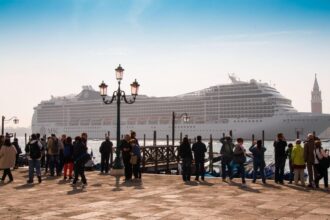
Arriving on a cruise ship instead? Our Venice Cruise Port Guide explains why a short port call rarely leaves enough time to make a multi-day pass worthwhile, and what to expect instead depending on where your ship actually docks.