Reviewed by our editorial team Updated
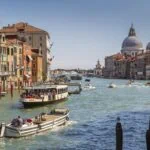
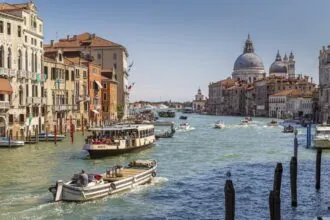
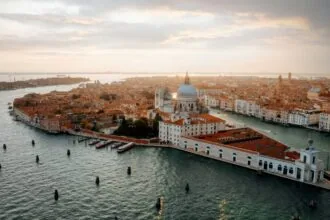
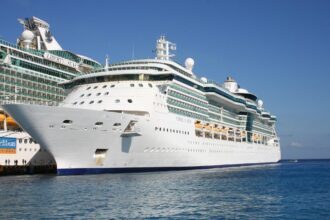
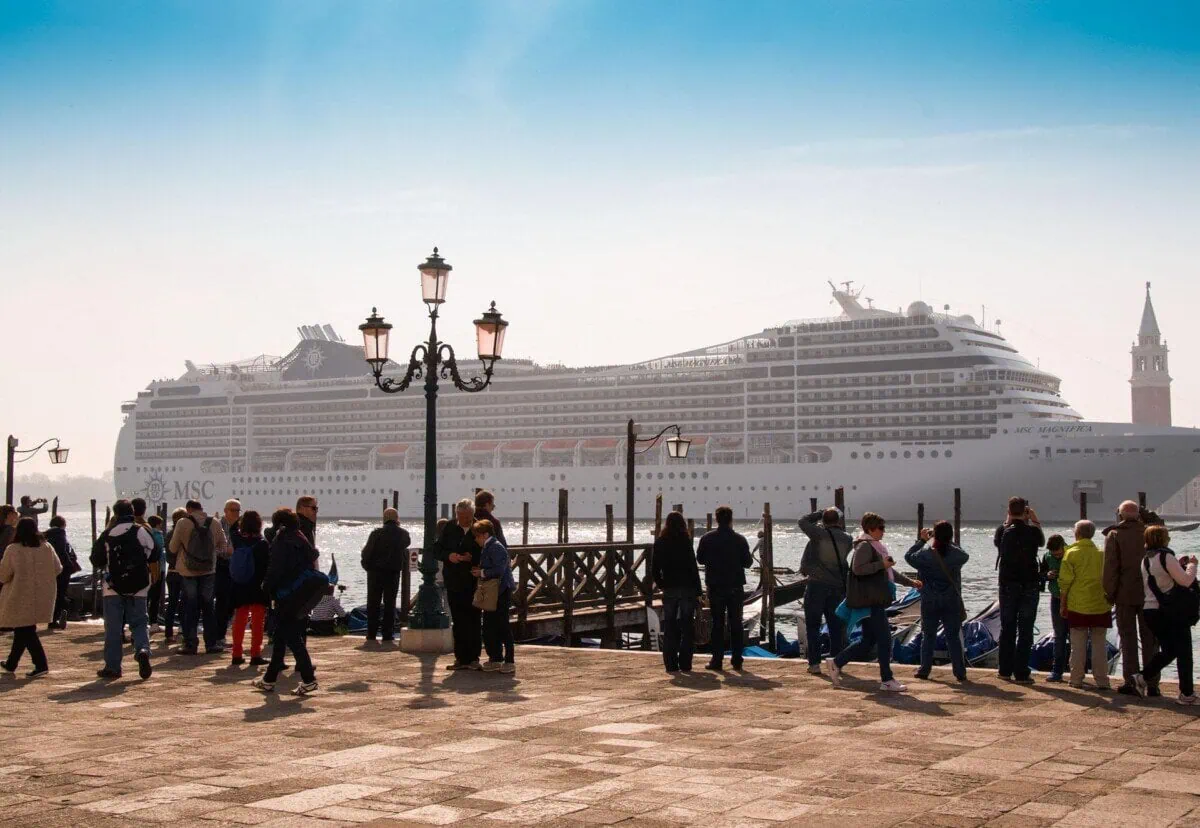
Picture a cruise ship gliding past St Mark’s Square, and you are picturing a scene that mostly no longer happens. Since 1 August 2021, Italian law has banned cruise ships over 25,000 gross tonnes from sailing through the Giudecca Canal and St Mark’s Basin, ending decades of ships passing directly through the historic centre after years of controversy over lagoon damage, wash from the hulls, and a serious collision in 2019. For most passengers today, that single rule changes the entire shape of a Venice port call.
What replaced it is genuinely a split system rather than one straightforward answer, and this is the bit that catches people out. Large ships now dock on the mainland at the industrial port of Marghera, a genuine boat-and-bus journey away from the historic centre, while a shrinking number of smaller ships, mostly under that same 25,000-tonne threshold, can still use the traditional terminal much closer to Piazzale Roma. Which one applies to a specific sailing depends entirely on the ship’s size and the cruise line, not on anything a passenger can control once they have booked.
This guide works through both scenarios honestly rather than assuming everyone is in the same boat, quite literally. It covers where a given ship is actually likely to berth, how passengers get from either terminal into the city, what the practical facilities look like, and how to think about the trade-off between an independent day ashore and a booked ship excursion. Checking a specific cruise line’s own port documentation before travelling is still the single most useful thing anyone can do here, since the exact procedure can shift between lines and seasons even within the same broad rules.
Venice Cruise Arrivals at a Glance
| Ship Type | Typical Docking Point | Getting Into Central Venice | Best For |
|---|---|---|---|
| Large ships (over 25,000 GT) | Porto Marghera, mainland | Shuttle bus or boat, then a short hop into the historic centre | Most mainstream lines, including MSC, Costa and Royal Caribbean sailings that still call at Venice |
| Smaller ships (under 25,000 GT) | San Basilio or the historic terminal near Piazzale Roma | Short walk or a single vaporetto stop | Windstar, SeaDream, Silversea, Scenic and similar smaller-ship lines |
| Unsure which applies | Check your cruise line’s port documentation | Depends on the above | Every passenger, before relying on either scenario |
Why Large Cruise Ships No Longer Sail Into Venice
The rule itself is straightforward even if the politics behind it were not. Italy’s government decree, approved in mid-2021, prohibits vessels over 25,000 gross tonnes from entering the Giudecca Canal and St Mark’s Basin, the two waterways that used to carry the biggest ships within a few hundred metres of the Doge’s Palace. It followed years of campaigning against the sight, wash and pollution of huge ships passing through the lagoon, and a widely reported 2019 incident in which a cruise ship lost control while docking and collided with a smaller tourist boat and the quayside.
The decree revoked large ships’ access to the Marittima passenger terminal, the long-established cruise facility near Piazzale Roma that had handled Venice’s cruise trade for generations, at least for anything above that tonnage threshold. Venezia Terminal Passeggeri, the company that has long managed the city’s cruise terminals, publicly opposed the change at the time, arguing it went further than necessary and effectively excluded even some genuinely small luxury vessels alongside the giants it was aimed at.
The practical result has been a genuine reshuffling of Northern Adriatic cruise traffic rather than a simple relocation. Some lines redirected large ships to the mainland dock covered below, while others adjusted itineraries entirely, substituting a call at Trieste or Ravenna and running Venice as a shuttle-based excursion from there instead of a genuine port call. Anyone whose itinerary lists Venice specifically should still confirm which of these arrangements actually applies to their sailing.
Best for two or three nights. The widest choice of rooms, with filters for free cancellation and included breakfast.
View staysBest for longer stays. Whole apartments and houses, so you are not eating out three times a day.
View rentalsBest for double-checking. Runs the same search across several booking sites so you are not leaving money behind.
Compare pricesPorto Marghera: Where Most Big Ships Dock Now
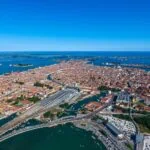
Porto Marghera is Venice’s industrial mainland port, a working cargo and refinery harbour rather than a purpose-built cruise terminal, and it is where the bulk of large-ship calls have been redirected since the ban. It sits a genuine distance from the historic centre, on the same stretch of mainland as Mestre, and passengers should not expect anything resembling the postcard approach that used to sail past St Mark’s Square.
How embarkation actually works here varies a little between cruise lines, and this is worth understanding rather than assuming one fixed process. On many sailings, passengers still check in at the historic Stazione Marittima terminal building near Piazzale Roma, the same complex that has processed Venice’s cruise passengers for decades, before being shuttled onward by bus or boat to the ship’s actual berth at Marghera. On others, particularly newer homeport arrangements for lines such as MSC, boarding happens more directly at or near Marghera itself, with a separate shuttle then offered into the city for the day. Both patterns exist in 2026, so the honest advice is to check the specific joining instructions sent by the cruise line rather than assuming either version.
Some major American and luxury lines have publicly pushed back on being routed to Marghera at all, citing concerns over the site’s infrastructure and the maintenance needed on the industrial channel ships must use to reach it. That has meant a genuinely mixed picture across operators, with some sailing lines still adjusting their Venice calls year to year rather than treating Marghera as a settled, permanent solution. Venezia Terminal Passeggeri (VTP), the official body managing the port’s passenger facilities, publishes current terminal information on its own official site, and checking it alongside the cruise line’s documentation is the most reliable way to confirm exactly what a given sailing involves.
Getting From Marghera Into Central Venice
Whichever exact check-in arrangement applies, the practical shape of the journey into Venice from Marghera is broadly consistent. A shuttle service, either a bus or a boat depending on the operator, covers the several kilometres between the mainland dock and the edge of the historic centre, and this leg is typically included in the cruise fare rather than sold as a separate add-on, though it is worth confirming that directly with the specific line.
Most shuttle routes deposit passengers at or near the Stazione Marittima terminal area, which itself sits only a short distance, roughly 500 metres, from Piazzale Roma, the gateway into Venice for road vehicles and the point where the historic centre’s car-free streets genuinely begin. From there, the automated People Mover shuttle train covers the short remaining hop in a few minutes for a modest fare, currently around €1.50 (£1.30/$1.60), or the same stretch is an easy fifteen-minute walk for anyone travelling light.
Once at Piazzale Roma, the rest of central Venice opens up through the same vaporetto water bus network that every other visitor uses, with a standard single ACTV ticket currently priced at €9.50 (£8.25/$10.25). Given the extra shuttle leg on both ends of the day, passengers on a large ship should be realistic about the time this adds. Allowing an hour or more each way between ship and city, on top of the actual sightseeing, is the sensible planning assumption rather than treating Venice as a simple walk-off port call.
Smaller Ships and the Traditional Terminal Near Piazzale Roma
Not every cruise passenger arriving in Venice deals with Marghera at all. Vessels that fall under the 25,000-tonne threshold retain access to terminals genuinely inside the historic centre, and this is where the ban’s exact wording matters most for anyone booked on a smaller ship. Operators including Windstar, SeaDream Yacht Club, Silversea, Scenic and Emerald, along with river-cruise vessels that continue into the lagoon, are the kind of lines most likely to fall into this category.
The main facility for these smaller ships is San Basilio, a quay on the Giudecca Canal a short distance from the main Stazione Marittima basin, alongside the historic terminal itself for vessels that still qualify. Both sit genuinely inside Venice’s car-free centre, which is the single biggest practical difference from a Marghera arrival: there is no mainland shuttle leg to plan around, and check-in happens at the same terminal the ship actually docks at.
Because San Basilio and the historic terminal sit within the lagoon rather than out on the mainland, a passenger stepping off one of these smaller ships is, in practical terms, already in Venice. That single fact makes a genuine difference to how much of a shore day is spent actually sightseeing rather than in transit, and it is worth factoring into any comparison between mainstream and smaller-ship itineraries calling at the city.
Getting From San Basilio Into Central Venice
Arriving at San Basilio or the historic terminal removes most of the transfer question that dominates a Marghera call. Stepping off the gangway puts a passenger directly onto Venice’s own streets, and St Mark’s Square is comfortably within walking distance for anyone happy with a stroll of twenty to forty minutes through the Dorsoduro district, depending on pace and how many wrong turns the city’s tangle of alleys throws up along the way.
For anyone who would rather not walk, the vaporetto water bus network picks up almost immediately outside the terminal, with a connecting service reaching central stops in a matter of minutes rather than requiring the multi-stage shuttle journey a Marghera arrival involves. Land and water taxis are also available directly outside the terminal building for passengers travelling with heavier luggage or limited mobility.
The genuine trade-off for this convenience is that fewer sailings actually qualify. Most large mainstream cruise itineraries will not use San Basilio at all, so this section applies specifically to passengers on smaller ships or river vessels rather than the majority of Venice-bound cruise traffic covered in the sections above. Checking a booking confirmation for the specific terminal name, rather than assuming either scenario, remains the only reliable way to plan around this in advance.
Port Facilities: WiFi, Luggage and Currency
Facilities differ noticeably between Venice’s cruise arrival points, and neither is built to the standard of a purpose-designed modern terminal like some Northern European ports now offer. At Stazione Marittima, the historic terminal complex handling check-in for many sailings, passengers should expect the basics rather than an airport-style experience: seating areas, staffed check-in counters, and taxi ranks immediately outside the terminal buildings for anyone needing a land or water taxi into the city.
Dependable terminal WiFi should not be assumed at either location, and most passengers rely on a local SIM, an eSIM bought in advance, or their phone’s own roaming allowance rather than expecting a strong free connection on the day. Genuine luggage storage at either the Marghera-linked terminals or San Basilio is limited, so anyone extending a stay before boarding or after disembarking is generally better served by the lockers at Venezia Santa Lucia railway station or an independent luggage storage service booked in the city itself.
Italy uses the euro, and card payments are near-universal across Venice, including at vaporetto ticket machines, taxi ranks and every cafe a passenger is likely to pass on a shore day. Carrying a modest amount of cash is still sensible for the occasional cash-only stall or a traghetto crossing, but there is no need to change large sums before travelling, and an ATM is generally reachable within a short walk of either terminal area.
How Much Time You Actually Need Ashore
The honest answer depends heavily on which of the two scenarios above applies, and Venice punishes an itinerary planned without accounting for that difference. A passenger disembarking at San Basilio or the historic terminal is effectively in the city already, so a typical eight-hour port call could realistically deliver six or more hours of genuine sightseeing time once a sensible buffer is left either side of the all-aboard deadline.
A passenger routed through Marghera should plan very differently. Once the shuttle leg is added on both ends of the day, plus the walk or People Mover ride between Stazione Marittima and Piazzale Roma, a chunk of an eight-hour call disappears before any sightseeing even starts. Realistically, this leaves closer to four to five hours of actual time in Venice itself, which is enough for St Mark’s Square, the Doge’s Palace exterior and a walk to the Rialto Bridge, but not enough to comfortably add a lagoon island like Murano or Burano into the same day.
Given that gap, prioritising ruthlessly matters more in Venice than in many other port cities. Deciding in advance whether the priority is St Mark’s Square, a specific museum, or simply the experience of walking the canals, rather than trying to do all three on a Marghera-routed call, tends to produce a far less rushed and more satisfying day than attempting a full checklist against a tight shuttle-dependent clock.
Best for long or awkward journeys. Builds one itinerary out of separate flights.
View flightsBest for anyone whose home plan charges by the megabyte abroad. Pay a fixed price up front.
Check eSIMsBest if you would rather not work out the transport on arrival. Book it now and forget it.
View transfersIndependent Sightseeing or a Ship-Organised Excursion
Venice is one of the easier European cruise calls to do entirely independently, since the historic centre is compact, well signposted and genuinely walkable once a passenger reaches it, regardless of which terminal they started from. For anyone routed through San Basilio or the historic terminal, going it alone is a straightforward default: step off the ship, walk or hop on a vaporetto, and start sightseeing without needing to coordinate around anyone else’s schedule, using our Things to Do in Venice guide to decide what genuinely earns a place in a tight port-call day.
A ship-organised excursion earns its place mainly for passengers routed through Marghera who would rather not manage the shuttle-and-People-Mover logistics themselves, or for anyone wanting a guided introduction to the city’s history on a first visit. Bundling transport and a guide into one booking removes the planning entirely, at a price premium, and it also guarantees a return to the ship on time, which matters more on a Marghera call than almost anywhere else in this guide, given how much of the day is genuinely dependent on shuttle timing.
A reasonable middle ground for confident travellers is booking a private, pre-arranged transfer from the ship into the city rather than either extreme, then exploring independently once there. This works particularly well for a small group splitting the cost, and it avoids both the ship excursion’s price and the uncertainty of working out a same-day shuttle schedule from scratch on arrival.
Practical Tips for a One Day Call in Venice
The single most important habit on any Venice port call is treating the all-aboard time as immovable, particularly on a Marghera-routed sailing where the return journey depends on a shuttle rather than simply walking back to a gangway. Building in a genuine buffer of at least an hour before that deadline, rather than cutting it fine on the last shuttle of the day, avoids the single worst outcome of any cruise call.
Comfortable, flat, waterproof-friendly shoes matter more here than in most cities, since Venice is entirely cobbled and bridged, and there is a genuine chance of encountering acqua alta, seasonal high water, in the low-lying parts of the city during autumn and winter port calls. St Mark’s Square floods faster and more often than almost anywhere else in the city, so checking a same-day forecast is worth the thirty seconds it takes.
Booking timed entry for St Mark’s Basilica or the Doge’s Palace in advance, where a shore day allows it, saves real time against queues that can eat into an already tight Marghera-routed schedule. Finally, keeping a note of the terminal name from the booking confirmation, and travelling with a screenshot of the return shuttle timetable rather than relying on memory or patchy signal in the city, removes one more source of stress from an otherwise straightforward day.

Rupert’s Handy Travel Tips
Sailing into Venice is genuinely different from almost any other cruise call, so here’s what I’d want to know before the gangway comes down:
- Check your terminal before you plan anything else: your booking confirmation or joining instructions should name Marghera, San Basilio or the historic terminal, and everything else in your day depends on that answer.
- Don’t assume a walk-off arrival if you’re on a large ship: a Marghera call almost always involves a shuttle bus or boat before you reach anything resembling central Venice.
- Screenshot your return shuttle time: phone signal can be patchy in the back streets, and a saved timetable beats trying to remember it under pressure.
- Pack shoes that can handle a wet cobblestone, not just a dry one: acqua alta can catch out an autumn or winter call with no warning at all.
- Prioritise one or two sights rather than a full checklist: a Marghera-routed day genuinely has less sightseeing time than the shore excursion brochure might suggest.
- Confirm your excursion’s meeting point matches your actual terminal: a ship-booked tour is built around where your specific ship is docking, so it will already account for the transfer, unlike a third-party tour booked independently.
Want to meet the reindeer behind our travel tips? Find out more in our page Who is Rupert?.




Frequently Asked Questions About the Venice Cruise Port
Do all cruise ships dock right in Venice’s historic centre?
No. Since August 2021, ships over 25,000 gross tonnes have been banned from the Giudecca Canal and St Mark’s Basin and are redirected to the mainland port of Marghera, while smaller ships can still use terminals inside the historic centre.
Is Porto Marghera within walking distance of central Venice?
No, Marghera is a mainland industrial port several kilometres from the historic centre, reached by a shuttle bus or boat rather than on foot, with a further hop from Piazzale Roma into the city itself.
How do I know if my ship will dock at Marghera or the traditional terminal?
Check your cruise line’s own joining instructions or port information for your specific sailing, since this depends on your ship’s tonnage and the operator rather than anything listed generically online.
Is the shuttle from Marghera included in my cruise fare?
It typically is on most sailings, since it forms part of getting passengers between the ship and the check-in terminal, but it is worth confirming directly with your specific cruise line rather than assuming.
Can I book my own private transfer instead of using the ship’s shuttle?
For the transfer between the ship’s berth and the check-in terminal, most passengers use the included shuttle, but a private transfer from the terminal area into the wider city, or for onward travel, is entirely possible to arrange separately.
Should I book a shore excursion for Venice or explore independently?
Venice is genuinely manageable independently, especially for smaller-ship passengers arriving inside the historic centre, though a ship excursion can simplify the day considerably for anyone routed through Marghera who would rather not manage shuttle timing themselves.
Is there WiFi at Venice’s cruise terminals?
Dependable free WiFi should not be assumed at either the Marghera-linked terminals or San Basilio, so most passengers rely on a local SIM, an eSIM or their own roaming allowance instead.
Why did Venice ban large cruise ships in the first place?
The 2021 decree followed years of concern over ship wash damaging the lagoon, pollution and overtourism, and it came shortly after a widely reported 2019 collision involving a cruise ship at the old Marittima terminal.
Further Reading
Once ashore, whichever terminal your ship actually used, our guide to Things to Do in Venice pulls together the sights genuinely worth prioritising on a tight port-call day, from St Mark’s Square to the quieter corners of Dorsoduro. For anyone whose shuttle drops them near Piazzale Roma with plenty of walking still ahead, our Venice Public Transport guide explains the vaporetto network, ticket prices and when a water taxi is worth the extra cost.
A cruise port call is rarely long enough to justify a multi-day pass, but anyone extending their trip into a longer stay either side of the sailing should also look at our Venice City Pass guide, which breaks down whether the Venezia Unica bundle actually pays off against buying transport and museum entry separately.