Reviewed by our editorial team Updated
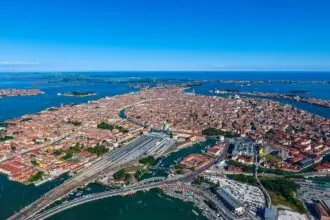
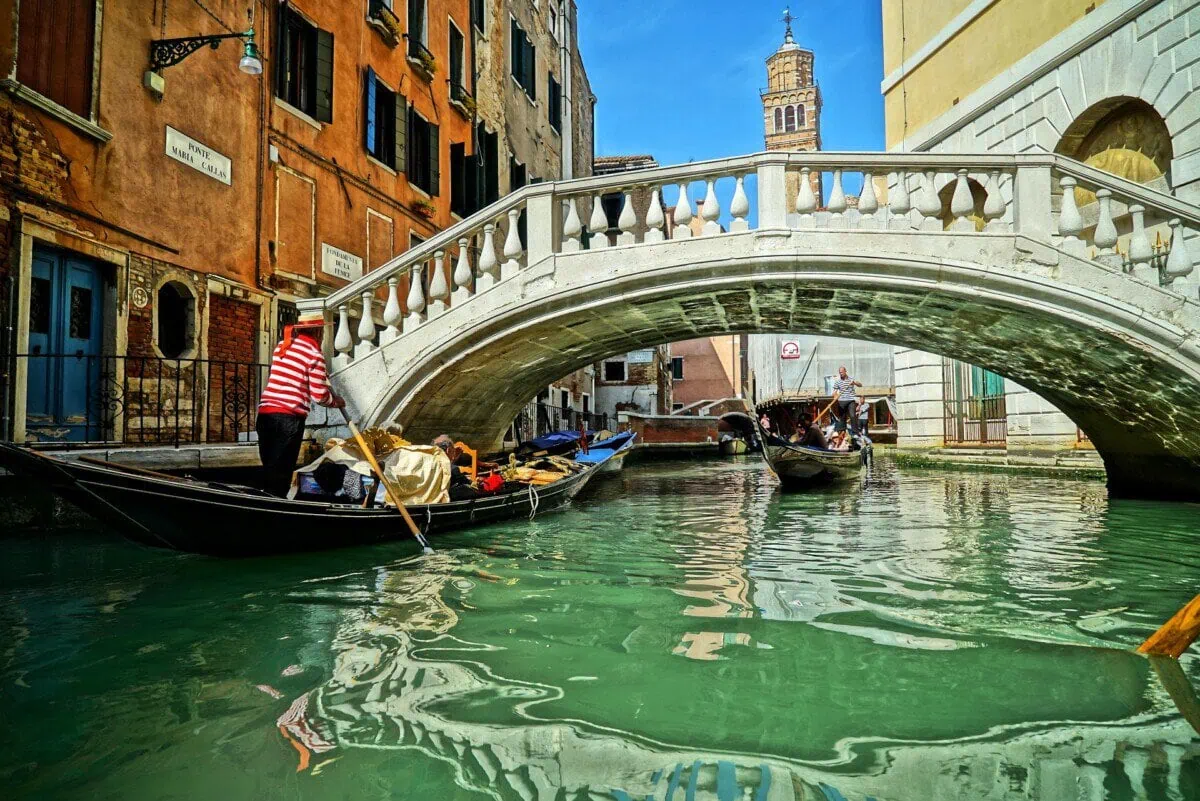
Venice is unlike anywhere else a traveller is likely to go, a city built on more than a hundred small islands and threaded together by canals instead of roads. There are no cars, no motorbikes and no bicycles inside the historic centre, and that single fact changes the pace of everything: getting somewhere means walking over a bridge, hopping on a vaporetto water bus, or gliding past in a gondola. The result is a place that still feels genuinely strange and beautiful even after a thousand photographs of it have already crossed your screen.
This guide works through Venice’s genuine highlights rather than a shortlist of the obvious few. St Mark’s Square and the Doge’s Palace anchor the city’s political and religious history, the Grand Canal is best experienced from the water rather than just admired from a bridge, and the lagoon islands of Murano, Burano and Torcello each offer a completely different pace once the crowds of the main city thin out. Art lovers have the Peggy Guggenheim Collection and the Gallerie dell’Accademia, and quieter corners like Campo Santa Margherita and the Lido show a side of the city that has nothing to do with souvenir masks.
A few practical notes apply across almost everything below. Venice is a genuinely popular destination, so booking timed entry in advance matters far more here than in most cities, particularly for St Mark’s Basilica and the Doge’s Palace in the summer months. Comfortable, flat shoes matter more than anything stylish, since most of the city is cobbled, bridged and occasionally under a few centimetres of water during acqua alta season in autumn and winter.
Worth noting for anyone planning around it: the day-tripper access fee that Venice trialled on selected peak dates in spring and summer 2026 is not currently in effect, though the scheme could return in a future season, so it is worth double-checking the city’s own booking portal before travelling. The sections below cover what each attraction actually involves, roughly how long to allow, and what it costs, so a first visit or a return trip can be planned properly rather than guessed at.
What to Expect Before You Go
Venice rewards planning more than most cities, and knowing what to expect first changes the visit considerably. The day-tripper entry charge trialled through the 2026 season, officially the Contributo di Accesso, ended on 27 July 2026 and is not currently in effect, though the city could reintroduce it in future.
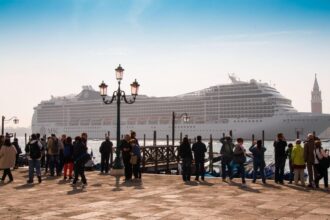
Crowds are the more constant reality, and St Mark’s Square and the Rialto Bridge fill to a standstill by mid-morning through spring and summer, worse again on cruise-ship days. Arriving before 9am or after 5pm at the headline sights makes a real difference.
Venice is also a genuinely physical city, built across small islands connected by stepped bridges rather than flat streets, with no way to avoid them on foot. Only a handful of bridges have ramps, so anyone with limited mobility should research routes carefully rather than assume a step-free path exists.
The vaporetto network adds its own learning curve, and a popular stop can mean a crowded wait at peak times, with boats running less often than a city metro and standing room only once full. Building extra time into a day’s plan avoids frustration at the pontoon.
Public toilets are easy enough to find, with paid facilities run by the city’s sanitation operator at Piazzale Roma, Rialto, St Mark’s Square, the train station and the main lagoon islands, typically around €1.50 (£1.30/$1.65) a visit. Anyone holding a ticket to a major museum can usually use its toilets for free instead.
All of this points the same way: booking ahead matters here more than in most cities, whether that’s timed entry to the Basilica or Doge’s Palace, accommodation booked before peak season pushes prices up, or knowing which vaporetto line to use. A little advance planning makes for a noticeably smoother trip.
Venice Attractions at a Glance
| Attraction | Time to Allow | Best For |
|---|---|---|
| St Mark’s Square and Basilica | 1.5-2 hours | Mosaics, history, first-time visitors |
| Doge’s Palace and the Bridge of Sighs | 2-3 hours | Venetian history, art, architecture |
| St Mark’s Campanile | 30-45 minutes | Panoramic views over the lagoon |
| A Gondola Ride Past the Bridge of Sighs | 45 minutes | A shared, lower-cost gondola outing |
| Rialto Bridge and Market | 1-1.5 hours | Local life, food, morning visits |
| Scala Contarini del Bovolo | 45 minutes | A hidden spiral staircase and rooftop view |
| The Grand Canal | 30 minutes-1 hour | Gondola rides, vaporetto sightseeing |
| Grand Canal Boat Tour | 1 hour | Guided sightseeing without a private hire |
| Peggy Guggenheim Collection | 1.5-2 hours | Modern art on the Grand Canal |
| Leonardo da Vinci Museum | 1-1.5 hours | Interactive inventions, good for families |
| Gallerie dell’Accademia | 1.5-2 hours | Venetian Renaissance masterpieces |
| Galleon Dinner Cruise | 3 hours | An evening lagoon cruise with dinner |
| Ca’ Rezzonico | 1-1.5 hours | 18th-century Venetian interiors |
| Natural History Museum | 1-1.5 hours | Dinosaurs and Adriatic marine life |
| Santa Maria della Salute | 30-45 minutes | Baroque architecture, free entry |
| San Giorgio Maggiore | 45 minutes-1 hour | Quieter lagoon views, less crowded tower |
| Basilica dei Frari | 45 minutes-1 hour | Titian’s Assumption and Renaissance art |
| The Jewish Ghetto | 1-1.5 hours | History, synagogues, quiet squares |
| Teatro La Fenice | 45 minutes-1 hour | Opera history, ornate interiors |
| The Arsenale and Naval History Museum | 1-1.5 hours | Maritime history, model ships |
| Murano | 2-3 hours | Glassblowing demonstrations, shopping |
| Burano | 2-3 hours | Colourful houses, lace, photography |
| Torcello | 1.5-2 hours | Escaping the crowds, mosaics |
| The Lido | Half a day | Beaches, cycling, a slower pace |
| Campo Santa Margherita | 1-2 hours | Local life, cafes, budget-friendly evenings |
Best if you want daily housekeeping and a front desk. Filter by area first, then by price.
Check availabilityBest for groups who want one address and separate bedrooms rather than three hotel rooms.
See holiday homesBest as a last check before booking. Compares hotel rates across several sites in one search.
Compare ratesSt Mark’s Square and Basilica
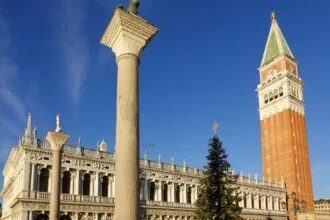
Piazza San Marco is the closest thing Venice has to a living room, a vast open square ringed by arcades, cafes and the domed silhouette of the basilica itself. It floods faster and more often than the rest of the city during acqua alta, and it is also where every gondola tour photograph, every pigeon-feeding cliche and every genuine first-timer’s gasp seems to happen at once.
The basilica behind it is a different order of building entirely. Its five domes and gold-ground mosaics were built to impress visiting dignitaries a thousand years ago, and the interior still glows with Byzantine-style mosaic ceilings that cover almost every surface above head height, a mix of biblical scenes and gilded saints that took centuries to complete.
Basic entry to the nave is free, though a small reservation fee, currently a few euro, buys a timed slot that avoids the worst of the queue outside. The Pala d’Oro, the jewel-encrusted gold altarpiece behind the main altar, costs around €5 (£4/$5) extra, while the Museum and Loggia dei Cavalli upstairs, home to the original bronze horses taken from Constantinople, adds roughly €7 (£6/$8) and includes a close-up view over the square itself.
Allow at least ninety minutes for the square and the basilica together, longer if the Pala d’Oro and Museum are both on the list. The basilica is generally open from around 9:30am, with shorter hours and a later start on Sundays for morning services, so anyone visiting on a Sunday should plan around midday rather than first thing.
Bags larger than a small daypack are not allowed inside and there is no cloakroom at the door, so travelling light on the day makes the whole visit considerably smoother. Strict dress rules apply too: shoulders and knees need covering to get past the entrance, which catches out more visitors on a hot August afternoon than any other rule in the city.
Doge’s Palace and the Bridge of Sighs
The Doge’s Palace sits right beside the basilica, and for thirteen centuries it was the seat of Venice’s entire government, home to the elected Doge, the courts and the prison. Walking through its rooms means passing beneath one of the largest oil paintings in the world, Tintoretto’s Paradise in the Great Council Chamber, before descending into the far plainer stone cells where prisoners were once held.
The covered Bridge of Sighs connects the palace to those old prison buildings across a narrow canal, and its name supposedly comes from the sighs of condemned prisoners catching their last glimpse of Venice through its small windows. It can only be crossed from inside the palace itself, not walked across from the street, which is why so many visitors only ever see it from the little bridge just south of it on the waterfront.
A single ticket, currently €35 (£30/$38) for adults or around €30 (£26/$33) when booked online well in advance, covers the palace along with three other St Mark’s Square museums: the Correr Museum, the Archaeological Museum and the Marciana Library’s monumental rooms. Reduced tickets for younger visitors and students bring that down to roughly €15 (£13/$16).
Two guided add-ons go further than the standard route. The Secret Itineraries tour takes in the palace’s hidden administrative offices and interrogation rooms, and a separate Doge’s Hidden Treasures tour covers different restricted spaces, each priced at roughly €40 (£35/$44) for adults and including entry to the other three museums as well.
Allow two to three hours for a proper visit, longer with one of the guided add-ons. The palace opens at 9am year-round, closing at 7pm in summer and 6pm in winter, with the last admission an hour before closing, so an early start avoids both the queue and the biggest crowds moving through the state rooms.
St Mark’s Campanile
The bell tower standing alone in the corner of St Mark’s Square looks ancient, but the current structure is a careful 1912 rebuild after the original collapsed almost without warning in 1902. Nobody was killed, and the tower went back up brick by brick to the same design, right down to the golden angel weathervane on top.
An elevator carries visitors straight to the top, which makes this one of the easiest good views in the city to reach, no stair climb required. From the belfry, the whole lagoon opens out: the domes of the basilica below, the rooftops of the Doge’s Palace, and on a clear day the outline of the Alps far to the north.
The official ticket price is €15 (£13/$16) for adults, with combined basilica-and-tower tickets available for a bit more if both are on the plan for the same day. Booking a timed slot in advance is worth doing in peak season, since the platform at the top is small and gets restricted once it fills.
Thirty to forty-five minutes covers it comfortably, including the wait for the lift. The tower keeps roughly the same hours as the basilica and can close briefly in high wind or fog, so it is worth checking conditions on a blustery day rather than turning up and finding the observation deck temporarily shut.
A Gondola Ride Past the Bridge of Sighs
A gondola ride does not have to mean hiring the whole boat privately, and a small-group option near St Mark’s Square groups up to five unrelated passengers for a shorter, cheaper outing. The route weaves through St Mark’s Basin before turning into quieter canals behind the Doge’s Palace, passing directly beneath the Bridge of Sighs rather than only glimpsing it from the waterfront.
A short onshore introduction covering the gondola’s construction runs before boarding, and the water portion itself lasts around half an hour. Along the way the gondolier steers past Riva degli Schiavoni and Campo Santa Maria Formosa, beside the old prison buildings the bridge once connected to the palace.
Pricing works out at roughly €37 (£32/$40) per person rather than the full-boat rate charged for a private hire, making it a genuinely more affordable way to try a real gondola. Spaces are limited to five per boat, so booking ahead in peak season is worth doing rather than turning up and hoping for a spot.
This suits a solo traveller or couple who still want a gondola without paying for an entire boat outright. The official per-boat pricing described elsewhere on this page still applies to a private hire, so this shared option is best thought of as a budget-friendly variant, not a replacement.
Early morning or the last light of evening tends to give the calmest water and the best photographs passing beneath the bridge, since midday traffic on the connecting canals gets congested. No walking is involved once aboard, though comfortable shoes still help for the short walk to the departure point.
Rialto Bridge and Market
The Rialto Bridge was, for centuries, the only way to cross the Grand Canal on foot, and its current stone arch has stood since 1591, replacing a string of wooden bridges that kept collapsing or burning down before it. Two rows of small shops still line the top of the bridge itself, much as they always have, selling jewellery, masks and Murano glass to the steady stream of people crossing over.
Just beyond the bridge on the San Polo side, the Rialto Market has traded on the same spot for close to a thousand years. The fish stalls open early, roughly 7:30am to noon, Tuesday to Saturday, while the fruit and vegetable stalls run a little longer and stay open on Mondays too, though everything closes on Sundays.
Arriving before 9am is the difference between watching Venice actually go about its business and seeing the stalls already picked over. Locals still shop here for dinner, and the mix of Adriatic fish on ice, seasonal produce and the shouted banter between stallholders gives a far better sense of daily Venetian life than the crowds on the bridge above ever do.
Neither the bridge nor the market charges admission, and both sit right in the centre of the city, a short walk from St Mark’s Square or a single stop on the vaporetto. An hour is enough for a proper look at both, though anyone keen on food should build in extra time to browse the surrounding bacari, the small standing-room wine bars that serve cicchetti snacks alongside a glass of local wine.
The Scala Contarini del Bovolo Staircase
Tucked down a quiet street near Campo Manin, the Scala Contarini del Bovolo is easy to miss entirely, and that is exactly its charm, a spiral staircase wrapped in tier upon tier of stone arches climbing the outside of a fifteenth-century palazzo. Bovolo means “snail” in Venetian dialect, a fitting name for its distinctive coiled shape.
Built onto the Palazzo Contarini in 1499, the tower rises around 26 metres and was designed to let residents reach the upper floors without cutting through cramped interior rooms. Eighty stone steps wind counterclockwise up the inside of the tower, with no lift or step-free alternative, so this is one attraction that genuinely demands a bit of stamina.
The climb ends at an open-air belvedere loggia at the top, looking out over a jumble of Venetian rooftops, chimney pots and distant domes that few visitors ever see from this angle. It is one of the best value viewpoints in the city precisely because so few day-trippers know it exists.
A full ticket costs €9 (£8/$10), with a reduced rate of €7 (£6/$8) for eligible visitors. Opening hours run from roughly 9:30am to 5:30pm in winter and 10am to 6pm in summer, daily, with last entry thirty minutes before closing.
Forty-five minutes covers the climb and a proper look from the top comfortably. It sits an easy walk from the Rialto Bridge or Campo Santo Stefano, making it a natural stop to slot in between two better-known sights rather than a special trip on its own.
Best for long or awkward journeys. Builds one itinerary out of separate flights.
View flightsBest for anyone whose home plan charges by the megabyte abroad. Pay a fixed price up front.
Check eSIMsBest when public transport has stopped, or when you are travelling with children and bags.
Book a transferThe Grand Canal: Gondola or Vaporetto
The Grand Canal is Venice’s main street, a wide S-shaped waterway lined with centuries of palazzi that runs right through the heart of the city. Seeing it properly means getting onto the water rather than just crossing it, and there are two genuinely different ways to do that, each suited to a different kind of visit.
A traditional gondola ride is the romantic, unhurried option: thirty minutes aboard a hand-built boat steered by a single gondolier, officially priced at €90 (£78/$98) during the day and €110 (£96/$120) after 7pm, for up to five passengers sharing the boat. That price covers the whole boat rather than a per-person rate, which makes it far better value split between a small group than taken solo.
The far cheaper alternative is riding the public vaporetto water bus along the same stretch of canal, particularly line 1, which stops almost everywhere and takes around forty-five minutes end to end. A single ticket costs €9.50 (£8/$10) and is valid for 75 minutes, while a 24-hour travel pass at €25 (£22/$27) or a 48-hour pass at €35 (£30/$38) works out considerably better value for anyone island-hopping over more than a single trip.
Current fares and multi-day passes can be checked directly on the city’s own transport and museums portal, veneziaunica.it, which is worth bookmarking before a longer stay. A morning ride on line 1, ideally with a seat at the front or back rather than inside, is one of the best cheap experiences in Venice, full stop.
A Shared Boat Tour Along the Grand Canal
For anyone who wants the Grand Canal’s sweep of palazzi explained rather than just photographed, a shared motorboat tour covers the same water as the public vaporetto but with a live guide narrating what’s passed. Small groups gather at a set point near the Giardinetti Reali, a short walk from St Mark’s Square.
The hour-long route runs past the Rialto Bridge, Palazzo Pisani Moretta and a long run of churches and merchant palaces lining the canal’s banks, with the guide filling in the history behind the more distinctive facades. Several departures run through the afternoon and evening, including a sunset option that catches the palazzi in a warmer light.
This sits somewhere between the DIY vaporetto ride described earlier on this page and a full private gondola hire, at roughly €45 (£39/$49) per person for the shared group format. It is a sensible middle option for anyone who wants commentary and a proper seat without paying for an entire private boat.
The meeting point is a short walk from St Mark’s Square, and arriving around twenty minutes before departure is generally advised. Food and drink are not included, so it is worth eating beforehand or treating the ride as a standalone hour rather than combining it with dinner.
Booking ahead is worth doing in peak season, since spaces are limited and the earlier slots tend to fill first. This is a good option for a first proper look at the canal’s grandest stretch without needing to plan a route yourself.
Peggy Guggenheim Collection
The American collector Peggy Guggenheim moved to Venice in 1949 and spent the rest of her life buying and living alongside some of the twentieth century’s most important art. Her former home, the unfinished 18th-century Palazzo Venier dei Leoni right on the Grand Canal, is now a compact but genuinely world-class museum of her personal collection.
Inside are works by Picasso, Pollock, Kandinsky and Magritte, hung in rooms that still feel more like a private house than an institution, plus a sculpture garden looking straight out over the water. It is a sharp change of pace from Venice’s Byzantine mosaics and Renaissance altarpieces, and a good stop for anyone who wants some modern art in among all the history.
Adult admission runs €17 (£15/$18), with reduced rates for seniors and students and free entry for children under ten. The museum opens daily from 10am to 6pm, with the ticket office closing an hour before that, and it is closed on Tuesdays and on Christmas Day, which catches out more than a few visitors planning a tight itinerary.
An hour and a half is generally enough to see the collection properly without rushing, and the garden cafe is a genuinely pleasant spot to sit afterwards. It sits in Dorsoduro, a short walk from the Accademia Bridge, so it pairs naturally with a visit to the Gallerie dell’Accademia on the same afternoon.

The Leonardo da Vinci Museum
Venice has no obvious connection to Leonardo da Vinci, who spent most of his working life in Florence and Milan, but a small interactive museum near the Scuola Grande di San Rocco brings his inventions to life through working models. It occupies the Scoletta Vecchia, a modest building within the San Rocco complex in San Polo.
Exhibits are organised into four themed rooms covering earth, water, air and fire, and many of the models are genuinely hands-on rather than kept behind glass. Visitors can turn a flywheel mechanism, examine a scale model of Leonardo’s helicopter design, or study the structure behind his early hang-glider sketches.
It sits a short walk from the Basilica dei Frari, making it easy to combine into a single San Polo afternoon that pairs Renaissance art with Renaissance engineering. That pairing also makes it one of the better options in Venice for travelling with children, since the exhibits hold attention in a way a gallery of paintings often doesn’t.
Entry starts from around €10 (£9/$11) per adult, and the museum is open daily from 10am to 7pm, with no fixed closing day. An hour to ninety minutes is enough to work through all four themed sections without rushing.
This is a genuinely different kind of stop from the churches and palazzi that dominate most of Venice’s sightseeing, and a useful change of pace for a family trip or anyone who has had their fill of altarpieces for one day. Booking a timed slot online in advance avoids a wait at the door in peak season.
Gallerie dell’Accademia
Where the Guggenheim covers modern art, the Gallerie dell’Accademia covers the centuries that made Venice famous for painting in the first place. Housed in a former convent just south of the Accademia Bridge, it holds the single most important collection of Venetian Renaissance art anywhere, spanning Bellini, Titian, Tintoretto and Veronese across room after room of altarpieces and large-scale canvases.
The building itself is worth slowing down for too, a sequence of grand halls that once formed part of a working monastery and school of art, with high ceilings that give the biggest paintings the space they were originally designed to fill. Veronese’s enormous Feast in the House of Levi is one of the highlights that genuinely needs the room’s full width to appreciate properly.
Standard admission is €20 (£17/$22) for adults, with a heavily reduced rate for younger visitors aged 18 to 25 from EU countries and free entry for under-18s. The gallery is open Tuesday to Sunday from 9am to 7pm, with ticket sales ending an hour before closing, and it is closed on Mondays, so check the calendar before building it into a packed day.
An hour and a half to two hours is a reasonable amount of time for a first visit, longer for anyone with a genuine interest in Renaissance painting. Its Dorsoduro location, an easy walk from the Peggy Guggenheim Collection and Ca’ Rezzonico, makes it easy to build an art-focused afternoon around this one neighbourhood.
A Galleon Dinner Cruise Around the Lagoon
For an evening covering the northern lagoon rather than the main tourist core, a dinner cruise aboard a traditional-style galleon departs near the Museo Navale close to the Arsenale, heading out past islands most day visitors never see. The boat’s timber-framed look nods to old Venetian craft, even though a modern engine runs underneath.
The route loops past Sant’Erasmo and San Francesco del Deserto before tracking towards Vignole and Mazzorbo, circling Murano and Burano from the water without actually docking at either. It returns through the San Giorgio basin, timed so the final approach back towards St Mark’s Square happens as the light fades over the skyline.
A five-course dinner is served on board by the boat’s own chef, with a glass of Prosecco on arrival and a bottle of wine, water and coffee served alongside the meal. The whole experience runs close to three hours, starting at 8:30pm in summer and a little earlier, around 8pm, during the winter months.
Pricing starts from around €125 (£109/$137) per person, well above a standard vaporetto-based evening but in line with other multi-course dinner cruises in the city. It suits a special-occasion evening far more than a quick sightseeing stop, and it is worth booking well ahead since seating is limited to the boat’s capacity.
This is a genuinely different way to see the lagoon than the more crowded daytime routes to Murano and Burano covered elsewhere on this page. Anyone prone to seasickness should note the water can be choppier after dark, though the route stays within the sheltered lagoon rather than heading out to open sea.
Best if you would rather spend the money on the trip than on the room. Compare hostels by location and rating.
Search hostelsBest if you have ever given up on a claim. AirHelp checks whether the flight qualifies and pursues it for you.
See the benefitsBest for the gap between checking out and your train. Drop bags at a shop or hotel nearby and carry on.
Store your bagsCa’ Rezzonico
Ca’ Rezzonico is a grand Baroque palazzo on the Grand Canal that now works as a museum of 18th-century Venetian life, and it is a genuinely underrated stop compared with the bigger names nearby. Its ballroom, with a ceiling fresco by Giovanni Battista Tiepolo, gives a real sense of the scale and theatre that Venetian noble families built into their homes at the height of the city’s wealth.
Room after room is furnished with original period furniture, chandeliers and paintings, including work by Pietro Longhi depicting the daily costume and social life of the era, which makes the palazzo feel lived-in rather than emptied out for display. There is also a small garden at the back, a rare thing to find attached to a Venetian palace open to the public.
Admission is €15 (£13/$16) for adults, and the museum keeps seasonal hours: 10am to 6pm from April to October, and 10am to 5pm from November to March, with the last entry an hour before closing. It is closed on Tuesdays, the opposite day to several of the other museums nearby, so it can slot neatly into a day when the Accademia is shut.
An hour to ninety minutes covers it well. It sits directly on a Grand Canal vaporetto stop of the same name, which makes it an easy add-on either side of a ride up or down the canal.
The Natural History Museum at Fontego dei Turchi
Fontego dei Turchi is one of the most striking buildings on the Grand Canal, a Byzantine-style palazzo that later served as Venice’s Turkish trading post for two centuries, and it now houses the city’s Natural History Museum. Its own history is almost as interesting as anything inside, with arched loggias and a marble front visible from a passing vaporetto.
Inside, a dinosaur skeleton dominates one gallery, the remains of an Ouranosaurus nigeriensis unearthed during Sahara expeditions, alongside the skull of Sarcosuchus imperator, one of the largest crocodiles ever to have existed. A separate hall holds a sperm whale and a roughly twenty-metre minke whale, suspended overhead for genuine scale.
The Tegnùe Aquarium recreates a slice of the Adriatic seabed in a five-metre tank, and a further section traces the story of life on Earth from the first simple organisms through to modern humans. It is a genuinely different museum from anything else on this page, more natural history than Venetian art or history.
Full admission is €15 (£13/$16), with a reduced rate of €7.50 (£7/$8) for students, under-25s and over-65s. The museum generally opens Tuesday to Sunday, closed on Mondays, with hours that stretch a little later on Friday and Saturday evenings, so it is worth checking the current daily schedule before travelling.
An hour to ninety minutes covers the main galleries comfortably, longer for anyone travelling with children keen on the dinosaur skeleton. It sits in Santa Croce right on the Grand Canal itself, an easy stop to combine with a walk from the train station.
Anyone wanting to combine this museum with several others across the city rather than paying for it on its own should look at the wider Venice City Pass, whose broader museum option includes the Natural History Museum alongside eleven other venues.
Santa Maria della Salute
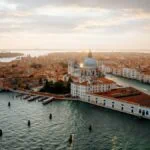
The great white dome of Santa Maria della Salute is one of the first things a visitor sees arriving from the lagoon, sitting right at the mouth of the Grand Canal opposite St Mark’s Square. Venice built it as a votive offering after a plague outbreak killed roughly a third of the city’s population in the early 1630s, and it is still the focus of a genuine local festival every November.
Inside, the church’s Baroque architect Baldassare Longhena designed a bright, octagonal main space that feels far more open than most Venetian churches, topped by that huge dome. A handful of Titian ceiling paintings survive in the sacristy, moved here from a church that no longer stands.
Entry to the main body of the church is free, and it opens daily from around 9am to 5:30pm. The sacristy, home to those Titian paintings, requires a small separate paid ticket and keeps shorter hours, typically mornings and afternoons Tuesday to Sunday, closed on Mondays.
Thirty to forty-five minutes is enough for most visitors, longer for anyone keen on the sacristy’s paintings. The church sits a short vaporetto hop or a scenic walk around the Dorsoduro waterfront from the Peggy Guggenheim Collection, and the view back across the water towards St Mark’s Square from its front steps is one of the best free photo spots in the city.

San Giorgio Maggiore
San Giorgio Maggiore is a small island directly across the water from St Mark’s Square, and its Palladio-designed church is one of the most photographed backdrops in Venice, usually from the other side of the lagoon rather than up close. Getting there is a short, cheap vaporetto ride, which keeps it far quieter than almost anywhere on the main island.
The church itself is free to enter and worth a look for Andrea Palladio’s clean, classical interior alone. Its real draw for most visitors, though, is the bell tower, reached by lift rather than stairs, which gives one of the best panoramic views of Venice available anywhere, arguably better than the busier Campanile in St Mark’s Square itself.
The tower ticket costs €8 (£7/$9) for adults, considerably less than St Mark’s own bell tower, and the queue is almost always shorter too. The church and tower generally keep hours from around 9:30am to 6:30pm, Monday to Saturday, with more limited access on Sundays around mass times.
Forty-five minutes to an hour covers a visit comfortably, including the short boat ride each way. It is an easy pairing with a stop at the Lido, since both sit on similar vaporetto routes from San Zaccaria near St Mark’s Square.
The Basilica dei Frari
The Basilica dei Frari is one of Venice’s largest churches, a vast Gothic brick basilica in San Polo that holds more important art in one building than almost anywhere else outside the Accademia. Its plain brick exterior gives no hint of what waits inside, which is part of why it is so often skipped by visitors sticking to St Mark’s Square.
Titian’s Assumption of the Virgin dominates the main altar, a huge, glowing altarpiece the artist himself considered among his finest work, and Titian is buried in a monumental tomb elsewhere in the same church. Opposite it stands sculptor Antonio Canova’s own pyramid-shaped funerary monument, designed originally as a tribute to Titian before being repurposed for Canova after his death.
The choir chapel adds further depth with paintings by Giovanni Bellini and Alvise Vivarini, and the basilica’s carved wooden choir stalls are among the finest surviving examples in Venice. It is part of the Chorus Venezia association of churches, which maintains several of the city’s most significant places of worship for visitors.
Entry costs around €5 (£4/$6), with reduced rates for students and seniors and free entry for children under eleven. Opening hours run roughly 9am to 6pm Monday to Saturday, but Sunday hours are afternoon-only, generally from 1pm to 6pm, since the church holds services during the morning.
Forty-five minutes to an hour covers the highlights comfortably, longer for anyone keen to study the artwork properly. The nearest vaporetto stop is San Tomà on lines 1 and 2, and it pairs naturally with the Leonardo da Vinci Museum just around the corner.
The Jewish Ghetto
Venice’s Jewish Ghetto, in the Cannaregio district, is the place that gave the word “ghetto” to the world, established by the Venetian Republic in 1516 as a segregated area where the city’s Jewish population was required to live. Its tall, narrow buildings, some of the tallest in Venice, exist because the community was forced to build upwards rather than outwards within a fixed footprint.
Five historic synagogues, several tucked away above street level and easy to walk straight past without noticing, still stand around the two main squares, and a handful remain active places of worship today. The overall atmosphere is quieter and more residential than most of central Venice, a genuine change of pace from the crowds around St Mark’s.
The Jewish Museum of Venice, which normally organises synagogue tours and holds a collection of ceremonial objects and archival material, has been closed for a major renovation, with reopening expected during autumn 2026, so it is worth checking its current status before building a visit around it specifically. The squares and synagogue exteriors remain freely walkable regardless.
An hour to ninety minutes covers a walk through the area at an easy pace. It sits a fifteen-minute walk from the train station or a short vaporetto ride up the Cannaregio Canal, and it is worth combining with a stroll along the Fondamenta della Misericordia, one of Venice’s liveliest evening spots for a drink with a canal view.

Teatro La Fenice
Teatro La Fenice is Venice’s grand opera house, and its name, meaning “the phoenix,” is a genuinely earned one: the theatre has burned down and been rebuilt twice, most recently after a 1996 arson attack, each time rising again on the same spot. Verdi premiered several operas here, including Rigoletto and La Traviata, and it remains one of Italy’s most important opera venues today.
A self-guided daytime visit with an audio guide lets visitors into the auditorium, the gilded boxes and the grand foyer even without attending a performance, which is the easiest way to see the building for anyone not planning a full evening at the opera. The interior is a genuine surprise given the plain facade outside, all red velvet and gold leaf under a painted ceiling.
The self-guided ticket costs €14 (£12/$15) for adults, with reduced prices for seniors and students, and the theatre is generally open for daytime visits from 9:30am to 6pm outside of rehearsal and performance schedules. It is worth checking the theatre’s own booking calendar before travelling, since visiting hours close off entirely on performance days.
Forty-five minutes covers the self-guided visit comfortably. For anyone whose trip lines up with an actual opera or concert performance, booking a seat for the evening turns this from a quick daytime stop into one of the most memorable nights Venice can offer.
The Arsenale and Naval History Museum
The Arsenale was once the industrial powerhouse behind Venice’s naval dominance, a fortified shipyard so efficient at its height that workers could reportedly assemble a fully-equipped galley in under a day. Its huge medieval gateway, guarded by stone lions taken from Greece centuries ago, still stands at the edge of the complex and is one of the most striking sights in eastern Venice.
Most of the Arsenale’s interior remains closed to the general public outside of the Venice Biennale, when its vast Corderie and Artiglierie halls open as major exhibition spaces for the art and architecture events held there in alternating years. Outside Biennale season, the best way to see it is by boat along the canal that runs through the middle, or from the outer walls on foot.
The adjoining Naval History Museum, run by the Italian Navy, is open to the public year-round and covers the Arsenale’s history through model ships, uniforms and a reconstruction of part of the ceremonial state barge, the Bucintoro. A full ticket costs €17 (£15/$18), with reduced and concession rates available, and the museum keeps seasonal hours, roughly 10am to 6pm in summer and 10am to 5pm in winter, closed on Mondays.
An hour to ninety minutes covers the museum well. It sits a short walk from the Arsenale vaporetto stop, on the same stretch of waterfront as the Naval Academy, making it an easy add-on to a walk out towards the eastern edge of the city.
Murano: Venice’s Glassmaking Island
Murano has been Venice’s centre of glassmaking since 1291, when the Republic ordered every glass furnace moved onto the island to reduce the fire risk to the main city and, not coincidentally, to keep the craft’s trade secrets contained in one easily watched place. The tradition never left, and the island’s canals are still lined with working furnaces and showrooms today.
Most visits centre on a live glassblowing demonstration, watching a glassmaker shape molten glass into a vase or figurine in a matter of minutes, something several furnaces offer for free as a way to draw customers into their attached shop. The Murano Glass Museum, in a former bishop’s palace, gives a more structured look at the craft’s history through pieces spanning centuries.
Museum admission is €15 (£13/$16) for adults, or around €20 (£17/$22) for a combined ticket covering Murano’s Glass Museum alongside the Lace Museum on Burano and the museum on Torcello, valid across all three for three months. The island is reached by regular vaporetto services from Fondamente Nove, taking around ten to fifteen minutes each way.
Two to three hours allows time for both a demonstration and a proper wander along the main canal. Genuine Murano glass carries a certification mark, worth checking for before buying anything, since imported imitation pieces are common in the cheaper souvenir shops closer to St Mark’s Square rather than on the island itself.

Burano: The Colourful Lace Island
Burano is the island every Venice photo feed eventually leads to, a small fishing community where every house is painted a different bright colour, supposedly so fishermen could spot their own home through fog from out on the water. The effect is genuinely striking in person, a grid of narrow canals lined with houses in shades of pink, yellow, blue and green that look almost too saturated to be real.
Beyond the houses, Burano has its own centuries-old craft tradition in handmade lace, once prized across European courts and still practised by a small number of artisans today. The Lace Museum, housed in the old lace-making school, walks through that history with historic pieces and demonstrations, and is included on the same combined ticket that covers Murano’s Glass Museum.
The island is reached by a direct vaporetto line from Fondamente Nove, a journey of around forty minutes, or via a connecting service from Murano. It has a genuinely different rhythm from the main city, quieter streets, a handful of excellent seafood restaurants, and none of the crowd density of St Mark’s Square even in peak season.
Two to three hours is a good amount of time to wander the canals, browse the lace shops and eat lunch. Photographers should aim for early morning or late afternoon light, when the colours read best and the main canal has not yet filled with day-trip groups.
Torcello: The Quietest Lagoon Island
Torcello is the quietest of the main lagoon islands, and also the oldest, settled centuries before Venice itself became the dominant city in the lagoon. Its population has shrunk to a tiny handful of residents today, leaving wide-open fields and a scatter of ancient buildings where a genuine medieval city once stood.
The island’s cathedral, Santa Maria Assunta, dates back to the 7th century and holds some of the oldest and most striking Byzantine mosaics in the entire lagoon, including a dramatic Last Judgement covering the whole west wall. A stone seat nearby, known as Attila’s Throne, adds a bit of local legend to what is otherwise a genuinely peaceful, half-forgotten place.
Torcello is reached by vaporetto from Burano, a short hop of a few minutes, or directly from Fondamente Nove on a slightly longer route. The combined three-island museum ticket covering Murano, Burano and Torcello, at around €20 (£17/$22), includes the small museum here alongside the cathedral’s own separate entrance fee.
An hour and a half covers Torcello comfortably, and it pairs naturally with Burano as the last stop on a lagoon-islands day. Anyone genuinely tired of crowds after Murano and Burano should save Torcello for last, since it is by far the quietest of the three.
The Lido: Venice’s Beach Escape
The Lido is a long, thin barrier island separating the Venetian lagoon from the open Adriatic, and it is the closest thing Venice has to a normal beach town, complete with cars, a proper high street and none of the tight alleyways of the main city. It hosts the Venice Film Festival every September, and its early-20th-century hotels still carry a faded, glamorous air from that era.
The island’s main appeal for most visitors is its long sandy beach, with a free public stretch alongside a run of paid beach clubs offering sunbeds and umbrellas for a daily fee. It is also popular for cycling, since the Lido is flat and far less congested than the main city, with bikes easy to rent near the vaporetto stop.
Regular vaporetto lines run from San Zaccaria, near St Mark’s Square, taking around twenty to thirty minutes depending on the route. There is no admission charge for the island itself or the public beach, so the only real cost is a sunbed rental if a beach club stretch is preferred over the free sections.
Half a day is a comfortable amount of time for a beach visit, longer for anyone renting a bike to explore further along the island. It makes a genuinely relaxing contrast to a few days spent pounding cobbled streets and queuing for museums back in the main city.

Campo Santa Margherita: Where Local Life Happens
Campo Santa Margherita is one of the largest squares in Venice and one of the least touristy, sitting in the Dorsoduro district near the university and popular with local students far more than day-trippers. It has a genuinely different feel from St Mark’s Square: market stalls in the mornings, children playing football in the afternoons, and a lively run of bars and cafes as the evening wears on.
There is no single attraction here so much as an atmosphere, and that is precisely the point. It is one of the best places in the city for an affordable evening drink with cicchetti, the small Venetian bar snacks, at a fraction of what the same experience costs near the main landmarks.
The square is free to visit and sits within easy walking distance of the Accademia, the Peggy Guggenheim Collection and Ca’ Rezzonico, making it a natural place to end an afternoon of museum-hopping in Dorsoduro. There is no set opening time, since it is simply a public square, though the bars and market stalls follow their own separate hours.
An hour or two here, ideally in the early evening, gives a real feel for how Venetians actually use their own city. It is a useful reminder that Venice is a living, working place and not only the open-air museum the main sights can sometimes make it feel like.

Rupert’s Handy Travel Tips
Venice is a city that rewards a bit of forward planning more than most, so here’s what I’d want to know before setting off across the lagoon.
- Book timed entry for the big two: St Mark’s Basilica and the Doge’s Palace both get genuinely long queues by mid-morning in peak season, so a pre-booked slot saves real time.
- Pack for acqua alta: Autumn and winter bring occasional high water in low-lying areas like St Mark’s Square, so a pair of ankle-high waterproof boots is worth the suitcase space if you’re visiting between October and March.
- Only board a gondola from an official stand: the price is regulated and posted, so agree the total time and fare before stepping aboard rather than negotiating on the water.
- Buy a multi-day vaporetto pass if you’re island-hopping: a 48-hour pass pays for itself quickly once Murano, Burano or the Lido are on the plan alongside the main city.
- Check the day-tripper access fee status before you travel: Venice has trialled a paid entry scheme on peak dates in recent years, and while it isn’t currently running, it’s worth a quick check on the official booking portal in case it returns for your travel dates.
Want to meet the reindeer behind our travel tips? Find out more in our page Who is Rupert?.




Frequently Asked Questions
How many days do you need to see the best of Venice?
Two to three full days covers the main sights comfortably, including St Mark’s Square, the Doge’s Palace, the Rialto and at least one lagoon island, though a single very packed day can hit the highlights if that’s all the time available.
Is it better to take a gondola or the vaporetto?
A gondola is the romantic, unhurried option best split between a small group given the price covers the whole boat, while the vaporetto is far cheaper and the more practical way to actually get around and see the Grand Canal on a budget.
Do I need to book tickets in advance for St Mark’s Basilica and the Doge’s Palace?
Booking ahead isn’t strictly required for either, but it is strongly recommended in spring and summer, since both attract long queues by mid-morning and a pre-booked timed slot skips most of the wait.
Can Murano, Burano and Torcello all be visited in one day?
Yes, all three are connected by regular vaporetto services and a single day is enough to see each one, though it makes for a full day, and travellers short on time often prioritise Burano and Murano over the quieter Torcello.
Is Venice expensive to visit?
Venice runs more expensive than most Italian cities for food and accommodation, but many of its best experiences, including St Mark’s Square, the Rialto Market, Campo Santa Margherita and simply walking the back streets, cost nothing at all.
Do I have to pay the Venice day-tripper access fee?
The access fee trialled on selected peak dates earlier in 2026 is not currently in effect, though the scheme could be reintroduced in a future season, so it is worth checking the city’s official booking portal shortly before travelling.
Further Reading
Getting between all of these sights is far easier once the vaporetto network actually makes sense, and our dedicated guide to getting around Venice covers the water bus routes, walking distances between the main sightseeing areas, and when a water taxi is genuinely worth the extra cost. For anyone weighing up whether a multi-attraction pass is worth buying, our guide to the Venezia Unica City Pass breaks down what it actually covers against paying for entry separately.
Venice also makes a genuinely good base for exploring further afield, and our guide to the best day trips from Venice covers realistic options on the mainland, from Padua and Verona to the Dolomites, for anyone with a spare day either side of a city-focused stay. For anyone planning to spend a full day or more in Verona itself rather than just passing through, our Things to Do in Verona guide rounds up the Roman arena, Juliet’s House and the rest of the old town. Travellers heading up to the Dolomites specifically for skiing, rather than a single day out, should see our dedicated Venice Airport to Ski Resorts guide instead. Arriving by air brings its own set of decisions too, and our guide to Venice’s airports compares Marco Polo and Treviso and the transfer options into the city from each.
Finally, anyone visiting in December should look at our guide to Christmas in Venice, which covers the seasonal markets, festive lighting and how the city’s usual crowds thin out once the winter chill sets in. Together with this page, those guides cover most of what a first-time or repeat visitor to Venice actually needs to plan a trip properly.
Arriving by ship rather than by air or train? Our Venice Cruise Port Guide covers where large and small ships actually dock since the 2021 cruise ban, and how much genuine sightseeing time a typical port call leaves for the sights covered above.