Reviewed by our editorial team Published
Discover Lake Garda
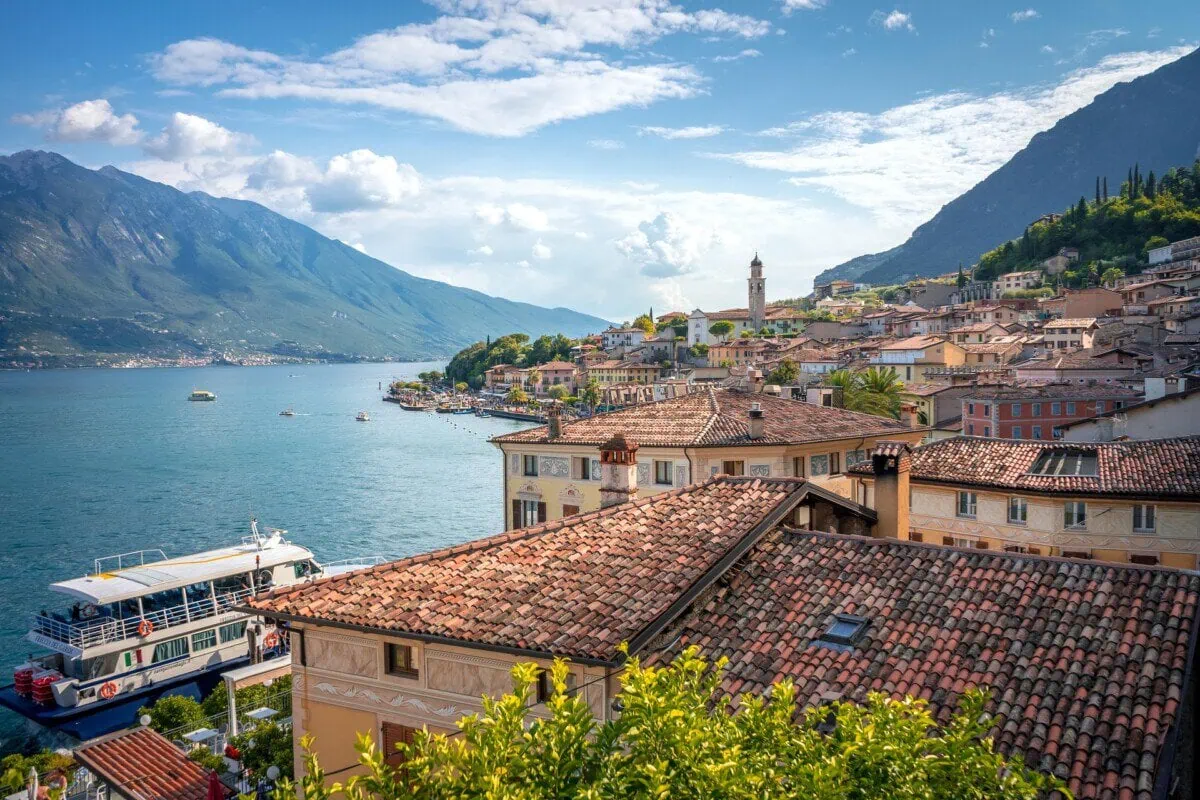
Lake Garda is Italy’s largest lake, stretching between Lombardy, Veneto and Trentino at the southern edge of the Alps. Its shoreline shifts character as it goes, from the flat, sun-baked south to steep cliffs and mountain backdrops further north, which is part of why the same lake can feel like several different holidays in one.
The south shore holds the lake’s best-known towns, including Sirmione and its Roman ruins, while the east and west shores string together smaller, quieter bases known for wine, watersports or simply a good waterfront table. Deciding where to stay usually matters more here than on a single-town city break.
A network of scheduled ferries links most of the lakeside towns, which means a base in one place still leaves the rest of the shoreline within easy reach for a day trip. Many visitors base themselves in one town for several nights and use the boats to see two or three others without ever needing a car.
Lake Garda works equally well as a standalone break or as an add-on to a longer Italian trip, since Verona, Milan and Venice are all within striking distance by road or rail. Its position also makes it a natural stop for anyone travelling between northern Italy and the Alps or Austria.
This guide covers the lake’s most rewarding towns, how to get to Garda in the first place, how the ferry network ties everything together, and the best viewpoints for taking in the scenery from above. Whether the plan is a single day trip or a week exploring the whole shoreline, the same practical groundwork applies.
Where is Lake Garda?
Lake Garda sits in northern Italy, roughly 30 kilometres west of Verona and around 130 kilometres east of Milan, spanning the borders of three regions: Lombardy to the west, Veneto to the east and Trentino to the north. It is the largest lake in the country by surface area, covering around 370 square kilometres of water framed by hills and low mountains on almost every side.
The lake runs roughly 52 kilometres from north to south, narrowing dramatically as it climbs towards the mountains, so the northern tip near Riva del Garda feels far more alpine than the broad, gentle southern basin around Sirmione and Desenzano. That funnel-shaped profile is largely the legacy of a huge glacier that carved out the basin during the last Ice Age.
Its position between the Alps and the Po plain gives Garda a noticeably milder microclimate than the surrounding countryside, which is part of why olive groves, lemon houses and vineyards thrive on its shores despite the mountains rising close behind them. Local growers have exploited this quirk for centuries, and Garda’s own olive oil now carries protected status as a result.
Three regional airports serve the lake within a couple of hours: Verona, Milan Bergamo and Brescia, with the exact choice usually coming down to which shore a trip is based on. The nearest major rail hub is Verona, with Desenzano and Peschiera both sitting directly on the Milan to Venice line.
Best for two or three nights. The widest choice of rooms, with filters for free cancellation and included breakfast.
View staysBest for groups who want one address and separate bedrooms rather than three hotel rooms.
See holiday homesBest as a last check before booking. Compares hotel rates across several sites in one search.
Compare ratesWhich Town Should You Visit?
Each of Lake Garda’s main towns suits a different kind of trip, and the table below lines up the shorthand version, who each one is best for, its general vibe, and how to actually reach it, before the sections that follow go into proper detail on each.
| Town | Best For | Vibe | How to Reach |
|---|---|---|---|
| Sirmione | Roman ruins, thermal spa, first-time visitors | Busy, historic, spa-town | Desenzano-Sirmione rail station, then bus, or ferry |
| Riva del Garda | Watersports, hiking, an active outdoor crowd | Youthful, breezy, mountainous | Verona or Brescia airport, then bus; or ferry from the south |
| Malcesine | Monte Baldo cable car, an easy day-trip stop | Compact, lakefront, lively but manageable | East-shore ferry, or bus from the Verona side |
| Bardolino | Wine country, a gentler promenade | Relaxed, local-feeling | Ferry from Malcesine or Garda town, or bus from Peschiera |
| Desenzano del Garda | A practical, well-connected base | Working town, lively harbour | Milan to Venice rail line (direct) |
| Peschiera del Garda | Walled old town, Gardaland gateway | Compact, historic ramparts | Milan to Venice rail line (direct), ferry pier |
| Gardone Riviera | Il Vittoriale, a calmer cultural stop | Greener, unhurried | Bus from Brescia or Desenzano, or ferry |
With so many towns dotted around the shoreline, picking a base can be the hardest part of planning a Lake Garda trip. Sirmione suits first-time visitors who want ruins, thermal baths and a walkable historic core, though its narrow streets get genuinely crowded at midday in summer, which is why an overnight stay pays off far more than a rushed day trip.
Riva del Garda, at the mountainous northern tip, is the pick for anyone drawn to watersports, hiking or a livelier outdoor crowd, while Malcesine on the eastern shore offers a similar alpine backdrop with easier access to a dramatic cable car up Monte Baldo. Both feel noticeably cooler and breezier than the towns further south.
Travellers chasing a quieter, more local pace tend to prefer Bardolino, known for its wine country and gentle promenade, or Gardone Riviera on the western shore, home to the eccentric gardens of Il Vittoriale. Both trade big-name sights for a slower rhythm and noticeably shorter queues.
Desenzano del Garda works best as a practical base thanks to its direct rail link, sizeable choice of hotels and restaurants, and central position for reaching the rest of the lake by ferry. Many visitors combine it with a shorter stay in one of the quieter towns further north, using it purely as a springboard.
Sirmione: Roman Ruins on a Narrow Peninsula
Sirmione occupies a slender peninsula jutting into the lake’s southern basin, its old town reached across a moat and drawbridge beneath the crenellated Scaligero Castle. The 13th-century fortress can be climbed for lake views and costs €10 (£9/$12), with a reduced rate for EU visitors aged 18 to 25.
At the peninsula’s tip sit the Grotte di Catullo, the sprawling ruins of a first-century Roman villa set among olive groves, with entry costing €10 (£9/$12) or €2 (£2/$2) reduced. A combined ticket covering the castle, the villa and Desenzano’s Roman villa runs €20 (£17/$23) and stays valid for a week.
The old town itself is a tight knot of pedestrian lanes lined with gelaterias and boutiques, and it becomes genuinely packed with day-trippers by late morning in peak season. Visitors driving in need to park outside the historic centre, since the old town sits inside a limited traffic zone.
Sirmione’s thermal springs also feed a well-known spa complex on the peninsula, drawing a steady stream of wellness-focused visitors alongside the sightseers. An early morning or early evening visit, once the coach parties have thinned out, shows the old town at its most atmospheric and photogenic, with the castle lit up and the lanes largely empty.
Riva del Garda: Watersports at the Mountainous North
At the lake’s northern tip, Riva del Garda sits hemmed in by steep cliffs that funnel a reliable thermal wind known locally as the Ora, making it one of Europe’s better-regarded spots for windsurfing, sailing and kitesurfing. Several schools along the waterfront rent equipment and run lessons through the season.
The town’s arcaded old centre is smaller and calmer than Sirmione’s, built around a lakefront promenade that makes an easy evening stroll past cafes and gelato stands. A short, well-marked climb leads up to the Bastione, a hilltop viewpoint looking straight down the length of the lake towards the southern basin.
Riva also serves as a gateway for hikers, with trails fanning out into the surrounding mountains and towards the dramatic clifftop village of Pieve di Tremosine, reached by a narrow, winding road carved into the gorge above the lake. The drive itself, with sheer drops on one side, has become a minor attraction in its own right.
The town leans noticeably more outdoors-focused than the lake’s southern resorts, with a younger, activity-driven crowd filling its bars and campsites through summer. It makes a good base for travellers who want at least one genuinely active day built into a Lake Garda itinerary, alongside the usual sightseeing further south.

Malcesine: A Cable Car to Monte Baldo
Malcesine, on the eastern shore beneath the Monte Baldo ridge, pairs a pretty lakefront old town with the region’s most dramatic cable car. The Funivia Malcesine-Monte Baldo uses rotating cabins to climb to around 1,760 metres in under twenty minutes, giving a sweeping panorama over the whole lake and the peaks beyond.
A return ticket costs around €30 (£26/$35) at full price, or a little less booked online in advance, and runs roughly from April to November. Once at the top, marked trails, a small restaurant and a paragliding launch point extend the visit well beyond the ride itself.
Malcesine’s own Scaliger Castle sits right on the waterfront, a smaller and more modest cousin of Sirmione’s fortress, and makes an easy add-on before or after the cable car. The old town’s narrow lanes, lined with small boutiques, are pleasantly walkable and noticeably less crowded than the lake’s southern hotspots.
Because Malcesine sits directly on the east-shore ferry route, it combines easily with a day trip to Riva del Garda further north or Bardolino to the south, making it a practical stop even for travellers based elsewhere on the lake who simply want a look around.
Bardolino: Wine Country on the Eastern Shore
Bardolino gives its name to the light, fruity red wine produced across the surrounding hills, and the town itself makes a relaxed base for visiting cellars and tasting rooms without needing to travel far from the centre. Several producers offer tours and tastings a short walk or drive away, most bookable directly.
Away from the vineyards, the town’s lakeside promenade is one of the gentler stretches of shoreline on Garda, backed by a small historic core with a couple of Romanesque churches worth a quick look. It rarely feels as pressured as Sirmione, even in peak season, and parking is noticeably easier too.
A small wine museum, housed in a working cellar on the edge of town, explains the local production process and offers tastings as part of a visit, making it an easy way to get an overview before heading out to individual vineyards for the real thing, glass in hand.
Bardolino suits families and travellers who want a quieter, more local-feeling stay, with regular ferries to Malcesine and Garda town keeping the rest of the shoreline within easy reach for a change of scene whenever it is wanted, without ever needing a car.
Desenzano del Garda: The Lake’s Main Gateway
As the lake’s largest town and its best-connected rail hub, Desenzano del Garda is where many visitors first arrive, often without realising quite how much the town itself offers. Its harbour is genuinely lively, ringed with restaurants and bars that stay busy well into the evening, and its shopping streets are the best-stocked on the southern shore.
The town’s own Roman villa, a short walk from the centre, holds some of the best-preserved mosaic floors anywhere on the lake, and is covered by the same combined ticket that includes Sirmione’s castle and Roman ruins, making a pair of Roman sites easy to fit into one day.
Because Desenzano sits directly on the Milan to Venice rail line and hosts one of the lake’s main ferry piers, it works well as a practical base for anyone planning to explore several towns without renting a car for the whole trip or juggling connections.
The trade-off is a town that feels more like a genuine working hub than a resort, so travellers wanting a purely picturesque base may prefer Sirmione or Bardolino instead, using Desenzano mainly as a transport gateway rather than a place to linger.
Best for finding routes the airlines do not sell as a single ticket. Combines carriers to bring the fare down.
Search flightsBest for anyone whose home plan charges by the megabyte abroad. Pay a fixed price up front.
Check eSIMsBest after a long flight or a late landing. Price agreed before you travel, and no taxi queue.
Check transfersPeschiera del Garda: A Walled Town on the Water
At the lake’s southeastern corner, where Garda drains into the Mincio river, Peschiera del Garda is easy to overlook next to bigger neighbours like Sirmione and Desenzano, yet its star-shaped Venetian ramparts make it one of the most distinctive towns on the whole shoreline. The fortress walls, canals and bastions were built by the Venetian Republic in the sixteenth century to guard this stretch of its mainland border.
Those defences now form part of a wider UNESCO World Heritage listing covering the Venetian defensive works stretching from Lombardy to Croatia, and they are far better preserved than most visitors expect from a lakeside town best known as a transport hub. A walk along the ramparts, with the water on one side and the old town’s rooftops on the other, is free and takes under an hour.
Peschiera’s other role is as the lake’s most useful gateway town, sitting directly on the Milan to Venice railway and within a short bus ride of Gardaland, which makes it a natural base for families splitting time between the theme park and the wider lake. Its ferry pier also puts Sirmione, Desenzano and the eastern shore within easy reach without a car.
For visitors who want to see more of the lake from the water without committing to a full day, a shorter cruise departing from Peschiera is a straightforward way to combine several towns and a proper sit-down meal into a single relaxed outing, which is exactly what the option below covers.
Gardone Riviera: Eccentric Gardens on the West Shore
On the lake’s western shore, Gardone Riviera is best known for Il Vittoriale degli Italiani, the sprawling hillside estate built by the poet and soldier Gabriele D’Annunzio, complete with a warship’s prow embedded into the hillside and several museums covering his eccentric later life in exile.
Tickets are sold as separate paths through the site: the fullest option, covering the park, three museums and a guided tour of the house, costs €18 (£15/$21) full price or €14 (£12/$16) reduced, with cheaper combinations available for anyone planning a shorter visit and less time on site.
Beyond the estate, Gardone’s mild microclimate supports a notable botanical garden, home to plant species gathered from across the world, and its waterfront promenade, lined with grand old villas, gives a sense of the lake’s early tourism heyday from the late nineteenth century onwards, when Gardone was a fashionable winter retreat.
The town suits travellers who want one standout cultural sight alongside a generally calmer, greener stretch of shoreline than the busier resorts further south and east, and it rewards a slower, unhurried pace of visit rather than a checklist of sights. A short stroll along the harbourfront also takes in Gardone’s own war memorial and a handful of lakeside cafes worth a slow coffee before moving on.
Which Lake Garda Town Should You Stay In?
Families with young children tend to do best in Peschiera del Garda or Bardolino, where gentle promenades, easy parking and calmer swimming spots beat the crowded lanes of Sirmione. Peschiera’s short bus ride to Gardaland also means a theme park day does not require changing base, which usually matters more to parents than scenery alone.
Couples wanting a slower, more romantic pace generally prefer Gardone Riviera or Bardolino, both trading big-name sights for quieter evenings and shorter queues. Sirmione works too, but mainly with an overnight stay, since its thermal spa and lantern-lit lanes feel very different once the day-trip coach parties have gone home.
Anyone building a trip around hiking or watersports should base themselves at the lake’s northern tip. Riva del Garda’s reliable Ora wind draws windsurfers and sailors, while Malcesine’s cable car opens up genuine mountain trails on Monte Baldo, and both towns feel noticeably more outdoors-focused than the flatter southern resorts.
Travellers planning to see several towns without repacking each night should choose a transport hub over a prettier setting. Desenzano’s direct rail line and central ferry pier make it the easiest single base for reaching Sirmione, Bardolino and the rest of the shoreline without ever needing to change hotels.
For evening atmosphere, Desenzano’s harbour stays genuinely lively long after dinner, with bars and restaurants that keep the waterfront busy well into the night, a sharp contrast to the quieter, earlier rhythm of Bardolino or Gardone Riviera once the sun goes down.

Gardaland Park: Italy’s Biggest Theme Park
Just inland from Peschiera, in the town of Castelnuovo del Garda, Gardaland has been drawing families to the southern shore since it first opened in 1975, and it now ranks as Italy’s largest theme park and one of the most visited in Europe. For anyone travelling with children, it is usually the single biggest draw on the entire lake.
The park packs more than 40 rides and attractions into its grounds, spanning gentle family favourites through to genuine thrill rides like the Raptor coaster and the indoor dark ride Fuga da Atlantide, alongside themed lands built around fairy tales, dinosaurs and Italian folklore for younger visitors.
A standalone Gardaland SEA LIFE Aquarium sits within the same resort and can be visited on a combined ticket, while an adjoining resort area adds themed hotels for families wanting to turn a single day into a longer stay without leaving the site at all.
A one-day adult ticket typically starts from around €49 (£42/$57) when booked online in advance, rising noticeably for tickets bought on the day at the gate, so booking ahead is genuinely worth doing given how much of a saving it represents.
How to Get to Lake Garda
Three regional airports put Lake Garda within reach: Verona Villafranca suits the south and east shores best, Brescia serves the southwest, and Milan Bergamo, though further out at around 80 kilometres, is a common budget-airline gateway for the western towns and often the cheapest option overall.
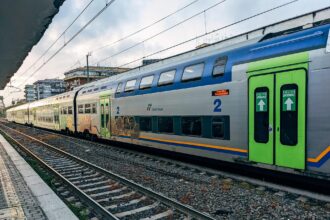
By train, the Milan to Venice line stops at both Desenzano del Garda-Sirmione and Peschiera del Garda, though high-speed Frecce services generally call at only one of the two, not both, so it is worth checking the exact stop before booking a ticket online.
From either station, local buses fan out to the lakeside towns; Peschiera, for instance, connects to Bardolino and Lazise in around 15 to 20 minutes. Brescia’s station also has bus links north towards Gardone Riviera and Limone sul Garda, though services thin out in winter.
Travellers arriving via Venice can reach Verona in around an hour by high-speed train and continue by regional service or transfer from there, making Lake Garda a realistic add-on even without a car for the whole trip, and worth building into a wider northern Italy itinerary. Drivers coming from Austria or Switzerland can also reach the lake directly via the A22 motorway, which runs close to the eastern shore before continuing south towards Verona.
Getting Around Lake Garda by Ferry
A network of scheduled boats run by Navigazione Laghi links most towns around the shoreline, making it entirely possible to explore Lake Garda without a car once settled into a base for the trip. Timetables thin out considerably outside the main April to October season.
A whole-lake day pass costs €39.50 (£34/$46) for an adult, with a three-day version available for €79 (£68/$92), while cheaper regional passes covering a single stretch of shoreline cost €23.50 (£20/$27) for a day. Single fares vary by route and zone, and children usually travel at a reduced rate.
Faster hydrofoil services cut journey times between the larger towns considerably compared with the slower ferries, though they typically cost more and call at fewer stops along the way, so it is worth checking which type of boat a specific route uses before setting out.
Beyond the scheduled network, most towns also offer independent boat trips, including guided lake tours and sunset cruises, for travellers who want a more leisurely trip on the water rather than point-to-point transport between towns on a set timetable. Several operators in Sirmione and Malcesine also run private charters for smaller groups, which can be worth the extra cost for a flexible half-day on the water.
Best if you would rather spend the money on the trip than on the room. Compare hostels by location and rating.
Search hostelsBest arranged before you fly rather than after. Covers claim handling, plus lounge access on eligible delays.
Explore AirHelp+Best if your room is not ready yet. Left luggage booked in advance, so you are not hunting for a locker.
Check storageWithout a Car vs With a Car at Lake Garda
Exploring Lake Garda without a car is genuinely realistic, provided the plan leans on the ferry network and rail links covered earlier in this guide. A base in Desenzano or Peschiera, both on the Milan to Venice line, puts Sirmione, Bardolino and the eastern shore within reach by boat or bus without ever needing to hire a vehicle.
The trade-off is timing. Ferries thin out considerably outside the April to October season, and reaching quieter west-shore villages between Gardone Riviera and Riva del Garda by public transport alone can mean a slow combination of buses rather than a direct boat, so a car-free trip works best for travellers focused on the better-connected towns.
A hire car earns its keep for reaching villages the ferry network skips, including the clifftop drive above Tremosine and the smaller wine hamlets around Bardolino, and it removes any dependence on a fixed timetable for an early start or a late return from dinner further round the shore.
The downside is largely historic centres. Sirmione, like several other lakeside towns, enforces a limited traffic zone, so a car has to be parked outside the old town rather than driven in, and July and August bring genuinely heavy traffic and scarce parking on the roads hugging the eastern shore.
Viewpoints and When to Visit
For the lake’s best panoramas, the Monte Baldo cable car from Malcesine and the clifftop village of Pieve di Tremosine above Riva del Garda are the two standout options, both giving a genuine sense of scale that is hard to appreciate properly from the shore alone.
Closer to town, the Bastione above Riva del Garda offers a shorter climb with a rewarding view down the lake, while trails from Malcesine’s upper cable car station extend into genuine mountain hiking territory for anyone with the time and stamina to explore further.
The shoulder seasons of May to June and September generally offer the best balance of warm weather and manageable crowds, since July and August see lakeside towns and parking become genuinely congested, particularly around Sirmione’s historic centre and the Malcesine cable car queue.
Many historic centres, including Sirmione’s, operate a limited traffic zone, so drivers should plan to park outside the old town and walk in rather than expecting to drive right up to a hotel door, especially during the busiest summer weeks. Booking accommodation with its own parking, or within easy walking distance of a designated car park, saves a lot of frustration during the peak July and August weeks.

Rupert’s Handy Travel Tips
Planning a trip around Lake Garda? Rupert has a few tips that can save both time and money:
- Check which train station your Frecce service uses: high-speed trains usually stop at either Desenzano or Peschiera, not both.
- Buy a regional ferry pass instead of the whole-lake pass: it’s cheaper if you’re only exploring one stretch of shoreline.
- Book the Monte Baldo cable car online: it’s a little cheaper than paying at the kiosk in Malcesine.
- Park outside Sirmione’s old town: the historic centre is a limited traffic zone and visitors without a permit risk a fine.
- Visit Sirmione early or late in the day: the old town gets genuinely packed with coach parties by late morning.
- Base yourself centrally if you want to see several towns: Desenzano’s rail and ferry links make it easier to explore the whole lake.
Want to meet the reindeer behind our travel tips? Find out more in our page Who is Rupert?.



Frequently Asked Questions About Lake Garda
Which town is best to stay in on Lake Garda?
Sirmione suits first-time visitors, Riva del Garda and Malcesine suit an active, mountainous stay, and Desenzano works best as a practical, well-connected base.
Can you get around Lake Garda without a car?
Yes. A network of scheduled ferries run by Navigazione Laghi links most towns, and trains and buses connect the lake to Verona, Milan and Brescia.
What is the nearest airport to Lake Garda?
Verona Villafranca is closest for the south and east shores, with Brescia and Milan Bergamo serving the southwest and west respectively.
How much does the Monte Baldo cable car cost?
A round trip from Malcesine costs around €30 (£26/$35) at full price, slightly less when booked online in advance.
When is the best time to visit Lake Garda?
May, June and September generally offer warm weather with far fewer crowds than the congested July and August peak season.
Is Sirmione worth visiting on a day trip?
Yes, though arriving early or late in the day avoids the worst of the midday coach-party crowds in its narrow old town.

Further Reading & Related Guides
Approaching Lake Garda from the east? Our Day Trips from Verona guide already covers Sirmione and the lake as one of its own excursions, and our Verona Airport Transfers guide explains getting from Verona Villafranca straight to the lakeside towns.
Planning a wider stay in the region? Our Day Trips from Milan guide is useful if arriving via Milan Bergamo, and our Interrail Italy Pass guide explains rail-pass options for a longer trip around northern Italy.
Continuing on to Venice from the lake? Our Venice Things to Do guide and Verona Things to Do guide are natural next stops for a wider Veneto itinerary.