Reviewed by our editorial team Published
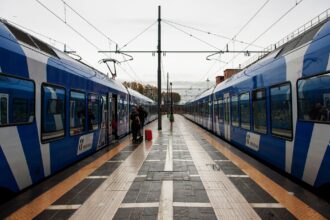
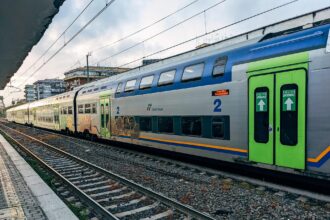
Verona sits almost exactly between two of northern Italy’s biggest draws, Lake Garda to the west and Venice to the east, which makes it one of the best-placed bases anywhere in the Veneto for a genuine variety of day trips. Regional trains fan out from Porta Nuova station in every direction, and almost nothing on this list needs a car.
The lake gets most of the attention, and rightly so, but Verona’s rail connections also open up a run of smaller, less crowded cities that rarely make it onto a first-time visitor’s list. Vicenza, Mantua and Padua are all under an hour and a half away, and each has a genuinely distinct character worth the short trip.
Unlike some rail hubs where every destination pulls in the same direction, Verona’s position means a single trip can head towards water, art, architecture or wine country depending on the day. That range is really the point of basing a Veneto trip here rather than in Venice itself, where every excursion tends to mean fighting the same crowds back out through the lagoon.
This guide brings together the genuine range of realistic day trips from Verona, comparing how to get to each one, what to expect on arrival, and how much time it is actually worth setting aside. Everywhere covered here is reachable by direct or one-change regional train, keeping things simple and avoiding the stress of driving in and out of the city.
Verona Day Trips at a Glance
| Destination | How to Get There | Journey Time | Suggested Time Needed |
|---|---|---|---|
| Sirmione & Lake Garda | Regional train to Desenzano del Garda, then local bus | About 45-70 minutes combined | Full day |
| Venice | Direct regional or high-speed train from Verona Porta Nuova | About 1 hour 10 minutes to 2 hours 20 minutes | Full day |
| Vicenza | Direct regional or high-speed train from Verona Porta Nuova | About 25-58 minutes | Half day to full day |
| Mantua | Direct regional train from Verona Porta Nuova | About 46 minutes | Half day to full day |
| Padua | Direct regional or high-speed train from Verona Porta Nuova | About 44 minutes to 1 hour 27 minutes | Full day |
| Soave & Valpolicella Wine Country | Regional train to Soave-San Bonifacio, or an organised wine tour | About 20-30 minutes by train | Half day to full day |
| Dolomites Day Tour | Organised coach tour departing from Sirmione or Desenzano (Lake Garda) | About 11 hours round trip | Full day |
Sirmione and Lake Garda: Italy’s Largest Lake
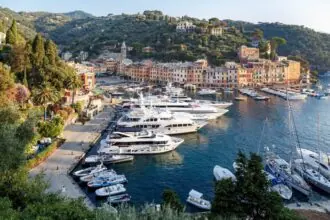
Lake Garda is Italy’s largest lake, and its southern shore is genuinely reachable from Verona in a single day. The draw here is a mix of warm, beach-town atmosphere and dramatic scenery, with mountains framing the lake further to the north.
Regional trains run from Verona Porta Nuova to Desenzano del Garda in around 20 to 25 minutes, departing roughly hourly throughout the day, with a standard second-class fare costing around €4.30 (£4/$5). Desenzano is a genuine lakeside town in its own right, with a marina and old town worth a wander.
From Desenzano, local buses reach the fortified peninsula of Sirmione, with its moated medieval castle and famous thermal waters, in around 25 to 30 minutes for a fare of roughly €1.50 (£1/$2). Sirmione’s Rocca Scaligera castle can be climbed for lake views, and the ruined Roman villa at the Grotte di Catullo, right at the tip of the peninsula, adds genuine ancient history to what is otherwise a resort town.
A more direct alternative is bus line 26, which runs straight from Verona’s Corso Porta Nuova to Sirmione in around 53 minutes without needing the change at Desenzano, though it is worth double-checking the last return departure carefully, since local bus timetables on this route thin out considerably by early evening.
Given the distances involved between towns around the lake, this is best treated as a full day, and it is worth choosing one focus, either Sirmione’s castle and old town or the wider lake itself, rather than trying to cram in too many stops.
Best for a short trip. Compare rooms by neighbourhood, price and guest rating before you book.
Compare hotelsBest for families, or any stay past about four nights. A kitchen and a washing machine start paying for themselves.
Browse rentalsBest as a last check before booking. Compares hotel rates across several sites in one search.
Compare ratesVenice: Canals, Islands and St Mark’s Basilica
Venice needs no real introduction, and its position at the eastern end of Verona’s rail line makes it a genuinely realistic day trip rather than the stretch it can be from cities further west. The canals, the islands and St Mark’s Basilica all deliver on the reputation, even on a single rushed day.
High-speed trains from Verona Porta Nuova reach Venezia Santa Lucia in as little as 1 hour 10 minutes, with slower regional services taking closer to 2 hours to 2 hours 20 minutes. Fares start from around €10 (£9/$12) for an advance regional ticket, rising considerably for a walk-up high-speed fare booked on the day.
Because Santa Lucia station sits directly on the Grand Canal, the walk from the train straight into the sightseeing genuinely could not be simpler. St Mark’s Square, the Rialto Bridge and a vaporetto ride down the Grand Canal cover the essentials of a single focused day.
Given how much there is to see, a single day only scratches the surface of what Venice actually offers, and travellers with a genuine interest in the city should weigh an overnight stay against the rushed version. For the full breakdown of sights, islands and getting around the lagoon, our dedicated Venice guides cover everything needed to plan a proper visit.
A full day is realistic here, though arriving on the earliest practical train and building in a late return gives noticeably more time to actually enjoy the city rather than spending it all in transit.
Vicenza: The City of Palladio
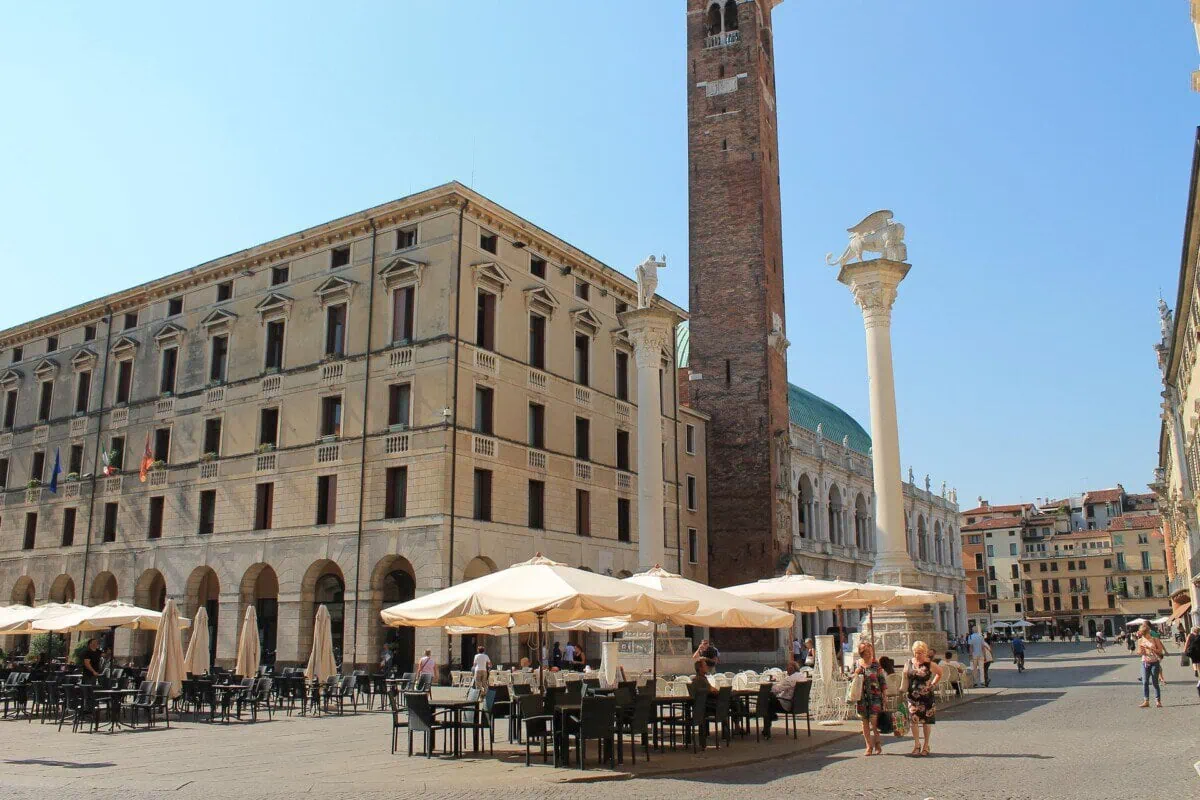
Vicenza is the closest genuine city on this list, and it is built almost entirely around the work of one architect, Andrea Palladio, whose Renaissance buildings here so influenced Western architecture that the historic centre earned UNESCO World Heritage status. It is a strong pick for anyone with even a passing interest in classical design.
Direct trains from Verona Porta Nuova take as little as 25 minutes on the fastest services, with slower regional trains closer to 40 to 58 minutes, and fares starting from around €4 (£3/$5). Frequent departures throughout the day make this one of the easiest half-day options on this whole list.
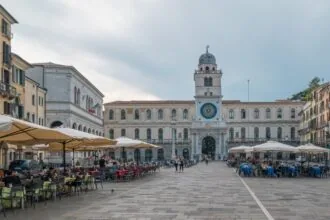
The Basilica Palladiana dominates the main square with its distinctive covered loggia, while the Teatro Olimpico, the oldest surviving indoor theatre in the world, uses forced-perspective scenery to create an illusion of great depth on a genuinely small stage. Just outside the centre, the elegant villa known as La Rotonda is considered one of Palladio’s finest works.
Vicenza’s compact centre means most of its key sights sit within a short walk of each other, and the city has a genuinely relaxed, prosperous feel that comes as a pleasant contrast after a day in busier Venice or Verona.
A half day covers the main square and theatre comfortably, rising to a full day for anyone wanting to add La Rotonda and a proper look at the surrounding countryside.
Mantua: Renaissance Palaces on Artificial Lakes
Mantua, or Mantova, sits surrounded on three sides by artificial lakes formed from the Mincio river, giving the city an almost island-like setting that few visitors expect from an inland Italian town. It was once one of Renaissance Italy’s great courts, ruled for centuries by the powerful Gonzaga family.
Direct regional trains from Verona Porta Nuova take around 46 minutes, with a standard second-class fare costing roughly €5 (£4/$6). Services run regularly throughout the day, making Mantua an easy addition even to a shorter itinerary.
The vast Palazzo Ducale, the Gonzaga family’s sprawling former residence, holds hundreds of rooms including Andrea Mantegna’s celebrated Camera degli Sposi frescoes. Across town, the smaller Palazzo Te, built as a pleasure palace for the family, is considered one of the finest examples of Mannerist architecture anywhere in Italy.
Mantua’s central squares, particularly Piazza Sordello and Piazza delle Erbe, are genuinely handsome and considerably quieter than their equivalents in more famous Italian cities, and the town’s local cuisine, built around pumpkin-stuffed pasta, is worth planning lunch around.
A full day allows time for both palaces properly, though a determined half day can cover the historic centre and one of the two if time is tighter.

A Full-Day Tour Into the Dolomites from Lake Garda
The Dolomites sit well beyond the realistic range of a Verona-based day trip by public transport, but travellers with a full day to spare can reach them on an organised coach tour departing from towns around Lake Garda, including Sirmione and Desenzano, both already covered above as part of the same day out. Pickup generally runs early, around 7am to 8am, reflecting how much ground the day actually covers.
The route typically passes through Cavalese, a traditional mountain town known for its chocolate shops, before continuing to Lake Soraga near Moena and up to the dramatic Passo Pordoi, a mountain pass reaching around 2,239 metres with views over the Catinaccio, Marmolada and Sella peaks. A stop in the alpine resort of Ortisei, known for its wood carving tradition, usually rounds out the itinerary before the drive back down to the lake.
An air-conditioned vehicle and a guide’s live commentary are included, along with hotel pickup and drop-off around Lake Garda, though food and a separate cable car ride up Passo Pordoi, priced at around €30 (£26/$36), are not part of the standard fare. Given how far the Dolomites genuinely are, a substantial share of the roughly eleven-hour day is spent on the road rather than at any single stop.
Prices start from around €85 (£70/$99) per adult, with reduced rates for children, and it suits travellers who have already covered Lake Garda’s own towns and want a genuinely different landscape for a second day in the area, rather than a first-time visitor still working through Verona’s core day trips.
Padua: Giotto’s Frescoes and a Historic University
Padua, or Padova, sits between Verona and Venice on the same rail corridor, and it holds one of the most significant fresco cycles in all of Western art alongside one of Europe’s oldest universities. It is often overshadowed by its two famous neighbours despite genuinely standing up to either.
Direct trains from Verona Porta Nuova take as little as 44 minutes on the fastest services, with slower regional trains closer to 1 hour 15 to 1 hour 27 minutes, and fares starting from around €6 (£5/$7). Frequent departures throughout the day make Padua straightforward to fit into most schedules.
The Scrovegni Chapel houses Giotto’s early fourteenth-century fresco cycle, widely considered a turning point in Western painting, and visits must be booked in advance for a strictly timed slot due to the fragile condition of the artwork. The Basilica of Saint Anthony and the historic Orto Botanico, one of the world’s oldest botanical gardens, both add further depth to a visit.
Padua’s university, founded in 1222, still shapes the city’s atmosphere, giving its central squares a genuinely lively, youthful energy that feels distinct from the more tourist-focused streets of Venice just down the line.
A full day allows time for the Scrovegni Chapel, the basilica and a proper wander through the university district, and booking the chapel slot ahead is essential rather than optional.
Soave and Valpolicella: A Wine Country Day Trip
Verona sits at the heart of two of Italy’s best-known wine regions, and a day spent among the vineyards makes a genuinely different kind of trip from the art and architecture covered elsewhere in this guide. Valpolicella, to the north, and Soave, to the east, each produce wines that carry real international reputation.
Regional trains reach Soave-San Bonifacio station in around 20 to 30 minutes from Verona Porta Nuova, with a short walk or local bus covering the last stretch into the walled hilltop town of Soave itself, known for its crisp white wine and a genuinely well-preserved medieval castle.
Valpolicella, home to the bold red Amarone, is more spread out across a scatter of small villages and hillside vineyards without a single obvious rail hub, so an organised half-day or full-day wine tour, typically including tastings at two or three wineries, tends to work better here than public transport alone.
Soave’s own walled centre and castle are worth a couple of hours in their own right beyond any wine tasting, and several producers in the town itself offer tastings without needing to book a full tour package.
A half day covers Soave’s town and a tasting or two, while a full day, particularly one built around an organised Valpolicella tour, suits anyone wanting to properly explore both regions’ wine in a single trip.
Best for finding routes the airlines do not sell as a single ticket. Combines carriers to bring the fare down.
Search flightsBest if you want maps and messaging working the moment you switch your phone on.
See eSIM plansBest if you would rather not work out the transport on arrival. Book it now and forget it.
View transfersBest Day Trips by Train Versus Ones Needing a Car or Tour
For anyone deciding between the day trips above, the easiest split is by transport method rather than distance alone, since a couple of destinations on this list genuinely need a car or an organised tour rather than a straightforward regional train.
Vicenza, Mantua, Padua and Venice all sit directly on the Milan to Venice rail corridor, reachable by a direct regional or high-speed train with no further connection needed at the other end, which makes any of the four a realistic option even for a first visit without a rental car.
Sirmione and Lake Garda require one extra step: a regional train to Desenzano del Garda followed by a local bus, or the more direct bus line 26 straight from central Verona. Neither leg needs a car, but the connection means building in a little more time than the single-train destinations above.
Valpolicella and the Dolomites are the two genuine exceptions. Valpolicella’s wineries are scattered across hillside villages with no single rail hub, so an organised wine tour or a hire car covers the ground far better than public transport, and the Dolomites day trip described above only runs as an organised coach tour departing from Lake Garda.
Which Day Trip Should You Choose?
For a first visit to the area, Sirmione and Lake Garda is the obvious choice, combining genuine scenery with a proper medieval castle and enough beach town atmosphere to feel like a real change of pace from Verona’s old town.
Travellers who want art and architecture without Venice’s crowds should head to Vicenza or Padua instead, both genuinely rewarding and considerably calmer than the lagoon city on the same rail line. Mantua suits anyone wanting a slower, more unusual day built around Renaissance palaces and an unexpected lake setting.
Anyone with a genuine full day to spare, and an early enough start, should still make time for Venice itself, since its rail connection from Verona is comfortable enough to make the trip worthwhile even for a single focused day.
For a completely different kind of day, the wine country around Soave and Valpolicella offers a genuine break from museums and monuments, particularly for travellers who have already covered Verona’s own major sights.
Whichever trip is chosen, buying tickets on the day at any Trenitalia station or through the Trenitalia app works well for the regional routes on this list, though booking the faster Venice services ahead is worth doing in peak season.

Rupert’s Handy Travel Tips
Verona’s position in the Veneto makes for some genuinely easy days out, so here are a few things worth knowing before you set off:
- Book the Scrovegni Chapel in Padua well ahead: visits run to a strictly timed slot due to the fragile fourteenth-century frescoes, and it does sell out.
- Check the last bus back from Sirmione: connections from Desenzano thin out surprisingly early in the evening.
- Book high-speed Venice tickets ahead where you can: advance fares are noticeably cheaper than a walk-up ticket on the day.
- Consider an organised tour for Valpolicella: the wine region has no single rail hub, so a tour covers more ground than public transport alone.
- Start early for Venice: the rail journey is comfortable, but a full day only really works with an early departure.
- Carry small change for Lake Garda’s local buses: connections like Desenzano to Sirmione are not always set up for card payments.
Want to meet the reindeer behind our travel tips? Find out more in our page Who is Rupert?.



Frequently Asked Questions About Day Trips from Verona
What is the best day trip from Verona?
Sirmione and Lake Garda is the classic choice, though Vicenza and Padua are strong picks for travellers who want art and architecture without Venice’s crowds.
Can I visit Venice as a day trip from Verona?
Yes, high-speed trains take as little as 1 hour 10 minutes, making Venice a genuinely realistic full-day trip rather than a rushed stretch.
How do I get from Verona to Sirmione?
The usual route is a regional train to Desenzano del Garda followed by a local bus, or a direct bus service from central Verona to Sirmione in around 53 minutes.
What is the quickest day trip from Verona?
Vicenza is the fastest at around 25 minutes on the quickest trains, making it an easy half-day option even for a short stay.
Do I need to book train tickets in advance for day trips from Verona?
For shorter regional routes like Vicenza or Mantua, it is rarely necessary. For Venice, booking ahead usually secures a cheaper fare.
Is Mantua worth visiting from Verona?
Yes, its Renaissance palaces and lake-surrounded setting make it one of the more distinctive day trips on this list, and it is reachable in around 46 minutes.
Do I need a car for any of these day trips?
No, every destination in this guide except the more spread-out Valpolicella wine region is reachable by direct or one-change regional train from Verona.
Further Reading
Landing in Verona before any of these trips? Our Verona Airport Transfers guide covers every realistic way of reaching the city centre from Villafranca, and our Things to Do in Verona guide rounds up the sights worth prioritising in the city itself before you head out on any of the trips above.
Only scratched the surface of Sirmione in a single day? Our Lake Garda Things to Do guide rounds up the rest of the shoreline towns, the ferry network and the best viewpoints for anyone tempted to stay longer than a day trip allows.
Coming at this cluster from the other direction? Our Day Trips from Venice guide already covers Verona as one of its own excursions, a useful comparison for anyone splitting time between the two cities.
For the wider picture on Italian rail travel, our Interrail Italy Pass guide and Italia in Tour Pass guide break down whether a multi-journey rail pass beats buying single fares for a longer Veneto itinerary.