Reviewed by our editorial team Published
Trieste’s Port: A Terminal Right in the City Centre
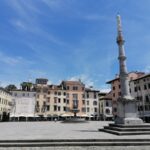
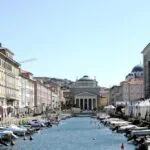
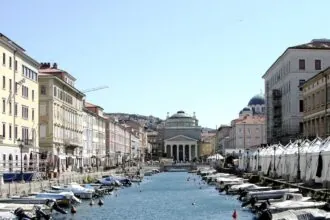
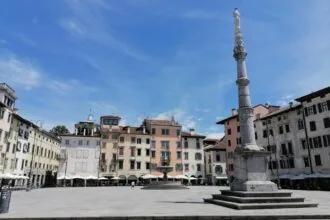
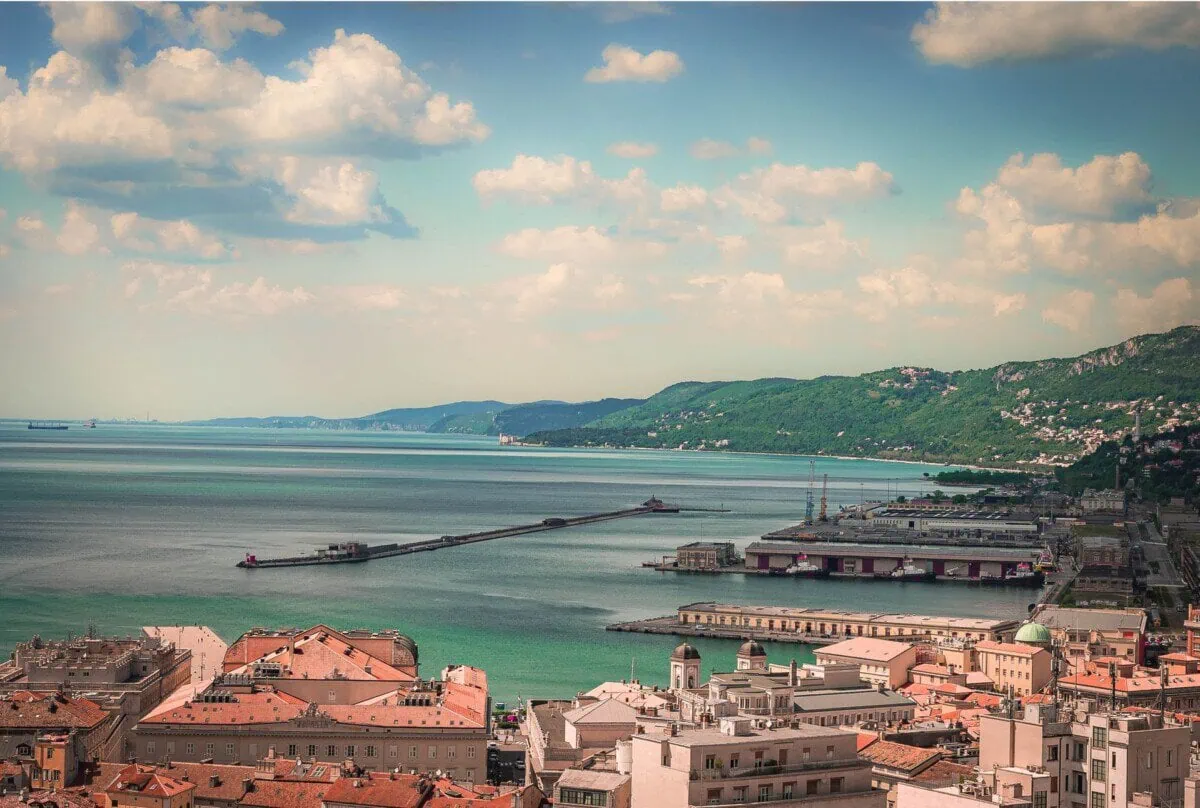
Unlike many Mediterranean ports tucked away in industrial zones, Trieste’s passenger terminal sits directly beside Piazza Unità d’Italia and Molo Audace, effectively part of the historic centre rather than a remote arrival point.
The city handles two distinct kinds of sea traffic: seasonal hydrofoil passenger routes across the Adriatic to Croatia and Slovenia, and growing cruise ship calls at the city’s dedicated maritime station.
Both arrival types share the advantage of Trieste’s compact geography: the passenger and cruise terminals sit roughly a fifteen-minute walk from the main train station, and within easy reach of the old town on foot.
Trieste has held free port status since 1719, a legal designation from its Habsburg founding that still separates the passenger and cruise berths at Molo IV from the sprawling container and cargo terminals of Porto Nuovo further along the coast. The Stazione Marittima building itself dates from the 1920s and 1930s, built specifically for the passenger trade rather than adapted from an industrial shed.
This guide covers the seasonal hydrofoil routes currently operating from Trieste route by route, the city’s cruise terminal, and how to get between the port and the rest of the city.
Whether arriving on a cruise call or planning a hydrofoil trip across the Adriatic, the same short walk connects the water to Trieste’s historic centre.
| Route | Frequency | Journey Time | Typical Price |
|---|---|---|---|
| Trieste-Piran (Slovenia) | Up to 4x weekly | ~40 minutes-3 hours | €9 (£8/$10) |
| Trieste-Rovinj (Croatia) | Up to 5x weekly | ~1 hour 40-2 hours 30 | From €9 (£8/$10) |
| Trieste-Poreč (Croatia) | ~3x weekly | ~1 hour 10-1 hour 45 | From €9 (£8/$10) |
| Trieste-Lošinj (Croatia) | ~2x weekly | ~4 hours | From €9 (£8/$10) |
Hydrofoil Routes to Croatia and Slovenia
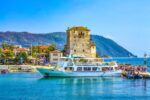
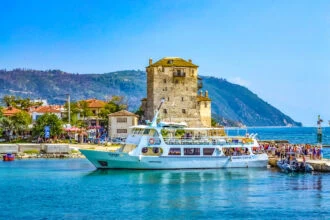
Seasonal hydrofoil services from Trieste are operated by Liberty Lines, typically running from spring through autumn rather than year-round, and connecting the city to several destinations across the northern Adriatic.
Routes to Rovinj run up to five times a week and take between one hour forty minutes and two hours thirty minutes, while Poreč, also in Croatian Istria, runs around three times weekly at a somewhat shorter one hour ten to one hour forty five minutes.
A longer route to Lošinj runs roughly twice a week and takes around four hours, reflecting the greater distance down the Croatian coast, while the crossing to Piran in Slovenia runs as often as four times weekly with a journey time varying from around 40 minutes up to three hours depending on the specific routing and stops.
Fares across these routes typically start from around €9 (£8/$10), though exact pricing depends on the route, season and how far in advance a ticket is booked. Because services are seasonal, it is worth confirming current timetables directly with Liberty Lines before planning a trip.
Liberty Lines is Italy’s largest scheduled hydrofoil operator, better known for its extensive network linking Sicily to the Aeolian and Egadi Islands, which makes the Trieste service a small, seasonal outpost of a much larger business rather than a one-off operation. Boarding at Molo IV follows the same pattern as any international sailing, with a document check, a security screening and a short safety briefing before the catamaran casts off.
Best for two or three nights. The widest choice of rooms, with filters for free cancellation and included breakfast.
View staysBest for longer stays. Whole apartments and houses, so you are not eating out three times a day.
View rentalsBest for double-checking. Runs the same search across several booking sites so you are not leaving money behind.
Compare pricesPiran: Slovenia’s Closest Hydrofoil Hop
Of the four routes, Piran is the shortest hop across the Adriatic, run by Liberty Lines on the same seasonal network that continues on to Poreč, Rovinj and Mali Lošinj, with crossings varying between around 40 minutes and three hours depending on the day’s stopping pattern.
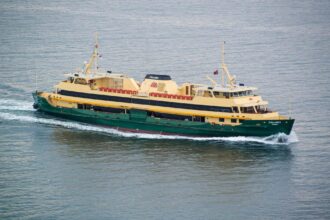
The network uses fast catamarans, including vessels such as the Sofia M, a modern hydrofoil carrying up to 180 passengers, with an air-conditioned cabin, panoramic windows and space for both bicycles and small pets on board.
Onboard, a drink bar covers tea, coffee and soft or alcoholic drinks, while a small snack bar sells sandwiches, toast and cakes, more useful on the longer multi-stop sailings than on the shortest direct hop.
Piran’s own Tartini Square, ringed by Venetian-Gothic townhouses, sits only steps from where the hydrofoil docks, so the crossing itself becomes part of the day rather than a means to an end.
Beyond the square, narrow lanes climb to the old town walls for views back across the Gulf of Trieste, and the nearby Sečovlje salt pans reward anyone with an extra hour or two to spare.
For travellers who want a taste of Slovenia’s coastline without the drive around the head of the gulf, Piran by hydrofoil is arguably the most scenic and relaxed way to make the crossing.
Trieste to Piran Ferry Times & Departures
Use Ferryhopper to check live sailings between Trieste and Piran in both directions. Select your travel date to compare scheduled ferry departures, sailing times and available tickets.
Select the date you want to travel. The times shown on the right-hand side are the scheduled departure and arrival times for each ferry.
Availability can change quickly, particularly during weekends and the summer season. Some sailings may stop accepting bookings a few hours before departure. If a timetable is blank, there may be no available sailings for today. Try moving to a later date to check future services.
This is the timetable for the outward direction. Use it to check sailings from Trieste to Piran for the date you plan to travel.
This is a separate timetable for the opposite direction. It does not select a return ticket for the journey above. Use it to check sailings from Piran to Trieste.
Want to compare different routes and other ferry options?
Compare routes, operators, sailing times and prices with Ferryhopper or Direct Ferries.
Rovinj: Croatian Istria’s Old Town on the Water
Rovinj is the most frequent of Trieste’s Croatian hydrofoil routes, run by Liberty Lines up to five times a week in season, with a crossing of around one hour forty minutes to two hours thirty minutes depending on the day’s routing.
The same fleet of fast catamarans used across the network covers this route, air-conditioned throughout with panoramic seating, a drink bar and a snack bar serving sandwiches and pastries on the longer sailings.
Luggage allowance runs to two bags per person, with small pets carried free of charge and bicycles accepted for a modest supplement, useful for anyone planning to explore Istria’s coast road once ashore.
Rovinj’s old town rises straight out of the sea on a former island, its lanes climbing steeply towards the Baroque bell tower of St Euphemia’s church, modelled on Venice’s own Campanile di San Marco.
The town has long attracted artists and photographers, drawn by pastel façades, laundry strung between buildings and a harbour still full of small working fishing boats.
For a genuine change of country and cuisine without a long drive, Rovinj by hydrofoil makes a strong case as Trieste’s single best day-trip crossing, pairing a very different Adriatic town with a scenic sea journey there and back.
Trieste to Rovinj Ferry Schedules & Tickets
Check the current Trieste to Rovinj ferry schedule with Ferryhopper. Change the date to compare available crossings, departure times and bookable tickets for both directions.
Select the date you want to travel. The times shown on the right-hand side are the scheduled departure and arrival times for each ferry.
Availability can change quickly, particularly during weekends and the summer season. Some sailings may stop accepting bookings a few hours before departure. If a timetable is blank, there may be no available sailings for today. Try moving to a later date to check future services.
This is the timetable for the outward direction. Use it to check sailings from Trieste to Rovinj for the date you plan to travel.
This is a separate timetable for the opposite direction. It does not select a return ticket for the journey above. Use it to check sailings from Rovinj to Trieste.
Want to compare alternative ferry routes and more sailing options?
Compare routes, operators, sailing times and prices with Ferryhopper or Direct Ferries.
Poreč: Roman Streets and a Byzantine Basilica
Poreč, further up the Istrian coast from Rovinj, runs around three times a week with Liberty Lines, and at roughly one hour ten minutes to one hour forty five minutes it is the shortest of the three Croatian crossings from Trieste.
The route shares the same catamaran fleet as the rest of the network, air-conditioned and fitted with a drink bar and snack bar, though the shorter sailing time means many passengers simply enjoy the open sea views instead.
As with the other routes, tickets are best bought in advance during peak summer, since Poreč’s popularity as a resort town means the busiest sailings can sell out closer to departure.
Poreč’s old town still follows its original Roman street grid, laid out around the ancient decumanus, with the Euphrasian Basilica, a UNESCO World Heritage Site, holding some of the finest surviving Byzantine mosaics anywhere on the Adriatic.
Beyond the historic centre, Poreč has grown into one of Istria’s main resort towns, with a long promenade, beach clubs and a noticeably livelier holiday atmosphere than the quieter lanes of Rovinj.
The mix of genuine Byzantine heritage and an easy beach-town pace makes Poreč a natural choice for travellers who want history in the morning and the sea in the afternoon, all without a hire car.
Trieste to Poreč Ferry Crossings & Times
Compare ferry crossings between Trieste and Poreč with Ferryhopper. The live timetable shows scheduled departure and arrival times so you can choose a suitable sailing in either direction.
Select the date you want to travel. The times shown on the right-hand side are the scheduled departure and arrival times for each ferry.
Availability can change quickly, particularly during weekends and the summer season. Some sailings may stop accepting bookings a few hours before departure. If a timetable is blank, there may be no available sailings for today. Try moving to a later date to check future services.
This is the timetable for the outward direction. Use it to check sailings from Trieste to Poreč for the date you plan to travel.
This is a separate timetable for the opposite direction. It does not select a return ticket for the journey above. Use it to check sailings from Poreč to Trieste.
Looking for different ferry routes or other ferry options?
Compare routes, operators, sailing times and prices with Ferryhopper or Direct Ferries.
Mali Lošinj: The Longest Crossing, an Island Escape
The furthest of Trieste’s hydrofoil routes, Mali Lošinj runs only around twice a week with Liberty Lines, reflecting the roughly four-hour crossing down the Croatian coast, considerably longer than the other three destinations covered here.
Because of the distance, this route relies on the same air-conditioned catamaran fleet but makes fuller use of the onboard drink bar and snack bar, with toast, sandwiches and cakes available across what amounts to most of a day at sea.
Given the limited weekly sailings, this is the route where checking the current timetable well in advance matters most, since missing one of only two weekly departures can mean a significant change of plan.
Once known as an Austro-Hungarian health resort, prized for its mild microclimate and aromatic pine forests, Lošinj has kept a reputation as one of the Adriatic’s more restorative islands rather than a party destination.
The island is also home to Croatia’s main bottlenose dolphin research and protection project, and its clear water and quiet coves draw a noticeably different, more laid-back crowd than the mainland Istrian towns.
For travellers with a full day to give over entirely to the journey, Lošinj rewards the effort with an island atmosphere that feels genuinely removed from anywhere reachable by road from Trieste.
Booking and Seasonality
Unlike Trieste’s year-round rail and road links, these hydrofoil routes are seasonal, generally operating from spring through autumn and scaling back or stopping entirely over winter. Anyone planning a crossing outside peak season should check current schedules before booking.
Tickets can be bought online in advance through Liberty Lines or via ferry-booking aggregators, and booking ahead is worth it in peak summer months when popular routes to Rovinj and Piran can sell out on the busiest departures.
Because these are international sailings to Croatia and Slovenia, every passenger needs a valid passport or EU national identity card at check-in, the same requirement as boarding a flight rather than a domestic train or bus. Fares bought directly through the operator can usually be changed or refunded up to a set cut-off before departure, though the exact terms vary by fare type and are worth checking at the time of booking.
These routes make it possible to combine a stay in Trieste with a genuinely different country and coastline without ever needing a car, a distinctive option compared with most Italian port cities.
For a shorter outing rather than a full crossing, the Piran route can also work as a day trip in its own right, an alternative to the road journey covered in our separate day trips guide to Trieste.
Foot Passenger or Car: What the Hydrofoils Actually Carry
Anyone weighing up these Adriatic crossings should know upfront that Liberty Lines’ catamarans are foot-passenger vessels, not car ferries, so there is no vehicle deck to book onto any of the four routes covered above. Luggage runs to around two bags per person, and a bicycle can usually be brought aboard for a modest supplement rather than a car.
This makes travelling car-free the default rather than an alternative on these routes, genuinely useful for anyone based in central Trieste without their own vehicle, since the terminal at Molo IV sits within walking distance of most hotels and the passenger and cruise berths described above.
Anyone who does drive to Trieste needs a separate plan for the far side of the crossing, since the car itself stays behind in Trieste’s port car park rather than travelling across with its owner. A taxi, local bus or short walk usually covers the final stretch into Piran, Rovinj, Poreč or Mali Lošinj once ashore, since each of these old towns is compact and walkable from its own harbour.
For travellers who specifically want a car on the Croatian or Slovenian side, whether for the Istrian coast road or onward into Slovenia, the practical fix is renting locally once ashore rather than expecting to bring one along, or driving the whole route by road instead of booking a hydrofoil in the first place.
Best if you can move a day either way. Shows how the fare changes across the month.
Compare flightsBest if you want maps and messaging working the moment you switch your phone on.
See eSIM plansBest after a long flight or a late landing. Price agreed before you travel, and no taxi queue.
Check transfersWhat Runs Outside the Summer Season
The honest answer for most of the year is: very little. These hydrofoil crossings are not a spring-to-autumn service in the loose sense that phrase implies; recent seasons have seen the Rovinj route, for example, confined to a window running from around late June to the end of August, considerably narrower than a full six-month season, and the other three routes follow a broadly similar pattern.
Outside that window, all four crossings covered above are suspended entirely rather than thinning out to a reduced timetable, so travellers hoping for an occasional winter or shoulder-season sailing to Piran, Rovinj, Poreč or Mali Lošinj should not plan around one without confirming current dates directly with Liberty Lines first.
The practical alternative once the hydrofoils stop running is overland travel. Trieste’s own airport railway station keeps a year-round regional service running to Nova Gorica on the Slovenian border, and onward road or rail connections from there reach Ljubljana and the coast in every season, unlike the hydrofoil network above. For Croatia, a hire car or a coach connection through Slovenia remains the realistic year-round option covered in our separate day trips guide.
This seasonal gap is worth building into any itinerary planned outside June to September, since arriving in Trieste expecting a same-day hop to Piran or Rovinj by sea in, say, November or February will not work, however reliable the route looks online.
Trieste’s Cruise Terminal
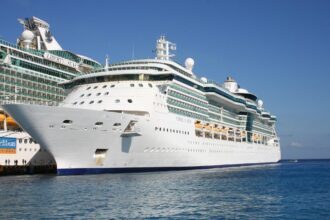
Trieste’s cruise operations run through the Stazione Marittima, the city’s maritime station, with two dedicated cruise-ship berths plus additional berths directly facing Piazza Unità d’Italia and on Molo Audace itself for smaller vessels.
The terminal is managed under concession by Trieste Terminal Passeggeri, and recent seasons have seen a modest return of major cruise lines to the port, alongside a broader, region-wide trend of somewhat declining Adriatic cruise traffic overall.
Because the terminal sits essentially adjacent to Piazza Unità, cruise passengers can walk straight into the historic centre without needing a shuttle bus, one of the more convenient arrangements among northern Adriatic ports.
The city’s main train station is a further ten to fifteen minutes on foot from the terminal, making a same-day rail connection onward genuinely realistic for cruise passengers with a few hours in port.
Trieste’s cruise numbers track the wider Adriatic trend mentioned above: the 2026 season is set to bring around 125 ship calls and roughly 380,000 passengers through the port, down from 131 calls and 455,000 passengers in 2025, even as the mix shifts toward a growing number of smaller luxury vessels. Norwegian Cruise Line is among the operators returning in 2026 with eleven scheduled calls, and industry forecasts point to a passenger recovery from 2027 onward.
Getting Between the Port and the City
Both the passenger hydrofoil terminal and the cruise station sit within a few minutes’ walk of Piazza Unità d’Italia, so most visitors arriving by sea need no further transport to reach the old town, the cathedral or the city’s historic cafés.
For anyone who would rather not walk, Trieste Trasporti bus line 9 runs directly along the waterfront past Piazza Unità d’Italia and the port on its route between Piazzale Gioberti and Sant’Andrea, while line 8 also passes close by along the Rive on its route between Roiano and Valmaura. Tickets cost a couple of euros, sold at tobacconists, newsstands and through the TPL FVG app, and cover the whole urban network rather than a single ride.
Taxis wait on a dedicated rank at Piazza Unità d’Italia, a couple of minutes from either terminal, or can be called through Radio Taxi Trieste on 040 307730 for anyone who would rather not queue. A taxi is the simplest way to reach destinations further along the coast such as Miramare Castle or Barcola, both also reachable by local bus from stops a short walk inland near the train station.
Drivers arriving by car can use the 600-space car park at Molo IV itself, run directly by Trieste Terminal Passeggeri on a pay-and-display basis with rates banded by zone, roughly €0.80 to €1.80 (£0.70-1.60/$0.90-2) per hour between 8am and 8pm on weekdays and Saturdays. It sits right beside the terminal building, making it a genuinely practical option for anyone driving in from elsewhere in Friuli-Venezia Giulia rather than arriving on foot from the city centre.
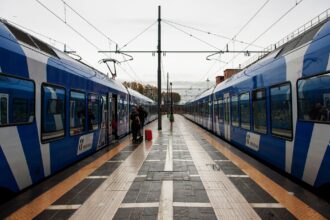
Trieste’s main train station, Trieste Centrale, is around a fifteen-minute walk from the port, or a short bus or taxi ride, and connects onward to Venice, Udine and the wider Italian rail network.
For anyone continuing straight on to Trieste Airport, our separate airport transfers guide covers the bus, train and taxi options in full, none of which depart from the port itself.
Facilities at the Ferry Terminal
Trieste’s hydrofoil services depart from the Nuova Stazione Marittima on Molo IV, a short walk from Piazza Unità and the main railway station, rather than from a large-scale international ferry terminal.
Because these are international routes to Slovenia and Croatia, passengers should plan to arrive at least two hours before departure to complete check-in at the Liberty Lines ticket desk and clear border checks, which can take longer at busy summer sailings.
The terminal building itself is modest rather than grand, with a ticket office and a basic waiting area, so anyone wanting a proper coffee or something to eat before boarding is better served by the waterfront bars and cafés lining the nearby Riva, only a few minutes on foot.
Luggage storage is available at the terminal for a small daily fee per bag, with further storage options a short walk away at Trieste Centrale railway station for anyone breaking a longer journey around a sailing.
Parking directly outside the terminal suits short drop-offs and pickups, with longer-stay parking available in nearby lots for travellers arriving by car rather than on foot from the city centre.
Given the seasonal, foot-passenger nature of these routes, facilities here are deliberately simple, so treating the terminal as a functional embarkation point rather than a destination in itself sets the right expectations.

Rupert’s Handy Travel Tips
Travelling by sea to or from Trieste? Rupert has a few tips that can save both time and money:
- Check current timetables before booking: hydrofoil routes to Croatia and Slovenia are seasonal, not year-round.
- Book Rovinj and Piran crossings ahead in summer: the busiest departures can sell out in peak season.
- Walk rather than taxi from the cruise terminal: Piazza Unità and the old town are just a few minutes away on foot.
- Use the Piran hydrofoil as a day trip option: it’s a scenic alternative to the road journey into Slovenia.
- Allow 15 minutes on foot to the train station: useful for cruise passengers planning a same-day onward rail trip.
- Arrive two hours early for any hydrofoil crossing: these are international routes, so check-in and border checks take longer than a domestic ferry.
- Confirm fares directly with the operator: pricing varies by route, season and how far ahead you book.
Want to meet the reindeer behind our travel tips? Find out more in our page Who is Rupert?.




Frequently Asked Questions About Trieste’s Ferry Port
Are Trieste’s ferry routes year-round?
No. The city’s passenger hydrofoil routes to Croatia and Slovenia are seasonal, generally running from spring through autumn.
Which company runs ferries from Trieste?
Liberty Lines operates the current seasonal hydrofoil routes to Rovinj, Poreč, Lošinj and Piran.
How far is the port from Trieste’s city centre?
The passenger and cruise terminals sit right beside Piazza Unità d’Italia, within easy walking distance of the historic centre.
Can you take a ferry from Trieste to Slovenia?
Yes, a seasonal hydrofoil runs to Piran up to four times a week, an alternative to the road journey across the border.
Does Trieste have a cruise terminal?
Yes, the Stazione Marittima handles cruise calls with two dedicated berths, managed by Trieste Terminal Passeggeri.
How much do hydrofoil tickets from Trieste cost?
Fares typically start from around €9 (£8/$10), varying by route, season and how far in advance a ticket is booked.
How early should you arrive for a hydrofoil departure?
At least two hours before sailing, since these are international routes requiring check-in and border checks at the Nuova Stazione Marittima.
Further Reading & Related Guides
Exploring the city first? Our Trieste Things to Do guide covers Piazza Unità, Miramare Castle and the historic cafés a short walk from the port, all worth building into a longer stay around any of the hydrofoil crossings above.
Heading further into Slovenia or Croatia after landing? Our Day Trips from Trieste guide covers the road route to Piran and Ljubljana in more depth, and our Interrail Slovenia Pass guide covers rail travel across the same border for anyone who would rather take the train than the boat.
Travelling to Trieste from elsewhere in Italy before catching a hydrofoil? Our Italia in Tour Pass guide explains whether a multi-day regional rail pass is worth buying for the journey in, useful for anyone combining several stops along the Adriatic coast before boarding at Molo IV.
Flying in instead? Our Trieste Airport Transfers guide covers getting from Ronchi dei Legionari into the city.