Reviewed by our editorial team Updated
Why Choose the Slovenia Pass
The Interrail Slovenia Pass is one of the most underrated rail passes in Europe, offering an excellent balance of scenic journeys, compact travel distances, and genuine value. Slovenia may be a relatively small country, but it packs an extraordinary amount of variety into a manageable space. Within just a few hours by train, travellers can move between alpine lakes, mountain valleys, historic towns, vineyard regions, and the Adriatic coastline.
One of the biggest reasons to choose the Slovenia rail pass is the freedom it provides. Unlike larger countries where rail journeys can dominate entire days, Slovenia’s compact geography means you spend more time exploring and less time sitting on trains. You can wake up in Ljubljana, spend the morning beside Lake Bled, carry on by train to Bohinjska Bistrica and by local bus into the mountains around Lake Bohinj, and still return to the capital by evening.
The pass is also ideal for travellers who enjoy slow travel and scenic routes. Slovenia’s railway lines pass through forests, river valleys, alpine landscapes, and small traditional towns. The famous Bohinj Railway route is particularly spectacular, offering one of the most scenic rail experiences in Central Europe without the crowds often found on more famous Swiss or Austrian routes.
It is worth being clear early about what the pass does not do. The Interrail Slovenia Pass is a One Country Pass, valid only within Slovenia, so it will not carry you to Vienna, Venice, Trieste or Zagreb. Slovenia’s position at the crossroads of Austria, Italy, Croatia and Hungary still makes it an excellent place to start or finish a wider European trip, but those onward legs need their own tickets, or a Global Pass.
For travellers wanting a flexible, scenic, and affordable rail experience without the complexity of larger European networks, the Slovenia Pass is an excellent choice.
Interrail Slovenia Pass Overview and Key Facts
The Interrail Slovenia Pass is a flexible One Country Pass that gives travellers unlimited train travel across Slovenia on selected travel days within a one-month period. It is designed for travellers who want the freedom to explore without buying separate tickets for every journey.
The pass is available in 3, 4, 5, 6, or 8 travel day formats, allowing you to choose an option that matches the length and pace of your trip. Travel days do not need to be consecutive, which makes the pass particularly useful for travellers who want to mix rail travel with longer stays in individual destinations.
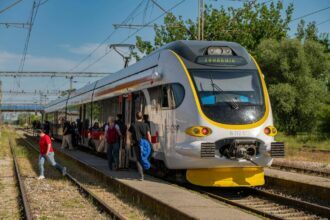
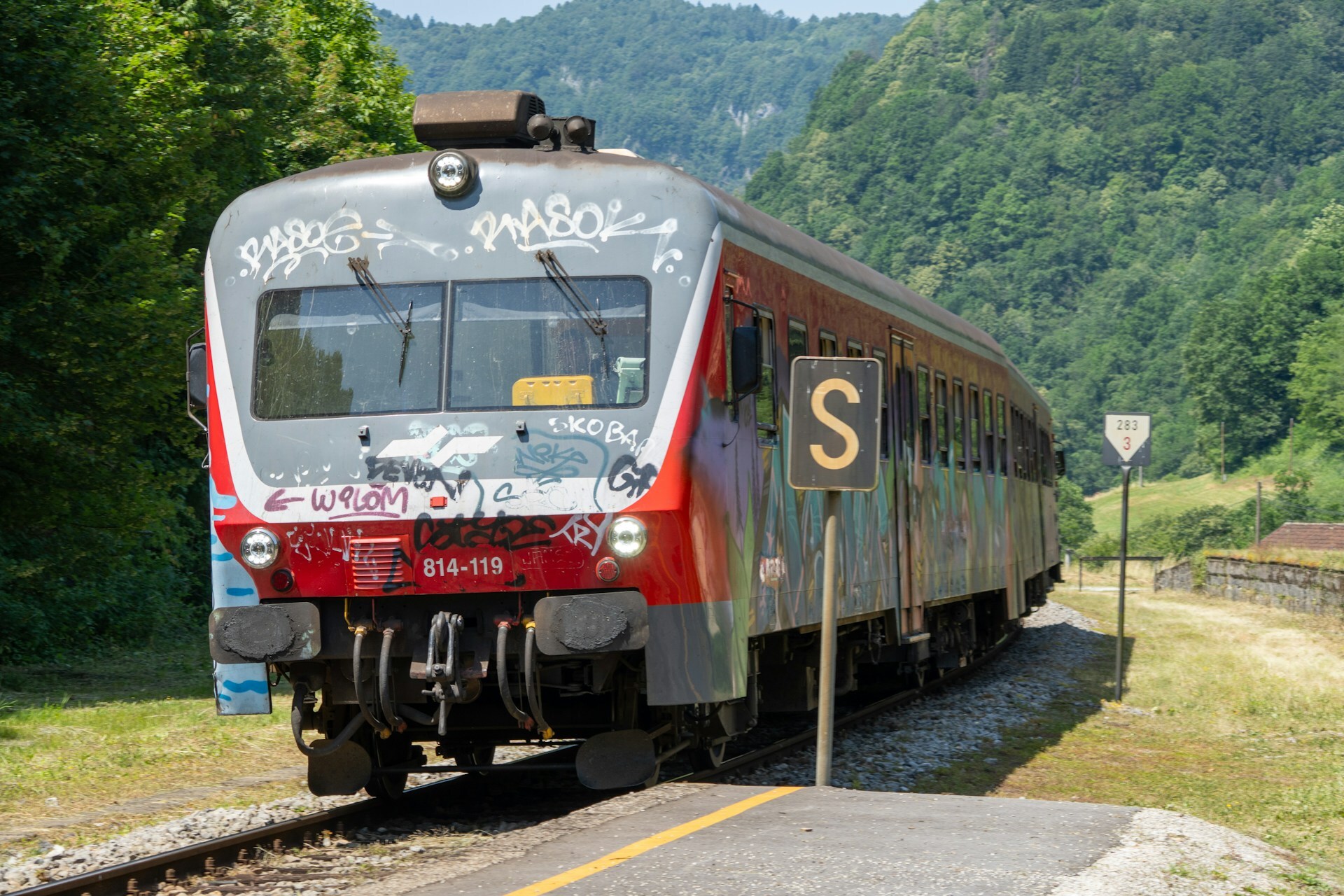
The pass covers nearly the entire passenger rail network operated by Slovenske železnice. This includes domestic regional services and InterCity routes. It does not include cross-border trains, because a One Country Pass is valid only within the single country named on it.
One of the strongest aspects of the Slovenia Interrail ticket is that reservations are generally minimal compared to countries like Spain or France. Most domestic trains can simply be boarded without extra fees, making spontaneous travel much easier.
The pass is available for youth, adult, and senior travellers, with discounted pricing for younger travellers aged 12–27 and seniors over 60. Children under 12 can often travel free when accompanied by an adult pass holder.
Travellers can choose between a mobile pass, stored in the Rail Planner App, or a traditional paper version. The mobile option has become increasingly popular due to its simplicity and instant delivery.
Because Slovenia is relatively compact, even shorter pass durations allow travellers to see a substantial portion of the country while keeping costs manageable.
Best if you want daily housekeeping and a front desk. Filter by area first, then by price.
Check availabilityBest for groups who want one address and separate bedrooms rather than three hotel rooms.
See holiday homesBest for double-checking. Runs the same Slovenia search across several booking sites so you are not leaving money behind.
Compare pricesKey Operators and Rail Network Size
The Interrail Slovenia Pass covers the national rail network operated by Slovenske železnice, commonly shortened to SŽ. Unlike larger European countries with multiple private train companies and fragmented ticketing systems, Slovenia’s rail network is refreshingly straightforward. In practical terms, if a passenger train operates in Slovenia, your pass will almost certainly cover it.
Slovenia’s railway network stretches across approximately 1,200 kilometres of track, linking the country’s major cities, mountain regions, and international borders. While this may seem small compared to countries such as Germany or Italy, the network is extremely efficient for the country’s size.
The railways connect the capital Ljubljana with key destinations including Maribor, Koper, Celje, and the lake regions near Lake Bled and Lake Bohinj.
International connectivity is one of Slovenia’s biggest strengths as a country, even though the pass itself stops at the border. Rail corridors extend north into Austria, west into Italy, south into Croatia, and east towards Hungary, which makes Slovenia an easy place to begin or end a wider Central European trip once you have bought the onward leg separately.
Although Slovenia does not operate high-speed trains comparable to France’s TGV or Spain’s AVE networks, the slower pace actually enhances the scenic experience. Routes pass through forests, river valleys, alpine tunnels, and wine-growing regions, creating a far more relaxed style of rail travel.
For travellers who value scenery and simplicity over extreme speed, Slovenia’s network is exceptionally rewarding.
Transport Hubs and Major Routes
The Slovenian rail network is heavily centred around Ljubljana, which acts as the country’s primary transport hub. Almost every major domestic and international train route passes through Ljubljana’s central station, making it the logical base for most rail itineraries.
From Ljubljana, travellers can easily branch out towards every major region of the country. One of the busiest domestic routes heads north-east towards Maribor, Slovenia’s second-largest city and the centre of the country’s wine region. This line continues onwards towards Austria and Hungary.
Another important route runs south-west towards Koper on the Adriatic coast. During summer, this becomes one of Slovenia’s most popular rail corridors as travellers head towards the sea.
The alpine routes north-west from Ljubljana are among the most scenic in the country. Trains towards Jesenice, Lesce-Bled, and Nova Gorica pass through mountain valleys and forests before connecting with routes into Austria and Italy.
One particularly famous journey is the Bohinj Railway, which links alpine Slovenia with the Soča Valley. This line passes through dramatic scenery including rivers, tunnels, and mountain passes, making it one of the standout rail experiences included with the Interrail Slovenia Pass.
Internationally, Slovenia’s location makes it an excellent rail crossroads. Direct and connecting services link Ljubljana with Vienna, Graz, Trieste, Venice, Zagreb, and Budapest.
Because distances remain relatively short, the Slovenia train travel pass works especially well for travellers wanting to combine multiple destinations without exhausting travel days.
Example Ticket Prices vs Pass Value
One of the biggest questions travellers ask is whether the Interrail Slovenia Pass actually saves money compared to buying standard tickets individually. Slovenia is cheaper than countries such as Switzerland or France, but rail costs can still add up surprisingly quickly once you begin combining multiple journeys across the country.
A standard one-way ticket between Ljubljana and Maribor typically costs around €12–€16 (£10–£14 / $13–$17), depending on train type and booking conditions. Journeys from Ljubljana to Koper on the Adriatic coast usually cost €10–€15 (£9–£13 / $11–$16) each way. A return trip to the area around Lake Bled may seem affordable at first glance, but once combined with additional journeys across the country, the costs begin to stack up.
International routes cost considerably more, but they cannot be counted towards the pass, because a One Country Pass does not cover them. A standard ticket from Ljubljana to Vienna can easily exceed €35–€50 (£30–£44 / $38–$54), while routes towards Venice or Zagreb often range between €20–€45 (£17–£39 / $22–$49). Those are fares you would still be paying on top of a Slovenia Pass, not savings it delivers.
The value case therefore has to rest on Slovenian fares alone. A traveller basing themselves in Ljubljana and working through Lesce-Bled, Bohinjska Bistrica, the full Bohinj Railway down to Nova Gorica, Maribor, Ptuj and Koper, with return legs on each, could still spend well over €120–€180 (£104–£157 / $130–$194) on individual domestic tickets. That is the honest comparison, and across a busy week it lands close to the price of a mid-length pass.
The biggest advantage is not just the raw savings, but the flexibility. With the Slovenia Interrail ticket, you avoid the stress of constantly calculating ticket prices or locking yourself into fixed departure times. If the weather changes and you suddenly decide to swap the coast for the mountains, you simply board another train.
That level of spontaneity is where the pass becomes especially valuable.

Interrail Slovenia Pass Prices (Flexi Passes)
The Interrail Slovenia Pass is sold as a Flexi Pass, allowing travellers to choose a specific number of travel days within a one-month validity period. This format works particularly well in Slovenia because the country is compact enough to combine several destinations into a single travel day while still allowing plenty of time for sightseeing.
Adult prices for the Slovenia Pass generally begin at around €105 (£91 / $113) for a 3-day pass and increase gradually depending on the number of travel days selected. A 4-day pass typically costs around €129 (£112 / $139), while a 5-day pass sits near €152 (£132 / $164). Longer versions, such as the 6-day and 8-day passes, usually range between €169 (£147 / $183) and €194 (£169 / $210).
The pricing structure becomes especially attractive for youth travellers aged 12–27, who receive substantial discounts. Youth versions of the pass are often around 20–25% cheaper, making the Slovenia train travel pass extremely appealing for backpackers and budget-conscious travellers exploring Central Europe.
Senior travellers over 60 also benefit from reduced pricing, while children under 12 frequently travel free when accompanied by an adult pass holder.
Because Slovenia is relatively small, many travellers find that a 3-day or 4-day pass is already enough to see the country’s major highlights. A shorter pass can comfortably cover journeys between Ljubljana, Bled, Maribor, and Koper, while still leaving space for a full day on the Bohinj Railway or a second run down to the coast.
Longer passes become more useful for travellers who want to work the branch lines and repeat favourite routes rather than simply tick off the main cities.
When compared against multiple domestic returns across a busy week, the pass often pays for itself surprisingly quickly, especially if you make full use of the longer travel days.
How the Slovenia Pass Works
The Interrail Slovenia Pass is designed to make rail travel as straightforward and flexible as possible. Once purchased, the pass allows unlimited train travel on selected travel days across the Slovenian rail network.
Travellers can choose between a mobile pass and a traditional paper version. The mobile option is now the most popular because it integrates directly with the official Rail Planner App. After purchase, the pass is loaded into the app, where travel days can be activated instantly whenever needed.
A “travel day” lasts from midnight to midnight and allows unlimited train journeys during that period. Importantly, travel days do not need to be consecutive. You might use one day for an alpine journey to Lake Bled, another several days later for a coastal trip to Koper, and another for the Bohinj Railway through the Julian Alps to Nova Gorica.
Using the pass is simple. Before boarding, you activate the travel day in the app and add your planned train to your journey log. Ticket inspectors then scan the QR code generated by the app. The system works offline once activated, which is helpful in mountainous regions where mobile signal may occasionally weaken.
Unlike countries such as Spain or France, Slovenia generally requires far fewer reservations. Most domestic trains can simply be boarded without extra fees, which keeps travel spontaneous and stress-free.
The international EuroCity and Railjet trains towards Austria and Italy do require reservations, though those journeys need their own tickets anyway. Reservations usually cost only a few euros and can be booked at stations or online.
The simplicity of the system is one of the Slovenia Pass’s greatest strengths.
Where You Can Travel with the Slovenia Pass
The Slovenia rail pass provides unlimited access to virtually the entire passenger rail network operated by Slovenske železnice. This includes domestic regional trains and InterCity services right across the country.
Within Slovenia itself, the pass covers all major destinations. Travellers can easily explore Ljubljana, the country’s compact and highly walkable capital, before heading north-west to the alpine stations at Lesce-Bled and Bohinjska Bistrica.
Routes towards Maribor open up Slovenia’s eastern wine regions, while services south-west towards Koper provide direct access to the Adriatic coast.
One of the most scenic inclusions is the Bohinj Railway, which crosses spectacular mountain landscapes and river valleys through western Slovenia. This line is often considered one of the hidden gems of European rail travel.
What the pass does not include is any journey beyond Slovenia. Popular international runs from Ljubljana to Vienna, Graz, Trieste, Venice, Zagreb, and Budapest all exist and are easy to book, but each one needs a separate ticket. Anyone planning several of them should compare a Global Pass before buying.
The pass is a straightforwardly domestic product, and that is its strength. Slovenia is small enough that unlimited travel inside a single country still reaches alpine lakes, the Soča Valley, the eastern wine country and the Adriatic, all without the cost or complexity of a multi-country pass.
Best for long or awkward journeys. Builds one itinerary out of separate flights.
View flightsBest if you want maps and messaging working the moment you switch your phone on.
See eSIM plansBest if you would rather not work out the transport on arrival. Book it now and forget it.
View transfersHow to Buy the Interrail Slovenia Pass
Buying the Interrail Slovenia Pass is straightforward, and most travellers now purchase it online before arriving in Slovenia. The easiest option is through the official Interrail website or authorised rail partners, where you can select the number of travel days, traveller category, and whether you want a mobile or paper pass.
The mobile pass has become the preferred option for most travellers because it removes the need to carry physical documents. Once purchased, the pass is delivered directly into the Rail Planner App, where it can be activated whenever you are ready to travel. This is especially useful for flexible trips where plans may change at short notice.
Paper passes are still available for travellers who prefer physical tickets, though these must be shipped in advance and carried throughout the trip. For most people, the mobile version is simply more convenient.
When purchasing the pass, you’ll need to choose between second class and first class travel. Second class is perfectly comfortable on Slovenian trains and represents the best value for most travellers. First class offers more space and quieter carriages on some international services, though domestic differences are often relatively minor.
The pass can also occasionally be purchased at larger European international railway stations, including hubs such as Vienna, Munich, or Ljubljana itself. However, buying online beforehand is usually simpler and avoids potential availability issues.
One important thing to remember is that the Slovenia Interrail ticket is intended for non-Slovenian residents. Residents of Slovenia must instead use domestic rail ticket products offered by Slovenske železnice.
For travellers combining Slovenia with wider European rail journeys, it may also be worth comparing the One Country Pass with a broader Global Interrail Pass before purchasing.

Explore Europe by Train with Rail Passes
Travelling by train in Europe can quickly become expensive if you book individual tickets. Rail passes offer a flexible way to travel across one or multiple countries with a single ticket, making it easier to plan your journey.
Rail Europe allows you to compare and buy a wide range of rail passes, including Interrail-style options, helping you choose the best pass for your route and travel style.
Top Routes and Itineraries with the Slovenia Pass
One of the biggest strengths of the Interrail Slovenia Pass is how much variety can be packed into relatively short rail journeys. Slovenia’s compact size means travellers can experience alpine scenery, historic cities, wine regions, and coastal landscapes without exhausting travel days.
A classic Slovenia itinerary usually begins in Ljubljana. The capital works exceptionally well as a rail base because nearly every major route passes through the city. From Ljubljana, one of the most popular journeys heads north-west towards Lake Bled and the surrounding Julian Alps. Many travellers continue by rail to Bohinjska Bistrica, which has its own station on the Bohinj Railway, then take the short local bus or taxi on to Lake Bohinj for hiking or lakeside relaxation.
Another excellent route heads south-west towards Koper on the Adriatic coast. This line offers a completely different side of Slovenia, with Mediterranean influences, seafood restaurants, and coastal scenery replacing alpine valleys.
The eastern route towards Maribor introduces travellers to Slovenia’s wine-producing regions and quieter historic towns. Nearby Ptuj, one of the oldest towns in Slovenia, is also easily reachable by rail.
For scenic rail enthusiasts, the Bohinj Railway is the standout experience. This spectacular route travels through mountain landscapes, tunnels, forests, and river valleys, particularly around Most na Soči and western Slovenia.
International extensions are popular, but they are not part of the Slovenia rail pass. Many travellers still combine Ljubljana with rail trips to Vienna, Graz, Trieste, Venice, or Zagreb, creating a broader Central European itinerary without needing flights, simply by buying those legs separately.
Because distances remain manageable, Slovenia works especially well for travellers who want to combine sightseeing with relaxed rail travel rather than spending entire days in transit.
Seat Reservations and Supplements
One of the most appealing aspects of travelling with the Interrail Slovenia Pass is that reservations are generally minimal compared to many other European countries. Most domestic Slovenian trains can simply be boarded without any additional booking or reservation fee, making the network highly flexible and spontaneous.
For regular regional and InterCity journeys within Slovenia, travellers can usually arrive at the station shortly before departure and board freely with their activated pass. This is particularly useful for day trips between Ljubljana, Maribor, Koper, and the alpine lake regions.
Reservations matter more on the international routes, which you would be booking as separate tickets anyway. Trains towards Austria, Italy, and Croatia sometimes require compulsory reservations, particularly on EuroCity or Railjet services. Fortunately, these fees are usually modest, often between €3 and €10 (£3–£9 / $3–$11).
International night trains or premium sleeper services may carry additional supplements depending on the type of accommodation selected. A couchette or sleeper cabin naturally costs more than a standard seat, though many travellers consider the overnight experience worthwhile.
Peak summer weekends can occasionally see trains become busy, especially routes towards the coast or alpine areas. In these situations, optional reservations may provide additional peace of mind even when not strictly required.
Compared to countries where reservation systems heavily restrict spontaneity, Slovenia remains refreshingly relaxed. For many travellers, this simplicity becomes one of the strongest reasons to choose the Slovenia train travel pass.
Benefits of the Slovenia Pass
The Interrail Slovenia Pass offers a combination of affordability, flexibility, and scenic travel that is difficult to match elsewhere in Europe. One of its greatest strengths is how much variety travellers can experience in a relatively short amount of time.
Because Slovenia is compact, the pass allows travellers to maximise sightseeing while minimising exhausting travel days. You can comfortably move between alpine lakes, coastal towns, vineyards, and historic cities without spending entire days on trains.
Another major advantage is the flexibility. With unlimited travel on selected days, travellers are not locked into rigid schedules or expensive advance-purchase tickets. If weather conditions suddenly improve in the mountains or you decide to spend another evening in Ljubljana, changing plans is easy.
The pass also covers an unusually varied network for its size. Slovenia packs alpine, Mediterranean and Pannonian landscapes into roughly 1,200 kilometres of track, so a single travel day can genuinely change the scenery around you. Few One Country Passes offer that much variety in such a compact region.
Scenic value is another major benefit. Routes through the Julian Alps, along the Bohinj Railway, and towards the Soča Valley provide beautiful landscapes throughout the journey itself, not just at the destination.
Importantly, Slovenia also remains significantly cheaper than many Western European countries. Accommodation, food, and local transport costs are generally lower than in places such as Switzerland or Austria, making the overall trip more budget-friendly.
For travellers wanting a rail pass that combines simplicity, natural beauty, scenic variety, and excellent value, the Slovenia Pass performs exceptionally well.
Drawbacks and Limitations
While the Interrail Slovenia Pass offers excellent value and flexibility, it is important to understand its limitations before planning your trip. Slovenia’s rail network is enjoyable and scenic, but it is not designed around ultra-fast travel in the same way as the high-speed systems found in France or Spain.
One of the main drawbacks is that some routes can be slower than expected. Although distances within Slovenia are short, trains often travel through mountainous terrain and winding valleys, meaning journey times are longer than the equivalent distance by motorway. A trip from Ljubljana to Koper, for example, may take over two hours despite the relatively short geographic distance.
Another limitation is that not every major tourist destination sits directly on the railway network. While places such as Lake Bled are easily accessible, areas deeper within Triglav National Park or certain alpine valleys often require onward bus connections. The Triglav National Park visitor centres at Bled, Bohinj, and Trenta are useful for checking access and current conditions before setting out. Travellers expecting trains to reach every mountain village may be disappointed.
The clearest limitation is that the pass stops at the border. Onward routes into Italy and Croatia sometimes have fewer daily services than travellers expect, particularly outside summer, and each of them needs its own ticket on top of the pass.
Although reservations are generally minimal within Slovenia itself, some international trains still require advance booking. This slightly reduces spontaneity when crossing borders towards cities like Vienna or Venice, on top of the separate ticket those journeys already need.
The final limitation is that the pass only covers trains. Slovenia’s bus network remains extremely important for reaching smaller destinations, meaning travellers may still need to budget separately for local buses, taxis, or shuttles in certain regions.
Despite these drawbacks, the overall balance of scenic travel, ease of use, and minimal reservation hassle still makes the Slovenia rail pass one of the strongest value One Country Passes in Europe.
Who the Pass is Best For
The Interrail Slovenia Pass is best suited to travellers who value flexibility, scenic journeys, and the ability to explore multiple regions without rigid planning. Because Slovenia is compact yet geographically diverse, the pass works especially well for travellers who want to experience a wide variety of landscapes within a short timeframe.
It is an excellent choice for first-time visitors to Slovenia. Travellers can comfortably use the pass to connect Ljubljana, Lesce-Bled, Bohinjska Bistrica, Maribor, and Koper within just a few travel days.
The pass is also highly attractive for backpackers and youth travellers. Discounted youth pricing, combined with Slovenia’s relatively affordable accommodation and food costs, makes the country particularly budget-friendly compared to neighbouring Alpine destinations.
Travellers who enjoy slow travel and scenic railways are another ideal audience. The Bohinj Railway and western alpine routes offer beautiful journeys where the train ride itself becomes part of the experience rather than merely transportation between cities.
Slovenia also works well as one leg of a multi-country European itinerary, though the pass covers only the Slovenian portion of it. Anyone crossing several borders should price up a Global Pass instead.
However, the pass is less suitable for travellers planning to stay entirely within one city or those relying heavily on buses to reach remote mountain areas. In those cases, standard local tickets may work out cheaper.
For most rail-focused travellers though, the Slovenia Pass strikes an excellent balance between price, simplicity, and travel freedom.
Best if you would rather spend the money on Slovenia than on the room. Compare hostels by location and rating.
Search hostelsBest if you have ever given up on a claim. AirHelp checks whether the flight qualifies and pursues it for you.
See the benefitsBest if your room is not ready yet. Left luggage booked in advance, so you are not hunting for a locker.
Check storageTips for Using the Slovenia Pass
Travelling with the Interrail Slovenia Pass is relatively straightforward, but a few practical strategies can significantly improve the experience and help maximise value.
One of the best tips is to use your travel days for longer or cross-country journeys rather than very short local trips. Slovenia’s domestic fares are fairly affordable, so using a full pass day for a quick regional journey may not provide the best value. Instead, save your travel days for routes such as Ljubljana to Koper, the full Bohinj Railway down to Nova Gorica, or a combined Maribor and Ptuj day in the east.
Another smart strategy is to combine rail travel with Slovenia’s highly reliable bus network. Some mountain regions and national park areas are more easily reached by bus than by train. Using trains for the long-distance backbone of your journey and buses for local access creates a far smoother itinerary.
Travellers should also pay close attention to international reservations. Domestic Slovenian trains rarely require reservations, but EuroCity and Railjet services towards Austria or Italy often do, and those journeys sit outside the pass in any case. Booking them a few days ahead avoids unnecessary stress.
Because Slovenia is compact, it’s also worth planning multiple stops within a single travel day. You could easily combine a morning at Lake Bled with an afternoon exploring another nearby town before returning to Ljubljana.
Weather flexibility is another huge advantage of the pass. Alpine conditions can change rapidly, especially outside summer, so having the ability to swap destinations at short notice becomes extremely useful.
Finally, try to sit on the correct side of the train on scenic routes where possible. Journeys along the Bohinj Railway and western alpine corridors often offer spectacular river and mountain views that are best appreciated from a window seat.
Apps for Train Travel
Using the right apps alongside your Interrail Slovenia Pass makes travelling significantly easier, especially when checking timetables, platform changes, and international connections.
The most important app is the official Rail Planner App, which stores the mobile version of your pass and allows you to activate travel days directly from your phone. It also includes European timetables, reservation indicators, and offline journey planning. For travellers using the mobile pass, this app becomes the centre of the entire Interrail experience.
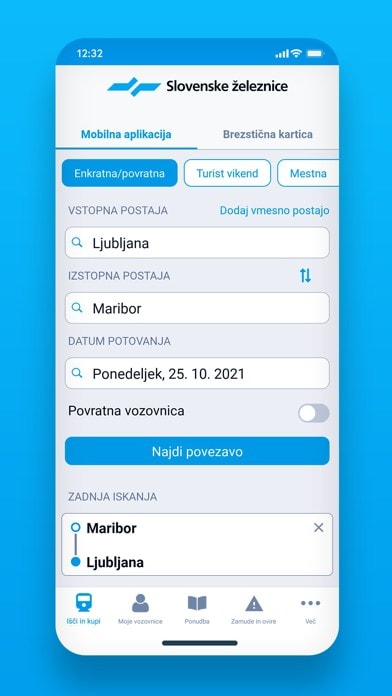
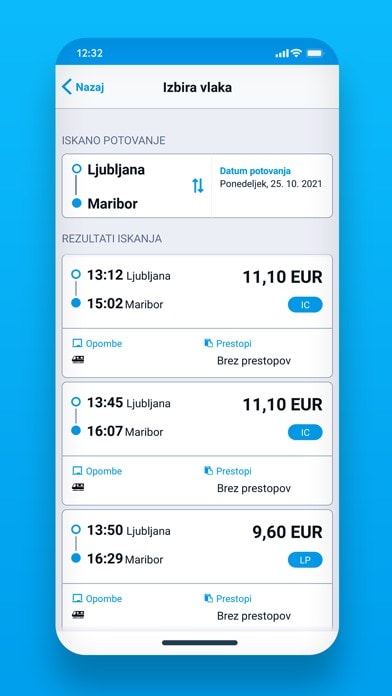
For more accurate local information within Slovenia itself, the app provided by Slovenske železnice is extremely useful. It provides live train updates, platform information, delays, and local ticket purchasing if needed for non-pass journeys.
Travellers should also keep Google Maps or Moovit installed for local navigation once arriving in cities or towns. Since buses and local transport sometimes complement Slovenian rail routes, these apps help bridge the gaps between stations and attractions.
Accommodation apps such as Booking.com or Hostelworld are also highly useful because Slovenia encourages flexible travel. Many travellers end up changing plans spontaneously after discovering new destinations or extending stays in places like Lake Bled or the Soča Valley.
For international journeys, apps from neighbouring operators such as ÖBB in Austria or Trenitalia in Italy can also become useful when managing cross-border reservations and onward travel.
Together, these apps transform the Slovenia train travel pass from a simple rail ticket into a flexible digital travel system that supports both careful planning and spontaneous exploration.

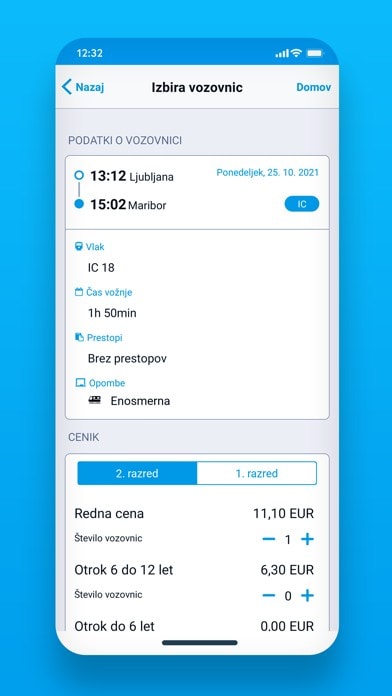
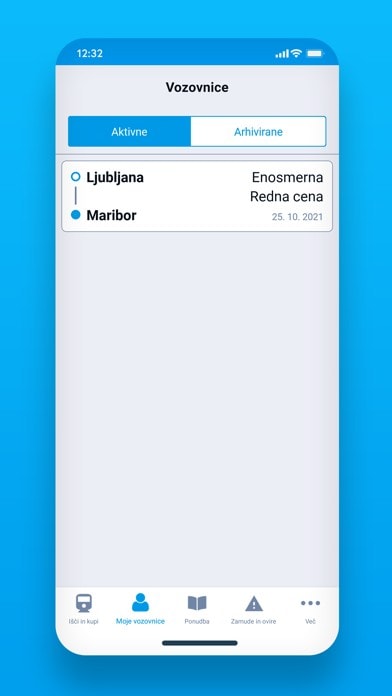
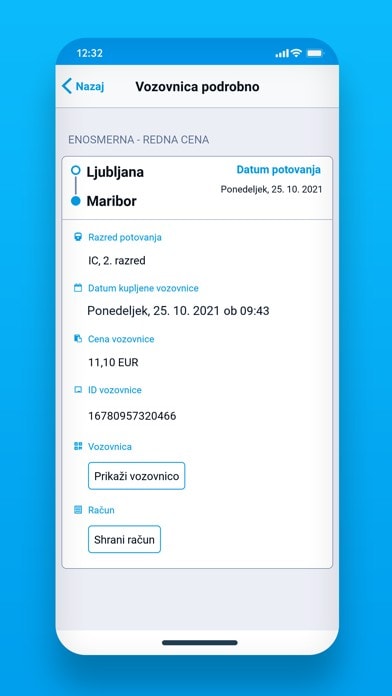
App availability and prices vary by country. Some of these may not appear in your local App Store or Google Play.

Rupert’s Handy Travel Tips
Slovenia’s network is small enough that a little local know-how goes a long way, here are my favourite ways to get the most out of the Interrail Slovenia Pass.
- Base yourself in Ljubljana: the capital sits at the centre of almost every line, so rather than packing up and moving hotels, use it as a hub and take day trips out to Bled, Maribor, and Koper, returning each evening.
- Ride the Bohinj Railway for the scenery, not just the destination: this line through the Julian Alps and down towards the Soča Valley is genuinely one of Europe’s great scenic rides, worth doing as a day out in its own right rather than just a means of getting somewhere.
- Bled itself needs a bus or short taxi from the station: the nearest stop is Lesce-Bled, a few kilometres from the lake, so budget a little extra time and, if you fancy it, walk the last stretch through the woods instead of waiting for a connecting bus.
- Don’t buy more travel days than you need: Slovenia is small enough that a 3-day or 4-day Flexi Pass comfortably covers Ljubljana, Bled, Maribor, and the coast, save the longer passes for trips that also work the branch lines and the full Bohinj Railway.
- Slovenske železnice trains are simple but sparse on some routes: smaller branch lines can run just a handful of services a day, so check the timetable in the Rail Planner App the night before rather than assuming you can turn up and go, especially on Sundays.
Want to meet the reindeer behind our travel tips? Find out more in our page Who is Rupert?.




Frequently Asked Questions about the Interrail Slovenia Pass
Do I need seat reservations for trains in Slovenia?
Most domestic trains do not require reservations. However, international services to Austria, Italy, and Croatia often do. It’s best to book these in advance to guarantee a seat.
Is the Slovenia Interrail ticket valid on buses?
No. The pass only covers trains operated by Slovenske železnice. Bohinjska Bistrica does have its own station on the Bohinj Railway, but Lake Bohinj itself lies a few kilometres beyond it, so you will still need a local bus or taxi for that last stretch, exactly as you do at Lesce-Bled.
Can I use the pass for international journeys?
No. The Interrail Slovenia Pass is a One Country Pass and is valid only within Slovenia. Journeys to Vienna, Venice, Trieste or Zagreb need a separate ticket, and if you plan several of them a Global Pass will usually work out better.
Is the mobile pass better than the paper pass?
Both work, but the mobile version is more convenient. You activate travel days in the app and don’t need to worry about losing a paper ticket.
How many days do I need to see Slovenia with the pass?
A 3- or 4-day pass is enough to cover Ljubljana, Bled, Maribor, and the coast. If you also want the full Bohinj Railway and the eastern branch lines, a 5- or 6-day pass provides more flexibility.

Further Reading & Related App Guides
Planning to explore Slovenia and its neighbours by train? These related guides will help you make the most of your Interrail adventure.
Our Train Booking Apps Guide makes it easy to compare European rail tickets and passes, and if you want to hop across the border to the Adriatic, our Interrail Croatia Pass Guide covers the country next door.
Staying connected while travelling through the mountains matters too, and our eSIM Apps Guide covers the easiest ways to keep data working without swapping physical SIM cards. It is worth checking our Weather Apps Guide before you head for Lake Bled or Ljubljana, and our Visa Requirement Apps Guide helps you understand entry rules and Schengen requirements.