Reviewed by our editorial team Published
33 Kilometres Out: Getting from Trieste Airport to the City
Picking the right Trieste Airport transfer starts with knowing the basic geography: Trieste Airport (TRS), officially Ronchi dei Legionari, sits around 33 kilometres northwest of the city centre, considerably further out than many regional Italian airports.
Despite the distance, the airport is unusually well connected for its size, thanks to a dedicated railway station right beside the terminal, alongside the more familiar bus, taxi and private transfer options found at most airports.
The airport also serves a wider catchment than Trieste alone, with bus connections reaching Udine, Gorizia, Grado and Monfalcone, reflecting its role as the main air gateway for Friuli-Venezia Giulia as a whole.
Taxi ranks, bus stops and the railway station all sit within a short walk of Arrivals, so nothing here involves much of a trek before the transfer even begins. The real decision usually comes down to speed, price or simplicity.
This guide covers every realistic way of reaching central Trieste: the airport bus, the dedicated train station, taxis, private transfers, and hiring a car, so the right option can be picked before joining a queue out of habit.
| Transfer Option | Typical Journey Time | Approximate Cost | Best For |
|---|---|---|---|
| Airport Bus (Line 51) | ~45-60 minutes | From €5 (£4/$6) | Budget travellers, light luggage |
| Train (Trieste Airport station) | ~25-30 minutes | €4.50-5.20 (£4-4.50/$5-6) | Fastest link into the centre |
| Taxi | ~30-45 minutes | €50-70 (£43-60/$59-82) | Door-to-door convenience |
| Private Transfer | ~30-45 minutes | From €55-60 (£47-52/$64-70) | Families and groups |
| Car Hire | Flexible | Varies by season | Exploring Slovenia and the Karst |
The Dedicated Airport Railway Station
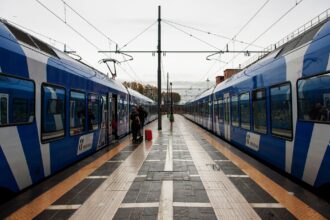
Trieste Airport’s standout feature is its own railway station, opened in 2018 and connected to the terminal by a covered walkway of around 425 metres, roughly a five-minute walk from Arrivals.
The station opened precisely on 19 March 2018 following a €17.2 million build, and its two platforms run 400 metres long, long enough to handle a full-length Frecciarossa set rather than just short regional trains. It was designed as a barrier-free, step-free facility from the outset, a detail that matters given how few regional Italian airports offer anything comparable this close to the terminal doors.
The station is served by Frecciarossa high-speed trains on the Venice to Trieste line, continuing onward to Padua, Bologna, Florence, Rome and Naples, alongside Intercity services and regional trains, making it a genuinely useful long-distance hub, not just a local shuttle stop.
Regional trains reach Trieste Centrale, the city’s main station, in around 25 to 30 minutes for a fare of roughly €4.50 to €5.20 (£4-4.50/$5-6), making the train comfortably the fastest way into the city centre.
The station also runs an international regional service towards Nova Gorica, on the Slovenian border, a useful detail for anyone continuing straight into Slovenia rather than into Trieste itself.
Best if you want daily housekeeping and a front desk. Filter by area first, then by price.
Check availabilityBest for families, or any stay past about four nights. A kitchen and a washing machine start paying for themselves.
Browse rentalsBest as a last check before booking. Compares hotel rates across several sites in one search.
Compare ratesThe Airport Bus to Central Trieste
For a direct road connection, a coach service run by TPL FVG, the region’s public transport network, operates as Line 51, stopping directly outside Arrivals and linking the airport to Trieste’s central bus station a few steps from the terminal doors.
Line 51 runs Monday to Saturday roughly every 30 minutes, thinning out to around once every one to two hours on Sundays, with services generally operating until about 21:00 and only a limited window either side of that.
A single ticket into central Trieste costs from around €3.30 to €5 (£3-4/$3.80-6) depending on where it is bought, with tickets available from the machine in Arrivals, the Turismo FVG desk, or directly from the driver, and the roughly 55-minute journey reflecting the stops made along the way.
Tickets can also be bought and validated through the TPLFVG app, available for both Android and iOS, which covers live departures and journey planning as well as ticket purchase, handy for anyone who would rather skip the queue at the machine.
Line 51 is not the only route at the airport: separate local services, Lines 1 and 26, connect Ronchi dei Legionari directly to Gorizia, Grado and Monfalcone’s railway station, so travellers whose final stop lies beyond Trieste should check the correct stand before boarding.
Because the bus takes noticeably longer door to door than the airport’s own train, it suits travellers prioritising cost over speed, particularly with light luggage and a hotel close to the central bus station itself.
Taking a Taxi from Trieste Airport
For a direct, door-to-door journey, a taxi is a straightforward option here, with ranks available outside the terminal for arriving passengers regardless of flight time.
A typical fare into central Trieste runs to somewhere between €50 and €70 (£43-60/$59-82), reflecting the airport’s greater distance from the city compared with many regional Italian airports, with journey times of around 30 to 45 minutes depending on traffic.
Prices can rise further at peak times or for late-night and early-morning arrivals, so it is worth confirming an approximate fare with the driver before setting off, particularly for a charter or long-haul flight landing outside normal hours.
Some operators run the route as a flat fee rather than a metered fare: Taxi Trieste Airport, for example, currently lists a fixed rate of around €75 (£65/$88) into the centre, tolls and standard luggage included, with modest supplements of roughly €2.80 (£2.40/$3.30) for night hours between 22:00 and 06:00, and the same again on Sundays and public holidays. Oversized bags and pets typically add another euro or two, small print worth checking if travelling with more than a single suitcase.
For groups of three or four, splitting a taxi fare can work out comparable to several bus tickets, particularly for anyone with a hotel some distance from the bus station or train station itself.
Booking a Private Transfer
Travellers who want a predictable, hassle-free arrival often choose a pre-booked private transfer instead of a taxi. A driver typically waits inside the arrivals hall holding a name board, removing any uncertainty after a long flight.
Fixed-price private transfers to central Trieste typically start from around €55 to €60 (£47-52/$64-70) for a standard car, rising to €140 (£120/$164) or more for a minibus suited to larger groups.
Because the price is agreed before travel, there is no surprise if traffic on the drive into the city is heavier than expected, and most operators include flight tracking with a free waiting window built in.
A private transfer is especially worth considering for very early departures or late arrivals, when both the bus timetable and train frequency thin out considerably.
Most private transfers here are booked in advance through international comparison platforms rather than a single local firm, weighing up several operators on price and vehicle type before paying online. Confirmation typically arrives with the driver’s name, vehicle details and a contact number, and most providers allow free cancellation up to 24 or 48 hours before pickup, useful given how often flight times shift at short notice.

Compare Airport Transfer Companies
Pre-booking your airport transfer can save time and reduce stress when you arrive. Whether you need a private taxi, shared shuttle or executive transfer, comparing providers can help you find the best price and service for your journey.
We’ve selected three trusted airport transfer companies so you can compare prices, vehicle options, cancellation policies and customer reviews before you travel.

Hiring a Car for Slovenia and the Karst
Major rental companies including Hertz, Avis, Budget and Europcar operate desks at Trieste Airport, making car hire a genuinely useful option for travellers planning to explore beyond the city itself.
A hire car is most useful for reaching the Karst plateau, Duino Castle, or crossing the border into Slovenia towards Ljubljana or Lake Bled, all destinations that are either awkward or slow by public transport from the airport directly.
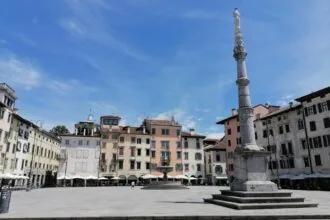
Inside Trieste itself, a car is rarely necessary, since the historic centre is compact and walkable, and parking near Piazza Unità and the old town can be limited, particularly during peak season.
Anyone driving into Slovenia needs a valid e-vignette to use its motorways, a mandatory digital toll sticker bought online in advance through the country’s official DARS system rather than paid at a barrier-style toll booth. A weekly pass costs around €16 (£14/$18) for a standard car, and most rental agreements leave it to the driver to arrange rather than including it automatically, so it is worth sorting out before crossing the border rather than after.
Given the airport’s genuine role as a gateway to the wider region, travellers planning day trips into Slovenia or across the Karst plateau are the ones most likely to benefit from hiring a car here rather than relying on public transport alone.

Search Car Hire Options in Trieste
When public transport does not fit your plans in Trieste, hiring a car can give you more control over your route and travel times.
Search both Discover Cars and EconomyBookings to compare rental prices, vehicle categories and supplier conditions.
Reaching Slovenia Directly From the Airport
Because Trieste Airport sits barely 30 kilometres from the Slovenian border, plenty of arriving passengers are heading into Slovenia rather than Trieste itself, whether that means the coastal towns around Koper and Piran or the capital, Ljubljana. Doubling back into central Trieste first rarely makes sense for this kind of onward trip.
The simplest option without a hire car is a shared shuttle service such as GoOpti, running door-to-door from Arrivals straight into Ljubljana. The roughly 120-kilometre run typically takes about one hour twenty minutes, with fares starting from around €10 (£9/$11) per person, generally cheaper the earlier a seat is booked.
No scheduled public bus runs directly from the terminal into Slovenia; Line 51 and the airport’s other local routes stay within Friuli-Venezia Giulia. Travellers relying on public transport are better served by the airport’s own train towards Nova Gorica, a Slovenian border town, or by connecting onward through central Trieste’s bus station instead.
A taxi covers the same ground as the shuttle, but at a noticeably higher fare for a genuinely cross-border run, since the driver has to factor in an empty return leg. A pre-booked private transfer offers similar door-to-door convenience with a price agreed before travel, while hiring a car, covered above, suits anyone planning to explore beyond a single Slovenian stop, provided the mandatory e-vignette is arranged first.
So Which Trieste Airport Transfer Actually Wins?
The best Trieste Airport transfer depends on destination, luggage, budget and timing, though the airport’s own railway station gives it an edge over many regional Italian airports for anyone happy to walk a few minutes from Arrivals.
For solo travellers or couples heading straight into central Trieste, the train is almost always the right call: it is the fastest option covered here and considerably cheaper than a taxi for a broadly similar journey time once the walkway is factored in.
Families, late-night arrivals and anyone carrying substantial luggage should lean towards a taxi or a pre-booked private transfer, particularly outside the train and bus’s normal operating hours.
Travellers planning to explore Slovenia or the Karst plateau should weigh car hire against relying on organised day tours from the city, but should be honest about whether a hire car will genuinely get used once settled into central Trieste’s walkable old town.
Put simply, the maths favours the train for anyone travelling light: at under €5.20 (£4.50/$6) and roughly 25 to 30 minutes door to door once the walkway is included, it beats a €50 to €75 taxi on both price and, often, total journey time once city-centre traffic is factored in. The bus narrows that gap only on price, not on speed, since Line 51’s extra stops routinely add 20 to 30 minutes over the direct rail link.
Best for finding routes the airlines do not sell as a single ticket. Combines carriers to bring the fare down.
Search flightsBest for anyone whose home plan charges by the megabyte abroad. Pay a fixed price up front.
Check eSIMsBest after a long flight or a late landing. Price agreed before you travel, and no taxi queue.
Check transfersContinuing the Journey From Trieste
For anyone using Trieste Airport as a stepping stone rather than a final stop, the airport’s own railway station puts the wider Italian rail network directly within reach, without needing to detour through the city centre first.
Direct or well-connected services reach much of the wider region, and the table below sets out realistic journey times to some of the destinations travellers most often ask about next.
For anyone travelling onward the same day, boarding directly from the airport’s own platforms avoids doubling back through central Trieste first, a genuine time saving compared with airports that rely solely on a shuttle bus into the city before any onward rail connection begins.
Regional tickets can be bought at the self-service machines beside the platforms without a reservation, while seats on Frecciarossa services are compulsory to reserve and often cheaper the earlier they are booked, so travellers with a firm onward date are better off buying ahead rather than at the airport itself.
This makes the airport a realistic starting point for a wider Italian rail trip, not just a link into Trieste itself, particularly for travellers who would rather begin exploring Friuli-Venezia Giulia or continue toward Venice without detouring into the city centre at all.
| Mode | Destination | Journey Time | Direct? |
|---|---|---|---|
| Regional | Trieste Centrale | ~25-30 minutes | Yes |
| Regional | Udine | ~35-45 minutes | Yes |
| Regional (international) | Nova Gorica, Slovenia | ~1 hour | Yes |
| High-Speed | Venezia Santa Lucia | ~1 hour 45 minutes-2 hours | Yes |
| High-Speed | Bologna | ~3-4 hours | Yes |
Facilities at the Airport
Trieste Airport is compact enough to cross on foot in a couple of minutes, but it still packs a reasonable spread of facilities into its single, uncomplicated terminal building for a regional gateway of this size.
Landside, the Moka Café on the first floor serves coffee and light food, while a self-service restaurant, Gusto, offers hot and cold dishes for lunch between roughly 12:00 and 14:30, useful for a proper meal rather than a rushed snack.
Once through security, Moka Café Gourmé covers a quicker coffee or bite, and an Aelia travel retail shop stocks perfumes, spirits, wines, souvenirs and books, the usual spread of last-minute gifts and essentials.
The whole terminal carries free Wi-Fi under the network TRS-AIRPORT, and a landside ATM operates daily until the last flight departs, alongside an IATA ticket desk open roughly from 05:35 to 19:00.
Travellers with time to spare can use the Sala Calligaris VIP lounge, accessible to Priority Pass holders and eligible cardholders, or the Turismo FVG desk in Arrivals for last-minute questions about onward bus or train connections.
There is no dedicated left-luggage desk at the airport itself, so anyone needing to store bags for several hours is generally better off checking with their airline directly or arranging storage in central Trieste before travelling out to the terminal.

Rupert’s Handy Travel Tips
Flying into Trieste Airport? Rupert has a few tips that can save both time and money:
- Use the covered walkway to the train station: it’s only around 425 metres from Arrivals, and the train is the fastest way into the city.
- Check for a Frecciarossa connection: the airport’s own station is served by high-speed trains, not just regional services.
- Take Line 51 if Udine or Gorizia is your destination: the same bus service reaches both, not just central Trieste.
- Book a private transfer for very early or late flights: both the bus and train thin out considerably outside normal hours.
- Only hire a car if you’re leaving Trieste: the historic centre is compact and walkable, and parking near Piazza Unità can be limited.
- Confirm the taxi fare before setting off: the airport’s distance from the city means fares run higher than many regional Italian airports.
- Download the TPLFVG app before you fly: it covers live bus times and ticket purchase for Line 51 in one place.
Want to meet the reindeer behind our travel tips? Find out more in our page Who is Rupert?.



Frequently Asked Questions About Trieste Airport Transfers
What is the fastest way from Trieste Airport to the city centre?
The train, reaching Trieste Centrale in around 25 to 30 minutes from the airport’s own dedicated railway station.
Does Trieste Airport have a train station?
Yes. A dedicated station sits beside the terminal, connected by a roughly 425-metre covered walkway, served by high-speed, Intercity and regional trains.
How far is Trieste Airport from the city centre?
Approximately 33 kilometres, with a road journey of around 30 to 45 minutes depending on traffic.
How much does the airport bus cost, and who runs it?
Line 51, run by TPL FVG, costs from around €3.30 to €5 (£3-4/$3.80-6) depending on where the ticket is bought, with a journey time of roughly 45 to 60 minutes into central Trieste.
Are taxis available at Trieste Airport?
Yes. Taxi ranks operate outside the terminal, with fares to the city centre typically €50-70 (£43-60/$59-82).
Is it worth hiring a car at Trieste Airport?
Mainly for exploring the Karst plateau or crossing into Slovenia. Trieste’s own historic centre is compact and walkable.
Does Trieste Airport have Wi-Fi and somewhere to eat?
Yes. Free Wi-Fi covers the whole terminal, and the airport has two cafés, a self-service restaurant and a travel retail shop.

Further Reading & Related Guides
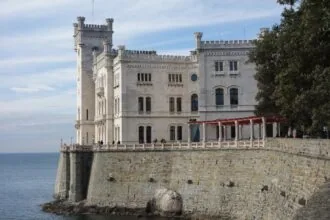
Once through the terminal, our Things to Do in Trieste guide rounds up the city’s sights worth prioritising first, from Piazza Unità to Miramare Castle, while our Day Trips from Trieste guide covers Slovenia, Udine and the Karst plateau for anyone planning to use the city as a base rather than a final stop.
Arriving by sea instead? Our Trieste Ferry Routes Guide covers the city’s cruise terminal and the seasonal Adriatic hydrofoils to Croatia and Slovenia, a genuinely different way to arrive than through the terminal building covered above.
Travelling onward by regional train rather than heading straight into the city? Our Italia in Tour Pass guide explains whether a multi-day regional pass is worth buying before boarding at the airport’s own platforms, and our Venice Things to Do guide covers the Frecciarossa connection onward to Venezia Santa Lucia in more depth.
Continuing into Slovenia? Our Interrail Slovenia Pass guide explains rail travel across the border to Ljubljana and Lake Bled.