Reviewed by our editorial team Updated
Discover the Historic Heart of Normandy
Few cities in France can match the atmosphere of Rouen. As the historic capital of Normandy, it is a place where medieval streets, magnificent churches, timber-framed houses and centuries of history come together to create one of the country’s most rewarding city breaks. Every corner tells a story, from the final days of Joan of Arc to the paintings of Claude Monet, making Rouen a destination that appeals equally to lovers of history, art and architecture.
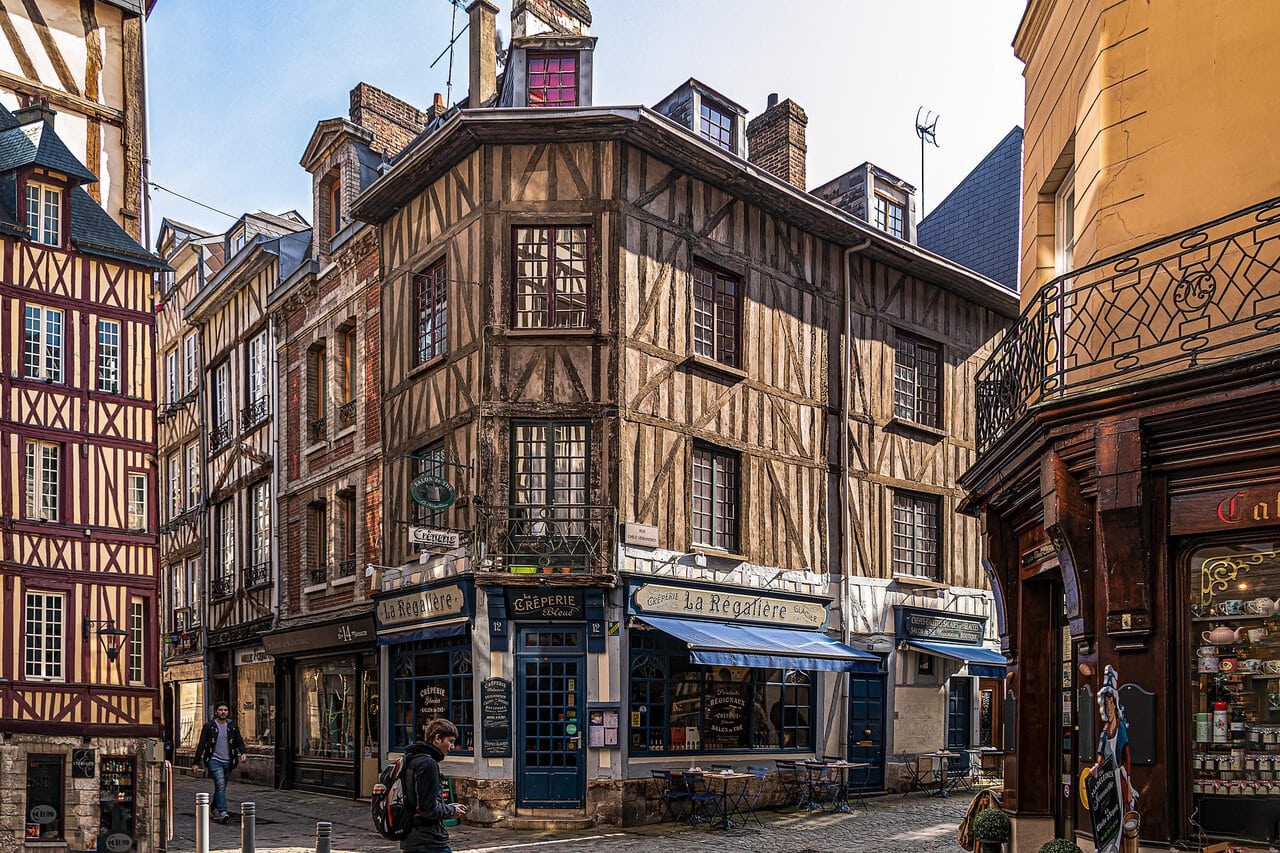
Despite suffering significant damage during the Second World War, Rouen has retained an extraordinary amount of its historic character. More than 2,000 half-timbered buildings survive within the city centre, creating one of the finest collections of medieval architecture anywhere in Europe. Walking through its narrow streets feels like stepping back several centuries, yet the city also has a lively modern atmosphere thanks to its cafés, restaurants, markets and riverside promenades.
Rouen is also wonderfully easy to explore. Most of its major attractions lie within a compact historic centre where walking is not only practical but the best way to appreciate the city’s beauty. Whether you’re admiring towering Gothic churches, browsing independent boutiques or relaxing beside the River Seine, almost everything is within comfortable walking distance.
Whether you’re visiting for a day from Paris, combining it with nearby Bayeux and the D-Day beaches, or spending several nights exploring Normandy, Rouen is a city that rewards anyone willing to slow down and absorb its remarkable history. The Normandy regional tourist board’s Rouen pages are a useful place to check current opening times, events and guided tours before you travel.
| Attraction | Time Needed | Admission | Best For |
|---|---|---|---|
| Rouen Cathedral | 45–60 minutes | Free (tower extra when open) | History, architecture, photography |
| Gros-Horloge | 20–40 minutes | Museum/tower ticket | First-time visitors, city views |
| Place du Vieux-Marché | 20–30 minutes | Free | Joan of Arc, cafés, local atmosphere |
| Joan of Arc Historial | 1.5–2 hours | Paid | Interactive history, families |
| Museum of Fine Arts | 1.5–2 hours | Free permanent collections | Art lovers |
| Saint-Maclou Church & Aître Saint-Maclou | 30–60 minutes | Church free | Medieval history, photography |
| Seine Riverside | 30–60 minutes | Free | Walks, relaxing, river views |
| Left bank quays & modern waterfront | 30–60 minutes | Free | Walking, cycling, waterfront scenery |
| Medieval Old Town | 2–3 hours | Free | Shopping, cafés, half-timbered streets |
| Day trip to Jumièges Abbey | Half day | Paid | Normandy history and ruins |
Wander Rouen’s Medieval Streets
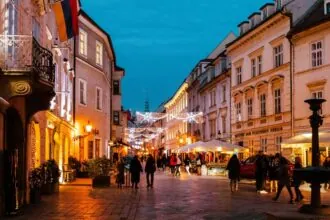
One of the greatest pleasures of visiting Rouen is simply wandering its beautiful medieval streets. Unlike many historic cities where only a handful of old buildings survive, Rouen’s centre remains packed with beautifully preserved half-timbered houses, elegant merchant buildings and narrow cobbled lanes that have changed remarkably little over the centuries.
The streets surrounding Rue du Gros-Horloge, Place du Vieux-Marché and the cathedral are particularly atmospheric. Colourful timber-framed buildings lean gently towards one another above the streets, while independent cafés, bakeries, galleries and boutiques occupy buildings that are often several hundred years old.
One of the city’s greatest strengths is that these streets remain very much alive. Rather than feeling like an open-air museum, Rouen continues to function as a vibrant city where locals shop, work and socialise every day. Markets spill into the squares, outdoor cafés fill with diners and street musicians often provide an enjoyable soundtrack as you explore.
Don’t worry too much about following a strict route. Some of Rouen’s greatest discoveries come from wandering down quiet alleyways, stepping into hidden courtyards or stumbling across historic buildings that aren’t marked on every tourist map. Allow yourself time to simply explore and you’ll quickly understand why Rouen is regarded as one of France’s finest medieval cities.
Best for two or three nights. The widest choice of rooms, with filters for free cancellation and included breakfast.
View staysBest for groups who want one address and separate bedrooms rather than three hotel rooms.
See holiday homesBest for double-checking. Runs the same search across several booking sites so you are not leaving money behind.
Compare pricesVisit Rouen Cathedral
Dominating the city skyline, Rouen Cathedral (Cathédrale Notre-Dame de Rouen) is undoubtedly the city’s most famous landmark. Rising above the surrounding rooftops with its intricate Gothic façade and soaring spire, it has inspired visitors for centuries and remains one of the greatest masterpieces of French Gothic architecture.
Construction began during the twelfth century, although the cathedral continued evolving over several hundred years. The result is a remarkable blend of architectural styles, with beautifully carved stonework, magnificent doorways and an astonishing level of decorative detail that rewards close inspection from every angle.
Inside, the cathedral is equally impressive. Sunlight pours through spectacular stained-glass windows, illuminating soaring vaulted ceilings, historic chapels and the tombs of important Norman figures, including Richard the Lionheart, whose heart is buried here. Despite welcoming large numbers of visitors, the cathedral still provides moments of remarkable peace and reflection.
Outside, take time to admire the west façade from different viewpoints around the square. The changing light dramatically alters its appearance throughout the day, something that fascinated one of history’s greatest artists and helped make Rouen famous far beyond France.
Follow the Story of Joan of Arc
No historical figure is more closely associated with Rouen than Joan of Arc. It was here, in 1431, that the young heroine was imprisoned, tried for heresy and ultimately executed, making the city one of the most significant places connected with her extraordinary life.
Her story is brought vividly to life throughout Rouen. The best place to begin is the Historial Jeanne d’Arc, an innovative museum housed within the magnificent Archbishop’s Palace, where Joan’s original trial took place. Through immersive multimedia presentations, historical documents and reconstructed scenes, visitors can follow the dramatic events that led to her trial and understand the political turmoil surrounding her fate.
A short walk away lies Place du Vieux-Marché, the square where Joan of Arc was burned at the stake. Today the square is peaceful and surrounded by cafés and restaurants, but memorials and information panels ensure visitors never forget the events that unfolded here almost six centuries ago.
Whether you’re already familiar with Joan of Arc or only know the broad outlines of her story, visiting the places connected with her life gives a fascinating insight into one of the most influential figures in French history and adds an unforgettable dimension to any visit to Rouen.
Explore the Gros-Horloge
One of Rouen’s most recognisable landmarks is the magnificent Gros-Horloge, an extraordinary astronomical clock that has watched over the city for more than 500 years. Mounted beneath a Renaissance arch spanning one of the city’s busiest streets, it is one of the oldest working public clocks in Europe and has become an enduring symbol of Rouen.
The clock itself dates from the fourteenth century, although the richly decorated arch and surrounding buildings were added later. Its elegant golden dial, adorned with a single ornate hand, displays not only the time but also the phases of the moon and the day of the week, demonstrating the remarkable craftsmanship of medieval clockmakers.
Visitors can climb inside the Gros-Horloge museum to learn how the mechanism works and enjoy spectacular views across the rooftops of Rouen from the upper viewing platform. Looking out towards Rouen Cathedral, the maze of half-timbered buildings and the winding medieval streets below is one of the highlights of any visit.
Whether you admire it from street level or explore the interior, the Gros-Horloge perfectly captures the character of Rouen and remains one of the city’s most photographed attractions.

Visit the Church of Saint Joan of Arc
Standing proudly on Place du Vieux-Marché, the striking Church of Saint Joan of Arc is unlike any other church in France. Built in 1979 on the site where Joan of Arc was executed, its bold modern design deliberately contrasts with the surrounding medieval buildings while serving as a lasting memorial to France’s national heroine.
The building’s sweeping roof has inspired many interpretations. Some believe it resembles the flames of Joan’s execution, while others see the shape of an overturned Viking longship, reflecting Normandy’s Scandinavian heritage. Whatever the inspiration, it is one of the most distinctive churches you’ll encounter anywhere in Europe.
Inside, the modern architecture is softened by magnificent Renaissance stained-glass windows rescued from the former Church of Saint Vincent, which was destroyed during the Second World War. Their rich colours fill the interior with beautiful light and create a fascinating contrast between historic craftsmanship and contemporary design.
Even if modern architecture isn’t usually your preference, the church is well worth visiting for its historical significance alone. Standing beside the memorial to Joan of Arc, it’s impossible not to reflect on the extraordinary events that unfolded here nearly six centuries ago.
Discover the Palais de Justice
The magnificent Palais de Justice is one of the finest examples of late Gothic civil architecture in France. Originally built as the seat of the Parliament of Normandy, this remarkable building demonstrates the wealth and importance that Rouen enjoyed during the medieval and Renaissance periods.
Its elaborate stone façade is a masterpiece of craftsmanship, covered with intricate carvings, decorative pinnacles, elegant arches and countless architectural details that reward careful observation. Despite suffering damage during the Second World War, painstaking restoration has ensured that the building continues to dominate the surrounding streets much as it has for centuries.
Look carefully at the walls and you’ll still notice scars left by wartime bombing, preserved as a reminder of Rouen’s turbulent twentieth-century history. It’s a powerful contrast between medieval beauty and modern conflict, adding another layer to the story of the city.
Although parts of the building continue to function as a courthouse, visitors are welcome to admire the impressive exterior, making it an essential stop while exploring the historic centre.
Walk Along Rue du Gros-Horloge
If there is one street that perfectly captures the atmosphere of Rouen, it is Rue du Gros-Horloge. Stretching between the cathedral and the Place du Vieux-Marché, this lively pedestrian street is lined with beautifully preserved half-timbered houses, elegant historic façades, independent boutiques and welcoming cafés.
Every few metres there’s something worth stopping for. You’ll discover traditional Norman architecture, artisan chocolatiers, local delicatessens, bakeries selling freshly baked pastries and shops specialising in regional products. Looking upwards reveals leaning timber-framed buildings whose upper floors project over the street, creating one of the city’s most iconic views.
The street is particularly beautiful during the early morning, before the crowds arrive, or in the evening, when warm lighting enhances the medieval atmosphere. It’s also one of the best places to simply pause at an outdoor café, watch the world go by and soak up the unique character of Rouen.
Whether you’re shopping, photographing the architecture or simply wandering between attractions, Rue du Gros-Horloge is far more than just a route through the city. It is one of Rouen’s great experiences in its own right and a place you’ll almost certainly return to several times during your visit.
Best for long or awkward journeys. Builds one itinerary out of separate flights.
View flightsBest for anyone whose home plan charges by the megabyte abroad. Pay a fixed price up front.
Check eSIMsBest if you would rather not work out the transport on arrival. Book it now and forget it.
View transfersVisit the Museum of Fine Arts
One of France’s finest regional art museums, the Museum of Fine Arts of Rouen (Musée des Beaux-Arts de Rouen) is an essential stop for anyone with an interest in painting, sculpture or French history. Housing an outstanding collection that spans from the fifteenth century to the modern era, the museum is often considered one of the country’s best outside Paris.
Its galleries feature masterpieces by internationally renowned artists including Claude Monet, Caravaggio, Velázquez, Rubens, Delacroix, Sisley, Modigliani and many others. The museum’s collection of Impressionist paintings is particularly impressive, reflecting Rouen’s important place in the development of the movement during the nineteenth century.
Beyond the paintings, visitors will discover sculptures, decorative arts, drawings and regularly changing temporary exhibitions that provide fresh reasons to return. The spacious galleries are thoughtfully arranged, allowing you to appreciate the artwork without feeling rushed, while information panels provide useful historical context.
Better still, the museum’s permanent collection is free to visit, making it one of the city’s best-value attractions. Whether you’re a dedicated art enthusiast or simply looking for a fascinating indoor activity, it’s a rewarding place to spend several hours.
Explore the Abbey of Saint-Ouen
Often overshadowed by the famous cathedral, the magnificent Abbey of Saint-Ouen is one of Rouen’s true hidden treasures. Many visitors leave the city saying this extraordinary church was every bit as impressive as the cathedral itself, yet it remains noticeably quieter throughout much of the year.
Built between the fourteenth and sixteenth centuries, the abbey is a masterpiece of High Gothic architecture. Its soaring vaulted ceilings, elegant stone columns and enormous stained-glass windows create a breathtaking interior filled with natural light. The sense of scale is remarkable, yet the peaceful atmosphere makes it feel far more intimate than many of France’s better-known churches.
One of the abbey’s greatest treasures is its spectacular Cavaillé-Coll organ, regarded as one of the finest pipe organs in France. If you’re fortunate enough to visit during a recital, the sound filling the vast Gothic interior is unforgettable.
Outside, the surrounding gardens and public square provide an excellent place to pause before continuing your exploration of Rouen. Despite its size and historical importance, the Abbey of Saint-Ouen often remains one of the city’s quieter attractions, making it a wonderful place to escape the busiest tourist areas.
See Aître Saint-Maclou
Hidden away behind the bustling streets of the historic centre lies one of Rouen’s most unusual and thought-provoking attractions. Aître Saint-Maclou began life during the Black Death as a cemetery before later becoming an ossuary, and today stands as one of the last surviving examples of its kind in Europe.
Entering the peaceful courtyard, you’ll immediately notice the distinctive timber-framed galleries surrounding the open space. Look closely at the carved wooden beams and you’ll discover intricate decorations featuring skulls, bones, spades, coffins and other symbols reminding visitors of the fragility of life. These carvings were created hundreds of years ago yet remain remarkably well preserved.
Despite its sombre history, the atmosphere today is calm rather than unsettling. Restoration work has transformed the site into a cultural space while carefully preserving its historical significance, allowing visitors to learn about medieval burial practices, outbreaks of plague and everyday life in Rouen during one of Europe’s darkest periods.
For anyone interested in history, architecture or places that are a little different from the usual tourist attractions, Aître Saint-Maclou is one of the most fascinating places in the city.
Stroll Along the River Seine
The mighty River Seine has shaped the fortunes of Rouen for centuries, transforming it into one of France’s most important trading ports long before modern roads and railways existed. Today, its attractive waterfront provides one of the city’s most relaxing places to explore.
Wide pedestrian promenades follow the river, offering excellent views of passing river cruise ships, traditional boats and the impressive bridges linking both sides of the city. It’s a completely different atmosphere from the narrow medieval streets, with plenty of open space to enjoy the riverside scenery.
Walking along the quays also helps you appreciate Rouen’s long commercial history. For centuries, goods travelled along the Seine between Paris, Rouen and the English Channel, helping establish the city’s wealth and influence. Information boards along the waterfront explain this maritime heritage while modern cafés and seating areas make it easy to stop and admire the views.
The riverside is particularly beautiful during the late afternoon and early evening, when the warm light reflects off the water and the towers of Rouen Cathedral rise above the historic skyline. Whether you’re taking photographs, enjoying a quiet stroll or simply resting after sightseeing, the River Seine offers one of the city’s most peaceful escapes.
Visit the Maritime, Fluvial and Harbour Museum
Rouen’s story has always been closely linked with the River Seine, and nowhere explains that connection better than the Maritime, Fluvial and Harbour Museum (Musée Maritime, Fluvial et Portuaire de Rouen). Located within former dockside warehouses beside the river, the museum explores how Rouen grew into one of France’s most important inland ports and why the Seine has been central to the city’s prosperity for centuries.
Inside you’ll discover an extensive collection of historic ship models, navigation instruments, port machinery, photographs and maritime artefacts that chart the development of shipping on the Seine. Exhibits explain how goods travelled between Paris, Rouen and the English Channel, while displays also highlight the city’s long links with merchant shipping, shipbuilding and international trade.
One of the museum’s strengths is the way it connects local history with the wider story of French maritime development. Interactive exhibits and detailed displays help visitors understand the engineering behind the docks, the challenges of navigating the Seine and the importance of Rouen as a gateway between inland France and the sea.
For anyone interested in ships, industrial heritage or Normandy’s trading history, this museum provides an excellent companion to the city’s medieval attractions.
Shop at Place du Vieux-Marché
Few places capture the character of Rouen quite like Place du Vieux-Marché. Although forever associated with the final moments of Joan of Arc, today the square is one of the city’s liveliest gathering places, filled with restaurants, cafés, artisan shops, market stalls and independent boutiques.
Spend time wandering through the surrounding streets and you’ll find traditional Norman delicatessens, artisan chocolatiers, local cider merchants, bakeries and speciality food shops selling regional products. It’s an excellent place to pick up authentic souvenirs while supporting independent businesses rather than international chains.
The square itself is surrounded by beautifully restored half-timbered buildings, creating one of Rouen’s most attractive settings. Outdoor terraces spill across the cobbles during the warmer months, making it an ideal place to pause with a coffee, enjoy lunch or simply watch the city go by.
Whether you’re shopping, relaxing or learning about its remarkable history, Place du Vieux-Marché remains one of the highlights of any visit to Rouen.
Best for solo travellers and anyone watching the budget. Dorm beds and private rooms in the same search.
Browse hostelsBest if you have ever given up on a claim. AirHelp checks whether the flight qualifies and pursues it for you.
See the benefitsBest for a day with a suitcase and nowhere to put it. Find a storage point near where you already are.
View storageAdmire Rouen’s Half-Timbered Houses
While many French cities have a handful of historic buildings, Rouen possesses one of the largest collections of half-timbered houses anywhere in the country. More than 2,000 timber-framed buildings survive across the city centre, giving Rouen an architectural character that’s instantly recognisable.
Built between the fifteenth and seventeenth centuries, these remarkable houses display an extraordinary variety of styles. Some feature colourful painted beams, while others showcase elaborate carved wooden details, projecting upper floors and steep slate roofs. Many have been lovingly restored and now house cafés, restaurants, boutiques and galleries, allowing visitors to appreciate them while experiencing modern city life.
Some of the finest examples can be found around Rue du Gros-Horloge, Place du Vieux-Marché, Rue Saint-Romain and the narrow streets surrounding the cathedral. Looking upwards often reveals details that many visitors miss, including carved figures, decorative beams and centuries-old craftsmanship preserved remarkably well.
For photographers, Rouen is a dream destination. Every street seems to offer another beautifully preserved façade, making it almost impossible to walk far without stopping to take another photograph.
Rouen Through the Eyes of Monet
Few artists are more closely associated with Rouen than the great Claude Monet. During the 1890s, the founder of Impressionism spent months painting the façade of Rouen Cathedral, fascinated by the way changing light transformed its appearance throughout the day.
Rather than creating a single painting, Monet produced an extraordinary series of more than 30 versions of the cathedral. Working from temporary studios overlooking the square, he captured the building in morning sunlight, afternoon brightness, mist, rain, sunset and changing seasonal conditions. His aim was not simply to record the architecture but to explore how light, colour and atmosphere constantly altered what the eye perceived.
Standing in Place de la Cathédrale today, it’s easy to understand his fascination. Spend a few minutes watching the sunlight move across the intricate Gothic stonework and you’ll notice the façade continually changing colour, just as Monet observed more than a century ago.
Many visitors enjoy recreating the artist’s viewpoint before continuing to the Museum of Fine Arts, where Impressionist works help place Rouen within one of the most influential artistic movements in history. Experiencing the cathedral through Monet’s eyes adds an entirely new appreciation for one of France’s greatest masterpieces.
Taste Traditional Norman Cuisine
A visit to Rouen isn’t complete without sampling the rich flavours of Normandy, one of France’s finest food-producing regions. The surrounding countryside supplies the city with exceptional cheeses, cream, butter, apples, seafood, cider and calvados, giving local restaurants access to some of the country’s best ingredients.
One of the region’s best-known cheeses is Camembert de Normandie, traditionally made using raw milk and protected by AOP status. You’ll also find excellent Pont-l’Évêque, Neufchâtel and Livarot, each offering its own distinctive flavour and history. Many local restaurants serve cheese boards featuring several Norman varieties, making them an excellent way to experience the region.
Seafood also features heavily on Rouen’s menus despite the city lying inland. Thanks to its position on the River Seine, fresh fish and shellfish arrive daily from the nearby Normandy coast. Specialities often include mussels, oysters, scallops, sole and seasonal catches served alongside locally grown vegetables.
For dessert, don’t miss a traditional Norman apple tart or dishes flavoured with the region’s famous calvados, an apple brandy produced throughout Normandy. Pair your meal with a glass of authentic Norman cider, and you’ll quickly understand why the region enjoys such an outstanding culinary reputation.

The Best Views and Photo Spots in Rouen
With its towering cathedral, medieval streets and colourful timber-framed buildings, Rouen is one of France’s most photogenic cities. Whether you’re carrying a professional camera or simply using your phone, there are countless opportunities to capture memorable images throughout the historic centre.
One of the finest viewpoints is Place de la Cathédrale, where the intricate façade of Rouen Cathedral dominates the square. Visit early in the morning for softer light and fewer people, or return later in the day to watch the changing sunlight transform the stonework just as Claude Monet observed more than a century ago.
The elegant Gros-Horloge is another favourite. Photograph the magnificent golden clock framed by the surrounding medieval buildings, then climb to the viewing platform for sweeping views across the rooftops of the old town. Nearby Rue Saint-Romain, Rue Eau-de-Robec and the streets around Place du Vieux-Marché are equally rewarding, with colourful half-timbered houses, flower-filled façades and charming cafés creating classic Rouen scenes.
For wider panoramas, head towards the River Seine, where the combination of bridges, church spires and the cathedral rising above the historic skyline provides some of the city’s most impressive views. At sunset, the warm evening light reflecting across the river creates some of Rouen’s most beautiful photographic opportunities.
Hidden Corners of Rouen
Beyond the famous landmarks, Rouen rewards visitors who take the time to wander away from the busiest streets. Some of the city’s greatest treasures are found in quiet lanes, hidden courtyards and peaceful corners that many visitors never discover.
Take time to explore Rue Eau-de-Robec, one of Rouen’s prettiest streets. Lined with colourful half-timbered houses beside a gently flowing stream, it feels worlds away from the busier shopping streets despite being only a short walk from the cathedral. Small cafés, artisan workshops and independent galleries add to its charm, making it one of the city’s most atmospheric locations.
Elsewhere you’ll stumble across hidden churchyards, tiny medieval passages, secluded gardens and beautifully restored courtyards tucked behind ancient buildings. Simply stepping through an open gateway can reveal peaceful spaces completely hidden from the surrounding streets.
These quieter corners are where Rouen often feels most authentic. Away from the busiest tourist attractions, you’ll experience the slower rhythm of everyday life while discovering architectural details, historic buildings and unexpected viewpoints that many visitors overlook. Sometimes the best way to experience Rouen is simply to put away the map and see where the next narrow street leads.

Rupert’s Handy Travel Tips
Rouen is one of those cities that’s best enjoyed without a strict itinerary. While the cathedral, Gros-Horloge and Joan of Arc sites are the headline attractions, some of the city’s best moments come from wandering its medieval streets and seeing what you discover around the next corner.
- Start early: Visit Rouen Cathedral in the morning before the busiest crowds arrive, then explore the surrounding medieval streets at a relaxed pace.
- Look up as you walk: Many of Rouen’s finest carved timber-framed houses, hidden courtyards and architectural details are above street level and are easy to miss.
- Don’t rush between attractions: Streets such as Rue du Gros-Horloge, Rue Saint-Romain and Place du Vieux-Marché are attractions in their own right, filled with cafés, boutiques and historic buildings.
- Stay into the evening: Once the day-trippers leave, Rouen becomes much quieter. The illuminated cathedral, Gros-Horloge and medieval streets create one of the most atmospheric evenings in Normandy.
Want to meet the reindeer behind our travel tips? Find out more on our page Who is Rupert?.




Frequently Asked Questions
How many days should you spend in Rouen?
One full day is enough to see Rouen’s main attractions, but two to three days allows time to explore its museums, churches, medieval streets and riverside at a much more relaxed pace.
Is Rouen worth visiting?
Absolutely. Rouen is one of France’s finest medieval cities, famous for its magnificent cathedral, beautifully preserved half-timbered houses, links with Joan of Arc and its important place in Impressionist art.
What is Rouen famous for?
Rouen is best known for Rouen Cathedral, the trial and execution of Joan of Arc, the Gros-Horloge, its outstanding medieval architecture and as the city that inspired Claude Monet’s Cathedral series.
Can you explore Rouen on foot?
Yes. The historic centre is compact and almost all of the major attractions are within easy walking distance, making Rouen one of the easiest cities in France to explore without a car.
When is the best time to visit Rouen?
Late spring, summer and early autumn generally offer the most pleasant weather. Visiting during one of the city’s seasonal festivals or evening light shows adds even more atmosphere to the experience.
Is Rouen good for families?
Yes. Families can enjoy exploring the medieval streets, visiting interactive museums, discovering the story of Joan of Arc, walking beside the River Seine and searching for the city’s famous historic landmarks.
How do you get to Rouen?
Rouen is easily reached by train from Paris, with regular services taking around 1 hour 30 minutes. The city is also well connected by road and makes an excellent base for exploring Normandy, including day trips to Mont-Saint-Michel.
What food should you try in Rouen?
Sample regional favourites including Camembert de Normandie, Neufchâtel cheese, fresh seafood, Norman cider, apple tarts and dishes flavoured with traditional calvados.
Further Reading
Combining Rouen with the rest of Normandy? Our Visiting Mont-Saint-Michel guide covers France’s iconic island abbey, and our Things to Do in Pontorson guide covers the closest town to it.
History lovers should also see our Things to Do in Bayeux guide, covering the medieval old town and famous Tapestry, and our Normandy D-Day Beaches Guide, covering the landing beaches, museums and memorials.