Reviewed by our editorial team Updated
Discover Bayeux
One of Normandy’s greatest treasures, Bayeux is a town where almost every street tells a story. Best known as the home of the world-famous Bayeux Tapestry, this beautifully preserved medieval town offers far more than a single attraction. Elegant half-timbered houses, a magnificent cathedral, peaceful riverside walks and outstanding museums combine to create one of the most rewarding destinations in northern France.
Unlike many historic towns, Bayeux escaped widespread destruction during the Second World War, leaving its medieval centre remarkably intact. As you wander its narrow streets, you’ll discover centuries-old buildings, traditional Norman architecture, bustling markets and inviting cafés that have welcomed visitors for generations.
Bayeux also occupies a unique place in history. It tells the story of the Norman Conquest of England through the extraordinary Bayeux Tapestry, while also serving as one of the best bases for exploring the nearby D-Day Landing Beaches. Few destinations anywhere in Europe allow visitors to experience such important moments from both the Middle Ages and the twentieth century in a single visit.
Whether you’re fascinated by medieval history, interested in the events of 1944, exploring Normandy on a road trip or simply searching for one of France’s most attractive historic towns, Bayeux consistently exceeds expectations.
This guide covers the very best things to do in Bayeux, helping you discover why it deserves to be one of the highlights of any journey through Normandy.
At a Glance: Why Visit Bayeux?
Few towns in France offer such an impressive combination of history, architecture, culture and beautiful scenery within such a compact area. Bayeux is easy to explore on foot, yet contains enough attractions to comfortably fill several days.
Its most famous attraction is, of course, the remarkable Bayeux Tapestry, one of the world’s greatest medieval treasures. Measuring almost 70 metres in length, this extraordinary embroidered masterpiece tells the story of William the Conqueror’s invasion of England in 1066 and remains one of Europe’s most significant historical artefacts.
Standing nearby is the magnificent Bayeux Cathedral, whose soaring towers dominate the skyline and have welcomed worshippers for almost a thousand years. Around it, the beautifully preserved Old Town invites visitors to wander along cobbled streets lined with traditional shops, restaurants and historic buildings.
Bayeux is also an important destination for anyone interested in the Second World War. The excellent Museum of the Battle of Normandy and the moving Bayeux War Cemetery provide powerful reminders of the liberation of Europe, while the famous D-Day beaches lie just a short drive away.
Whether you’re visiting for a day or using Bayeux as your base for exploring Normandy, you’ll discover a town that combines world-class history with the relaxed atmosphere of a traditional French market town.
| Attraction | Time Needed | Admission | Best For |
|---|---|---|---|
| Bayeux Tapestry Museum | 1–2 hours | Closed until autumn 2027 | History, William the Conqueror |
| Bayeux Cathedral | 30–60 mins | Free | Architecture, history |
| Museum of the Battle of Normandy | 1.5–2 hours | Paid | Second World War history |
| MAHB (Museum of Art and History Baron Gérard) | 1–1.5 hours | Paid | Art, porcelain, local history |
| Old Town of Bayeux | 1–2 hours | Free | Walking, shopping and cafés |
| American D-Day Half-Day Tour | 4 hours | Paid | First-time visitors |
| Normandy D-Day Full-Day Tour | Full day | Paid | In-depth D-Day history |
| Bayeux War Cemetery | 30–45 mins | Free | Military history and remembrance |
Best for a short trip. Compare rooms by neighbourhood, price and guest rating before you book.
Compare hotelsBest for groups who want one address and separate bedrooms rather than three hotel rooms.
See holiday homesBest as a last check before booking. Compares hotel rates across several sites in one search.
Compare ratesWhen is the Best Time to Visit Bayeux?
Bayeux is an enjoyable destination throughout the year, with each season offering a different perspective on this historic Norman town.
Spring is one of the best times to visit. The gardens burst into colour, outdoor cafés begin filling with visitors and the surrounding countryside becomes beautifully green. Comfortable temperatures make it ideal for exploring both the town and the nearby D-Day beaches on foot.
During summer, Bayeux is at its liveliest. Long daylight hours allow plenty of time to explore the museums, stroll through the medieval streets and visit the Normandy coastline. This is also the busiest season, particularly around the anniversary of the D-Day Landings in June, when commemorative events attract visitors from around the world.
Autumn brings quieter streets while retaining mild weather, making it an excellent time to appreciate the town’s history without the larger crowds. The surrounding countryside also takes on beautiful seasonal colours, adding to Bayeux’s charm.
Winter offers a more peaceful experience. Although temperatures are cooler, the town retains its welcoming atmosphere, while festive decorations and Christmas markets create an attractive seasonal setting. Museums remain open, allowing visitors to enjoy Bayeux’s cultural attractions throughout the year.
Whenever you visit, allow enough time to experience more than just the famous tapestry. Bayeux rewards those who slow down and take time to explore its remarkable history, beautiful architecture and welcoming streets.
How to Get to Bayeux
Despite its historic appearance, Bayeux is exceptionally well connected and easy to reach by train, road and air, making it an ideal destination for exploring Normandy.
Travelling by train is one of the easiest options. Bayeux railway station is served by regular regional services linking the town with Caen, Cherbourg and Paris Saint-Lazare. From the station, it’s only around 10 to 15 minutes’ walk to the historic centre, allowing visitors to begin sightseeing almost immediately after arrival.
If you’re travelling by car, Bayeux is conveniently located close to the N13, providing straightforward access from Caen, Cherbourg, Mont-Saint-Michel and the Normandy coastline. Its central location also makes it an excellent base for visiting the nearby D-Day beaches, Arromanches-les-Bains, Omaha Beach and Pointe du Hoc.
The nearest airport is Caen–Carpiquet Airport, while larger international airports at Paris Charles de Gaulle and Paris Orly offer additional flight options with onward rail connections.
Thanks to its excellent transport links, compact historic centre and proximity to many of Normandy’s most important attractions, Bayeux is one of the easiest and most rewarding towns to include in a wider itinerary through northern France.
Getting Around Bayeux
One of the greatest advantages of visiting Bayeux is how easy it is to explore. The historic centre is compact, largely pedestrian-friendly and filled with attractive streets that are best discovered on foot. Almost all of the town’s main attractions are within a 10 to 20-minute walk of one another, allowing visitors to enjoy the atmosphere without relying on public transport.
The Bayeux Tapestry Museum, Bayeux Cathedral, the Museum of the Battle of Normandy, the War Cemetery, the Old Town and the River Aure are all conveniently located within easy walking distance. As you move between attractions, you’ll pass medieval streets, elegant townhouses, traditional cafés and independent shops, making the journey just as enjoyable as the destinations themselves.
If you’re arriving by train, Bayeux railway station is around 10 to 15 minutes on foot from the cathedral and historic centre. The route is straightforward and well signposted, making it easy to begin sightseeing immediately after arriving.
For visitors planning to explore the surrounding region, having a car provides the greatest flexibility. The famous D-Day beaches, Arromanches-les-Bains, Omaha Beach, Utah Beach, Pointe du Hoc and numerous museums are all within a short drive. Several companies also operate organised D-Day tours from Bayeux, making it possible to visit these historic sites without driving yourself.
Bayeux is also served by local buses connecting surrounding villages and nearby towns, although most visitors find walking more than sufficient for exploring the town itself.
Whether you’re visiting for a day or staying longer, Bayeux is one of the easiest historic towns in France to discover at a relaxed pace.

See the Bayeux Tapestry
No visit to Bayeux is complete without seeing the extraordinary Bayeux Tapestry, one of the world’s most important surviving medieval artworks and a true masterpiece of European history.
Despite its name, the Bayeux Tapestry is actually an embroidered linen cloth measuring almost 70 metres long. Created during the eleventh century, it tells the remarkable story of the Norman Conquest of England and the events leading to the Battle of Hastings in 1066, when William the Conqueror defeated King Harold II.
One important point to plan around: the Bayeux Tapestry Museum is closed for major renovation work until autumn 2027, and the embroidery is no longer on public display there. Guided storytelling walks around the town continue in the meantime, and the tourist office publishes the current alternatives on the Bayeux Bessin tourist office website. When the museum reopens, visitors follow the embroidery scene by scene using an excellent multilingual audio guide that explains the historical significance, symbolism and remarkable craftsmanship behind each section.
The tapestry is astonishingly detailed. More than 600 human figures, 200 horses, numerous ships, animals and intricate decorative borders illustrate battles, feasts, royal ceremonies and everyday medieval life. Historians continue to study it today, not only as a work of art but also as one of the most valuable historical records from the Middle Ages.
To protect this priceless masterpiece, lighting inside the gallery is carefully controlled and photography may be restricted, helping preserve the embroidery for future generations.
Recognised on UNESCO’s Memory of the World Register, the Bayeux Tapestry is far more than a museum exhibit. It is one of the greatest historical treasures in Europe and the highlight of any visit to Normandy.
Visit Bayeux Cathedral
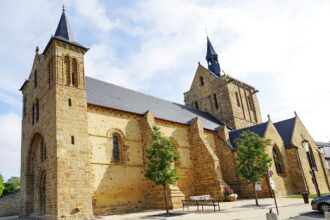
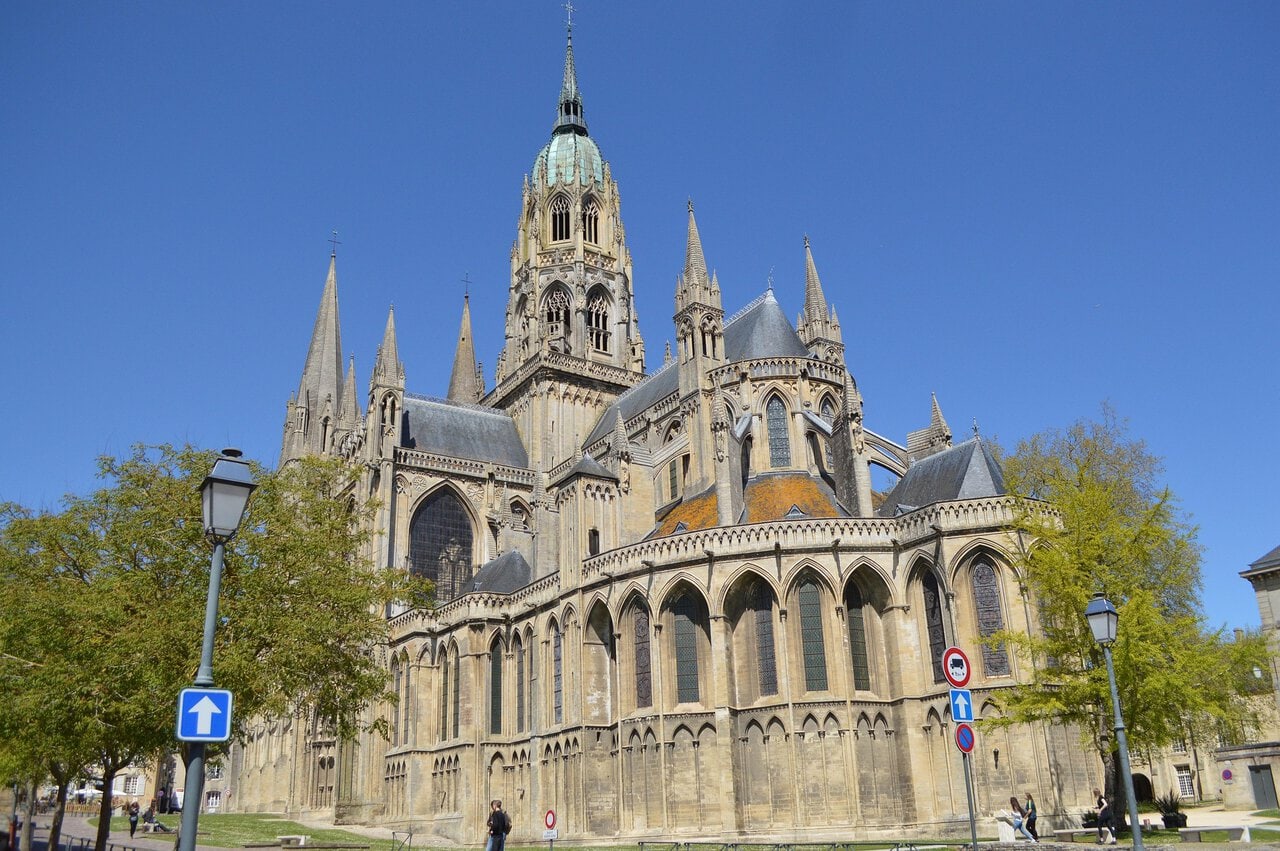
Towering above the rooftops of the town, the magnificent Bayeux Cathedral (Cathédrale Notre-Dame de Bayeux) has dominated the skyline for almost 1,000 years and remains one of the finest examples of medieval architecture in Normandy.
The cathedral standing today dates largely from the eleventh and twelfth centuries, although later additions introduced elegant Gothic features alongside the original Romanesque design. The result is a breathtaking building whose soaring towers, richly carved stonework and graceful interior leave a lasting impression on visitors.
The cathedral is closely connected with the Bayeux Tapestry. According to tradition, the tapestry was originally displayed here shortly after its creation, allowing pilgrims and worshippers to view the remarkable story of the Norman Conquest during important religious festivals.
Inside, visitors are greeted by impressive vaulted ceilings, magnificent stained-glass windows, beautifully carved chapels and an atmosphere of quiet reflection. As sunlight filters through the coloured glass, the stone interior takes on a warm glow that perfectly complements the building’s extraordinary history.
Take time to walk around the exterior as well. From the surrounding streets you’ll gain wonderful views of the cathedral’s flying buttresses, intricate Gothic details and elegant towers rising above the medieval town.
Whether you’re interested in architecture, history or simply appreciate beautiful churches, Bayeux Cathedral is one of Normandy’s greatest landmarks and an essential part of any visit to the town.
Explore the Medieval Old Town
Away from its famous monuments, Bayeux is simply a wonderful place to wander. Its beautifully preserved medieval centre escaped much of the destruction suffered by other Norman towns during the Second World War, allowing visitors to experience streets that have changed remarkably little over the centuries.
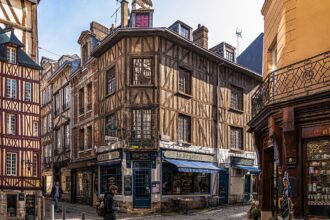
Narrow cobbled lanes wind between elegant stone houses, colourful half-timbered buildings and traditional Norman architecture, creating an atmosphere that feels both authentic and welcoming. Independent boutiques, artisan bakeries, delicatessens and inviting cafés line the streets, making it easy to spend several hours simply exploring without a fixed itinerary.
The charming Rue Saint-Jean is one of the town’s liveliest streets, filled with local shops, restaurants and cafés, while quieter side streets reveal hidden courtyards, flower-filled gardens and beautifully preserved medieval buildings waiting to be discovered.
As you stroll through the town, you’ll frequently encounter reminders of Bayeux’s remarkable past. Historic townhouses stand alongside centuries-old churches, while plaques and information boards explain the important events that shaped the town throughout both the Middle Ages and the Second World War.
One of the greatest pleasures of visiting Bayeux is slowing down. Pause beside the River Aure, enjoy lunch in a traditional bistro or simply sit in one of the attractive squares watching everyday life unfold.
The combination of outstanding history, beautiful architecture and a relaxed Norman atmosphere makes the Old Town one of the most enjoyable places to explore anywhere in France.
Best for finding routes the airlines do not sell as a single ticket. Combines carriers to bring the fare down.
Search flightsBest for short trips. Install the eSIM at home and arrive with working data, no shop queue.
Browse eSIMsBest when public transport has stopped, or when you are travelling with children and bags.
Book a transferDiscover the Museum of the Battle of Normandy
While Bayeux is best known for its medieval history, it also played an important role in the events that followed the D-Day Landings in June 1944. The excellent Museum of the Battle of Normandy (Musée Mémorial de la Bataille de Normandie) tells the story of the fierce fighting that took place after the Allied forces came ashore, explaining how the liberation of Normandy unfolded.
Located just a short walk from the Bayeux War Cemetery, the museum presents the campaign through an impressive collection of military vehicles, artillery, uniforms, weapons, personal belongings, maps and wartime photographs. Rather than focusing solely on D-Day itself, the exhibitions explain the weeks of fighting that followed as Allied troops pushed inland towards Caen, Saint-Lô and eventually Paris.
Detailed displays place the military campaign into context, showing how strategy, logistics and individual acts of courage shaped the outcome of one of the most significant battles of the Second World War. Personal stories from soldiers and civilians help bring the history to life, making the museum both informative and moving.
Allow at least one and a half to two hours to explore the exhibitions properly. The museum is suitable whether you already have a strong interest in military history or are simply looking to better understand the events that transformed Normandy during the summer of 1944.
Combined with visits to the nearby beaches and memorials, the Museum of the Battle of Normandy provides an essential insight into one of the defining moments of modern European history.
Visit the Bayeux War Cemetery
The Bayeux War Cemetery is the largest Commonwealth War Graves Commission cemetery of the Second World War in France, providing a peaceful and dignified place to remember the thousands of men and women who lost their lives during the Battle of Normandy.
There are 4,144 Commonwealth burials here, alongside more than 500 war graves of other nationalities, the majority of them German. Immaculately maintained lawns, carefully tended flower borders and rows of white Portland stone headstones create an atmosphere of quiet reflection and respect.
Directly opposite stands the Bayeux Memorial, which commemorates more than 1,800 Commonwealth soldiers who have no known grave. The names carved into its stone walls serve as a powerful reminder of the enormous sacrifice made during the liberation of Europe.
Visitors are encouraged to walk quietly through the cemetery, taking time to read the personal inscriptions chosen by families, many of which offer touching tributes to sons, fathers, brothers and husbands who never returned home. These individual stories make the scale of the conflict deeply personal.
Although the cemetery is closely connected with nearby D-Day attractions, it is much more than a historical site. It remains an active place of remembrance where visitors from around the world come to honour those who gave their lives for freedom.
Whether or not you have a particular interest in military history, the Bayeux War Cemetery is one of the most moving places to visit in Normandy.
Explore the MAHB (Museum of Art and History Baron Gérard)
Housed inside the former Bishop’s Palace, beside the magnificent Bayeux Cathedral, the Museum of Art and History Baron Gérard (MAHB) offers a fascinating journey through the artistic, cultural and social history of Bayeux and Normandy.
Beautifully restored galleries combine medieval architecture with modern exhibition spaces, displaying collections that range from archaeological discoveries and medieval sculpture to fine art, porcelain, lace, furniture and decorative objects spanning several centuries.
One of the museum’s highlights is its collection of Norman porcelain, produced in Bayeux during the nineteenth century and admired for its craftsmanship and distinctive designs. Visitors can also admire paintings by leading French artists alongside exhibits explaining the town’s development from Roman times through the Middle Ages and into the modern era.
The museum cleverly blends history and art, allowing visitors to understand how Bayeux evolved over the centuries while appreciating the creativity that flourished here. Interactive displays and multimedia presentations make the collections accessible even if you’re not a regular museum visitor.
Its location beside the cathedral makes it easy to combine both attractions during the same visit, creating a deeper understanding of Bayeux’s remarkable cultural heritage.
Whether you’re interested in history, fine art or simply looking for another excellent museum beyond the famous tapestry, the MAHB is well worth including in your itinerary.

Walk Along the River Aure
Flowing gently through the heart of Bayeux, the peaceful River Aure provides one of the town’s most scenic walking routes. Lined with elegant stone houses, historic mills, colourful gardens and graceful footbridges, it offers a quieter side of Bayeux that many visitors overlook.
Walking beside the river reveals some of the town’s prettiest views. Reflections of medieval buildings shimmer on the water, ducks glide beneath ancient bridges and flower-filled gardens add colour throughout the warmer months. The riverside paths are beautifully maintained and offer numerous places to stop and enjoy the surroundings.
Several historic buildings back directly onto the river, allowing visitors to appreciate Bayeux from a completely different perspective. Former mills, old warehouses and traditional Norman homes highlight the important role the River Aure played in the town’s commercial development over many centuries.
The riverside is also home to several cafés and restaurants where you can enjoy lunch or a coffee while watching the gentle flow of the water. During the evening, as the town becomes quieter, the river takes on an especially peaceful atmosphere that’s perfect for a leisurely stroll.
Whether you’re taking a break between museums or simply looking for somewhere to unwind, the River Aure perfectly complements Bayeux’s medieval charm and is one of the town’s most relaxing places to explore.
Browse Bayeux Market and Local Shops
One of the best ways to experience everyday life in Bayeux is by exploring its bustling markets, independent boutiques and traditional Norman food shops. While the town is famous for its history, it also offers an excellent shopping experience centred around local produce, artisan crafts and family-run businesses rather than large chain stores.
The highlight is the Bayeux Market, traditionally held on Saturday mornings, when the streets around the town centre fill with colourful stalls selling fresh fruit and vegetables, Norman cheeses, artisan bread, charcuterie, seafood, flowers, honey, handmade preserves and seasonal produce. It’s one of the largest and liveliest markets in Normandy, attracting both local residents and visitors from across the region.
Away from market day, Bayeux’s historic streets are home to numerous boulangeries, pâtisseries, fromageries and delicatessens where you can sample regional specialities. Look out for Camembert, Pont-l’Évêque, Livarot, traditional Norman butter, locally produced cider, Calvados, chocolates and handmade biscuits that make excellent souvenirs.
The town is also known for its specialist shops selling books, antiques, local artwork and products inspired by the famous Bayeux Tapestry. Unlike many tourist destinations, many of these shops are independently owned, giving the town a welcoming and authentic feel.
Whether you’re shopping for gifts or simply enjoying the atmosphere, Bayeux’s markets and independent shops provide another reason to slow down and appreciate one of Normandy’s most attractive towns.
Experience Norman Food and Local Specialities
No visit to Bayeux is complete without sampling the rich culinary traditions of Normandy. Blessed with fertile farmland, world-famous dairy products and an exceptional coastline, the region produces some of the finest food in France, and Bayeux is one of the best places to enjoy it.
Restaurants throughout the town proudly serve classic Norman dishes prepared using cream, butter, fresh seafood, local cheeses and seasonal produce. Depending on the season, menus often feature mussels, oysters, scallops, fresh fish from the nearby coast and the region’s famous salt-meadow lamb, which grazes on the coastal marshes of Normandy.
Cheese lovers are particularly well catered for. Local favourites include Camembert, Pont-l’Évêque, Livarot and Neufchâtel, while many restaurants also showcase excellent local butter and cream that have helped make Normandy famous among food lovers.
No meal would be complete without trying one of the region’s celebrated drinks. A glass of traditional Norman cider pairs perfectly with many dishes, while Calvados, Normandy’s renowned apple brandy, remains a favourite after dinner. Many cafés also serve freshly pressed apple juice produced in nearby orchards.
Whether you’re enjoying lunch in a medieval square, dining beside the River Aure or relaxing in a traditional Norman bistro, Bayeux offers an outstanding introduction to one of France’s greatest food regions.
Best for solo travellers and anyone watching the budget. Dorm beds and private rooms in the same search.
Browse hostelsBest if you have ever given up on a claim. AirHelp checks whether the flight qualifies and pursues it for you.
See the benefitsBest if your room is not ready yet. Left luggage booked in advance, so you are not hunting for a locker.
Check storageVisit the Bayeux Botanical Garden
Just a short walk from the historic centre lies the peaceful Bayeux Botanical Garden (Jardin Botanique de Bayeux), one of the town’s hidden gems and the perfect place to escape the busy streets for an hour or two.
Created during the nineteenth century, the garden covers almost three hectares and contains an impressive collection of mature trees, colourful flower beds and landscaped walking paths. It’s particularly popular during spring and summer, when the gardens are filled with vibrant blooms and birdsong.
The garden’s most famous attraction is its extraordinary Weeping European Beech, a spectacular tree that is more than 160 years old. With an enormous canopy spreading across hundreds of square metres, it has been recognised as one of France’s most remarkable trees and is worth visiting in its own right.
Peaceful benches, shaded pathways and open lawns make the botanical garden an ideal place for a picnic or a quiet break between sightseeing. Unlike many larger tourist attractions, it retains a wonderfully relaxed atmosphere and is often overlooked by visitors rushing between the Bayeux Tapestry and the D-Day museums.
Whether you’re interested in horticulture, photography or simply looking for somewhere tranquil to unwind, the Bayeux Botanical Garden provides a beautiful contrast to the town’s historic monuments.
Follow the Liberty Tree and Historic Centre Trail
As you explore Bayeux, keep an eye out for the Liberty Tree (Arbre de la Liberté) and the self-guided Historic Centre Trail, which together offer one of the most enjoyable ways to discover the town’s fascinating past.
The impressive Liberty Tree was planted during the French Revolution as a symbol of freedom and remains one of the oldest surviving trees of its kind in France. Standing close to the cathedral, it has witnessed more than two centuries of Bayeux’s history and continues to be an important local landmark.
From here, follow the marked walking route through the historic centre, passing many of Bayeux’s most important buildings and lesser-known corners. Information panels explain the significance of medieval houses, former merchant buildings, churches, mills and public squares, helping visitors understand how the town developed over nearly a thousand years.
The trail also highlights Bayeux’s remarkable survival during the Second World War, explaining why its medieval streets remain so beautifully preserved today. Along the way you’ll encounter attractive viewpoints overlooking the River Aure, hidden courtyards and quiet lanes that many visitors would otherwise miss.
Following the trail is an excellent way to appreciate Bayeux beyond its most famous attractions, allowing you to discover the layers of history that make this one of Normandy’s most rewarding towns to explore.
Explore Bayeux’s Street Art and Murals
Although Bayeux is best known for its medieval heritage, the town also embraces contemporary creativity through a growing collection of street art, public sculptures and artistic installations. These modern additions provide an interesting contrast to the ancient buildings and demonstrate that Bayeux continues to evolve while respecting its remarkable past.
As you wander through the historic centre, you’ll occasionally come across colourful murals, decorative artworks and creative displays tucked away in side streets and quiet courtyards. Some celebrate important moments in the town’s history, while others showcase the work of local artists inspired by the landscapes and traditions of Normandy.
Temporary exhibitions and public art projects also appear throughout the year, particularly during cultural festivals and community events. These installations add another reason to slow down and explore beyond the main tourist attractions, as some of the most interesting pieces are found away from the busiest streets.
Bayeux’s galleries, workshops and artisan studios further reinforce the town’s artistic reputation. Many local artists display paintings, ceramics, photography and handcrafted pieces inspired by the surrounding countryside, medieval architecture and the dramatic coastline nearby.
While street art isn’t the main reason to visit Bayeux, it adds another layer of interest to a town where history and modern creativity exist comfortably side by side.

Discover the Lace Conservatory (Conservatoire de la Dentelle)
One of Bayeux’s lesser-known treasures is the Conservatoire de la Dentelle, dedicated to preserving the centuries-old tradition of Bayeux lace. During the nineteenth century, Bayeux became one of France’s leading centres for lace making, with skilled craftspeople producing intricate handmade lace that was admired throughout Europe.
Today, the conservatory keeps this remarkable tradition alive through demonstrations, exhibitions and workshops that showcase the extraordinary patience and craftsmanship required to produce these delicate works of art.
Visitors can watch experienced lace makers working with traditional bobbins and fine threads, creating intricate patterns using techniques that have been passed down through generations. Seeing the process first-hand gives a real appreciation of the skill involved, with some pieces requiring many weeks or even months to complete.
Displays explain the history of Bayeux’s lace industry, its importance to the local economy and the efforts being made to preserve these traditional skills for future generations. Beautiful examples of finished lace are also on display, highlighting the remarkable detail that made Bayeux famous among collectors.
Whether you’re interested in traditional crafts, fashion or local history, the Lace Conservatory provides a fascinating insight into another aspect of Bayeux’s cultural heritage that many visitors never discover.
Best Photography and Viewpoints
With its medieval streets, magnificent cathedral, peaceful River Aure and beautifully preserved historic buildings, Bayeux offers countless opportunities for memorable photographs.
One of the most iconic viewpoints is from the banks of the River Aure, where elegant stone houses and medieval buildings are reflected in the gently flowing water. Early mornings provide particularly beautiful conditions, with soft light and quieter streets creating ideal photography opportunities.
The towering Bayeux Cathedral dominates the skyline and looks spectacular from almost every direction. Some of the finest views can be found from the surrounding medieval streets, where the cathedral rises dramatically above traditional Norman rooftops.
The charming streets around Rue Saint-Jean and the Old Town are equally rewarding, with half-timbered houses, flower-filled balconies and historic shopfronts creating postcard-perfect scenes. During market days, colourful stalls and bustling squares add even more life and character to the town.
The peaceful Bayeux Botanical Garden provides another excellent location, particularly for capturing its famous Weeping European Beech, while the nearby War Cemetery offers a place for respectful reflection and carefully composed photographs of one of Normandy’s most significant memorials.
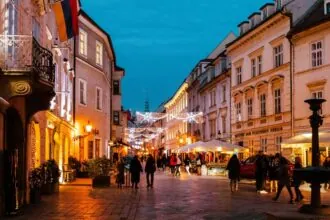
As evening approaches, Bayeux becomes especially atmospheric. Warm lighting illuminates the cathedral, cafés spill onto the streets and the reflections along the River Aure create some of the town’s most beautiful scenes.
Using Bayeux as a Base for the D-Day Beaches
One of the main reasons so many visitors choose to stay in Bayeux is its outstanding location. The town sits within easy reach of many of Normandy’s most important D-Day sites, making it one of the best bases for exploring the events of 6 June 1944.
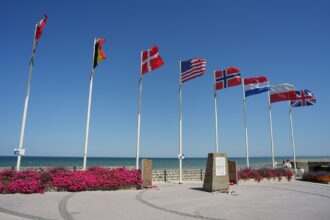
Within a 30 to 40-minute drive, you can reach Omaha Beach, Gold Beach, Juno Beach, Arromanches-les-Bains, Pointe du Hoc, the Normandy American Cemetery and numerous museums, memorials and preserved battlefields. This allows visitors to explore at a relaxed pace without changing accommodation each day.
Many companies also operate guided D-Day tours directly from Bayeux, ranging from half-day excursions to comprehensive full-day tours covering the major landing beaches and battlefield sites. Knowledgeable guides provide valuable historical context, helping visitors better understand the events that shaped modern Europe.
Returning to Bayeux each evening offers a welcome contrast after an emotional day visiting the memorials. The town’s excellent restaurants, welcoming hotels and peaceful medieval streets provide a comfortable place to reflect on everything you’ve seen.
Whether you’re travelling independently or joining an organised tour, Bayeux remains the ideal gateway to the D-Day beaches while offering enough attractions of its own to justify spending several days in this remarkable corner of Normandy.

Discover the American D-Day Landing Beaches on a Half-Day Tour
If you want to experience the most important American D-Day sites without committing to a full day, this half-day guided tour from Bayeux is an excellent option. Travelling in a comfortable Mercedes minivan with an English-speaking guide, you’ll visit three of the most significant locations connected to the Normandy landings while learning about the events of 6 June 1944 through expert commentary and personal stories.
The tour begins in Place de Québec in Bayeux before heading to Omaha Beach, where thousands of American troops landed under heavy German fire. Walking along the beach while hearing first-hand accounts of the battle gives visitors a much deeper appreciation of the challenges faced by the Allied forces than simply reading about the events.
From there, you’ll continue to the Normandy American Cemetery at Colleville-sur-Mer. Overlooking Omaha Beach, the beautifully maintained cemetery contains more than 9,000 white marble graves and is one of the most moving places to visit in Normandy. Your guide will explain the history of the cemetery, its memorial chapel and some of the personal stories behind the names engraved here.
The final major stop is Pointe du Hoc, where the US Army Rangers famously scaled 30-metre cliffs under enemy fire to capture German gun positions. Although restoration work means access may occasionally be replaced by Longues-sur-Mer Battery during 2026 and 2027, the tour still provides an excellent understanding of the strategic importance of this part of the coastline.
With small groups, round-trip transport from Bayeux and expert historical commentary throughout, this is one of the easiest ways to experience the highlights of the American D-Day sector in just four hours.
Explore Normandy’s D-Day History on a Full-Day Guided Tour
For visitors wanting a more complete understanding of the Normandy campaign, this full-day D-Day Landing Beaches tour from Bayeux visits many of the most famous American battlefields and memorials, combining military history with the stories of the people who fought here.
After leaving Place de Québec, the day begins at Sainte-Mère-Église, one of the first French towns liberated on D-Day and famous for the American paratroopers who landed there during the early hours of the invasion. Your guide explains the airborne assault and the role the town played in securing the Allied advance inland.
The tour continues to Utah Beach, where the American landings achieved many of their objectives despite difficult conditions. You’ll have time to explore the beach, learn about the landings and stop for lunch before continuing along the Normandy coastline.
Later in the day you’ll visit Pointe du Hoc, where the dramatic cliffs and bomb craters still reveal the scale of the fighting, before continuing to Omaha Beach, arguably the most famous landing beach of all. Standing on the vast stretch of sand while hearing the stories of those who fought here is an unforgettable experience for many visitors.
Throughout the day your guide explains not only the military operations but also the wider story of Normandy during the Second World War, helping visitors understand how each location fitted into the success of Operation Overlord. Travelling in a small group of up to ten people also allows plenty of opportunities to ask questions and enjoy a more personal experience.
If you only plan to take one organised excursion during your stay in Bayeux, this comprehensive tour offers one of the best introductions to the D-Day landings and the sacrifices made during the liberation of Europe.

Rupert’s Handy Travel Tips
Bayeux is much more than a base for visiting the D-Day beaches. Give yourself time to enjoy the town as well as Normandy’s wartime history.
- Check the Tapestry Museum before you travel: It is closed for renovation until autumn 2027, so build your day around the cathedral, the MAHB and the wartime museums instead.
- Use Bayeux as your Normandy base: The town is compact, easy to walk around and perfectly positioned for exploring the D-Day beaches, Arromanches, Omaha Beach and Pointe du Hoc.
- Book your D-Day tour in advance: Guided tours regularly sell out during late spring and summer, particularly around the D-Day anniversary in June.
- Take time to explore the old town: Beyond the museums, Bayeux has beautiful medieval streets, independent cafés, riverside walks and one of Normandy’s finest cathedrals.
- Stay overnight if you can: Once the day-trippers leave, Bayeux becomes wonderfully peaceful and is one of the most enjoyable towns in Normandy to explore during the evening.
Want to meet the reindeer behind our travel tips? Find out more in our page Who is Rupert?.




Frequently Asked Questions
Is Bayeux worth visiting?
Absolutely. Bayeux is one of Normandy’s finest historic towns, combining the world-famous Bayeux Tapestry, a magnificent cathedral, beautifully preserved medieval streets and excellent access to the nearby D-Day beaches.
How many days should I spend in Bayeux?
A full day is enough to see the main attractions in the town itself. However, two or three days is ideal if you also want to explore the D-Day beaches, museums and surrounding countryside.
Can you walk around Bayeux?
Yes. The historic centre is compact and very walkable, with the Bayeux Tapestry Museum, Cathedral, Old Town, River Aure and major museums all within a comfortable walking distance.
What is Bayeux famous for?
Bayeux is best known for the Bayeux Tapestry, which tells the story of the Norman Conquest of England in 1066. The town is also famous for its beautifully preserved medieval centre and its role as a gateway to the D-Day landing beaches.
Is Bayeux a good base for visiting the D-Day beaches?
Yes. Many visitors consider Bayeux the best base in Normandy for exploring the D-Day beaches, thanks to its central location, excellent accommodation, restaurants and organised battlefield tours.
When is Bayeux Market?
The main Bayeux Market is traditionally held on Saturday mornings, with stalls selling local produce, cheeses, seafood, flowers and regional specialities. Market dates can occasionally change, so it’s worth checking locally before your visit.
Can you visit Bayeux as a day trip from Paris?
Yes. Direct and connecting train services make Bayeux an achievable day trip from Paris, although staying overnight gives you much more time to enjoy both the town and the nearby historic sites.
What local food should I try in Bayeux?
Don’t miss Camembert, Pont-l’Évêque, Norman cider, Calvados, fresh seafood, salt-meadow lamb and traditional Norman desserts made with locally grown apples.
Further Reading
Continuing your Normandy trip? Our Things to Do in Pontorson guide covers the closest town to Mont-Saint-Michel, and our Visiting Mont-Saint-Michel guide covers tickets, tides and the abbey itself.
Exploring further afield? Our Visiting Rouen guide covers the region’s historic Gothic capital, and our Normandy D-Day Beaches Guide covers the landing beaches, museums and memorials in full detail.