Reviewed by our editorial team Updated
Why the Silver Meteor Is the Fastest Train to Florida
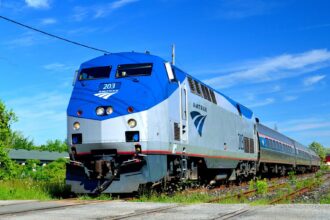
The Silver Meteor is Amtrak’s fastest scheduled train between New York and Miami, running daily for roughly 28 hours down the East Coast. It’s one of two long-distance Florida trains sharing the same corridor, and it earns its reputation for speed by keeping its station list tighter than its sibling, the Silver Star.
Covering approximately 1,389 miles (2,235 km), the Silver Meteor follows a largely coastal routing through Virginia, the Carolinas and Georgia before threading through central Florida towards Miami. It’s one of Amtrak’s oldest branded services, tracing its name back to the legendary streamliners first introduced in 1939.
Unlike the big western trains, the Silver Meteor doesn’t climb mountains or cross deserts. Instead it offers a gentler, low-altitude journey through Chesapeake tidewater country, the South Carolina Lowcountry, the Georgia coastal plain and the citrus groves of central Florida, all from the comfort of a single overnight sleeper train.
The appeal here is less about dramatic scenery and more about steady, comfortable progress: a gentle overnight glide down the Eastern Seaboard that trades mountain views for historic Southern cities and a genuinely relaxing pace.
The train runs on Viewliner equipment, the same single-level sleeping cars used across Amtrak’s eastern long-distance network, rather than the double-deck Superliners found on western routes. That means Roomettes and Bedrooms sit at platform level, with no stairs to climb when boarding.
Power for the train also changes partway through the journey, switching from electric traction on the Northeast Corridor to diesel locomotives south of Washington DC, a detail rail enthusiasts often enjoy noting during the changeover.
For travellers heading to Orlando, West Palm Beach, Fort Lauderdale or Miami, the Silver Meteor is also a genuinely practical alternative to flying, particularly for anyone wanting to bring more luggage than a typical airline allowance or simply avoid airport security altogether.
It’s also a useful regional option for shorter hops that don’t involve Florida at all, since the Silver Meteor calls at plenty of intermediate cities where a rental car or connecting flight would otherwise be the only realistic choice.
Because it makes noticeably fewer stops than the Silver Star, the Silver Meteor tends to appeal to travellers who mainly want to reach Florida efficiently, rather than explore every small town along the way. This guide covers its route, cabins, dining and how it compares with its slower sibling.
Snowbirds heading south for the winter, students travelling to and from Florida colleges, and leisure travellers combining a city stopover with a beach holiday all make up a large share of the Silver Meteor‘s regular passengers each year.
Whether you’re booking the full New York to Miami run or a shorter regional segment, this guide walks through the stations, the sleeper cabins, the dining service and the exact differences that separate the Meteor from the Star.
Silver Meteor Route Overview
Rather than a mountain-crossing epic, the Silver Meteor is best understood as a long, steady coastal run. Departing New York’s Moynihan Train Hall, the train reaches Washington DC in around four hours, then continues south overnight through Virginia, the Carolinas and Georgia before arriving in Florida the following morning.
The full journey covers 33 stations and roughly 1,389 miles, taking about 28 hours end to end. Compared with the Silver Star’s 37 stations and 32-hour schedule, the Meteor is both shorter in distance and noticeably quicker, thanks to a more direct coastal alignment and fewer intermediate calls.
Crucially, the Silver Meteor does not detour to Tampa. It runs straight down Florida‘s east-central corridor through Winter Park, Orlando, Kissimmee and Winter Haven before reaching the Palm Beaches and Miami, which is the single biggest structural difference between the two Florida trains.
Equipment throughout is Amtrak’s Viewliner fleet, paired with Amfleet II coaches and an ACS-64 electric locomotive for the Northeast Corridor section, switching to diesel power south of Washington DC. There’s no Sightseer Lounge on this equipment, so the Café Car serves as the main onboard social space for the whole journey.
Journey times below reflect a typical daily departure. Freight congestion, seasonal timetable changes and engineering work can all cause minor variation, so it’s always worth confirming the live Amtrak schedule closer to your intended travel date.
Both the Northeast Corridor section and the Southern portion of the route are shared with other traffic, whether commuter services near New York and Washington or freight trains further south, so a small amount of built-in schedule buffer is always sensible.
See hotel options and places to stay for your trip.
Browse hotelsBrowse apartments, holiday homes and self-catering stays.
View rentalsCompare prices from multiple hotel booking sites.
Check dealsNew York to Washington DC: The Northeast Corridor
The Silver Meteor begins at New York’s Moynihan Train Hall, sharing the busy Northeast Corridor with Acela and Northeast Regional services for its opening stretch. After Newark and Trenton, the train reaches Philadelphia’s 30th Street Station, a grand terminal and a hub for onward connections across Pennsylvania.
South of Philadelphia the route continues through Wilmington, Delaware, and into Maryland towards Baltimore, before crossing the Potomac River into Washington DC. This whole opening section typically takes around four hours and is fast, frequent and heavily used by commuters as well as long-distance passengers.
Washington Union Station is where the Silver Meteor‘s character really begins to change. South of here, the train leaves behind the dense commuter rail network and settles into the slower, more relaxed pace typical of Amtrak’s long-distance Southern services.
Many passengers joining specifically for the overnight Florida leg choose to board at Washington DC rather than New York, especially if they’d rather skip the busiest, most crowded section of the Northeast Corridor entirely.
Locomotives are swapped at Washington DC too, with the electric engine used north of the capital giving way to diesel power for the remainder of the journey south towards Florida.
Because this stretch is shared with so many commuter and Northeast Regional services, it’s also the section of the journey most likely to feel busy, particularly during Friday afternoon rush hour departures from New York.
Passengers boarding at intermediate Northeast Corridor stations such as Philadelphia or Baltimore can also join the Silver Meteor here, making it a flexible option even for travellers not starting their journey in New York itself.
Washington DC to the Carolinas: Virginia and the Coastal Plain
Leaving Washington DC, the Silver Meteor calls at Alexandria and Fredericksburg before reaching Richmond, Virginia’s capital and an important stop for passengers connecting within the state. The scenery here shifts from suburban Washington into rural Virginia farmland fairly quickly.
South of Richmond, the train calls at Petersburg before crossing into North Carolina at Rocky Mount, one of the state’s key rail junctions. From here the Silver Meteor heads towards Fayetteville, tracing a route noticeably further east than the Silver Star’s inland path through Raleigh.
This coastal alignment is a deliberate historical choice. The Silver Meteor has always run closer to the Atlantic seaboard than its sibling, following the CSX A-Line through the flat, sandy coastal plain of eastern North Carolina and South Carolina.
Crossing into South Carolina, the train calls at Florence and Kingstree, both classic small Southern railroad towns, before the scenery begins to open out into the marshland and tidal creeks that define the Lowcountry ahead.
Cotton fields, pine plantations and small farming communities dominate the view for much of this stretch, a quieter, more rural counterpart to the busy Northeast Corridor scenery from earlier in the day.
This whole segment from Washington DC to the South Carolina Lowcountry typically runs overnight on the southbound departure, meaning much of Virginia and North Carolina passes by in darkness for most passengers.
Passengers travelling northbound from Florida experience this section in reverse, often waking up somewhere around Richmond or Fredericksburg with Washington DC and the Northeast still a few hours ahead of them.
Freight traffic can occasionally cause brief delays through this stretch, since large sections of the route are owned and dispatched by CSX rather than Amtrak itself, so allowing a little schedule flexibility is always sensible.
Much of this trackage dates back to the original Atlantic Coast Line Railroad, a company whose nineteenth century engineering decisions still shape the exact alignment the Silver Meteor follows through the Carolinas today.
Charleston, Savannah and the Lowcountry
One of the Silver Meteor‘s signature stops is historic Charleston, South Carolina, a city famous for its cobblestone streets, pastel-coloured houses and antebellum architecture. The station sits a short drive from the historic downtown peninsula, making it a popular overnight break point.
Charleston‘s food scene has become a major draw in its own right in recent years, and a stopover here gives passengers the chance to sample some of the American South’s most celebrated restaurants before continuing south.
South of Charleston the train calls at Yemassee, a small station serving the surrounding Lowcountry plantation region, before crossing into Georgia and reaching Savannah, another historic port city known for its Spanish moss-draped squares and riverside architecture.
Savannah‘s riverfront district sits within easy reach of the station, and its cobblestone streets and horse-drawn carriage tours make it just as compelling a stopover choice as Charleston further up the coast.
This stretch of coastal Georgia and South Carolina is one of the most atmospheric on the whole route, with the train crossing tidal marshes, cypress swamps and slow-moving rivers that feel a world away from the Northeast Corridor a day earlier.
From Savannah the Silver Meteor continues to Jesup, Georgia, a small but important junction stop that appears on the Meteor’s timetable but not on the Silver Star’s, one of several small differences that distinguish the two routes’ station lists.
Georgia‘s coastal plain around Jesup is sparsely populated and heavily forested, offering a genuinely quiet, rural contrast to the historic city stops at Charleston and Savannah on either side of it.
Together, Charleston and Savannah give the Silver Meteor a genuine historic sightseeing dimension, and many passengers choose to break their journey at one or both cities rather than riding the full route in a single sitting.
Both cities also offer well-connected, walkable historic districts close to their Amtrak stations, making a one or two night stopover genuinely practical without needing to hire a car.
Spring is a particularly popular time to break your journey in either city, when Charleston‘s gardens and Savannah‘s parks are at their most colourful and temperatures are still comfortable for walking tours.

The Best Silver Meteor Stopovers
Although it’s perfectly possible to travel all the way from New York to Miami in one journey, the Silver Meteor also lends itself particularly well to a slower East Coast itinerary. Several of its intermediate stops are destinations worth visiting in their own right.
Charleston is one of the obvious choices. Rather than arriving and immediately continuing south, spending a couple of nights here gives you time to explore the historic centre, waterfront, markets and celebrated food scene before returning to the railway.
Further south, Savannah makes another excellent stop. Its historic squares, Spanish moss-covered trees and riverfront create a very different experience from the cities further north, and combining Charleston and Savannah by train can become a holiday in itself.
Orlando provides a completely different type of break. Families could use the Silver Meteor to reach Central Florida, spend several days exploring the theme parks and other attractions, then continue south towards West Palm Beach, Fort Lauderdale or Miami.
You could also reverse the idea and use the train to build a journey north from Florida. A trip such as Miami → Savannah → Charleston → Washington DC → New York turns what could have been a simple flight home into a multi-city East Coast rail itinerary.
The important thing to remember is that getting off the train ends that particular journey segment. If you’re spending one or more nights somewhere, you’ll need a reservation for the later train on which you intend to continue.
Georgia to Central Florida
South of Jesup, the Silver Meteor crosses into Florida and calls at Jacksonville, the state’s largest city by area and an important crew and equipment change point for Amtrak’s Florida services. Many passengers wake up around this point on the southbound overnight run.
From Jacksonville the train heads south through Palatka and DeLand, small central Florida towns surrounded by lakes, springs and citrus groves, before reaching Winter Park, an attractive, leafy suburb just north of downtown Orlando.
The train then calls at Orlando itself, one of the busiest stops on the entire route thanks to the city’s status as a major tourist destination, before continuing to Kissimmee, gateway to many of the area’s theme parks and resorts.
This section of Florida feels noticeably different from the coastal Carolinas and Georgia earlier in the journey, with flat citrus groves, lakes and increasingly suburban development replacing the marshes and tidal creeks of the Lowcountry.
Spanish moss gives way to palm trees somewhere around the Florida state line, one of the clearest visual markers that the journey has moved firmly into the Sunshine State’s distinctive landscape.
Because the Silver Meteor skips the Tampa detour entirely, this central Florida stretch is noticeably more direct than the equivalent section of the Silver Star, saving passengers a meaningful chunk of overall journey time.
Families heading to the Orlando theme parks often find this the single most useful stretch of the whole route, since it delivers them close to their destination without the wider detour their Tampa-bound counterparts have to endure.
Winter Park itself is worth a mention on its own merits, with tree-lined streets, boutique shopping and a scenic boat tour of its interconnected lakes, all within easy walking distance of the Amtrak station.
Central Florida to Miami
From Kissimmee the Silver Meteor continues to Winter Haven and Sebring, both quiet central Florida towns, before the route turns firmly southeast towards the coast and the string of Palm Beach County stations that follow.
The train calls at West Palm Beach, Delray Beach and Deerfield Beach, all popular South Florida communities, before reaching Fort Lauderdale and Hollywood, the final two stops before the terminus.
This final stretch runs close to the coast for much of its length, and passengers on the eastern side of the train can often catch glimpses of the Intracoastal Waterway and, occasionally, the Atlantic Ocean itself in the late afternoon light.
Palm trees, waterfront condominiums and the occasional glimpse of a marina line the tracks through this section, a fitting final stretch of scenery before the train pulls into its South Florida terminus.
The Silver Meteor finally terminates at Miami, arriving after roughly 28 hours onboard. The station is a modern, functional building with connections to Tri-Rail and Miami’s Metrorail system for onward travel around the city.
Arriving in South Florida after a full day and night onboard is a genuinely satisfying way to end the journey, especially compared with the stress of a connecting flight through a major hub airport.
For passengers continuing beyond Miami, rental cars, taxis and rideshare services are all readily available directly outside the station, making onward travel to the Keys or Miami Beach straightforward.
Some travellers choose to disembark earlier at Fort Lauderdale or West Palm Beach instead, particularly if their final destination sits closer to those stations than to downtown Miami itself.
Whichever station you choose to end your journey at, it’s worth double-checking connecting transport options in advance, since not every South Florida station has the same level of onward public transit access.
Search flights and useful route combinations in one place.
View flightsUse an eSIM to get online without hunting for a local SIM after arrival.
See eSIM optionsBook a private airport transfer in advance and have your ride planned before you arrive.
Check transfersUsing the Silver Meteor for a Florida Holiday
The Silver Meteor doesn’t have to be treated purely as a train between New York and Miami. Its collection of Florida stations makes it useful for reaching several popular destinations without immediately hiring a car.
For visitors heading to the theme parks, Orlando and Kissimmee are the most obvious stops. Which station works best will depend on where you’re staying, so check the location of your hotel and your onward transfer before choosing automatically.
Further south, the train serves West Palm Beach, Delray Beach, Deerfield Beach, Fort Lauderdale, Hollywood and Miami. This creates several possible entry points into South Florida rather than forcing every passenger to remain onboard until the final station.
If you’re staying in Fort Lauderdale, for example, there is little reason to continue to Miami simply because it’s the end of the route. The same principle applies at West Palm Beach and the other intermediate stations: choose the station that works best for your actual accommodation.
The Silver Meteor can also form one part of a longer Florida itinerary, but it shouldn’t automatically be used for every local journey. South Florida has other rail and public transport services that may operate much more frequently, so compare your options rather than assuming the long-distance Amtrak train is always the best way to travel between neighbouring cities.
Where the Silver Meteor really comes into its own is when you’re combining Florida with somewhere much further north. Being able to board in New York, Washington DC, Charleston or Savannah, sleep onboard and wake up in Florida is what makes this train substantially different from an ordinary regional rail service.
Sleeper Cabins on the Silver Meteor
Because the Silver Meteor runs overnight in both directions, many passengers upgrade from Coach to one of Amtrak’s Viewliner sleeper cabins. As single-level cars, there’s no stair climbing required to reach your room, unlike the bi-level Superliners used on western trains.
The most popular option is the Roomette, suitable for one or two passengers. By day it offers two forward-facing seats, and at night these convert into a lower bed with a second berth folding down from above. Roomette passengers share toilet and shower facilities elsewhere in the same car.
A car attendant is assigned to each sleeping car and will make up your bed in the evening and reset it in the morning, one of the small touches that makes sleeper travel feel genuinely looked after.
Bedrooms offer considerably more space, with a private toilet and shower, a sofa that converts into a bed, and an upper berth for a second passenger, making them a popular choice for couples travelling the full overnight route to Florida.
Both cabin types are noticeably smaller than the equivalent Superliner rooms found on western trains, a trade-off for the single-level Viewliner design that avoids any stairs between the platform and your seat.
An Accessible Bedroom is also available on Viewliner sleeping cars, designed for passengers with reduced mobility and offering extra manoeuvring space along with a fold-down bed and private facilities.
All sleeping car passengers receive complimentary meals, bottled water and priority boarding at many stations, benefits that make the upgrade from Coach genuinely worthwhile on a journey lasting well over a full day.
Luggage space in Viewliner cabins is more limited than in a Superliner Bedroom, so it’s worth packing efficiently for a journey of this length, keeping essentials easily reachable rather than buried in a large suitcase.
Sleeper fares rise with demand, and winter departures in particular can sell out weeks ahead, so booking as early as possible generally secures both a better price and a wider choice of cabins.
Coach seating remains a comfortable option for shorter hops, such as New York to Washington DC or Charleston to Savannah, but for the complete overnight run to Miami, most experienced travellers recommend at least a Roomette.
| Feature | Coach | Roomette | Bedroom |
|---|---|---|---|
| Private accommodation | ❌ | ✅ | ✅ |
| Bed for sleeping | ❌ (reclining seat only) | ✅ Upper & lower berths | ✅ Full-sized beds |
| Meals included | ❌ | ✅ | ✅ |
| Private toilet | ❌ | ❌ (shared facilities) | ✅ |
| Private shower | ❌ | ❌ (shared facilities) | ✅ |
| Café Car access | ✅ | ✅ | ✅ |
| Best for | Budget travellers | Couples & solo travellers | Maximum comfort |
Dining and Café Car
Dining on the Silver Meteor follows Amtrak’s Flexible Dining model, used across its eastern Viewliner-equipped long-distance trains. Sleeping car passengers receive complimentary meals, typically a hot entree for lunch and dinner plus a lighter breakfast, served in the dining car or delivered to your cabin.
Menus rotate periodically but generally include options such as grilled chicken, pasta, a vegetarian dish and a hot sandwich, alongside sides, desserts and a decent range of drinks, a simpler service than the multi-course dining found on some western routes.
Coach passengers can purchase food from the Café Car, which stocks sandwiches, salads, snacks, beer, wine and coffee throughout the journey, and which also functions as the closest thing to a social space onboard since there’s no dedicated observation car.
Because the Silver Meteor uses single-level Viewliner equipment rather than the bi-level Superliners found out west, there’s no Sightseer Lounge, so the Café Car’s small seating area handles both casual dining and general socialising throughout the trip.
Meal times for sleeper passengers are usually announced over the intercom, and it’s worth heading to the dining car reasonably promptly, since seating is more limited than on the larger western trains.
Café Car prices are broadly comparable to airport concessions, so Coach passengers on a budget may want to bring some of their own snacks and drinks for the longer stretches between meal services.
If you have dietary requirements, it’s worth notifying Amtrak when booking, particularly for vegetarian, vegan or gluten-free requests, so the onboard crew can plan accordingly before meal service begins each day of the journey.
Booking Silver Meteor Tickets with Omio
You can search for Silver Meteor tickets through Omio, which can be particularly convenient if you’re planning several journeys around the United States and want to keep different transport bookings together in one place.
Rather than searching only for the Silver Meteor by name, enter your actual departure and destination, such as New York to Miami, Washington DC to Orlando, Charleston to Savannah or New York to Fort Lauderdale. This makes it easier to see the Amtrak services available for your particular journey and compare the departure and arrival times.
For shorter journeys, Omio can also help you compare the train with other available transport. The Silver Meteor isn’t only useful for the complete overnight journey to Florida; it can also be booked between intermediate stations, making journeys such as Charleston to Savannah possible without travelling the entire route.
Pay particular attention to the ticket and accommodation type before booking an overnight journey. Travelling for more than a day in Coach is a very different experience from having a private Roomette or Bedroom, so travellers wanting sleeper accommodation should check exactly what is included with the fare being offered.
If you’re planning several Amtrak journeys rather than just the Silver Meteor, it’s also worth comparing the combined price of your individual tickets with the Amtrak USA Rail Pass before paying.

Book Amtrak Tickets and Sleeper Trains
Travelling by train in the United States can be a memorable way to cover long distances, especially on scenic routes and overnight journeys. Amtrak lets you book rail tickets, long-distance services, and sleeper train journeys across the country.
It is ideal for city-to-city travel, cross-country rail trips, and travellers who want a slower, more comfortable alternative to flying. Sleeper trains can also make long journeys easier by combining transport and overnight accommodation.
Silver Meteor or Silver Star: Which Florida Train Should You Choose?
Amtrak runs two separate long-distance trains between New York and Miami, and the choice between them comes down almost entirely to speed versus stops. The Silver Meteor is the faster of the two, taking around 28 hours across 33 stations on a mostly coastal alignment.
The Silver Star takes a slower, more inland route through Raleigh and Columbia, calls at 37 stations, and famously detours to serve Tampa, adding roughly four extra hours to the overall journey time.
Note that the Silver Star is currently operating as part of a temporary combined service called the Floridian, running between Chicago and Miami via Washington DC while Amtrak completes East River Tunnel works in New York. The comparison below reflects each train’s traditional route and timings; always check the current train number and timetable for your travel date before booking.
The table below sets the two trains side by side, and it’s worth reading alongside our dedicated Silver Star guide if you’re still deciding which one actually fits your itinerary.
| Feature | Silver Meteor | Silver Star |
|---|---|---|
| Route Style | Coastal (Charleston, Savannah) | Inland (Raleigh, Columbia) |
| Distance | Approximately 1,389 miles (2,235 km) | Approximately 1,522 miles (2,449 km) |
| Journey Time | Around 28 hours | Around 32 hours |
| Number of Stations | 33 | 37 |
| Serves Tampa? | ❌ | ✅ |
| Serves Charleston? | ✅ | ❌ |
| Equipment | Viewliner sleeping cars | Viewliner sleeping cars |
| Best For | Fastest overall journey to Florida | Tampa access and inland Carolinas stations |
If your priority is simply reaching Florida as quickly as possible, or you’re travelling to a station on the Meteor’s coastal route such as Charleston, Savannah or Winter Park, the Silver Meteor is the more efficient option of the two trains.
If Tampa is your destination, or you’d rather travel via Raleigh and Columbia for personal or connection reasons, the Silver Star is the only one of the two that actually serves those stations directly without requiring a transfer.
Onboard, the two trains are very similar: both use Viewliner sleeping cars, both offer Flexible Dining, and neither carries a dedicated Sightseer Lounge. The real decision comes down to your exact origin and destination stations rather than onboard comfort.
Fares between the two trains are generally similar too, so price rarely tips the decision one way or the other. It really does come down to which stations you actually need to reach.
For a full breakdown of the Silver Star‘s route, stations and its own take on this comparison, see our dedicated Silver Star Guide.
Best Time of Year to Ride the Silver Meteor
The Silver Meteor operates daily throughout the year, and its low-altitude, largely coastal route rarely faces the kind of winter disruption that can affect mountain-crossing western trains, making it a reliable year-round option.
Winter is genuinely the peak season for this particular route, since so many passengers are travelling south specifically to escape colder Northern climates, meaning sleeper cabins can sell out well in advance around the holidays.
Retirees splitting their year between a Northern home and a Florida winter base make up a notable share of this seasonal demand, often booking the same departure date year after year.
Spring brings milder temperatures across the Carolinas and Georgia and is a popular time to combine the train journey with a Charleston or Savannah stopover, before the Deep South’s summer humidity really sets in.
Summer is hot and humid along almost the entire route, and hurricane season, which runs roughly from June through November, can occasionally disrupt the Florida portion of the journey, so it’s worth checking forecasts if you’re travelling during these months.
Autumn offers a good middle ground, with cooling temperatures in the Carolinas, fewer crowds than winter, and generally settled weather once the peak of hurricane season has passed by late October.
Holiday periods such as Thanksgiving and Christmas see especially heavy demand for southbound sleeper cabins, as snowbirds and families travelling to visit relatives in Florida book well ahead of the festive season.
If your schedule is flexible, travelling midweek rather than on a Friday or Sunday can often mean a quieter train and a slightly easier time securing your preferred sleeper cabin at short notice.
Browse hostels and budget-friendly stays.
See hostelsAccess compensation support, eligible lounge benefits and faster payouts.
See the benefitsUse convenient luggage storage between arrival, check-in and departure.
Check storageIs the Silver Meteor Worth It?
The Silver Meteor won’t offer the high-altitude drama of the California Zephyr, but it does something genuinely useful: it links the Northeast directly to Florida with a comfortable overnight sleeper option and a couple of genuinely worthwhile historic city stops along the way.
Its biggest strength is simply efficiency among Amtrak’s East Coast overnight trains, delivering passengers between New York and South Florida in the shortest scheduled time of any of Amtrak’s Florida services.
It’s particularly worth considering for anyone travelling to Charleston, Savannah, Orlando or the Palm Beaches who would rather avoid flying, or who simply enjoys the relaxed pace of long-distance rail travel over a rushed connecting flight.
It also suits travellers making multiple stops along the East Coast in one trip, since the ticket can be booked with several breaks built in rather than requiring separate flights for each city.
Because it’s the faster of Amtrak’s two Florida trains, the Silver Meteor also suits travellers who want the overnight sleeper experience without adding unnecessary hours for stations they don’t actually need to visit.
Solo travellers in particular often appreciate the built-in social element of shared dining car seating, a small but genuine way to meet fellow passengers that a flight simply doesn’t offer.
Families travelling with young children often appreciate the extra legroom and freedom to move around compared with a long-haul flight, along with the novelty of a genuine overnight adventure that doubles as part of the holiday itself.
First-time long-distance rail travellers often find the Silver Meteor an approachable introduction to sleeper trains too, since the journey is shorter than the big transcontinental western routes but still long enough to properly enjoy a night in a Roomette.
That said, if your only goal is reaching Miami from New York as quickly as possible, flying will always be considerably faster. The Silver Meteor rewards travellers who have the time and inclination to enjoy the journey itself.
Weigh the roughly 28-hour journey against a two to three hour flight honestly before booking, since the train only makes sense once you value the experience of the journey as much as simply arriving.
For anyone building a wider East Coast rail trip, our Crescent Guide covers Amtrak’s third overnight departure from New York and Washington DC, heading southwest towards New Orleans instead of Florida.
Does the Amtrak USA Rail Pass Make Sense for the Silver Meteor?
If the Silver Meteor is only one leg of a longer American rail adventure, it’s worth looking at the Amtrak USA Rail Pass before booking individual tickets.
Rather than paying for each journey separately, the Rail Pass allows travel across a set number of segments within a fixed period, which can work out cheaper if you’re combining the Silver Meteor with other long-distance Amtrak routes.
The pass typically covers Coach travel across a fixed number of segments booked within a set validity window, giving flexibility to build a multi-city itinerary rather than committing to a single point-to-point ticket.
Some travellers use the pass to combine a Florida trip with a wider East Coast itinerary, adding the Crescent towards New Orleans or exploring further north with the Lake Shore Limited or Cardinal.
It’s worth pricing both options for your exact travel dates before deciding, since promotional Coach fares booked well ahead can sometimes work out cheaper than the pass for a single one-way journey.
It’s worth noting that the Rail Pass covers Coach travel only. Sleeper accommodation, including Silver Meteor Roomettes and Bedrooms, requires an additional supplement paid separately at the time of booking.
This means a pass-holder can still travel the Silver Meteor comfortably in Coach for the whole 28-hour journey while paying only the sleeper supplement if they later decide to upgrade for extra comfort.
As a rough guide, the pass tends to make the most sense once your itinerary includes three or more separate long-distance segments, rather than a single one-way Silver Meteor booking.
Travellers combining the western long-distance trains, such as the California Zephyr or Coast Starlight, with an eastern route like the Silver Meteor can sometimes turn a single Florida trip into a genuine coast-to-coast rail adventure using one pass.
Practical Tips for Riding the Silver Meteor
A little preparation goes a long way on a journey of nearly 28 hours, even though the Silver Meteor is generally a comfortable and well-run way to travel down the East Coast.
Book sleeper cabins early for winter travel especially, since this is the peak season for the route and Roomettes and Bedrooms can sell out weeks in advance.
Arrive at the station with time to spare, particularly at busy stops like New York or Washington DC, since boarding for sleeper passengers can start earlier than the general Coach line.
Pack layers, since you’ll travel from the cooler Northeast through increasingly warm and humid Southern states, often within the same 24-hour period.
Bring your own snacks for Coach travel, since Café Car prices are broadly comparable to airport concessions rather than supermarket pricing.
Download entertainment in advance, since Wi-Fi can be unreliable through rural stretches of the Carolinas and Georgia, and mobile signal occasionally drops out entirely.
Consider a Charleston or Savannah stopover if your schedule allows, since both cities are genuinely worth exploring rather than simply passing through on the way to Florida.
Confirm your onward transport in Miami before arrival, since rideshare pickup points at busy stations can occasionally involve a short walk from the platform.
Double-check you’ve booked the right train, since it’s easy to confuse the Silver Meteor with the Silver Star when searching, particularly if Tampa is part of your plans.
Finally, allow flexible connection times at either end of the journey, since long-distance Amtrak trains sharing freight-owned track can occasionally run behind schedule.
If you’re travelling with children, ask the onboard crew about quieter times to visit the Café Car, since it tends to be calmer mid-morning and mid-afternoon than right around the main meal service windows.

Rupert’s Handy Travel Tips
If you’re planning to ride the Silver Meteor from New York to Miami, here are a few tips to help you get the most from the journey:
- Book winter travel early: this is the busiest season on the route, and sleeper cabins sell out fastest of all.
- Break your journey in Charleston or Savannah: both historic cities are genuinely worth a day or two rather than passing straight through.
- Pack for a climate shift: temperatures rise noticeably as you head south, often within a single day onboard.
- Double-check you want the Meteor, not the Star: if Tampa is your destination, you’ll need the sibling service instead.
Want to meet the reindeer behind our travel tips? Find out more in our page Who is Rupert?.




Frequently Asked Questions
How long does the Silver Meteor take from New York to Miami?
The full journey takes approximately 28 hours, covering around 1,389 miles (2,235 km) across 33 stations.
What’s the difference between the Silver Meteor and the Silver Star?
The Silver Meteor is faster and more direct, running a coastal route via Charleston and Savannah. The Silver Star is slower, runs further inland via Raleigh and Columbia, and detours to serve Tampa.
Does the Silver Meteor stop in Tampa?
No. Tampa is served by the Silver Star, not the Silver Meteor. If Tampa is your destination, you’ll need to book the sibling service instead.
Does the Silver Meteor have an observation or Sightseer Lounge car?
No. The Silver Meteor uses single-level Viewliner equipment, so there’s no Sightseer Lounge. The Café Car serves as the onboard social space instead.
Are meals included on the Silver Meteor?
Yes, for sleeping car passengers, who receive complimentary Flexible Dining meals. Coach passengers can purchase food from the Café Car.
Is the Silver Meteor the same train as the historic 1939 streamliner?
It carries the same name and general route heritage, though the modern Silver Meteor uses entirely different, contemporary Amtrak equipment.
Can I book just part of the Silver Meteor route, such as Charleston to Savannah?
Yes, shorter segments are common, and the train is regularly used for regional trips between Southern cities as well as the full New York to Miami run.
Is Wi-Fi reliable on the Silver Meteor?
Onboard Wi-Fi is available but can be inconsistent through rural stretches of the Carolinas and Georgia, so it’s sensible to download anything you need before boarding.
Does the Silver Meteor run every day?
Yes, the Silver Meteor operates daily in both directions, with occasional schedule adjustments during major holidays or severe weather.
Can you smoke on the Silver Meteor?
No, the Silver Meteor is entirely smoke-free, in its Viewliner sleeping cars, coach seating and the Café Car alike. As with Amtrak’s other long-distance trains, crews may occasionally allow a short platform smoke break at a longer scheduled stop, but only if the train is running on time, and passengers must stay beside the train and reboard as soon as the horn sounds, since the stop can be cut short without much warning.
Further Reading
If you’re planning a wider East Coast or Florida rail trip, these guides can help you build out your itinerary around the Silver Meteor.
Our Amtrak Routes Guide compares every major long-distance route across the country, while our Amtrak Sleeper Train Guide explains the different cabin types available and whether upgrading from Coach is worthwhile. If you’re planning multiple journeys, our Amtrak USA Rail Pass Guide shows exactly how the pass works and who it suits best.
Before booking, it’s well worth reading our dedicated Silver Star Guide to compare stations, journey times and routing directly against the Meteor.
If you’re travelling further afield, our Crescent Guide covers Amtrak’s third overnight East Coast departure towards New Orleans.