Reviewed by our editorial team Updated
Riga is Latvia’s capital and the largest city in the Baltic states, a former Hanseatic League trading port that grew rich on the Daugava River’s route to the Baltic Sea. Its medieval Old Town, Vecrīga, has carried UNESCO World Heritage status since 1997, prized for a street plan and skyline that survived largely intact through centuries of Swedish, Russian and German rule.
Beyond the cobbles, Riga holds a second claim to fame that many first-time visitors don’t expect. The city’s Art Nouveau district, concentrated around Alberta iela and the surrounding Quiet Centre, is widely considered one of the largest and best-preserved collections of Jugendstil architecture anywhere in Europe.
That combination, a genuine medieval core paired with an entire neighbourhood of early-20th-century architectural showpieces, is what earns Riga a dedicated guide rather than a passing mention on a wider Baltic itinerary. Add a UNESCO-recognised market housed in former Zeppelin hangars, a still-standing KGB headquarters turned museum, and a genuinely walkable public transport network, and the city rewards two or three full days rather than a single afternoon stopover.
This guide covers 16 of the best things to do in Riga, from the major Old Town landmarks to the Art Nouveau streets, the Central Market and the green spaces just beyond the centre. A dedicated section also covers Rīgas satiksme, the city’s tram, trolleybus and bus operator, since several of the best sights sit a short ride rather than a walk from the historic core.
Prices below are quoted in euros, since Latvia uses the single currency, with approximate GBP and USD conversions alongside. Most of what’s covered here sits within Riga’s compact centre, walkable in well under half an hour end to end, with the outer sights a quick tram or bus ride away.
Riga at a Glance
| Attraction | Area | Roughly How Long to Spend |
|---|---|---|
| Old Town (Vecrīga) | Vecrīga | Half to full day |
| Riga Cathedral | Vecrīga | 45 minutes |
| House of the Blackheads | Vecrīga | 30-45 minutes |
| St Peter’s Church Tower | Vecrīga | 30 minutes |
| Art Nouveau District | Quiet Centre | 2-3 hours |
| Riga Central Market | Near Vecrīga | 1-2 hours |
| Latvian National Museum of Art | City Centre | 90 minutes |
| Riga Motor Museum | Šampēteris | 90 minutes+ |
| The Corner House (KGB Museum) | City Centre | 1 hour |
| Ethnographic Open-Air Museum | Lake Jugla | 2-3 hours |
| Kalnciema Quarter | Pārdaugava | 1-2 hours |
| Mežaparks & Riga Zoo | Mežaparks | Half day |
| Canal & River Boat Tours | Bastejkalns Park | 50 minutes-1 hour |
| Hop-On Hop-Off Bus Tour | Citywide | Half day (flexible) |
| Panorama Riga Observation Deck | Latvian Academy of Sciences | 30-45 minutes |
| Riga Rise Observation Wheel | Uzvaras Park, Pārdaugava | 15-20 minutes |
| Riga Pass | Citywide | Use across full trip |
| Food and Drink Scene | Miera iela & City Centre | Flexible |
| Shopping Beyond the Market | Old Town & Pārdaugava | 1-2 hours |
| Nightlife and Rooftop Bars | Old Town & City Centre | Evening |
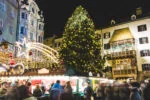
| Dome Square Christmas Market | Vecrīga | 1-2 hours (seasonal) |
Several of the sights above, including Bastejkalns Park, Kalnciema Quarter and the Freedom Monument, cost nothing at all, and even the Old Town’s biggest draws are free to explore from the outside.
Riga’s Old Town (Vecrīga): A UNESCO-Listed Medieval Core
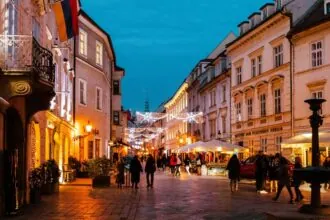
Vecrīga is Riga’s medieval heart, a tangle of cobbled lanes, church spires and merchant houses squeezed into a peninsula between the Daugava River and a ring of parks that once formed the city’s fortifications. UNESCO added the district to its World Heritage list in 1997, citing its rare mix of medieval, Gothic and Art Nouveau buildings surviving side by side.
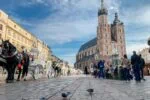
The district’s main squares, Doma laukums and Rātslaukums, anchor most first visits, ringed by the cathedral, the Blackheads House and a scatter of open-air cafés that fill up the moment the weather turns warm. Wandering without a fixed plan works well here, since almost every side street opens onto another photogenic corner.
Riga’s Old Town escaped the worst of Soviet-era redevelopment that flattened comparable districts elsewhere in the Baltics, and much of what stands today dates back genuinely centuries rather than to a post-war reconstruction. That authenticity is a large part of why UNESCO’s citation singles the area out.
The whole district is entirely free to explore on foot, and its compact size means most of it can be covered in half a day, though allowing a full day leaves room to linger over lunch or slip into one of the smaller museums along the way.
Evenings bring a different mood, with the square outside the cathedral filling with buskers and the narrow lanes lit warmly enough to make a second, slower lap worthwhile after dinner. Old Town sits within easy walking distance of nearly every other sight on this list.
Best for two or three nights. The widest choice of rooms, with filters for free cancellation and included breakfast.
View staysBest for families, or any stay past about four nights. A kitchen and a washing machine start paying for themselves.
Browse rentalsBest as a last check before booking. Compares hotel rates across several sites in one search.
Compare ratesRiga Cathedral (Rīgas Doms): The Baltic’s Largest Medieval Church
Riga Cathedral, known locally as Rīgas Doms, was founded in 1211 and remains the largest medieval church in the Baltic states, its brick nave dominating Doma laukums at the centre of the Old Town. Centuries of rebuilding layered Romanesque, Gothic and Baroque elements onto the original structure.
The cathedral’s biggest draw for many visitors isn’t the architecture itself but its organ, a 19th-century instrument that was the largest in the world when it was installed and still ranks among Europe’s finest. Regular organ concerts run through the week and are worth timing a visit around.
Entry to the cathedral nave itself is free, though a small donation is customarily welcomed, while tickets for organ concerts typically cost from around €10 (£8.60/$11.70) depending on the programme and performer. Seasonal festivals occasionally bring higher-profile recitals at a premium price.
The cathedral’s cloister, one of the best-preserved in northern Europe, holds a small museum of historic Riga artefacts and is accessible on a separate combined ticket. Allow around 45 minutes for the nave alone, longer if a concert is included.
Doma laukums, the square outside, is worth a slow circuit in its own right, framed by 19th-century facades and a handful of pavement cafés that make a natural stop before or after visiting inside.
The cathedral also hosted early rehearsals tied to Latvia’s Song Festival tradition in the 19th century, a choral custom that eventually grew into the mass gatherings now held at Mežaparks’ Great Bandstand every five years.
The cathedral sits a two-minute walk from the House of the Blackheads and St Peter’s Church, making it a natural first or second stop on any Old Town walking route.
House of the Blackheads: Destroyed in 1941, Rebuilt by 2001
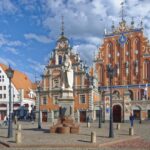
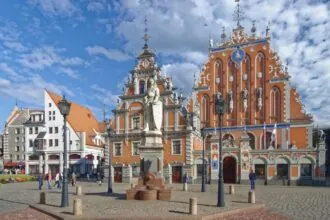
The House of the Blackheads is one of Riga’s most photographed buildings, a step-gabled merchant guild hall rebuilt in ornate Dutch Renaissance style on the site of a medieval original. The Brotherhood of Blackheads, an association of unmarried foreign merchants, used the hall for feasts and guild business from the 14th century onward.
The building visitors see today is almost entirely a reconstruction, since the original was destroyed by German bombing in 1941 and the ruins were later demolished under Soviet rule. It was rebuilt from historical drawings and photographs after Latvian independence, reopening in 2001 to mark Riga’s 800th anniversary.
Inside, the interior mixes restored guild rooms with a small museum covering the building’s history and the archaeological remains uncovered beneath it during reconstruction. A short film and English-language displays fill in the gaps for visitors without a guide.
Adult admission costs around €7 (£6.02/$8.19), and a visit comfortably fits into 30 to 45 minutes, making it an easy add-on to a wider loop of Doma laukums and Rātslaukums.
The square outside, Rātslaukums, also holds the Museum of the Occupation nearby and the rebuilt Town Hall, both worth a glance even for visitors skipping the interior.
Only unmarried foreign merchants could join the original Brotherhood, and that transient membership is part of why the guild eventually faded while Riga’s other, family-based trade guilds carried on for generations longer.
The hall’s ornate facade is best appreciated from across the square rather than up close, where the scale of the gables and heraldic decoration reads properly.
St Peter’s Church and Its 123-Metre Viewing Tower
St Peter’s Church has stood on this site since 1209, though the tower most visitors come to see is a 1970s steel reconstruction following a fire caused by German shelling in 1941. At 123 metres, it remains one of the tallest church spires in the Baltic region.
A lift carries visitors up to two viewing platforms partway up the tower, offering the best rooftop panorama of Riga’s Old Town available anywhere in the city, including a clear line over the cathedral, the river and the Art Nouveau district beyond.
Tickets for the tower cost around €9 (£7.74/$10.53) for adults, and the lift makes the climb accessible without the stairs that similar towers elsewhere in the Baltics still require. The church’s Gothic interior below is separately viewable and free to enter.
Clear days are worth waiting for if the schedule allows, since the platform is partly open to the elements and the view loses most of its appeal in heavy cloud or rain. Early morning or just before closing tends to be quietest.
The church itself has been rebuilt several times since medieval fires and wars repeatedly damaged it, and its current form dates mostly to a 1970s Soviet-era restoration rather than the original medieval structure.
Allow around 30 minutes for the tower alone, and note the platform can feel exposed and windy even on a mild day, so a light jacket is worth carrying up.
The tower sits directly beside the Old Town’s southern edge, a two-minute walk from both the Occupation Museum and the riverside promenade.
The Three Brothers: Riga’s Oldest Surviving Houses
The Three Brothers is a row of three narrow medieval houses on Mazā Pils iela, widely regarded as the oldest surviving residential complex in Riga, with the oldest of the trio dating to the 15th century. Each house was built in a distinct style, letting visitors trace roughly three centuries of Riga’s domestic architecture in a single glance.
The oldest house, painted white, retains stepped gables and tiny windows typical of medieval taxation rules that charged property owners by window size. The middle and youngest houses, built later in Dutch Renaissance and early Baroque styles, show how the street’s architecture evolved as those restrictions relaxed.
The yellow middle house now serves as the Latvian Museum of Architecture, holding small exhibitions on the country’s building traditions and offering the only interior of the three that’s regularly open to visitors. Admission to the museum is modest, generally a few euros.
The houses themselves are viewed almost entirely from the street, and the narrow lane they sit on is one of the most atmospheric in the Old Town, especially with fewer crowds than the main squares nearby.
A visit takes only 10 to 15 minutes unless the architecture museum is included, making it an easy stop between Riga Castle and the cathedral rather than a dedicated excursion.
The street’s uneven cobbles and narrow width mean it’s best explored slowly on foot, since it’s one of the few Old Town lanes too tight for anything but pedestrians.
Early morning light works particularly well here, when the pastel facades catch the sun before the lane fills with tour groups.
Freedom Monument: Latvia’s Symbol of Independence
The Freedom Monument, unveiled in 1935, is Latvia’s principal memorial to soldiers killed during the country’s 1918 to 1920 war of independence, and it remains the most potent symbol of Latvian statehood in the entire city. A bronze figure known as Milda stands atop the 42-metre column, holding three gilded stars representing the country’s historical regions.
The monument survived the entire Soviet occupation despite obvious political tension, largely because officials reinterpreted its symbolism rather than risk the public reaction its demolition would have caused. Laying flowers at its base became a quiet act of resistance for Latvians throughout that period.
A changing of the guard takes place at set times, a small but formal ceremony that draws a modest crowd and adds a few minutes of genuine ritual to what’s otherwise a self-guided stop. The surrounding plaza is entirely free and open at all hours.
The monument sits at the edge of the Old Town, directly beside Bastejkalns Park and within easy sight of the Freedom Street shopping strip, making it a natural link between the historic core and the newer city centre beyond it.
Most visitors spend no more than 10 to 15 minutes here, though the site rewards a second look after dark, when the column is dramatically lit against the surrounding gardens.
It’s one of the few Riga landmarks with genuine ongoing civic meaning rather than purely historical interest, and official wreath-laying ceremonies still take place here on national holidays.
The nearest tram stop, Nacionālais teātris, sits barely two minutes away on foot, making the monument an easy stop even for visitors based outside the Old Town.
Riga Castle: Seat of Latvia’s President
Riga Castle has stood on the bank of the Daugava since the 14th century, rebuilt and expanded repeatedly under Livonian, Polish, Swedish and Russian rule before becoming the official residence of Latvia’s president after independence. Part of the complex also houses the Latvian Museum of National History, one of the country’s largest historical collections.
A serious fire in 2013 damaged a section of the castle known as the convent building, and restoration work has continued in stages since, meaning some exhibition halls remain closed or under construction at any given time. Visitors should check current opening status before planning a visit around a specific gallery.
Where open, the museum’s exhibitions trace Latvian history from prehistoric settlement through the medieval, imperial Russian and Soviet periods, giving useful context for much of what’s covered elsewhere on this list, particularly the Corner House and Freedom Monument. Adult admission typically runs from around €6 (£5.16/$7.02) for the open sections.
The castle’s exterior and riverside gardens remain viewable regardless of which interior sections are open, and the building’s mixed architectural styles, layered over six centuries, are worth a slow look even without going inside.
Because the president officially resides here, parts of the complex are permanently off-limits and occasionally closed entirely for state functions, so a castle visit works best as a flexible add-on rather than a fixed centrepiece of a day’s plan.
The castle sits directly beside the Three Brothers and a short walk from the cathedral, making it easy to combine into the same short loop through the northern end of the Old Town.
Best for long or awkward journeys. Builds one itinerary out of separate flights.
View flightsBest if you want maps and messaging working the moment you switch your phone on.
See eSIM plansBest when public transport has stopped, or when you are travelling with children and bags.
Book a transferThe Art Nouveau District: Alberta iela
Riga’s Art Nouveau district, centred on Alberta iela and spilling across the surrounding Quiet Centre, is one of the largest and most architecturally significant concentrations of Jugendstil buildings anywhere in Europe, with an estimated third of all buildings in central Riga built in some variation of the style. Most date from a construction boom between 1904 and 1914.
Alberta iela itself holds the district’s most flamboyant examples, several designed by Mikhail Eisenstein, father of the film director Sergei Eisenstein, whose facades pile on sculpted faces, sphinxes and elaborate floral ornament in a style that verges on theatrical. Numbers 2a and 4 are usually singled out as the street’s standout buildings.
The Riga Art Nouveau Centre, set inside a genuine former Jugendstil apartment on nearby Alberta iela, recreates a wealthy Riga household from the early 1900s down to the furniture and wallpaper. Adult admission costs around €7 (£6.02/$8.19), and it’s the best way to see an interior rather than just the facades outside.
The wider district rewards slow, aimless walking more than a fixed checklist, since striking buildings turn up on streets well beyond Alberta iela itself, particularly along Elizabetes iela and Strēlnieku iela.
A guided architecture-focused walking tour is a genuinely useful option here, since much of what makes the district remarkable, the symbolism, the sculptors and the building history, isn’t always obvious from the street alone.
The district sits a 15 to 20-minute walk north of the Old Town, or a short ride on trams 11 or 4 from Vecrīga toward Barona iela, making it easy to combine with a longer day covering both areas.
Riga Central Market: Shopping Inside Former Zeppelin Hangars
Riga Central Market is one of the largest and oldest markets in Europe, built between 1924 and 1930 inside five former German Zeppelin hangars that were originally intended for airship maintenance before being repurposed for food retail. The scale is genuinely unusual, with each pavilion covering more ground than a typical European market hall.
UNESCO recognised the market alongside the rest of Riga’s historic centre, citing its early use of reinforced concrete and steel-frame hangar construction as architecturally significant in its own right, not just for its role as a working market. Each pavilion still specialises, with separate halls for meat, fish, dairy and produce.
Beyond the five main hangars, an extensive outdoor market spreads around the buildings, selling everything from pickled vegetables to flowers and secondhand goods, and it’s here that the market feels most genuinely local rather than tourist-oriented. Prices for produce and prepared food run noticeably lower than in the Old Town’s restaurants.
Weekday mornings are the best time to visit, when stallholders are freshest and the crowds are thinner than on a Saturday, though the market operates daily and stays lively well into the afternoon. Entry is free, and a visit can run anywhere from 30 minutes to two hours depending on appetite for browsing.
The market sits a short walk south of the Old Town and directly beside Riga’s main bus and train stations, making it a natural first or last stop for anyone arriving or departing by rail.
Smoked fish and fresh rye bread are the two things worth seeking out specifically, both considered genuine specialities of the region rather than tourist novelties.
Latvian National Museum of Art: Latvia’s Largest Painting Collection
The Latvian National Museum of Art, reopened in 2016 after a major renovation, holds the country’s largest collection of Latvian painting and sculpture from the 18th century to the present, housed in a grand neoclassical building overlooking Esplanāde park. The renovation added a full new underground floor without altering the historic facade above.
The permanent collection traces Latvian art through Baltic German influence, a flourishing national romantic period in the early 20th century, and the Soviet decades, giving a clearer sense of the country’s cultural identity than almost any other single museum in Riga. Works by Vilhelms Purvītis and Jānis Rozentāls feature prominently.
Adult admission to the permanent exhibition costs around €7 (£6.02/$8.19), with temporary exhibitions sometimes priced separately or bundled into a combined ticket. The building’s grand staircase and skylit galleries are worth a look even for visitors without a strong interest in Latvian art specifically.
Allow around 90 minutes for a proper visit, longer if a temporary exhibition is running alongside the permanent collection, since the museum is considerably larger inside than its facade suggests.
The museum sits beside Esplanāde park, a pleasant green space in its own right, making the two an easy pairing on a quieter, museum-focused day away from the Old Town’s main squares.
A rooftop terrace café operates seasonally and offers one of the better views over the surrounding rooftops for the price of a coffee.
The nearest tram stop, Nacionālā opera, sits a five-minute walk away, with several routes connecting directly back to the Old Town in under ten minutes.
Riga Motor Museum: Stalin and Brezhnev’s Soviet Limousines
Riga Motor Museum, reopened in a striking modern building in 2016, holds one of the most significant classic car collections in the former Soviet Union, including vehicles once owned by Soviet leaders Stalin, Khrushchev and Brezhnev. The scale of the collection, more than 100 vehicles across several floors, makes it the largest and most modern automotive museum in the Baltics.
Highlights include armoured Soviet limousines built for state officials, a run of pre-war European sports cars, and interactive exhibits that let visitors sit inside several vehicles rather than viewing everything from behind a rope. The building itself, glass-fronted and deliberately futuristic, contrasts sharply with the historic vehicles inside.
Adult admission costs around €12 (£10.32/$14.04), making it one of the pricier single-attraction tickets on this list, though the collection’s depth and the interactive elements generally justify it for anyone with even a casual interest in cars.
The museum sits outside the Old Town in the Šampēteris neighbourhood, reachable in around 15 minutes from the centre by tram, and it’s easily paired with a wider afternoon that also takes in Mežaparks nearby.
Allow at least 90 minutes to see the collection properly, longer for visitors with a genuine interest in automotive history, since several halls go well beyond a simple procession of parked cars.
A café and gift shop operate on site, and the museum runs periodic special exhibitions that rotate additional vehicles in from private collections.
Trams 11 and 9 both stop within a short walk of the entrance, making the museum one of the easier outer-city sights to reach without a car.
The Corner House: Latvia’s KGB Museum
The Corner House, known locally as Stūra māja, is a beautiful Art Nouveau apartment building at the corner of Brīvības and Stabu iela that hid one of the darkest chapters in Riga’s history behind its ornate facade. From 1940 until 1991, with a wartime gap under Nazi occupation, the building served as the local headquarters of the Soviet security service, the KGB.
Guided tours, run only in small groups and generally required rather than optional, take visitors through the building’s holding cells, interrogation rooms and execution chamber in the basement, largely preserved exactly as they were left when the KGB vacated the building in 1991. The experience is deliberately unpolished rather than a sanitised museum display.
Adult admission for a guided tour costs around €15 (£12.90/$17.55), and tours run in English at set times through the day, generally lasting around an hour. Advance booking is strongly recommended, since group sizes are kept deliberately small.
This is one of the more emotionally heavy stops on this list, and it isn’t recommended for young children, given the subject matter covers deportation, imprisonment and execution under Soviet rule in unflinching detail.
The building sits a 10 to 15-minute walk north of the Old Town, on the same stretch of Brīvības iela that leads toward the Freedom Monument, making it easy to combine into a wider walking route.
Photography is restricted in parts of the interior out of respect for the site’s history, and guides typically ask visitors to keep phones away during the more sensitive sections of the tour.
Bastejkalns Park: Canal Paddleboats and a Freedom Memorial
Bastejkalns is a small landscaped park built into the ring of green space that replaced Riga’s old defensive ramparts once the city outgrew its medieval walls, its canal running in a gentle loop just outside the Old Town’s edge. Paddleboats operate on the canal in summer, a genuinely popular way to see the Old Town skyline from the water.
The park holds a quiet, sobering memorial to five people killed here during Soviet crackdowns on Latvia’s independence movement in January 1991, marked with simple stone plaques rather than a large monument. It’s a reminder that this gentle green space sits at the edge of some genuinely recent history.
Weeping willows line much of the canal, and the park is at its best in late spring when tulips planted along the paths are in full bloom, a tradition that’s become something of a local photography ritual.
Entry is entirely free, and the park connects directly to the Freedom Monument at one end and the Old Town’s fortification-era bastion hill at the other, making it a natural link between sights rather than a standalone destination.
Paddleboat rental costs a modest hourly rate, generally under €15 (£12.90/$17.55) per boat, and it’s one of the more relaxed ways to spend an hour in the city centre away from museum queues.
The park is small enough to cross in 10 minutes but rewards a slower pace, particularly around the canal bridges near Kronvalda park at its northern end.
Several central tram and trolleybus stops sit within a couple of minutes’ walk of the park’s edges, making it an easy stop between Old Town sightseeing and the Art Nouveau district further north.
Best for short city stops where being central matters more than the room. Dorms and private rooms both listed.
See hostelsBest arranged before you fly rather than after. Covers claim handling, plus lounge access on eligible delays.
Explore AirHelp+Best if your room is not ready yet. Left luggage booked in advance, so you are not hunting for a locker.
Check storageBoat Tours on Riga’s City Canal and Daugava River
Riga’s city canal traces the line of the medieval moat that once ringed the Old Town’s fortifications, and a small fleet of tour boats now uses that same water, plus a stretch of the wider Daugava River, to show the skyline from an angle no walking route can match. Boats leave from a pier on Bastejkalns Park, right where the canal opens out beside the Freedom Monument, making the district’s boat tours a natural pairing with a stroll through that park.
The Riga Historic Boat Tour with audio guide and captain’s stories is the best starting point for most first-time visitors, a 50-minute route through the canal and onto the Daugava with a recorded audio guide narrating the sights and, on some departures, a captain who adds personal stories along the way. Tickets run from around €7 (£6.02/$8.19), and its strong 4.7-star rating from more than 1,600 reviews makes it the most consistently well-reviewed of Riga’s boat options.
Visitors after a slightly longer, quieter ride can choose the Canal & River Electric Boat Tour with Audio Guide instead, a one-hour trip on a battery-powered boat that covers more ground than the historic tour while staying near-silent as it glides past the Art Nouveau district’s riverside edge. Tickets start from around €12 (£10.32/$14.04), and the electric motor makes it a noticeably smoother ride for anyone sensitive to engine noise or diesel fumes on the water.
For an evening option, the Riga Sunset 1 Hour Boat Cruise with bar and Wi-Fi runs later in the day and adds an onboard bar and Wi-Fi to the same hour-long stretch of canal and river, watching the Old Town’s spires catch the evening light. Tickets start from around €15 (£12.90/$17.55), and its 4.1-star rating reflects a more relaxed, social atmosphere rather than the tightly narrated history of the daytime tours.
All three tours run primarily between spring and early autumn, when the canal’s water level and the region’s daylight hours make sightseeing by boat worthwhile, and departures thin out considerably once the colder months set in. Warm layers are worth carrying even in summer, since the water adds a noticeable chill to the open-top boats regardless of the season.
Red Bus Hop-On Hop-Off Sightseeing Tour
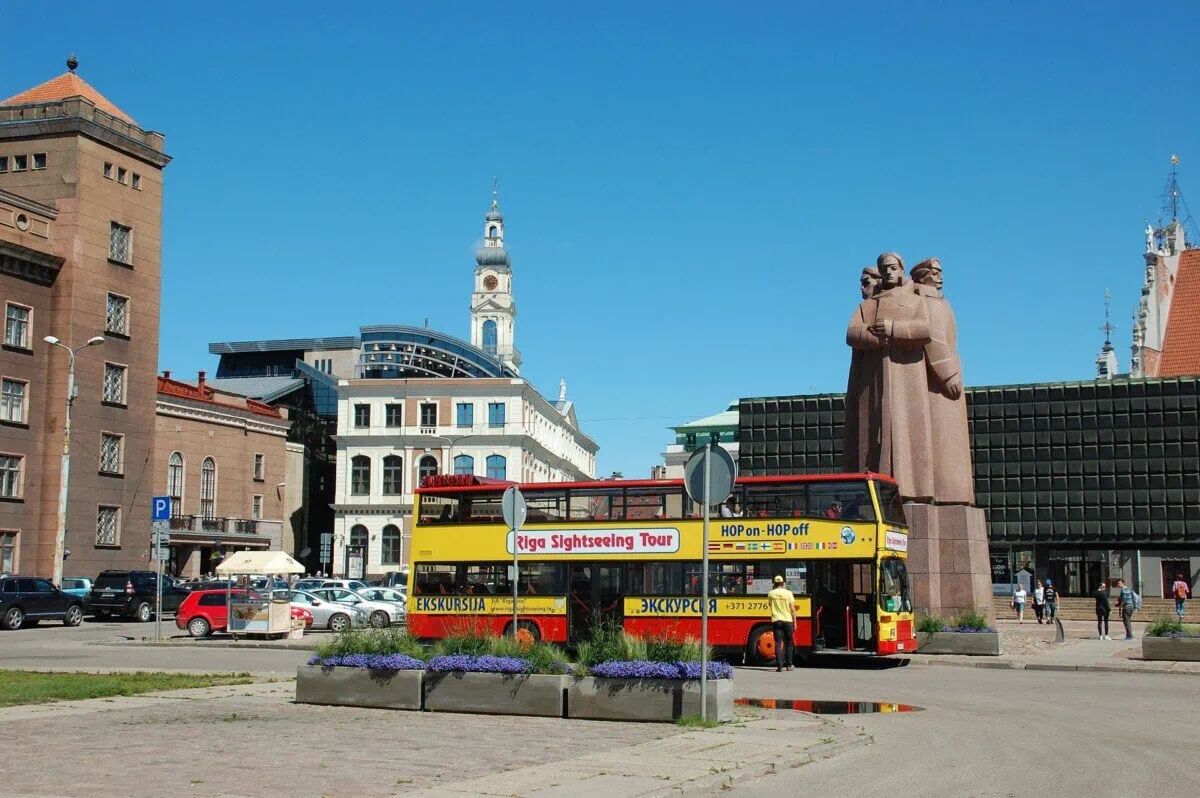
Riga’s open-top hop-on hop-off bus network offers a fixed loop connecting the Old Town, the Art Nouveau district, Riga Central Market and several of the outer sights covered elsewhere in this guide, with recorded commentary available in multiple languages through onboard headphones. Tickets allow unlimited boarding and re-boarding at any stop along the route, making it a useful option for visitors short on time or less keen on walking longer distances between sights.
The Red Bus Hop-On Hop-off Sightseeing Grand Tour is the main version operating in the city, with tickets valid for a full day and buses running at regular intervals through the main tourist season. Prices start from around €30 (£25.80/$35.10), reflecting the convenience of unlimited stops rather than a single scenic ride.
Reviews for the service sit at a more modest 3.8 stars from over 300 ratings, generally reflecting frustration with traffic delays and gaps between buses rather than the route itself, so it’s worth treating the schedule as approximate rather than fixed. Visitors prioritising a tight itinerary may find walking or the tram network, covered later in this guide, more reliable for specific timed stops.
The route is most useful for a first orientation lap of the city on arrival, giving a sense of how the Old Town, the Art Nouveau streets and the outer districts connect before committing to a walking-focused plan for the rest of a trip. It’s less essential for visitors staying only within the compact Old Town core, which is entirely walkable on its own.
Buses typically depart from a stop near Riga Central Station or the Old Town’s edge, with exact pickup points confirmed at booking, and most operators allow the ticket to be used the same day or the next depending on the option chosen.
Panorama Riga: The Latvian Academy of Sciences Observation Deck
Riga’s most distinctive skyline view comes not from a purpose-built tower but from the Latvian Academy of Sciences, a Stalinist-era high-rise built between 1951 and 1961 in the same tiered, “Seven Sisters” style as comparable skyscrapers in Moscow. Locals have nicknamed the building Stalin’s Birthday Cake, a nod to its wedding-cake silhouette rising above the streets near Riga Central Market.
The Panorama Riga observation deck sits roughly 65 metres up the tower, reached by an elevator followed by a short flight of stairs onto an open circular terrace that wraps around the building’s upper section. From here, the view stretches across the Old Town’s church spires and the Daugava River, and on a clear day as far as the separate Riga TV Tower on Zaķusala island across the water.
It’s worth being clear that Panorama Riga and the Riga TV Tower are two entirely different attractions, sitting on opposite sides of the river with separate observation decks, and the Academy of Sciences deck is the closer, more central option for visitors based around the Old Town. Tickets cost from around €8 (£6.88/$9.36), noticeably less than a typical TV tower ticket elsewhere in Europe.
The deck’s Soviet-era architecture is as much a part of the visit as the view itself, with the building’s hammer-and-sickle detailing and imposing scale offering a striking contrast to the Old Town’s medieval spires a short walk away. Allow around 30 to 45 minutes for the elevator queue, the terrace itself and the walk back down.
The building sits a short walk south of Riga Central Market, making the deck an easy add-on to a market visit rather than a separate outing, and its lower visitor numbers compared with the Old Town’s towers mean queues are rarely long outside peak summer weekends.

Riga Rise: The City’s New Panoramic Wheel
Riga Rise is a purpose-built observation wheel that opened in April 2025 on the left bank of the Daugava in Uzvaras Park, becoming the newest addition to the city’s growing list of viewpoints. The wheel reaches a height of around 65 metres, putting its top cabins roughly level with the Academy of Sciences observation deck across the river.
Unlike the open-air platforms at St Peter’s Church or Panorama Riga, Riga Rise’s enclosed cabins come with heating and air conditioning, allowing the attraction to keep running through the colder months rather than closing outside summer. That makes it one of the more comfortable elevated viewpoints in Riga for a winter visit.
The Riga Rise: Giant Panoramic Wheel Ticket covers a full rotation lasting roughly 15 to 20 minutes, with tickets starting from around €17 (£14.62/$19.89). Its 4.6-star rating from a smaller pool of reviews reflects a relatively new attraction still building up its review count rather than any consistent complaint.
From the top, the wheel offers views back across the river to the Old Town’s spires and the Academy of Sciences tower, plus a wider look over Uzvaras Park and the Pārdaugava district’s residential streets that most visitors otherwise skip entirely. It’s a genuinely different vantage point from the city-centre towers covered elsewhere in this guide.
The wheel sits a short walk or a couple of tram stops from the Old Town, making it an easy pairing with a wider afternoon spent exploring Pārdaugava, including Kalnciema Quarter’s weekend market a little further along the same riverbank.
Getting Around Riga: Trams, Trolleybuses and Buses
Riga’s public transport network is run by Rīgas satiksme, the city-owned operator responsible for trams, trolleybuses and buses across the whole municipality, covered stop by stop in our own Riga Public Transport guide. The network is genuinely extensive, with electric trolleybuses covering much of the city centre and tram lines reaching further out into residential districts like Mežaparks and Šampēteris.
A single ticket bought directly from the driver costs €2.00 (£1.72/$2.34) and covers one trip on one vehicle without transfers, while loading trips onto a reloadable e-talon smart card works out noticeably cheaper per journey and is the better option for anyone making more than a couple of trips a day.
Visitors planning a fuller day of sightseeing outside the compact centre are usually better served by a time-based ticket: a 24-hour ticket covering all routes costs €5.00 (£4.30/$5.85), a 3-day ticket costs €10.00 (£8.60/$11.70), and a 5-day ticket costs €15.00 (£12.90/$17.55), all valid across the entire tram, trolleybus and bus network rather than a single line.
Every ticket, whether paper or loaded onto an e-talon, has to be validated on board using the small yellow validators near each door, and inspectors do check regularly, with on-the-spot fines for anyone caught without a valid, validated ticket.
In practice, most of what’s covered in this guide sits close enough together that walking covers the Old Town core entirely, with trams and trolleybuses only really necessary for the Art Nouveau district’s outer streets, the Motor Museum, the Ethnographic Museum and Mežaparks.
Trams 11 and 4 are the most useful single lines for visitors, both running from the Old Town’s edge out past Alberta iela and toward the museum and park district to the east.
Full route maps, live timetables and current fares are available on Rīgas satiksme’s official website, worth checking before a longer trip out to the Ethnographic Museum or Mežaparks since evening services thin out somewhat outside the centre.
The Riga Pass: Is It Worth Buying?
The Riga Pass is a prepaid city card bundling entry to more than 80 attractions, tours and discounts across the city into a single purchase, aimed at visitors planning to pack a lot of paid sights into a short trip. It covers a mix of museums, tours and smaller perks like discounted meals, rather than a fixed shortlist of headline attractions.
The Riga Pass with over 80 benefits and no time limit is the version currently available, priced from around €17 (£14.62/$19.89) and notable for having no expiry window once activated, unlike the multi-day tourist cards common in other European capitals. That flexibility means it can be used across a longer trip rather than needing to be claimed within a fixed number of days.
Reviews for the pass sit at a more modest 3.2 stars from a small pool of around 23 ratings, generally reflecting mixed experiences with which attractions are actually included and how the discounts compare with paying separately for a shorter list of sights. It’s worth checking the current list of included attractions against a planned itinerary before buying, rather than assuming it covers everything on this list.
For visitors sticking mainly to free sights like the Old Town, Bastejkalns Park, Kalnciema Quarter and the Freedom Monument, most of which already cost nothing to see, the pass is unlikely to pay for itself. It makes more sense for a trip built around several of the paid museums and tours covered in this guide, where the combined savings have a better chance of covering the pass’s cost.
As with any bundled city pass, doing a rough tally of planned paid attractions against the pass price before buying is the safest way to judge whether it’s worth it on a specific trip, rather than buying it as a default. Latvia’s national museums and the Corner House tours, for instance, aren’t always included, so it’s worth checking those specifically first.

Latvian Ethnographic Open-Air Museum: 100 Wooden Buildings by the Lake
The Latvian Ethnographic Open-Air Museum sits on the wooded shore of Lake Jugla, a short way outside the centre, and gathers more than 100 original wooden buildings relocated from across Latvia’s regions to recreate rural life from the 17th to early 20th centuries. Farmsteads, windmills, a wooden church and a working fishing village are spread across roughly 100 hectares of forest.
Costumed staff demonstrate traditional crafts on weekends and during seasonal festivals, including blacksmithing, weaving and baking in wood-fired ovens, giving the site a genuinely lived-in feel rather than a static architectural collection. Seasonal markets, particularly around midsummer and Christmas, draw large local crowds alongside the usual visitors.
Adult admission costs around €9.00 (£7.74/$10.53) in summer and €6.00 (£5.16/$7.02) in winter, reflecting the shorter daylight hours and reduced programming outside the warmer months. Comfortable walking shoes are worth wearing, since the site covers considerably more ground than a typical museum.
Allow at least two to three hours to see a meaningful cross-section of the buildings, longer during a festival weekend when demonstrations and food stalls add considerably to the visit.
The museum sits around 25 to 30 minutes from the Old Town by tram and a short walk, making it more of a half-day excursion than a quick add-on to a central sightseeing loop.
The lakeside setting makes for a genuinely pleasant walk even between buildings, and several benches and picnic spots dotted through the forest invite a slower pace than most city museums allow.
Tram 11 runs close to the museum’s entrance from the city centre, and the walk from the nearest stop takes around 10 to 15 minutes through pleasant residential streets.
Kalnciema Quarter: Riga’s Weekend Design Market
Kalnciema Quarter, on the left bank of the Daugava in the Pārdaugava district, is a cluster of restored 19th-century wooden buildings that now houses independent design shops, galleries and a well-loved weekend market. The buildings themselves are fine examples of Riga’s traditional wooden architecture, a style far less visited than the stone Old Town or the Art Nouveau streets.
The Saturday market is the quarter’s main draw, filling the courtyard with local farmers, bakers and small producers selling fresh bread, cheese and seasonal produce alongside live music and food stalls. It has a distinctly local, unhurried atmosphere compared with the more tourist-oriented Central Market closer to the centre.
Beyond market days, the quarter’s permanent shops and small design studios stay open through the week, giving visitors a reason to cross the river even outside the Saturday rush. A handful of cafés and a small cultural centre round out the offering.
Entry to the quarter and its market is entirely free, with spending limited to whatever food, crafts or produce catches the eye on the day.
The area sits a short walk or a few minutes by tram across the Akmens Bridge from the Old Town, making it an easy half-day crossing rather than a major excursion.
Weekday visits are noticeably quieter, with most of the wooden buildings’ architecture still worth seeing even when the market stalls aren’t set up.
The Pārdaugava side of the river also offers some of the best skyline views back across to the Old Town, particularly from the riverside path near the bridge.
Mežaparks and Riga Zoo: An Early Garden City and Forest Park
Mežaparks is a garden suburb laid out in 1901 as one of Europe’s earliest planned garden cities, its wide tree-lined streets and generously spaced wooden villas still largely intact more than a century later. The district doubles as one of Riga’s largest green spaces, with forest trails, a lake and open lawns spreading across several hundred hectares.
Riga Zoo occupies a large section of the park, home to more than 400 species including big cats, primates and a well-regarded reptile house, and it remains one of the most popular family days out in the city. Adult admission costs around €15.00 (£12.90/$17.55) during the summer season.
The Great Bandstand, or Mežaparka Lielā estrāde, hosts the Latvian Song and Dance Festival, a UNESCO-recognised cultural tradition held every five years that can draw tens of thousands of performers and spectators to the park’s amphitheatre. Even outside festival years, smaller concerts run through the summer.
The wooden villas lining Mežaparks’ streets are largely private homes rather than public buildings, but a slow walk through the district gives a genuinely different picture of Riga than the Old Town or the Art Nouveau streets closer to the centre.
Allow a half day at minimum to combine the zoo with even a short walk through the surrounding streets, longer if the lake and forest trails are on the itinerary too.
Mežaparks sits around 20 minutes from the centre by tram, with tram 11 running directly from Vecrīga to stops within walking distance of both the zoo entrance and the bandstand.
Weekends bring noticeably more visitors to the zoo and lakeside paths, so a weekday visit suits anyone hoping for a quieter walk through the wider park.
For a different way to reach Mežaparks, a seasonal boat service now runs along the Daugava between the city centre and a mooring near the park, offering a scenic river alternative to the tram for visitors keen to combine the zoo with a short cruise. The Boat Trip to Mežaparks (Zoo) or Back to Riga costs from around €15 (£12.90/$17.55), and its strong 4.7-star rating suggests it’s a genuinely pleasant way to bookend a day at the zoo.

Riga’s Food and Drink Scene: Beyond the Central Market’s Food Halls
Beyond the Central Market’s food halls, already covered earlier in this guide, Riga’s genuine food scene is spread across a handful of neighbourhoods that reward a bit of wandering rather than a single checklist stop. Miera iela, a once-industrial street in the Miera district, has become the city’s independent food and coffee strip, lined with specialty coffee roasters, bakeries and small restaurants that skew noticeably younger and more experimental than the Old Town’s tourist-facing menus.
Traditional Latvian cooking is built around hearty, peasant-style staples, and no dish sums that up better than pelēkie zirņi ar speķi, grey peas cooked with bacon and onion, a genuine national dish rather than a tourist invention. Rupjmaize, the dense, dark rye bread already mentioned at the Central Market, turns up on nearly every restaurant table across the city, often served alongside smoked fish or a bowl of cold beetroot soup in summer.
Riga’s craft beer scene has grown considerably over the past decade, with a cluster of taprooms and bottle shops around the Old Town and the Miera iela district pouring small-batch Latvian brews alongside imports, a marked shift from the mass-market lagers that once dominated the city’s bars. Several breweries run their own taprooms directly, making it easy to sample a wider range than a single bar’s tap list usually allows.
Sit-down restaurants serving modern Latvian cuisine, built on the same local, seasonal ingredients as the traditional dishes but presented with a lighter, contemporary touch, have opened steadily across the city centre in recent years, giving visitors a middle ground between tourist-menu Old Town restaurants and the more casual Miera iela cafés. Booking ahead is worth it at the better-known spots, particularly on weekend evenings.
Weekday lunch menus, offered by most sit-down restaurants across the city, are consistently the best value way to try Latvian cooking without committing to a full evening meal, typically running well below the equivalent dinner price for a similar dish. It’s a genuinely useful habit for anyone splitting sightseeing across a full day.
Shopping and Markets Beyond the Central Market: Malls, Boutiques and Flea Markets
Riga Central Market’s food halls and outdoor stalls, covered earlier in this guide, are the city’s best-known shopping destination, but several other spots round out a fuller picture of how Rigans actually shop. Galerija Centrs, a large shopping centre occupying nearly a full block on Audēju iela in the Old Town, has operated since 1938 and now holds more than 100 shops across several floors, making it the most central option for anyone after mainstream fashion or homeware brands.
Kalnciema Quarter’s Saturday market, already covered in its own section of this guide, remains the best option for local design, crafts and small producers, and it’s worth cross-referencing rather than repeating in full here. Its weekday shops stay open through the week for anyone unable to catch the Saturday rush.
The Art Nouveau district around Alberta iela and the Quiet Centre also holds a scatter of independent design boutiques and craft studios tucked among the Jugendstil facades, selling everything from ceramics to locally designed jewellery, though they’re spread out enough to require a bit of deliberate searching rather than a single concentrated strip. Combining a shopping detour with the district’s architecture walk, covered earlier, makes the most of the trip out there.
For secondhand finds and a more chaotic browsing experience, Riga’s flea markets, held on various weekends around the city, sell everything from vintage Soviet-era objects to genuine antiques, and prices are generally negotiable in a way the city’s fixed-price shops aren’t. They tend to move locations and schedules seasonally, so checking current listings before making a special trip is worth the extra few minutes.
Freedom Street, or Brīvības iela, running from the Old Town’s edge past the Freedom Monument, holds a mix of mainstream high-street shops and is the most convenient stretch for anyone after everyday essentials rather than souvenirs or design pieces. It sits within easy walking distance of the Corner House and several other sights covered earlier in this guide.
Riga After Dark: Bars, Rooftops and Nightlife
Riga’s after-dark scene splits fairly clearly between the Old Town’s dense cluster of bars and clubs, aimed squarely at visitors and stag or hen groups, and a quieter, more local scene spread across the wider city centre. Doma laukums and the surrounding lanes stay lively well into the night through the warmer months, with outdoor terraces filling up the moment the temperature allows it.
For a view rather than just a drink, the Skyline Bar, on the 26th floor of the Radisson Blu Hotel Latvija, remains the city’s best-known rooftop bar, reached by a panoramic elevator and looking straight out over the Old Town’s spires and the river beyond. It’s worth timing a visit around sunset, when the terrace is at its busiest but also at its best for photos.
Craft beer taprooms, many of the same ones covered in the food and drink section of this guide, double as some of the city’s more relaxed evening spots, particularly around Miera iela and the streets just north of the Old Town. They tend to draw a mixed crowd of locals and visitors rather than the more tourist-heavy bars closer to Doma laukums.
Riga’s club scene is concentrated in a handful of venues around the Old Town and the wider city centre, with electronic music and live DJ sets the dominant draw on weekend nights, and most venues don’t get going until well after midnight. Entry policies and cover charges vary considerably by venue and night, so checking ahead is worth it for anything with a specific act or theme.
Whatever the plan, Riga’s compact centre means most of the city’s nightlife sits within easy walking distance of the Old Town, and taxis and ride-hailing apps are widely available and inexpensive by Nordic standards for the later, colder trips back to a hotel.

Riga’s Dome Square Christmas Market: Mulled Wine and Handicrafts
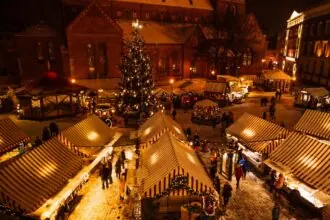
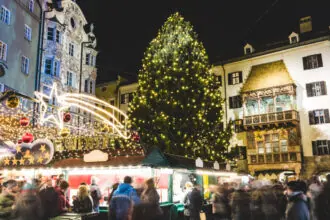
Riga’s Christmas market takes over Dome Square in front of the cathedral each winter, filling the square with wooden stalls selling mulled wine, handicrafts and seasonal food beneath a large decorated tree that’s become one of the city’s best-known festive traditions. The market typically runs from late November through early January, spanning the whole holiday season rather than a brief pre-Christmas window.
Since this guide covers Riga’s year-round attractions, the market only gets a brief mention here, but it’s easily one of the best reasons to visit the city specifically in winter rather than the warmer months covered by most of the sights above. Our Riga Christmas Market guide covers the full market in detail, including stalls, food, opening dates and how it compares with other Baltic capitals’ festive markets.
Visitors planning a winter trip around the market should also budget for shorter daylight hours and colder weather affecting some of the outdoor sights covered earlier in this guide, particularly Bastejkalns Park’s canal and the open-air platforms at St Peter’s Church and Panorama Riga.

Rupert’s Handy Travel Tips
Rupert reckons Riga rewards a mix of slow Old Town wandering and a few well-timed rides out to the Art Nouveau streets, the market and the parks beyond.
- Buy tickets online where possible: it saves queuing at popular sights like the Corner House and the Motor Museum.
- Load an e-talon for a multi-day trip: it works out cheaper per journey than paying the driver each time.
- Validate every ticket on board: inspectors do check regularly, and fines apply for an unvalidated ticket.
- Visit the Central Market on a weekday morning: stallholders are freshest and the crowds are noticeably thinner.
- Book Corner House tours ahead: group sizes are kept deliberately small and popular slots fill up fast.
- Wear comfortable shoes for the Ethnographic Museum: the site covers far more ground than a typical museum.
Want to meet the reindeer behind our travel tips? Find out more in our page Who is Rupert?.




Frequently Asked Questions About Things to Do in Riga
How many days do you need in Riga?
Two full days cover the Old Town, the Art Nouveau district and the Central Market comfortably, while a third day allows time for Mežaparks or the Ethnographic Museum further out.
Is Riga’s Old Town walkable?
Yes, entirely. Vecrīga is compact enough to cross on foot in well under half an hour, with nearly every major landmark within a short walk of another.
Do I need public transport to see Riga?
Not for the Old Town or Art Nouveau district, both walkable, but trams and buses are genuinely useful for the Motor Museum, the Ethnographic Museum, Kalnciema Quarter and Mežaparks.
What currency does Latvia use?
The euro. Card payments are widely accepted, including for tickets on Rīgas satiksme trams, trolleybuses and buses.
Is the Corner House KGB Museum suitable for children?
It isn’t recommended for young children, since the guided tour covers imprisonment, deportation and execution under Soviet rule in unflinching detail.
What is Riga famous for?
Its UNESCO-listed Old Town, one of Europe’s largest collections of Art Nouveau architecture, and the Central Market’s former Zeppelin hangars.
When is the best time to visit the Central Market?
Weekday mornings, when stalls are freshest and crowds are noticeably thinner than at the weekend.
Is Riga expensive to visit?
It’s generally cheaper than Stockholm or Copenhagen, with public transport, museum admission and food all priced noticeably lower than in the wealthier Nordic capitals nearby.
Is the Riga Pass worth buying?
It depends on the itinerary. The pass covers over 80 attractions and discounts with no time limit, but its modest 3.2-star rating suggests checking the included list against a planned trip before buying.
Where do Riga’s boat tours depart from?
Most canal and river boat tours leave from a pier on Bastejkalns Park, right beside the Freedom Monument at the edge of the Old Town.
Further Reading
Anyone travelling onward by rail should also read our Interrail Latvia Pass guide, covering routes, prices and booking for rail travel across the country beyond Riga itself.
Latvia sits naturally alongside its Baltic neighbours on a wider rail itinerary, and our Interrail Estonia Pass guide covers the route north to Tallinn, while our Interrail Lithuania Pass guide covers the route south to Vilnius, both practical next stops from Riga’s own well-connected station.
Visitors planning a longer Baltic trip often combine all three capitals into a single loop, and Riga’s central position, roughly midway between Tallinn and Vilnius, makes it a natural base for a few days before continuing in either direction.
Whichever direction the trip continues, Riga’s Old Town, Art Nouveau streets and Central Market are worth the two or three days recommended above, rather than the single rushed afternoon many Baltic itineraries allow it.
For the practical side of a trip, our Riga Airport Transfers guide covers getting in from RIX, our Day Trips from Riga guide covers Jūrmala, Sigulda and the castles beyond the capital, and if visiting over winter, our Riga Christmas Market guide covers Dome Square’s festive season in full.
Arriving by sea, or wondering whether a ferry to Riga still exists, our Riga Cruise Port and Ferry Guide covers the city’s fast-growing cruise season in full, and explains honestly why the old Stockholm ferry route remains suspended.