Reviewed by our editorial team Updated
Why the Interrail Latvia Pass Is a Simple Way to Explore the Baltics
The Interrail Latvia Pass is a practical choice for travellers who want to experience the Baltic region at a slower, more local pace. Latvia’s rail system is compact, easy to understand, and centred around Riga, making it one of the least intimidating Interrail passes for first-time users.
The pass is best suited to travellers who want to explore beyond the capital without constantly buying separate tickets. From Riga, trains connect to Jūrmala on the Gulf of Riga, Daugavpils near the eastern border, Liepāja on the Baltic coast, and Valga on the Estonian border. These routes give you access to a mix of seaside towns, cultural cities, historic regions, and cross-border connections.
Unlike larger rail networks, Latvia is not about high-speed travel or complex route planning. It is about simple journeys, modest distances, and relaxed exploration. A trip from Riga to Jūrmala takes less than an hour, while longer journeys such as Riga to Daugavpils take around three hours. This makes the pass especially useful for travellers who want to use Riga as a base and build day trips around it.
One of the main advantages is simplicity. Latvia’s passenger trains are operated by Vivi (formerly known as Pasažieru Vilciens, which rebranded in November 2023), which means there are no complicated operator rules to learn. The pass works across the national rail network, making it easy to plan without worrying about which company runs each train.
The main drawback is that the Latvia Pass is paper-only. There is no mobile version, so you must carry the physical pass, fill in the travel date and journey details by hand, and present it during inspections. This gives the pass a more traditional Interrail feel, but it also means you need to keep it safe and complete it correctly before boarding.
Overall, the Interrail Latvia Pass is best for travellers who value simplicity, affordability, and relaxed rail travel, rather than speed or luxury.
Interrail Latvia Pass Overview and Key Facts
The Interrail Latvia Pass is a One Country Pass that gives you flexible rail travel across Latvia for a set number of travel days within a one-month period. It is designed for travellers who want to explore the country by train without buying separate tickets for each journey.
The pass is available with 3, 4, 5, 6, or 8 travel days, and each active day allows unlimited train journeys within Latvia. This makes it possible to combine several destinations on one travel day, such as travelling from Riga to Sigulda, continuing to Cēsis, and returning to Riga later.
A key detail is that the Latvia Pass is paper-only. Unlike most modern Interrail passes, it cannot be loaded into the Rail Planner app as a mobile ticket. You must carry the physical pass, write in each travel day and journey before boarding, and show it to conductors during ticket checks.
The pass is valid across the Vivi national rail network, covering Riga and the main regional routes. It is useful for journeys to Jūrmala, Tukums, Sigulda, Cēsis, Daugavpils, Liepāja, and Valga, although destinations outside the rail network require buses or other transport.
Seat reservations are generally not required on Latvian domestic trains. Most services use open seating, which keeps travel straightforward and flexible. Trains can still become busy on popular routes, especially Riga to Jūrmala in summer, but there is no major reservation system to navigate.
The pass does not include Riga’s trams, trolleybuses, or buses, and there is no direct airport rail link to Riga Airport. Local transport must be paid for separately.
In practical terms, the Latvia Pass is a simple, traditional, low-friction rail pass that works best for travellers planning several medium or long-distance journeys from Riga. The table below gives a quick sense of how the travel-day options compare on price.
| Age Category | 3-Day Pass | 8-Day Pass |
|---|---|---|
| Youth (12–27) | €50 (£44/$54) | €113 (£98/$122) |
| Adult (28–59) | €67 (£58/$72) | €150 (£131/$162) |
| Senior (60+) | €60 (£52/$65) | €135 (£117/$146) |
See hotel options and places to stay in Latvia.
Browse hotelsBrowse apartments, homes and self-catering accommodation in Latvia.
Browse rentalsCompare prices for Latvia hotels across multiple booking sites.
Check dealsKey Operators and Rail Network Size in Latvia
Latvia’s passenger rail network is operated by Vivi, the state-owned national rail company. This makes the Interrail Latvia Pass unusually simple, because there is one main operator and no complicated mix of private companies, premium trains, or excluded long-distance brands.
The Latvian rail network is modest compared with larger European countries, but it is well suited to the country’s size and geography. Most routes radiate from Riga Central Station, creating a clear hub-and-spoke system that connects the capital with the main regional destinations.
The most important rail corridors include Riga to Daugavpils, Riga to Liepāja, Riga to Valga, Riga to Sigulda and Cēsis, and Riga to Jūrmala and Tukums. These routes cover many of the places visitors are most likely to reach by train, including seaside resorts, historic towns, nature areas, and border connections.
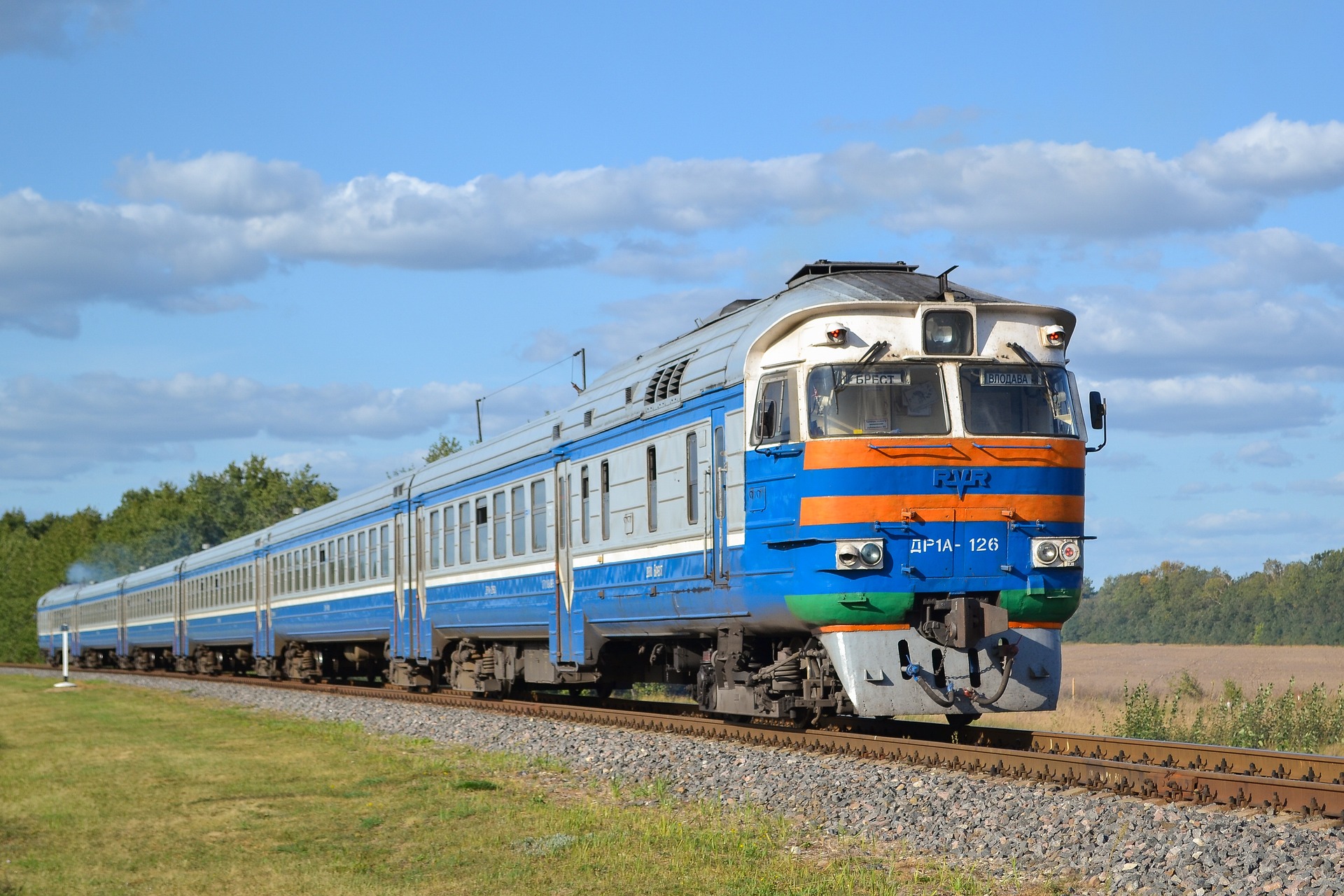
Most trains are regional or suburban units rather than high-speed services. They are functional, comfortable enough for the distances involved, and designed for everyday travel rather than luxury tourism. Journey times are reasonable, with many day trips possible from Riga, although longer routes require more planning because frequencies can be limited.
Latvia has been modernising parts of its rail fleet, with newer electric trains replacing older stock on key corridors. Even so, the system still feels more local and traditional than high-speed networks in Western Europe.
Looking further ahead, Rail Baltica is the region’s biggest rail project, a new standard-gauge line that will eventually link Tallinn, Riga, and Vilnius with Warsaw and continental Europe. As of mid-2026 it is not operational anywhere, with roughly 40% of the mainline under construction and track-laying only just starting on isolated sections.
The official target for the first phase is 2030, though Poland’s own infrastructure ministry has called that date “impossible” and pointed to 2040 instead. It is worth treating any Rail Baltica timeline as a work in progress rather than an imminent option.
For Interrail users, the main advantage is clarity. The pass gives access to the national rail system under one operator, with no major domestic reservation fees, no high-speed supplements, and no complex validity rules. That simplicity is one of the strongest reasons to consider the Latvia Pass.
Main Transport Hubs and Key Rail Routes in Latvia
The heart of Latvian rail travel is Riga Central Station, known locally as Rīgas Centrālā stacija. Almost every major rail journey begins or passes through Riga, making it the natural base for using the Interrail Latvia Pass.
Riga Central Station is well placed for travellers, with connections to the city’s tram, trolleybus, and bus networks, as well as shops, ticket counters, waiting areas, and luggage facilities. Since the pass does not cover urban transport, you will still need separate local tickets for moving around Riga, but the station itself is easy to reach from most central areas.
The most popular short route is Riga to Jūrmala and Tukums, which links the capital with the seaside resorts on the Gulf of Riga. Jūrmala is less than an hour from Riga, making it one of the easiest and most rewarding day trips in the country.
For culture and nature, the route from Riga to Sigulda and Cēsis is especially useful. This line gives access to the Gauja National Park region, with castles, forests, river valleys, and hiking opportunities.
Longer domestic routes include Riga to Daugavpils, which reaches Latvia’s second-largest city in around three hours, and Riga to Liepāja, which connects the capital with the Baltic coast in roughly four hours. These routes are slower but valuable for travellers who want to experience more than Riga and its immediate surroundings.
The Riga to Valga route is important for travellers continuing into Estonia, forming the Latvian leg of the Vilnius to Riga to Tallinn rail connection, with a cross-platform change at Valga onto Elron. The Latvia Pass itself is valid only within Latvia, so onward travel needs a separate ticket or a broader pass.
Overall, Latvia’s rail system is simple to understand. Riga is the hub, and the main routes spread out towards the coast, the east, the north, and the Estonian border.
Example Ticket Prices vs Pass Value in Latvia
The Interrail Latvia Pass sits in an unusual position because regular train tickets in Latvia are already very affordable. This means the pass is not always about huge savings on a single journey. Its real value comes from flexibility, fixed costs, and the ability to combine several trips within one month.
Short journeys from Riga to Jūrmala often cost around €1.50–€2 (£1.30–£1.75/$1.60–$2.15) one way, while routes such as Riga to Sigulda usually sit around €2.50–€3.50 (£2.15–£3.05/$2.70–$3.80). Longer journeys cost more but remain affordable by European standards.
Riga to Daugavpils typically costs around €7–€9 (£6.10–£7.85/$7.55–$9.70), Riga to Liepāja around €9–€11 (£7.85–£9.55/$9.70–$11.90), and Riga to Valga around €8–€10 (£6.95–£8.70/$8.65–$10.80). These fares stay low even on the longer corridors, which is exactly why the pass rewards multi-stop days rather than single tickets.
If you are only planning one or two short day trips from Riga, local tickets will usually be cheaper than the pass. However, the picture changes once you start combining seaside trips, nature routes, and longer regional journeys. A route that includes Riga to Sigulda, Cēsis, Daugavpils, Liepāja, and Jūrmala can quickly approach or exceed the cost of a short pass, especially if you value the ability to change plans.
The pass becomes most useful when you make several medium-distance journeys or use one travel day for multiple stops. For example, you could travel from Riga to Sigulda, continue to Cēsis, and return to Riga in the evening, all under one pass day.
In practical terms, the Latvia Pass is best viewed as a low-cost flexibility product rather than a major money-saving tool. It gives you predictable travel costs and makes it easier to explore beyond Riga without constantly buying separate tickets.

Interrail Latvia Pass Prices Explained
The Interrail Latvia Pass is one of the cheapest One Country Passes in the Interrail system, making it accessible for travellers who want a simple rail-based introduction to the Baltics. It is available as a Flexi Pass, with travel days used within a one-month period.
For Youth travellers aged 12 to 27, prices start at €50 (£44/$54) for 3 travel days, rising to €113 (£98/$122) for 8 travel days. For Adults aged 28 to 59, the pass starts at €67 (£58/$72) for 3 travel days and increases to €150 (£131/$162) for 8 travel days. Senior travellers aged 60 and over benefit from reduced fares, with prices ranging from €60 (£52/$65) for 3 days to €135 (£117/$146) for 8 days.
The 3-day pass works best for travellers who want to combine Riga with a few major day trips, such as Jūrmala, Sigulda, Cēsis, or Daugavpils. The 5 or 6-day options are better suited to travellers who want a fuller route including Liepāja, Valga, and multiple regional stops. The 8-day pass is best for slower travellers who want to spread journeys across a month and explore Latvia at a relaxed pace.
Because local tickets are cheap, choosing the right pass matters. The pass is strongest when you use travel days for longer journeys or multi-stop days, rather than very short trips that cost only a few euros.
Overall, the Latvia Pass is affordable, simple, and flexible, but it delivers the best value when used for several meaningful journeys beyond Riga.
How the Latvia Pass Works in Practice
The Interrail Latvia Pass works differently from most modern Interrail passes because it is paper-only. There is no mobile version, which means you must carry the physical pass throughout your trip and complete the required journey details by hand.
After purchase, the pass is sent to you as a physical ticket. Before your first journey, it should be validated according to the instructions provided with the pass. On each travel day, you must write the date clearly in the correct travel box before boarding. You also need to record your journey details before travelling, as conductors may check the pass during the trip.
Each travel day allows unlimited train journeys across Latvia from midnight to midnight. This makes it possible to combine several towns in one day, such as Riga to Sigulda to Cēsis and back to Riga, or to use a full day for a longer return journey to Daugavpils or Liepāja.
Reservations are generally not required on domestic Latvian trains, which keeps the system simple. Most services operate with open seating, so you board and find an available seat. Trains can still be busy on popular commuter and seaside routes, particularly Riga to Jūrmala in summer, but there is no complicated reservation process.
Because the pass is physical, you need to protect it carefully. A travel wallet or waterproof sleeve is a sensible idea, as replacing a lost or damaged pass can be difficult.
In practice, using the Latvia Pass feels more traditional than digital. It requires a little more care than a mobile pass, but the actual rail system is easy to navigate once you are travelling.
Where You Can Travel with the Latvia Pass
The Interrail Latvia Pass covers the national rail routes operated by Vivi, giving access to Latvia’s main rail-connected destinations. The network is centred on Riga, so most journeys begin or connect through the capital.
The easiest and most popular day trip is Riga to Jūrmala, which takes less than an hour and brings you to Latvia’s best-known seaside resort. Trains continue towards Tukums, making this a useful route for beach days, spa stays, and coastal breaks.
For nature and culture, the route from Riga to Sigulda and Cēsis is one of the strongest uses of the pass. This line gives access to the Gauja National Park region, with castles, hiking trails, river valleys, and historic towns.
Longer journeys include Riga to Daugavpils, Latvia’s second-largest city, known for its fortress and cultural mix, and Riga to Liepāja, a Baltic coast city with beaches, music heritage, and historic military sites. These routes take longer but provide a more rounded picture of the country.
The pass also covers travel towards Valga on the Estonian border, which is useful if you are connecting into Estonia. However, onward travel beyond Latvia requires a separate ticket or a wider pass.
Some important Latvian destinations are not covered by rail. Places such as Kuldīga and Ventspils require bus connections, so the pass works best when combined with other transport for a full national itinerary.
Overall, the Latvia Pass gives you strong coverage of the country’s main rail corridors, seaside routes, nature regions, and cultural cities, with Riga acting as the central base.
Search flights and useful route combinations for your trip.
View flightsUse an eSIM to get online without hunting for a local SIM after arrival.
See eSIM optionsCheck private pickup options and plan your onward journey before arrival.
View transfersHow to Buy the Interrail Latvia Pass
Buying the Interrail Latvia Pass is straightforward, but there is one key difference compared with most other Interrail products: it is only available as a paper pass. This affects both how you purchase it and how you prepare for your trip.
The easiest way to buy the pass is through the official Interrail website or authorised retailers such as Rail Europe. Once purchased, the pass is physically shipped to your address, so you need to allow enough time for delivery. Ordering at least two weeks before travel is sensible, especially if you are relying on standard shipping. Express delivery is usually available if you are short on time.
During the purchase process, you select your number of travel days, your age category which determines pricing, and your travel class. Most travellers choose second class, which is standard across Latvia’s regional trains, although first class may be available on a limited number of longer routes.
Because the pass is not digital, you cannot activate it through the Rail Planner app. Instead, you must carry the physical document at all times. Before your first journey, follow the instructions provided with the pass to ensure it is correctly validated if required. On each travel day, you must write in the date before boarding, and you should also record your journey details as instructed.
Even though the pass itself is paper-based, it is still worth using the Rail Planner app for timetable checking and route planning. For real-time domestic information, the Vivi website or app is also useful.
In short, buying the Latvia Pass is simple, but it requires a bit more preparation than mobile passes. Plan ahead, allow time for delivery, and make sure you are ready to use a physical ticket during your journey.

Explore Europe by Train with Rail Passes
Travelling by train in Europe can quickly become expensive if you book individual tickets. Rail passes offer a flexible way to travel across one or multiple countries with a single ticket, making it easier to plan your journey.
Rail Europe allows you to compare and buy a wide range of rail passes, including Interrail-style options, helping you choose the best pass for your route and travel style.
Top Routes and Itineraries with the Latvia Pass
The Interrail Latvia Pass works best when you build your itinerary around Riga as a base, using the rail network for outward day trips and occasional longer journeys. Because distances are short, it is easy to combine several experiences within a limited number of travel days.
One of the most popular short routes is Riga to Jūrmala, which offers a quick escape to the Baltic coast. This can be done in a few hours, but it also pairs well with a longer day that continues further inland.
A stronger use of the pass is the route from Riga to Sigulda and Cēsis, which takes you into the Gauja National Park region. This area combines castles, forest landscapes, and outdoor activities, making it one of Latvia’s most rewarding regions to explore by train.
For a deeper cultural experience, the route to Daugavpils provides a contrast to Riga, with its industrial history, fortress complex, and multicultural identity. This journey is longer, so it works well as either a full-day return or an overnight stop.
Another key route is Riga to Liepāja, which takes you to the Baltic coast on the western side of the country. This is a slower journey, but it offers beaches, music heritage, and a different atmosphere from the capital.
Travellers extending their journey can use the route from Riga to Valga, connecting into Estonia. While the Latvia Pass covers only the Latvian portion, it integrates well with wider Baltic itineraries.
A simple three-day plan might include Riga, Jūrmala, and Sigulda, while a longer itinerary could add Cēsis, Daugavpils, and Liepāja. Because you have unlimited journeys on each travel day, you can also combine multiple stops into one day, which is where the pass delivers the most value.
Seat Reservations and Supplements in Latvia
One of the biggest advantages of travelling with the Interrail Latvia Pass is the lack of complicated reservation rules. In contrast to Western Europe, where high-speed trains often require mandatory reservations and additional fees, Latvia’s system is much simpler.
For almost all domestic journeys, seat reservations are not required. Trains operate with open seating, meaning you can board freely, find an available seat, and show your pass when requested. This makes travel highly flexible and removes the need to plan every journey in advance.
On busy routes, particularly Riga to Jūrmala during summer, trains can become crowded, and you may not always get your preferred seat. However, this is a comfort issue rather than a booking requirement, and it does not affect the validity of your pass.
There are no high-speed trains or domestic sleeper services in Latvia, so you do not need to worry about supplements for premium travel. The network is entirely made up of regional and medium-distance services, which keeps costs low and the system easy to understand.
If you are travelling beyond Latvia using a wider Interrail product, such as a Global Pass, reservations may be required for international connections. However, within Latvia itself, the pass works without any additional booking steps.
In practical terms, this means you can decide your travel plans on the day, board trains without reservations, and enjoy a low-stress, flexible travel experience.
Benefits of the Latvia Pass
The Interrail Latvia Pass stands out for its simplicity, affordability, and flexibility, particularly for travellers who want to explore the Baltics without dealing with complex rail systems.
The most obvious benefit is ease of use. With one national operator and no major reservation requirements, the pass is extremely straightforward. You do not need to navigate multiple train companies or booking systems, which makes it ideal for first-time Interrail users.
Another key advantage is flexibility. On each travel day, you have unlimited journeys, allowing you to combine multiple destinations without additional cost. This makes it easy to adapt your plans, whether that means adding an extra stop or changing your route at short notice.
The pass also offers good value for travellers making several longer journeys. While Latvia’s ticket prices are low, combining routes such as Riga to Daugavpils, Liepāja, and regional day trips can quickly justify the cost of a pass. Discounts for youth and seniors make it even more attractive for those groups.
A further benefit is the variety of destinations accessible by rail. Within a relatively small country, you can experience coastal resorts, historic towns, national parks, and cultural cities, all within a few hours of Riga.
Finally, the Latvia Pass delivers a relaxed travel experience. Without reservation systems, supplements, or high-speed complexities, it allows you to travel in a more traditional, unhurried way. For many travellers, this simplicity is exactly what makes it appealing.
Drawbacks and Limitations of the Latvia Pass
The Interrail Latvia Pass is simple and flexible, but it is not without its limitations, and you need to be clear on these before deciding if it suits your trip.
The most obvious drawback is the paper-only format. Unlike most Interrail passes, you cannot store it in an app or activate it digitally. You must carry the physical pass, complete it by hand, and keep it safe throughout your journey. If it is lost or damaged, replacing it can be difficult. That alone will put some travellers off, especially if you are used to mobile tickets.
The second limitation is the size of the rail network. Latvia’s trains cover the main corridors well, but there are gaps. Some popular destinations such as Kuldīga and Ventspils are not connected by rail at all, which means you will need buses or other transport. The pass works best when combined with local transport rather than used as a complete solution.
Frequency is another factor. While routes like Riga to Jūrmala run regularly, longer routes such as Riga to Liepāja or Riga to Daugavpils may only have a few departures per day. If you miss a train, you may be waiting several hours, so you cannot rely on turn-up-and-go flexibility in the same way as in countries like the Netherlands or Germany.
There is also no high-speed rail. Journeys are comfortable enough, but they are slow by Western European standards, and there are no overnight trains or premium services. If you are expecting fast, high-frequency connections, Latvia will feel different.
Finally, because tickets are already cheap, the pass is not always the most economical choice. If you are only planning one or two journeys, you are usually better off buying individual tickets.
In short, the Latvia Pass is best for flexible, multi-stop travel, but less useful if your trip is short, highly localised, or focused on places outside the rail network.
Who the Latvia Pass Is Best For
The Interrail Latvia Pass is not a one-size-fits-all product, but for the right traveller, it works extremely well.
It is particularly suited to first-time Interrail users who want a simple introduction to rail travel. With only one operator and no complex reservation rules, Latvia is one of the easiest countries to understand and navigate by train.
It is also a strong option for budget-conscious travellers. Latvia is already affordable, and the pass provides predictable travel costs if you are planning several journeys. Youth travellers and seniors benefit the most thanks to discounted pricing, making it ideal for students, backpackers, and retirees.
The pass works well for city hoppers who want to move between Riga, Daugavpils, Liepāja, Sigulda, and Cēsis. Each of these places offers a different perspective on Latvia, from historic towns and nature regions to coastal cities.
It is also a good fit for slow travellers. Because distances are short and the network is manageable, you can take your time, base yourself in Riga, and explore outward without rushing.
If you are planning a wider Baltic trip, the pass can slot into a route that includes Estonia and Lithuania, particularly via the connection to Valga. In that context, it becomes part of a broader regional journey rather than a standalone product.
On the other hand, the pass is less suitable for travellers who plan to stay only in Riga, or those who want to reach destinations that are not served by rail.
Overall, it is best for travellers who value simplicity, flexibility, and low-stress travel rather than speed or luxury.
Compare hostels and budget-friendly accommodation around Latvia.
Browse hostelsAccess compensation support, eligible lounge benefits and faster payouts when flights go wrong.
See the benefitsLeave your luggage somewhere convenient and enjoy Latvia hands-free.
View storagePractical Tips for Using the Latvia Pass
To get real value from the Interrail Latvia Pass, you need to use it strategically rather than casually.
The first rule is to treat the pass carefully. Because it is paper-only, you should always carry a pen and fill in your travel date before boarding. Conductors do check, and mistakes can result in fines. Keeping the pass in a protective wallet is a sensible precaution.
Next, use your travel days wisely. Short journeys such as Riga to Jūrmala are extremely cheap when bought separately, so it is better to save your pass days for longer routes or multi-stop journeys. For example, combining Sigulda and Cēsis on the same day gives much better value than using a pass day for a single short trip.
Planning is also important. Latvia’s train frequencies are not as dense as in Western Europe, so check timetables the day before. Routes such as Riga to Liepāja do not run constantly, and missing a train can disrupt your day.
You should also prepare for the journey itself. Food options on trains are limited, so bring snacks and water, especially on longer routes. Stations outside Riga may have fewer facilities than you expect.
Finally, combine the pass with other transport. Many of Latvia’s most interesting places are not directly on the rail network, so using buses alongside trains gives you much better coverage. Think of the pass as your core transport tool, not the only one.
Used properly, the Latvia Pass gives you a flexible, low-cost way to explore the country without overcomplicating your travel.
Best Apps for Train Travel in Latvia
Even though the Interrail Latvia Pass is paper-based, digital tools still play an important role in planning and navigating your journey.
The most important is the Rail Planner App. While you cannot load your Latvia Pass into it, it is still essential for checking train times, routes, and connections across Europe. It is particularly useful if you are combining Latvia with other countries.
For domestic travel, the Vivi app is the most reliable source of real-time information. It shows live timetables, delays, and platform details, which is important given the limited frequency of some routes, and the same timetables are published on the Vivi passenger rail website.
To get around cities, apps like Google Maps and Trafi are extremely useful. Since the pass does not cover local transport, these apps help you connect trains with buses, trams, and walking routes in places like Riga.
If you are travelling beyond the rail network, tools like Omio can help you find and book bus connections to destinations not served by train.
For practical support, translation apps and weather apps are also worth having, as English is not always widely used at smaller stations, and Latvia’s weather can change quickly.
In reality, the best setup is a combination of Rail Planner for structure, local rail apps for accuracy, and navigation apps for door-to-door travel. This approach fills the gaps left by the paper pass and makes your journey much smoother.

Rupert’s Handy Travel Tips
I have hopped around Latvia on the Vivi network a few times now, and these are the habits that saved me the most hassle.
- Base yourself in Riga: almost every route starts or ends here, so it makes far more sense as a hub than trying to move your bags every night.
- Get the Vivi app early: it gives you live timetables and platform info, which matters more than you’d think once you’re outside the capital.
- Don’t expect a dense network: Latvia’s domestic lines are limited, so map out your connections the evening before rather than assuming you can wing it.
- Make time for Jūrmala: it’s under an hour from Riga and one of the easiest, most rewarding half-days you’ll spend on the coast.
- You can cross the border by train now: Rail Baltica isn’t running yet, but a daily LTG Link train already connects Vilnius and Riga, and Riga to Tallinn works as a Vivi service to Valga with a cross-platform change onto Elron, so a coach is no longer the only option.
Want to meet the reindeer behind our travel tips? Find out more in our page Who is Rupert?.




Frequently Asked Questions about the Interrail Latvia Pass
Is the Latvia Pass available as a mobile ticket?
No. The Latvia Pass is paper-only. You must carry the physical pass, fill in each travel day by hand, and present it to conductors during inspections.
Do I need seat reservations in Latvia?
Generally no. Almost all trains in Latvia are open seating. Reservations are not required for domestic services, though you may find busy trains on popular routes such as Riga–Jūrmala during summer.
Can I reach the seaside with the pass?
Yes. The Latvia Pass covers travel to Jūrmala and Liepāja, two of the country’s most popular coastal destinations. For resorts not on the rail map, such as Ventspils or Kuldīga, you’ll need to take a bus in combination with the train.
Does the pass cover Riga’s trams and buses?
No. Urban transport is not included. You’ll need to buy separate tickets for Riga’s trams, trolleybuses, and buses, either from machines, kiosks, or the Trafi app.
Is the pass worth it if tickets are cheap?
Yes, if you plan to travel beyond Riga. A return to Daugavpils or Liepāja plus one or two shorter day trips will quickly exceed the price of a 3-day Youth Pass. The pass also offers flexibility to change plans at short notice.
Can I use the Latvia Pass internationally?
The Latvia Pass is valid only within Latvia. For travel into Estonia or Lithuania, you’ll need additional tickets or an Interrail Global Pass. The rail links do exist: a daily train runs between Vilnius and Riga, and Riga to Tallinn is a single cross-platform change at Valga.

Further Reading & Related App Guides
Ready to explore more of the Baltics and beyond? These related guides will help you plan your journeys across Latvia and wider Europe with confidence.
For a wider view of the Interrail system, our Main Interrail Pass Guide covers European routes and ticket types in more depth, while the Train Booking Apps Guide makes it easier to book cross-border journeys beyond Latvia. If you are continuing on to Estonia or Lithuania, staying connected matters too, and the eSIM Apps Guide covers your options across the Baltics.
Once you are on the ground, the Local Transport Apps Guide helps you navigate cities such as Riga and Daugavpils, and the Weather Apps Guide is worth checking before longer regional trips. It is also sensible to sort cover with the Travel Insurance Apps Guide before you set off.
Together, these companion guides help you get more from your Interrail Latvia Pass, from smooth train connections and weather planning to staying online and insured throughout your Baltic adventure.