Reviewed by our editorial team Updated
Discover One of the World’s Most Famous Volcanoes
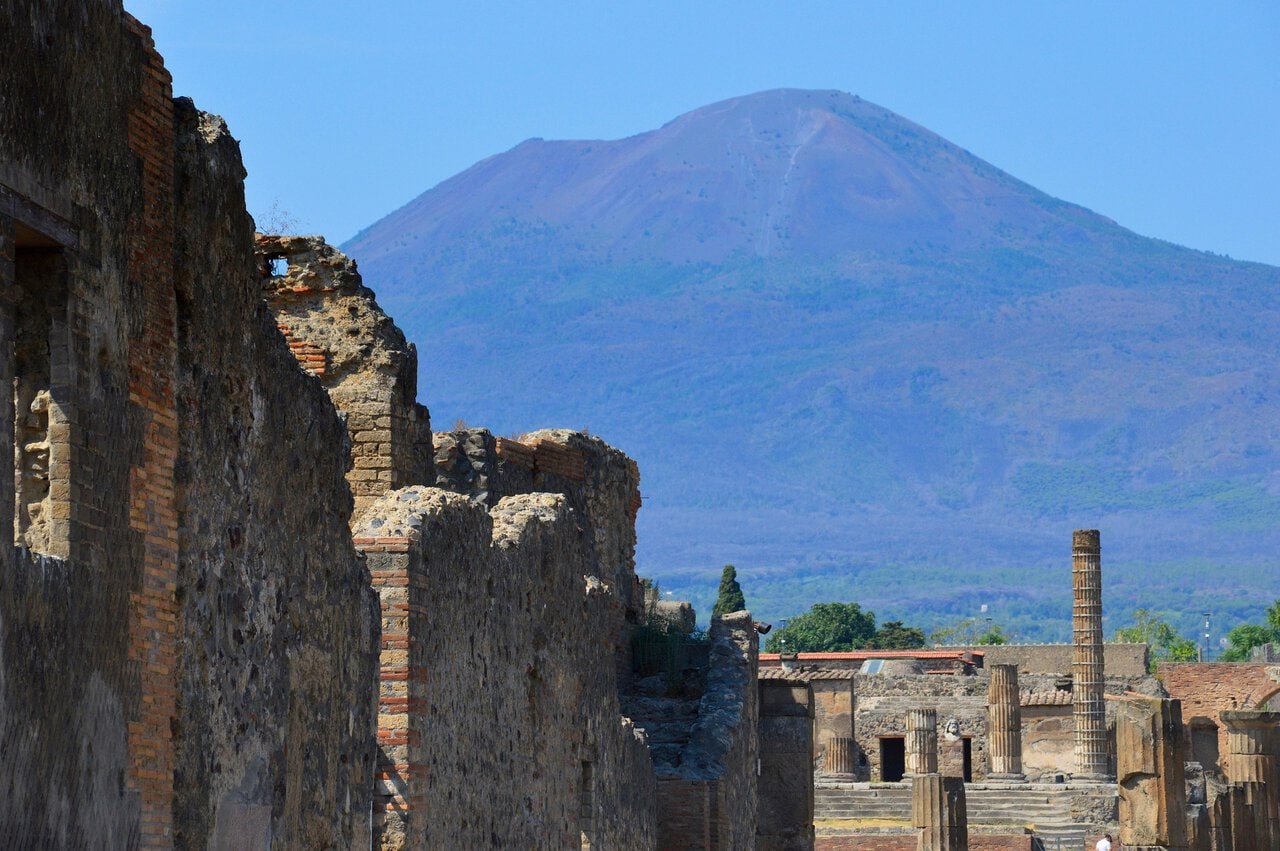
Rising dramatically above the Bay of Naples, Mount Vesuvius is one of Italy’s most iconic landmarks and one of the few active volcanoes in mainland Europe that visitors can walk right up to. Standing at around 1,281 metres (4,203 feet), it dominates the skyline of Naples, Pompeii and Herculaneum, serving as a constant reminder of the immense natural forces that shaped this part of southern Italy.
Today, thousands of visitors climb the volcano each year to stand on the edge of its enormous crater, enjoy breathtaking panoramic views across the Bay of Naples, and experience one of Europe’s most extraordinary geological landscapes. On a clear day, you can see Naples, Capri, Ischia, the Sorrento Peninsula, the Amalfi Coast and much of the surrounding Campania region stretching into the distance.
Despite its destructive history, visiting Mount Vesuvius is now a safe and well-managed experience. A modern visitor centre, shuttle buses, marked walking trails and a maintained footpath to the summit make it accessible to anyone with a reasonable level of fitness. Whether you’re fascinated by volcanoes, Roman history or simply looking for spectacular views, climbing Vesuvius is one of the highlights of any trip to southern Italy.
Many visitors combine Mount Vesuvius with Pompeii or Herculaneum on the same day, creating an unforgettable journey through both the natural and human history of one of the world’s most famous volcanic landscapes.
Mount Vesuvius at a Glance
| Information | Details |
|---|---|
| Location | Campania, Italy |
| Height | Approximately 1,281 metres (4,203 ft) |
| Volcano Type | Stratovolcano |
| Last Major Eruption | 1944 |
| Most Famous Eruption | AD 79 |
| National Park | Vesuvius National Park (Parco Nazionale del Vesuvio) |
| UNESCO Connection | Overlooks the UNESCO World Heritage Sites of Pompeii and Herculaneum |
| Time Needed | 2–4 hours (longer if combined with Pompeii or Herculaneum) |
| Walk to the Crater | Around 20–30 minutes each way from the upper car park |
| Difficulty | Moderate uphill walk |
| Suitable For | Families, history lovers, photographers and hikers |
| Advance Tickets Recommended | Yes, particularly during spring and summer |
See hotel options and places to stay in Italy.
Browse hotelsBrowse apartments, homes and self-catering accommodation in Italy.
Browse rentalsCompare prices for Italy hotels across multiple booking sites.
Check dealsMount Vesuvius and the UNESCO World Heritage Site
Although Mount Vesuvius itself isn’t included within the UNESCO designation, it forms the dramatic backdrop to one of the world’s most important UNESCO World Heritage Sites. In 1997, UNESCO inscribed the Archaeological Areas of Pompeii, Herculaneum and Torre Annunziata in recognition of their outstanding preservation and exceptional importance to human history.
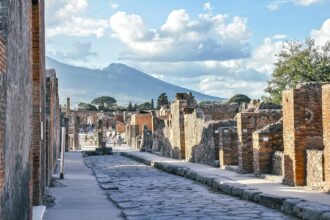
The connection between the volcano and these ancient Roman cities is inseparable. The catastrophic eruption of AD 79 buried Pompeii, Herculaneum and several neighbouring settlements beneath volcanic ash, pumice and mud, preserving streets, homes, temples and everyday objects in extraordinary detail. As a result, archaeologists have been able to build one of the most complete pictures of life in the Roman Empire ever discovered.
Standing on the rim of Mount Vesuvius while looking down towards Pompeii and Herculaneum provides a unique perspective on the events that shaped this remarkable landscape nearly two thousand years ago. Few places in the world allow visitors to experience both the natural force behind a historic disaster and the exceptionally preserved archaeological remains it created.
For many travellers, this combination is what makes a visit so special. Exploring the UNESCO-listed ruins before climbing the volcano creates a far deeper understanding of the eruption than visiting either attraction on its own. Together, they tell one of history’s most compelling stories of nature, survival and archaeological discovery.
Why Visit Mount Vesuvius?
There are very few places in the world where you can stand on the rim of an active volcano, look directly into its crater and then gaze down towards an ancient city that it once destroyed. That unique combination of geology, history and spectacular scenery makes Mount Vesuvius unlike almost any other attraction in Europe.
For many visitors, the greatest appeal is the chance to walk to the crater itself. The climb is relatively short but immensely rewarding, with every step revealing wider views across the Bay of Naples. Reaching the summit, you’ll be able to look into the vast volcanic crater while appreciating the immense scale of the mountain that buried Pompeii, Herculaneum and several other Roman settlements nearly two thousand years ago.
Vesuvius also offers some of the finest viewpoints in southern Italy. Looking west you’ll see Naples, while to the south the Sorrento Peninsula, Capri and the sparkling waters of the Tyrrhenian Sea dominate the horizon. The changing colours throughout the day make it a favourite destination for photographers, especially during the early morning and late afternoon.
Whether you’re interested in volcanoes, Roman archaeology, hiking or simply ticking off one of Italy’s most famous natural landmarks, Mount Vesuvius is an experience that combines adventure, history and unforgettable scenery in a single visit.
The Remarkable History of Mount Vesuvius
Although Mount Vesuvius has erupted many times throughout history, it is forever linked with the catastrophic eruption of AD 79. Following centuries of relative inactivity, the volcano suddenly exploded with enormous force, sending towering columns of ash and volcanic rock high into the atmosphere before burying nearby towns beneath metres of ash and pyroclastic material.
The cities of Pompeii, Herculaneum, Stabiae and several smaller settlements were devastated. Thousands of people lost their lives, while buildings, streets and everyday objects were preserved beneath volcanic deposits, creating one of the most extraordinary archaeological discoveries ever made. Much of what we know about the eruption comes from the detailed eyewitness accounts of Pliny the Younger, whose letters remain one of history’s most famous descriptions of a natural disaster.
Vesuvius remained active for centuries after the Roman period, erupting dozens of times with varying intensity. Its most recent major eruption took place in 1944, during the Second World War, when lava flows and ash caused significant damage to nearby villages and even destroyed Allied military aircraft stationed in the area.
Today, Mount Vesuvius is one of the world’s most closely monitored volcanoes. Scientists continuously study seismic activity, gas emissions and ground movement, ensuring that the volcano is carefully observed around the clock. While future eruptions are inevitable, visitors can safely explore the mountain thanks to comprehensive monitoring and carefully managed access to the national park.

Climbing to the Crater of Mount Vesuvius
Standing on the rim of the crater is undoubtedly the highlight of any visit to Mount Vesuvius. While the volcano looks imposing from below, reaching the summit is surprisingly achievable for most visitors with a reasonable level of fitness. From the upper visitor area, a well-maintained volcanic gravel path climbs steadily towards the crater, with spectacular views unfolding at every turn.
The walk to the summit takes around 20 to 30 minutes, although you’ll probably want to allow longer because there are so many opportunities to stop and admire the scenery. The route climbs gradually rather than steeply, but the loose volcanic surface can make sections feel more demanding than the distance suggests. Comfortable walking shoes or trainers are strongly recommended, particularly during wet weather.
As you climb higher, the views become increasingly impressive. Looking west you’ll see Naples stretching around the bay, while to the south the Sorrento Peninsula, Capri, Ischia and the shimmering waters of the Tyrrhenian Sea come into view. On exceptionally clear days it’s possible to see for many miles across southern Italy.
Reaching the crater itself is an unforgettable experience. Walking along the rim, you’ll peer into the vast volcanic crater while learning about its geology from information boards positioned along the route. Although Vesuvius has remained relatively quiet since 1944, seeing the enormous crater first-hand is a powerful reminder that this is still an active volcano monitored continuously by scientists.
Allow around 1½ to 2 hours for the return walk, giving yourself plenty of time to enjoy the viewpoints, take photographs and simply appreciate one of Italy’s most remarkable natural landscapes.
Buying Tickets for Mount Vesuvius
Unlike many natural attractions, Mount Vesuvius operates a timed-entry ticket system, with visitor numbers carefully controlled throughout the day. This helps protect the national park, reduces overcrowding on the summit trail and ensures a more enjoyable experience for everyone.
During the busy spring, summer and autumn seasons, tickets frequently sell out several days in advance, particularly for popular morning time slots. Booking online before travelling is therefore strongly recommended, especially if you’re visiting at weekends, during school holidays or combining Vesuvius with Pompeii on the same day.
Your ticket includes access to the summit trail and crater area, where park staff and rangers monitor visitor numbers and provide assistance when required. Make sure you arrive in plenty of time for your allocated entry slot, as late arrivals may not always be admitted if capacity has already been reached.
If you’re visiting as part of an organised excursion, admission is usually included within the tour price, but it’s always worth checking exactly what’s covered before booking. Some tours include transport only, while others combine entry tickets, guided commentary and visits to attractions such as Pompeii or Herculaneum.
Getting to Mount Vesuvius
Despite its dramatic location, Mount Vesuvius is surprisingly easy to reach from many of southern Italy’s most popular destinations. Whether you’re staying in Naples, Pompeii, Herculaneum, Sorrento or elsewhere along the Amalfi Coast, there are several convenient ways to visit.
Many independent travellers take the Circumvesuviana Railway to Pompei Scavi or Ercolano Scavi, where dedicated shuttle buses continue up the mountain to the visitor entrance. This is often the simplest and most economical option if you’re relying on public transport and allows you to combine the volcano with one of the nearby archaeological sites.
If you’re driving, the journey is straightforward via the motorway network before climbing the winding road into Vesuvius National Park. Organised coach tours are also widely available from Naples, Sorrento and the Amalfi Coast, often including transport, entry tickets and a guided visit to Pompeii on the same day.
Thanks to its central location, Mount Vesuvius is one of the easiest day trips in the Campania region and can comfortably be visited as either a standalone attraction or combined with several of Italy’s most famous historical sites.
Search flights and useful route combinations for your trip.
View flightsBrowse Airalo eSIM options for convenient travel data.
Check eSIMsCheck private pickup options and plan your onward journey before arrival.
View transfersVisiting Mount Vesuvius by Public Transport
Travelling by public transport is one of the easiest and most affordable ways to reach Mount Vesuvius, particularly if you’re staying in Naples or Sorrento. Most visitors begin their journey on the Circumvesuviana Railway, which connects Naples with Pompei Scavi and Ercolano Scavi, two stations that serve as gateways to the volcano.
From both stations, dedicated shuttle buses operate to the visitor entrance within Vesuvius National Park. These services are timed to meet many train arrivals during the main tourist season, allowing visitors to complete the final climb by road before walking to the crater. Booking a combined shuttle and entry ticket in advance can make the journey considerably smoother during busy periods.
If you’re travelling from Naples, the entire journey typically takes around 90 minutes, depending on connections. From Sorrento, allow approximately one hour to reach the volcano. Visitors staying elsewhere along the Amalfi Coast usually travel via Sorrento or join one of the many organised day tours operating throughout the region.
Public transport is an excellent option for visitors who don’t want to hire a car, and it removes the need to navigate mountain roads or search for parking during the busiest months of the year.
Driving to Mount Vesuvius
Hiring a car gives you the greatest flexibility when visiting Mount Vesuvius, especially if you’re planning to combine the volcano with Pompeii, Herculaneum, a vineyard tour or the Amalfi Coast. The roads leading to Vesuvius National Park are well maintained, and the drive offers increasingly impressive views across the Bay of Naples as you climb higher into the volcanic landscape.
Most visitors leave the A3 motorway at either Ercolano or Torre del Greco before following clearly signposted roads towards the national park. The final section is a winding mountain road that climbs steadily through woodland and volcanic terrain before reaching the upper visitor area. Although there are plenty of bends, the route is suitable for normal cars and doesn’t require any specialist driving experience.
Parking is available close to the visitor entrance, although spaces can fill quickly during spring, summer and weekends. Arriving early in the morning or later in the afternoon usually provides the best chance of finding a space and avoiding the busiest crowds on the summit trail.
If you’re hiring a car for your holiday, visiting Mount Vesuvius is one of the easiest attractions in Campania to reach independently. It also allows you to explore nearby towns, wineries and archaeological sites at your own pace without relying on public transport schedules.
Should You Join an Organised Tour?
For many visitors, an organised tour is the simplest way to experience Mount Vesuvius, particularly if you’re staying in Naples, Sorrento or elsewhere along the Amalfi Coast. Tours remove the hassle of organising train connections, shuttle buses and timed-entry tickets, allowing you to focus on enjoying the experience.
Most tours include return transport, entry tickets and enough free time to walk to the crater, while many also combine the volcano with a visit to Pompeii or Herculaneum. Full-day excursions often include guided commentary throughout the journey, helping visitors understand both the geology of the volcano and the history of the Roman cities destroyed during the eruption of AD 79.
Private tours offer even greater flexibility, allowing you to spend longer at the crater, stop at local wineries or tailor the itinerary to suit your interests. Although they cost more than travelling independently, they’re an excellent option for families, groups or visitors with limited time.
If you’re confident using trains and shuttle buses, travelling independently is perfectly straightforward and usually costs less. However, if convenience is your priority, an organised tour can represent excellent value and remove much of the planning involved.
Mount Vesuvius or Pompeii?
Many travellers wonder whether they should visit Mount Vesuvius, Pompeii, or both. The answer depends largely on how much time you have and what interests you most, as the two attractions offer completely different experiences despite being closely connected by history.
| Feature | Mount Vesuvius | Pompeii |
|---|---|---|
| Main Attraction | Active volcano and crater | Ancient Roman city |
| Time Needed | 2–4 hours | 4–6 hours |
| Walking Difficulty | Moderate uphill climb | Mostly flat walking |
| Best For | Nature, geology and panoramic views | Roman history and archaeology |
| Suitable for Families | Yes | Yes |
| Photography | Outstanding landscapes | Historic streets and ruins |
| Can Be Combined? | ✅ Yes | ✅ Yes |
If you only have time for one attraction, choose Pompeii if you’re fascinated by history and archaeology, or Mount Vesuvius if you’d rather experience one of Europe’s most famous natural landmarks. However, if your schedule allows, visiting both on the same day provides a much deeper understanding of how the eruption of AD 79 shaped this remarkable region.
Can You Visit Pompeii and Mount Vesuvius in One Day?
Absolutely, and it’s one of the most popular day trips in southern Italy. Thanks to the short distance between the two attractions, it’s perfectly possible to explore the ruins of Pompeii in the morning before climbing Mount Vesuvius during the afternoon.
Many visitors begin with an early train to Pompei Scavi, spending three to four hours exploring the archaeological site before catching a shuttle bus to the volcano. After walking to the crater and enjoying the spectacular views across the Bay of Naples, it’s easy to return to Naples or Sorrento during the evening.
If you’re travelling independently, remember to book your Mount Vesuvius entry ticket in advance and leave enough time to travel between the two attractions. Organised tours are another excellent option, as they usually include transport, admission and a guide, making the day much simpler to organise.
Combining Pompeii and Mount Vesuvius creates one of Italy’s most unforgettable sightseeing experiences. Few places in the world allow you to explore an ancient city destroyed by a volcanic eruption before standing on the very volcano that changed history almost two thousand years ago.
Visiting Herculaneum and Mount Vesuvius
Although Pompeii receives most of the attention, many travellers actually prefer combining Herculaneum with Mount Vesuvius. The two attractions are much closer together, making for a more relaxed day, and Herculaneum’s compact size means you can comfortably explore the ancient city before heading up the volcano without feeling rushed.
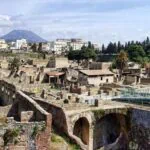
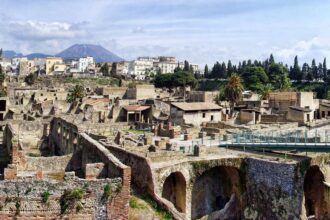
Unlike Pompeii, which covers a vast area, Herculaneum can usually be explored in around two to three hours. The town was buried beneath deep layers of volcanic mud during the eruption of AD 79, preserving wooden buildings, furniture and even upper floors in remarkable condition. It provides a fascinating contrast to Pompeii and offers an incredibly detailed glimpse into everyday Roman life.
From Ercolano Scavi Station, regular shuttle buses climb towards Mount Vesuvius, making it straightforward to visit both attractions without hiring a car. If you’re particularly interested in Roman history, this combination is arguably one of the best day trips anywhere in Italy, allowing you to experience both the destructive power of the volcano and one of archaeology’s greatest discoveries.
Browse hostels and budget-friendly stays around Italy.
See hostelsGet help with compensation, eligible lounge access and disruption support.
Explore AirHelp+Use convenient luggage storage around Italy between arrival, check-in and departure.
Check storageThe Best Time to Visit Mount Vesuvius
Mount Vesuvius is open throughout much of the year, but the experience varies considerably depending on the season and the time of day. Choosing when to visit can make a significant difference to the views, walking conditions and overall enjoyment of the climb.
Spring and autumn are generally considered the best times to visit. Temperatures are pleasant, visibility is often excellent and the walking trail is usually far less crowded than during the peak summer months. Spring also brings colourful wildflowers across the slopes of the national park, while autumn offers cooler conditions that make the uphill walk much more comfortable.
During summer, visitor numbers increase dramatically. By late morning the path to the crater can become busy, and temperatures regularly climb above 30°C, making the exposed volcanic trail feel considerably more demanding. Arriving as early as possible is highly recommended, not only to avoid the heat but also to enjoy clearer views before afternoon haze develops over the Bay of Naples.
Winter offers a completely different experience. Although the volcano is much quieter, poor weather, strong winds or low cloud can occasionally affect visibility or result in temporary closures of the summit path. Before travelling, it’s always worth checking the latest conditions if you’re visiting during the cooler months.
What Should You Wear?
Although climbing Mount Vesuvius doesn’t require specialist hiking equipment, wearing the right clothing will make your visit far more enjoyable. The path to the crater consists of loose volcanic gravel and uneven surfaces, so comfortable walking shoes or trainers with good grip are much more suitable than sandals or flip-flops.
Weather conditions can change surprisingly quickly. Even on warm summer days, strong winds are common near the crater, so carrying a light jacket or windproof layer is a sensible precaution. During spring and autumn, temperatures at the summit can be significantly cooler than in Naples or along the coast.
Don’t forget sun cream, a hat, sunglasses and plenty of drinking water, particularly if you’re visiting between June and September. Much of the trail is exposed, with very little natural shade, and the Mediterranean sun can feel surprisingly intense during the climb.
A small backpack is ideal for carrying water, snacks and a camera, allowing you to keep your hands free while walking. Travelling light will make the uphill section much more comfortable.
Safety on an Active Volcano
One of the questions many visitors ask is whether it’s safe to climb Mount Vesuvius. The answer is yes. Although Vesuvius remains an active volcano, it is also one of the most closely monitored volcanoes in the world. Scientists continuously measure seismic activity, volcanic gases and ground movement, ensuring that any significant changes are detected long before they pose a risk to visitors.
Access to the crater is carefully managed by Vesuvius National Park, with clearly marked paths, visitor limits and trained staff monitoring conditions throughout the day. If volcanic activity, severe weather or safety concerns arise, access to the summit can be restricted or temporarily closed.
Visitors should always remain on the designated paths and avoid crossing barriers or approaching unstable areas around the crater. The volcanic rock can be loose in places, and wandering away from the official trail is both dangerous and prohibited.
With sensible precautions and by following the instructions of park staff, visiting Mount Vesuvius is a safe and unforgettable experience, offering the rare opportunity to stand on one of the world’s most famous active volcanoes while enjoying some of the finest views in southern Italy.

Photography Tips for Visiting Mount Vesuvius
Whether you’re carrying a professional camera or simply using your smartphone, Mount Vesuvius offers some of the finest photography opportunities in southern Italy. The combination of volcanic landscapes, panoramic coastal views and the vast crater itself creates spectacular images throughout the year.
The best light is usually found early in the morning or during the late afternoon, when the lower sun brings out the rich colours of the volcanic rock and reduces the haze that often develops across the Bay of Naples. From the summit you’ll enjoy sweeping views towards Naples, Capri, Ischia, the Sorrento Peninsula and, on exceptionally clear days, parts of the Amalfi Coast.
Don’t focus solely on the crater. Some of the most impressive photographs are actually taken while climbing the trail, where the contrast between the rugged volcanic slopes and the sparkling Mediterranean provides a dramatic backdrop. Looking back down the path also creates excellent wide-angle shots that capture both the scale of the volcano and the landscape below.
If you’re visiting after rain, the volcanic rock often appears darker and more dramatic, while winter can occasionally bring snow to the upper slopes, creating a completely different perspective on one of Italy’s most famous natural landmarks.
Where to Eat Near Mount Vesuvius
Although there are a handful of cafés and refreshment kiosks close to the visitor entrance, most visitors choose to eat before or after climbing the volcano. The surrounding towns offer a much wider choice of restaurants, pizzerias and traditional trattorias serving authentic Campanian cuisine.
If you’re visiting from Pompeii, you’ll find numerous restaurants around Pompei Scavi Station, making it easy to enjoy lunch before heading up the volcano. Travellers arriving via Herculaneum can also find plenty of cafés and family-run restaurants close to Ercolano Scavi Station, many specialising in fresh seafood, wood-fired pizza and local wines produced on the fertile volcanic slopes surrounding Vesuvius.
The area around the volcano is also famous for its vineyards. The mineral-rich volcanic soil produces distinctive wines, including the celebrated Lacryma Christi del Vesuvio, and several local wineries offer tastings and guided tours that can easily be combined with a visit to the national park.
If you’re planning a full day exploring Mount Vesuvius, Pompeii or Herculaneum, allowing time for a leisurely meal is highly recommended. It’s a wonderful opportunity to experience the region’s outstanding food while enjoying views of the volcano you’ve just climbed.
Money-Saving Tips for Visiting Mount Vesuvius
Visiting Mount Vesuvius doesn’t have to be expensive, particularly if you plan your day carefully. Booking entry tickets online not only guarantees your preferred time slot but can also save disappointment during busy periods when tickets sell out.
If you’re planning to visit Pompeii, Herculaneum and several other attractions during your stay, it’s worth investigating the Campania Artecard, which may offer significant savings depending on your itinerary. Visitors intending to explore multiple archaeological sites often find it provides excellent value.
Travelling by Circumvesuviana Railway and shuttle bus is generally much cheaper than hiring a car or joining a guided excursion, particularly for solo travellers or couples. On the other hand, groups of three or four people may find that sharing a rental car becomes surprisingly cost-effective once transport costs are divided.
Finally, avoid buying food and drinks at the summit if you’re travelling on a budget. Bringing your own water and snacks from Naples, Pompeii or Herculaneum will usually be considerably cheaper, especially during the peak tourist season.

Rupert’s Handy Travel Tips
Climbing an active volcano is a rare thing to tick off, so here’s what I’d want to know before setting out.
- Book your tickets as early as possible: timed entry slots for Mount Vesuvius regularly sell out during spring, summer and school holidays. Booking ahead gives you far more choice and avoids the disappointment of arriving to find the day’s tickets have already gone.
- Start your climb early: the volcano becomes much busier from late morning onwards, especially during the summer. An early start usually means cooler temperatures, quieter paths and much clearer views across the Bay of Naples.
- Wear suitable footwear: the walk to the crater is relatively short, but the volcanic gravel can be loose and slippery underfoot. Comfortable trainers or walking shoes will make the climb much more enjoyable than sandals or flip-flops.
- Carry water and sun protection: much of the trail is exposed with very little shade. A refillable water bottle, sun cream and a hat are essential during the warmer months.
- Combine your visit with Pompeii or Herculaneum: seeing the ancient Roman cities before standing on the volcano that buried them nearly 2,000 years ago creates one of the most memorable day trips in Italy and is well worth planning if time allows.
Want to meet the reindeer behind our travel tips? Find out more in our page Who is Rupert?.




Frequently Asked Questions
Can you climb to the top of Mount Vesuvius?
Yes. Visitors can walk from the upper visitor area to the crater along a well-maintained path. The walk takes around 20 to 30 minutes each way and is suitable for most people with a reasonable level of fitness.
Is Mount Vesuvius still active?
Yes. Mount Vesuvius is an active volcano, although its last major eruption was in 1944. It is continuously monitored by scientists, and the national park is only opened to visitors when it is considered safe to do so.
How long does it take to visit Mount Vesuvius?
Most visitors spend 2 to 4 hours at the volcano, including the walk to the crater. If you’re combining it with Pompeii or Herculaneum, allow a full day.
Can you visit Mount Vesuvius without a tour?
Absolutely. Many visitors travel independently using the Circumvesuviana Railway and shuttle buses or by hiring a car. Guided tours are available, but they’re not essential.
Do you need to book tickets in advance?
Yes, particularly during spring, summer and weekends. Entry is controlled using timed tickets, and popular slots often sell out several days in advance.
Is the walk difficult?
The walk is considered moderate. It’s uphill for most of the route and follows loose volcanic gravel, but the distance is relatively short. Most visitors complete the climb without difficulty if they wear suitable footwear.
Can you visit Pompeii and Mount Vesuvius on the same day?
Yes. It’s one of the most popular day trips in southern Italy. Many visitors spend the morning exploring Pompeii before travelling up to Mount Vesuvius during the afternoon.
Is Mount Vesuvius suitable for children?
Yes. Children who are comfortable walking uphill should have no difficulty reaching the crater, although younger children may need regular breaks during warmer weather.
Further Reading
If you’re planning to explore more of Campania, we have plenty of guides to help you make the most of your trip.
Before climbing the volcano, don’t miss our Complete Pompeii Guide, which explains everything you need to know about visiting one of the world’s most famous archaeological sites.
For visitors using public transport, our Circumvesuviana Railway Guide explains how to travel between Naples, Pompeii, Herculaneum and Sorrento, while our Naples Guide and Naples Airport Transfers Guide will help you plan the rest of your stay in the region.
Heading further south? Our Sorrento Guide and Complete Amalfi Coast Guide cover the best towns, beaches, scenic drives and day trips, while our Campania Artecard Guide explains whether the regional sightseeing pass could save you money when visiting attractions such as Pompeii, Herculaneum and several museums around Naples.
If you’re planning to visit more archaeological sites, take a look at our Complete Herculaneum Guide, which explores the remarkably preserved Roman city buried alongside Pompeii during the eruption of AD 79.