Reviewed by our editorial team Updated
Discover One of Italy’s Most Fascinating Cities
Few cities divide opinion quite like Naples. Chaotic, energetic, historic and endlessly fascinating, it’s a place that rewards visitors who embrace its character rather than expect a perfectly polished city break. Beneath the bustling streets lies more than 2,500 years of history, while above ground you’ll find magnificent castles, grand piazzas, world-class museums, vibrant neighbourhoods and arguably the best pizza anywhere in the world.
As the birthplace of pizza and the historic capital of southern Italy, Naples combines an extraordinary cultural heritage with a lively atmosphere that feels completely different from cities such as Rome, Florence or Venice. Around every corner you’ll discover bustling markets, elegant churches, hidden courtyards, colourful street art and spectacular views across the Bay of Naples towards Mount Vesuvius. The city’s historic centre is recognised as a UNESCO World Heritage Site, while its museums house many of the treasures recovered from nearby Pompeii and Herculaneum.
Naples is also one of Europe’s greatest transport hubs for sightseeing. Ferries depart daily for Capri, Ischia and Procida, while trains connect visitors with Pompeii, Herculaneum, Sorrento and the Amalfi Coast. Many people use Naples simply as a gateway to these famous destinations, but that does the city a disservice. There’s more than enough here to fill several days before you even think about leaving.
In this guide we’ve brought together the very best things to do in Naples, from iconic attractions and hidden gems to unforgettable viewpoints, historic streets and authentic food experiences. Whether you’re visiting for a weekend or planning a longer stay, this guide will help you make the most of one of Italy’s most exciting cities.
Before You Start Exploring Naples
Naples is a city best explored with a little planning. While many of the major attractions are located within or close to the historic centre, the city spreads across several hills and neighbourhoods, meaning you’ll almost certainly use public transport alongside walking. Fortunately, Naples has an excellent network of metro lines, buses, trams and funicular railways, making it easy to travel between districts such as the Historic Centre, Vomero, Chiaia and the waterfront.
If you’re planning to visit several museums and historic attractions, it’s well worth considering the Campania Artecard. Depending on the version you choose, it can include free admission to some of Naples’ biggest attractions, discounted entry elsewhere and, with the 3-Day Pass, unlimited travel on the city’s public transport network. For visitors intending to explore sites such as the National Archaeological Museum, Royal Palace, Castel Sant’Elmo and nearby Pompeii, it can represent excellent value.
Naples can comfortably fill three or four days, although many visitors only spend a weekend here before continuing to destinations such as the Amalfi Coast or Capri. Two full days will allow you to see the main highlights, while an extra day gives you time to enjoy the city at a more relaxed pace or take a memorable day trip beyond the city limits.
The best times to visit are spring and autumn, when temperatures are pleasant and sightseeing is comfortable. Summer brings long sunny days but also larger crowds and higher temperatures, while winter offers quieter streets and lower accommodation prices, particularly outside the Christmas period.
Like any major city, Naples rewards sensible precautions. The busiest tourist areas are generally lively and welcoming, but it’s wise to keep an eye on valuables, particularly around crowded transport hubs and busy shopping streets. By staying aware of your surroundings and using common sense, you’ll quickly discover that Naples is a warm, welcoming city whose vibrant atmosphere is one of its greatest attractions. For current opening hours, events and staffed info points, the City of Naples official tourism portal is the most reliable starting point.
See hotel options and places to stay in Naples.
Browse hotelsExplore holiday homes and apartments around Naples.
See holiday homesSee hotel prices from multiple booking sites in one search.
Compare ratesExplore Spaccanapoli
If you only have time to experience one part of Naples, make it Spaccanapoli. Running through the heart of the city’s UNESCO World Heritage-listed Historic Centre, this long, narrow street quite literally appears to split Naples in two when viewed from above, giving it the name “Spaccanapoli”, meaning Naples Splitter. For centuries it has been the city’s main thoroughfare, and today it remains the perfect introduction to Naples’ unique character.
Walking along Spaccanapoli is like travelling through more than 2,000 years of history. Elegant churches stand beside bustling cafés, historic palaces overlook lively piazzas and family-run bakeries sit alongside artisan workshops that have traded here for generations. Every few metres you’ll discover another hidden courtyard, baroque façade or narrow alleyway disappearing into the maze of streets that make Naples so fascinating to explore.
Among the highlights are the magnificent Church of Gesù Nuovo, instantly recognisable by its unusual diamond-shaped stone façade, and the beautiful Monastery of Santa Chiara, famous for its peaceful cloisters decorated with colourful majolica tiles. Nearby you’ll also find Piazza San Domenico Maggiore, one of the city’s most attractive squares, surrounded by historic buildings and lively outdoor cafés that provide the perfect place to pause for a coffee.
Spaccanapoli is also one of the best places in Naples to experience the city’s incredible food culture. Traditional pizzerias, bakeries and delicatessens line the street, while small shops sell local products including limoncello, pastries, espresso, olive oil and handmade souvenirs. It’s an excellent place to sample authentic Neapolitan street food, whether that’s a folded pizza, freshly baked sfogliatella or a simple espresso enjoyed standing at the counter like the locals.
The easiest way to reach Spaccanapoli is by Naples Metro Line 1 to Dante or Università, both of which are only a short walk away. Piazza Cavour station on Line 2 is another convenient option, while several local bus routes also stop around the edge of the historic centre. Once you arrive, the entire area is best explored on foot, allowing you to wander at your own pace and discover the countless hidden corners that make this one of Italy’s most captivating streets.
Visit the Naples National Archaeological Museum
The National Archaeological Museum of Naples (MANN) is widely regarded as one of the finest archaeological museums anywhere in the world and is an absolute must for anyone planning to visit Pompeii or Herculaneum. Many of the most valuable discoveries uncovered at the two ancient Roman cities were removed for preservation and are now displayed here, making the museum an essential companion to the archaeological sites themselves.
Its collection is extraordinary. Visitors can admire beautifully preserved Roman mosaics, marble sculptures, frescoes, jewellery, household objects and ancient coins, many of which survived the eruption of Mount Vesuvius in AD 79. The museum is also home to the world-famous Farnese Collection, featuring colossal Roman sculptures including the magnificent Farnese Hercules and Farnese Bull, regarded as masterpieces of classical art.
One of the museum’s most fascinating sections recreates everyday life in Roman Campania. Walking through galleries filled with furniture, kitchen utensils, decorative artwork and remarkably preserved household objects offers an incredible insight into daily life almost two thousand years ago. Visitors interested in Roman history could easily spend three to four hours exploring the collections, although even a shorter visit is hugely rewarding.
The museum also houses the famous Secret Cabinet, containing erotic art recovered from Pompeii and Herculaneum. Once accessible only to academics, it now provides an intriguing glimpse into Roman attitudes towards everyday life and culture.
Reaching the museum couldn’t be easier. It sits directly beside Museo Station on Naples Metro Line 1, making it one of the city’s most accessible attractions. Several bus routes also stop nearby, and it’s only around a 15-minute walk from Spaccanapoli, allowing both attractions to be comfortably combined in a single day. If you’re purchasing the Campania Artecard, the National Archaeological Museum is one of the very best places to use it and should be high on any visitor’s itinerary.
Discover Naples Underground (Napoli Sotterranea)
Beneath the busy streets of Naples lies an entirely different city. Napoli Sotterranea, or Naples Underground, takes visitors almost 40 metres below ground into a remarkable network of ancient tunnels, aqueducts and chambers that reveal more than 2,400 years of the city’s history. It’s one of Naples’ most unique attractions and offers a fascinating insight into how generations of Neapolitans have lived beneath the surface.
The underground passages began life as Greek quarries, where volcanic tuff stone was extracted to build the ancient city. During Roman times, these vast caverns were transformed into an ingenious network of aqueducts supplying fresh water throughout Naples. Centuries later, they became bomb shelters protecting thousands of residents during the heavy bombing of the Second World War, and many of the artefacts, graffiti and personal belongings left behind remain on display today.
A guided tour leads you through narrow tunnels, enormous cisterns and atmospheric chambers while explaining how the underground city evolved over the centuries. One of the most memorable moments comes when visitors have the chance to walk through a particularly narrow candlelit passage, although there’s usually an alternative route for anyone who would rather avoid confined spaces. You’ll also see the remains of an ancient Roman theatre, hidden beneath modern buildings and accessed through an ordinary apartment block, demonstrating just how closely Naples’ ancient and modern worlds are intertwined.
The entrance to Napoli Sotterranea is located just off Piazza San Gaetano in the heart of the historic centre, making it easy to combine with Spaccanapoli, Naples Cathedral and the Sansevero Chapel. The nearest metro stations are Dante on Metro Line 1 and Piazza Cavour on Line 2, both around a 10 to 15-minute walk away. Tours are extremely popular, particularly during weekends and the summer months, so booking ahead is highly recommended. If you’re looking for an attraction that’s completely different from Naples’ churches and museums, this is one experience you shouldn’t miss.
Visit Naples Cathedral
Standing proudly in the heart of the historic centre, Naples Cathedral (Duomo di Napoli) is one of the city’s most important religious buildings and a place that has been at the centre of Neapolitan life for more than seven centuries. Officially dedicated to the Assumption of the Virgin Mary, the cathedral is far better known for its connection with Saint Januarius (San Gennaro), Naples’ patron saint, whose miraculous blood is said to liquefy several times each year.
The cathedral combines several architectural styles thanks to centuries of rebuilding following earthquakes and renovations. Its impressive Gothic façade gives way to an elegant interior filled with marble columns, richly decorated chapels and magnificent frescoes. The undisputed highlight is the Chapel of the Treasure of San Gennaro, one of the most lavishly decorated Baroque chapels in Italy, where priceless works of art, silver statues and the famous vials said to contain the saint’s dried blood are kept.
Whether or not you believe in miracles, the ceremony surrounding the Liquefaction of the Blood is one of Naples’ most important religious traditions. Thousands of local residents gather to witness the event, believing it brings good fortune to the city. The cathedral also contains the archaeological remains of the earlier Basilica of Santa Restituta, allowing visitors to explore layers of Naples’ religious history beneath the current building.
The cathedral is located on Via Duomo, just a few minutes’ walk from Spaccanapoli and Napoli Sotterranea, making it easy to include all three attractions in a single morning. Duomo Station on Metro Line 1 provides the most convenient public transport connection, while Piazza Cavour on Line 2 is also within walking distance. Entry to the cathedral itself is free, although some areas and museums may charge separately. Even if you’re not particularly interested in religious history, the cathedral remains one of Naples’ most impressive landmarks and an essential stop while exploring the historic centre.
Tour Castel Sant’Elmo
Perched high above Naples on Vomero Hill, Castel Sant’Elmo offers what many people consider the finest panoramic views in the entire city. Originally built as a medieval fortress before being transformed into the distinctive star-shaped castle seen today, it has watched over Naples for centuries and played an important role in the city’s military history. Today, however, most visitors come for one reason above all else: the breathtaking views.
Walking around the castle’s enormous ramparts provides spectacular panoramas across the Bay of Naples, Mount Vesuvius, the historic centre, the waterfront and, on clear days, all the way to Capri. It’s one of the best places to appreciate the sheer size of Naples and understand how dramatically the city sits between the sea and the surrounding hills. Sunset is particularly magical, as the golden light illuminates the rooftops before the city begins to sparkle after dark.
Inside the fortress you’ll also find exhibition spaces showcasing contemporary art and temporary cultural displays, while the castle itself offers an insight into centuries of Neapolitan history. Many visitors combine their visit with the neighbouring Certosa di San Martino, a former monastery housing an outstanding museum of Neapolitan history and decorative arts.
Although the castle stands high above the city, it’s surprisingly easy to reach. Take Naples Metro Line 1 to Vanvitelli and walk from there, or use one of Naples’ famous funicular railways, which climb the hillside in just a few minutes. The Montesanto Funicular runs up to Morghen, the closest upper station to the castle, while the Central and Chiaia lines arrive at Piazza Fuga and Piazza Vanvitelli respectively. From the upper stations it’s a short uphill walk to the entrance. Castel Sant’Elmo is included with the Campania Artecard, making it an excellent addition to any sightseeing itinerary. If you’re looking for the best photographs of Naples, this is undoubtedly one of the city’s unmissable attractions.
Explore the Royal Palace of Naples
Dominating the eastern side of the magnificent Piazza del Plebiscito, the Royal Palace of Naples (Palazzo Reale) stands as one of the city’s grandest buildings and offers a fascinating glimpse into the lives of the kings and queens who once ruled southern Italy. Constructed during the early seventeenth century, it served as the principal residence of the Spanish, Austrian and Bourbon monarchs, becoming the political heart of the Kingdom of Naples for hundreds of years.
The palace’s richly decorated State Apartments are the main attraction, with visitors passing through lavish reception rooms, elegant drawing rooms, royal bedrooms and magnificent ballrooms filled with period furniture, chandeliers, tapestries and priceless works of art. The spectacular Grand Staircase is one of Italy’s finest examples of Baroque architecture, while the beautifully preserved Court Theatre provides another highlight hidden within the palace complex.
Outside, the palace overlooks the vast open space of Piazza del Plebiscito, where visitors can admire the impressive façade before strolling towards the nearby waterfront, Castel Nuovo or the elegant shopping arcades of Galleria Umberto I. Its central location makes it one of the easiest attractions to combine with several other major sights during the same day.
The Royal Palace is conveniently served by Municipio Station on Metro Line 1, while numerous city buses also stop nearby. It’s only a few minutes’ walk from the ferry terminals at Molo Beverello, making it an excellent first or last stop if you’re travelling to Capri, Ischia or Procida. The palace is also included with the Campania Artecard, and visitors interested in royal history, architecture or decorative arts should allow at least two to three hours to explore its magnificent interiors at a leisurely pace.
Compare routes and fares for your journey to Naples.
Compare flightsBrowse Airalo eSIM options for convenient travel data.
Check eSIMsCheck private pickup options and plan your onward journey before arrival.
View transfersWalk Through Piazza del Plebiscito
If Naples has a heart, it’s undoubtedly Piazza del Plebiscito. This enormous open square is one of Italy’s largest public spaces and has been the setting for royal ceremonies, military parades, concerts and public celebrations for centuries. Surrounded by grand historic buildings, it’s the perfect place to pause, admire the architecture and appreciate the scale of one of southern Italy’s most impressive city squares.
The square is framed by the magnificent Royal Palace of Naples on one side and the striking Basilica of San Francesco di Paola on the other. With its huge domed roof and sweeping semicircular colonnade, the basilica is often compared to Rome’s Pantheon and creates one of Naples’ most recognisable views. The wide open space between the two buildings provides a welcome contrast to the narrow streets of the historic centre and is a favourite gathering place for both locals and visitors.
One of the square’s best-known traditions involves the two bronze equestrian statues standing outside the Royal Palace. Legend says that if you can walk blindfolded in a straight line between them after spinning around, you’ll enjoy good luck. Most people fail spectacularly, providing plenty of entertainment for everyone watching. Throughout the year the piazza also hosts concerts, festivals and seasonal events, meaning there’s often something happening regardless of when you visit.
Piazza del Plebiscito is just a short walk from Castel Nuovo, Galleria Umberto I, the Royal Palace and the Lungomare, making it one of the easiest places to include on any sightseeing route around central Naples. The nearest station is Municipio on Metro Line 1, while numerous bus routes also stop nearby. Whether you’re admiring the architecture, enjoying a coffee or simply watching city life unfold, this iconic square deserves a place on every Naples itinerary.
Visit Castel Nuovo (Maschio Angioino)
Standing guard over Naples’ harbour, Castel Nuovo, more commonly known as Maschio Angioino, is one of the city’s most distinctive landmarks. Built during the thirteenth century by Charles I of Anjou, the fortress has witnessed centuries of royal intrigue, political change and military conflict. Today it offers visitors the chance to explore one of Naples’ most important historic buildings while enjoying superb views over the waterfront.
The castle is immediately recognisable thanks to its five enormous round towers and impressive defensive walls, but perhaps its most remarkable feature is the magnificent Triumphal Arch that marks the main entrance. Built to celebrate the arrival of King Alfonso V of Aragon, the beautifully carved marble arch is considered one of the finest examples of Renaissance sculpture in southern Italy.
Inside the castle you’ll discover the Civic Museum, where collections of paintings, sculptures and historical artefacts tell the story of Naples through the centuries. Visitors can also explore ancient halls, defensive courtyards and sections of the medieval fortifications, while the Palatine Chapel provides another architectural highlight. From parts of the castle you’ll enjoy attractive views across the harbour towards Mount Vesuvius and the Bay of Naples.
Castel Nuovo is located opposite Molo Beverello, making it one of the first landmarks many visitors see after arriving by ferry from Capri, Ischia or Procida. It’s only a few minutes’ walk from Municipio Station on Metro Line 1 and sits within easy walking distance of the Royal Palace, Piazza del Plebiscito and Galleria Umberto I. If you’re interested in medieval history, architecture or photography, Maschio Angioino is one of Naples’ most rewarding attractions.
Stroll Along the Lungomare
Few city waterfronts are as enjoyable as Naples’ Lungomare. Stretching for several kilometres along the edge of the Bay of Naples, this elegant seaside promenade offers spectacular views of Mount Vesuvius, the glittering Mediterranean and the city’s historic skyline. Whether you’re visiting in the early morning or at sunset, it’s one of the most relaxing places to escape the bustle of the historic centre.
The promenade is lined with cafés, restaurants and gelaterias, making it the perfect place to stop for lunch or enjoy an evening aperitivo while watching boats drift across the bay. The atmosphere changes throughout the day, with joggers and cyclists making the most of the quieter mornings before families and visitors fill the waterfront later in the afternoon. As the sun begins to set, the Lungomare becomes one of Naples’ most romantic locations, with the city lights reflecting across the water towards Vesuvius.
Along the route you’ll pass several of Naples’ best-known landmarks, including Castel dell’Ovo, the elegant marina at Borgo Marinari and a series of small beaches where locals gather during the warmer months. There are plenty of benches and viewing points, making it easy to slow down and simply enjoy one of Italy’s finest urban coastal walks.
The Lungomare is easily reached on foot from Piazza del Plebiscito, Castel Nuovo and the Royal Palace, while Municipio and Toledo stations on Metro Line 1 both provide convenient access. Numerous city buses also run along the waterfront. Even if you only have a couple of days in Naples, setting aside an hour or two for a leisurely stroll along the Lungomare is one of the best ways to experience the city’s unique combination of sea, history and spectacular scenery.
Visit Castel dell’Ovo
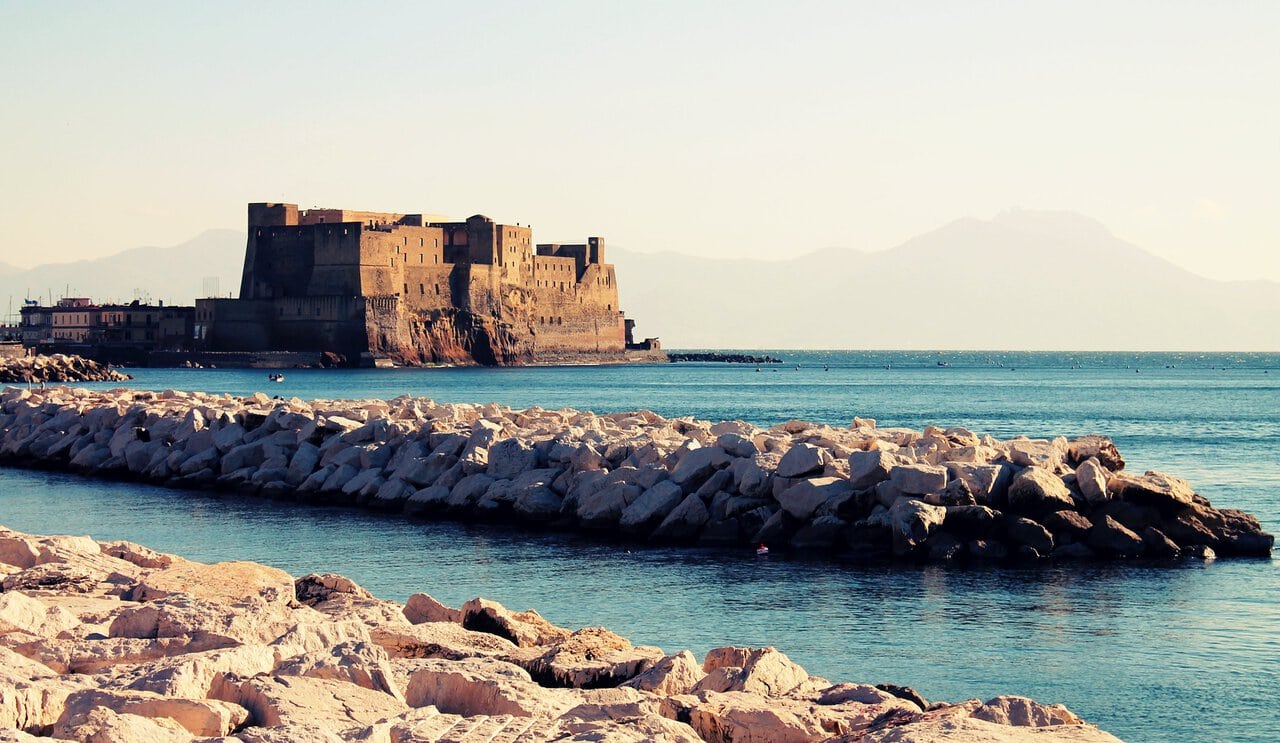
Sitting on a small peninsula at the edge of the Bay of Naples, Castel dell’Ovo is the oldest castle in the city and one of its most picturesque landmarks. Although the fortress has guarded the harbour for centuries, it’s perhaps even more famous for the legend that gave it its unusual name. According to local tradition, the Roman poet Virgil hid a magical egg within the castle’s foundations, believing that as long as it remained intact, Naples would be protected from disaster.
Today the castle is a peaceful place to explore, with its stone ramparts providing magnificent views across the bay towards Mount Vesuvius, the Sorrento Peninsula and the city’s waterfront. Unlike some of Naples’ other castles, the main attraction here isn’t lavish interiors or museum collections but the spectacular setting itself. Walking through the ancient passageways before climbing onto the terraces rewards visitors with some of the finest panoramic viewpoints anywhere in Naples.
Immediately beside the castle lies Borgo Marinari, a charming little marina filled with sailing boats, seafood restaurants and waterside cafés. Many visitors combine the two, exploring the castle before enjoying lunch or an evening meal overlooking the harbour. The area has a much calmer atmosphere than the busy historic centre and is particularly beautiful around sunset.
Castel dell’Ovo is located at the eastern end of the Lungomare and is easily reached on foot from Piazza del Plebiscito, the Royal Palace or Castel Nuovo in around 20 minutes. Several bus routes also stop nearby if you prefer not to walk. Best of all, entry to the castle is free, making it one of the best-value attractions in Naples and an essential stop for anyone looking to enjoy the city’s spectacular waterfront scenery.
See the Veiled Christ at Cappella Sansevero
Hidden among the narrow streets of Naples’ historic centre is one of Italy’s greatest artistic masterpieces. The Veiled Christ (Cristo Velato), housed inside the small Cappella Sansevero, is widely regarded as one of the most extraordinary marble sculptures ever created. Even visitors with little interest in art often leave describing it as one of the highlights of their entire trip to Naples.
Created in 1753 by the sculptor Giuseppe Sanmartino, the statue depicts the body of Christ lying beneath an incredibly delicate marble veil. What makes the sculpture so remarkable is that the transparent veil was carved from the same single block of marble as the figure beneath it. The folds of fabric appear almost weightless, revealing every detail of Christ’s face and body with astonishing realism. For centuries, visitors believed the veil had been created using alchemy rather than sculpture, adding to the chapel’s air of mystery.
The chapel itself is equally fascinating. Commissioned by the eccentric nobleman Prince Raimondo di Sangro, it’s filled with symbolic artwork, intricate marble sculptures and unusual exhibits that reflect his interests in science, philosophy and experimentation. Alongside the Veiled Christ, visitors can admire the dramatic statues of Modesty and Disillusion, while the mysterious anatomical machines displayed in the crypt continue to intrigue historians and medical experts alike.
Cappella Sansevero is located just a few minutes’ walk from Spaccanapoli, making it easy to combine with Naples Underground, Naples Cathedral and the National Archaeological Museum. The nearest metro stations are Dante on Metro Line 1 and Piazza Cavour on Line 2. Visitor numbers are strictly controlled and the chapel regularly sells out, particularly during weekends and the summer season, so booking tickets well in advance is strongly recommended. If you only visit one museum or gallery during your stay in Naples, many would argue this should be it.
Explore the Spanish Quarter
Few neighbourhoods capture the true spirit of Naples quite like the Spanish Quarter (Quartieri Spagnoli). Originally built during the sixteenth century to house Spanish soldiers, the district has evolved into one of the city’s liveliest and most authentic neighbourhoods. Today it’s a maze of narrow streets, washing lines, tiny workshops, bustling cafés and colourful street art that offers a genuine glimpse into everyday Neapolitan life.
The Spanish Quarter has become famous in recent years for its enormous Diego Maradona murals, celebrating the football legend who transformed SSC Napoli during the 1980s. The shrine dedicated to Maradona has become a pilgrimage site for football fans from around the world, with scarves, shirts, flags and photographs covering the surrounding streets. Even visitors with little interest in football often find the atmosphere fascinating, as it demonstrates just how deeply the Argentine icon remains woven into the city’s identity.
Away from the murals, the neighbourhood is one of the best places in Naples to enjoy authentic local food. Traditional pizzerias, family-run trattorias and tiny cafés line the streets, while bakeries tempt visitors with freshly baked pastries and street food. Simply wandering through the quarter, watching residents chat from balconies and children playing football in the alleyways, is an experience in itself.
The Spanish Quarter sits just behind Via Toledo, making it easily accessible from Toledo Station on Metro Line 1, one of Europe’s most beautiful metro stations. It’s also within walking distance of Piazza del Plebiscito, Galleria Umberto I and the Royal Palace. While the neighbourhood once had a rough reputation, it’s now one of Naples’ most popular areas for visitors. As always in any busy city, it’s sensible to remain aware of your surroundings, but don’t let outdated stereotypes stop you from exploring one of Naples’ most characterful districts.
Compare hostels and lower-cost places to stay in Naples.
Search hostelsAccess compensation support, eligible lounge benefits and faster payouts when flights go wrong.
See the benefitsArriving before check-in or leaving later? Store your luggage and make more of your time in Naples.
Store your bagsRide the Naples Funiculars
Most cities have public transport systems that simply get you from A to B. In Naples, the funicular railways are attractions in their own right. Climbing steep hills that would otherwise require long walks, these historic cable railways have been carrying passengers between the city centre and the hillside districts for well over a century, while providing some wonderful views along the way.
Naples operates four funicular lines, linking the busy streets below with neighbourhoods including Vomero and Posillipo. For visitors, they’re the quickest and easiest way to reach attractions such as Castel Sant’Elmo and the Certosa di San Martino, avoiding the steep uphill climb while offering a memorable journey through tunnels and elevated sections of track.
The most useful lines for visitors are the Central Funicular, Chiaia Funicular and Montesanto Funicular, all of which climb from the city centre to the Vomero district. The Central Funicular is particularly popular as it links Augusteo Station, just a short walk from Via Toledo and Piazza del Plebiscito, with Piazza Fuga near Castel Sant’Elmo and Certosa di San Martino. The journey takes only around five minutes, but saves climbing hundreds of steps while offering glimpses of the city as you ascend the hillside.
Services generally operate every 10 minutes throughout the day, with trains running from early morning until late evening, making them one of the most convenient ways to reach Naples’ hilltop attractions. Tickets use the standard UnicoCampania fare system, so they’re inexpensive to use and can be purchased from station ticket machines, ticket offices or via the UnicoCampania app. If you’re travelling with the Campania Artecard 3-Day Pass, journeys on the funiculars are included at no extra cost.
Although the rides themselves are relatively short, they’re a memorable part of the Naples experience. Emerging at the top of the hill to discover spectacular views across the Bay of Naples, Mount Vesuvius and the city’s rooftops is something every visitor should experience at least once. Even if you aren’t heading directly to Castel Sant’Elmo, it’s worth taking a return trip simply to enjoy one of Europe’s most distinctive urban transport systems.
Visit Capodimonte Museum & Royal Park
Set on a hill overlooking Naples, the Capodimonte Museum (Museo e Real Bosco di Capodimonte) is one of Italy’s finest art museums yet remains surprisingly overlooked by many visitors. Housed inside a magnificent Bourbon palace surrounded by extensive parkland, it combines world-class art collections with peaceful gardens and some of the best views across the city.
The museum’s collection includes masterpieces by artists such as Caravaggio, Titian, Raphael, Botticelli, El Greco and Parmigianino, alongside elegant royal apartments and decorative arts collected by the Bourbon kings. One of the highlights is Caravaggio’s dramatic The Flagellation of Christ, while the beautifully furnished state rooms provide a fascinating insight into royal life in Naples.
Outside, the Royal Park of Capodimonte offers a welcome escape from the city’s busy streets. Covering more than 130 hectares, the park is filled with tree-lined avenues, sculptures, formal gardens and shaded walking paths where locals come to jog, picnic or simply relax. It’s the perfect place to slow the pace after exploring Naples’ historic centre, and there are several viewpoints looking back across the rooftops towards Mount Vesuvius.
Capodimonte is located a little further from the historic centre than many of Naples’ other attractions, but it’s still easy to reach using public transport. Regular buses operate from Piazza Museo, outside the National Archaeological Museum, and from several points in the city centre. Taxis are also readily available if you prefer a quicker journey. The museum is included with the Campania Artecard, making it excellent value for art lovers. If you enjoy combining outstanding museums with beautiful outdoor spaces, Capodimonte is one of Naples’ most rewarding attractions.
Shop Along Via Toledo & Galleria Umberto I
If you’re looking for the perfect combination of shopping, architecture and people-watching, few places in Naples rival Via Toledo. Stretching for more than a kilometre through the heart of the city, it’s one of Naples’ busiest and most famous streets, lined with international fashion brands, historic cafés, elegant boutiques and countless places to stop for an espresso or gelato. Whether you’re planning to shop or simply soak up the atmosphere, it’s an essential part of any visit.
Running alongside the modern stores are reminders of Naples’ rich history. Side streets disappear into the lively Spanish Quarter, while grand historic buildings stand beside contemporary retailers, creating a fascinating mix of old and new. Street musicians, performers and local artists often add to the lively atmosphere, particularly during weekends and holidays.
Just off Via Toledo you’ll find the magnificent Galleria Umberto I, one of Italy’s finest nineteenth-century shopping arcades. Covered by an enormous glass and iron dome, the elegant interior is filled with cafés, bookshops and boutiques arranged around an intricate mosaic floor. Even if you’re not planning to buy anything, the arcade is worth visiting simply to admire its beautiful architecture and enjoy a coffee beneath the spectacular vaulted roof.
Via Toledo is served by Toledo Station on Metro Line 1, regularly voted one of Europe’s most beautiful metro stations thanks to its dramatic blue mosaic installation known as the “Station of the Sea.” Many visitors come to admire the station itself before heading up to street level. From here it’s only a short walk to Piazza del Plebiscito, the Royal Palace, Castel Nuovo and the Spanish Quarter, making Via Toledo an excellent place to begin or end a day of sightseeing.

Watch an Opera at Teatro di San Carlo
Standing beside the Royal Palace, the Teatro di San Carlo is one of Naples’ greatest cultural treasures and the oldest continuously operating opera house in the world. Opened in 1737, it predates Milan’s famous La Scala by more than forty years and has welcomed many of history’s greatest composers, conductors and performers.
Stepping inside the theatre is an unforgettable experience. The richly decorated auditorium is a masterpiece of gold leaf, red velvet and crystal chandeliers, with six tiers of elegant private boxes surrounding the magnificent stage. Even if you don’t normally attend opera, the building itself is reason enough to visit, offering a fascinating glimpse into the lavish world of eighteenth-century European royalty and high society.
If your schedule allows, attending a live performance is one of the most memorable things to do in Naples. The theatre stages a varied programme of opera, ballet and classical concerts throughout the year, attracting internationally renowned performers. Tickets are available across a wide range of prices, making it more accessible than many visitors expect. If there isn’t a performance during your stay, guided tours allow visitors to explore the auditorium, royal box and backstage areas while learning about the theatre’s remarkable history.
The theatre is located directly beside Piazza del Plebiscito, making it easy to combine with the Royal Palace, Castel Nuovo, Galleria Umberto I and the Lungomare. The nearest station is Municipio on Metro Line 1, although Toledo Station is also within comfortable walking distance. Whether you choose a daytime tour or an evening performance, Teatro di San Carlo offers one of Naples’ finest cultural experiences.
Try Authentic Neapolitan Pizza
You simply cannot visit Naples without eating authentic Neapolitan pizza. This is the city where pizza was born, and locals take enormous pride in preserving the traditional methods that have made it famous around the world. From simple neighbourhood pizzerias to internationally recognised institutions, Naples offers some of the finest pizza you’ll ever taste.
Traditional Pizza Napoletana follows strict guidelines recognised by UNESCO as part of the world’s Intangible Cultural Heritage. The dough is made using just a handful of ingredients before being hand stretched, topped sparingly with fresh produce and cooked for around 90 seconds in a scorching wood-fired oven. The result is a light, soft crust with distinctive leopard spotting and a wonderfully airy texture.
The most famous varieties remain the classics. The Margherita, topped with tomato, mozzarella and basil, was reportedly created in honour of Queen Margherita of Savoy, while the Marinara, made with tomato, garlic, oregano and olive oil, is even older and demonstrates how delicious simplicity can be. Across Naples you’ll also find countless seasonal specials using local cheeses, cured meats and fresh seafood.
Excellent pizzerias are scattered throughout the city, particularly around the Historic Centre, Via dei Tribunali, Spaccanapoli and the Spanish Quarter. Many of the best-known restaurants attract long queues, especially during the evening, but turnover is usually quick and the experience is well worth the wait. Most are easily reached on foot from Dante, Museo or Toledo metro stations. Wherever you choose to eat, enjoying a traditional pizza in its birthplace is one of the defining experiences of any trip to Naples.
Visit Borgo Marinari
Tucked beneath the walls of Castel dell’Ovo, Borgo Marinari feels like a small fishing village hidden within the city. This charming marina has welcomed boats for centuries and today provides one of the most relaxing corners of Naples, with colourful yachts, seafood restaurants and waterfront cafés creating a peaceful contrast to the busy streets of the historic centre.
The marina is reached by crossing a short causeway that connects the mainland with the tiny island of Megaride, believed to be the earliest Greek settlement in the Naples area. Once across, you’ll find a picturesque harbour surrounded by restaurants serving freshly caught seafood, traditional Neapolitan dishes and outdoor terraces overlooking the bay. It’s an ideal place to enjoy a leisurely lunch, afternoon drink or romantic evening meal as the sun sets behind Mount Vesuvius.
Borgo Marinari is also one of the city’s best photography spots. Looking back across the harbour you’ll enjoy superb views of Castel dell’Ovo, while looking the other way reveals the elegant curve of the Lungomare, the Bay of Naples and, on clear days, the islands of Capri and Ischia. Early mornings are wonderfully peaceful, while evenings bring a lively but relaxed atmosphere as locals and visitors gather beside the water.
The marina is an easy 20-minute walk from Piazza del Plebiscito, following the scenic Lungomare promenade. Several city buses also stop nearby, while Municipio Station on Metro Line 1 provides the nearest metro connection. Most visitors combine Borgo Marinari with Castel dell’Ovo and a stroll along the waterfront, making it one of the most enjoyable and picturesque ways to spend an afternoon in Naples.

Experience Naples After Dark
As the sun sets behind Mount Vesuvius, Naples takes on an entirely different character. The busy shopping streets begin to empty, restaurant terraces fill with locals enjoying long evening meals and the waterfront comes alive with people strolling beside the sea. Unlike many European cities, Naples has a vibrant evening culture where life continues well into the night, making it one of the best places in Italy to simply wander and soak up the atmosphere.
The Lungomare is one of the city’s most popular evening destinations. Couples, families and groups of friends gather along the promenade to enjoy the cooler temperatures, while restaurants overlooking the Bay of Naples serve fresh seafood with spectacular sunset views. Nearby Borgo Marinari offers a more relaxed atmosphere, with waterside bars and cafés providing the perfect setting for an evening drink beneath the walls of Castel dell’Ovo.
If you’re looking for something livelier, head towards the Spanish Quarter, Via Toledo or the streets around Piazza Bellini, where you’ll find a huge choice of wine bars, traditional pubs, cocktail bars and late-night cafés. Naples is also famous for its evening food scene, with many of the city’s best pizzerias remaining busy until late. Eating dinner after 8pm is perfectly normal here, and many locals don’t arrive until even later.
For a more cultural evening, check the programme at Teatro di San Carlo, where opera, ballet and classical concerts are performed throughout the year. Even if you don’t attend a performance, the illuminated Royal Palace and Piazza del Plebiscito are particularly beautiful after dark.
Most central areas remain busy well into the evening and are easily reached using Metro Line 1, although services finish before the city’s nightlife does, so it’s worth checking the last train if you’re staying outside the centre. Taxis are readily available throughout the city and provide a convenient way to return to your accommodation after an evening exploring Naples’ vibrant nightlife.
Take a Hop-On Hop-Off Bus Tour
If you’re visiting Naples for the first time or have limited time to explore, a Hop-On Hop-Off Bus Tour offers an excellent introduction to the city. Rather than trying to navigate public transport straight away, you can sit back, enjoy the panoramic views and learn about Naples’ history through the onboard commentary while travelling between many of the city’s biggest attractions.
Most operators run two different routes. The City Route focuses on Naples’ historic landmarks, including Piazza Municipio, Piazza del Plebiscito, the Royal Palace, Castel Nuovo, Via Toledo and the National Archaeological Museum. The Coastal Route travels along the spectacular waterfront towards Posillipo, offering wonderful views across the Bay of Naples, Mount Vesuvius and the islands of Capri and Ischia that are difficult to appreciate from ground level.
The flexibility is what makes these tours particularly useful. You can remain on board for the full circuit to get your bearings or hop off whenever something catches your eye before simply boarding the next bus. It’s also an excellent option for visitors who would rather avoid long walks between attractions or anyone travelling with children.
Most tours begin close to Molo Beverello near the cruise terminal and Castel Nuovo, making them convenient whether you’re arriving by cruise ship, ferry or staying in the city centre. Tickets are generally valid for the entire day, allowing unlimited boarding throughout the operating hours.
Although Naples is very walkable in places, the Hop-On Hop-Off Bus provides a relaxing overview of the city and helps visitors understand how the different neighbourhoods fit together. Many travellers choose to take the full tour on their first morning before returning later to explore their favourite areas in more detail.
Things to Do in Naples with Children
Naples is often thought of as a city for history lovers and food enthusiasts, but it’s also a surprisingly enjoyable destination for families. Alongside castles and museums, you’ll find wide waterfront promenades, open spaces, fascinating underground adventures and plenty of opportunities to enjoy the city’s famous food.
One of the most popular family attractions is Castel dell’Ovo, where children can explore ancient towers and enjoy the legend of the magical egg hidden beneath the castle. The nearby Lungomare provides plenty of space to walk, cycle or simply enjoy an ice cream while watching boats cross the bay. The panoramic views of Mount Vesuvius also make a memorable backdrop for family photographs.
Older children often enjoy Naples Underground, where guided tours explore ancient tunnels and wartime shelters beneath the city. Meanwhile, the National Archaeological Museum offers an excellent opportunity to see artefacts recovered from Pompeii and Herculaneum, particularly if you’re planning to visit the archaeological sites themselves.
No family trip to Naples would be complete without trying authentic Neapolitan pizza. Many traditional pizzerias are extremely welcoming to children, and watching pizzas being prepared and cooked in huge wood-fired ovens is an attraction in itself.
Most family-friendly attractions are located around the historic centre and waterfront and are easy to reach using Metro Line 1 or on foot. If you’re staying for several days, Naples also makes an excellent base for family day trips to Pompeii, Herculaneum, Capri and Sorrento, all of which can be reached by train or ferry.

Free Things to Do in Naples
One of the best things about Naples is that many of its highlights cost absolutely nothing. Even without buying attraction tickets, you can spend an enjoyable day wandering through historic streets, admiring magnificent churches and enjoying some of Italy’s finest coastal scenery.
Begin by exploring Spaccanapoli and the surrounding streets of the Historic Centre, where simply walking through the narrow lanes reveals centuries of history. Continue to Piazza del Plebiscito, admire the exterior of the Royal Palace, then stroll down to the Lungomare and enjoy spectacular views across the Bay of Naples towards Mount Vesuvius.
Entry to several churches, including Naples Cathedral, is free, while Castel dell’Ovo also welcomes visitors without an admission charge. The colourful streets of the Spanish Quarter, including the famous Maradona murals, can likewise be explored entirely free of charge and provide one of the city’s most authentic experiences.
If you enjoy green spaces, the Royal Park of Capodimonte is another excellent option. Although the museum charges admission, access to much of the surrounding parkland is free, allowing visitors to enjoy peaceful walks and impressive views across the city.
Most of these attractions are within walking distance of one another or easily reached using Metro Line 1, making it entirely possible to enjoy a memorable day in Naples on a very modest budget. The city’s atmosphere, architecture and spectacular setting prove that some of its greatest experiences don’t require an entrance ticket at all.
Best Viewpoints in Naples
Naples is one of Europe’s most dramatically positioned cities, spreading across hillsides that overlook the sparkling Bay of Naples with Mount Vesuvius dominating the horizon. While you’ll catch impressive views throughout the city, a handful of locations stand out as genuine must-visits for photographers and anyone wanting to appreciate Naples from above.
The undisputed number one viewpoint is Castel Sant’Elmo. Standing on Vomero Hill, the castle’s huge terraces provide breathtaking 360-degree panoramas across the historic centre, the harbour, Vesuvius and, on clear days, the islands of Capri, Ischia and Procida. Many visitors head here late in the afternoon, when the city is bathed in golden light before the lights begin to twinkle after sunset.
Another excellent location is the Belvedere di San Martino, immediately beside the Certosa di San Martino. Slightly lower than Castel Sant’Elmo but often quieter, it offers equally impressive views and is only a few minutes’ walk away. Down at sea level, the Lungomare provides a completely different perspective, allowing visitors to enjoy uninterrupted views across the bay while walking towards Castel dell’Ovo.
For something a little less obvious, head to Posillipo, one of Naples’ most exclusive residential districts. Viewpoints such as Belvedere di Sant’Antonio a Posillipo look back across the entire city, creating one of the classic postcard views of Naples with Vesuvius rising behind the skyline. If you’re already visiting Capodimonte Museum, don’t miss the viewpoints within the surrounding Royal Park, where you’ll also enjoy wonderful panoramas over the rooftops of the historic centre.
Most of these viewpoints are easy to reach using Metro Line 1, combined with one of Naples’ famous funicular railways or local buses. If you enjoy photography, try to visit early in the morning or during the final hour before sunset, when the softer light produces the city’s most spectacular views.
Which Attractions Are Included in the Campania Artecard?
If you’re planning to visit several museums, castles and archaeological sites during your stay, the Campania Artecard can offer excellent value. Many of Naples’ biggest attractions participate in the scheme, allowing you to save money on admission while also benefiting from discounted entry to additional sites. The 3-Day Pass even includes unlimited travel on the UnicoCampania public transport network, making it especially useful for sightseeing around the city.
Some of the most popular attractions covered by the Artecard include the National Archaeological Museum, Royal Palace of Naples, Castel Sant’Elmo, Capodimonte Museum, Certosa di San Martino and numerous archaeological sites outside the city, including Pompeii, Herculaneum, Oplontis, Paestum and the Royal Palace of Caserta. If your itinerary includes several of these attractions, it’s well worth comparing the combined admission costs with the price of the pass.
However, the Artecard isn’t suitable for every visitor. Attractions such as Naples Underground, the Sansevero Chapel, Hop-On Hop-Off Bus Tours, ferry crossings to Capri or Ischia, and many guided experiences aren’t included. Likewise, only the 3-Day Pass includes local public transport, while the longer-duration passes focus solely on attraction admission.
Because the different versions of the Artecard can be confusing, we’ve created a dedicated Campania Artecard Guide explaining exactly what’s included, how to activate the pass, which attractions offer the best value and whether it’s actually worth buying for your own itinerary. If you’re planning several days of sightseeing in Naples, it’s well worth reading before you purchase.

Choosing the Best Things to Do in Naples
Naples has so much to offer that it’s impossible to see everything in a single visit. The best attractions for you will depend on your interests, how long you’re staying and whether you plan to explore beyond the city. Fortunately, the city’s highlights cater to almost every type of traveller.
If this is your first visit, focus on the essentials. Wander through Spaccanapoli, visit the National Archaeological Museum, explore Naples Underground, admire Piazza del Plebiscito and finish the day with a walk along the Lungomare. Together, these attractions provide an excellent introduction to Naples’ history, culture and spectacular setting.
History enthusiasts should add Castel Sant’Elmo, Castel Nuovo, Naples Cathedral, the Royal Palace and the Sansevero Chapel, while food lovers will want to spend time exploring the Spanish Quarter, sampling authentic Neapolitan pizza and relaxing in the cafés around the historic centre.
Families may prefer a slower pace, combining Castel dell’Ovo, the waterfront, Hop-On Hop-Off Bus Tours and perhaps Naples Underground before heading to one of the city’s famous pizzerias. Photographers, meanwhile, shouldn’t miss the viewpoints from Vomero, Posillipo and the Lungomare, particularly around sunset.
Whatever your interests, Naples rewards visitors who allow themselves time to wander. Some of the city’s greatest pleasures aren’t found inside museums or behind ticket barriers but in its lively streets, hidden piazzas, bustling cafés and breathtaking views across the Bay of Naples. It’s a city that reveals something new around almost every corner, ensuring that many visitors leave already planning their return.

Rupert’s Handy Travel Tips
Naples is one of my favourite cities in Europe, but it’s a place that’s best enjoyed with a little planning. Here are a few tips that will help you make the most of your visit:
- Don’t rush: Naples rewards wandering. Leave time to explore side streets, hidden churches and local cafés rather than trying to tick off every attraction.
- Use the Metro and funiculars: They save a huge amount of walking, especially if you’re visiting Castel Sant’Elmo, Vomero or Capodimonte.
- Book popular attractions in advance: The Veiled Christ, Naples Underground and some guided tours regularly sell out during the busiest months.
- Visit the waterfront at sunset: The views from the Lungomare and Borgo Marinari as the sun drops behind the Bay of Naples are unforgettable.
- Consider the Campania Artecard: If you’re planning to visit several museums and archaeological sites, it can save you a considerable amount of money during your stay.
Want to meet the reindeer behind our travel tips? Find out more in our page Who is Rupert?.




Frequently Asked Questions
How many days do you need in Naples?
Most visitors should allow three to four days to explore Naples properly. This gives you enough time to see the city’s main attractions while also leaving the option of taking a day trip to destinations such as Pompeii, Capri or Herculaneum.
What is the number one attraction in Naples?
The National Archaeological Museum is often regarded as Naples’ finest attraction thanks to its world-famous collections from Pompeii and Herculaneum. However, many visitors would also place Spaccanapoli, Naples Underground and the Veiled Christ among the city’s highlights.
Is Naples walkable?
Yes. The historic centre is very walkable, although the city is built across several hills. Using the Metro and funicular railways makes travelling between districts much easier.
Is Naples safe for tourists?
The main tourist areas are generally busy and welcoming. As with any large city, keep an eye on your belongings in crowded places and remain aware of your surroundings, particularly around transport hubs.
Is the Campania Artecard worth buying?
If you’re planning to visit several museums and archaeological sites, the Campania Artecard can offer excellent value. It’s particularly worthwhile if your itinerary includes attractions such as the National Archaeological Museum, Castel Sant’Elmo, Pompeii and Herculaneum.
Can you visit Naples without taking a day trip?
Absolutely. While Naples is an excellent base for exploring southern Italy, the city itself easily contains enough attractions to fill several enjoyable days.
What food should I try in Naples?
Authentic Neapolitan pizza is the obvious choice, but don’t miss sfogliatella, babà, fresh seafood, local espresso and traditional street food while exploring the city.
What’s the best viewpoint in Naples?
Castel Sant’Elmo offers the city’s finest panoramic views, closely followed by the nearby Belvedere di San Martino and the waterfront along the Lungomare.
Further Reading
Naples is only the beginning of what southern Italy has to offer. If you’re planning to explore beyond the city, our Best Day Trips from Naples guide covers unforgettable destinations including Pompeii, Herculaneum, Mount Vesuvius, Capri, Ischia, Procida, Sorrento and the spectacular Amalfi Coast.
Planning to save money while sightseeing? Read our Complete Guide to the Campania Artecard, where we explain the different passes, what’s included, how to activate your pass and whether it’s worth buying for your itinerary.
If you’re arriving by air, our Naples Airport Transfers Guide explains the quickest and cheapest ways to reach the city centre using buses, taxis, private transfers and public transport.
Travelling onwards by sea? Take a look at our Naples Ferry Routes Guide, covering ferries to Capri, Ischia, Procida, Sicily and other destinations around the Bay of Naples.
Finally, if you’re continuing your journey through Italy by rail, don’t miss our Italia in Tour Pass Guide, which explains how to save money on regional train travel throughout the country.