
Reviewed by our editorial team Updated
Why Choose the Bulgaria Pass
The Interrail Bulgaria Pass is one of the most affordable rail passes in Europe, making it an excellent choice for travellers who want to explore this diverse Balkan country by train. From Black Sea coastlines to historic towns and mountain landscapes, Bulgaria offers a huge variety of experiences, and this pass allows you to access them at a fraction of the cost of individual tickets. For budget-conscious travellers, it is one of the easiest ways to see more while spending less.
One of the strongest advantages of the Bulgaria Pass is its exceptional value. Compared to rail passes in Western Europe, prices are significantly lower, which makes it ideal for students, backpackers, and long-term travellers looking to stretch their budget. Even adult and senior travellers will find that the pass can pay for itself in just a few intercity journeys, especially when covering longer routes across the country.
The pass also offers a high level of flexibility. Travel days are spread across a one-month period, allowing you to build your itinerary around your own pace. You can travel on consecutive days to move quickly between destinations, or space out your journeys to spend more time exploring each place. Bulgaria’s compact geography means most trips can be completed within a day, and the rail network connects all major cities along with many smaller towns and rural areas.
What makes Bulgaria particularly rewarding is its contrast between regions. You can move from the cosmopolitan capital Sofia, to the seaside cities of Varna and Burgas, to historic destinations like Plovdiv, and then into the Rila and Rhodope Mountains. The pass makes it easy to link these very different landscapes and cultural experiences into one seamless journey.
For travellers who want to experience local life, enjoy slower, more immersive travel, and explore both well-known highlights and lesser-visited towns, the Interrail Bulgaria Pass is a practical, flexible, and highly cost-effective choice.
Quick Facts / Pass Overview
The Interrail Bulgaria Pass is designed specifically for travel within Bulgaria, offering flexible rail access across the entire national network. It is available to European residents, while non-European travellers should instead purchase the Eurail Bulgaria Pass, which provides the same coverage.
Travellers can choose between 1st and 2nd class, depending on their preferred level of comfort, and the pass is available across multiple age categories, including Youth (12–27), Adult (28–59), Senior (60+), and Child (4–11), with children travelling free when accompanied by an adult. This makes it particularly attractive for families looking to keep costs down.
The pass operates as a Flexi Pass, meaning you select a set number of travel days to use within a one-month period. Available options include 3, 4, 5, 6, or 8 travel days, giving you the flexibility to either travel intensively or spread journeys across your trip.
Most trains in Bulgaria do not require reservations, which allows for a very flexible, turn-up-and-go style of travel. However, some long-distance and international routes may require advance booking, particularly for overnight services.
The pass is available as both a mobile pass, stored in the Interrail app, and a traditional paper version, although mobile is now the more convenient and widely used option. Popular routes covered include Sofia to Plovdiv, Sofia to Varna, Plovdiv to Burgas, and Sofia to Ruse, all of which highlight the core travel corridors within the country.
| Travel Days | Youth (12–27) | Adult (28–59) | Senior (60+) |
|---|---|---|---|
| 3 days | €50 / £44 / $54 | €67 / £58 / $72 | €60 / £52 / $65 |
| 4 days | €63 / £55 / $68 | €84 / £73 / $91 | €76 / £66 / $82 |
| 5 days | €75 / £65 / $81 | €100 / £87 / $108 | €91 / £79 / $98 |
| 6 days | €89 / £77 / $96 | €118 / £103 / $127 | €107 / £93 / $116 |
| 8 days | €113 / £98 / $122 | €150 / £131 / $162 | €135 / £117 / $146 |
Prices are approximate and shown for guidance only. Interrail pricing can shift slightly by season and promotion, so it is always worth confirming the exact fare at checkout before booking.
Compare hotels and other places to stay in Bulgaria.
Check availabilityBrowse apartments, holiday homes and self-catering stays in Bulgaria.
View rentalsCompare prices for Bulgaria hotels across multiple booking sites.
Check dealsKey Operators and Rail Network Size
The Interrail Bulgaria Pass is valid on the national railway operator BDŽ (Bŭlgarski Dŭrzhavni Zheleznitsi), which runs the vast majority of passenger train services across the country. The network spans approximately 4,000 kilometres of track, connecting major cities, regional centres, and many rural areas, making it one of the most comprehensive ways to explore Bulgaria.
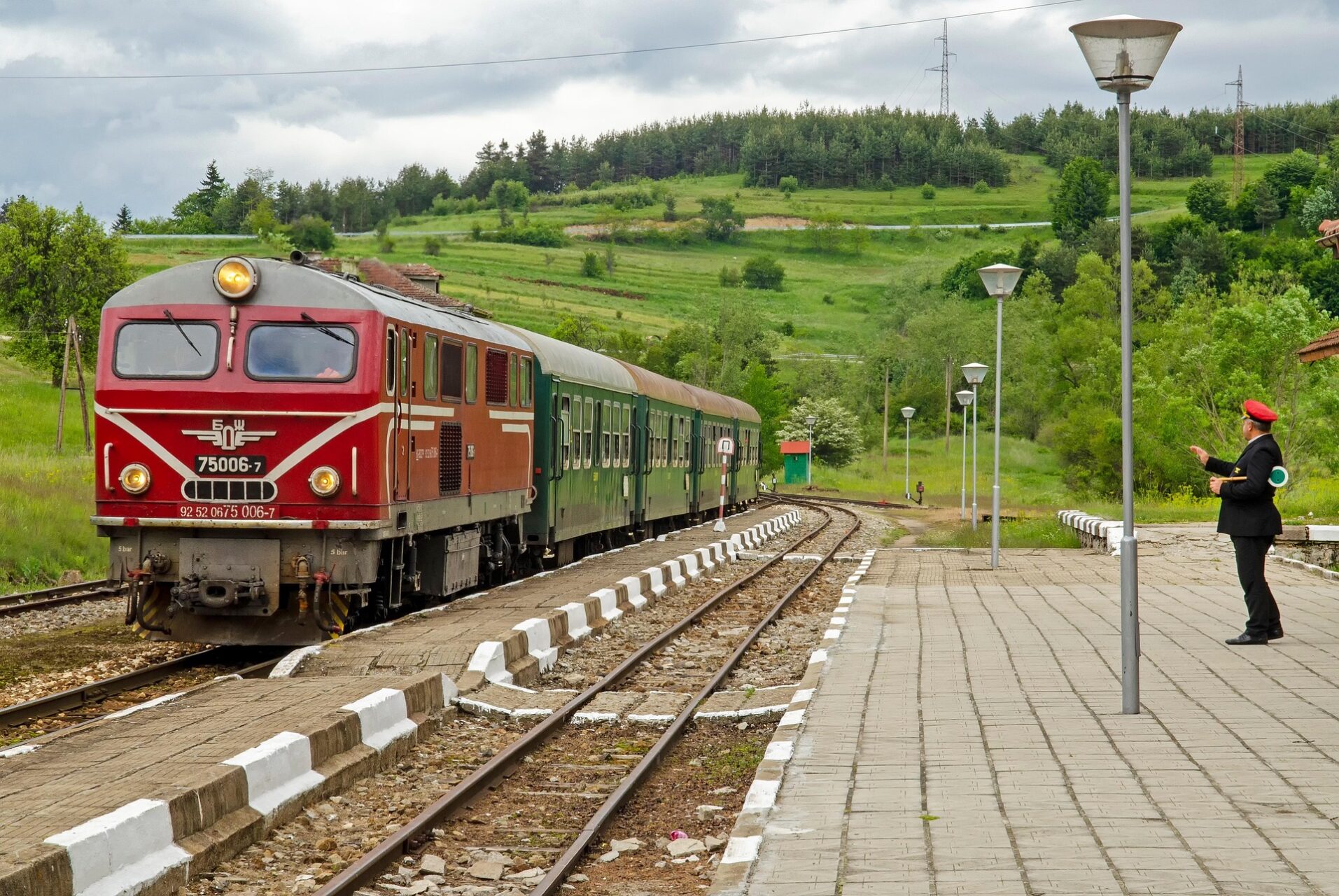
The rail system is divided into several service types. Express and fast trains connect major cities such as Sofia, Plovdiv, Varna, and Burgas, providing the backbone of long-distance travel. Regional trains serve smaller towns and local routes, giving access to areas that are often overlooked by tourists. There are also night trains, which operate on longer routes such as Sofia to Varna or Burgas, with optional sleeper and couchette accommodation available.
While the network is extensive, it is important to understand that it is not as modern or fast as Western European rail systems. Journey times are generally longer, and infrastructure upgrades are still ongoing, particularly along major corridors. However, the trade-off is a network that is affordable, reliable, and capable of reaching most parts of the country.
International connections are available, although they are more limited. Direct trains link Sofia with Bucharest, Belgrade, and Istanbul, typically running once per day. These routes often require reservations, but they provide valuable onward connections for travellers continuing beyond Bulgaria.
Overall, the BDŽ network offers strong national coverage, and the Bulgaria Pass provides unlimited access across it, making it a powerful tool for exploring both popular and lesser-known destinations.
Transport Hubs and Major Routes
Rail travel in Bulgaria is centred around several key transport hubs, which act as gateways to different regions of the country and provide connections to neighbouring nations.
The most important hub is Sofia Central Station, located in the capital. From here, trains run to nearly every part of Bulgaria, including major destinations such as Plovdiv, Varna, Burgas, Ruse, and Veliko Tarnovo, as well as international services to Romania, Serbia, and Turkey. It is the main starting point for most long-distance journeys.
On the Black Sea coast, Varna and Burgas serve as the primary eastern hubs. These cities are particularly busy during the summer months, offering access to beaches and seaside resorts. Trains from Sofia take approximately 6 to 8 hours, but the journey provides a varied and scenic view of the country’s changing landscapes.
Plovdiv is another crucial hub, positioned in central Bulgaria. It connects routes between the capital and both northern and southern regions. From here, travellers can head east towards Stara Zagora and Burgas, or north towards Veliko Tarnovo and Ruse, making it a natural crossroads for rail travel.
Further north, Ruse, located on the Danube River, acts as the main connection point to Bucharest in Romania. In the south, Stara Zagora plays an important role in linking central routes and connecting smaller regional destinations.
Some of the most popular routes for pass holders include Sofia to Plovdiv (around 2.5 to 3 hours), Sofia to Varna (7 to 8 hours), Sofia to Burgas (around 7 hours), Plovdiv to Burgas (4 to 5 hours), and Sofia to Ruse (5 to 6 hours). These routes showcase the range of journeys possible, from short intercity trips to longer cross-country travel.
Example Ticket Prices vs Pass Value
To understand the value of the Interrail Bulgaria Pass, it is important to compare it with the cost of individual train tickets. Bulgaria already has some of the lowest rail fares in Europe, but the savings from a pass can still become significant when taking multiple journeys.
Short routes such as Sofia to Plovdiv typically cost around €6 to €8 (roughly £5 to £7 / $6 to $9), while longer journeys like Sofia to Varna or Sofia to Burgas are usually in the range of €15 to €20 (about £13 to £17 / $16 to $22). International journeys, such as Sofia to Bucharest, often cost around €20 to €25 each way (about £17 to £22 / $22 to $27).
While these prices are low, the real advantage of the pass lies in its flexibility and cumulative savings. For example, a 6-day Youth Pass priced at €89 (about £77 / $96) can quickly pay for itself if you are taking multiple long-distance trips across the country. A typical itinerary including routes such as Sofia to Plovdiv, Sofia to Varna, Sofia to Burgas, Plovdiv to Burgas, Sofia to Ruse, and Sofia to Veliko Tarnovo could easily exceed the cost of the pass when purchased as individual tickets.
Beyond cost, the pass also provides convenience and simplicity. Instead of buying tickets at stations, often with queues and limited English-language support, you can travel freely with a single pass. This is particularly valuable for international travellers who want to avoid friction during their journey.
The value increases further for families, thanks to free child travel, and for senior travellers, who benefit from discounted rates. For budget travellers, the ability to fix transport costs in advance also makes trip planning more predictable and stress-free.

Interrail Bulgaria Pass Prices (Flexi Passes)
The Interrail Bulgaria Pass is one of the lowest-priced passes in the entire Interrail range, which makes it especially attractive for travellers looking to maximise value while exploring multiple destinations.
For 3 travel days within one month, prices start at €50 / £44 / $54 for Youth, €67 / £58 / $72 for Adults, and €60 / £52 / $65 for Seniors. This is ideal for shorter trips where you want to focus on a few key routes without committing to a longer itinerary.
The 4-day option increases slightly to €63 / £55 / $68 for Youth, €84 / £73 / $91 for Adults, and €76 / £66 / $82 for Seniors, offering a bit more flexibility while still keeping costs low.
With 5 travel days, prices rise to €75 / £65 / $81 for Youth, €100 / £87 / $108 for Adults, and €91 / £79 / $98 for Seniors, which suits travellers planning a more varied route across the country.
The 6-day pass, which is often the most popular choice, costs €89 / £77 / $96 for Youth, €118 / £103 / $127 for Adults, and €107 / £93 / $116 for Seniors. This option provides a strong balance between cost and flexibility, allowing you to cover multiple regions without rushing.
For longer trips, the 8-day pass is priced at €113 / £98 / $122 for Youth, €150 / £131 / $162 for Adults, and €135 / £117 / $146 for Seniors, making it possible to explore Bulgaria in depth while still maintaining excellent value compared to Western European passes.
Even a handful of long-distance journeys can quickly match or exceed these prices, which is why the Bulgaria Pass stands out as one of the best-value Interrail options available. The ability to travel flexibly without buying individual tickets further increases its overall value.
How to Buy the Interrail Bulgaria Pass
Buying the Interrail Bulgaria Pass is straightforward, with several options available depending on your preference for convenience or traditional tickets.
The easiest and most reliable method is through the official Interrail website, where you can purchase both mobile and paper passes. Buying online ensures access to the latest pricing and seasonal discounts, which can make the pass even more cost-effective.
The mobile pass is now the preferred option for most travellers. It is delivered instantly and stored in the Rail Planner app, allowing you to activate travel days, manage your itinerary, and present a QR code ticket directly on your phone. This provides a high level of flexibility, particularly if your plans change at short notice.
A paper pass is still available through authorised agents and selected major railway stations, but it is gradually being phased out. It also introduces additional steps, such as delivery or collection, and requires manual date entry for each travel day.
When purchasing your pass, you will need to choose your travel class, your pass duration, and your passenger category based on age. Payment is typically made using card or PayPal, and the process is quick and user-friendly.
Once purchased, the pass must be activated before your first journey. Mobile passes can be activated directly within the app, while paper passes must be validated at a railway station. Buying in advance is recommended so you are fully familiar with how the system works before travelling

Explore Europe by Train with Rail Passes
Travelling by train in Europe can quickly become expensive if you book individual tickets. Rail passes offer a flexible way to travel across one or multiple countries with a single ticket, making it easier to plan your journey.
Rail Europe allows you to compare and buy a wide range of rail passes, including Interrail-style options, helping you choose the best pass for your route and travel style.
Apps for Train Travel
Using the right apps can significantly improve your experience when travelling with the Interrail Bulgaria Pass, helping you plan routes, check schedules, and navigate unfamiliar stations.
The most important app is the Interrail Rail Planner app, which acts as your central travel companion. It stores your mobile pass, generates your QR code ticket, and provides access to timetables across Bulgaria and the wider European network. It also indicates when seat reservations are required, helping you avoid unexpected issues.
For local services, the BDŽ app and website provide timetable information directly from Bulgaria’s national railway operator. While the interface can be basic and English support is sometimes limited, the data is accurate and useful for checking domestic train schedules and platform details.
For cross-border journeys, third-party apps such as Omio and Trainline are helpful for comparing routes and understanding connections beyond Bulgaria. Although they do not sell Interrail passes, they are useful for planning onward travel and checking alternative options.
Navigation apps such as Google Maps and Moovit are essential once you arrive in cities. They help you connect rail journeys with local buses, trams, and walking routes, ensuring a smooth transition from station to destination.
By combining the Rail Planner app with local and navigation tools, you can travel confidently, track your journeys, and adapt plans easily while moving around Bulgaria.
Search flights and useful route combinations for your trip.
View flightsBrowse Airalo eSIM options for convenient travel data.
Check eSIMsCheck private pickup options and plan your onward journey before arrival.
View transfersHow the Bulgaria Pass Works
The Interrail Bulgaria Pass operates as a Flexi Pass, giving you the freedom to choose when and how you travel within a set period.
Once purchased, the pass is valid for one month, during which you can use a selected number of travel days. On each travel day, you can take unlimited train journeys from midnight to midnight, allowing you to move between multiple destinations without additional cost.
This system gives you the flexibility to design your itinerary around your travel style. You can group journeys together for faster exploration, or spread them out to spend more time in each location.
The pass is available in both mobile and paper formats, although the mobile version is now more widely used. With the mobile pass, you activate each travel day within the Rail Planner app and generate a QR code that is checked by conductors during your journey. The paper version requires you to manually fill in travel dates before boarding.
One of the key advantages of the Bulgaria Pass is that most trains do not require reservations. This means you can simply arrive at the station, board the train, and travel without pre-booking. For certain long-distance, overnight, or international routes, reservations may be required, but these are generally low-cost and easy to arrange.
The Bulgarian rail network connects all major cities and many rural areas, making the pass a practical and flexible way to explore the country. From capital cities to coastal resorts and mountain regions, the system is simple to use and offers excellent value for travellers who want freedom without complexity.
Where You Can Travel with the Bulgaria Pass
The Interrail Bulgaria Pass provides access to the entire national rail network, allowing you to travel across cities, towns, and rural regions without needing to purchase individual tickets. This makes it one of the most straightforward ways to explore the country in depth.
The journey typically begins in Sofia, the capital and main rail hub. From here, trains connect to every major region. One of the most popular routes is Sofia to Plovdiv, linking the capital with Bulgaria’s second-largest city in under three hours. Plovdiv is one of the oldest continuously inhabited cities in Europe, known for its Roman amphitheatre and well-preserved Old Town.
Heading east, the network reaches the Black Sea coast, with direct services to Varna and Burgas. These routes are particularly popular during the summer months, offering access to beaches, seaside resorts, and nightlife. Although the journeys can take six to seven hours, they provide a scenic cross-section of the country and are fully covered by the pass.
To the north, Ruse sits on the Danube River and acts as the main gateway to Romania, with rail connections to Bucharest. Other key destinations include Veliko Tarnovo, known for its dramatic hilltop fortress and medieval history, and Stara Zagora, a regional centre with a strong archaeological heritage.
In the southwest, the rail line from Sofia towards Blagoevgrad opens access to the Pirin Mountains, with connections onward to Bansko, one of Bulgaria’s most popular ski resorts. While a short bus connection is required for the final stretch, the rail network still provides the backbone of the journey.
Overall, the pass allows you to move between urban centres, coastal destinations, historic towns, and mountain regions, making it possible to experience the full diversity of Bulgaria within a single trip.
Top Routes and Itineraries with the Bulgaria Pass
The Interrail Bulgaria Pass works well for a wide range of itineraries, whether you are planning a short cultural trip or a longer journey across multiple regions.
A popular route is the Sofia to Plovdiv to Veliko Tarnovo to Ruse circuit, which showcases Bulgaria’s rich history. This itinerary takes you from the capital through Roman ruins, medieval fortresses, and Ottoman-era architecture, before finishing near the Romanian border, where you can continue your journey into Bucharest.
For a summer-focused trip, many travellers combine the capital with the coast. The Sofia to Plovdiv to Burgas route is a favourite, blending city exploration with seaside relaxation. An alternative option is heading to Varna, which combines beaches with archaeological sites and cultural attractions.
Nature-based itineraries are also popular. Using Sofia as a base, you can travel towards the Rila and Pirin mountain ranges, where hiking, skiing, and outdoor activities dominate. Pirin National Park, at the southern end of that range, is a UNESCO World Heritage site. Towns such as Blagoevgrad act as access points for further exploration into these regions.
Another option is a north to south route, for example Ruse to Veliko Tarnovo to Stara Zagora to Burgas, which cuts across different landscapes and provides a more complete view of the country’s geography and culture.
While trains in Bulgaria are generally slower than in Western Europe, this slower pace allows you to take in the scenery and enjoy the journey itself. Longer routes such as Sofia to Varna or Sofia to Burgas can take most of a day, but they offer a relaxed and immersive travel experience that aligns well with the flexibility of the pass.
Seat Reservations and Supplements
One of the key advantages of the Interrail Bulgaria Pass is that most trains do not require seat reservations, allowing for a highly flexible style of travel. In many cases, you can simply arrive at the station, board the train, and present your pass when requested.
There are, however, a few exceptions. Certain long-distance and overnight trains require reservations, particularly if you want access to sleeper or couchette accommodation. These reservations are generally very affordable, often costing just a few euros. For example, a couchette on an overnight train to the coast typically costs around €3 to €5 (about £3 to £4 / $3 to $5), making it a cost-effective way to travel long distances.
For international routes, including services to Romania, Serbia, and Turkey, reservations are usually required. These trains run less frequently, often once per day, so booking in advance helps secure a seat. Reservation costs typically range from €5 to €10 (about £4 to £9 / $5 to $11), depending on the route and service.
Unlike Western Europe, Bulgaria does not operate high-speed trains such as Eurostar or Thalys, which means there are no expensive supplements to worry about. The trade-off is slower journey times, but the benefit is a system that is simple, low-cost, and easy to use.
In practice, the best approach is to combine spontaneous travel on most routes with planned reservations for longer or overnight journeys, ensuring both flexibility and comfort throughout your trip.
Benefits of the Bulgaria Pass
The Interrail Bulgaria Pass offers a number of strong advantages, starting with its outstanding affordability. It is one of the cheapest Interrail passes available, making it highly attractive for budget travellers, students, and backpackers. Even a small number of long-distance journeys can quickly match or exceed the cost of the pass.
Another major benefit is the extensive coverage it provides. With unlimited travel on active days, you can reach major cities, regional towns, and rural areas without needing separate tickets. This makes it easy to combine cultural sightseeing, coastal trips, and mountain exploration within a single itinerary.
The pass also offers a high level of flexibility. On each travel day, you can take multiple journeys without additional cost, allowing you to adapt your plans as you go. This is particularly useful for travellers who prefer a more spontaneous approach to exploring.
Convenience is another key advantage. Instead of navigating ticket offices, often in Bulgarian and with limited English support, you can simply board trains with your pass and travel with minimal hassle. This simplifies the entire process, especially for international visitors.
Finally, the pass encourages deeper exploration. Because travel is already covered, you are more likely to visit lesser-known towns and regions, rather than sticking only to major destinations. This often leads to a more authentic and rewarding travel experience, making the Bulgaria Pass not just a cost-saving tool, but a gateway to discovering the country more fully.
Drawbacks and Limitations
While the Interrail Bulgaria Pass offers excellent value and flexibility, there are a few limitations that travellers should understand before committing.
The most noticeable drawback is journey time. Bulgaria’s rail infrastructure is older and slower than in Western Europe, which means routes can take longer than expected. A journey such as Sofia to Varna can take 7 to 8 hours, despite the relatively modest distance. For travellers on tight schedules, this slower pace can limit how much ground you can realistically cover.
Another factor is train frequency. Major routes like Sofia to Plovdiv run regularly, but services to smaller towns and rural areas can be less frequent. This makes planning more important, especially if you are trying to complete return trips within the same day.
Comfort levels can also vary. While some trains have been modernised, many still use older rolling stock, which can feel basic. Air conditioning is not guaranteed, and delays can occasionally occur. Travellers expecting the standards of Western European rail travel may need to adjust expectations.
It is also important to note that the pass covers trains only. In some parts of Bulgaria, particularly in mountain regions or smaller towns, buses are often faster and more practical. This means you may need to combine train and bus travel to reach certain destinations.
Finally, while international connections exist, they are limited in frequency, often running just once per day. Routes to Romania, Serbia, and Turkey are useful, but they do not offer the same level of flexibility as rail networks in more central parts of Europe.
Despite these limitations, the pass remains a strong option for travellers who prioritise affordability, flexibility, and cultural experience over speed and modern comfort.
Browse hostels and budget-friendly stays around Bulgaria.
See hostelsFlying to Bulgaria? Get fast compensation payouts, eligible lounge benefits and expert help when flights go wrong.
See AirHelp+ benefitsArriving before check-in or leaving later? Store your luggage and make more of your time in Bulgaria.
Store your bagsWho the Pass is Best For
The Interrail Bulgaria Pass is best suited to travellers who value flexibility, affordability, and a more relaxed pace of travel.
It is particularly appealing to budget travellers and backpackers, who can take advantage of the low pass prices to move between destinations without worrying about individual ticket costs. This makes it easier to explore multiple regions while keeping overall expenses under control.
The pass is also ideal for students and long-term travellers. With travel days spread across a month, you can spend several days in one location before moving on, creating a more flexible and immersive itinerary. This suits travellers who prefer to explore slowly rather than rush between cities.
Families can also benefit, especially because children under 12 travel free with an adult. This makes multi-stop trips more affordable, particularly during peak travel periods such as summer holidays when coastal destinations are in high demand.
For senior travellers, the pass offers both discounted pricing and simplicity. The ability to travel with one ticket, without needing to navigate booking systems or language barriers, makes the experience far more straightforward.
Finally, the pass is well suited to cultural travellers who are interested in history, architecture, and local traditions. With unlimited travel on selected days, it becomes much easier to combine UNESCO sites, historic towns, and lesser-known regions into a single, well-rounded trip.
Tips for Using the Bulgaria Pass
To get the most out of the Interrail Bulgaria Pass, it is important to balance flexibility with a small amount of planning.
Checking timetables in advance is essential, especially on routes with fewer daily services. While the pass allows spontaneous travel, knowing departure times helps avoid unnecessary waiting or missed connections.
Using travel days strategically can significantly improve value. Because trains are slower, longer journeys often take up most of a day, so it makes sense to dedicate full travel days to major routes, while saving shorter journeys for days when you can combine multiple trips.
Being prepared for older trains will make your journey more comfortable. Bringing water, snacks, and entertainment is particularly useful on longer routes, especially when travelling to the coast or across the country.
In many cases, combining train and bus travel is the most efficient way to explore. While the pass covers trains, Bulgaria’s bus network often provides faster connections to certain destinations, particularly in mountainous regions.
Overnight trains are another useful option. Paying a small supplement for a couchette or sleeper can save on accommodation costs while allowing you to travel longer distances efficiently.
It is also sensible to carry some cash in euros, as smaller stations or reservation desks may not always accept cards. Finally, learning a few basic Cyrillic characters can make navigating station signs and timetables much easier, particularly outside major cities.
Apps for Train Travel in Bulgaria
Using the right apps can transform your experience when travelling with the Interrail Bulgaria Pass, making it easier to plan journeys, check schedules, and stay connected on the move.
The most important tool is the Interrail Rail Planner app, which acts as your primary travel companion. It stores your mobile pass, generates your QR code ticket, and provides access to train timetables across Bulgaria and Europe, even when offline. It also highlights when reservations are required, helping you avoid unexpected issues.
For domestic travel, the BDŽ Passenger app and website provide timetable information directly from Bulgaria’s national railway operator. While the interface can be basic and English support limited, it offers accurate and up-to-date information on train schedules and services.
For planning journeys beyond Bulgaria, apps such as Trainline and Omio are useful for comparing international routes and checking connections to neighbouring countries. Although they do not sell Interrail passes, they help you visualise routes and understand travel options across borders.
Navigation apps such as Google Maps and Moovit are essential once you arrive in cities. They allow you to connect your rail journey with local transport systems, including buses, trams, and walking routes, ensuring a smooth end-to-end journey.
For connectivity, using an eSIM app such as Airalo ensures reliable mobile data across Bulgaria, allowing you to check schedules, update plans, and stay connected throughout your trip.
By combining these tools, you can travel with confidence, adapt plans easily, and make full use of the flexibility offered by the Bulgaria Pass.

Rupert’s Handy Travel Tips
Rupert’s travelled across Bulgaria more times than he can count, and he’s learned that taking the train here is less about speed and more about enjoying the journey.
- Allow more time than you think: trains are reliable but slower, so don’t plan tight connections.
- Pick window seats on long routes: the scenery between Sofia and the coast is one of the highlights.
- Carry snacks and water: onboard services are limited on many trains.
- Use night trains where possible: a cheap couchette can save both time and a night’s accommodation.
- Don’t rely on English everywhere: having your destination written down can save confusion at stations.
Want to meet the reindeer behind our travel tips? Find out more in our page Who is Rupert?.


Frequently Asked Questions about the Interrail Bulgaria Pass
Do I need seat reservations in Bulgaria?
Most trains don’t require reservations, but night trains and some international routes do. Reservations are inexpensive and can be arranged at stations.
Is the Bulgaria Pass cheaper than buying individual tickets?
For just one or two journeys, single tickets may be cheaper. But if you plan multiple trips or want flexibility, the pass usually offers better value.
Does the pass cover buses and trams?
No. The pass is valid on trains operated by BDŽ. City transport such as trams, metros, and buses require separate tickets.
Can I use the pass for international trains?
Yes, the pass covers cross-border trains to Romania, Serbia, and Turkey, but these services usually require reservations and small supplements.
Can children travel free with the pass?
Yes. Up to two children under 12 travel free when accompanied by an adult with a valid pass.
Further Reading & Related App Guides
Travelling across Bulgaria with an Interrail Pass becomes even more rewarding when you use Sofia as your starting point. Before setting off, explore our Things to Do in Sofia guide to discover the capital’s Roman ruins, cathedrals, museums and mountain scenery. If you’re looking to venture beyond the city, our Day Trips from Sofia guide covers destinations including Rila Monastery, Plovdiv, Koprivshtitsa and the spectacular Iskar Gorge, many of which are easily reached by train.
Rail travellers should also read our Night Trains from Sofia guide, which covers overnight services to Varna, Burgas, Dobrich, Silistra and Istanbul, helping you make the most of your Interrail pass. If you’re arriving in Bulgaria by air, our Sofia Airport Transfers Guide explains the easiest ways to travel between the airport, city centre and railway station.
For wider route planning across Europe, visit our Interrail Guide, where you’ll find advice on passes, reservations, route planning and international rail travel. Finally, before crossing borders or travelling through rural areas, make sure you’re connected by comparing the latest options in our eSIM Guide, helping you stay online throughout your Bulgarian rail adventure.











