Reviewed by our editorial team Updated
Riga sits on the Daugava River close to the Baltic Sea, and for a growing number of travellers the first Latvian ground they touch is not the airport but the deck of a cruise ship. The city’s cruise business has expanded rapidly over the past few years, while the older idea of arriving by scheduled passenger ferry has quietly gone the other way, with the once-familiar overnight crossing to Stockholm still not running as of September 2026. This guide brings both sides of that story into one place, since asking about “ferries from Riga” and asking about “Riga as a cruise port” increasingly leads to the same honest answer.
The bulk of what follows covers Riga as a working cruise destination: the passenger terminal itself, how many ships actually call each season, which cruise lines and itineraries bring travellers here, and the practical business of getting from the gangway into the Old Town and back before the ship sails. Riga has become a genuine fixture on Baltic capitals cruises alongside Stockholm, Helsinki and Tallinn, and 2026 is shaping up to be one of its busiest seasons yet.
Where this guide differs from a typical port page is in addressing the ferry question directly rather than skipping past it. The Stockholm route has been suspended since 2020, and while Latvian officials and Tallink restarted talks in 2026, nothing concrete has been confirmed. Rather than pad out a section pretending otherwise, this page explains exactly what has and has not happened, verified against sources from earlier this year, before returning to the cruise details that make up most of a visit to Riga by sea today.
Riga’s Cruise Port and Ferry Situation at a Glance
The table below summarises where things genuinely stand in September 2026, before the detailed sections that follow cover each part in full.
| Route or Service | Status | Detail |
|---|---|---|
| Riga Passenger Terminal (cruise) | Fully operating | Eksporta iela, roughly 0.5-0.6km from Old Town |
| Cruise ship calls, 2026 | Active, record season | 100 vessels confirmed, 23 operators |
| Riga – Stockholm ferry (Tallink) | Suspended since 2020 | Talks resumed July 2026, no restart date |
| Riga – Helsinki ferry | Does not operate | No direct sailing currently exists |
| Liepāja – Travemünde ferry (Stena Line) | Operates, different port | Departs Liepāja, not Riga |
The Riga Passenger Terminal: Location, History and Facilities
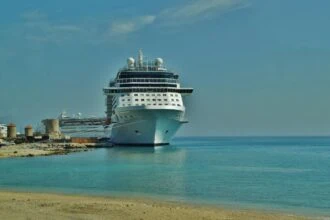
The Riga Passenger Terminal sits on Eksporta iela in the Andrejsala district, a former industrial dockside area that has been steadily redeveloped over the past two decades. Its location puts it firmly inside the city rather than at a remote industrial port, which is unusual among Baltic capitals and one of Riga’s genuine advantages for cruise passengers.
The terminal building itself dates back to the Soviet era and has been renovated in stages rather than replaced outright, so facilities are functional rather than flashy compared with some newer Scandinavian terminals. Inside, arriving passengers find a waiting hall, currency exchange, basic retail and a taxi stand, with clear signage in both Latvian and English throughout.
A separate, more modern terminal for the Stockholm ferry route once operated from the same general area, and this building has sat largely unused since the route’s suspension in 2020. Plans for a new passenger terminal at Andrejsala, roughly two kilometres from the current cruise facility, have been discussed publicly by the Freeport of Riga Authority and a private investor, though no firm construction timeline exists as of September 2026.
For cruise operations specifically, the existing facility handles the volume without major bottlenecks, since ships dock, discharge passengers and depart within a single day for the vast majority of calls. The Freeport of Riga Authority, which manages the terminal and the wider port, publishes official passenger information for anyone wanting more detail than a general guide can cover.
Ground transport options cluster close to the gangway rather than requiring a long walk through the port itself, which matters for anyone with limited mobility or a tight shore-day schedule. Buses laid on for shore excursions, private taxis and the walking route into Old Town all begin from broadly the same point outside the terminal building.
Best if you want daily housekeeping and a front desk. Filter by area first, then by price.
Check availabilityBest for families, or any stay past about four nights. A kitchen and a washing machine start paying for themselves.
Browse rentalsBest if you have already picked a hotel. Checks the big booking sites for the same room and shows who is cheapest.
Check dealsA Record-Breaking Cruise Season: How Many Ships Actually Call Here
Riga’s cruise numbers have grown substantially in recent years, and 2025 set a genuine record for the port. According to the Freeport of Riga Authority, 85 cruise ships called at the city that year, carrying a combined 115,500 passengers, the highest annual total in the port’s history.
That growth has continued rather than plateaued, with 100 cruise vessels confirmed for the 2026 season from 23 different cruise operators, according to the Freeport’s own figures. The rise reflects a wider trend across the Baltic, where capitals such as Riga are increasingly built into longer regional itineraries rather than treated as optional add-ons.
Of the 2026 calls, 13 are scheduled as overnight stays, meaning the ship remains docked overnight rather than departing the same evening, and six operators are visiting Riga for the first time. Both figures matter for the city’s tourism economy, since an overnight call effectively doubles the time passengers spend ashore compared with a standard single-day stop.
Riga’s own municipal government has actively courted this growth, working alongside the Freeport Authority to market the city to cruise lines planning Baltic itineraries several years in advance. That coordinated approach is part of why a relatively compact capital has managed to attract a season on this scale.
For travellers weighing up whether Riga is a genuine cruise destination or a minor stop tacked onto a bigger itinerary, these numbers answer the question plainly. A port handling 100 ship calls and well over 100,000 passengers in a single season is a firmly established fixture on the Baltic cruise map rather than a niche curiosity.
Which Cruise Lines and Ships Sail to Riga
A broad mix of operators now includes Riga on their Baltic itineraries, spanning mainstream mass-market lines through to smaller, more specialist ships. Norwegian Cruise Line, MSC Cruises and TUI Cruises are among the larger operators with regular 2026 calls, bringing ships that carry several thousand passengers at a time.
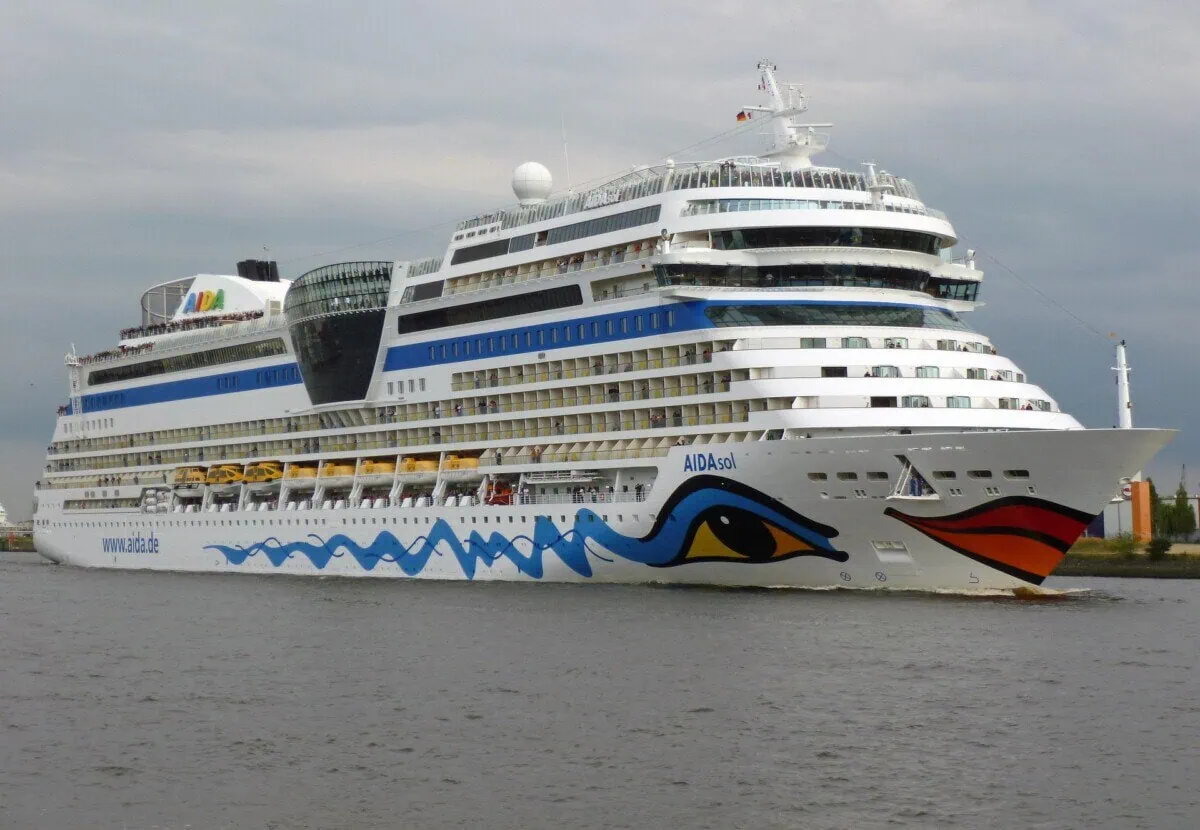
AIDA Cruises returned to Riga for the 2026 season after a five-year absence, a notable comeback linked to the port’s improved facilities and growing profile. Holland America Line and Phoenix Reisen also feature among the season’s confirmed operators, reflecting demand from both American and German-speaking passenger markets.
Smaller and more specialist operators round out the season alongside the bigger mainstream names, giving Riga a genuinely varied mix rather than relying on one or two dominant brands. This diversity helps explain the six first-time operators calling in 2026, since Riga’s reputation has clearly spread beyond the cruise lines that already knew the port well.
Ship sizes vary considerably across this mix, from mid-size vessels carrying a few hundred passengers up to significantly larger ships, and the Freeport of Riga confirmed hosting the largest cruise ship in the port’s history during the 2026 season. That milestone call attracted local media attention and underlined how far the port’s capacity has developed to accommodate genuinely large modern vessels.
For independent travellers researching which cruise to book rather than simply arriving on one, checking a specific line’s 2026 Baltic itinerary directly against Riga’s confirmed call list is worth doing before assuming a sailing includes the city. Not every Baltic cruise calls at every capital, and Riga, while increasingly common, is not yet universal across the market.
From Ship to Old Town: Getting Into the City
One of Riga’s biggest advantages as a cruise port is sheer proximity, since the terminal sits roughly 0.5 to 0.6 kilometres from the edge of the Old Town, a genuinely short distance by cruise port standards. Most passengers can comfortably walk the route in around seven to ten minutes, crossing the Daugava via the striking Vanšu Bridge on the way.
That walking route is flat, well paved and easy to follow without a map, running along the riverside before crossing into the historic core near the National Library and on toward the Old Town’s medieval streets. For passengers who prefer not to walk, or who are travelling with limited mobility, a taxi rank sits directly outside the terminal building.
A metered taxi into the centre typically costs somewhere around €5-10 (roughly £4-9/$6-12) for the short hop, given how close the terminal already sits to the centre. Ride-hailing apps, principally Bolt since Uber does not operate in Latvia, offer a similar journey for around €4-8 (roughly £3-7/$5-9), with the fare shown upfront before booking.
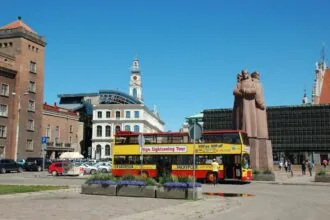
Hop-on hop-off bus tours also serve the cruise terminal on many sailing days, offering a slower but more comprehensive loop around the wider city for passengers who want to cover more ground than a walk to the Old Town alone allows. A typical day pass runs to roughly €20 (approximately £17/$23), which is worth weighing against simply walking if the Old Town itself is the main priority.
Because the walk is so manageable, many cruise passengers skip organised transport altogether and simply follow the riverside path into the centre on foot, especially on a clear day. Anyone doing so should keep a rough return time in mind, since the same walk back to the terminal takes just as long and it is easy to lose track of time once inside the Old Town’s narrow streets.
Making the Most of a Single Day in Port
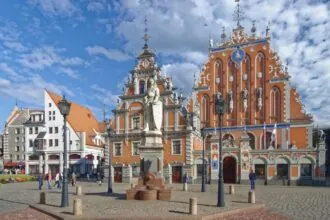
Most cruise calls at Riga last a single day, so knowing which sights genuinely fit into a few hours ashore matters more than trying to see everything the city offers. The UNESCO-listed Old Town sits closest to the terminal and rewards even a short visit, with the House of the Blackheads, St Peter’s Church and the Three Brothers all within easy walking distance of each other.
For passengers with a little more time, Riga’s celebrated Art Nouveau district along Alberta iela and nearby streets is a short tram or taxi ride from the Old Town and showcases some of the finest Jugendstil architecture anywhere in Europe. The ornate facades here are dramatically different in style from the Old Town’s medieval streets, and many first-time visitors find the contrast genuinely striking.
Riga Central Market, housed in a set of former Zeppelin hangars, sits between the terminal and the Old Town and offers a fast, authentic taste of Latvian food culture for anyone with an hour to spare. It is one of Europe’s largest markets and works well as either a standalone stop or a quick detour on the walk in or out of the centre.
Travellers who prefer a structured itinerary rather than improvising on the day can also book a guided shore excursion in advance, and one verified option pitched specifically at cruise passengers with limited time ashore covers Old Riga’s key sights in about three hours. Booking ahead removes any uncertainty about fitting the outing safely within the ship’s departure window.
Whichever combination of sights is chosen, building in a buffer of at least 30-45 minutes before the ship’s all-aboard time is sensible, since the walk back to the terminal, while short, still takes real time after a full day exploring. Old Town’s cobbled streets and narrow lanes are easy to lose track of time in, and missing an all-aboard call is a genuinely serious problem rather than a minor inconvenience.
Overnight Calls: When Your Ship Stays Longer
While most cruise calls at Riga last a single day, the 2026 season includes 13 scheduled overnight stays, where the ship remains docked through the night rather than sailing the same evening. For passengers on one of these calls, an overnight stop effectively doubles the practical time available to explore the city compared with a standard day visit.
An overnight stay opens up options a single afternoon simply cannot accommodate, including a proper evening meal in one of Riga’s restaurants, a visit to the Latvian National Opera, or simply wandering the Old Town’s atmospheric streets once the day-trip crowds have thinned. Riga’s Old Town takes on a noticeably different character after dark, with warmly lit facades and quieter cobbled lanes.
Overnight calls also make day trips slightly further afield genuinely feasible, since passengers are not racing an evening departure. Jūrmala, the seaside resort town roughly 25 minutes from the centre, becomes a realistic half-day addition when the ship is not sailing until the following day.
Cruise lines scheduling an overnight in Riga typically do so deliberately, recognising that the city rewards a longer stay more than a rushed single afternoon does. Passengers booking a specific sailing who want this extra time should check the itinerary carefully, since not every Riga call includes an overnight stop and the difference matters considerably for planning purposes.
Practically speaking, an overnight call changes very little about getting ashore itself, since the terminal, walking route and transport options all work exactly the same as on a standard day call. The only real difference is the freedom to plan an evening in the city without watching the clock quite so closely.
Riga’s Place in Baltic Capitals Cruise Itineraries
Riga rarely appears as a cruise destination in isolation, and it is instead almost always built into a wider Baltic capitals itinerary alongside a rotating selection of Stockholm, Helsinki, Tallinn and, depending on the operator, Gdańsk or a St Petersburg-focused leg. These itineraries typically run seven to fourteen nights, starting and ending in a major Northern European hub such as Copenhagen or Stockholm.
Within that pattern, Riga usually sits alongside Tallinn as one of the two Baltic states capitals included, since both cities offer compact, walkable historic cores that suit a single-day call well. Ships often visit the two within a day or two of each other, giving passengers a useful point of comparison between Estonia and Latvia’s respective old towns.
The wider itinerary context matters when choosing a specific cruise, since some operators favour a Scandinavia-heavy route with only a brief Baltic states component, while others build a genuinely balanced itinerary giving Riga and Tallinn equal billing alongside the bigger Nordic capitals. Checking a specific sailing’s full port list before booking avoids any disappointment about how much time is spent where.
Riga’s growing profile within these itineraries reflects a broader shift in Baltic cruising toward genuinely regional routes rather than routes anchored almost entirely around Scandinavia with the Baltic states as an afterthought. The six cruise operators calling at Riga for the first time in 2026 are part of that same shift.
For travellers specifically prioritising Riga over other Baltic ports, checking whether a sailing includes an overnight stay here, as roughly one in eight 2026 calls does, is worth doing before comparing prices across similar-looking itineraries. The extra evening ashore can be the deciding factor between two otherwise comparable cruises.
Best for finding routes the airlines do not sell as a single ticket. Combines carriers to bring the fare down.
Search flightsBest for short trips. Install the eSIM at home and arrive with working data, no shop queue.
Browse eSIMsBest after a long flight or a late landing. Price agreed before you travel, and no taxi queue.
Check transfersIs There a Passenger Ferry from Riga? The Honest Answer
The honest answer, as of September 2026, is no. There is currently no operating passenger ferry route from Riga to anywhere, a situation that surprises many travellers who remember or have read about the long-running overnight service to Stockholm.
That Stockholm route, historically operated by Tallink, has been suspended since 2020, when the COVID-19 pandemic halted the service along with much of Europe’s passenger ferry network. Unlike many routes elsewhere that resumed once travel restrictions lifted, the Riga-Stockholm crossing simply never restarted, and it remains suspended six years later with no confirmed resumption date.
It is also worth ruling out a route that some ferry comparison sites list inaccurately: there is no direct ferry between Riga and Helsinki either, despite occasionally appearing in search results or aggregator listings. Genuine ferry connections to Helsinki exist from Tallinn, not Riga, and travellers should not plan a trip around a Riga-Helsinki sailing that does not exist.
The one route that does operate from Latvia to Germany, run by Stena Line between Liepāja and Travemünde, is not a Riga service at all. Liepāja sits on Latvia’s western coast, roughly 200 kilometres from Riga by road, making it a separate journey entirely rather than a practical alternative for anyone starting in the capital.
This page addresses the ferry question directly rather than skipping past it, because pretending a route exists when it does not wastes a traveller’s time and, at worst, sends someone to a terminal expecting a sailing that will not happen. The sections that follow explain why the Stockholm route stopped and what, if anything, might change that in the coming years.
Why the Stockholm Route Stopped and Whether It’s Coming Back
The Riga-Stockholm ferry’s suspension traces directly back to 2020, when pandemic travel restrictions made the overnight crossing commercially unviable almost overnight. Tallink, the Estonian shipping company that operated the route, redirected its vessels to other, busier Baltic crossings rather than continue running an empty ship between Latvia and Sweden.
Unlike some suspended routes that quietly resumed once restrictions eased, this one stayed shelved, and by early 2026 Latvian officials were still discussing the route’s future rather than its return. In January 2026, Riga city council head Viesturs Kleinbergs confirmed that plans to restart the service that year had again been shelved, stating plainly that it would “definitely not happen in April” as had earlier been suggested.
A recurring sticking point has been terminal infrastructure. The purpose-built ferry terminal the route once used sits close to the current cruise facility but needs renovation estimated at somewhere between €500,000-1,000,000 (roughly £430,000-860,000/$585,000-1,170,000), and the building itself is privately owned, complicating negotiations between the city, the port authority and the owner.
A longer-term solution is also on the table: a new passenger terminal at Andrejsala, roughly two kilometres from the existing facility, backed by a private investor working alongside the Freeport of Riga Authority. Kleinbergs has been careful not to attach a completion date to that project, saying he would “definitely not name any specific years” when asked directly.
There is, however, genuine movement rather than total silence. Talks resumed in July 2026 between Latvia’s Economics Minister Viktors Valainis and Tallink Grupp’s CEO Peep Jalakas, with both sides describing “significant progress” toward restoring both passenger and cargo ferry service. No restart date has resulted from those talks, and as things stand the route remains a genuine possibility rather than a certainty.
Getting Between Riga and Stockholm Without a Ferry
With the direct ferry suspended, travellers wanting to move between Riga and Stockholm today have two realistic options, and the fastest by far is flying. airBaltic, the Latvian flag carrier based at Riga Airport, operates direct flights on this route, with a flight time of roughly one to one and a half hours compared with the old ferry’s overnight crossing.
For travellers specifically wanting a sea crossing as part of the journey rather than simply the fastest route, an indirect option exists via Tallinn. Tallink Silja continues to operate its well-established overnight ferry between Tallinn and Stockholm, so travellers can cover the Riga-Tallinn leg by bus or train, roughly four to five hours, before joining that still-running Stockholm crossing.
This indirect route inevitably takes considerably longer than either flying directly or the old Riga-Stockholm ferry once did, so it suits travellers building a broader multi-stop Baltic itinerary rather than anyone simply trying to get from A to B efficiently. Our own Ferry Routes from Tallinn guide covers that Stockholm crossing, along with Tallinn’s other genuine ferry connections, in full detail.
For business travellers or anyone prioritising speed, flying remains overwhelmingly the more practical choice, and multiple daily rotations between the two cities mean schedules are flexible without much advance planning required. Fares vary considerably by how far ahead a ticket is booked, following the pattern typical of any short-haul European route rather than anything specific to this city pair.
None of these alternatives fully replicates what the old overnight ferry offered, namely a genuine sea crossing that doubled as low-cost accommodation for the night, and that gap is precisely why some Latvian officials continue pushing to restore the direct service. Until that happens, flying or routing via Tallinn remain the only practical ways to make this specific journey.
The Freeport of Riga: A Working Port Beyond Cruise Ships
It is easy to think of Riga’s port purely in terms of the cruise terminal, but the Freeport of Riga is, first and foremost, one of the busiest commercial ports on the Baltic Sea, handling cargo ranging from containers and timber to grain and coal. Cruise operations, while highly visible to visitors, represent only a small part of the port’s overall activity.
The Freeport is managed by the Freeport of Riga Authority, a public body responsible for the port’s various terminals, infrastructure investment and long-term development, including the passenger and cruise facilities covered throughout this guide. Its remit stretches well beyond passenger traffic into freight logistics and shipping infrastructure, including the proposed new Andrejsala passenger facility discussed earlier in this guide.
This dual identity, as both a working freight port and a growing cruise destination, shapes some of the practical details passengers encounter, including why the passenger terminal sits where it does and why a purpose-built ferry terminal exists separately from the cruise facility. Cargo operations and passenger operations are kept physically distinct within the wider port area for safety and logistical reasons.
For readers wanting the most current, official information on passenger services, sailing schedules or terminal developments, the Freeport of Riga Authority publishes updates directly through its own passenger information page, which is a more reliable source than third-party aggregators for anything time-sensitive such as a ferry restart announcement. This guide has been checked against that source and current 2026 news reporting rather than older assumptions.
Understanding the port’s wider commercial role also explains why the city has continued investing in cruise infrastructure even while the passenger ferry situation remains unresolved, since the two are managed as genuinely separate strands of the same authority’s strategy. Cruise tourism has grown steadily even as the ferry question sits unanswered, which is precisely the split this page has tried to reflect honestly throughout.
Practical Tips for Passengers Ashore
Latvia uses the euro (EUR) as its currency, so cruise passengers arriving from Sweden, Denmark or the UK should expect a currency switch rather than assuming their home currency will be accepted anywhere in the city. Card payments are near-universal across Riga, including in the Old Town’s cafes, shops and market stalls, so carrying large amounts of cash is rarely necessary.
Bolt is the dominant ride-hailing app throughout Latvia and works reliably for short hops between the terminal and anywhere in the city centre, while Uber does not operate in the country at all. Downloading Bolt and creating an account before a cruise call, rather than trying to do so on unfamiliar terminal WiFi, saves time if a taxi rank queue looks long.
English is widely spoken across Riga’s tourist areas, particularly among younger residents and anyone working in hospitality, so language rarely presents a genuine barrier for cruise passengers exploring independently. Basic Latvian phrases are appreciated but not remotely necessary for a smooth day ashore.
Mobile roaming for EU/EEA visitors works seamlessly under standard “roam like at home” rules, but passengers from the UK, US or elsewhere outside the EU should check their carrier’s rates before relying heavily on data, since terminal WiFi alone is rarely sufficient for navigation. A short-term travel eSIM is a straightforward workaround for anyone wanting reliable data without hunting for a local SIM card during a brief call.
Weather in Riga can shift quickly even within a single cruise season, so checking the forecast the morning of arrival rather than relying on a general seasonal assumption is worth the two minutes it takes. A light rain layer is a sensible addition to any daypack regardless of the month, given the city’s proximity to open Baltic waters.
Finally, keeping the ship’s all-aboard time visible on a phone or written down, along with the terminal’s exact name and address for a taxi driver, removes one of the few genuine risks of an independent day ashore. Cruise lines are generally unforgiving about missed departures, so building in a comfortable buffer matters more than shaving a few extra minutes off a day in port.
When Riga’s Cruise Season Runs and What to Expect from the Weather
Riga’s cruise season follows the broader Baltic pattern, running roughly from April through October, with the busiest months for ship calls typically falling across June, July and August. Outside that window, ice risk and reduced daylight make Baltic Sea cruising largely impractical, so travellers will not find winter sailings calling at the city.
Summer brings Riga’s most reliable weather for a day ashore, with average highs typically in the low-to-mid twenties Celsius and long daylight hours thanks to the city’s northern latitude. Rain remains possible even in peak summer, though it tends to arrive as short showers rather than prolonged wet spells that would spoil a shore excursion entirely.
Shoulder-season calls in April, May, September and October bring noticeably cooler temperatures, often in single figures Celsius at either end of the season, along with a higher chance of persistent rain. Passengers on early or late-season sailings should pack layers rather than relying purely on a summer wardrobe, since Baltic weather this far north can turn quickly regardless of the calendar date.
The port’s own operational data reflects this seasonal pattern clearly, with the 2026 season’s confirmed calls concentrated across the warmer months rather than spread evenly through the year. This concentration is exactly why the record 2025 season and the confirmed 2026 growth both represent a genuinely compressed summer surge rather than steady year-round traffic.
For travellers with some flexibility over which sailing to book, June and early July tend to offer the best balance of reliable weather and slightly thinner crowds compared with the peak of late July and August, when several ships can be in port on the same day. Checking a specific sailing date against Riga’s known busy periods is worth doing before finalising a booking.
Best if you would rather spend the money on the trip than on the room. Compare hostels by location and rating.
Search hostelsBest for anyone flying more than once or twice a year. Handles the compensation claim so you are not chasing the airline.
See AirHelp+Best for a day with a suitcase and nowhere to put it. Find a storage point near where you already are.
View storageCombining a Cruise Call with a Longer Stay in Latvia
Some travellers use a Riga cruise call as an introduction to the city before returning independently for a longer stay, while others extend a cruise itinerary with pre- or post-cruise nights in Riga itself. Both approaches are increasingly common, given how much Riga and the wider Latvian coast reward more than a single rushed afternoon.
Anyone planning to stay in Riga before or after a cruise should note that the city’s airport, RIX, sits around 10 kilometres from the centre and has no rail link, meaning bus, taxi or ride-hailing remain the only practical transfer options for now. Our Riga Airport Transfers guide covers every route in detail for travellers flying in independently around their cruise dates.
For visitors extending their stay, Riga’s Old Town, Art Nouveau district and Central Market, covered briefly in the single-day-in-port section above, only scratch the surface of what the city offers with more time, and a proper multi-day visit opens up museums, riverside walks and neighbourhoods that a rushed shore excursion simply cannot fit in. Our full Things to Do in Riga guide covers the city in considerably more depth.
Travellers building a longer Baltic itinerary around a Riga stay, rather than a single cruise call, may also find rail travel useful for onward journeys within Latvia and the wider region, particularly as Rail Baltica’s high-speed line continues under construction. Our Interrail Latvia Pass guide explains how current rail options within Latvia work while that larger project remains unfinished.
Whichever approach is taken, extending a visit beyond the cruise ship’s own schedule is generally the only way to properly experience Riga’s evening atmosphere, since even an overnight call, covered earlier in this guide, cannot fully replace a night or two spent in the city with no ship departure time to plan around.
Accessibility at the Cruise Terminal
The Riga Passenger Terminal is largely single-level and step-free at its core, which generally makes moving from the gangway through to the waiting hall, taxi stand and shore excursion meeting points manageable for passengers with reduced mobility. Cruise lines typically coordinate directly with the terminal for any passenger requiring particular assistance during disembarkation.
The short walking route into Old Town, while genuinely convenient for most passengers, does involve some uneven paving once inside the historic core itself, where cobbled streets are common throughout the medieval centre. Travellers with mobility concerns may prefer a taxi or Bolt for at least the return leg, even if the outbound walk feels manageable.
Wheelchair-accessible taxis can generally be arranged with advance notice through the terminal or a chosen shore excursion operator, and cruise lines running organised tours typically offer at least one accessible coach option on busier call days. Confirming specific accessibility needs directly with the cruise line before travel remains the most reliable way to ensure suitable transport is available on arrival.
Signage throughout the terminal building appears in both Latvian and English, and staff are generally well accustomed to helping cruise passengers who may only be ashore for a few hours and need quick, clear directions. This is particularly useful for anyone navigating independently rather than as part of an organised shore excursion group.
For passengers with specific accessibility requirements, contacting the Freeport of Riga Authority or the relevant cruise line directly in advance of the sailing date is generally more reliable than relying solely on general guidance, since facilities and available support can vary depending on which specific berth a ship is assigned within the wider terminal area.

Rupert’s Handy Travel Tips
Riga’s cruise season is booming while its old ferry route stays stuck in limbo, so knowing which bit of that story applies to your trip saves any confusion at the terminal.
- Walk if you can: it’s only 7-10 minutes over the Vanšu Bridge to Old Town, so save the taxi fare unless you’re genuinely pushed for time.
- Don’t go looking for the Stockholm ferry: it’s been suspended since 2020, so fly via airBaltic or route through Tallinn instead.
- Download Bolt before you land: Uber doesn’t work in Latvia at all, and Bolt shows your fare before you confirm.
- Check for an overnight call: roughly one in eight 2026 sailings stays docked overnight, which is worth knowing when comparing itineraries.
- Set a return alarm: the walk back to the terminal is short, but it’s easy to lose track of time in Old Town’s cobbled lanes.
- Pack a light rain layer whatever the month: Riga’s Baltic weather can turn quickly even in peak summer.
Want to meet the reindeer behind our travel tips? Find out more in our page Who is Rupert?.




Frequently Asked Questions About Riga’s Cruise Port and Ferries
Is there currently a ferry from Riga to Stockholm?
No. The Tallink-operated route has been suspended since 2020, and while talks between Latvian officials and Tallink resumed in July 2026, no restart date has been confirmed.
Does a ferry run between Riga and Helsinki?
No. Despite appearing on some ferry comparison sites, there is no direct sailing between Riga and Helsinki currently in operation.
How many cruise ships call at Riga each year?
The Freeport of Riga confirmed 100 cruise ship calls for the 2026 season from 23 operators, following a record 85 calls and 115,500 passengers in 2025.
How far is the cruise terminal from Riga Old Town?
Around 0.5-0.6 kilometres, roughly a 7-10 minute walk across the Vanšu Bridge, making it one of the more central cruise terminals in the Baltic region.
Can I fly directly between Riga and Stockholm instead of taking a ferry?
Yes. airBaltic operates direct flights on the route, taking roughly one to one and a half hours compared with the old overnight ferry crossing.
Is a new ferry terminal being built in Riga?
A new terminal at Andrejsala has been discussed by the Freeport of Riga Authority and a private investor, but as of September 2026 no construction timeline has been confirmed.
What currency is used in Riga, and do I need cash ashore?
Latvia uses the euro, and card payments are accepted almost everywhere in the city, so carrying significant cash for a short cruise call is rarely necessary.
Are there overnight cruise calls at Riga?
Yes, 13 of the confirmed 2026 sailings are scheduled as overnight stays, giving passengers considerably more time in the city than a standard single-day call.
Further Reading
If this cruise call or ferry research is part of a longer stay in the city, our Things to Do in Riga guide covers the Old Town, Art Nouveau district and Central Market in far more depth than a single shore day allows, along with the wider sights worth building into a multi-day visit.
Travellers flying into or out of Riga independently, whether before or after a cruise, should also read our Riga Airport Transfers guide, which explains why RIX currently has no rail link and covers the bus, taxi and ride-hailing options that fill that gap until Rail Baltica eventually opens.
For anyone building rail travel into a wider Latvian or Baltic itinerary around this trip, our Interrail Latvia Pass guide explains how current rail passes work within the country, including how they interact with the still-unfinished Rail Baltica project referenced throughout this guide.
Anyone considering the Tallinn route as an alternative way to reach Stockholm without flying, covered earlier in this page, should also look at our Ferry Routes from Tallinn guide, which details that still-operating overnight crossing and Tallinn’s other genuine ferry connections across the Baltic Sea.