Reviewed by our editorial team Updated
Vilnius is Lithuania’s capital and the largest of the three Baltic states’ capital cities, a compact, hilly city where medieval streets open onto some of Northern Europe’s finest Baroque architecture. Its Old Town survived Soviet-era neglect and postwar redevelopment more intact than almost any other historic centre in the region, which is why UNESCO listed it in 1994.
The city takes its founding story from Grand Duke Gediminas, who according to legend dreamed of an iron wolf howling atop a hill overlooking two rivers and was told by a pagan priest that a great city should rise there. That hill, crowned by the surviving red-brick tower of his castle, still anchors the skyline above the Old Town today.
Vilnius carries a heavier twentieth-century history too. Lithuania lost its independence to Soviet occupation in 1940, was occupied by Nazi Germany from 1941, then returned to Soviet control until 1990, and the former KGB headquarters on Gedimino Avenue now stands as a museum to that occupation and the resistance that eventually ended it.
Across the Vilnelė river sits Užupis, a once-derelict district that artists began colonising in the 1990s and playfully declared an independent republic, complete with its own constitution, flag and April Fools’ Independence Day. It remains one of the most distinctive neighbourhoods in this guide, equal parts bohemian art scene and functioning residential quarter.
This guide works through Vilnius’s essential sights in a sensible order: the Old Town and its UNESCO-listed core first, followed by the major churches and towers, Užupis and the university quarter, the city’s Soviet-era history, and its tours and museums, before finishing with the practicalities of the city’s tourist pass.
Use the at-a-glance table below to plan a route, then read on for detail on opening hours, admission prices and what each stop is actually like to visit.
| Attraction | Duration | Price |
|---|---|---|
| Vilnius Old Town (self-guided walk) | Half day or more | Free |
| Gediminas Castle Tower and Hill | 30-45 minutes | around €10 (£8.60/$11.70) |
| Three Crosses Monument | 30-45 minutes | Free |
| Vilnius Cathedral (main nave) | 20-30 minutes | Free entry, crypt extra |
| Admission tickets for the Cathedral Bell Tower | 1 hour | from £13 (€15.08/$17.68) |
| St. Anne’s Church | 15-20 minutes | Free |
| Gates of Dawn (Aušros Vartai) | 15-20 minutes | Free |
| Užupis (self-guided) | 1-2 hours | Free |
| Vilnius University courtyards and bell tower | 45-60 minutes | Courtyards free, combined ticket around €6 (£5.16/$7.02) |
| Museum of Occupations and Freedom Fights | 1-1.5 hours | around €6 (£5.16/$7.02) adult |
| Sightseeing Audio Tour (Hop-on Hop-off) | 1 hour | from £15 (€17.40/$20.40) |
| Automuseum Vilnius: Entry Ticket | 1 day | from £15 (€17.40/$20.40) |
| Trakai Castle day trip | Half day to full day | Train from around €4 (£3.44/$4.68) return, plus entry |
| MO Museum | 1-1.5 hours | €11 (£9.46/$12.87) adult |
| The Money Museum | 45 minutes to 1 hour | Free |
| Vilnius Pass | 24, 48 or 72 hours | €39-64 (£33.54-55.04/$45.63-74.88) |
Vilnius Old Town and Its UNESCO Historic Centre
Vilnius’s Old Town, known locally as Senamiestis, is one of the largest and best-preserved medieval old towns in Northern and Eastern Europe, covering roughly 360 hectares of winding cobbled streets. UNESCO inscribed the Vilnius Historic Centre on its World Heritage list in 1994, citing its exceptional concentration of Gothic, Renaissance, Baroque and Classical buildings layered across seven centuries.
The Baroque churches are the city’s defining architectural signature, a style so distinctive here that historians use the term Vilnius Baroque to describe the local variation. Grand Duke Gediminas founded the city in the early 14th century, and successive rulers rebuilt it repeatedly after fires and wars, leaving the dense architectural layering visitors see today.
Unlike many European old towns rebuilt after wartime destruction, much of Vilnius’s historic core survived the Second World War relatively intact, though the city’s once-substantial Jewish population and the Great Synagogue that served it were devastated in the Holocaust. Wandering the Old Town’s grid of narrow streets remains free and one of the best ways to get orientated before tackling the paid sights below.
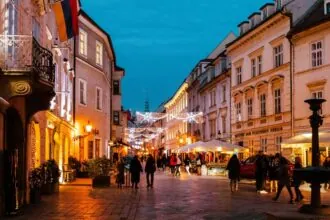
Pilies Street is the main pedestrian spine, running from Cathedral Square up toward the Gates of Dawn and lined with amber shops, cafes and street performers for most of the year. Side streets branch off toward the university quarter, the Presidential Palace and dozens of Baroque church facades that reward simply looking up.
Town Hall Square, at the Old Town’s southern end, hosts markets, festivals and a Christmas tree every December, while the neoclassical Town Hall itself now serves as a venue for receptions and exhibitions rather than municipal business. Both squares make natural starting or finishing points for a self-guided walk through the neighbourhoods covered in the rest of this guide.
Gediminas Tower: Vilnius’s Best Panoramic Viewpoint
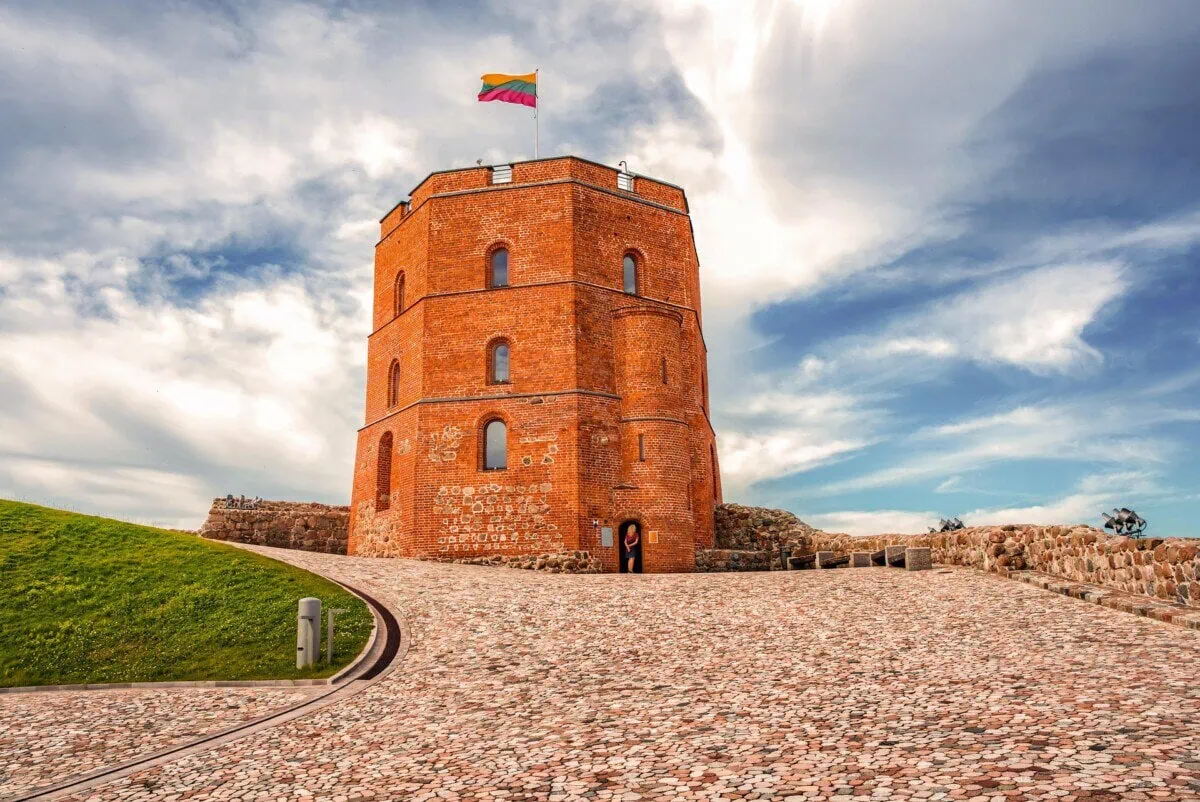
Gediminas Tower is the last surviving structure of the Upper Castle that once crowned the hill above Vilnius’s Old Town, and it remains the single image most associated with the city. According to legend, Grand Duke Gediminas dreamed of an iron wolf howling from this same hilltop and was told by a pagan priest that it meant a great city should rise here, a founding myth still repeated to every visitor.
The original wooden fortifications date to the 14th century, but the red-brick octagonal tower standing today was largely rebuilt in the Gothic style under Grand Duke Vytautas the Great and again after later fires and the Napoleonic wars, which badly damaged the wider castle complex in 1812. What survives is essentially a rebuilt remnant rather than an unbroken medieval original, though it occupies the same strategic hilltop the castle always held.
Inside, the tower now houses a branch of the National Museum of Lithuania, with exhibits on the castle’s construction, historical weapons and models showing how the Upper and Lower Castles once looked together. The real draw for most visitors is the rooftop viewing platform, which gives one of the best panoramas in the city over the Old Town’s red rooftops, the Neris River and, on a clear day, the high-rises of the business district beyond.
Getting up the hill takes a short, steep walk on a gravel path, or a ride on the funicular that climbs the slope in under a minute; both options are well signposted from Cathedral Square below. Admission to the tower and museum is around €10 (£8.60/$11.70) for adults, with reduced rates for students and seniors, though it is worth checking the National Museum of Lithuania’s current listing before visiting since prices are revised periodically.
The hill itself is free to walk even without paying for the tower, and the grassy slopes around it are a popular spot for locals to watch the sunset over the Old Town. Visiting first thing in the morning or in the hour before closing tends to avoid the worst of the midday tour-group crowds.
Best if you want daily housekeeping and a front desk. Filter by area first, then by price.
Check availabilityBest for families, or any stay past about four nights. A kitchen and a washing machine start paying for themselves.
Browse rentalsBest as a last check before booking. Compares hotel rates across several sites in one search.
Compare ratesThree Crosses Hill: A Rebuilt Symbol of Independence
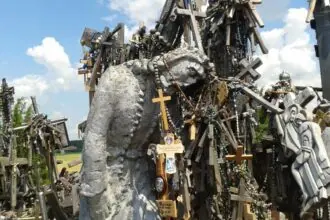
Across a small valley from Gediminas Hill stands Three Crosses Hill, home to one of Vilnius’s other defining hilltop landmarks: three tall white crosses visible from much of the Old Town below. Local legend says they commemorate seven Franciscan friars killed by pagan tribesmen in the 14th century, in some tellings beheaded, in others crucified and thrown into the Neris River.
The first wooden crosses on the hill date to the 17th century, and the concrete monument seen today was rebuilt in 1916 by sculptor Antanas Vivulskis. Soviet authorities tore the crosses down in 1950 as part of a wider campaign against religious monuments, and the hilltop stood bare for almost four decades.
Lithuanians rebuilt the monument in 1989, ahead of full independence, and it has stood as a symbol of resilience ever since. Reaching the top involves a steady climb up a wooded path and a long flight of steps, rewarded with one of the widest views in the city, taking in Gediminas Tower, the Old Town rooftops and the Neris River below.
There is no admission charge and no fixed opening hours, since the hill is an open public park rather than a ticketed site. It draws far fewer visitors than Gediminas Tower directly opposite, which makes it a good spot for photographing the castle and Old Town skyline without another landmark’s crowds in the shot.
Vilnius Cathedral and Cathedral Square
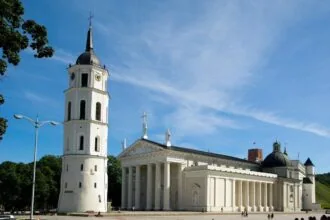
Vilnius Cathedral, formally the Cathedral Basilica of St Stanislaus and St Vladislav, stands on Cathedral Square at the foot of Gediminas Hill and is the spiritual centre of Roman Catholic Lithuania. Its stark neoclassical facade, rebuilt between 1783 and 1801 by architect Laurynas Gucevičius, gives little hint of the site’s much older and more complicated history beneath.
Archaeological excavations have suggested that a pagan temple dedicated to the thunder god Perkūnas once stood on or near this spot, and the cathedral itself has been rebuilt and remodelled repeatedly since the first church was raised here after Lithuania’s official conversion to Christianity in 1387. The crypts beneath the cathedral hold the remains of several Grand Dukes and Polish-Lithuanian monarchs, including a chapel dedicated to St Casimir, the country’s patron saint.
Cathedral Square itself is the city’s largest and most photographed open space, framed by the cathedral, the belfry and the reconstructed Palace of the Grand Dukes of Lithuania, which was rebuilt on its historic foundations and reopened as a museum in the 2000s. A small tiled marker in the square’s paving is a popular spot for visitors to stand and turn around for good luck, echoing similar traditions found at landmarks across the region.
Entry to the cathedral’s main nave is free, and it functions as an active parish church alongside its role as a major sight, so visiting hours can shift around Mass times and religious holidays. The separate crypts and treasury charge a modest admission fee and are worth the extra time for anyone interested in the royal tombs and liturgical artefacts stored below.
Standing separately beside the cathedral, the freestanding bell tower is one of the square’s most climbable landmarks and is covered in detail, along with current ticket options, in the next section of this guide.
The Cathedral Belfry: Climb Above Cathedral Square
The Vilnius Cathedral Belfry, standing just west of the cathedral itself, began life as a defensive tower forming part of the Lower Castle’s fortifications, built in stages between the 13th and 16th centuries. It was only converted into a bell tower and folded visually into Cathedral Square once its original military purpose faded, giving it a mixed architecture of Gothic, Renaissance and Baroque elements stacked across its different tiers.
Rising over 50 metres, the belfry is one of the tallest structures in the Old Town and one of the few places in central Vilnius where visitors can climb above the rooftops rather than just admire them from below. The tower holds a set of working bells, some cast centuries ago, and information panels along the climb explain how the structure evolved from fortification to church tower over some 400 years.
Reaching the top involves several flights of stairs and narrow wooden platforms rather than a lift, so it suits visitors who are reasonably mobile, and the reward at the summit is a view across Cathedral Square, Gediminas Hill and the Old Town’s rooftops that rivals the castle tower’s panorama from a different angle.
Because the belfry sits at ground level in one of the busiest squares in the city, queues can build quickly in peak summer months, which is where a fast-track ticket makes the biggest practical difference. Buying ahead also secures a specific entry slot rather than joining whatever queue has formed on the day.
This is a newly added listing on GetYourGuide, covering a one-hour visit with fast-track entry that skips the general admission line at the tower’s base. Priced from £13 (approximately €15.08/$17.68), it is one of the more affordable timed-entry tickets in this guide and pairs naturally with a visit to the cathedral and square covered above.

St. Anne’s Church: The Old Town’s Most Photographed Facade
St. Anne’s Church is a small but exceptional example of Flamboyant Gothic brickwork, built in stages through the late 15th and early 16th centuries at the edge of the Old Town near the Vilnelė riverbank. Its facade combines dozens of specially fired brick shapes into an intricate, almost lace-like pattern that has made it one of the most photographed buildings in the city.
A well-known, if unverifiable, legend holds that Napoleon Bonaparte was so taken with the church during his 1812 campaign that he wished he could carry it back to Paris in the palm of his hand. Whether or not the story is strictly true, it captures how consistently the building has impressed visitors for more than two centuries.
The church stands beside the larger Bernardine Church complex, and together the two form one of the most striking architectural groupings in the Old Town, particularly when viewed from across the small park along the riverbank. Both buildings survived the twentieth century’s upheavals better than many of the city’s other religious sites.
Entry to St. Anne’s is free, and the interior, while much simpler than its ornate exterior, is worth a brief look for the Gothic ribbed vaulting overhead. Because it remains an active parish church, visiting hours can be limited around services, so it suits a short stop on a wider Old Town walk rather than a dedicated outing.
The Gates of Dawn (Aušros Vartai)
The Gates of Dawn is the only surviving gate from the nine that once punctured Vilnius’s 16th-century defensive wall, and it remains one of the most important pilgrimage sites in this part of Europe. Built in the 1500s as a fortified city entrance, it survived the demolition of the rest of the wall in the early 19th century largely because of the chapel built into it.
That chapel houses the icon of Our Lady of the Gate of Dawn, a painting revered by both Catholic and Orthodox Christians and credited with miraculous powers by generations of worshippers, including Polish and Lithuanian royalty. The icon sits above the gate itself, visible from the street below through a window, with the chapel entrance reached via a staircase just inside the Old Town wall.
Pope John Paul II visited the shrine in 1993, and it remains an active site of pilgrimage today, with worshippers still pausing to pray as they pass beneath the gate on Aušros Vartų Street. The gate marks the southern end of the Old Town and a natural point to begin or finish a walk up Pilies Street toward the cathedral.
Entry to the chapel is free, though visitors should dress and behave respectfully given its status as an active place of worship rather than a museum piece. Its opening hours are more limited than the Old Town’s main churches, so an early-morning or midday visit tends to be more reliable than a late-afternoon one.
Užupis: The Self-Declared Republic of Artists
Across the small Vilnelė river from the Old Town sits Užupis, a district that spent much of the Soviet era as a rundown, half-abandoned corner of the city before artists began moving into its cheap, crumbling buildings during the 1990s. What followed was one of Europe’s more charming acts of civic theatre: on April Fools’ Day 1997, residents declared Užupis an independent republic, complete with its own flag, a currency for one day a year and a president, the filmmaker Romas Lileikis.
The republic’s constitution, a list of more than 40 whimsical yet genuinely thoughtful articles including the right to be unique, the right to be happy and the right to love and take care of a cat, is displayed on mirrored plaques along Paupio Street in dozens of languages, including English. It has since become one of the most photographed spots in the neighbourhood.
A bronze angel statue, erected in 2002 and blowing a trumpet, stands in the district’s main square and has become Užupis’s unofficial emblem, replacing an earlier egg sculpture that stood there before it. Street art, small galleries and independent studios fill many of the surrounding courtyards, and the area still functions as a genuine, if increasingly gentrified, residential neighbourhood rather than a theme-park version of one.
Despite the playful republic branding, there are no border checks or passport stamps, and crossing into Užupis costs nothing beyond the short walk across one of the pedestrian bridges from the Old Town. Weekend afternoons bring the busiest crowds, particularly around the Constitution wall and Angel statue, while weekday mornings offer a quieter, more residential feel to the same streets.
The district rewards slow wandering rather than a checklist approach, since much of its appeal lies in stumbling across a mural, a sculpture garden or a riverside cafe rather than ticking off a single named sight. Užupis Day, held every April Fools’ Day, is the liveliest time to visit if the dates line up with a trip.
Best if you can move a day either way. Shows how the fare changes across the month.
Compare flightsBest for short trips. Install the eSIM at home and arrive with working data, no shop queue.
Browse eSIMsBest if you would rather not work out the transport on arrival. Book it now and forget it.
View transfersVilnius University: Four Centuries of Courtyards and Library Halls
Vilnius University was founded in 1579 by Jesuit scholars under a charter granted by King Stephen Báthory, making it one of the oldest universities in Northern and Eastern Europe and the oldest in the Baltic states. It remains Lithuania’s largest and most prestigious university, with its historic core still occupying the same central Old Town campus it has held for more than four centuries.
The historic campus is built around a series of interlinked courtyards, several dating to the 16th and 17th centuries, that visitors can wander through much like a small architectural museum in their own right. St John’s Church and its bell tower, part of the university complex, offer one of the best elevated views in the Old Town for anyone willing to add another climb to their itinerary.
The university’s library holds one of the richest collections of historic manuscripts and early printed books in the region, and the Grand Courtyard’s arcaded galleries have hosted academic ceremonies since the institution’s earliest days. Frescoes and murals added during 20th-century restorations decorate several of the courtyard walls, blending centuries of academic and artistic history in a single walkable space.
Access to the outer courtyards is generally free during the day, while a combined ticket covering the library exhibition halls, the observatory and St John’s Church bell tower carries a modest admission charge. Given the site’s central location just off Pilies Street, it fits naturally into an Old Town walking route without requiring a special trip.
Museum of Occupations and Freedom Fights
Housed in the former KGB headquarters on Gedimino Avenue, the Museum of Occupations and Freedom Fights, previously known as the Museum of Genocide Victims, is one of the most sobering stops on this list and one of the most important for understanding modern Lithuanian identity. The building itself served as a prison and interrogation centre under both Nazi and Soviet occupation, and much of the basement has been preserved rather than restored.
Exhibits trace Lithuania’s occupation by the Soviet Union from 1940, the Nazi occupation from 1941 to 1944, the return of Soviet rule until 1990, and the mass deportations of Lithuanian civilians to Siberia that followed each upheaval. The basement holds original prison cells, an isolation cell built for psychological pressure, and a preserved execution chamber where political prisoners were killed in the postwar years.
Upstairs, the exhibits shift toward the resistance movement, covering the partisan fighters who continued armed opposition to Soviet rule into the 1950s and the eventual peaceful independence movement that led to Lithuania restoring its statehood in 1990. Personal artefacts, photographs and documents give the museum a more individual, human scale than its grim setting might suggest.
The museum charges a modest admission fee for adults, with reduced rates for students and free entry on certain designated days; current hours and pricing are best confirmed on the museum’s own website before visiting given periodic schedule changes. Allow at least an hour, more if reading through the detailed wall texts, and note that some of the basement content is not well suited to young children.
Hop-On Hop-Off Bus: See Vilnius Beyond the Old Town
For visitors who want a broad overview of Vilnius beyond the walkable Old Town core, the hop-on hop-off bus offers an open-top loop connecting the historic centre with sights further afield, including the modern business district across the Neris River and viewpoints that are a longer walk from Cathedral Square. Passengers can get on and off freely at each stop across the day on a single ticket.
An audio commentary, delivered through onboard headphones in multiple languages, narrates the history of each stop as the bus moves through its route, functioning as a flexible, low-effort alternative to a fixed-schedule guided walk. It suits first-time visitors looking for orientation on arrival day, or anyone travelling with limited time who wants to see more of the city than the Old Town alone allows.
This format works particularly well in Vilnius given how spread out some of the city’s other worthwhile sights are compared with the tightly clustered Old Town, letting visitors reach the television tower or the outer districts without arranging separate public transport. Tickets are typically valid for the day of purchase, allowing multiple loops if time permits.
The tour holds a 4.1-star rating from 398 reviews on GetYourGuide, a solid score reflecting the format’s practicality even if hop-on hop-off tours generally draw more mixed feedback than smaller guided walks. It runs for around an hour end to end if ridden straight through without stopping.
Priced from £15 (approximately €17.40/$20.40), it is one of the more affordable ways to see the wider city in a single sitting, and it pairs naturally with a walking-focused day in the Old Town on either side of the ride.
Automuseum Vilnius: Classic Cars and Soviet-Era Motoring
The Vilnius Automobile Museum, generally marketed to English-speaking visitors as the Automuseum Vilnius, is a private collection housed a short drive from the city centre and built around one of the larger gatherings of classic and vintage vehicles in the Baltic states. Its collection ranges from early 20th-century motorcars through Soviet-era Ladas and Volgas to more modern supercars, giving it a broader sweep than a typical single-marque museum.
The museum grew out of a private collector’s passion project and has expanded significantly since opening, now displaying vehicles across multiple halls alongside motorcycles, engines and automotive memorabilia. Several cars come with notable backstories, including former state and diplomatic vehicles, which the museum’s displays and placards explain in more detail than a typical static car show.
It is a distinctly different experience from the Old Town’s churches and medieval towers, and it tends to appeal particularly to visitors with an interest in engineering, design history or Soviet-era daily life, since several exhibits speak directly to how ordinary Lithuanians experienced motoring under Soviet rule.
Because the museum sits outside the compact Old Town, reaching it typically requires a taxi, rideshare or a longer public transport journey (our own Vilnius Public Transport guide covers the bus and trolleybus network in full), so it suits a half-day outing rather than a quick add-on between Old Town stops. Allow at least an hour to see the halls properly, more for anyone with a genuine interest in the vehicles themselves.
The museum holds a 4.8-star rating from 15 reviews on GetYourGuide, a strong early score reflecting a relatively small but enthusiastic review base rather than the thousands gathered by the city’s most-visited landmarks. A one-day ticket is priced from £15 (approximately €17.40/$20.40), giving flexible same-day entry.
Trakai Castle: A Brief Word on the Nearby Highlight
Roughly 28 kilometres west of Vilnius, Trakai Island Castle is one of the most photographed sights in Lithuania, a red-brick Gothic fortress rebuilt across an island on Lake Galvė by Grand Dukes Kęstutis and Vytautas the Great in the 14th and 15th centuries. It is reachable from Vilnius by regional train or bus in around half an hour, making it a popular half-day or full-day add-on rather than a stop within the city itself.
Because Trakai sits well outside Vilnius proper and deserves more depth than a single section here can offer, from its Karaim community history to the practicalities of getting there, it is covered in full in our separate day-trips guide to the wider Vilnius region rather than duplicated at length in this city-focused list.
Is the Vilnius Pass Worth It?
Go Vilnius, the city’s official tourism body, sells the Vilnius Pass, a tourist card covering free or discounted entry to more than 60 museums and attractions in the city, priced at €39 (£33.54/$45.63) for 24 hours, €53 (£45.58/$62.01) for 48 hours and €64 (£55.04/$74.88) for 72 hours, with a 24-hour-plus-transport option at €46.50 (£40.00/$54.41) that adds unlimited buses and trolleybuses. It replaced the older Vilnius City Card under a rebrand in recent years, and the list of included sights changes periodically, so it is worth checking the official Go Vilnius listing for exactly what a given tier covers before buying.
Several of the paid stops in this guide, including the Museum of Occupations and Freedom Fights and Vilnius University’s combined ticket, typically feature on the included or discounted list, which can make the pass worthwhile for visitors planning to pack several museums into a short stay. Gediminas Tower, run by the separate National Museum of Lithuania, is not always included on every tier, so it is worth double-checking that specific inclusion if the castle tower is a priority.
Here is what that looks like in practice over two days: Gediminas Tower (around €10), the MO Museum (€11), the Museum of Occupations and Freedom Fights (around €6) and Vilnius University’s combined ticket (around €6) already total roughly €33 in standalone admission alone. Add one of the pass’s complimentary guided walking tours, typically worth €15-20 (£13-17.20/$17.55-23.40) booked separately, plus two days of public transport at around €8-9 (£6.88-7.74/$9.36-10.53) a day, and the equivalent spend comfortably clears the €53 (£45.58/$62.01) cost of the 48-hour pass itself, before counting any of its other 50-plus included venues.
As with most city passes, the value case still depends on pace: a visitor planning three or more paid museums across the card’s validity window, plus regular use of buses and trolleybuses, is likely to come out ahead in the way the example above shows, while a lighter itinerary built mainly around the Old Town’s free churches and squares may not need it at all.
The prices above are correct as of research for this guide, but Go Vilnius does revise both pricing and inclusions periodically, so the official Go Vilnius Vilnius Pass page is worth checking for current tiers and exactly what a given price covers before buying.
Best for solo travellers and anyone watching the budget. Dorm beds and private rooms in the same search.
Browse hostelsBest for anyone flying more than once or twice a year. Handles the compensation claim so you are not chasing the airline.
See AirHelp+Best for a day with a suitcase and nowhere to put it. Find a storage point near where you already are.
View storageMO Museum: Vilnius’s Libeskind-Designed Art Museum
The MO Museum is Vilnius’s museum of modern and contemporary Lithuanian art, opened in 2018 in a striking white building designed by architect Daniel Libeskind, best known internationally for the Jewish Museum Berlin and the Denver Art Museum extension. It sits a short walk from the Old Town near the Bernardine Garden.
The museum was founded by Lithuanian philanthropists Viktoras and Danguolė Butkus, and its collection traces Lithuanian art from the 1960s to the present, including work by artists whose output was restricted under Soviet rule. Rotating temporary exhibitions bring in international contemporary artists alongside the permanent collection.
Beyond the galleries, the building itself is part of the draw: a sweeping outdoor staircase climbs one side of the museum toward a garden terrace, a striking piece of architecture set against the Old Town’s older skyline. It has quickly become a popular photo stop for visitors walking between the Old Town and the riverside beyond.
Standard adult admission is €11 (£9.46/$12.87), with reduced rates for students and free entry for young children, though it is worth checking the museum’s website for current pricing since ticket prices can shift around exhibition changes. Like several of Vilnius’s museums, MO closes one day a week, so confirm opening hours before visiting.
The Money Museum: The Old Town’s Best Free Family Stop
The Money Museum, run by the Bank of Lithuania in a restored building just off Totorių Street, is one of the Old Town’s best free attractions and a favourite with families travelling with children. Interactive displays trace the history of money in Lithuania from early barter and coinage through the interwar litas to the adoption of the euro.
Interactive exhibits include scales that estimate a visitor’s net worth in gold, platinum or silver, a giant coin pyramid built from more than a million Lithuanian one-cent coins, and touchscreen terminals and games covering the history of currency, making it one of the more engaging stops in this guide for younger visitors. Multilingual displays, including English, keep the content accessible to international visitors.
Entry is completely free, and while individual visitors can generally just turn up, the museum recommends booking ahead through its website for group visits and guided tours. It closes on national holidays, so it is worth checking the calendar before planning a stop.
It makes a natural, lighter counterpoint to the Museum of Occupations and Freedom Fights elsewhere in this guide, and its central Old Town location means it slots easily into a walking day around Cathedral Square and Pilies Street. Allow around 45 minutes to an hour to see the exhibits properly.
Halės Turgus: Vilnius’s Best Stop for Traditional Lithuanian Food
Halės Turgus, Vilnius’s oldest indoor market, opened in 1906 as one of the era’s first large covered market halls and underwent a thorough restoration between 2004 and 2006 that returned its ironwork facades and central staircase to their original design. It sits on Pylimo Street, a 10 to 15 minute walk from the Old Town near the railway station.
Stalls inside sell fresh bread, local cheeses, cured meats and Lithuanian wine alongside beigelinės, the market’s bagel stalls, and several small cafes serve both Lithuanian and international dishes for a quick sit-down lunch. The market also hosts seasonal tastings and culinary workshops for visitors curious about the country’s food traditions.
For a proper sit-down meal, two Lithuanian staples are worth seeking out: cepelinai, dense potato dumplings usually stuffed with minced meat or curd cheese and topped with bacon and sour cream, and šaltibarščiai, a bright pink cold beet soup served with boiled potatoes on the side. Etno Dravas on Pilies Street specialises in cepelinai served several different ways, while Lagaminas is a long-standing favourite for potato pancakes and other home-style Lithuanian cooking.
For something more specific to the region, Senoji Kibininė serves kibinai, the meat-filled pastries brought to Lithuania by the Karaim community historically settled around Trakai and mentioned earlier in this guide. Together these stops cover the range of Lithuanian food, from market snacking to a full sit-down meal.

Shopping in Vilnius: Amber, Old Town Streets and Akropolis
Pilies Street is the Old Town’s main shopping spine, a 500 metre pedestrian route running from Cathedral Square to Town Hall Square and lined with stalls selling amber jewellery, linen and folk crafts. It hosts the annual Kaziukas Fair each March, when artisans from across Lithuania set up stands selling handmade goods along its full length.
Vokiečių Street, meaning German Street, takes its name from the merchants and craftsmen who settled there in the 14th century and once housed the Vilnius Mint. Today it forms one corner of the city’s so-called Nightlife Triangle, and its outdoor terraces make it as much a shopping and dining stop by day as a bar street by night.
Amber is Lithuania’s signature souvenir, sourced from the Baltic Sea and sold in shades from pale honey to near black across dozens of Old Town jewellers, so it is worth buying from an established shop rather than a street stall to avoid the resin fakes that circulate in tourist areas. Užupis adds a different kind of shopping to the mix, with small design studios and craft workshops tucked into the courtyards already described earlier in this guide.
For a modern shopping trip beyond the Old Town, Akropolis in the Šeškinė district opened in 2002 and has grown from an initial 54,000 square metres to around 110,000 square metres, making it the largest shopping centre in the Baltic states. It combines international fashion chains, a large supermarket and a bookstore under one roof, a straightforward option for anything the Old Town’s boutiques don’t stock.
Vilnius Nightlife: The Old Town’s Bar Triangle and Craft Beer Scene
Locals call the block formed by Vilniaus, Islandijos and Vokiečių streets the Nightlife Triangle, the busiest concentration of bars and clubs in the city and the natural starting point for an evening out. It is walkable, safe and open every night of the week, with venues ranging from cocktail bars to late-closing clubs within a few minutes of each other.
Lithuania has built a strong craft beer culture over the past decade, and Vilnius’s bars reflect it with rotating taps of small-batch Lithuanian ales alongside imported options. Alaus Biblioteka, on Trakų Street in the Old Town, runs guided tastings led by trained beer sommeliers and is one of the more structured ways to sample the scene rather than just picking a pub at random.
Across the river, Užupis offers a quieter, more bohemian alternative to the Triangle’s bigger crowds, with small bars like Devinkė and Užupio Kavinė tucked into the district’s narrow streets and courtyards. The atmosphere here leans toward conversation over loud music, in keeping with the neighbourhood’s artsy, self-declared-republic character described earlier in this guide.
Both areas sit within easy walking distance of the Old Town’s main sights, so an evening out rarely means straying far from wherever the day’s sightseeing ended. Weeknights are noticeably quieter than Friday and Saturday, worth bearing in mind for visitors who prefer a calmer first taste of the city’s bar scene.
Vilnius with Kids: Vingis Park, Zoopark and Family-Friendly Museums
Vilnius has no major zoo within the city itself; Lithuania’s main zoological garden is in Kaunas, a short train journey away. For families staying in Vilnius, Zoopark, a smaller animal park on Verkių Street in the north of the city, houses more than 60 species including lemurs and Balkan turtles and runs educational programmes aimed at children.
Vingis Park, at 162 hectares the largest green space in the city, sits beside a curve of the Neris River and offers wide lawns, cycling paths and a Vilnius University botanical garden outpost, making it a good spot to let children run off energy between sights. Its open-air amphitheatre hosts major concerts in summer, so it is worth checking the schedule before visiting if a quiet afternoon is the goal.
The Energy and Technology Museum, housed in Vilnius’s former first power plant, is one of the country’s largest technology museums and includes interactive rooms designed specifically for younger visitors alongside preserved turbines and generators dating to 1903. It pairs well with the Money Museum described earlier in this guide as a second hands-on stop for families with time for two museums in a day.
Between Zoopark, Vingis Park and the city’s family-oriented museums, Vilnius offers a reasonable spread of options for visitors travelling with children, even without a full zoo inside the city limits. Most sit outside the compact Old Town, so budgeting time for a taxi or bus ride is worth factoring into a family itinerary.

Rainy Day in Vilnius: The City’s Best Indoor Options
Vilnius’s Old Town is built for walking, but the city has enough indoor options to fill a wet day without losing much of the trip. The MO Museum, covered in more detail elsewhere in this guide, is a strong first stop given its striking Libeskind-designed interior and rotating contemporary art exhibitions.
The Contemporary Art Centre, known locally as CAC, has occupied its building on Vokiečių Street since 1992 and holds around 2,000 square metres of exhibition space across five rooms plus a cinema hall, including a permanent Fluxus art collection. It runs a full programme of temporary shows, so it is worth checking what’s on before a visit rather than assuming a fixed permanent display.
The Energy and Technology Museum, described above under family options, doubles as a solid rainy-day choice for adults too, with preserved power-plant machinery and hands-on industrial history to explore. The Money Museum and the Museum of Occupations and Freedom Fights, both covered earlier in this guide, round out the city’s best free and low-cost indoor stops.
Between these five museums, a visitor could realistically spend a full wet day moving between the Old Town and the slightly further-flung Energy and Technology Museum without setting foot in the rain for long. Most sit within a 20 to 30 minute walk or a short taxi ride of Cathedral Square, keeping transitions between them manageable even in bad weather.

Rupert’s Handy Travel Tips
Vilnius rewards a bit of planning given how much history sits within a small, walkable area, so here are a few tips before setting off.
- Buy the Cathedral Bell Tower ticket ahead in summer: fast-track entry saves real queue time in Cathedral Square during peak months.
- Wear proper shoes for the climbs: Gediminas Tower and the Cathedral Belfry both involve stairs rather than lifts.
- Check museum opening days before visiting: several of Vilnius’s museums close on Mondays, so build them around a midweek slot.
- Cross into Užupis on foot: no passport or ticket is needed, just a short walk over one of the pedestrian bridges from the Old Town.
- Confirm current Vilnius Pass inclusions before buying: the list of covered attractions changes periodically, so check the official listing for the tier you need.
- Base yourself in or near the Old Town: nearly everything in this guide except the Automuseum and Trakai Castle sits within a 20-minute walk of Cathedral Square.
Want to meet the reindeer behind our travel tips? Find out more in our page Who is Rupert?.




Frequently Asked Questions About Things to Do in Vilnius
How many days do I need to see Vilnius’s main sights?
Two to three days covers the Old Town landmarks, the cathedral and belfry, Užupis and one or two museums, though adding a Trakai Castle day trip or the Automuseum is worth a third or fourth day.
Is Vilnius Old Town walkable?
Yes, nearly every landmark in this guide except the Automuseum and Trakai Castle sits within a compact, largely pedestrianised area, and most sights are within a 15 to 20 minute walk of Cathedral Square.
What is Vilnius best known for?
Vilnius is best known for its UNESCO-listed Baroque Old Town, the Gediminas Tower on its hilltop, the bohemian Užupis district, and its layered twentieth-century history of Soviet and Nazi occupation followed by independence.
What are the Three Crosses above Vilnius Old Town?
They are a hilltop monument recalling a local legend of martyred friars, first raised in wood in the 17th century, rebuilt in concrete in 1916, torn down by Soviet authorities in 1950 and rebuilt again in 1989 as Lithuania moved toward independence.
Is Vilnius Cathedral free to visit?
The main nave is free to enter, though the crypts and treasury beneath the cathedral, and the separate belfry beside it, both charge a modest admission fee.
Do I need a ticket to visit Užupis?
No, Užupis is a genuine residential district rather than a paid attraction, and crossing into it from the Old Town costs nothing beyond the short walk over a pedestrian bridge.
Is the Vilnius Pass worth buying?
Often yes for a museum-heavy trip: Gediminas Tower, the MO Museum, the Museum of Occupations and Vilnius University’s combined ticket alone total around €33, and adding a guided tour and two days of transport pushes that past the €53 cost of the 48-hour pass. A lighter trip focused on the Old Town’s free sights may not need it.
Is Trakai Castle worth visiting from Vilnius?
Yes, though because it sits well outside the city, it is covered in more depth in our separate day-trips guide rather than as a full section in this city-focused list.
What’s the best way to understand Vilnius’s Soviet-era history?
The Museum of Occupations and Freedom Fights, housed in the former KGB headquarters, is the single most detailed site covering Lithuania’s occupation, deportations and resistance movement.
Further Reading
For travellers planning to explore beyond Vilnius by rail, our Interrail Lithuania Pass guide covers train connections onward to Kaunas and Klaipėda, useful for anyone extending a Baltic trip beyond the capital.
Vilnius is often compared with the region’s other Baltic capitals, and travellers weighing up a wider Baltic itinerary may find our Best Things to Do in Tallinn guide useful for comparing Estonia’s medieval capital against Lithuania’s Baroque one.
For the most current information on Vilnius’s official tourist pass, including its 24, 48 and 72-hour pricing tiers and the full list of included museums and attractions, the official Go Vilnius Vilnius Pass page keeps its listings up to date.
For getting into the city from the airport, see our Vilnius Airport Transfers guide. If you’re visiting between late November and Christmas, our Christmas in Vilnius guide covers the Cathedral Square market in full, and our Day Trips from Vilnius guide covers Trakai Castle, which is only briefly mentioned here, along with Kaunas and beyond.