
Reviewed by our editorial team Updated
Why Vilnius Airport Transfers Work Differently
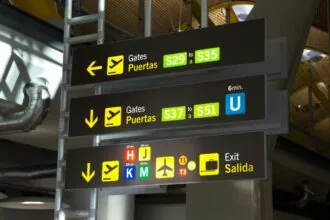
Landing at Vilnius Airport means arriving at Lithuania’s busiest gateway, officially known as Vilnius International Airport and identified by the code VNO. It has a single, compact terminal, which keeps the walk from the aircraft to the arrivals hall short and simple.
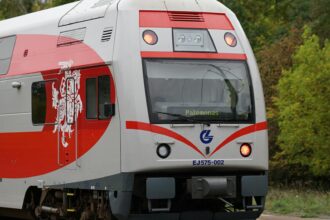
Unlike many European capitals, there is no airport train or metro link waiting outside. In fact, Lithuania has no metro or urban rail network at all, so buses, taxis and ride-hailing apps are the only ways into Vilnius from the terminal.
The upside is proximity. Vilnius Airport sits unusually close to the historic centre, roughly 6 kilometres (about 4 miles) south of the Old Town, which is nearer than many European capital airports manage even with a dedicated rail line.
That short distance means every option, from a budget bus ticket to a private transfer, tends to land somewhere between 10 and 25 minutes. The main choice is really about cost and convenience rather than speed.
This guide covers the public bus routes, the official taxi rank, Bolt and other ride-hailing apps, car hire, driving and parking, and what to expect if you land late at night. It also flags the mistakes first-time visitors most often make on arrival.
| Transfer Option | Journey Time | Approximate Cost | Best For |
|---|---|---|---|
| Bus 3G (express) | Around 20 minutes | €0.65-0.90 (£0.56-0.77/$0.76-1.05) | Budget and solo travellers |
| Bus 88 | Around 20-25 minutes | €0.65-0.90 (£0.56-0.77/$0.76-1.05) | City centre and Europa Square |
| Night bus 88N | Around 20-25 minutes | €0.65-0.90 (£0.56-0.77/$0.76-1.05) | Late-night and early arrivals |
| Taxi | 10-20 minutes | €10-15 (£9-13/$12-18) | Door-to-door convenience |
| Bolt (ride-hailing) | 10-20 minutes | From around €6-10 (£5-9/$7-12) | App-based convenience |
| Car hire | Flexible | Varies | Exploring wider Lithuania |
| Private transfer | 10-20 minutes | From around €60 (£52/$70) | Families and groups |
Understanding Vilnius Airport
Vilnius Airport lies around 6 kilometres south of the Old Town, making it one of the closest capital-city airports to its own centre anywhere in Europe. That proximity shapes almost every transfer decision covered in this guide.
The airport has one terminal building, with arrivals on the ground floor and departures spread across the upper floors. That layout keeps orientation simple, since there is no shuttle bus or long internal walk between gates and the public transport stops outside.
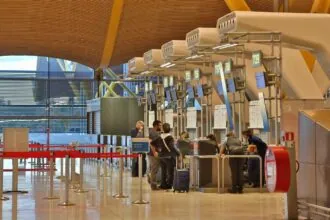
Bus stops, the official taxi rank and the designated ride-hailing pickup zone all sit within a short walk of the arrivals exit. Given the airport’s modest size compared to major European hubs, queues at passport control and baggage reclaim tend to be manageable outside peak periods.
Because the city itself has no metro or suburban rail network, Vilnius’s public transport authority relies entirely on buses and trolleybuses. The airport is simply treated as one more stop on that bus network rather than a separate rail-connected hub, which is worth knowing before you start looking for a train platform that does not exist.
Best for a short trip. Compare rooms by neighbourhood, price and guest rating before you book.
Compare hotelsBest for groups who want one address and separate bedrooms rather than three hotel rooms.
See holiday homesBest as a last check before booking. Compares hotel rates across several sites in one search.
Compare ratesPublic Buses From Vilnius Airport
Several public bus routes serve Vilnius Airport directly, and the route number to use depends on where you are heading. The 3G express service runs between Fabijoniškės and the airport via the city centre, departing roughly every 10 minutes and reaching the centre in about 20 minutes.
Bus 88 connects the airport with the city centre and on to Europa Square, and also runs a dedicated night service (88N) once the daytime timetable finishes. Buses 1 and 2 take a more local route via Vikingų street toward the railway and bus stations, running roughly every 20 to 30 minutes and useful if your hotel sits closer to those stops.
Tickets can be bought several ways: through the m.ticket or Trafi mobile apps, from the Narvesen kiosk inside the terminal, by tapping a contactless bank card directly on the validator once aboard, or with a reusable JUDU (Vilniečio) card topped up in advance. Buying via app can be fiddly for visitors without a Lithuanian phone number, so a contactless card tap or a kiosk ticket is often the simplest route for a first-time arrival.
A standard 30-minute ticket costs €0.65 (£0.56/$0.76), a 60-minute ticket €0.90 (£0.77/$1.05), and day passes are available for €5.00 (£4.30/$5.85) for one day or €8.00 (£6.88/$9.36) for three days. Whichever method you use, tickets must be validated on board, since inspectors do check and fines apply for travelling without a valid one.
Taxis at Vilnius Airport
An official taxi rank sits just outside the arrivals terminal, staffed by several licensed operators rather than a single company. Each licensed vehicle carries a sticker inside showing its approved tariff, which is worth glancing at before you get in.
Given how close the airport sits to the centre, a taxi to the Old Town typically takes 10 to 20 minutes depending on traffic and the exact drop-off point. Fares are not fixed across every operator, but a typical journey costs somewhere around €10-15 (£9-13/$12-18), so treat that as a guide rather than a guarantee.
Occasional reports mention drivers at the rank quoting a flat, unmetered rate rather than running the meter, particularly to less experienced visitors. Confirming the fare or the tariff sticker before setting off, or simply booking through a ride-hailing app instead, removes most of that uncertainty.
Card payment is widely accepted at the official rank, and drivers can issue printed receipts on request. If a fare feels well outside the usual range, the airport provides a complaint form where you can submit trip details and a receipt for review.
Private Transfers at Vilnius Airport
A private transfer is different from both a metered taxi and an on-demand ride-hailing app. It is a pre-booked, fixed-price car with a named driver waiting for you inside arrivals, arranged and paid for online before you even land, rather than hailed once you are through the terminal doors.
The appeal lies almost entirely in certainty. The price is agreed in advance, the driver typically tracks your flight and waits even if it lands late, and there is no language barrier or meter to worry about. That makes it well suited to families or groups with heavy luggage, or anyone arriving very late at night or very early in the morning.
That certainty comes at a price. A private transfer from Vilnius Airport typically starts from around €60 (£52/$70) per vehicle, noticeably more than the €10-15 (£9-13/$12-18) a metered taxi usually costs for the same short hop into the Old Town, though split across a family or group the gap narrows considerably.
Booking is done online in advance rather than on the day, usually through a fixed-price website or app that lets you enter your flight number so the driver knows if you land early or late. Most companies also offer meet-and-greet service inside the terminal, with the driver holding a name board rather than you having to search for them outside.

Compare Airport Transfer Companies
Pre-booking your airport transfer can save time and reduce stress when you arrive. Whether you need a private taxi, shared shuttle or executive transfer, comparing providers can help you find the best price and service for your journey.
We’ve selected three trusted airport transfer companies so you can compare prices, vehicle options, cancellation policies and customer reviews before you travel.

Bolt, Uber and Ride-Hailing Apps in Vilnius
Bolt, the Estonian ride-hailing company, is by far the dominant app across the Baltic states, and Vilnius is no exception. The airport has a dedicated Bolt pickup zone with reserved parking spaces near the intercity bus stops, and the app shows the current pickup point along with signage on the ground.
Booking works the same way it does anywhere else: enter your destination, review the upfront price estimate, and confirm before a driver is assigned. Cars usually arrive within a few minutes, and options range from a basic economy ride up to Comfort, XL and accessible categories.
Pricing is dynamic and shown before you book, but a short airport-to-centre trip typically comes out at around €6-10 (£5-9/$7-12), rising with traffic, demand or a larger vehicle category. Because the fare is agreed upfront in the app, it tends to be a more predictable option than negotiating with a driver at the rank.
Uber’s presence in Vilnius has been inconsistent over recent years, with some sources describing local availability and others listing only Bolt, eTaksi and Taxi.lt as the city’s main apps. It is worth checking whether Uber shows any cars nearby after landing, but Bolt remains the safer default for a reliable Vilnius airport pickup.
Car Hire at Vilnius Airport
For travellers planning a wider Baltic road trip, hiring a car at the airport is a sensible option. Kaunas, the coastal city of Klaipėda, and the Hill of Crosses near Šiauliai are all far easier to reach with your own vehicle than by regional bus.
Sixt, Hertz and Enterprise all operate rental desks at Vilnius Airport, alongside other local and international providers, with vehicles ranging from small city cars to larger estates suited to longer journeys. Counters sit close to the arrivals hall, so collecting a car shortly after landing is generally quick.
A hire car is rarely necessary if your trip stays within Vilnius itself. The Old Town is compact and walkable, the bus network covers the wider city reasonably well, and parking within the historic centre can be limited and comes with restrictions in places.
Car hire makes most sense for visitors building a longer itinerary around the Baltic states, rather than a city-only break. As with most airports, booking online in advance is typically cheaper than arranging a rental at the desk on arrival.

Find Car Hire Deals for Vilnius
A hire car can be useful for exploring Vilnius and the surrounding area, particularly when the places you want to visit are awkward to reach by public transport.
Using more than one comparison site can help you check prices and rental terms across a wider range of suppliers before deciding which option suits your trip.
Driving and Parking at Vilnius Airport
Drivers collecting arriving passengers should head for Rodūnios kelias, the main road linking the airport with central Vilnius and the wider motorway network, which is clearly signed from the city. The airport sits close enough to the centre that the drive rarely takes more than 15 to 20 minutes outside rush hour.
A short-term drop-off and pickup area sits directly outside the terminal, with a brief free window before charges apply. For longer stays, dedicated car parks are available close to the terminal, along with a more distant long-stay option that tends to work out cheaper for multi-day trips.
Exact parking rates change with season and how far ahead you book, so it is worth checking the Vilnius Airport website for current prices rather than assuming a fixed figure. Pre-booking online is typically cheaper than paying at the barrier on the day.
Disabled parking bays are provided close to the terminal entrance for travellers with a valid permit, minimising the distance to walk with luggage or mobility equipment.
Best for finding routes the airlines do not sell as a single ticket. Combines carriers to bring the fare down.
Search flightsBest for anyone whose home plan charges by the megabyte abroad. Pay a fixed price up front.
Check eSIMsBest if you would rather not work out the transport on arrival. Book it now and forget it.
View transfersLate-Night and Early-Morning Arrivals
Vilnius Airport’s flight schedule is lighter overnight than a major hub, so it is worth planning ahead for very late or very early flights. The dedicated night bus 88N covers the airport-to-centre route between roughly 22:30 and 05:30, once the daytime services have finished for the night.
Outside that window, or if 88N does not suit your route, a taxi is the most dependable option. The official rank operates around the clock, so there is no need to worry about a bus that has stopped running or an app with no nearby drivers.
Bolt also runs 24 hours a day in Vilnius, though fewer drivers are typically active in the small hours, which can mean a slightly longer wait than during the day. Building in a little extra time for a late-night or pre-dawn pickup is a sensible precaution.
Travellers with a very early departure sometimes choose to stay overnight near the airport rather than travel out from central Vilnius before dawn, removing any risk from a delayed night bus or a quiet taxi rank.
Accessibility at Vilnius Airport
Passengers with reduced mobility should arrange assistance in advance rather than on the day, either through the airline at the time of booking or directly with the airport’s own passenger assistance service, ideally at least 48 hours before travel.
The terminal itself is on a single main level for arrivals, with lifts connecting to the upper departure floors, which keeps the walk from the aircraft to ground transport reasonably straightforward. Modern buses on the airport routes are generally low-floor and wheelchair accessible, though it is worth checking the specific vehicle on arrival at the stop.
For ride-hailing, Bolt offers dedicated Assist and Wheelchair categories in Vilnius, which can be booked through the app in the same way as a standard ride. This is often the most reliable accessible option for travellers who prefer not to rely on the general taxi rank.
Disabled parking bays close to the terminal entrance are available for drivers collecting passengers with a valid permit, cutting down the distance between the car and the building.
First-Time Visitor Mistakes to Avoid
The most common mistake is assuming a train or metro connects the airport to the city, simply because that is how most European capitals work. Vilnius has neither, so it is worth planning around buses, taxis or Bolt before you land rather than hunting for a non-existent platform.
Picking the wrong bus route is another easy slip. Buses 1 and 2 head toward the railway and bus stations via a different path than 3G or 88, so checking your hotel’s location against the route map before boarding saves a confusing extra transfer.
Some visitors accept a flat, unmetered rate from a driver at the rank without checking the tariff sticker first. Confirming the fare basis, or simply using Bolt for an upfront price, avoids most disputes over cost.
Finally, travellers sometimes board a bus without a valid ticket, assuming the lack of a barrier means it is optional. Inspectors do check, and a ticket bought through the app, at the kiosk, or tapped by contactless card takes only a moment before boarding.
Which Transfer Option Is Best?
For most solo travellers and couples without heavy luggage, the 3G express bus is hard to beat. It runs every 10 minutes, reaches the centre in about 20 minutes, and costs under a euro either way.
Families, groups, or anyone with several suitcases will likely find a taxi or Bolt more practical, trading a slightly higher fare for a direct door-to-door ride without navigating bus stops. Bolt’s upfront pricing generally makes it the more predictable of the two.
Late-night or very early arrivals should default to a taxi or Bolt, since the 88N night bus only covers a specific window and does not run at every hour. Anyone building a longer trip around the Baltic states should seriously consider car hire, since Vilnius itself needs no vehicle at all.
Whichever option you pick, Vilnius Airport’s short distance from the Old Town means the journey rarely takes longer than 25 minutes, making it one of the least stressful capital-city arrivals in Europe.

Rupert’s Handy Travel Tips
Flying into Vilnius Airport? Rupert has a few tips to make the transfer smoother.
- Forget the train entirely: Lithuania has no metro or urban rail network, so buses, taxis and Bolt are your only options from the terminal.
- Take the 3G express if you’re travelling light: it runs every 10 minutes and reaches the city centre in about 20 minutes for under a euro.
- Double-check your bus number: routes 1 and 2 head to the railway and bus stations, while 3G and 88 run into the centre, so match the number to your hotel first.
- Validate your ticket on board: there are no barriers, but inspectors do check, and fines apply for travelling without one.
- Bolt beats Uber here: it is the dominant ride-hailing app across the Baltics, with a dedicated pickup zone at the airport and reliably upfront pricing.
- Confirm the tariff before a taxi sets off: the airport rank is fully licensed, but checking the sticker inside the car avoids any confusion over a flat rate.
Want to meet the reindeer behind our travel tips? Find out more in our page Who is Rupert?.




Frequently Asked Questions About Vilnius Airport Transfers
Does Vilnius Airport have a train or metro link to the city?
No. Lithuania has no metro or urban rail network at all, so buses, taxis and ride-hailing apps are the only ways into Vilnius from the airport.
What is the fastest way from Vilnius Airport to the city centre?
The 3G express bus is usually fastest for travellers without a car, running every 10 minutes and reaching the centre in about 20 minutes.
How much does the airport bus cost?
A 30-minute ticket costs €0.65 (£0.56/$0.76) and a 60-minute ticket costs €0.90 (£0.77/$1.05), bought via app, kiosk, contactless card or a JUDU travel card.
How much does a taxi cost from Vilnius Airport to the Old Town?
Expect to pay typically around €10-15 (£9-13/$12-18) for a 10 to 20 minute ride, though fares vary by operator and traffic, so treat this as a guide.
What is a private transfer from Vilnius Airport?
It is a pre-booked, fixed-price car with a named driver waiting for you inside arrivals, typically starting from around €60 (£52/$70), more expensive than a taxi but with the price and the wait guaranteed in advance.
Is Uber available in Vilnius?
Bolt is the dominant ride-hailing app in the city, and Uber’s local availability has been inconsistent, so it is worth checking the app on arrival rather than assuming it will show cars.
How far is Vilnius Airport from the city centre?
Around 6 kilometres (about 4 miles) south of the Old Town, making it one of the closest capital-city airports in Europe.
Is there a night bus from Vilnius Airport?
Yes. Bus 88N runs between the airport and the city centre from roughly 22:30 to 05:30, covering the hours when daytime routes have stopped.
Is Vilnius Airport accessible for passengers with reduced mobility?
Yes. Assistance can be arranged in advance through your airline or the airport, the terminal is largely step-free, and Bolt offers Assist and Wheelchair ride categories for accessible transfers.
Further Reading
If you’re exploring beyond Vilnius by train, our Interrail Lithuania Pass guide covers connections onward to Kaunas and the coastal city of Klaipėda, both easy add-ons to a Vilnius trip. Staying connected from the moment you land is just as useful, so our eSIM Apps guide can help you compare data plans before you need to check a bus timetable or open the Bolt app at the airport.
Once you’re into the city, our Best Things to Do in Vilnius guide covers Gediminas Tower, the Old Town and Užupis, and if you’re visiting between late November and Christmas, our Christmas in Vilnius guide covers the Cathedral Square market in full. Anyone with a spare day may also want our Day Trips from Vilnius guide, which covers Trakai Castle, Kaunas and beyond.
For the bus and trolleybus network within the city itself, our Vilnius Public Transport guide covers tickets, routes and validation in full.