Reviewed by our editorial team Updated
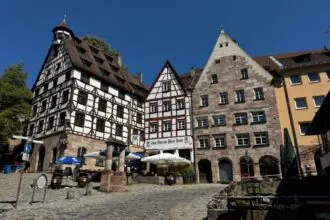
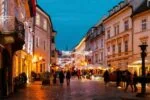
Nuremberg is Bavaria’s second city and one of Germany’s most historically layered, a place where a thousand years of imperial power, Renaissance art, and the darkest chapters of the 20th century sit within walking distance of each other. Its red-sandstone Old Town, painstakingly rebuilt after World War II, still feels convincingly medieval.
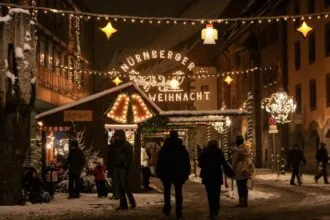
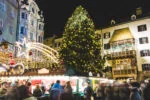
The skyline is dominated by the Kaiserburg, the Imperial Castle that once hosted every Holy Roman Emperor, while the cobbled lanes below hold half-timbered houses, two soaring Gothic churches, and the fountain-filled Hauptmarkt that becomes the world-famous Christkindlesmarkt every December.
Nuremberg carries a heavier history too. The Nazi Party staged its largest rallies here, the postwar trials that defined international justice took place in the city, and several underground bunkers built during Allied bombing raids are now open to the public.
Beyond the old walls, the city rewards families and collectors alike, with a metalware museum tucked into a former factory and a full-scale PLAYMOBIL theme park a short bus ride away in neighbouring Zirndorf.
This guide works through Nuremberg’s essential sights in a sensible order: the Old Town’s landmark buildings first, followed by its guided tours, WWII-era sites, quirky museums, and family days out, before finishing with the practicalities of the city’s transport pass.
Use the at-a-glance table below to plan a route, then read on for the detail on opening hours, admission prices, and what each stop is actually like to visit.
| Attraction | Duration | Price |
|---|---|---|
| Nuremberg Castle (Kaiserburg) | Self-guided, 1-2 hours | €9 (£7.74/$10.53) combination ticket |
| Hauptmarkt and the Schöner Brunnen | 20-30 minutes | Free to view |
| St. Lorenz Church | 20-30 minutes | Free entry, donation welcome |
| St. Sebald Church | 20-30 minutes | €5 (£4.30/$5.85) adult |
| Tunnels and Secret Passages in the City Wall Tour | 1 hour | from £10 (€11.60/$13.60) |
| Old Town Public Guided Walking Tour | 1 hour 30 minutes | from £14 (€16.24/$19.04) |
| City Tour with the Bimmelbahn Train | 40 minutes | from £9 (€10.44/$12.24) |
| Albrecht Dürer’s House | 45-60 minutes | €7.50 (£6.45/$8.78) adult |
| Germanisches Nationalmuseum | 2-3 hours | €10 (£8.60/$11.70) adult |
| Medieval Dungeons Guided Tour | 45 minutes | from £9 (€10.44/$12.24) |
| Walking Tour of the Former Nazi Party Rally Grounds | 2 hours | from £11 (€12.76/$14.96) |
| Historischer Kunstbunker WWII Art Bunker Tour | 1 hour | from £10 (€11.60/$13.60) |
| Nuclear Bunker in the Main Railway Station | 1 hour 15 minutes | from £11 (€12.76/$14.96) |
| BMF Museum Day Ticket | 1 day, Sunday only | from £4.28 (€4.96/$5.82) |
| PLAYMOBIL Funpark | 1 day | from £12 (€13.92/$16.32) |
| Hop-On/Hop-Off Bus Tour | Flexible, full day | from £19 (€22.04/$25.84) |
| Nürnberg 48-Hour CityCard | 2 days | from £33 (€38.28/$44.88) |
Nuremberg Castle (Kaiserburg)
The Kaiserburg, or Imperial Castle, is Nuremberg’s defining landmark, a fortified palace complex that towers over the Old Town from a sandstone outcrop at its northern edge. From 1050 to 1571, every Holy Roman Emperor stayed here at least once, and Nuremberg’s role hosting the empire’s first Imperial Diet after a new ruler’s election, decreed by Charles IV’s Golden Bull of 1356, made this one of the most politically significant castles in medieval Europe.
The complex actually comprises three linked sections: the Kaiserburg proper, the Burggrafenburg ruins, and the municipal Reichsstadt fortifications, though visitors mostly explore the Palas state rooms, the Romanesque Double Chapel, and the Sinwell Tower, which offers sweeping views over the city’s red rooftops.
A combination ticket covering the Palas, Double Chapel, museum, Deep Well and Sinwell Tower costs €9 (£7.74/$10.53) for adults, rising to €10 (£8.60/$11.70) from January 2026, with a reduced rate of €8 (£6.88/$9.36). Individual sections, such as the Palas and museum alone, can be visited for €7 (£6.02/$8.19).
The Deep Well demonstration is worth timing a visit around: staff lower a lit candle more than 50 metres down the shaft to show just how deep the well runs, a simple trick that still draws an audible gasp from most groups. Tickets for the well tour alone cost €4 (£3.44/$4.68).
The castle gardens are free to enter and open daily from April to October, offering one of the best photo spots in the city looking back over the Old Town’s towers and rooftops. The smaller Maria Sibylla Merian Garden keeps more limited weekend hours.
Opening hours run daily from 9am to 6pm between April and September, shortening to 10am to 4pm from October to March. The castle closes on 1 January, Shrove Tuesday, and 24, 25 and 31 December, so check the calendar before planning a visit around a holiday date.
Holders of the Nürnberg Card get free entry to the whole complex, which makes the castle one of the best-value stops to build a city-card visit around given its otherwise significant combination ticket price.
Hauptmarkt and the Schöner Brunnen Fountain
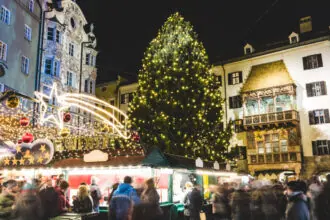
The Hauptmarkt is Nuremberg’s central square, laid out in the 14th century and still the beating heart of the Old Town. It hosts a produce and flower market most weekday mornings and transforms into the world-famous Christkindlesmarkt every Advent season.
At its centre stands the Schöner Brunnen, the Beautiful Fountain, a 19-metre Gothic spire built between 1385 and 1396 and decorated with 40 painted sandstone figures representing electors, prophets, philosophers and evangelists arranged across four tiers. The original figures have been moved indoors for preservation, with weatherproof replicas standing in their place today.
Set into the fountain’s iron railing is a seamless golden ring, the subject of Nuremberg’s best-known local legend. Visitors are told that spinning the ring three times while making a silent wish brings good luck, a tradition that has worn a visible shine into the metal over the decades.
Admission to the square and fountain is free, and both are open around the clock as public outdoor spaces. The best light for photographs comes in the early morning, before the market stalls and tour groups fill the square.
Facing the Hauptmarkt is the Frauenkirche, whose Männleinlaufen mechanical clock performs a small daily display at noon, worth timing a visit around if the fountain and market alone are not enough to fill an hour here.
Best for a short trip. Compare rooms by neighbourhood, price and guest rating before you book.
Compare hotelsBest for groups who want one address and separate bedrooms rather than three hotel rooms.
See holiday homesBest as a last check before booking. Compares hotel rates across several sites in one search.
Compare ratesSt. Lorenz Church
St. Lorenz is Nuremberg’s largest parish church, begun around 1250 as a three-aisled Gothic basilica and extended between 1439 and 1477 with a soaring late Gothic hall choir. Its twin west towers rise to 80 and 81 metres, making the building visible from most points in the southern Old Town.
The church turned Lutheran in 1524, early in the Reformation, and today it houses two of the finest pieces of medieval religious art anywhere in Germany: Veit Stoß’s carved wooden Annunciation of 1518, suspended above the choir, and Adam Kraft’s intricate stone tabernacle of 1496, standing nearly 20 metres tall.
St. Lorenz also holds one of the world’s largest church organs, with roughly 12,000 pipes and 165 registers spread across several instruments, and free organ recitals are held regularly for visitors who happen to time their trip right.
The building was heavily damaged by Allied bombing in 1945 and was not fully rededicated until 10 August 1952, a restoration that mirrors the wider rebuilding of Nuremberg’s Old Town after the war.
St. Lorenz is open Monday to Saturday from 9am to 5:30pm and Sunday from 1pm to 3:30pm, with free entry to explore the interior, though a donation toward its upkeep is welcomed at the door.
St. Sebald Church
A short walk north across the Pegnitz river, St. Sebald is Nuremberg’s oldest parish church, begun around 1215 as a Late Romanesque basilica with two choirs before Gothic modifications were added from 1309 onward. It formerly served as the city council’s own church, underlining its historic status alongside St. Lorenz.
The church’s centrepiece is the bronze shrine of St. Sebaldus, cast by master metalworker Peter Vischer and his sons between 1508 and 1519, a masterpiece of German Renaissance bronze work that still holds the saint’s relics at the high altar.
Like most of Nuremberg’s medieval core, St. Sebald was badly damaged in the Second World War and was reconstructed and reconsecrated in 1957, a rebuild that preserved much of its pre-Reformation art collection.
Admission costs €5 (£4.30/$5.85) for adults, with a reduced rate of €2.50 (£2.15/$2.93) for students, seniors and groups; children and young people under 18 enter free, and religious services themselves carry no charge.
Opening hours shift with the seasons: 9:30am to 4pm from January to March, and 9:30am to 6pm from April through December, giving longer daylight hours to explore during the main tourist season and Christmas market period.
Tunnels and Secret Passages in the City Wall Tour
Beneath Nuremberg’s Old Town runs a network of sandstone tunnels and passages originally cut as cellars and escape routes, later repurposed as air raid shelters during the Second World War. This guided tour takes small groups underground to see sections rarely open to the public.
The one-hour walk covers roughly a kilometre of tunnel beneath the city walls, weaving through cool, low-ceilinged corridors that once stored beer and wine for the merchants above before wartime authorities converted them into bomb shelters for thousands of residents.
Guides explain how the tunnel network connects to the wider story of Nuremberg’s fortifications, the largest and best-preserved medieval city wall system in Germany, and how it was adapted twice over: once for storage, once for survival.
The tour has built a strong reputation among visitors, holding a 4.8-star rating from more than 3,000 reviews and a Top pick badge on GetYourGuide, making it one of the most consistently well-reviewed activities in the city.
Comfortable, closed-toe shoes are worth wearing given the uneven underground floors, and a light layer helps too, since the tunnels stay noticeably cooler than the streets above regardless of the season.
Old Town Public Guided Walking Tour
For a first overview of Nuremberg, this public walking tour groups travellers together with a local guide for a 90-minute loop through the Old Town’s core landmarks, from the Hauptmarkt and Schöner Brunnen to St. Sebald and the approach up to the castle.
Because it runs as a shared public tour rather than a private booking, it is one of the more affordable ways to get proper context on the city’s medieval layout, its rebuilding after 1945, and the stories behind buildings that are easy to walk past without knowing their significance.
The tour holds a 4.6-star rating across more than 2,700 reviews, reflecting consistently positive feedback on guide quality, a strong sign for anyone deciding between a self-guided wander and a structured introduction on their first day in the city.
Tours typically depart daily from a central meeting point near the Hauptmarkt, and English-language departures run alongside German ones, so it is worth checking the exact schedule and language when booking rather than assuming availability.
Booking this on arrival day works well, since the orientation it provides makes every later stop on this list, from the castle to the churches, easier to place within the wider city.
City Tour with the Bimmelbahn Train
The Bimmelbahn is a road-legal miniature train that loops through Nuremberg’s Old Town and past its major landmarks, giving visitors with limited mobility, young children, or simply tired legs an easy way to see the city’s layout without walking every cobbled street.
The 40-minute circuit passes the Hauptmarkt, the city walls, and several of the churches and squares covered elsewhere in this guide, with a recorded commentary pointing out the history of each stop as the train trundles past.
It is a particularly practical option for families travelling with a pushchair or grandparents who want the highlights without the full walking-tour distance, and it works well as a first orientation lap before deciding which sights are worth returning to on foot.
The tour carries a 4.4-star rating from more than 2,800 reviews, a solid score for what is fundamentally a low-effort sightseeing option rather than an in-depth historical deep dive.
Departures typically run from a stop near the Hauptmarkt at regular intervals through the day, and no advance booking is usually required outside of the busiest Christmas market weekends in December.
Albrecht Dürer’s House
Just below the castle, the half-timbered house at Albrecht-Dürer-Straße 39 was home to Germany’s most celebrated Renaissance artist from 1509 until his death in 1528, and it remains one of the best-preserved artist’s houses anywhere in Europe.
Inside, recreated period rooms show how Dürer and his workshop actually lived and worked, including a reconstructed print workshop where staff demonstrate historical woodcut and engraving techniques using replica tools, a highlight for anyone interested in how his famous prints were physically made.
The collection includes reproductions of Dürer’s major works alongside genuine period furnishings and studio equipment, since most of his original paintings now hang in major museums elsewhere, from Vienna to Munich, rather than in the house itself.
Admission costs €7.50 (£6.45/$8.78) for adults, with a reduced rate of €2.50 (£2.15/$2.93) and a family ticket priced at €8 (£6.88/$9.36); Nürnberg Card holders enter free.
The house is open Tuesday to Sunday from 10am to 6pm, with extended Monday opening during summer and the Christmas market season, so it is worth checking the calendar if visiting outside the usual midweek pattern.
Best if you can move a day either way. Shows how the fare changes across the month.
Compare flightsBest for short trips. Install the eSIM at home and arrive with working data, no shop queue.
Browse eSIMsBest if you would rather not work out the transport on arrival. Book it now and forget it.
View transfersGermanisches Nationalmuseum
The Germanisches Nationalmuseum is the largest museum of German cultural history in the world, holding more than 1.3 million objects spanning prehistory to the present day across a sprawling former monastery complex just south of the Old Town walls.
Highlights include Dürer’s own paintings and drawings, the oldest surviving terrestrial globe made by Martin Behaim in 1492, and one of the most important collections of historical musical instruments and scientific tools anywhere in Germany, making it worth several hours rather than a quick pass-through.
Standard admission costs €10 (£8.60/$11.70) for adults, with a reduced rate of €6 (£5.16/$7.02) for students, schoolchildren and disabled visitors, and a family ticket at €14 (£12.04/$16.38) covering up to two adults and four children.
Free admission runs every Wednesday from 5:30pm until closing, excluding special exhibitions, a useful option for budget-conscious visitors happy to fit their visit into a shorter evening window instead.
Opening hours run Tuesday to Sunday from 10am to 6pm, extending to 8:30pm on Wednesdays; the museum is closed on Mondays, so plan around that when building a multi-day itinerary.
Medieval Dungeons Guided Tour
Beneath Nuremberg’s former town hall lie the Lochgefängnisse, a set of medieval dungeons used for interrogation and short-term imprisonment from the 14th century onward, now open to the public as one of the city’s most atmospheric guided tours.
The 45-minute tour leads small groups through a maze of stone cells, narrow corridors and an original torture chamber, with guides explaining how the city’s medieval justice system actually operated, from arrest through interrogation to punishment.
Because the space sits directly beneath the Rathaus (town hall) that still functions today, the contrast between the grand civic building above and the grim cells below makes for one of the more memorable stops on this list, particularly for visitors with an interest in medieval law and order.
The tour holds a 4.8-star rating from more than 2,400 reviews, putting it among the highest-rated paid activities in Nuremberg alongside the tunnel tour above.
Given the low ceilings and uneven stone floors, this is not the easiest tour for visitors with mobility restrictions, and sturdy footwear is worth wearing regardless of who is taking part.
Walking Tour of the Former Nazi Party Rally Grounds
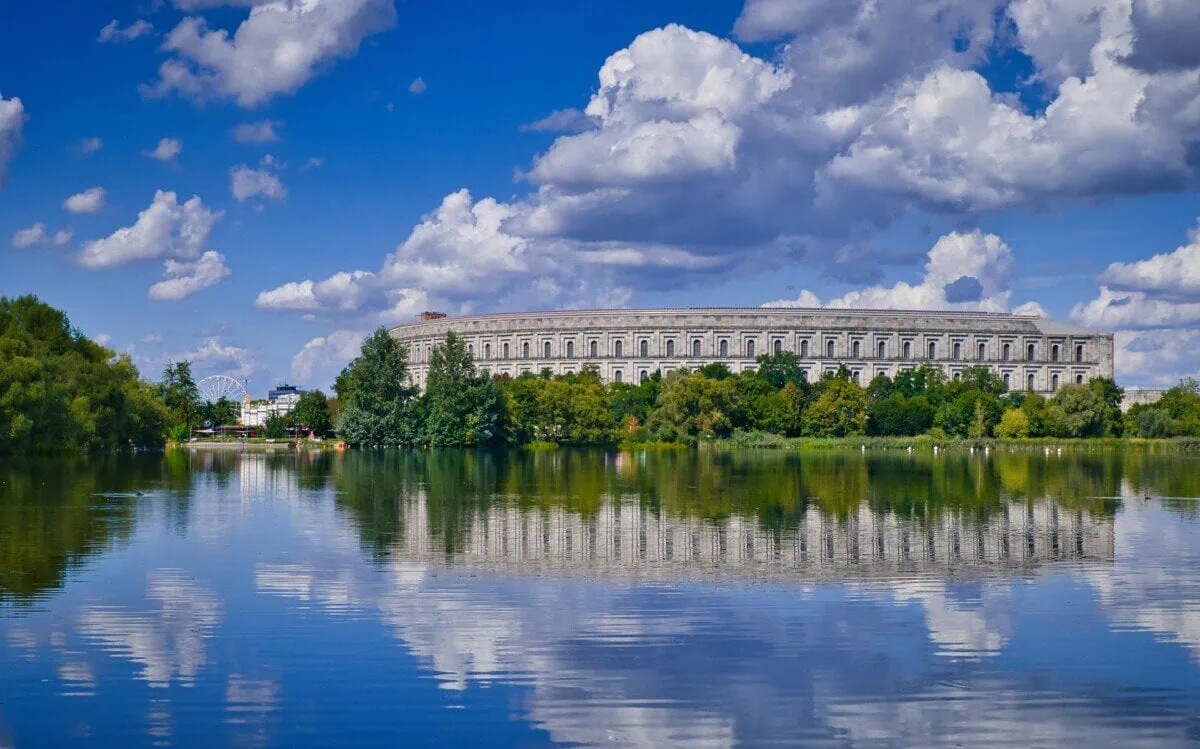
The Reichsparteitagsgelände, on the southeastern edge of the city, is the vast, unfinished complex where the Nazi Party staged its largest propaganda rallies between 1933 and 1938, and it remains one of the most significant, and sobering, Third Reich sites still standing anywhere in Germany.
This two-hour guided walk covers the Zeppelin Field grandstand, the never-completed Congress Hall modelled loosely on Rome’s Colosseum, and the Great Road built for military parades, with guides explaining both the architectural ambition behind the complex and the historical context of what actually happened there.
Rather than presenting the site as a curiosity, guides on this tour typically frame it within Germany’s wider process of confronting its own history, a subject the country treats with unusual openness compared with many others.
The tour holds a 4.7-star rating from more than 2,000 reviews, reflecting consistently strong feedback on guides’ historical knowledge and their handling of what is, by nature, difficult subject matter.
The complex is large and mostly outdoors, so comfortable walking shoes and weather-appropriate clothing matter here more than at most other stops on this list, particularly in Nuremberg’s colder months.
Historischer Kunstbunker WWII Art Bunker Tour
Cut into the sandstone rock beneath the castle, the Historischer Kunstbunker was originally built as a beer cellar before being reinforced during the Second World War to protect Nuremberg’s most valuable artworks and treasures from Allied bombing raids.
Among the items sheltered here were the imperial regalia of the Holy Roman Empire and major artworks from the city’s churches and museums, moved underground as bombing raids intensified from 1943 onward and only returned to public display after the war.
The one-hour guided tour leads visitors through the original vaulted chambers, largely unchanged since the 1940s, with guides explaining both the engineering behind the bunker’s construction and the specific objects it was built to protect.
It holds a 4.8-star rating from more than 1,000 reviews, matching the tunnel tour above as one of the best-reviewed underground experiences in the city.
As with the city wall tunnels, expect cool temperatures and uneven floors underground, and note that the bunker is reached by a steep staircase, which is worth factoring in for visitors with limited mobility.
Nuclear Bunker in the Main Railway Station
Beneath Nuremberg’s busy Hauptbahnhof lies a Cold War-era nuclear fallout shelter, built to protect thousands of civilians in the event of an attack and largely forgotten by the millions of travellers who pass through the station above it every year.
This 75-minute tour takes small groups through the shelter’s blast doors, decontamination areas, and rows of bunk-style sleeping quarters, with guides explaining how the facility was designed to function as a self-contained refuge for an extended period.
The tour sits at an interesting midpoint between Nuremberg’s medieval underground tunnels and its Second World War sites, adding a Cold War layer to the city’s history that many first-time visitors do not expect to find.
It holds a 4.6-star rating from 346 reviews, a smaller but still strongly positive sample compared with the city’s more established underground tours.
Because the meeting point sits inside the working railway station, this tour combines naturally with a day spent exploring central Nuremberg on foot, without needing to travel out to a separate site.
BMF Museum Day Ticket
BMF stands for Bayerische Metallwarenfabrik, the Bavarian Hardware Factory founded in Nuremberg in 1902 by Hans Wagner and Willy Gundel, and this small museum occupies part of the company’s former factory premises at Wiesentalstraße 34, a short tram ride from the Old Town.
Across roughly 250 square metres, the museum displays product designs, historical catalogues and original manufactured pieces that trace the company’s role in the city’s once-dominant metalworking and toy industries, an unglamorous but genuinely distinctive corner of Nuremberg’s industrial heritage.
This is a niche stop rather than a headline attraction, and it suits visitors with a specific interest in industrial design or Nuremberg’s manufacturing history more than a general first-time sightseer working through the main landmarks.
Admission costs €5 (£4.30/$5.85) for adults and €3 (£2.58/$3.51) at the reduced rate, and the museum keeps notably limited hours, open only on Sunday afternoons from 2pm to 6pm, so it needs deliberate planning around rather than a spontaneous drop-in.
Given those limited hours, it is worth checking the GetYourGuide listing and the museum’s own site for the current schedule before building a Sunday around it, since a single closed day can otherwise derail an itinerary that depends on it.
Best for short city stops where being central matters more than the room. Dorms and private rooms both listed.
See hostelsBest if you have ever given up on a claim. AirHelp checks whether the flight qualifies and pursues it for you.
See the benefitsBest if your room is not ready yet. Left luggage booked in advance, so you are not hunting for a locker.
Check storagePLAYMOBIL Funpark
The PLAYMOBIL FunPark sits in Zirndorf, roughly ten kilometres west of central Nuremberg, and turns the toy brand’s playsets into a full-scale outdoor theme park with pirate ships, a Wild West town, a knight’s castle and a farm, all built for hands-on play rather than passive viewing.
Unlike most theme parks, there are no mechanical rides here; instead, children climb, dig, splash and role-play their way through oversized recreations of the toy sets, which makes it a particularly good fit for younger children who tire quickly of queuing.
A standard day ticket costs €24.90 (£21.41/$29.13) during the main season, dropping to a discounted €21.90 (£18.83/$25.62) for entry from 3pm onward, while winter season pricing starts from around €10.90 (£9.37/$12.75); children under three enter free year-round.
The park operates on a seasonal calendar, generally running from spring through early winter with reduced hours over the Snoozing Time period in November and a shorter winter schedule from late November through January, closing entirely on Christmas Eve, Christmas Day, Boxing Day, New Year’s Eve and New Year’s Day.
Getting there from central Nuremberg is straightforward by public bus, and the park makes a sensible full-day trip out of the Old Town for any family travelling with younger children who need a break from churches and museums.
Hop-On/Hop-Off Bus Tour
For visitors who want to see more of Nuremberg beyond the compact walkable Old Town, the hop-on/hop-off bus tour runs a loop connecting the main historic centre with sights further out, letting passengers get on and off freely at each stop across the day.
A recorded commentary, usually available in multiple languages through onboard headphones, covers the history of each stop as the bus moves through the route, functioning as a flexible alternative to a fixed-schedule walking tour.
This option suits visitors with limited time who want a broad overview in a single day, or anyone travelling with mobility restrictions who would struggle with the amount of walking that the Old Town’s cobbled streets otherwise demand.
It holds a 4.3-star rating from 853 reviews, the most modest score among the tours covered in this guide, reflecting mixed feedback that is fairly typical for hop-on/hop-off formats generally compared with smaller guided walking tours.
Tickets are typically valid for 24 hours from first use, making it possible to ride a full loop on arrival day for orientation, then hop off at specific stops the following day once you know which sights are worth returning to.
Is the Nürnberg Card Worth It?
The Nürnberg 48-hour CityCard bundles free entry to around 30 museums and attractions with unlimited public transport across Nuremberg, Fürth and Stein, valid for a full 48 hours from first use rather than fixed calendar days.
Officially, the card costs €38 (£32.68/$44.46) for adults and €12 (£10.32/$14.04) for children aged 6 to 11, with children under 5 travelling free alongside an adult cardholder; the GetYourGuide listing for the same product runs from £33 (€38.28/$44.88), so it is worth comparing both booking routes before paying.
Included attractions cover several of the paid stops in this guide, among them the Imperial Castle, Albrecht Dürer’s House and the Germanisches Nationalmuseum, alongside sights not covered here such as the Tiergarten zoo, the DB Museum and the Memorium Nuremberg Trials.
Doing the maths makes the value clear fairly quickly: a combination ticket at the castle (€9), the Dürer House (€7.50) and the Nationalmuseum (€10) alone already totals more than €26, before adding two days of unlimited transport, which typically costs around €8 to €9 per day on its own.
For anyone planning to visit three or more paid museums over two days, or who wants to avoid buying individual transport tickets altogether, the card comfortably pays for itself; for a shorter, lighter itinerary focused mainly on the free Old Town landmarks, it is less essential.

Nuremberg’s Bratwurst Scene: Where Locals Actually Eat
Nuremberg’s food identity centres on the Nürnberger Rostbratwurst, a small grilled sausage around 7 to 9 centimetres long that holds Protected Geographical Indication status, meaning it can legally only be produced inside the city. Locals order them the traditional way, as drei im Weckla, three sausages tucked into a bread roll with mustard, a quick and inexpensive way to eat exactly as a Nuremberger would.
For a sit-down version, the Bratwursthäusle on Rathausplatz claims to be Nuremberg’s oldest restaurant, tracing its roots back to 1312 and grilling its sausages over an open beechwood fire in full view of diners. It sits right beside the town hall, making it an easy stop after the Medieval Dungeons tour covered earlier in this guide.
Inside the Handwerkerhof craftsmen’s courtyard near the Königstor gate, Behringer’s Bratwurst-Glöcklein serves the same sausages from a history its owners trace to the 14th century, with past regulars said to include Albrecht Dürer and sculptor Adam Kraft. It opens Monday to Saturday and pairs naturally with the Handwerkerhof’s craft shops, covered in the next section.
Beyond bratwurst, Nuremberg is Germany’s Lebkuchen capital, and the Lebkuchen-Schmidt outlet store sells the city’s famous soft gingerbread, spiced with cardamom, cloves and candied citrus, in tins that travel well as gifts. It overlaps with the shopping streets covered below, so both stops work well on the same afternoon.
GetYourGuide – “Rotes Bier” and “Blaue Zipfel”: A Historical-Culinary Walk
Shopping in Nuremberg: From Karolinenstraße to the Handwerkerhof
Nuremberg’s main shopping streets, Karolinenstraße and Breite Gasse, run through the Old Town near St. Lorenz Church, lined with high street chains, independent boutiques and the odd designer name. Both are fully pedestrianised, making them an easy add-on to a morning spent visiting the churches covered earlier in this guide.
Just outside the old city walls near the main railway station, the Handwerkerhof recreates a medieval craftsmen’s courtyard, its half-timbered stalls selling handmade leather goods, pewter, glass engravings and dolls rather than mass-produced souvenirs. It operates seasonally from March through December, Monday to Saturday, so it is worth checking it is open before making a special trip.
The Hauptmarkt, already covered above for its fountain and Christmas market, also runs a produce and flower market on weekday mornings, with shops around the square selling jewellery, antiques and local souvenirs. It is worth a second look purely as a shopping stop rather than only a sightseeing one.
Gingerbread makes the easiest Nuremberg souvenir to carry home, and the Lebkuchen-Schmidt outlet mentioned in the food section above sells decorative tins that hold up well in luggage. For anything heavier, most Old Town shops accept card payment, though smaller stalls at the Handwerkerhof and Hauptmarkt sometimes prefer cash.
Nuremberg After Dark: Bars, Beer Cellars and a Growing Craft Scene
Nuremberg’s nightlife centres on the streets around Tiergärtnerplatz, beneath the castle, and spreads south across the Pegnitz river into the Lorenz half of the Old Town, where bars, beer cellars and late-opening kneipen cluster within easy walking distance of each other. Most venues are small and traditional rather than club-focused, so an evening here tends to mean bar-hopping rather than one big night out.
For beer specifically, Bierwerk combines traditional Franconian brewing with a more modern craft approach and keeps pub games on hand, while Hausbrauerei Altstadthof brews its own beer on site, including unusual varieties such as Rote Weissbier and Schwarzbier rarely found elsewhere. Both sit within the Old Town and work well as an evening pair.
Smaller, more traditional spots round out the scene, among them Weissbierhex, a cosy kneipe built around Bavarian wheat beer, and Kloster, a long-standing riverside bar known for its Franconian beer selection. Both draw a mix of locals and visitors rather than feeling purely tourist-oriented.
Franconia brews more beer per capita than almost anywhere else in Germany, and Nuremberg’s bars reflect that, with menus built around regional styles rather than imports. Most bars stay open into the early hours on Friday and Saturday, though many Old Town kneipen keep quieter, earlier closing times midweek.

Nuremberg with Kids: The Zoo, the Toy Museum and Family-Friendly Days
The Tiergarten Nürnberg ranks among Europe’s most attractive landscape zoos, spread across 67 hectares of forest and home to around 280 species, including a dolphin lagoon that was the first outdoor dolphin pool built in Germany. Adult admission runs €21 (£18.06/$24.57), with a family ticket for two adults and their children priced at €47.50 (£40.85/$55.58).
In the Old Town itself, the Spielzeugmuseum, Nuremberg’s Toy Museum, traces the city’s centuries-old role as a toy manufacturing centre through tin toys, dolls’ houses and early board games across several floors. Adult tickets cost €7.50 (£6.45/$8.78), with a small group ticket covering one adult and up to three children priced at €8 (£6.88/$9.36).
Families will also get good use out of this guide’s Bimmelbahn train tour, since the miniature train’s slow pace and recorded commentary suit younger children who tire quickly on foot. The castle gardens, free to enter between April and October, offer open lawns where children can run around after a morning of museums and churches.
For a full day built entirely around play, the PLAYMOBIL Funpark covered earlier in this guide remains the best family day trip from central Nuremberg, its hands-on pirate ships and knight’s castle needing no booking beyond the bus ride out to Zirndorf.
Rainy Day Nuremberg: The Best Indoor Things to Do
Nuremberg has plenty to offer when the weather turns, starting with the DB Museum, Germany’s oldest railway museum, where Ludwig II’s royal train and a coal wagon from 1829, the oldest surviving railway vehicle on the mainland, sit alongside a 1,000-square-metre model railway. Adult admission costs €10 (£8.60/$11.70), and the museum sits a short walk from the main station.
For contemporary art and design, the Neues Museum Nürnberg houses work from the 1950s onward across 3,000 square metres near the Hauptbahnhof, with a rooftop beehive producing honey sold in its own shop as an unusual bonus. Adult tickets cost €9 (£7.74/$10.53), with concessions priced at €6 (£5.16/$7.02).
The Germanisches Nationalmuseum, covered in detail earlier in this guide, remains the single best rainy-day option in the city given its sheer size, and the underground tunnel and bunker tours double as shelter from the rain by definition. The niche BMF Museum, open Sunday afternoons only, is worth combining with a wet Sunday if the timing lines up.
Between the museums, the tunnels and the churches, Nuremberg has enough indoor options to fill two or three full days without setting foot outside for long, which makes it a reliable year-round city break rather than one dependent on good weather.

Rupert’s Handy Travel Tips
Nuremberg mixes grand imperial landmarks with some genuinely strange underground corners, so a bit of planning goes a long way here.
- Wear proper shoes underground: several of Nuremberg’s best-rated tours, from the city wall tunnels to the WWII art bunker, involve uneven stone floors and steep steps.
- Book dark-tourism tours ahead in summer: the Nazi Party Rally Grounds walking tour and Medieval Dungeons tour both run with limited group sizes and can sell out on weekends.
- Do the maths on the Nürnberg Card first: it only pays for itself if you’re visiting several paid museums and using public transport across both days.
- Check the BMF Museum’s opening day: it only opens on Sunday afternoons, so build it around that rather than assuming a weekday visit.
- Give the Christmas market season extra time: if visiting in December, the Hauptmarkt gets genuinely crowded and queueing for underground tours can take longer than usual.
- Base yourself inside the city walls: nearly everything except the PLAYMOBIL FunPark sits within a 20-minute walk of the Hauptmarkt, so a central hotel saves on transport.
Want to meet the reindeer behind our travel tips? Find out more in our page Who is Rupert?.



Frequently Asked Questions About Things to Do in Nuremberg
How many days do I need to see the main sights in Nuremberg?
Two to three days covers the Old Town landmarks, one or two guided tours and a museum, though adding the PLAYMOBIL FunPark or a deeper dive into the WWII sites is worth a third or fourth day.
Is Nuremberg’s Old Town walkable?
Yes, nearly every landmark in this guide sits within the compact, largely pedestrianised Old Town, and the castle, churches and Hauptmarkt are all within a 15 to 20 minute walk of each other.
What is Nuremberg best known for?
Nuremberg is best known for its Christkindlesmarkt Christmas market, its well-preserved medieval Old Town, its role as the site of the Nazi Party’s largest rallies and the postwar Nuremberg Trials, and its long history as a centre for toy and metalware manufacturing.
Are the churches in Nuremberg free to visit?
St. Lorenz is free to enter with a suggested donation, while St. Sebald charges €5 (£4.30/$5.85) for adults, with concessions and free entry for under-18s.
Is the Nürnberg Card worth buying?
It depends on the itinerary: for anyone visiting three or more paid attractions and relying on public transport across two days, it comfortably pays for itself, though a lighter trip focused on free Old Town sights may not need it.
What’s the best way to see Nuremberg’s WWII history?
The Walking Tour of the Former Nazi Party Rally Grounds and the Historischer Kunstbunker tour cover the two most significant sites, and both are best visited as guided experiences given the historical context involved.
Is the PLAYMOBIL FunPark suitable for very young children?
Yes, the park is built around hands-on play rather than mechanical rides, which makes it a particularly good fit for toddlers and younger children who tire of queuing for rides elsewhere.
When is the best time to visit Nuremberg?
Late November and December bring the Christkindlesmarkt but also the biggest crowds, while spring and early autumn offer milder weather and shorter queues at the castle and underground tours.
Further Reading
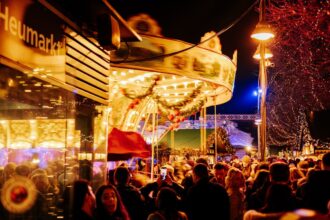
Nuremberg’s Christkindlesmarkt is the market against which most of Germany’s other Advent markets are measured, and travellers building a wider festive trip may want to compare it against other major German markets, including our Cologne Christmas Markets guide, which covers the seven distinct markets spread across that city’s Old Town and riverside harbour.
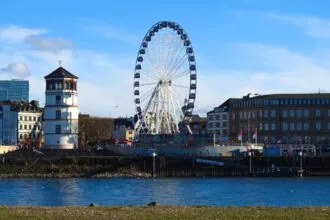
For a longer look at another underrated German city, our Best Things to Do in Düsseldorf guide covers a similarly walkable Old Town, major art museums and a riverside promenade, making it a natural add-on to a wider Bavaria and Rhineland trip.
For the most current opening hours and admission prices at Nuremberg’s Imperial Castle, always worth checking given the January 2026 price change mentioned above, the official Bavarian Palace Administration’s Kaiserburg page keeps its schedule and ticket information up to date.
If you’re visiting between late November and Christmas Eve, our dedicated Nuremberg Christmas Market guide covers the Christkindlesmarkt’s history, food and 2026 dates in full. For getting into the city from the airport, see our Nuremberg Airport Transfers guide, and if you have time to explore further afield, our Day Trips from Nuremberg guide covers Bamberg, Regensburg and more by regional train.