Reviewed by our editorial team Published
Cologne does not run one Christmas market. It runs seven, spread across the city from the foot of the Kölner Dom cathedral to the Rhine waterfront, and each has its own distinct character rather than being a smaller copy of the next. That makes Cologne one of the most comprehensive Christmas market cities in Germany, but it also means a first-time visitor can easily waste an evening wandering between markets that don’t actually suit what they wanted from the trip.
The Cathedral Market beside the Dom is the biggest draw and the most crowded, while Neumarkt‘s Angels’ Market leans romantic and minimalist, Rudolfplatz recreates a half-timbered medieval village, and Heinzels Wintermärchen spreads a whimsical elf theme across two connected Old Town squares, complete with an ice rink. The harbour market at Rheinauhafen runs the longest season of them all and stays noticeably calmer than the city-centre markets. Based on the confirmed 2026 pattern from Cologne market organisers, most markets run from mid-to-late November through to 23 December, with a couple, including the harbour, extending into early January.
This guide walks through each market, what actually distinguishes it from the others, and which ones are worth prioritising depending on whether you want atmosphere, quiet, families, or ice skating. It also covers the practical side: food and drink, how to get between markets on foot or by tram, and where to stay so you’re within easy reach of more than one.
| Market | Location | Character |
|---|---|---|
| Cathedral Market | Kölner Dom | Largest, most iconic, very crowded |
| Angels’ Market (Markt der Engel) | Neumarkt | Romantic, minimalist white chalets |
| Nikolausdorf | Rudolfplatz | Medieval village, quieter |
| Heinzels Wintermärchen (Alter Markt) | Old Town | Whimsical elf theme, shopping |
| Heinzels Wintermärchen (Heumarkt) | Heumarkt | Ice rink, mulled wine feature |
| Harbour Market | Rheinauhafen | Nautical, calmer, longest season |
| VeedelsAdvent | Chlodwigplatz, Südstadt | Small, local neighbourhood feel |
The Cathedral Market: Big, Beautiful and Busy
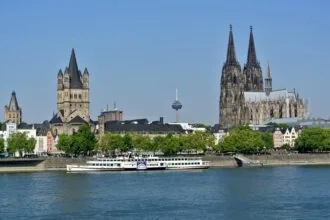
The Weihnachtsmarkt am Kölner Dom sits directly beside Cologne’s UNESCO-listed cathedral, and it is the market every first-time visitor pictures. A towering Christmas tree anchors a maze of wooden chalets under strings of lights, with the Dom’s twin spires floodlit above the whole scene, and it is genuinely one of the most striking market settings in Germany.
That visual impact comes at the cost of crowds. Weekend evenings in December are shoulder-to-shoulder busy, so anyone prioritising photographs or a relaxed browse should aim for a weekday afternoon instead, ideally in the first couple of weeks after opening around mid-November. Mulled wine here typically runs from around €5 (£4.30/$5.60) a cup, similar to the other Cologne markets, though the setting is what people are really paying the queue for.
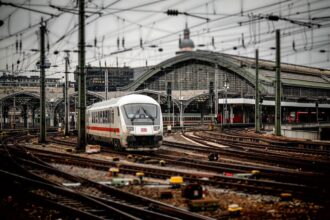
Because it sits right beside Cologne Hauptbahnhof, this is also the easiest market to combine with a short visit, whether you’re arriving by train for the day or breaking a longer journey. Based on the confirmed 2026 season dates, expect the Cathedral Market to run from around 16 November to 23 December, closing earlier than the harbour and Heumarkt markets.
Neumarkt and Rudolfplatz: The Quieter Alternatives
A ten-minute walk from the Dom, Neumarkt hosts the Angels’ Christmas Market, built around white chalets, string lights suspended between trees and live angel-costumed performers rather than the denser, darker-wood chalet style of the Cathedral Market. It reads as more romantic and photogenic in daylight, and it draws a noticeably calmer crowd even during peak weekends.
Further south, Rudolfplatz hosts Nikolausdorf, a market built around half-timbered chalet facades designed to look like a small medieval village, complete with a chapel structure and a dedicated children’s programme. It is one of the smaller markets on this list, which makes it a sensible choice for anyone visiting with young children who don’t want to navigate the Cathedral Market’s crowds.
Both markets sit on Cologne’s compact city-centre tram network, so it is entirely realistic to see the Cathedral Market, Neumarkt and Rudolfplatz in a single afternoon without a car. Expect similar pricing across all three, with mulled wine and snacks in the €4 to €6 (£3.50 to £5.20/$4.50 to $6.70) range.
See hotel options and places to stay in Cologne.
Browse hotelsBrowse apartments, homes and self-catering accommodation in Cologne.
Browse rentalsSee hotel prices from multiple booking sites in one search.
Compare ratesHeinzels Wintermärchen: Old Town and the Ice Rink
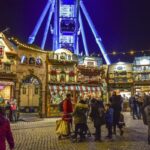
Named after the Heinzelmännchen, Cologne’s legendary house elves, Heinzels Wintermärchen spreads across two connected squares, Alter Markt and Heumarkt, in the heart of the Old Town. The Alter Markt half leans toward shopping and themed alleys, with picturesque half-timbered buildings as a backdrop, while the Heumarkt half is where the ice rink and feuerzangenbowle stalls (rum-soaked sugar cones set alight over hot wine) are found.
Because it runs across two linked squares rather than one, this is worth budgeting more time for than the smaller markets on this list, particularly if skating is part of the plan. Ice rink sessions typically cost around €6 to €8 (£5.20 to £7/$6.70 to $9) including skate hire, and slots can fill up on weekend evenings.
The Heumarkt side of Heinzels Wintermärchen also runs later than most of the other markets, typically staying open into early January based on the confirmed 2026 pattern, which makes it a good choice for anyone visiting Cologne between Christmas and New Year when several of the other markets have already closed.
Rheinauhafen: The Harbour Market Away From the Crowds
Set against the Rhine and Cologne’s distinctive Kranhaus crane-buildings, the Harbour Christmas Market at Rheinauhafen trades the density of the Old Town markets for open riverside space and a nautical theme. It is a fifteen to twenty minute walk south from the Cathedral, or a short tram ride, and it draws a noticeably smaller crowd than any of the city-centre markets.
Stalls here lean toward sweet treats and gifts rather than the full food-and-drink spread of the bigger markets, and the riverside setting makes it a pleasant stop even if you’ve already visited one of the busier options earlier in the day. Based on confirmed 2026 dates, this is also the longest-running of Cologne’s seven markets, typically open from mid-November through to early January.
For anyone who finds the Cathedral Market’s crowds overwhelming, or who is visiting later in the season after several other markets have closed, the harbour is the most reliable fallback. It is also one of the better options for an evening walk, since the riverside lighting reflects nicely off the water.
Getting Between the Markets and Where to Stay
Cologne’s compact centre makes it realistic to visit three or four markets in a single day, since the Cathedral Market, Neumarkt, Rudolfplatz and Heinzels Wintermärchen all sit within a 20-minute walk of each other or one short KVB tram hop. The harbour market and the smaller Chlodwigplatz neighbourhood market in Südstadt are a little further out, best reached by tram rather than on foot if you’re short on time.
Arriving from Cologne Bonn Airport (CGN), the S-Bahn runs directly into Cologne Hauptbahnhof, right beside the Cathedral Market, in around 15 minutes. Our Cologne Airport Transfers guide covers every route in, including taxi and private transfer pricing for anyone travelling with luggage or arriving late.
For accommodation, staying in the Altstadt (Old Town) or near the Hauptbahnhof puts you within walking distance of four of the seven markets, which is the most efficient base if your priority is seeing as many as possible. Hotel prices rise sharply on December weekends, so booking several weeks ahead is worth doing rather than assuming last-minute availability.
Düsseldorf is close enough to fold into the same trip rather than treating Cologne as a standalone destination. Direct trains cover the roughly 35 kilometres between the two cities in as little as 20 minutes on the fastest ICE services, or around 30 minutes on a regional RE train, which makes a full weekend split between both cities a realistic way to see two genuinely different takes on the Rhineland Christmas market tradition.
Rides, Ice Skating and Craft Workshops
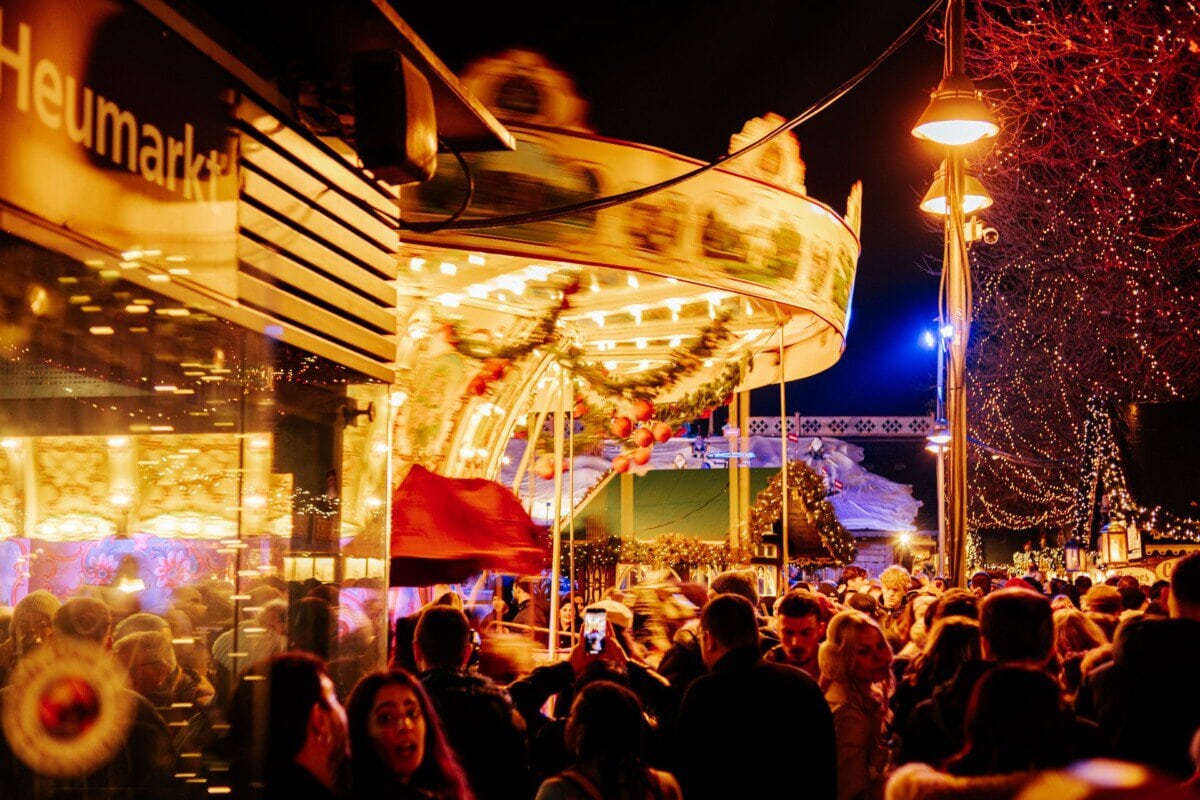
Cologne’s markets are not just stalls to browse past. At Heinzels Wintermärchen, the Alter Markt and Heumarkt squares between them pack in a Ferris wheel, a historic carousel, and what local organisers bill as one of Germany’s finest open-air ice rinks, with more than 100 metres of skating space. Ice stock sport, Bavaria’s answer to curling, is also set up nearby, with rink hire and a warm drink typically included for anyone visiting as a group.
Alongside the rides, the Handwerkergasse (artisan lane) at Alter Markt is where the market earns its craft credentials, with wood carvers, blacksmiths and confectioners demonstrating their trade live rather than only selling finished pieces. Children have their own dedicated activities here too, including candy cane making, horseshoe forging, and a working Christmas Post Office for letters to Santa.
Over at the Cathedral Market, the draw is more theatrical than physical: a central pavilion hosts more than 100 free stage performances across the season, alongside a colourful children’s programme timed for family visits. Rudolfplatz’s Nikolausdorf runs its own smaller children’s programme too, in keeping with its quieter, family-first character.
Skate hire at Heumarkt typically costs around €6 to €8 (£5.20 to £7/$6.70 to $9), and slots are worth booking ahead for weekend evenings. Of all seven markets, Heinzels Wintermärchen is the one to prioritise if activities matter more to your visit than atmosphere alone.
What’s on Sale: Crafts, Gifts and Festive Food
Each of Cologne’s markets sells a slightly different mix, and it is worth knowing what to expect before deciding where to shop. At Heinzels Wintermärchen, the same wood carvers, blacksmiths and confectioners seen demonstrating at Handwerkergasse sell their own finished work directly, from carved ornaments to handmade sweets, alongside a proper food line-up of strudels, waffles, apple pancakes, potato fritters (Reibekuchen) and flame-grilled salmon. The Futter- und Naschgasse (food and treats lane) is the place to head if eating your way round matters more than gift shopping.
Neumarkt’s Angels’ Market leans toward smaller, more delicate items in keeping with its romantic, minimalist white-chalet style, think tree ornaments, candles and handmade decorations rather than larger craft pieces. The harbour market at Rheinauhafen sells fewer big-ticket items too, with stalls concentrated on sweet treats and smaller gifts that suit its quieter, riverside character.
Food and drink prices stay fairly consistent across the markets. Mulled wine runs around €4 to €6 (£3.50 to £5.20/$4.50 to $6.70) a cup depending on the stall, and Heumarkt’s feuerzangenbowle, the rum-soaked sugar cone set alight over hot wine, is one of the more theatrical drinks worth trying if you haven’t had it before.
For anyone shopping for gifts to take home, Handwerkergasse at Heinzels Wintermärchen is the strongest single stop, since it combines the widest range of genuinely handmade items with the chance to watch them being made.
Christmas Lights and Other Festive Events Around Cologne
Unlike some European cities, Cologne does not run a single citywide lights switch-on ceremony. Each market’s own lighting instead comes on when that market opens for the season, so the Cathedral Market and Neumarkt are lit from around 16 November, while Heinzels Wintermärchen and the harbour market follow their own separate opening dates. There is no confirmed single switch-on night to plan a visit around, so working from each market’s own published opening date is more useful than chasing a specific lighting event.
Beyond the markets themselves, Cologne runs a wider festive programme through December. A Christmas Circus performs under a heated tent, and local theatres stage seasonal productions including The Nutcracker and Cinderella, alongside advent concerts held around the city. The Rhine gets its own festive twist too, with river cruises offering a Christmas brunch as an alternative way to see the markets from the water.
For visitors trying to cover more than one market without walking the whole way, the Christmas Market Express, a heritage trolley bus run by Wolters Bimmelbahnen, loops between several of the main markets, a useful option for anyone with limited mobility or simply short on time.
Cologne Cathedral itself hosts a full programme of Advent and Christmas concerts through December, including choral and organ recitals performed beneath the same twin spires that floodlight the Cathedral Market below. It’s a short walk from the market stalls to a genuinely different kind of evening, and checking the cathedral’s own concert listings ahead of a visit is worth doing if a specific date or performance matters to the trip.
Beyond the seven markets, Kölner Zoo runs its own seasonal lantern trail, China Lights, spread across around 20 hectares of the zoo grounds in Cologne-Niehl. The most recent edition was built from 64 illuminated lantern ensembles and around 1,400 individual figures, mostly animals and mythical scenes, made using traditional Chinese lantern-making techniques. It has returned for several consecutive winters and opens from mid-December, typically alongside the zoo’s own reduced winter hours; adult tickets ran from around €24 for the most recent season, though 2026 pricing should be confirmed on the zoo’s own site closer to the time.
This wider programme is worth building into a longer visit rather than assuming the markets are the only festive thing happening in the city. Booking ahead for the Christmas Circus and any theatre performances is sensible, since December weekends sell out quickly.
Compare routes and fares for your journey to Cologne.
Compare flightsChoose an Airalo eSIM and arrange mobile data before you arrive.
Browse eSIMsHave a private airport pickup arranged before you travel.
Book a transferShop, Transport and Attraction Hours Over Christmas
German shops keep fairly standard hours through most of December. Expect most city-centre stores to open from around 9am or 10am to 8pm on weekdays and Saturdays, since North Rhine-Westphalia places no fixed legal closing time on an ordinary weekday. Sundays are different: shops are normally closed altogether, and Cologne only opens them on a handful of specially authorised verkaufsoffene Sonntage (open Sundays) each year, so Sunday browsing should not be assumed outside those dates.
Christmas Eve (24 December) is a half day if it falls on a weekday, with most shops closing by around 2pm. Christmas Day and Boxing Day (25 and 26 December) are both public holidays in Germany, so shops, banks and most attractions close completely, and New Year’s Day (1 January) follows the same pattern.
Public transport keeps running throughout, just on a reduced timetable. Cologne’s KVB buses and trams switch to a Sunday schedule from 3pm on Christmas Eve, and run a full Sunday timetable on both Christmas Day and Boxing Day, with normal night services still operating between the two.
Cologne Cathedral itself stays open to visitors outside of services, generally from 6am to 8pm, though sightseeing areas such as the tower and treasury keep shorter hours and can close at short notice around religious holidays, so checking the cathedral’s own site before a Christmas Day visit is worth doing.
New Year’s Eve in Cologne
Cologne’s New Year’s Eve centres on the Rhine, with crowds gathering along the riverbanks and bridges to watch the informal firework displays that light up the sky across the city at midnight. This is largely a citywide, resident-led tradition rather than one official show to head to, with rockets going up from gardens, riverside spots and open squares.
Since 2023, the city has enforced a Böllerverbotszone, a firework ban zone covering the left-bank city centre up to the Ring roads, where category 2 bangers and firecrackers (the loud, sound-only type) are banned outright, even though visual rockets and other sky fireworks remain legal there. The rule exists to cut down on noise, litter and fine-dust complaints, and to protect police and emergency crews, who had previously had firecrackers thrown at them during the New Year rush in the city centre.
Anyone caught breaking the ban faces a fine of up to €200 (£175/$225), rising sharply for repeat or serious offences. Nationally, category F2 and F3 fireworks can only legally be set off between 6pm on 31 December and 7am on 1 January, and are banned outright near churches, hospitals and half-timbered buildings anywhere in Germany.
If you are visiting Cologne for New Year, the riverside promenades on both banks of the Rhine are the best vantage points. Just expect them to be busy, and dress for standing outside in near-freezing temperatures for the countdown.
Cologne’s December Weather
Cologne’s winters are mild by German standards thanks to its position in the Rhine valley, but December is still reliably cold enough to need proper layers. Average daytime highs sit around 6.5°C (43.7°F), dropping to lows of about 1°C (33.8°F) overnight, so daytime market visits feel crisp rather than brutal while evenings call for a proper coat, hat and gloves.
Rain is more likely than snow. December typically brings around 70mm of precipitation spread across 13 days, and while light snow does fall most winters, Cologne rarely sees the kind of heavy, settled snow that some Alpine or Eastern European Christmas markets get. A dusting is a genuine possibility, particularly later in December, but it is not something to plan a visit around.
Given the damp, cold conditions, waterproof footwear matters more than a heavy winter coat alone, since cobbled market squares get slippery and puddled quickly after rain. Layering works better than one thick coat, since market visits involve a lot of standing around stalls interspersed with warming up over mulled wine indoors or under a pavilion.
For anyone visiting across several days, packing for a range of conditions, from a crisp, dry evening to a wet, raw one, is the safest approach, since December weather in the Rhineland can shift noticeably from one day to the next. An umbrella is genuinely more useful here than in many other European Christmas market cities.

Rupert’s Handy Travel Tips
Seven markets sounds like a lot to plan around, but Cologne’s compact centre makes it far easier than it looks. Here’s how I’d approach it.
- Start at the Cathedral early: visit the Cathedral Market first thing or on a weekday afternoon, then move on before the evening crowds build.
- Pick two or three, not all seven: the city-centre markets are close together, but trying to see all seven in one visit rushes every one of them.
- Save the harbour for later in your trip: it runs longer than most other markets and is a good option if you’re visiting after Christmas.
- Book ice rink slots ahead at Heumarkt: weekend evening sessions fill up, so reserve online rather than turning up and hoping.
- Use the KVB day ticket if you’re covering ground: a single tram day pass is cheaper than several individual fares if you’re visiting more than two markets in a day.
Want to meet the reindeer behind our travel tips? Find out more in our page Who is Rupert?.



Frequently Asked Questions
How many Christmas markets does Cologne have?
Seven distinct markets run across the city each season: the Cathedral Market, Neumarkt’s Angels’ Market, Rudolfplatz’s Nikolausdorf, Heinzels Wintermärchen (spread across Alter Markt and Heumarkt), the harbour market at Rheinauhafen, and the smaller VeedelsAdvent market at Chlodwigplatz.
Which Cologne Christmas market should I visit if I only have time for one?
The Cathedral Market is the obvious choice for atmosphere and photographs, but if you would rather avoid the crowds, the harbour market at Rheinauhafen offers a calmer, equally attractive alternative.
When do Cologne’s Christmas markets open in 2026?
Based on the confirmed 2026 pattern from Cologne’s market organisers, most markets run from mid-to-late November to 23 December, with the harbour market and the Heumarkt side of Heinzels Wintermärchen extending into early January. Always check individual market listings closer to the date, since exact opening days can shift slightly year to year.
Can I walk between all the markets?
Most of them, yes. The Cathedral Market, Neumarkt, Rudolfplatz and Heinzels Wintermärchen all sit within around a 20-minute walk of each other, though the harbour market and Chlodwigplatz are more comfortably reached by tram.
Is the ice rink at Heumarkt open to everyone?
Yes, it operates as a standard public session-based rink with skate hire included in the ticket price, though weekend evening slots can sell out, so booking ahead is worth it.
Is there a Christmas lights switch-on event in Cologne?
No, Cologne does not run a single citywide lights switch-on ceremony. Each market’s own lighting comes on when that market opens for the season, so the Cathedral Market and Neumarkt are lit from around 16 November while Heinzels Wintermärchen and the harbour market follow their own separate opening dates.
What’s the weather like at Cologne’s Christmas markets?
Expect daytime highs of around 6.5°C (43.7°F) and overnight lows close to 1°C (33.8°F) through December, with rain more likely than snow. Pack warm layers, a waterproof coat and sturdy shoes, since the cobbled market squares get slippery after rain.
Further Reading
Beyond the markets, Cologne is worth building a wider visit around, and our Best Things to Do in Cologne guide covers the cathedral itself, the Rhine boat trips and the city’s museums in full, giving you plenty to fill the daylight hours before the markets open for the evening.
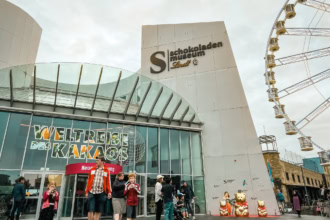
Near the harbour market, our Chocolate Museum Cologne Guide covers tickets, opening hours and what to expect inside one of the city’s most popular indoor attractions, a good option for anyone visiting between markets on a cold or wet afternoon.
If you are flying in, our Cologne Airport Transfers guide explains every route from Cologne Bonn Airport into the city centre, including the S-Bahn connection that drops you right beside the Cathedral Market.
Cologne pairs naturally with other German Christmas market cities on a wider winter itinerary, and our European Christmas Markets Guide is a useful starting point for comparing it against Vienna, Strasbourg and other major festive destinations, whether you’re planning a single city break or a longer rail trip across the region.
For confirmed 2026 dates and opening hours across all of Cologne’s markets, the city’s official KölnTourismus Christmas guide is worth checking before you travel.