Reviewed by our editorial team Published
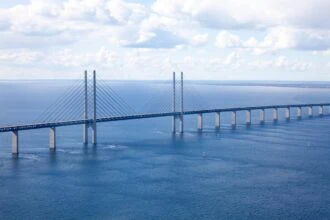
Malmö is the kind of city that rewards curiosity rather than a rigid checklist. Sweden’s third-largest city sits just across the Öresund Bridge from Copenhagen, yet it has spent the last two decades building an identity entirely its own, part medieval trading town, part reinvented industrial waterfront, part genuinely multicultural food capital.
The compact Gamla Staden (Old Town) still holds half-timbered merchant houses and a 15th-century castle, while a short walk or tram ride away, the former shipyards of Västra Hamnen have become one of Scandinavia’s most talked-about pieces of sustainable urban design, anchored by the twisting Turning Torso skyscraper.
This guide covers 17 of the best things to do in Malmö, from castles and canals to street food markets and open-water saunas, with practical prices, opening hours and transport notes throughout. Our separate guide to crossing the Öresund Bridge from Copenhagen covers getting here in detail.
Prices below are quoted in Swedish krona (SEK) with approximate GBP, EUR and USD conversions. Malmö is compact enough to explore almost entirely on foot or by bike, and most of the attractions on this list sit within a 20-minute walk of Malmö Central Station.
Malmö at a Glance
| Attraction | Type | Typical Cost |
|---|---|---|
| Turning Torso | Landmark skyscraper | 195 SEK (tours, summer only) |
| Malmöhus Castle | Renaissance castle and museums | Paid entry |
| Lilla Torg | Historic square | Free |
| Malmö Konsthall | Contemporary art hall | Free |
| Ribersborgs Kallbadhus | Open-air bathhouse and sauna | 45 SEK |
| Disgusting Food Museum | Specialty museum | 230 SEK |
Most of Malmö’s headline sights are either free or inexpensive, and a single day is enough to combine several without feeling rushed.
Turning Torso: Sweden’s Tallest Building
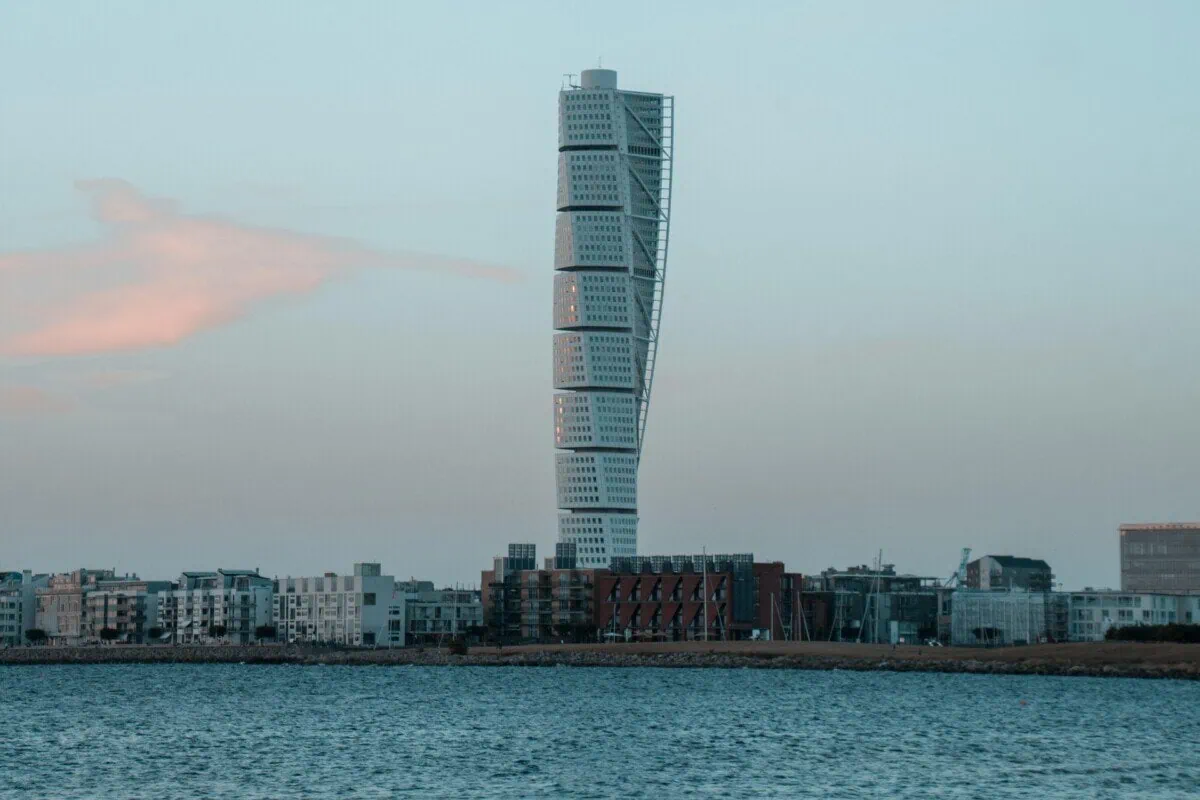
The Turning Torso is impossible to miss on Malmö’s skyline: a 190-metre, 54-storey residential and office tower made up of nine cubic sections that twist a full 90 degrees from base to summit. Designed by Spanish architect Santiago Calatrava and based on his own sculpture of a twisting human torso, it opened in 2005 and remains the tallest building in Sweden.
The tower’s 147 apartments occupy the upper seven cubes, with office space filling the lower two, so there’s no permanent public observation deck. Limited guided tours run during July and August only, on specific weekday and Sunday time slots, and need booking in advance through the building’s own site.
Adult tour tickets cost around 195 SEK (£14/€17/$18), with a family ticket at roughly 500 SEK and free entry for children under six. Outside those summer tour slots, the building is still very much worth seeing from the ground.
The best photographs come from Ribersborg Beach just to the west, where the tower’s full twist is visible against the water, particularly in the late afternoon light.
Best if you want daily housekeeping and a front desk. Filter by area first, then by price.
Check availabilityBest for families, or any stay past about four nights. A kitchen and a washing machine start paying for themselves.
Browse rentalsBest for double-checking. Runs the same search across several booking sites so you are not leaving money behind.
Compare pricesMalmöhus Castle and Malmö Museums
Malmöhus Castle is the oldest surviving Renaissance castle in the Nordic region, built in 1434 and rebuilt in its current form by Danish king Christian III in the 1530s, back when Malmö was still part of Denmark. Its thick round bastions and moat give it a genuinely fortified feel rather than a purely decorative one.
Inside, the castle now houses Malmö Museer, a combined ticket covering the Malmö Art Museum, a natural history museum with a small aquarium and terrarium, and rotating exhibitions on the city’s history, including its centuries as a Danish stronghold and later industrial port.
The art collection leans heavily on Nordic painting, including a strong holding of Swedish modernist work, while the natural history wing covers regional wildlife in a way that works well for families with children.
The castle sits inside Kungsparken, so a visit combines naturally with a walk through the surrounding gardens and moat paths either before or after the museum itself.
Lilla Torg: The Old Town’s Historic Square
Lilla Torg (“Little Square”) was laid out in the 1590s as an extension of the larger Stortorget next door, filling in what had been open wasteland at the edge of the medieval town. It quickly became a working marketplace, with distinct trading zones for meat, fish, bread and groceries arranged around its edges.
Several of the square’s half-timbered buildings survive from that era, including the Hedmanska gården from the 1590s, now home to the Form/Design Center, and the 1720s Ekströmska huset on the western side. A Gothic Revival market hall briefly covered the whole square from 1902 until it was demolished in 1968 to restore the original open space.
Today the square is Malmö’s most photographed corner, its cobbles ringed by cafés, bars and restaurants that spill outdoors from spring through early autumn, centred on a 1973 fountain by artist Thure Thörn depicting the square’s old trading professions.
Evenings here get lively without tipping into rowdy, making Lilla Torg a reliable spot for a fika stop by day and a drink after dinner.
Stortorget: Malmö’s Grand Main Square
One block from Lilla Torg, Stortorget is Malmö’s original main square, laid out in the 1530s and, for a time, one of the largest public squares in Europe. Its centrepiece is an equestrian statue of King Karl X Gustav, cast in 1896 to commemorate Sweden’s acquisition of Skåne from Denmark.
The square is framed by Malmö’s Rådhuset (City Hall), a Renaissance-style building whose ornate Dutch-influenced façade dates largely from an 1860s remodel, and the more austere Residenset, a former governor’s residence now used for civic functions.
Unlike Lilla Torg’s café-lined intimacy, Stortorget feels more civic and open, doubling as a venue for markets, public gatherings and the occasional outdoor concert through the warmer months.
Standing at its centre gives a genuine sense of Malmö’s layered history, with medieval street patterns, Renaissance civic buildings and modern shopfronts all visible within a single glance.

St Petri Church: Malmö’s Oldest Building
St Petri Church dates to the early 14th century, making it the oldest surviving building in Malmö, and its towering brick nave is built in the same Baltic Brick Gothic style as the Marienkirche in Lübeck, a reminder of Malmö’s centuries of trade across the southern Baltic.
The church’s tower has had a troubled history, collapsing twice during the 15th century before receiving its current spire in 1890. Inside, the late-15th-century merchants’ chapel on the western side holds some of the best-preserved late medieval ceiling murals in the region, uncovered and restored in the early 20th century.
The church also holds the largest surviving wooden altar retable in Northern Europe, carved between 1608 and 1611, along with a black stone pulpit completed in 1599 and numerous 17th and 18th-century grave monuments.
The church is open daily from 10am to 6pm, and entry is free, making it an easy stop to combine with either of the neighbouring squares.
Malmö City Library: An Architectural Landmark
Malmö City Library traces its roots to 1905, when it opened with just over 3,000 volumes, but the building that draws visitors today is a striking blend of old and new. The historic “Castle” wing, built for the original Malmö Museum and inspired by Danish and Skåne Renaissance architecture, has housed the library since 1946.
Beside it stands “The Calendar of Light,” a glass extension designed by Danish architect Henning Larsen and opened in 1997, connected to the older building by a cylindrical entrance hall that holds the information desk and café.
The library’s collection now runs to more than 550,000 items, and it was the first library in Sweden to lend video games, starting in 2006, a detail that says a lot about its ongoing effort to stay genuinely useful to the whole city rather than just architecturally impressive.
Entry is free, and the reading rooms inside the glass wing are worth a look even for visitors with no intention of borrowing a book.
Ribersborg Beach and Kallbadhus
Ribersborg Beach (“Ribban” to locals) is a long stretch of sand and grass running along the Öresund strait, within easy walking distance of the city centre and offering some of the best views anywhere of the Turning Torso across the water.
At its western end sits Ribersborgs Kallbadhus, an open-air bathhouse built in 1898 with separate wood-panelled sections for men and women, wood-burning saunas, and direct steps into the sea for a genuine cold-water plunge year-round.
A single visit costs around 45 SEK (£3/€4/$4), with multi-visit cards available for regular users. Summer hours run roughly 9am to 9pm on weekdays, while winter sees shorter hours, and visitors are asked to sit on a towel rather than directly on the benches.
Nude bathing is standard practice here, split by gender in the older sections, so first-time visitors should expect a genuinely traditional Nordic bathhouse experience rather than a tourist-facing spa.
Best if you can move a day either way. Shows how the fare changes across the month.
Compare flightsBest if you want maps and messaging working the moment you switch your phone on.
See eSIM plansBest after a long flight or a late landing. Price agreed before you travel, and no taxi queue.
Check transfersFolkets Park: Sweden’s Oldest Amusement Park
Folkets Park opened in 1891 and is the oldest folk and amusement park in Sweden, originally built with close ties to the Social Democratic movement and consciously modelled on Copenhagen’s Tivoli Gardens across the water.
Several original structures survive, including the ornate Moriska paviljongen (Moorish Pavilion) with its Oriental-influenced façade, and Amiralen, once Scandinavia’s largest dance hall when built in the late 1930s and now renovated for concerts and events.
Beyond the historic buildings, the park offers carousel rides, a playground, a small terrarium and petting zoo, mini-golf, and several restaurants, making it a genuinely family-friendly stop rather than a purely nostalgic one.
General admission is free, though individual rides and attractions carry their own small charges, and the park runs year-round with a busier programme through the summer months.
Västra Hamnen: The Reinvented Waterfront
Västra Hamnen (Western Harbour) was, until the 1990s, a working shipyard and industrial dockland. It has since been rebuilt as one of Europe’s most closely studied examples of sustainable urban housing, developed as the flagship district for the 2001 Bo01 housing exhibition.
The district’s buildings mix bold, colourful contemporary architecture with green roofs, wind power and rainwater systems designed to make the whole neighbourhood close to carbon-neutral, and the Turning Torso anchors its skyline at the northern tip.
A network of waterfront promenades and small swimming jetties runs along the harbour’s edge, popular with joggers, cyclists and, in summer, open-water swimmers who don’t mind a slightly more urban setting than Ribersborg.
The area is best explored by bicycle rather than on foot, given its scale, and it makes a striking contrast with the medieval streets of Gamla Staden less than twenty minutes away.
A Rundan Canal Boat Tour
Malmö’s compact canal system, largely following the line of the old town’s medieval moat, is best seen from the water on a Rundan sightseeing boat tour, departing from Norra Vallgatan directly across from Malmö Central Station.
The tour runs a loop of around 45 to 50 minutes, passing beneath roughly 18 bridges and offering water-level views of Malmöhus Castle, Kungsparken and the wider harbour, with the Turning Torso visible in the distance for much of the route.
Boats operate seasonally, typically from the start of April to the end of September, with tickets bookable in advance online or on the day, weather and demand permitting.
It’s a relaxed way to see several of the city’s landmarks in a single sitting, and a good option for visitors travelling with young children or limited mobility who’d rather not walk the full circuit on land.
Möllevångstorget and Möllan’s Food Scene
Möllevångstorget, known locally as “Möllan,” grew up as a centre of Sweden’s labour movement during the late 19th-century industrial boom, and its centrepiece statue, “The Glory of Labour” by Axel Ebbe, still nods to that history at the square’s heart.
Today the surrounding district is Malmö’s most genuinely multicultural neighbourhood, with restaurants and grocers reflecting waves of immigration from the Middle East, South Asia and Southeast Asia layered over the square’s older Swedish character.
Malmö has a semi-serious reputation as Sweden’s falafel capital, even hosting falafel world championships, and Möllan’s kebab and falafel spots are consistently cheaper than equivalent food in central Stockholm or Gothenburg.
An outdoor fruit and vegetable market runs on the square most days, and the surrounding streets hold enough independent cafés and second-hand shops to justify an unhurried afternoon rather than a quick walk-through.
Disgusting Food Museum
The Disgusting Food Museum takes a genuinely original angle on food tourism, displaying around 80 of the world’s most divisive dishes and ingredients, from Icelandic fermented shark to Sardinian maggot cheese, and inviting visitors to smell, and sometimes taste, exhibits along the way.
The museum’s real point is more thoughtful than shock value alone: it explores how disgust is culturally learned rather than universal, since a food considered a delicacy in one country can trigger revulsion in another.
Adult tickets cost around 230 SEK (£17/€20/$22), with reduced rates for students and seniors and free entry for young children accompanied by a guardian. The museum is open daily from 11am to 6pm, closing only on 24 December.
Allow around an hour, and expect a stronger reaction to some of the smell stations than the exhibits themselves; it’s a popular, if unusual, stop for teenagers and food-curious travellers alike.
Malmö Konsthall: Free Contemporary Art
Malmö Konsthall opened in 1975 following an architectural competition won by Klas Anshelm, and its opening exhibitions, including works by Edvard Munch, set a high bar that the venue has maintained across nearly 600 exhibitions since.
Despite a relatively modest footprint from the outside, the hall is now regarded as one of Northern Europe’s largest single-room exhibition spaces, with a bright, flexible interior that suits large-scale installations as well as photography and film.
The programme leans firmly toward contemporary and experimental art rather than a permanent collection, so the exhibitions on show change several times a year, and it’s worth checking the current listing before visiting.
Entry is completely free, and the hall sits close enough to the central station and Lilla Torg to fold easily into a wider day of sightseeing.
Best if you would rather spend the money on the trip than on the room. Compare hostels by location and rating.
Search hostelsBest arranged before you fly rather than after. Covers claim handling, plus lounge access on eligible delays.
Explore AirHelp+Best for a day with a suitcase and nowhere to put it. Find a storage point near where you already are.
View storageModerna Museet Malmö
Moderna Museet Malmö is the southern outpost of Stockholm’s national modern art museum, housed in a converted early 20th-century power station whose industrial brickwork has been left largely intact around the galleries inside.
The museum draws on the national collection in Stockholm for rotating exhibitions of Swedish and international modern art, alongside dedicated shows for contemporary artists, giving Malmö genuine access to major works without a trip north.
Admission runs to around 50 SEK (£4/€5/$5), with free entry for visitors aged 18 and under. The museum is closed on Mondays, opens 11am to 5pm most other days, and stays open later, until 7pm, on Thursdays.
The building’s industrial character makes it worth visiting for the architecture alone, even for visitors who wouldn’t normally seek out a contemporary art museum.
Kungsparken and Slottsträdgården
Kungsparken, laid out around Malmöhus Castle’s old moat, is Sweden’s oldest still-existing municipal park, its winding paths and small bridges creating a genuinely peaceful contrast to the busier streets just a few minutes’ walk away.
Adjoining it, Slottsträdgården (Castle Garden) is an organic garden run partly by the city and partly by volunteers, growing vegetables, herbs and flowers using pesticide-free methods, with a small café that opens seasonally.
Windmills and duck ponds dotted through the wider park make it a favourite with local families, and it’s an easy, free way to spend an hour between the castle and the harbourfront.
The gardens are at their best from May to September, when the organic beds are in full growth, though the park itself is worth a walk in any season.
Cycling Around Malmö
Malmö is consistently ranked among the world’s top ten cycling cities, and its flat terrain, extensive dedicated bike lanes and compact size make two wheels genuinely the best way to see the city beyond the old town core.
Bike rental is available through several city-centre shops and a bike-share scheme, and most of the attractions on this list, including Västra Hamnen, Ribersborg and Folkets Park, connect via dedicated cycle paths rather than shared road space.
A popular route runs along the waterfront promenade from Ribersborg past the Turning Torso and into Västra Hamnen, giving a genuine sense of the city’s transformation from industrial port to sustainable district within a single ride.
Cycling also solves the practical problem of Malmö’s attractions being spread further apart than the old town alone suggests, particularly for visitors keen to see both Möllevångstorget and the harbour in one day.

Malmö Live and the Concert Waterfront
Malmö Live, opened in 2015 beside the canal near the central station, combines a concert hall, conference centre and hotel in a single striking glass-and-metal complex that’s become a fixture of the modern skyline.
The hall is home to the Malmö Symphony Orchestra and hosts a varied programme of classical concerts, touring pop and jazz acts, and conferences throughout the year, with a public foyer and café open even without a ticket to a specific show.
The building’s waterfront terrace, overlooking the canal, is a pleasant spot for a coffee regardless of what’s on stage, and it sits close enough to the station to work as a first or last stop on a Malmö visit.
Checking the current programme before travelling is worth doing for anyone hoping to catch a specific performance, since the more popular touring acts sell out well ahead of their dates.

Rupert’s Handy Travel Tips
Rupert thinks Malmö gets unfairly overshadowed by Copenhagen, when really it rewards a proper day or two of its own.
- Rent a bike on arrival: Malmö’s attractions are more spread out than the old town alone suggests, and the city is built for cycling.
- Save the Turning Torso tour for July or August: it’s the only window when guided visits actually run.
- Bring a towel for Ribersborgs Kallbadhus: visitors are expected to sit on their own towel rather than the bench.
- Eat in Möllevångstorget, not the old town: the food is better value and more varied around Möllan.
- Combine Malmöhus with Kungsparken: the castle and gardens share the same grounds, so seeing both costs no extra time.
Want to meet the reindeer behind our travel tips? Find out more in our page Who is Rupert?.




Frequently Asked Questions About Things to Do in Malmö
How many days do you need in Malmö?
One full day covers the old town and its museums comfortably, while two days allow time to also explore Västra Hamnen, Möllevångstorget and Ribersborg Beach without rushing.
Is Malmö worth visiting if I’m already going to Copenhagen?
Yes. The Öresund Bridge crossing takes as little as 35 minutes by train, and Malmö’s old town, waterfront and food scene are distinct enough to justify a separate day.
Can I go up the Turning Torso?
Only during limited guided tour slots in July and August, since the building is a working residential and office tower with no permanent public viewing deck.
What is Malmö known for food-wise?
A genuinely multicultural food scene centred on Möllevångstorget, with a strong reputation for falafel and kebab alongside more traditional Swedish fika culture around Lilla Torg.
Is Malmö expensive?
Generally less expensive than Stockholm, particularly for food around Möllevångstorget, though museum and attraction prices are broadly similar to the rest of Sweden.
Do I need a car in Malmö?
No. The city is compact and flat, with excellent cycling infrastructure and a walkable old town, making a car unnecessary and often inconvenient for parking.
Further Reading
For getting here from Denmark, see our Copenhagen to Malmö Öresund Bridge Crossing Guide, covering train times, tickets and the bridge itself in detail.
Anyone continuing further into Sweden should also read our Interrail Sweden Pass guide, covering rail travel between Malmö, Gothenburg and Stockholm.
For more on the wider Danish side of the crossing, our Things to Do in Copenhagen guide covers the city’s top sights, tips and prices in full.