Reviewed by our editorial team Updated
Copenhagen is one of the easiest capital cities in Europe to fall for on a first visit, and one of the hardest to see properly in a single weekend. The Danish capital packs royal palaces, a 400-year-old crown jewel collection, a UNESCO-adjacent old town, a waste-to-energy plant with a ski slope on its roof, and a self-governing hippie neighbourhood into a city small enough to cross on foot in under an hour. It rewards travellers who slow down rather than sprint between ticked-off landmarks.
This guide covers the essential sights most first-time visitors want, from the fairground rides and illuminated gardens of Tivoli to the crown jewels at Rosenborg Castle and the coloured townhouses of Nyhavn, but it also spends real time on the things that make Copenhagen genuinely different from any other European capital: climbing the outdoor spiral staircase on a 17th-century church spire, hiking or skiing on the roof of a working power plant, and wandering the car-free, self-built streets of Freetown Christiania. Wherever it matters, we cover how to actually get there, what it costs in more than one currency, and how much time to set aside.
Copenhagen is also a genuinely practical city to explore. The metro, S-train and bus network is compact and mostly walkable in between, cycling is a normal way to get around rather than a novelty, and most of the big-name sights sit within a roughly 3km stretch between Tivoli and Christianshavn. If you are travelling onward by rail, our page on the Interrail Denmark Pass digs into whether a multi-day rail pass is worth it for the rest of the country, and the city’s Christmas markets, its best day trips, and the short hop across to Malmö in Sweden are all worth a separate look if you have more than a couple of days here.
Below, we have grouped everything from the headline royal sights to free things to do, plus practical notes on how long to budget for a visit and how family- and access-friendly the city actually is.
Copenhagen Attractions at a Glance
Here is a quick-reference overview of the attractions covered in this guide before we go into detail on each one below.
| Attraction | What It Is | Typical Adult Price |
|---|---|---|
| Tivoli Gardens | Historic amusement park and gardens | From 150 DKK (£17/€20/$22) |
| Nyhavn | Colourful 17th-century harbour | Free to walk |
| The Little Mermaid | Bronze statue on the harbour | Free |
| Rosenborg Castle | Royal castle and crown jewels | Around 130 DKK (£15/€17/$19) |
| Amalienborg Palace | Royal residence and museum | 125 DKK (£14/€17/$18) |
| Christiansborg Palace | Parliament, royal rooms and tower | Tower free; combi ticket 225 DKK (£26/€30/$33) |
| National Museum of Denmark | Denmark’s largest history museum | 130 DKK (£15/€17/$19) |
| SMK (National Gallery) | Denmark’s national art collection | Permanent collection free |
| Freetown Christiania | Self-governing car-free neighbourhood | Free to enter |
| The Round Tower | 17th-century tower with spiral ramp | 60 DKK (£7/€8/$9), under-18s free |
| Church of Our Saviour | Church with external spiral spire climb | 70 DKK (£8/€9/$10) |
| Torvehallerne | Covered food market | Free to browse |
| CopenHill | Power plant roof with hiking and skiing | Rooftop and hiking free; skiing extra |
| Ny Carlsberg Glyptotek | Classical art museum and winter garden | Around 115 DKK (£13/€15/$17); free last Wednesday of the month |
| Canal tours | Sightseeing or self-drive boats | From around 60 DKK (£7/€8/$9) per person on a shared boat |
| Christianshavn | Canal-side neighbourhood | Free to explore |
Tivoli Gardens: Rides, Lights and a 19th-Century Pleasure Garden
Tivoli Gardens has been operating since 1843, which makes it one of the oldest amusement parks still running anywhere in the world. It sits right next to Copenhagen Central Station, so it is usually the first thing visitors see stepping off the train, and its illuminated gardens and pantomime theatre make it feel more like a Victorian pleasure garden than a modern theme park.
The park’s biggest draw for many visitors is Rutschebanen, a wooden roller coaster dating from 1914 that is still ridden with a brakeman on board controlling its speed by hand. Alongside it are dozens of other rides, an open-air stage, restaurants ranging from hot dog stands to a Michelin-starred kitchen, and gardens that are replanted several times a year to match the season.
Tivoli is not open year-round. It typically runs a spring/summer season from roughly April to September, a Halloween season through October, and a Christmas season with mulled wine and markets from mid-November into the new year, with short closures between seasons. Entrance-only tickets typically run from around 150 DKK to 200 DKK (£17 to £23 / €20 to €26 / $22 to $28) depending on the date, with rides charged separately unless you add a ride pass.
Because Tivoli sits directly by the station, it needs no separate transport planning and works well as either a first stop after arriving or a last stop before an evening train or flight. Evenings are when the gardens are at their best, once the thousands of lights strung through the trees come on.
Given how central and photogenic Tivoli is, it is worth budgeting at least two to three hours for a proper visit, longer if you plan to ride anything. The city’s own Christmas markets, of which Tivoli’s seasonal one is the best known, are worth a separate visit if you are in town over the festive period.
Two ticket options are bookable below. The first is straightforward garden entry, covering the lights, gardens and general access, with individual rides paid for separately once inside. The second bundles entry together with a ride pass, giving unlimited rides for the day, which works out cheaper than paying per ride if you plan on riding more than two or three times.
Best for two or three nights. The widest choice of rooms, with filters for free cancellation and included breakfast.
View staysBest for longer stays. Whole apartments and houses, so you are not eating out three times a day.
View rentalsBest for double-checking. Runs the same search across several booking sites so you are not leaving money behind.
Compare pricesNyhavn: Copenhagen’s Colourful Harbourfront
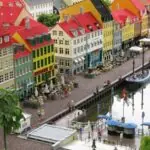
Nyhavn (“New Harbour”) is the single most photographed street in Copenhagen, and it earns the reputation. The narrow canal was dug in the 1670s under King Christian V to bring merchant ships and their cargo into the heart of the city, and today it is lined with brightly painted 17th- and 18th-century townhouses that once housed sailors, merchants and, for a time, a hard-drinking dockside crowd.
The writer Hans Christian Andersen lived at three different addresses along Nyhavn over the years, including number 20, where he reportedly wrote some of his earliest fairy tales. The colourful façades along the north side, roughly numbers 1 to 25, are the ones that appear in almost every postcard of the city.
Nyhavn is entirely free to walk along, and it is also the main departure point for most of Copenhagen’s canal-sightseeing boats, which is worth knowing if you plan to combine the two. The canal-front bars and restaurants are lovely for a drink but tend to be priced for the view, so many locals instead buy a beer from a nearby shop and sit on the quayside, which is entirely normal here.
The area gets genuinely crowded on summer evenings and during the Christmas season, when a market and a tree fill the square at the canal’s western end. Arriving in the late morning or on a weekday gives a much better chance of photographing the houses without a crowd in front of them.
Nyhavn sits an easy 10-minute walk from both Kongens Nytorv metro station and Amalienborg Palace, which makes it a natural link between the old town and the palace district rather than a standalone stop.
The Little Mermaid: Andersen’s Fairy Tale on the Harbour
The Little Mermaid (Den Lille Havfrue) is a small bronze statue perched on rocks at the water’s edge along the Langelinie promenade, inspired by Hans Christian Andersen’s fairy tale of the same name. It was sculpted by Edvard Eriksen and unveiled in 1913, a gift to the city from Carlsberg brewer Carl Jacobsen.
Most first-time visitors are surprised by how small the statue actually is, at only around 1.25 metres tall, and how modest the setting is compared to its global fame. It is worth going anyway, largely because the walk along Langelinie past the harbour and the Kastellet star fort is pleasant in its own right.
The statue has also had an eventful history, having been vandalised and even beheaded more than once over the decades, which is part of the folklore locals will happily tell you about if you ask.
Getting there is easy and entirely free. It is roughly a 20 to 25 minute walk north from Nyhavn along the harbour, or a short ride on bus route 23, which stops close by. Many visitors combine the walk with the nearby Kastellet fortifications and the Gefion Fountain.
Because there is not much to do once you have seen it, most people spend 15 to 20 minutes at the statue itself, folding it into a longer walk along the waterfront rather than treating it as a destination on its own.
Rosenborg Castle: Crown Jewels and a Royal Garden
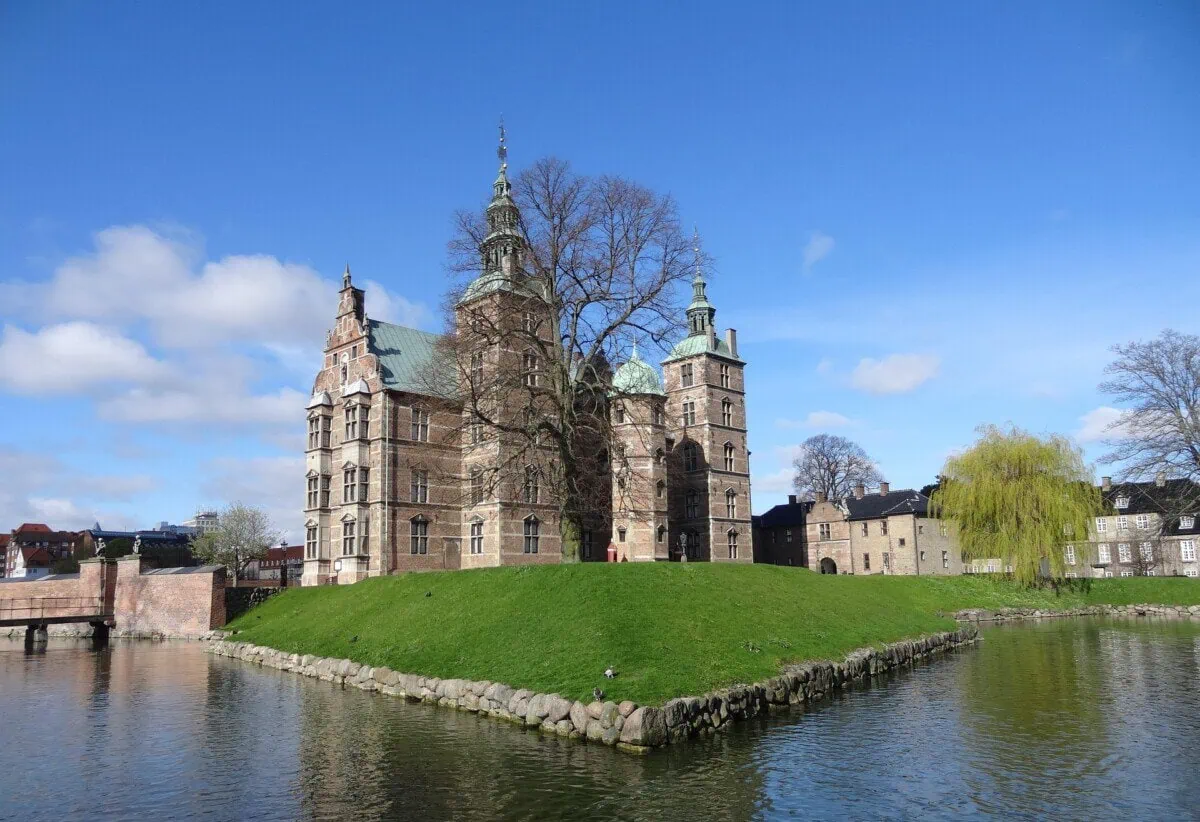
Rosenborg Castle was built in the early 1600s by King Christian IV as a summer residence, in a fairytale-like Dutch Renaissance style with copper spires and a moat. It sits inside Kongens Have (the King’s Garden), one of the oldest royal gardens in Europe and a genuinely lovely spot to sit even if you skip the castle itself.
Inside, the castle’s biggest draw is the Treasury in the basement, home to the Danish Crown Jewels and the Royal Regalia, including crowns, swords and orbs still used in official ceremonies today. The upper floors preserve Christian IV’s original audience rooms and bedchamber, largely unchanged for centuries.
Admission to the castle typically costs around 130 DKK (£15/€17/$19) for adults, with visitors under 18 admitted free (a ticket is still required). Booking online in advance is usually slightly cheaper than paying on the day and helps avoid queues in peak summer.
Rosenborg sits a short walk from Nørreport station, one of the city’s main transport hubs, making it an easy add-on to a visit to nearby Torvehallerne food market. The gardens themselves are free to enter and open daily, even outside the castle’s own opening hours.
Budget around 60 to 90 minutes for the castle interior, plus however long you want to spend afterwards in the garden, which is a popular spot for a picnic on a sunny day.
Amalienborg Palace: Home of the Danish Royal Family
Amalienborg is the working home of the Danish royal family, made up of four near-identical rococo palace buildings arranged around an octagonal courtyard, with an equestrian statue of King Frederik V at its centre. It has served as the main royal residence since 1794.
One wing houses the Amalienborg Museum, where the interiors of several royal apartments are preserved much as they were used by earlier generations of the family, giving a genuinely personal glimpse into royal life rather than a purely ceremonial one. Admission costs 125 DKK (£14/€17/$18) for adults, with under-18s free and Copenhagen Card holders admitted at no extra cost.
The palace’s best-known daily event is the Changing of the Guard, when the Royal Life Guard marches from their barracks near Rosenborg Castle through the city streets to Amalienborg, usually arriving around midday. It is free to watch from the square and, when the monarch is in residence, is accompanied by a small band.
Amalienborg sits directly between Nyhavn and the harbour promenade towards the Little Mermaid, so it slots naturally into a walking route rather than requiring a separate trip. The courtyard itself is always open and free to walk through, even if you skip the museum.
Allow around 45 minutes to an hour for the museum, and arrive a little before midday if you want a decent view of the guard change without needing to fight for a spot at the front.
Christiansborg Palace: Parliament, Royalty and a Free Tower Climb
Christiansborg Palace is unusual among Europe’s royal palaces because it is genuinely still in daily use for all three branches of Danish power: it houses the Danish Parliament (Folketinget), the Supreme Court, and the Prime Minister’s office, alongside the Royal Reception Rooms still used by the monarch for state occasions.
The palace’s tower is the tallest in Copenhagen and is free to climb, offering one of the best panoramic views in the city without a ticket. Beneath the palace, the excavated ruins of the two earlier castles that stood on the same site, dating back to the 1160s, are open to visitors as a separate exhibit.
The gilded Royal Reception Rooms, used for state banquets and hung with modern tapestries depicting Danish history, are the palace’s grandest paid attraction. A combined ticket covering the Reception Rooms, Ruins and Royal Stables costs around 225 DKK (£26/€30/$33), while a broader Royal Palace Pass covering Amalienborg and Rosenborg too runs to roughly 345 DKK (£40/€46/$50); under-18s go free on both.
Christiansborg sits on Slotsholmen, a small island in the city centre a short walk from Nyhavn and the Strøget shopping street, making it easy to combine with a wider old-town walk. It is also worth checking ahead, since Parliament sittings occasionally restrict access to parts of the building.
Even a quick tower visit takes only 20 to 30 minutes, while seeing the Reception Rooms and Ruins properly is closer to 90 minutes to two hours in total.
National Museum of Denmark: From Vikings to the Present Day
The National Museum of Denmark is the country’s largest cultural history museum, housed in a former royal palace close to Christiansborg. It covers Danish history from prehistory to the present day, alongside substantial Egyptian, Greek, and ethnographic collections.
Among its most famous exhibits are the Golden Horns, elaborately decorated Iron Age drinking horns, and the remarkably preserved Egtved Girl, a Bronze Age burial whose clothing and belongings survived almost intact. The museum’s Viking Age galleries are also a highlight, tracing Denmark’s role in the wider Viking world.
Admission costs 130 DKK (£15/€17/$19) for adults, with under-18s admitted free. The museum also runs a dedicated children’s museum within the building, with hands-on activities aimed at younger visitors, which makes it a genuinely good rainy-day option for families.
It sits within easy walking distance of both Christiansborg Palace and Strøget, so it works well as a midday stop between the old town’s outdoor sights, particularly on a day with poor weather.
Given the size of the collection, allow at least 90 minutes for a focused visit, and closer to two to three hours if you want to see the Viking, Egyptian and children’s galleries properly.
Best for finding routes the airlines do not sell as a single ticket. Combines carriers to bring the fare down.
Search flightsBest for short trips. Install the eSIM at home and arrive with working data, no shop queue.
Browse eSIMsBest if you would rather not work out the transport on arrival. Book it now and forget it.
View transfersSMK: Denmark’s National Gallery of Art
SMK (Statens Museum for Kunst) is Denmark’s national art museum, holding the country’s largest collection of paintings and sculpture from the 14th century to the present. It sits inside a green park just north of Rosenborg Castle, in a building that pairs a 19th-century wing with a striking modern glass extension.
The permanent collection spans Danish Golden Age painting, European masters including Matisse and Rubens, and a strong modern and contemporary wing, and it is genuinely one of the better free museums in Europe rather than a minor stop. The building’s glass foyer, known as the Sculpture Street, is worth a look even for visitors short on time.
Entry to the permanent collection is free, which sets it apart from most of the other paid museums on this list, while special temporary exhibitions usually carry their own separate ticket price.
SMK is a short walk from both Rosenborg Castle and the Botanical Garden, making it easy to combine into a single loop through the park and gardens north of the old town.
Because entry is free, it is worth dropping in for even 30 to 45 minutes if you are in the area, though dedicated art lovers can easily spend two hours or more across the full collection.
Hop-On Hop-Off Bus Tours
For visitors who would rather sit back than plan a walking route, Copenhagen’s two hop-on hop-off operators cover most of the sights in this guide from the top deck of an open-top double-decker. Buy once and you can ride all day, hopping off wherever something catches your eye and picking up the next bus once you’re done.
CitySightseeing runs the larger network, with 22 stops spread across three routes: a year-round Classic route covering Nyhavn, the Little Mermaid, Rosenborg Castle and Tivoli, plus two weekend and summer-only routes reaching Christianshavn’s coloured houses and the Carlsberg brewery district, including a stop at Copenhagen Zoo. Buses run from around 9:30am to 4:30pm, and tickets, valid for 24, 48 or 72 hours, include a multilingual audio guide and free Wi-Fi on board.
Red Sightseeing covers 18 stops on a single central loop, taking in Nyhavn, Amalienborg Palace, the Little Mermaid, Rosenborg Castle and Christiansborg Palace, with buses departing every 30 to 60 minutes from around 9am until a final departure at 4pm. Like CitySightseeing, tickets run for 24, 48 or 72 hours and include an audio guide; children aged two and under ride free, with a discounted rate for ages three to fourteen.
Whether a hop-on hop-off ticket is worth it comes down to how you like to travel. For a first morning in the city, when getting oriented matters more than moving fast, the top-deck loop covers a lot of ground with minimal effort, and the recorded commentary fills in context a walking guide would otherwise need to supply. It also earns its keep for anyone with mobility limits, young children who tire quickly, or a tight single day trying to cover sights spread across the centre and Christianshavn.
It is a weaker choice for a longer stay. Copenhagen’s Metro, train and bus network already reaches every stop on both routes for a fraction of the price, and the compact centre is genuinely walkable between most of the big sights, so anyone staying more than a day or two will usually get more from buying individual attraction tickets and walking or using public transport between them, treating a hop-on hop-off ticket as a one-off orientation ride rather than a full-stay transport plan.
Freetown Christiania: Copenhagen’s Self-Governing Neighbourhood
Freetown Christiania is a self-governing, largely car-free neighbourhood established in 1971 by a group of squatters who occupied a set of abandoned military barracks in Christianshavn. Today it is home to a few hundred residents, self-built houses, art studios, and a genuinely alternative way of life that has become one of Copenhagen’s most talked-about sights.
The neighbourhood is free to walk into and explore, and guided walking tours run daily from near the main entrance for a small charge if you want context rather than just wandering. Beyond the well-known main street, the area backing onto the old rampart moat is quiet, green and genuinely pretty.
There is one important rule to know before visiting: photography is strictly forbidden on Pusher Street, the short stretch where cannabis is openly sold, since the trade itself remains illegal in Denmark despite being tolerated there. Signs at the entrance make this clear, and residents take it seriously.
Away from Pusher Street, visitors are welcome to photograph freely and are encouraged to chat with residents about the neighbourhood, though running is discouraged since it can be mistaken for trouble given the area’s history of police attention.
Christiania sits a 10-minute walk from Christianshavn’s canals, so the two are easily combined. Most visitors spend 45 minutes to an hour exploring on foot.
The Round Tower: A Spiral Ramp to Copenhagen’s Best View
The Round Tower is a 17th-century tower built by Christian IV in 1642 as part of the Trinitatis Church complex, originally combining a church, a university library and an astronomical observatory in one building. What makes it unusual today is how you climb it: instead of stairs, a 209-metre spiral ramp winds around the inside of the tower, said to have been designed so a horse and carriage could reach the top.
From the top, a viewing platform gives one of the best rooftop views over old Copenhagen, taking in the spires of the Church of Our Saviour and Christiansborg in the same sweep. Admission costs 60 DKK (£7/€8/$9) for adults, with under-18s admitted free.
One practical note for anyone visiting in 2026: the tower’s historic observatory itself is closed for restoration work throughout the year, so check ahead if the observatory specifically is the draw, though the ramp and rooftop viewing platform remain unaffected.
The Round Tower sits right in the heart of the Latin Quarter, close to Strøget and a short walk from Nørreport station, making it an easy stop between the old town’s other landmarks rather than a detour.
Because the ramp itself is quick to climb, most visitors spend around 30 to 40 minutes here, including time at the top taking in the view.
Church of Our Saviour: Copenhagen’s Twisting Golden Spire
Church of Our Saviour in Christianshavn is best known for its extraordinary twisting spire, wrapped in an external gilded staircase that winds around the outside of the tower rather than being hidden inside it. It is one of Copenhagen’s most recognisable landmarks and, for a lot of visitors, its single most memorable climb.
The full climb is around 400 steps, of which the final 150 are outdoors on the narrow, railed spiral staircase wrapped around the golden spire, with the steps gradually narrowing as you near the top. The reward is a genuinely spectacular view over Copenhagen’s rooftops and harbour.
An adult ticket to climb the tower costs around 70 DKK (£8/€9/$10), with children around 20 DKK (£2/€3/$3); entry to the church itself below is free. The climb is genuinely weather-dependent, since the outdoor copper steps can close for safety in rain, snow or strong wind, and may stay closed a little longer afterwards while they dry.
The church sits in the heart of Christianshavn, a short walk from Christiania and the canal district, so it pairs naturally with both. It is not a good option for anyone uneasy with heights or narrow staircases, given how exposed the top section is.
Budget around 30 to 45 minutes for the climb and the view, and check the tower’s own weather status before making a special trip on a windy or wet day.
Torvehallerne: Copenhagen’s Best Food Market
Torvehallerne is Copenhagen’s best-known covered food market, made up of two glass-walled halls that opened in 2011 on the site of a much older open-air market square. It has since become a genuine favourite with locals as well as visitors, rather than a tourist-only stop.
Inside, roughly 60 stalls sell everything from fresh seafood, cheese and charcuterie to coffee, pastries and ready-to-eat Danish specialities like smørrebrød (open sandwiches). It is one of the best places in the city to try Danish food without committing to a sit-down restaurant.
Entry is entirely free, and you only pay for what you buy, which makes it a good lunch stop on almost any budget. Prices at individual stalls vary widely, but a coffee and pastry or a smørrebrød lunch typically comes to somewhere around 60 to 100 DKK (£7 to £11/€8 to €13/$9 to $14) per person.
Torvehallerne sits directly outside Nørreport station, one of the city’s busiest transport hubs, making it a natural stop on the way to or from Rosenborg Castle or SMK.
Most visitors spend 30 minutes to an hour browsing and eating, and it is worth arriving a little hungry rather than after a big meal.
Best for short city stops where being central matters more than the room. Dorms and private rooms both listed.
See hostelsBest arranged before you fly rather than after. Covers claim handling, plus lounge access on eligible delays.
Explore AirHelp+Best for a day with a suitcase and nowhere to put it. Find a storage point near where you already are.
View storageCopenhagen Zoo: Giant Pandas on a Hillside Site
Copenhagen Zoo has occupied the same hillside site at the top of Frederiksberg Bakke since 1859, making it one of the older zoos still operating anywhere in Europe. It is now home to more than 4,000 animals across roughly 250 species, spread across grounds genuinely built into a slope rather than the flat grid most city zoos work with.
The zoo’s biggest draw is its giant pandas, on loan from China and the only pair on public display anywhere in Scandinavia; their enclosure gets busy on weekends, so an early visit is worth planning if seeing them is the priority. Elsewhere, the Arctic Ring lets visitors watch polar bears swim past an underwater viewing window, and the 160-metre Leopard Trail, the longest walkway of its kind in Europe, threads visitors directly through a big-cat enclosure. The zoo also holds Europe’s only breeding population of Tasmanian devils, alongside Asian elephants and an open savannah shared by giraffes and zebras.
Adult admission runs from around 230 DKK (£27/€31/$33) in winter (November to February) up to about 260 DKK (£30/€35/$38) in summer (March to October), with reduced rates for children.
The zoo sits in Frederiksberg, a short ride from the city centre: bus 7A stops right outside the main entrance, while bus 4A drops passengers nearby on Roskildevej. The nearest Metro stations, Fasanvej (M1/M2) and Frederiksberg Allé (M3), are both around a 1.5-kilometre walk away, so the bus is the more practical option for most visitors. The zoo also appears on CitySightseeing’s summer Carlsberg route, covered above.
CopenHill: Skiing and Hiking on a Power Plant Roof
CopenHill (also known as Amager Bakke) is a fully operational waste-to-energy power plant with a genuinely usable dry ski slope, hiking trail and running track built onto its sloped roof. Designed by architect Bjarke Ingels and opened in 2019, it has become one of the most unusual and talked-about additions to the city’s skyline in decades.
Walking, running or taking the lift up to the rooftop café is free during opening hours, and the view from the top stretches across the harbour and, on a clear day, towards Sweden. The ski and snowboard slope operates separately, with its own equipment rental and lesson pricing, and is popular with locals as a genuine substitute for a winter sports trip.
Opening hours vary by activity: the rooftop café and walking access generally run from mid-morning into the evening, while the ski slope keeps shorter afternoon hours on weekdays and longer hours at weekends. It is worth checking the current schedule before travelling out, since private events occasionally close parts of the roof.
CopenHill sits on Amager, a short bus ride from the city centre rather than a walkable distance, so it needs a little more planning than most of the sights on this list. Bus 37 stops right in front of the ski slope, or take the Metro to Christianshavn St. and pick up bus 2A towards Margretheholmen, about a 7-minute walk from there. It is worth the trip regardless, particularly for anyone curious about sustainable architecture.
Budget at least an hour for the round trip, walk and café, longer again if you plan to actually ski or snowboard.
Ny Carlsberg Glyptotek: Ancient Sculpture and a Glass-Domed Winter Garden
The Ny Carlsberg Glyptotek is a striking art museum founded by Carlsberg brewer Carl Jacobsen, built around his personal collection of ancient Egyptian, Greek and Roman sculpture alongside 19th-century French and Danish art, including a notable collection of Rodin sculptures and French Impressionist paintings.
Its standout feature is the domed Winter Garden at the museum’s centre, a plant-filled atrium under a glass roof that is worth the visit almost on its own, especially on a grey Copenhagen day. It is one of the more photogenic interiors in the city.
Admission costs around 115 DKK (£13/€15/$17) for adults, with a small discount available for online bookings, and the museum offers free entry to the entire collection on the last Wednesday of every month, which is worth planning around if your dates allow it.
The Glyptotek sits right beside Tivoli Gardens and Copenhagen Central Station, making it an easy add-on either before or after a visit to Tivoli rather than a separate trip.
Allow around 90 minutes for a proper visit, including time to simply sit in the Winter Garden.

The Copenhagen Card
For anyone planning to pack several paid attractions into a short stay, the Copenhagen Card can work out considerably cheaper than buying tickets one at a time. It comes in two tiers with genuinely different coverage, so it is worth checking which one actually matches your itinerary before buying, since the cheaper-sounding option is not always the better deal.
The Hop tier covers 40+ attractions in the city centre plus unlimited rides on the hop-on hop-off bus network covered above, but it does not include Copenhagen’s ordinary Metro, bus or train network, and it stops at the city limits, so day trips to places like Kronborg Castle or the Louisiana Museum are not included. A 24-hour adult card starts from around 600 DKK (£70/€80/$87).
The Discover tier is the broader option, covering 80+ attractions plus unlimited public transport across Copenhagen, including the airport Metro, and it extends to day-trip destinations such as Kronborg Castle and the Louisiana Museum. It is worth knowing that a 24-hour adult Discover card starts from around 589 DKK (£69/€79/$85), typically cheaper than the Hop tier despite covering considerably more. For most visitors combining several paid sights with public transport, Discover is the better starting point.
As a rough rule of thumb, the Copenhagen Card pays off once you are visiting three or four paid attractions in a single day: Tivoli Gardens, Rosenborg Castle and Christiansborg’s tower and royal rooms alone add up to more than the price of a 24-hour Discover card, before the free public transport is even counted. It is a weaker deal for a slower trip built around one or two sights a day with plenty of free browsing in between, since several of Copenhagen’s best-known sights, including Nyhavn, Christianshavn and Freetown Christiania, cost nothing to see and the card buys nothing extra there. Families should also weigh it site by site, since several museums already let under-18s in free, so a card bought for the whole party sometimes only pays off for the adults.
Canal Tours: Seeing Copenhagen From the Water
Seeing Copenhagen from the water is one of the best ways to understand how the city fits together, since much of the historic centre, Christianshavn and the modern harbourfront are all built directly along canals and open water. Most sightseeing boats depart from Nyhavn.
Classic sightseeing operators run hop-on, guided canal tours lasting around an hour, taking in Nyhavn, the Little Mermaid, the Opera House and Christiansborg from the water, typically priced from around 60 to 100 DKK (£7 to £11/€8 to €13/$9 to $14) per adult depending on the operator and route.
For something more hands-on, self-drive electric picnic boats let a small group take the wheel themselves, no boating licence required, cruising at a gentle walking pace along the same canals. These typically start from around 550 DKK (£63/€74/$80) for a boat holding up to eight people, which works out cheaply per person for a small group.
Whichever option you choose, canal tours are a good way to see Christianshavn’s houseboats and the modern Opera House from angles you would not otherwise get on foot, and they run rain or shine with covered seating.
A standard sightseeing tour runs 45 minutes to an hour; a self-drive boat booking is usually for one or two hours, depending on the package.
Christianshavn: Copenhagen’s Canal-Side Neighbourhood
Christianshavn is a canal-side neighbourhood built in the early 1600s on reclaimed land, deliberately laid out with Dutch-style canals and ramparts as a fortified extension of the city. It has since become one of Copenhagen’s most relaxed and liveable districts, popular with locals rather than built around tourism.
Its narrow canals are lined with houseboats and converted warehouses, and the old star-shaped rampart, Christianshavns Vold, now forms a quiet green walking loop that circles much of the neighbourhood. It is also home to both Freetown Christiania and the Church of Our Saviour, making it a natural base for exploring both.
Exploring Christianshavn is entirely free, and it rewards slow wandering more than a checklist approach, particularly along the smaller side canals away from the main streets. Cafés and bakeries here tend to be noticeably cheaper than the equivalent spot in the old town or Nyhavn.
The neighbourhood sits just across the harbour from the old town, reachable by metro (Christianshavn station), bus, or a short walk across Knippelsbro bridge from Slotsholmen, so it is easy to reach without a car.
Set aside at least an hour or two to walk the canals and ramparts properly, more if you are also visiting Christiania and the church tower while you are there.

Free and Budget Things to Do in Copenhagen
Copenhagen has a reputation for being expensive, but a surprising amount of the best of it costs nothing at all. Walking Nyhavn, exploring Christianshavn’s canals, browsing Torvehallerne, wandering Freetown Christiania, and watching the free Changing of the Guard at Amalienborg around midday are all genuinely worthwhile and cost precisely zero.
Several major museums are free too. SMK’s permanent collection is free year-round, the National Museum’s children’s areas and several smaller municipal museums cost nothing, and the Ny Carlsberg Glyptotek waives its admission entirely on the last Wednesday of every month.
The city’s green spaces are another good free option. Kongens Have, the garden surrounding Rosenborg Castle, and the Copenhagen Botanical Garden near SMK are both free to enter, even though their respective Palm House and castle interiors charge admission. Strøget, one of Europe’s longest pedestrian shopping streets, is free to walk even if you are only window shopping.
For a cheap and filling meal, a hot dog from a pølsevogn (sausage van) or a takeaway smørrebrød from a bakery typically costs a fraction of a sit-down restaurant bill, and picnicking in one of the city’s parks or gardens is both normal and free.
If you are visiting several paid attractions, it is worth comparing the cost against a Copenhagen Card, which bundles free entry to most major sights and public transport into one pass, since it can work out cheaper than paying individually once you visit three or four attractions in a day.
How Long Do You Need in Copenhagen?
A tight but genuinely satisfying visit to Copenhagen’s headline sights is possible in two full days. That is usually enough time to cover Tivoli, Nyhavn, Amalienborg, the Little Mermaid, and either Rosenborg Castle or Christiansborg Palace, with an evening or two spent eating around Torvehallerne or Nyhavn.
Three to four days is a more comfortable target if you want to add Freetown Christiania, Christianshavn’s canals, the Church of Our Saviour’s spire, and one or two of the city’s excellent museums without feeling rushed between them. This is also enough time to fit in CopenHill, which sits further from the centre than most other sights.
Travellers with five days or more have room to slow right down, add a canal tour, revisit a favourite neighbourhood, and use Copenhagen as a genuine base rather than a checklist stop. The city’s day trips, from castle towns to coastal villages, are worth building in if you have this much time.
Because most of the central sights sit within walking distance of each other, it is entirely possible to see a great deal without relying heavily on public transport, though the metro is worth using for anything on Amager or further out.
Whichever length of trip you plan, it is worth building in at least one slower, unplanned afternoon, since much of what people end up loving about Copenhagen (a canal-side café, a quiet street in Christianshavn) is not on any official attraction list.
Accessibility and Children in Copenhagen
Copenhagen is one of the more accessible European capitals to explore, thanks largely to its flat terrain, extensive cycle lanes, and a metro network built with step-free access at every station. Most major museums, including the National Museum, SMK and Amalienborg, have lifts and level access to their main galleries.
Some of the city’s oldest attractions are the exception. The Round Tower’s spiral ramp and the Church of Our Saviour’s external spire staircase are both physically demanding climbs with no lift alternative, so travellers with mobility concerns should treat the view as optional rather than essential.
For families, Copenhagen is genuinely well set up for children. Tivoli Gardens has rides for younger children as well as adults, the National Museum’s dedicated children’s museum is hands-on and free once inside, and under-18s are admitted free to nearly every paid museum on this list, including Rosenborg, Amalienborg, Christiansborg and the Round Tower.
Torvehallerne and the parks around Rosenborg and the Botanical Garden are easy, low-pressure stops with young children, and pushchairs manage well on most of the flat, cobbled-but-manageable streets in the centre, though Nyhavn’s quayside can be uneven in places.
CopenHill’s rooftop walk is also stroller and wheelchair accessible via its lift, making it one of the more unexpectedly inclusive attractions on this list despite its industrial setting.

Rupert’s Handy Travel Tips
Copenhagen is compact and walkable, but a few local tricks make it much easier to get the most out of a short visit.
- Book the Church of Our Saviour ahead: tower slots are timed and limited, and it closes in bad weather, so check availability before you plan your day around it.
- Skip Pusher Street photography entirely: in Christiania, put the camera away until you’re past the main strip.
- Do the Round Tower and Church of Our Saviour together: both are in walking distance of Christianshavn and give very different views of the same skyline.
- Watch the Changing of the Guard at midday: it’s free, brief, and easy to combine with a Nyhavn walk either side.
- Save the Glyptotek for a grey day: the glass-roofed Winter Garden feels even better when the weather outside isn’t cooperating, and it’s free on the last Wednesday of the month.
Want to meet the reindeer behind our travel tips? Find out more in our page Who is Rupert?.





Frequently Asked Questions About Things to Do in Copenhagen
How many days do you need in Copenhagen?
Two full days cover the headline sights like Tivoli, Nyhavn and Amalienborg comfortably. Three to four days lets you add Christiania, Christianshavn and one or two major museums without feeling rushed.
Is Copenhagen expensive to visit?
Denmark is one of Europe’s pricier destinations for food and drink, but a genuine amount of the best sightseeing, including Nyhavn, Christianshavn, Christiania and the Changing of the Guard, is completely free.
Is it safe to visit Freetown Christiania?
Yes, Christiania is a normal and welcoming neighbourhood to walk through in the daytime. The one firm rule is to never photograph Pusher Street, where cannabis is sold openly despite remaining illegal in Denmark.
Can you climb the Church of Our Saviour in any weather?
No. The final stretch of the climb is an outdoor spiral staircase that closes for safety in rain, snow or strong wind, and can stay shut a little longer afterwards while the copper steps dry.
Is CopenHill worth visiting if you don’t ski?
Yes. Walking or taking the lift up to the rooftop café and viewpoint is free and doesn’t require any interest in skiing, and the view over the harbour is one of the best in the city.
Do children need tickets for Copenhagen’s museums and palaces?
Most of the paid attractions on this list, including Rosenborg Castle, Amalienborg, Christiansborg and the Round Tower, admit under-18s free, although a ticket is still usually required at the door.
Further Reading
If Copenhagen is one stop on a wider Danish trip, our Interrail Denmark Pass Guide explains when a multi-day rail pass genuinely pays off against buying individual DSB tickets between Copenhagen, Odense, Aarhus and Aalborg, and how the pass covers Copenhagen’s own S-tog suburban network for day trips out of the city.
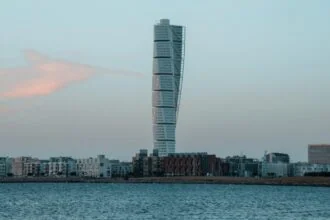
Travelling in the run-up to Christmas is a good reason to extend your stay, since Tivoli’s own festive season is one of several worth knowing about across the continent; our European Christmas Markets Guide compares Copenhagen’s Tivoli market against Vienna, Prague and other major cities if you are weighing up where to spend a winter city break. For getting between Danish and Swedish rail networks more broadly, the same Interrail Denmark Pass guide also covers what the pass does and doesn’t include for cross-border journeys towards Malmö and Hamburg. For a closer look at the city itself, our Things to Do in Malmö guide covers Turning Torso, the old town and the city’s beaches.
Once the big sights are covered, our Copenhagen Airport Transfers guide covers every route into the city from Kastrup, and our Night Trains from Copenhagen guide is worth a look for anyone extending the trip overnight towards Germany or Sweden. Travelling by sea instead, our Ferries from Copenhagen guide covers the overnight crossing to Oslo and how to reach Bornholm by ferry.
Before you travel, it’s also worth checking how you’ll stay connected and covered once you land. Denmark uses the same EU roaming rules as the rest of the Nordic region, so our eSIM Apps Guide is worth a look if you are coming from outside Europe, alongside our Travel Insurance Apps Guide to make sure a busy sightseeing itinerary, including tower climbs and canal tours, is properly covered before you set off.