Reviewed by our editorial team Published
Getting from Copenhagen Airport to the City Centre
Copenhagen Airport, widely known as Kastrup and officially coded CPH, is Denmark’s main international gateway and one of the busiest airports anywhere in Scandinavia. It sits around eight kilometres south of central Copenhagen, close enough that most transfers into the city take well under half an hour.
Unlike airports where the transfer choice feels limited to a single overpriced train or an unavoidable taxi queue, Copenhagen Airport transfers are genuinely varied. Travellers can choose between the Metro, regional and cross-border trains, a direct bus route, taxis, a pre-booked private transfer or a hire car, depending on budget, luggage and exactly where in the city they are headed.
One reason the airport works so smoothly is how deeply integrated it is with Denmark’s wider rail network. The train and Metro station sits directly beneath Terminal 3, and both services continue straight into Copenhagen Central Station without requiring a change, so travellers can genuinely walk from the arrivals hall to a platform in a couple of minutes.
The airport’s position on the Øresund Line also makes it an unusually useful arrival point for travellers heading beyond Denmark. The same trains that reach the city centre in around a quarter of an hour continue directly across the Øresund Bridge towards Malmö and southern Sweden, which matters for anyone planning a wider Scandinavian trip.
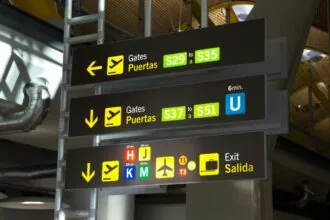
For most first-time visitors, Copenhagen feels immediately calm and easy to navigate after landing. Signage throughout the terminal is clear in both Danish and English, and Denmark’s reputation for efficient, well-organised public transport holds up from the moment you step off the plane.
This guide walks through every practical way to get from Copenhagen Airport into the city centre, covering journey times, approximate costs in DKK, GBP, EUR and USD, and which option genuinely suits families, business travellers, backpackers and anyone arriving with a lot of luggage.
Quick Transfer Comparison Table
| Transfer Option | Typical Cost | Journey Time | Best For | Main Arrival Point |
|---|---|---|---|---|
| Metro (M2) | 30 DKK (£3.50 / €4 / $4.35) | Around 13 to 15 minutes | Fastest budget option | Nørreport / Kongens Nytorv |
| DSB & Øresund Train | 30 DKK (£3.50 / €4 / $4.35) | Around 13 to 15 minutes | Direct to Central Station or onward to Sweden | Copenhagen Central Station |
| Bus (5C) | 30 DKK (£3.50 / €4 / $4.35) | Around 35 minutes | Districts off the rail lines | Various city stops |
| Taxi | 230 to 350 DKK (£27 to £41 / €31 to €47 / $33 to $51) | Around 20 to 30 minutes | Door-to-door, heavy luggage | Direct to address |
| Private Transfer | From around 350 DKK (£41 / €47 / $51) | Around 20 to 30 minutes | Families, comfort, fixed price | Direct to accommodation |
| Car Hire | Varies by provider | Around 20 to 30 minutes drive | Wider Zealand and Denmark trips | Self-drive |
Best for a short trip. Compare rooms by neighbourhood, price and guest rating before you book.
Compare hotelsBest for longer stays. Whole apartments and houses, so you are not eating out three times a day.
View rentalsBest as a last check before booking. Compares hotel rates across several sites in one search.
Compare ratesWhere Is Copenhagen Airport?
Copenhagen Airport sits on the island of Amager, roughly eight kilometres south of central Copenhagen and directly on the route of the Øresund Line towards Sweden. Despite handling well over 25 million passengers a year, the airport remains one of the more compact and easy-to-navigate major hubs in Northern Europe.
The airport currently operates across Terminal 2 and Terminal 3, connected internally by walkways, with all rail and Metro services accessed through Terminal 3. Terminal use can shift between airlines and seasons, so it is always worth checking your boarding pass rather than assuming.
One of the biggest practical advantages of Copenhagen Airport is that the train and Metro station sits directly beneath Terminal 3, right in the extension of the arrivals area. Clear overhead signage in Danish and English points the way, and passengers travelling with hand luggage only can reach security via a short internal footbridge.
There is no long shuttle bus ride to a remote station here, and no confusing walk across a car park in the rain. Anyone arriving at Terminal 2 simply follows the internal walkway through to Terminal 3, where escalators and lifts lead straight down to the platforms.
This tight integration is a big part of why so many travellers choose rail over a taxi for the first leg of a Copenhagen trip. It removes the guesswork from a first arrival, particularly for visitors landing after a long flight with little energy for navigating an unfamiliar airport.
The Metro (M2): The Fastest Way Into the City
The Copenhagen Metro’s M2 line is usually the fastest and most straightforward way to reach the city centre from the airport. Trains run directly beneath Terminal 3, so there is no need to find a separate station building or cross any roads, and you can check current timetables on Copenhagen Airport’s own metro page.
Journeys to central stops such as Nørreport or Kongens Nytorv typically take around 13 to 15 minutes, making the Metro comparable in speed to a taxi during busy traffic, at a fraction of the price. The driverless trains run smoothly, and the whole platform area feels modern, clean and easy to follow even for first-time visitors.
Frequency is genuinely excellent. During rush hour the M2 runs roughly every two minutes, dropping to around every three minutes for the rest of the day and at weekends, and to about every eight minutes on Friday and Saturday nights and roughly every 20 minutes on other nights.
That last point matters more than it might sound. The Copenhagen Metro runs all night, every night, so a late landing or an early departure is never a reason to book an expensive taxi, even if the reduced overnight frequency means a slightly longer wait.
A single ticket into the city centre costs around 30 DKK (£3.50 / €4 / $4.35), covers three zones under Copenhagen’s ring-zone fare system, and stays valid for 90 minutes, long enough to change onto a bus or S-train without buying again. Ticket machines at the airport station take coins and card payments only, not banknotes, so it is worth having a card ready.
Travellers planning several journeys in a day, or a short multi-day stay, are usually better off with a City Pass covering zones 1 to 4, which starts at around 100 DKK (£11.70 / €13.40 / $14.50) for 24 hours and includes the airport zone as standard.
Train Services: DSB and the Øresund Line
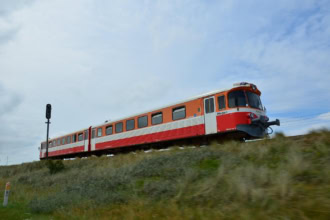
Alongside the Metro, Copenhagen Airport railway station is served by regular DSB regional and InterCity trains running into Copenhagen Central Station, plus the cross-border Øresund Line services that continue straight over the bridge into Sweden. All of these trains use the same underground station beneath Terminal 3.
It is worth knowing exactly who runs what. DSB, Denmark’s national rail operator, runs the domestic regional and InterCity services that continue on from Copenhagen Central towards Odense, Aarhus and Aalborg, while the separate cross-border Øresund trains to Malmö and Lund are operated by Transdev on behalf of Sweden’s regional transport authorities, having taken over that route from the previous joint DSB and SJ operation.
Both the domestic and cross-border services from the airport are genuine direct, through-trains into Copenhagen Central, normally taking around 13 to 15 minutes with no change required. Fares for this short hop use the same zone-based ticketing as the Metro, so a standard single ticket at around 30 DKK (£3.50 / €4 / $4.35) covers the journey regardless of which service you board.
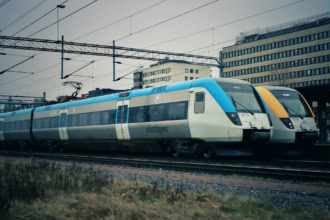
The cross-border Øresund trains run particularly frequently, departing roughly every 15 to 20 minutes through the day between the airport, Copenhagen and Malmö, with an additional hourly service continuing further on to Gothenburg. On board, expect first and second class seating, toilets, power sockets at every seating bay and free WiFi, though there is no catering trolley and seating is open rather than reserved.
For travellers extending their trip into Sweden, the appeal is that the same train carries you from the airport, through Copenhagen and straight on to Malmö without changing platforms. Only a separate Swedish-side ticket is needed once you cross the bridge, and our Interrail Denmark Pass Guide explains exactly which portion of a cross-border journey a Danish rail pass actually covers.

Plan Your Copenhagen Train Journey with Omio
Planning a train journey involving Copenhagen? Omio lets you compare routes, check departure times and search for tickets from different transport operators in one place.
It is particularly useful when a journey involves different rail companies or crosses a border, saving you from checking several operator websites separately.
Scan to open
on your phone

Bus Options from the Airport
For travellers happy to trade a little speed for a different route into the city, Bus 5C runs from a stop right outside Terminal 3 into central Copenhagen. It is a normal city bus rather than a dedicated airport express, and it uses the same zone-based ticket as the Metro and train.
The journey takes noticeably longer than rail, usually around 35 minutes, since the bus follows city streets rather than a dedicated rail corridor. It suits travellers heading to a specific district not directly served by a Metro or train stop, rather than anyone racing to catch a connection.
Beyond the local city bus, the airport is also a stop for several long-distance coach operators, including FlixBus, Swebus Express and Bus4You, running onward services deeper into Denmark and across the bridge into Sweden. These are a genuinely useful budget option for travellers continuing beyond Copenhagen rather than stopping in the city itself.
For most visitors staying in central Copenhagen, though, the Metro or train remains the more practical choice simply because it is faster and just as cheap. The bus is worth considering mainly when your hotel or apartment sits well away from the rail corridor, or during any temporary disruption to Metro or train services.
Taxis from Copenhagen Airport
Taxis remain the simplest door-to-door option from Copenhagen Airport, with official ranks clearly signed outside the terminal building. Drivers are licensed, cars are metered, and queuing is generally calm and well organised compared with many larger European airports.
A typical fare into central Copenhagen runs from around 230 DKK (£27 / €31 / $33) up to roughly 350 DKK (£41 / €47 / $51), depending on traffic, the time of day and exactly where you are headed. The ride itself usually takes 20 to 30 minutes.
Uber and Bolt both operate in Copenhagen, including airport pickups, and fares are usually broadly similar to a licensed taxi rather than dramatically cheaper. The choice between them often comes down to convenience and app familiarity rather than price.
Taxis suit travellers carrying heavy luggage, families with young children, anyone arriving very late at night, or visitors staying somewhere the Metro and train do not reach directly. Splitting the fare across a small group can also make a taxi more competitive against several individual rail tickets.
One thing worth knowing before you land is that Danish taxi fares are not cheap by European standards, in line with the country’s generally higher cost of living. Travellers arriving from Southern or Eastern Europe in particular often find the fare higher than they expect.
Private Transfers and Hotel Pickups
For travellers who would rather skip the queue and the fare-watching altogether, a pre-booked private transfer offers a smooth start to a Copenhagen trip. A driver typically waits inside the arrivals hall holding a name board, then takes you straight to your hotel or apartment without any further stops.
This option is particularly popular with families travelling with young children, anyone carrying awkward luggage such as ski equipment or golf bags, and business travellers who would rather have a fixed price agreed in advance rather than watch a taxi meter climb through city traffic.
A standard car for two to three passengers typically starts from around 350 DKK (£41 / €47 / $51), with larger vehicles for bigger groups or extra luggage priced higher. Most operators allow free cancellation up to a set number of hours before arrival, which is worth checking at the time of booking.
Journey times are broadly the same as a taxi, usually 20 to 30 minutes depending on traffic and the exact destination. The main advantage over a standard taxi is certainty, since the price, the vehicle size and the pickup point are all agreed before you land rather than negotiated on arrival.
Private transfers cost more than public transport, but for a group arriving together, especially after a long flight, the extra expense often buys a genuinely stress-free start to the trip, particularly if you are travelling with young children or simply want door-to-door comfort straight to your accommodation.

Compare Airport Transfer Companies
Pre-booking your airport transfer can save time and reduce stress when you arrive. Whether you need a private taxi, shared shuttle or executive transfer, comparing providers can help you find the best price and service for your journey.
We’ve selected three trusted airport transfer companies so you can compare prices, vehicle options, cancellation policies and customer reviews before you travel.
Best for finding routes the airlines do not sell as a single ticket. Combines carriers to bring the fare down.
Search flightsBest if you want maps and messaging working the moment you switch your phone on.
See eSIM plansBest when public transport has stopped, or when you are travelling with children and bags.
Book a transferCar Hire and Driving in Denmark
Hiring a car from Copenhagen Airport works well for travellers planning to explore beyond the city, whether that means the wider island of Zealand, the beaches of North Sjælland, or a longer road trip across Denmark.
All car rental desks are grouped together at the airport’s Car Rental Centre, located at the western end of the site around 1.2 kilometres from the terminals. A free shuttle bus runs from Terminal 3 directly to the centre, stopping right outside it.
Major international firms including Avis, Hertz, Europcar and Sixt operate from the Car Rental Centre alongside several local companies, and pickup procedures are generally efficient once you reach the desk. Returning a car works the same way in reverse, with a free shuttle back to the terminal, train and Metro station afterwards.
For travellers staying only in central Copenhagen, a hire car is rarely worth the expense. Parking in the city centre is limited and expensive, the road network is calm but tightly packed with cyclists, and the Metro, train and bus network covers the centre extremely well without a car.
A car becomes far more useful once you are heading out towards coastal Zealand or smaller Danish towns. Drivers continuing across the Øresund Bridge into Sweden should also budget for the crossing itself, since a standard car currently costs around 520 DKK (£61 / €70 / $75) at the toll booth, slightly less if booked online in advance.
Compare Car Hire Prices in Copenhagen
If you are planning to explore beyond Copenhagen, hiring a car can give you much more flexibility over where you go and how long you spend there.
Compare prices through Discover Cars and EconomyBookings to check vehicles, rental conditions and offers from multiple car hire companies before you book.
Luggage, Accessibility and Choosing the Right Option
Copenhagen Airport is generally excellent for accessibility, and the good news continues once you reach the Metro platforms below Terminal 3. Every Metro station, including the airport, is fitted with lifts or elevators, giving genuinely step-free access rather than accessibility added on as an afterthought.
Wheelchair users planning to travel on a DSB regional or InterCity train rather than the Metro should book assistance in advance through DSB’s dedicated assistance service, ideally at least 12 hours ahead of travel. The Metro itself needs no such advance booking, since level boarding is built into every station.
Travellers with heavy suitcases, pushchairs or a lot of luggage will generally find the Metro and train the easiest rail option, since both offer wide doors and dedicated luggage space, unlike some older commuter rail systems elsewhere in Europe. Travelling slightly outside rush hour helps if you are managing several bags.
For genuinely large groups, several oversized bags, or anyone simply wanting the least effort after a long flight, a taxi or pre-booked private transfer removes the need to navigate stairs, ticket machines and unfamiliar signage altogether. The extra cost usually buys real convenience rather than just speed.
As a rough rule, the Metro suits solo travellers and couples with hand luggage, the train suits anyone whose accommodation sits nearer Copenhagen Central Station, and a taxi or private transfer suits families, larger groups and late-night arrivals. Car hire only really earns its cost once you are exploring beyond the city itself.
Common Mistakes Travellers Make
One of the most common mistakes is arriving at the ticket machine without a card or coins ready, since the machines at Copenhagen Airport’s Metro and train station do not accept banknotes. Having a contactless card to hand avoids an unnecessary delay right at the start of the trip.
Another frequent mix-up is boarding an Øresund train heading further into Sweden by mistake, rather than a domestic DSB service, or the other way around. Checking the platform display board before boarding takes a few seconds and avoids an unwanted detour towards Malmö.
Some travellers also assume a Danish rail ticket or pass automatically covers the whole journey once a train crosses the Øresund Bridge into Sweden. In reality, only the Danish portion of a cross-border journey is covered, and a separate Swedish-side ticket is needed for the rest.
Visitors also sometimes underestimate how much a taxi costs compared with the Metro, assuming Danish fares will be similar to cheaper parts of Europe. Denmark is an expensive country by European standards, and airport transfers are no exception, even though the public transport alternative remains excellent value.
Finally, some travellers assume every terminal at Copenhagen Airport sits right beside the rail station. Anyone landing at Terminal 2 should allow a few extra minutes to walk through to Terminal 3, where the Metro and train platforms are actually located.

Rupert’s Handy Travel Tips
Copenhagen Airport is one of Rupert’s favourite Nordic arrivals because the train and Metro station sits practically inside the terminal itself, so you are on a platform before the jet lag even sets in.
- Have a card ready before you tap in: the ticket machines at the airport station only take coins and cards, not banknotes.
- Take the Metro for your first ride: the driverless train glides straight into the city in around 15 minutes at a fraction of the taxi fare.
- Watch the platform screens carefully: DSB, Øresund and Metro services all use the same station beneath Terminal 3, so double-check the display before boarding.
- Sit on the right if you’re continuing to Sweden: it gives the best view as the train crosses the Øresund Bridge towards Malmö.
- Consider a City Pass for longer stays: it covers the airport zone and pays for itself after just a few journeys.
- Don’t rush the walk from Terminal 2: give yourself a few extra minutes to reach the platforms beneath Terminal 3.
One of Rupert’s favourite moments in Scandinavia is watching the Øresund Bridge appear through the window on the run towards Malmö, Denmark quietly giving way to Sweden below the tracks.
Want to meet the reindeer behind our travel tips? Find out more in our page Who is Rupert?.




Frequently Asked Questions About Copenhagen Airport Transfers
What is the fastest way from Copenhagen Airport to the city centre?
The Metro (M2) or a DSB/Øresund train are normally fastest, both taking around 13 to 15 minutes into central Copenhagen from the station beneath Terminal 3.
Is there a special airport supplement on the Metro or train ticket?
No. Copenhagen Airport uses the same zone-based fare as the rest of the city’s public transport network, so a standard ticket covers the journey.
Does the airport train go directly to Malmö in Sweden?
Yes. The cross-border Øresund Line trains run directly from the airport, through Copenhagen and on to Malmö with no change, although a separate Swedish-side ticket applies once you cross the bridge.
How much does a taxi cost from Copenhagen Airport?
Expect to pay roughly 230 to 350 DKK (£27 to £41 / €31 to €47 / $33 to $51) for the 20 to 30 minute journey into central Copenhagen.
Does the Copenhagen Metro run all night?
Yes. The M2 operates 24 hours a day, every day, with reduced frequency overnight rather than a full closure.
Is Copenhagen Airport accessible for wheelchair users and travellers with heavy luggage?
Yes. The Metro offers step-free, level boarding at every station, while wheelchair users planning to use a DSB train should book assistance in advance.
Further Reading & Related Guides
If Copenhagen is just one stop on a wider Scandinavian trip, it is worth planning your onward rail travel before you land. Our Interrail Denmark Pass Guide explains how a Danish rail pass works alongside the cross-border Øresund trains covered in this guide, including exactly which portion of a Malmö-bound journey it actually covers.
Travellers continuing across the bridge into Sweden, whether for a day trip to Malmö or a longer stay, will find our Interrail Sweden Pass Guide useful for working out whether a Swedish rail pass makes sense for the rest of the trip.
For a sense of how another major Nordic capital handles its own airport transfers, our Stockholm Airport Transfers Guide covers the Arlanda Express, commuter rail and taxi options into central Stockholm, useful background if Sweden’s capital is also on your itinerary.
Staying connected throughout a Danish or wider Scandinavian trip is easier with the right SIM setup, and our eSIM Apps Guide compares the best options for data and calls across Europe. Our dedicated Copenhagen sights guide and day trips guide cover the rest of a Danish city break in full.