Reviewed by our editorial team Updated
Copenhagen sits at the centre of one of Europe’s most efficient rail networks, and that single fact is what makes day trips from the Danish capital so easy to pull off. Denmark is a small, flat country stitched together by fast, frequent trains, so a traveller based in Copenhagen can wake up in the city, spend a full afternoon inside a Renaissance castle or a Viking longship museum, and be back in time for dinner near Nyhavn.
This guide covers eight of the best day trips from Copenhagen, chosen for history, art, and genuinely easy access by train. Some, like Roskilde and Helsingør, barely count as a detour, while others, like Odense, ask for an earlier start but reward it with a different side of the country entirely.
Copenhagen itself has plenty to keep visitors busy on its own, from its canals and palaces to its Christmas markets in December, and this page isn’t a substitute for exploring the city first. Its job is to answer the question that comes once the museums and bike lanes of the capital start to feel familiar: where the trains from Copenhagen Central Station can actually take you next.
Every destination below can be reached without a car, most within an hour and several within 30-40 minutes. That includes a genuine cross-border option in Malmö, Sweden, which sits just across the Øresund Bridge and gets its own dedicated guide elsewhere on this site for anyone planning a whole day in Sweden rather than a quick look.
Whether the goal is a UNESCO cathedral, a castle straight out of Shakespeare, or an afternoon among Nordic modern art overlooking the sea, Denmark’s rail network makes it realistic to fit more than one into a single, well-planned week.
Best Day Trips from Copenhagen at a Glance
Every option below is covered in its own section further down the page, but this table is a quick way to compare journey times and decide what fits into a single day before reading on.
| Destination | Journey Time | How to Get There | Best For |
|---|---|---|---|
| Roskilde | Around 20-25 minutes | Direct regional train | Viking Ship Museum & UNESCO cathedral |
| Helsingør | Around 40 minutes | Direct Kystbanen coastal train | Kronborg Castle & the real Hamlet |
| Louisiana Museum (Humlebæk) | Around 40 minutes, plus a 10-15 minute walk | Direct Kystbanen coastal train | Modern art with sea views |
| Frederiksborg Castle (Hillerød) | Around 35-40 minutes | Direct S-train, Line A | Baroque “Nordic Versailles” |
| Malmö, Sweden | Around 35 minutes | Direct Øresundståg cross-border train | A quick taste of Sweden |
| Odense | Around 75-80 minutes | Direct InterCity or Lyntog train | Hans Christian Andersen’s birthplace |
| Dragør | Around 35-40 minutes | Direct bus, route 350S | A postcard fishing village |
| Klampenborg (Bakken & Dyrehaven) | Around 20-25 minutes | Direct S-train, Line C | Free-roaming deer & the world’s oldest amusement park |
Roskilde: Viking Ships and a UNESCO Cathedral
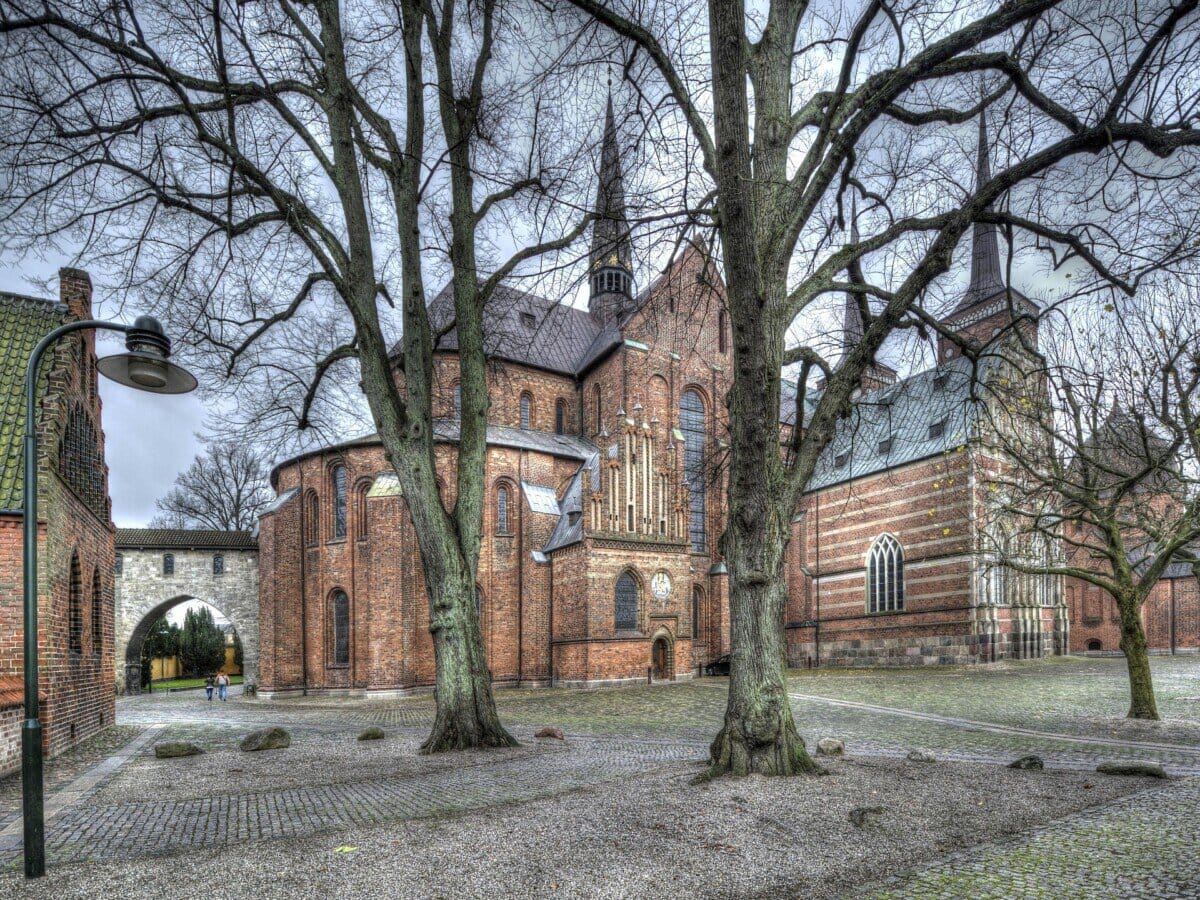
Roskilde was once Denmark’s capital and the seat of its bishops, and it still carries that weight in two sites that sit within easy walking distance of each other. Roskilde Cathedral has been the burial place of Danish monarchs for centuries and holds the tombs of around 40 kings and queens, which is why UNESCO listed it as a World Heritage Site in 1995.
Down by the fjord, the Viking Ship Museum displays five genuine Viking-age ships recovered from the Roskilde Fjord in the 1960s, including a longship built for war and a broad-beamed trader. A working boatyard next door builds full-size replicas using traditional techniques, and in the summer season some of those replicas take visitors out onto the fjord itself.
Getting there could not be simpler. Regional and InterCity trains run direct from Copenhagen Central Station, Nørreport, and Østerport, with around 7-8 departures an hour on this stretch of line, and the journey itself takes only about 22-24 minutes.
Admission to the cathedral costs around 80 DKK (£9/€11/$12) for adults, with under-18s free. The Viking Ship Museum charges roughly 165 DKK (£19/€22/$24) in summer or 130 DKK (£15/€17/$19) in winter for adults, with a family ticket around 310 DKK (£36/€42/$45) and children again admitted free.
Both sites are an easy stroll from Roskilde station, so a half-day is enough to see them properly, leaving time for lunch in the old town before heading back to Copenhagen on one of the frequent afternoon trains.
Best for two or three nights. The widest choice of rooms, with filters for free cancellation and included breakfast.
View staysBest for longer stays. Whole apartments and houses, so you are not eating out three times a day.
View rentalsBest if you have already picked a hotel. Checks the big booking sites for the same room and shows who is cheapest.
Check dealsHelsingør: Kronborg Castle and the Real Hamlet
Helsingør (Elsinore) sits at Denmark’s narrowest point on the Øresund strait, close enough to Sweden that Kronborg Castle’s cannons could once cover the entire crossing. The castle itself is a UNESCO World Heritage Site and the acknowledged real-world setting for Shakespeare’s Hamlet, and open-air performances of the play are staged in its courtyard most summers.
Beyond the Hamlet connection, Kronborg is a genuinely imposing Renaissance fortress with royal apartments, a vast banqueting hall, and dank casemate tunnels below that hold a statue of the legendary sleeping Viking chief Holger Danske. The town around it has its own charm too, with a cobbled old quarter and the striking M/S Maritime Museum, built into the old dry dock and designed by Bjarke Ingels’ architecture firm.
The Kystbanen coastal line runs direct trains from Copenhagen Central, Nørreport, and Østerport straight to Helsingør, no changes required, with around four departures an hour and a journey time of roughly 40 minutes. The route hugs the coast for long stretches, with genuine sea views across to Sweden for much of the ride.
Adult admission to Kronborg Castle costs around 150 DKK (£17/€20/$22), or slightly less at 135 DKK (£16/€18/$20) when booked online in advance, and children are admitted free. An annual pass exists for frequent visitors, but for a single day trip the standard ticket is the sensible option.
Because Helsingør sits on the same line as Humlebæk, it pairs naturally with a stop at the Louisiana Museum below, either on the way out or the way back, making it easy to turn one train ticket into two very different day trips.
Louisiana Museum of Modern Art, Humlebæk
Set on a clifftop estate overlooking the Øresund, the Louisiana Museum of Modern Art is regularly ranked among the best modern art museums in the world, and much of that reputation comes from the building itself rather than just what hangs inside it. Low-slung wings of glass and brick weave through mature parkland and a sculpture garden running down to the water, so the art and the sea views compete for attention in the best possible way.
Inside, the permanent collection covers major names in post-war and contemporary art, and the museum stages six to eight major exhibitions every year, so the specific highlight changes depending on when a visit falls. The sculpture park alone, dotted with works by artists such as Henry Moore and Alexander Calder, is worth the trip even for visitors who only have an hour to spare.
Trains on the same Kystbanen coastal line used for Helsingør run direct from Copenhagen Central, Nørreport, and Østerport to Humlebæk station, with several departures an hour and a journey time of around 40 minutes. From the station it’s a signposted walk of about 10-15 minutes through the village to reach the museum entrance.
Adult admission costs around 145 DKK (£17/€19/$21), with a student rate of roughly 130 DKK (£15/€17/$19) and free entry for anyone under 18. The museum stays open until 22:00 on Tuesdays to Fridays, which makes a late-afternoon train a genuinely good option, not just an early-morning one.
Because Humlebæk is only ten minutes further up the line from Helsingør, many visitors combine the two into one longer day, seeing Kronborg Castle in the morning and the museum in the afternoon.
Frederiksborg Castle, Hillerød
Often nicknamed the “Nordic Versailles,” Frederiksborg Castle is the largest Renaissance royal residence in Scandinavia, spread across three small islands linked by bridges on a lake just outside Hillerød. It served as the coronation church of Danish kings for two centuries, and its chapel and Great Hall are still decorated with the kind of gilded, over-the-top detail that royal building projects were meant to show off.
The castle now houses the Museum of National History, a chronological run through Danish history told largely through portraiture, while outside the formal Baroque garden climbs the hillside opposite in a strict geometric pattern that’s worth the short walk on its own. Rowing boats can sometimes be hired on the lake in summer for a different view of the whole complex.
Copenhagen’s S-train Line A runs direct to Hillerød with no changes needed, departing every 10-20 minutes and taking around 35-40 minutes each way. From Hillerød station it’s about a 15-minute walk along the lakeside path, or a short hop on local bus 301 or 302, which stops close to the castle entrance.
Adult admission is around 125 DKK (£15/€17/$18), with a student rate of roughly 105 DKK (£12/€14/$15), and children under 18 go in free. The ticket is valid for the whole day and covers every part of the museum, including any temporary exhibitions running at the time.
Because it’s on a different line from Helsingør and Humlebæk, Frederiksborg works best as its own dedicated day rather than a stop tacked onto another trip, especially if the garden and a slow lunch in Hillerød’s town centre are part of the plan.
Malmö, Sweden: A Quick Trip Across the Bridge
Malmö is close enough to Copenhagen that it’s genuinely possible to have breakfast in Denmark and lunch in Sweden, thanks to the direct Öresundståg train across the Øresund Bridge. Departures run roughly every 15-20 minutes, the crossing itself takes around 35 minutes with no change of train, and the service stops at Copenhagen Airport en route to Malmö Central.
Once there, Malmö’s compact old town of Renaissance-era streets and squares, and the striking Turning Torso tower on the waterfront, are easily covered on foot in a few hours, which is why many visitors treat it as a half-day add-on rather than a full day out. Remember that Sweden uses the Swedish krona rather than the Danish krone, and that this is an international border crossing, so a passport or valid EU ID card is required even for a short visit.
This page only covers Malmö briefly, since a fuller, dedicated guide to the Copenhagen to Malmö trip is available elsewhere on this site for anyone planning to make a full day of it. For ideas on what to actually do once you arrive, our Things to Do in Malmö guide covers Turning Torso, the old town and the city’s beaches in more depth.
Odense: Birthplace of Hans Christian Andersen
Odense is the furthest destination on this list, but it’s still a realistic day trip and rewards the slightly longer journey with a genuinely different city. It’s the birthplace of Hans Christian Andersen, and the fairy-tale author’s legacy runs through the city in museums, statues, and street names in a way few other places can match.
The centrepiece is the Hans Christian Andersen House, a striking modern museum complex built around the author’s childhood neighbourhood that combines his original manuscripts and letters with immersive, story-led exhibition spaces. It’s a genuinely different kind of museum experience from the older, more traditional houses covered elsewhere on this list, and it draws visitors well beyond anyone with a passing interest in fairy tales.
Trains run direct from Copenhagen, with more than 50 departures a day on this route, so there’s rarely a long wait for the next one. The InterCityLyn (Lyntog) express covers the distance in around 75-80 minutes, while the standard InterCity service takes a little under 1 hour 40 minutes, and every carriage has power sockets and free WiFi.
The journey itself is part of the appeal, crossing from Zealand to the island of Funen over the Great Belt Fixed Link, one of the longest suspension bridges in the world, with open water on both sides for several minutes.
Adult admission to the Hans Christian Andersen House is around 165 DKK (£19/€22/$24), with under-18s admitted free, though advance online booking is required for every visitor, paying or not. Given the travel time, this is one destination where an early morning departure genuinely pays off.
Dragør: A Fishing Village Frozen in Time
Dragør feels like it belongs on a different coastline entirely, despite sitting on the same island as Copenhagen Airport, barely half an hour from the city centre. Yellow-washed, thatch-roofed cottages line cobbled lanes running down to a small working harbour, a look the town has kept largely intact since its heyday as a herring-fishing port centuries ago.
There’s genuinely little to “do” here in the ticketed-attraction sense, and that’s rather the point. Wandering the old town, browsing a handful of independent shops and galleries, and finding a harbourside café for smoked fish or a slice of cake fills a relaxed half-day without ever feeling rushed.
Dragør isn’t on the rail network, but bus route 350S runs direct from Nørreport Station and takes around 40 minutes, dropping passengers close to the old town. It’s a straightforward, no-change journey that uses the same travel card or ticket as the trains and metro.
A bicycle is arguably the best way to see the surrounding countryside once there, since flat coastal roads link Dragør to nearby beaches and the older Store Magleby village, settled by Dutch farmers in the 16th century and still showing traces of that heritage in its street names and architecture.
Best for long or awkward journeys. Builds one itinerary out of separate flights.
View flightsBest for anyone whose home plan charges by the megabyte abroad. Pay a fixed price up front.
Check eSIMsBest after a long flight or a late landing. Price agreed before you travel, and no taxi queue.
Check transfersKlampenborg: Bakken and the Deer Park
Klampenborg pairs two very different attractions that sit right next to each other, making it one of the easiest and cheapest genuine day trips on this list. Bakken, dating back to 1583, claims the title of the world’s oldest operating amusement park, and its wooden roller coaster, Rutschebanen, has been thrilling riders since 1932.
Right next door, Jægersborg Dyrehave (the deer park) is a walled royal hunting forest where several hundred fallow, red, and sika deer roam freely among ancient oaks, entirely unbothered by walkers and cyclists sharing the same paths. At its centre stands the Hermitage Hunting Lodge, a small 18th-century royal pavilion built purely so the king could watch hunts from an elevated dining room.
Copenhagen’s S-train Line C runs direct to Klampenborg station, no changes required, with departures roughly every 10 minutes and a journey time of around 20-25 minutes, making this the quickest escape from the city on this whole list.
Entry to Bakken itself is free, with rides paid for individually or through a multi-ride ticket costing roughly 349 DKK (£41/€47/$51) for unlimited rides on the day. Entry to the deer park is free and unrestricted, so a visit can cost almost nothing beyond the train fare if the rides are skipped in favour of a walk among the deer.
Getting Around: Trains, Tickets and Rail Passes
Every destination above is covered by the same integrated network that runs Copenhagen’s own public transport, which is part of why day trips here feel so painless compared with many other European capitals. DSB, the national rail operator, runs the InterCity and regional services, while the S-tog suburban network reaches Hillerød and Klampenborg on the same tickets used for the metro and buses within the city.
The Rejseplanen app is the most reliable way to check live departures, platforms, and delays across every operator in this guide, and it’s worth installing before setting off rather than relying on station boards alone. The official DSB app handles ticket purchases and seat reservations directly, and both work well alongside a standard rejsekort travel card for shorter, S-train-only hops like Klampenborg.
For a single day trip, buying a normal point-to-point ticket is almost always cheaper than any pass. Anyone planning to combine several of these destinations across a longer stay, or continue on to Aarhus, Odense, or Aalborg beyond a single day out, should look at the Interrail Denmark Pass, which covers unlimited travel on DSB’s network, including the S-tog, on each activated travel day.
Reservations aren’t required on any of the domestic routes covered in this guide, so there’s no need to book seats in advance for Roskilde, Helsingør, Humlebæk, Hillerød, or Klampenborg. The cross-border Öresundståg service to Malmö and Sweden more broadly can require a reservation on some longer-distance connections, so it’s worth double-checking before travelling further into Sweden than a single afternoon.
How to Book Your Train Tickets
The simplest way to book most of the journeys on this page is directly through DSB, Denmark’s national operator, on its website or app. For comparing options or booking ahead of a trip, many travellers instead use Omio, a booking platform that lets you compare train, bus and flight routes together and book DSB tickets alongside onward journeys. Tickets are issued as mobile e-tickets, so there’s no need to print anything or queue at a machine once you’ve bought online.
It’s worth watching for DSB’s discounted Orange fares, released on popular routes and sold on a first-come basis. They’re non-refundable and tied to a specific train, but can cut the standard fare significantly if booked a few days ahead rather than bought on the day. Full-price standard tickets, by contrast, are flexible and valid on any train that day, which suits a day trip with an uncertain return time.
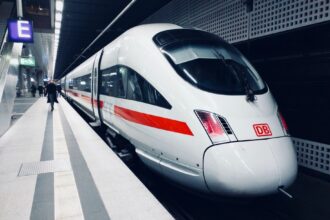
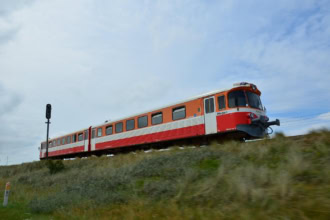
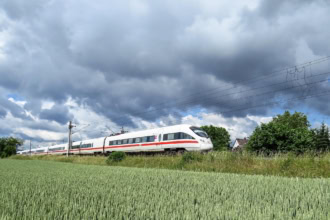
Danish trains themselves are worth a mention beyond the booking mechanics. DSB’s regional and InterCity carriages are generally spacious and clean, with power sockets at most seats and free WiFi, and every train has a Stillezone (quiet carriage) where a phone call or a loud conversation earns a disapproving look rather than a formal warning. One genuine quirk: delays do happen, especially in autumn, when fallen leaves on the tracks are a recurring, semi-official excuse for late-running services, so it’s worth building a little slack into any tight connection. Bikes travel in a dedicated area on most trains for a small extra ticket, useful if cycling is part of your day trip plan.

Rupert’s Handy Travel Tips
Denmark’s trains make these day trips genuinely easy, but a little planning turns a good day out into a great one.
- Combine Helsingør and Humlebæk: they sit on the same coastal line, so Kronborg Castle and the Louisiana Museum fit comfortably into one longer day.
- Book museum tickets online first: several sites, including the Hans Christian Andersen House, require advance online booking even for free entry.
- Bring a passport for Malmö: the Øresundståg crosses an international border, so a valid passport or EU ID card is essential even for a short visit.
- Check the last train home: Odense’s longer journey time means it’s worth confirming the return schedule before heading out for the day.
- Skip the pass for a single trip: a normal point-to-point ticket is usually cheaper unless several of these destinations are being combined across a longer stay.
Want to meet the reindeer behind our travel tips? Find out more in our page Who is Rupert?.




Frequently Asked Questions About Day Trips from Copenhagen
What is the best day trip from Copenhagen for a first visit?
Roskilde is hard to beat for a first-timer. It’s only 20-25 minutes away, combines a UNESCO cathedral with the Viking Ship Museum, and needs no planning beyond hopping on a train.
Do I need a car for any of these day trips?
No. Every destination in this guide is reachable by direct train or bus from central Copenhagen, and several sit on the same S-train and metro tickets used within the city itself.
Can I combine more than one destination in a single day?
Yes, if they’re on the same line. Helsingør and the Louisiana Museum in Humlebæk sit on the same coastal route, so many visitors see Kronborg Castle in the morning and the museum in the afternoon.
Is Malmö worth visiting as a day trip from Copenhagen?
Yes, and it’s one of the easiest cross-border day trips in Europe thanks to the direct Øresundståg train. This page covers it briefly since a full, dedicated Copenhagen to Malmö guide goes into far more detail elsewhere on this site.
Do I need a rail pass for these day trips?
Not usually. A single point-to-point ticket is normally cheaper for one destination, and a multi-day pass like the Interrail Denmark Pass only pays off once several trips or longer-distance travel around Denmark are combined.
Which of these day trips is best for families with children?
Klampenborg is the easiest choice, since children under 18 travel free at both Bakken and the deer park, and the journey there is barely 20-25 minutes on the S-train.
Further Reading
Anyone planning to see more of Denmark than a single day trip should look at our Interrail Denmark Pass Guide, which breaks down pricing and shows when a multi-day pass genuinely beats buying single tickets for routes like Copenhagen to Aarhus or Odense. If Malmö turns into more than a quick afternoon and Sweden itself becomes part of the trip, our Interrail Sweden Pass Guide covers the equivalent pass on the other side of the Øresund Bridge.
For a wider European trip that treats Denmark as just one stop among several, our Interrail Pass Guide explains how a single-country pass like Denmark’s fits alongside the full Interrail Global Pass. And before setting off on any of these routes, it’s worth checking our Train Booking Apps Guide, which compares the platforms travellers actually use to book DSB tickets, seat reservations, and connections across the rest of Europe.