Reviewed by our editorial team Published
Discover the Best Things to Do in Manchester
Manchester is a city that wears its history on its sleeve while constantly building something new on top of it. This is the place where the world’s first passenger railway station once stood, where the trade union movement and the Suffragette campaign both took shape, and where red-brick Victorian warehouses now sit alongside glass-fronted galleries, converted canal basins and a football culture that reaches every corner of the globe. It is a compact, walkable city with a genuine sense of self: proud, a little wry about its rainy reputation, and never short of somewhere interesting to duck into when the weather turns.
Most of the attractions below sit within a comfortable walk of Manchester Piccadilly and Manchester Victoria stations, or a short hop on the city’s Metrolink tram network, which makes planning a visit straightforward even on a tight schedule. For the practical side of a trip, including where to stay and how to get around, our Manchester Travel Guide covers the logistics in more depth, while anyone with an extra day or two to spare should look at our Day Trips from Manchester guide for options ranging from Liverpool and the Peak District to Jodrell Bank’s radio telescope.
Manchester Attractions at a Glance
| Attraction | Time to Allow | Best For |
|---|---|---|
| Science and Industry Museum | 2-3 hours | Families, industrial history, free entry |
| John Rylands Library | 45-60 minutes | Architecture, rare books, free entry |
| Manchester Art Gallery | 1-2 hours | Pre-Raphaelite art, free entry |
| National Football Museum | 2-3 hours | Football fans, interactive exhibits |
| Old Trafford and Etihad Stadium Tours | 1.5-2 hours each | Football fans, behind-the-scenes access |
| The Northern Quarter | 2-4 hours | Independent shops, street art, nightlife |
| Manchester Museum | 1.5-2 hours | Families, Egyptology, natural history |
| Manchester Cathedral and Cathedral Gardens | 30-45 minutes | History, architecture, free entry |
| Christmas Markets in Manchester | Half a day (November-December) | Festive atmosphere, food and gifts |
| The Trafford Centre | Half a day | Shopping, dining, family leisure |
| Dino Falls Adventure Golf | 1-1.5 hours | Family fun, adventure golf |
| HOME | 2-3 hours | Independent film, theatre, contemporary art |
| Aviva Studios | 1-3 hours (event-dependent) | Theatre, exhibitions, large-scale events |
| Manchester’s Theatre Scene (Palace, Opera House, Royal Exchange, The Lowry) | Evening (2-3 hours per show) | Musicals, drama, theatre-in-the-round |
| The Coronation Street Experience | 1.5-2 hours | TV fans, behind-the-scenes tours |
| Live Music at AO Arena and Co-op Live | Evening (event-dependent) | Concerts, major arena shows |
| Jodrell Bank, East Lancashire Railway and River Cruises | Half a day each | Day trips, rail and water travel |
| Sightseeing Manchester Bus Tour | 90 minutes (full loop) | First-time visitors, easy orientation |
| Free and Budget Things to Do | Flexible | Budget travellers, rainy-day plans |
| Shopping (Arndale, King Street & Market Street) | 1 to 3 hours | Fashion, gifts, luxury boutiques |
| Manchester’s Food Halls | 1 to 2 hours | Foodies, groups, rainy days |
| Major & Annual Events | Varies by event | Festival-goers, repeat visitors |
| Manchester’s Chinatown | 1 to 2 hours | Food, culture, photography |
| Jodrell Bank Observatory | Half a day (incl. travel) | Families, science lovers, day-trippers |
| East Lancashire Railway | Half a day | Steam enthusiasts, families |
| Manchester River Cruises | 1 hour | Relaxed sightseeing, families |
| Manchester’s Music Scene | 1 to 3 hours | Music fans, heritage trail |
| Things to Do When It Rains | Half a day | Wet-weather planning |
Best if you want daily housekeeping and a front desk. Filter by area first, then by price.
Check availabilityBest for longer stays. Whole apartments and houses, so you are not eating out three times a day.
View rentalsBest as a last check before booking. Compares Manchester hotel rates across several sites in one search.
Compare ratesThe Science and Industry Museum
Housed in the old Liverpool Road railway station in Castlefield, the Science and Industry Museum sits on genuinely significant ground. The station buildings here date back to 1830, making them part of the site of the world’s first purpose-built passenger railway, and the museum builds its whole story outward from that fact, tracing Manchester’s transformation from a market town into the world’s first industrial city.
Inside, the highlight for most visitors is the collection of working steam engines and looms, several of which are fired up and demonstrated by staff on set days. The Revolution Manchester gallery ties the exhibits back to the city’s textile and engineering past in a way that genuinely helps the scale of the story land, and a full-size aircraft suspended overhead in one of the halls is a reliable crowd-pleaser for children.
Entry to the main museum is free, though a free ticket should still be booked online in advance to guarantee a slot, and there is sometimes a charge for temporary exhibitions. The museum is open 10am to 5pm daily, with the last admission shortly before closing, and there is no on-site parking, so the short walk from Deansgate-Castlefield Metrolink stop is the easiest way in.
Allow at least two to three hours to do the museum justice, longer if travelling with children who want to linger in the hands-on galleries. Castlefield itself is worth building extra time around, since the museum sits within a wider urban heritage park that also holds the remains of a Roman fort and a stretch of restored canal basin right on the doorstep.
John Rylands Library: A Free Neo-Gothic Landmark on Deansgate
Few free attractions anywhere in the UK make quite the first impression that the John Rylands Library does. Built on Deansgate in a dramatic neo-Gothic style and opened in 1900, it was commissioned by Enriqueta Rylands as a memorial to her husband, the cotton merchant John Rylands, and its stone reading room still feels closer to a cathedral than a library.
The building is now part of the University of Manchester Library and holds one of the country’s great rare book and manuscript collections, including an original Gutenberg Bible and a fragment of papyrus containing part of the Gospel of John that ranks among the oldest surviving New Testament texts anywhere in the world. Rotating exhibitions bring different parts of the collection out into public view through the year.
Admission is free, and the building is currently open Wednesday to Saturday, 10am to 5pm, with last entry twenty minutes before closing, so it is worth checking the current opening days before building a visit around it, particularly since it is closed on Mondays, Tuesdays and Sundays. Photography is generally permitted in the historic Reading Room, which remains the single most photographed interior in the city.
Most visitors need 45 minutes to an hour to see the historic rooms and whichever exhibition is on display. The library sits a short walk from Manchester’s other Deansgate attractions, making it easy to combine with a wider afternoon around the city centre.
Manchester Art Gallery: Free Pre-Raphaelites on Mosley Street
Set across three linked historic buildings on Mosley Street, Manchester Art Gallery holds one of the most significant Pre-Raphaelite collections outside London, alongside work by Ford Madox Brown and a strong showing of L.S. Lowry’s industrial Manchester scenes. It is the kind of gallery that rewards an unhurried wander rather than a race through the highlights.
Beyond the paintings, the gallery’s decorative art and craft galleries cover ceramics, silverware and design across several centuries, and a programme of temporary exhibitions keeps the collection feeling current rather than static. There is a small gallery shop and a café inside, useful for a mid-visit break.
Entry is free and open to all, which makes it one of the easiest attractions in the city to fit into any budget. The gallery is open Tuesday to Sunday, 10am to 5pm, and closed on Mondays except bank holidays, so a Monday city break should be planned around this closure.
Around one to two hours is enough for most visitors to see the main collection, and the gallery’s central location just off St Peter’s Square means it slots naturally into a day that also takes in the Central Library and St Ann’s Square.
The National Football Museum
Fittingly for a city obsessed with the game, Manchester is home to the National Football Museum, housed in the distinctive glass-fronted Urbis building at Cathedral Gardens. It holds the official collection of English football memorabilia, from early hand-stitched balls and the original FA Cup to shirts and boots worn by some of the sport’s biggest names.
The museum leans heavily into interactive exhibits, with penalty shoot-out and commentary booths that make it genuinely engaging for children and casual fans, not just collectors of memorabilia. Several floors of galleries mix serious social history, covering the women’s game and football’s role in communities, with the kind of hands-on displays that keep a family visit moving.
Adult tickets cost around £16 (€18/$20) booked in advance online, rising to about £18 (€21/$23) on the day, while a child ticket (ages 5-15) runs from roughly £10 (€12/$13) advance to £12 (€14/$15) on the day; under-5s go free. Tickets bought directly from the museum are valid for a full year of return visits, not just a single entry, and the museum opens daily from 10am to 5pm.
Budget two to three hours for a proper visit. The location at Cathedral Gardens puts it directly opposite Manchester Cathedral, making the two an easy pairing on the same afternoon.
Old Trafford and Etihad Stadium Tours
Manchester’s two Premier League grounds, Old Trafford and the Etihad Stadium, both run behind-the-scenes tours that go well beyond a standard matchday experience. The Old Trafford Museum and Stadium Tour runs to around 70 minutes and takes in the Sir Alex Ferguson Stand, the players’ tunnel, the dressing room and the dugouts, with entry to the club museum included as part of the same ticket.
Across the city, the Etihad Stadium Tour covers similar ground for Manchester City, including the tunnel, dressing rooms and pitch-side areas, with adult tickets currently priced from around £25 (€29/$32) and discounted family and child options available. Both clubs sell tickets directly through their own official sites, and both stop running tours on matchdays, so it is worth checking the fixture list before booking.
Neither ground is within easy walking distance of the city centre. Old Trafford is reached via Manchester United Football Ground rail station or the Metrolink stop of the same name, while the Etihad Stadium sits a short walk from Etihad Campus Metrolink, roughly fifteen minutes from Piccadilly by tram. Trying to combine both tours in one day is possible but tight, given the crosstown travel involved.
For the full detail on current pricing, matchday tickets and how to fit a stadium visit around a wider football trip, our dedicated Football in Manchester Travel Guide goes into far more depth than a single section here can cover.
The Northern Quarter: Manchester’s Creative and Bohemian Heart
North of the city centre, the Northern Quarter is Manchester’s creative and bohemian heart, centred loosely on Stevenson Square, Oldham Street and Tib Street. Former Victorian warehouses and textile mills now hold independent record shops, vintage clothing stores, art galleries and some of the city’s most distinctive street art, much of it changing from one visit to the next.
This is also the district most closely tied to Manchester’s music heritage, sitting close to the site of the legendary Haçienda club and within the same stretch of the city that shaped bands from Joy Division to Oasis. Afflecks, a rambling indoor market of independent traders spread across several floors, remains one of the area’s best-known landmarks and a good wet-weather browse.
Come evening, the Northern Quarter shifts into one of Manchester’s best areas for independent bars, craft breweries and street food, with a genuinely varied food scene that runs from long-standing curry houses to newer small-plates openings. There is no admission fee for the area itself; the only cost is whatever gets spent in its shops and bars.
Allow two to four hours for a proper wander, more if planning to eat and drink there. The district is a short walk from both Piccadilly Gardens and Victoria station, making it an easy add-on to a day that also covers the city centre’s main sights.
Best for finding routes the airlines do not sell as a single ticket. Combines carriers to bring the fare down.
Search flightsBest for short trips. Install the eSIM at home and arrive in Manchester with working data, no shop queue.
Browse eSIMsBest when public transport has stopped, or when you are travelling with children and bags.
Book a transferManchester’s Chinatown
Manchester is home to one of the largest Chinatowns in Europe, a compact grid of streets just south of the Arndale worth a dedicated visit rather than a passing glance. It is one of the few parts of the city that feels different block to block, with lantern-strung streets and signage in Chinese script.
The area centres on Faulkner Street and is roughly bounded by Mosley Street, Portland Street, Princess Street and Charlotte Street. Its centrepiece is the Imperial Chinese Archway, a paifang built in China, shipped over in three containers and erected in 1986 and 1987 as a gift from the city council.
Beyond the arch sits a dense cluster of Chinese, Japanese, Korean and Southeast Asian restaurants, bakeries and supermarkets, with Manchester’s first Chinese restaurant, Ping Hong, opening nearby on Oxford Street in 1948. The Chinese Arts Centre, established in 1989, runs a year-round cultural programme.
Chinese New Year is when the area is busiest and most worth timing a visit around, with a lion dance parade and food stalls drawing crowds from across the North West. Outside of that, weekday lunchtimes are quietest, with set menus running £8 to £15 (€9 to €17/$10 to $19) per person.
Chinatown sits a two-minute walk from St Peter’s Square Metrolink stop and about five minutes from the Arndale, an easy add-on to a city centre shopping trip. It is one of the areas most visitors walk past, which makes it worth going out of your way for a proper visit.
Manchester Museum: Ancient Egypt and the Vivarium on Oxford Road
Part of the University of Manchester on Oxford Road, Manchester Museum reopened in 2023 after a major redevelopment and now holds one of the best Ancient Egypt collections outside London, alongside strong natural history and archaeology galleries. Its Egyptology holdings, including mummies and funerary artefacts, remain the single biggest draw for most visitors.
Families tend to gravitate toward the Vivarium, a living collection of frogs and other amphibians that gives the museum a genuinely different feel from a typical static-display museum. The museum’s temporary exhibition space regularly hosts major touring shows, which do sometimes require advance online booking even though they remain free to attend.
Entry is free across all permanent galleries. Opening hours vary through the week, generally running from 10am to 5pm Tuesday, Thursday, Friday and Sunday, later on Wednesdays until 9pm, and with an earlier 8am opening on Saturdays for a quieter pre-10am slot; the museum is typically closed on Mondays outside August.
Plan for 90 minutes to two hours. The museum sits on the busy Oxford Road university corridor, making it easy to combine with a wider look at the surrounding campus and the Whitworth Art Gallery a little further south.
Manchester Cathedral and Cathedral Gardens
Manchester Cathedral is a Grade I listed medieval building right in the heart of the city, notable for having the widest nave of any cathedral in England, a legacy of its origins as a parish church rather than a purpose-built cathedral. Its stained glass and carved wooden misericords reward a slower look than most visitors give them on the way past.
In the cathedral’s undercroft sits the Hanging Bridge, a scheduled ancient monument dating to 1421 and one of the oldest structures anywhere in central Manchester, now displayed as part of the cathedral’s small visitor area. It is an easy detail to miss without knowing to look for it.
Entry is free, with a suggested £5 (€6/$6) donation toward the cathedral’s upkeep, and contactless donations are accepted. Opening hours run Monday to Saturday, 9:30am to 4pm, and Sunday, midday to 4pm, though these can shift around services and special events.
Outside, Cathedral Gardens is a compact green space that doubles as one of the city’s main events spaces, home to the National Football Museum, a seasonal ice rink in winter, and one of the busiest legs of the Christmas markets trail. Thirty minutes covers the cathedral interior itself, though the gardens are worth lingering in on a fine day.
Christmas Markets in Manchester
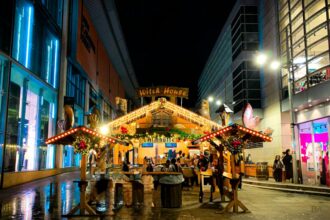
Manchester runs one of the UK’s largest and longest-established Christmas market trails, spreading wooden chalet stalls across roughly ten sites through the city centre rather than confining them to a single square. Albert Square and Cathedral Gardens anchor the trail at either end, with further stalls threaded through St Ann’s Square, King Street, Market Street and Exchange Square in between.
The markets typically open in early to mid-November and run for several weeks through to just before Christmas, with a couple of the central sites, including Albert Square and Cathedral Gardens, often staying open a little longer into the festive period. Expect the usual mix of mulled wine, bratwurst and other street food, along with independent stalls selling gifts, decorations and crafts.
Because the sites are spread across the centre rather than clustered in one place, the markets work best walked as a loop rather than tackled all at once, and evenings tend to feel more atmospheric than the middle of the day thanks to the lighting and the big wheel that usually anchors Albert Square. Cathedral Gardens’ seasonal ice rink adds a second reason to linger at that end of the trail.
For a full route, site-by-site breakdown and tips on tackling the whole trail in one day, our dedicated Manchester Christmas Markets guide covers the complete city trail in far more depth than fits here.
Major and Annual Events in Manchester
Beyond its museums and match days, Manchester runs one of the busiest annual events calendars of any UK city, and timing a visit around one can turn a good trip into a memorable one. Between spring and late summer there is rarely a month without a major festival filling the streets or a city park.
The adidas Manchester Marathon, held in April, is one of the flattest and fastest courses in the UK, drawing more than 30,000 runners through the city centre. Manchester Day, usually in June, brings a free family parade of giant puppets along a route into Albert Square.
Parklife, also in June, has grown into one of Britain’s biggest urban music festivals, taking over Heaton Park for a weekend of electronic and dance acts. Manchester International Festival, centred on Factory International at Aviva Studios, is biennial rather than annual, returning only in alternating years.
Manchester Pride fills the August bank holiday weekend with a city centre parade and a ticketed festival around Canal Street’s Gay Village, among the largest LGBTQ+ celebrations in the UK. Tickets for Pride and Parklife typically need booking months in advance, since both sell out.
None of these overlap with the city’s Christmas Markets, which run separately from mid-November and have their own dedicated section elsewhere in this guide. Check exact dates before booking travel, since several events shift by a week or two each year.
Of these, Manchester Day is the easiest to build a casual visit around: it’s free, family-friendly and needs no advance ticket, unlike Parklife or Pride’s ticketed festival.
The Trafford Centre: Shopping, Dining and Family Fun in Trafford Park
A short drive west of the city centre in Trafford Park, The Trafford Centre is one of the largest shopping and leisure destinations in the UK, built around a distinctive mock-Baroque interior with domed skylights and marble floors that make browsing feel closer to sightseeing than shopping. Over 200 stores fill the centre, spanning high street names and luxury brands alike, which makes it worth setting aside a proper half-day rather than treating it as a quick stop.
Food is arguably as big a draw as the shops. The Orient, the centre’s vast food hall, is fitted out to resemble the deck of an ocean liner, with dozens of restaurants and takeaway counters arranged around a central promenade. Next door at the Trafford Palazzo, the LEGOLAND Discovery Centre and SEA LIFE Manchester Aquarium give families two further reasons to build a whole day around the trip, alongside a multiplex cinema for anyone who wants to round off the visit with a film.
The centre sits at postcode M17 8AA and is best reached by car, since parking is extensive, though the Manchester Metrolink’s Trafford Park Line also runs directly to The Trafford Centre tram stop right beside the mall, with regular bus services from the city centre as a further option. Opening hours generally run from 10am to 9pm through the week, with shorter Sunday hours, and the centre gets noticeably busier in the run-up to Christmas.
Combined with Dino Falls Adventure Golf immediately next door, a Trafford Centre visit can easily fill an entire day away from the city’s museums and galleries, making a genuinely different kind of stop for anyone who has already covered the main city-centre sights.
Best for solo travellers and anyone watching the budget. Dorm beds and private rooms in the same search.
Browse hostelsBest arranged before you fly rather than after. Covers claim handling, plus lounge access on eligible delays.
Explore AirHelp+Best for a day with a bag and nowhere to put it. Find a storage point near where you already are.
View storageShopping in Manchester City Centre: Arndale, King Street and Market Street
Manchester’s city centre is a shopping destination in its own right, and you do not need a tram out to the suburbs to find it. Within a fifteen-minute walk of Piccadilly Gardens sit three distinct retail characters, a vast covered mall, a strip of luxury boutiques, and one of England’s busiest pedestrianised streets.
The Manchester Arndale is the anchor, a three-floor complex of around 200 stores with entrances on Market Street, Cannon Street, Corporation Street and Withy Grove. Its tenants run from a flagship Next and Apple Store to Zara, H&M and a Sephora that opened in 2025, and the centre draws over 40 million visitors a year.
A five-minute walk south brings you to King Street, Manchester’s designer quarter, where Georgian buildings house Mulberry alongside independent jewellers and boutiques. It is a quieter, more upmarket contrast to the Arndale, worth a stop once you have browsed the Northern Quarter’s independent shops.
Market Street itself, linking the Arndale to Piccadilly Gardens, is fully pedestrianised and lined with a large Primark opposite the mall’s main entrance. It is one of the busiest shopping streets in the country by footfall, so expect crowds at weekends and through December.
All three sit within a couple of minutes of the Market Street, Exchange Square and Shudehill Metrolink stops. Arndale hours run Monday to Saturday 9am to 8pm and Sunday 11.30am to 5.30pm. For a bigger, out-of-town alternative with a food hall attached, see our Trafford Centre section.
For genuine browsing without the crowds, King Street beats the Arndale; save the Arndale for when you need a specific big-name shop and don’t mind the queues.
Manchester’s Food Hall Scene
Manchester has embraced the food hall format more thoroughly than almost anywhere else in the UK, turning old warehouses and railway arches into grazing venues with a dozen kitchens under one roof. It suits groups with different tastes who cannot agree on a single restaurant.
Mackie Mayor, on the edge of the Northern Quarter in a restored Victorian meat market, is the best known, with around nine independent kitchens serving everything from wood-fired pizza to fresh fish and Baohouse buns. It is dog-friendly and gets busy at weekends, so arrive early for a table.
Society, in the Kampus development near Piccadilly, packs five kitchens covering pan-Asian, Indian street food and burgers into one room with resident DJs. Escape to Freight Island, inside the old Depot Mayfield rail shed, goes further, combining food, bars and live events across covered and open-air spaces.
GRUB operates from a converted textile warehouse at The Red Bank Project, running Wednesday to Sunday with an outdoor beer garden and traders serving Greek to Sri Lankan food. New Century Kitchen, inside the NOMA development near Victoria, adds six more traders and a terrace.
Most halls take walk-ins only and let you order from several kitchens for one table, so budget £8 to £15 (€9 to €17/$10 to $19) per dish. On a wet afternoon, a food hall doubles as one of the better indoor options covered in our rainy-day section below.
For a first visit, Mackie Mayor is the one to prioritise over the others; Escape to Freight Island is the better pick if the plan is a full night out rather than just dinner.
Dino Falls Adventure Golf
Immediately next to the Trafford Centre at Old Park Lane, Dino Falls Adventure Golf turns a round of crazy golf into a full prehistoric adventure, with two separate 18-hole courses, The Rapids and The Volcano, threading through animatronic dinosaurs, waterfalls and jungle planting. It is one of the more unusual family attractions in the wider Manchester area, and no golfing experience is needed to enjoy it.
Both courses are designed to work for a genuine mix of ages and abilities, with pram-friendly and wheelchair-accessible paths throughout and a cashless payment system across the venue. Sessions run late into the evening most days, which makes it a good option after a day spent at the Trafford Centre or elsewhere in the city.
Dino Falls opens from 7am to 11pm Sunday to Wednesday and until 11:30pm Thursday to Saturday, with the last round of the day starting an hour before closing. Prices are set per round rather than per venue visit, so it is worth checking current rates directly before booking, especially for larger family groups.
Given its Trafford Park location, Dino Falls pairs naturally with a Trafford Centre trip rather than a city-centre day, and the two together make a solid half-day-plus outing for anyone travelling with children.

HOME: Manchester’s Independent Arts Centre on First Street
On First Street, just south of the city centre, HOME is Manchester’s independent arts centre, combining two cinema screens for arthouse and mainstream film, two theatre spaces and a contemporary art gallery under one roof. It opened in 2015 and quickly became one of the city’s most-loved cultural venues, prized as much for its programming as for its design.
The theatre side stages a genuinely varied mix of new writing, touring drama and festival co-productions, while the gallery runs a rolling series of free contemporary art exhibitions that change several times a year. The cinema programme leans into independent, foreign-language and classic film alongside the latest releases, giving it a noticeably different feel from a standard multiplex.
HOME sits at 2 Tony Wilson Place, Manchester M15 4FN, a short walk from Deansgate and the Science and Industry Museum, and opens from around 10am on weekdays and Saturdays, 11am on Sundays. Cafés and bars inside make it easy to combine a visit with food or a pre-show drink.
Because it mixes free galleries with ticketed theatre and film, HOME works equally well as a rainy-afternoon drop-in or as the centrepiece of an evening out, and its Castlefield-adjacent location makes it easy to combine with several of the museums covered elsewhere on this page.
Aviva Studios: Factory International’s New Home on Water Street
On Water Street, close to Deansgate and the River Irwell, Aviva Studios is Manchester’s newest major cultural venue, opened in October 2023 as the permanent home of Factory International, the organisation behind the Manchester International Festival. Designed by the Dutch architects OMA, the building’s raw, industrial-scale form was a deliberate nod to the mills and warehouses that once stood on the same stretch of the city.
Inside, the venue splits into two very different spaces: The Hall, a more conventional theatre with tiered seating, and The Warehouse, a vast column-free space that can be reconfigured for anything from immersive theatre to club nights and large-scale art installations. Programming ranges from major festival premieres to touring exhibitions and gigs.
A standout feature of the venue’s approach is its Aviva £10 Tickets scheme, which keeps a set allocation of seats for major shows priced at just £10 (€11/$13) regardless of the show’s usual ticket price, making it one of the more accessible major venues in the city for a spontaneous evening out.
Aviva Studios is not to be confused with the Aviva Stadium in Dublin; this is a purely Manchester venue, and its city-centre location makes it easy to combine with a day spent around Castlefield or Deansgate before an evening show.
Manchester’s Theatre Scene: Palace, Opera House, Royal Exchange and The Lowry
Manchester’s theatre scene runs from grand Edwardian playhouses to a genuine architectural one-off, and taking in a show is an easy way to fill an evening wherever a visit falls in the calendar. The Palace Theatre and the Opera House, both run by ATG on opposite sides of the city centre, host the big touring West End musicals and major drama, and both buildings date back more than a century.
For something more distinctive, the Royal Exchange Theatre occupies the former Cotton Exchange building on St Ann’s Square, and its main stage is a striking theatre-in-the-round structure, often described as looking like a spaceship dropped into a Victorian trading hall. It stages a genuinely broad mix of classic drama, new writing and the occasional musical through the year.
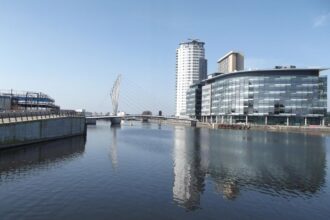
Across the water in Salford Quays, The Lowry adds a fourth option, with two theatre spaces and a contemporary art gallery inside a striking waterside building that also looks out over the MediaCityUK development. Its programme runs from opera and dance to comedy and family shows, alongside a rolling series of free exhibitions.
Between them, these four venues cover most tastes, from a big-budget touring musical to something more experimental, and ticket prices vary hugely by show and seat, so it is worth checking each venue’s own site directly when planning an evening around a specific production.

The Coronation Street Experience
For fans of Britain’s longest-running soap opera, The Coronation Street Experience offers genuine behind-the-scenes access to Weatherfield’s cobbled streets, the Rovers Return Inn and Roy’s Rolls café, all part of the real working set used in production. It is run by Continuum Attractions as the official ITV Studios visitor experience, rather than a fan-made replica.
The standard guided tour runs for around 90 minutes and takes in the exterior sets along with an exhibition of props and costumes covering more than 60 years of the show’s history, while Star Tours add the chance to meet a cast member as part of the visit. An exhibition-only ticket is also available for anyone short on time.
The attraction sits at ITV Studios, Trafford Wharf Road, Trafford Park, Manchester M17 1FZ, close to the Imperial War Museum North tram stop and within easy reach of MediaCityUK. Guided tour tickets currently start from around £40 (€46/$51) at weekends, with exhibition-only entry available from roughly £8 (€9/$10) on weekdays.
Given its Trafford Park location, the experience combines naturally with a visit to the Imperial War Museum North or a wander around Salford Quays, making it easy to build into a day that also takes in MediaCityUK.
Live Music and Major Events: AO Arena and Co-op Live
Manchester is one of the best cities in the UK for a big arena show, with two major venues covering slightly different ends of the calendar. The AO Arena, right in the city centre next to Victoria station, has been one of Europe’s busiest indoor arenas for years and hosts everything from global music tours to major comedy and sports events; our dedicated AO Arena Manchester Guide covers getting there, seating and what to expect on a show night.
A short distance away at the Etihad Campus, Co-op Live opened in 2024 as the UK’s largest indoor arena, adding serious extra capacity to the city’s live music scene since. Our Co-op Live Manchester Guide goes into the venue’s transport links, bag policy and typical event timings in far more depth than fits here.
Both venues sell out quickly for the biggest tours, so it is worth booking well ahead if a specific show is the reason for a visit, and double-checking which arena a gig is actually at before travelling, since the two sit on opposite sides of the city.
Manchester’s Music Scene
Manchester’s claim to be one of the world’s great music cities rests on more than nostalgia, and tracing that history on the ground is genuinely rewarding. The city produced Joy Division, New Order, the Stone Roses and Oasis, and its influence on British music is hard to overstate.
Joy Division formed here after a 1976 Sex Pistols gig, their bleak post-punk sound giving way to New Order’s electronic reinvention under the city’s own Factory Records. A decade later, the Haçienda nightclub became the home of Madchester, the collision of indie guitars and acid house the Stone Roses embodied, paving the way for Oasis’s 2025 reunion shows at Heaton Park.
The Haçienda itself closed in 1997 and is now flats, but its legacy runs through the city’s small-venue scene, distinct from the arena concerts covered elsewhere. Band on the Wall, a long-running Northern Quarter venue, focuses on jazz and emerging artists, while YES has become a key multi-room venue since 2018.
Gorilla, in a railway arch near Oxford Road, and The Deaf Institute, a Grade II listed Victorian hall with a 260 capacity, both nearly closed in the pandemic before being rescued, and now host touring acts on their way up, having featured Blossoms and Florence and the Machine early on.
For a self-guided angle, the Northern Quarter’s record shops, Piccadilly Records, Vinyl Exchange and Eastern Bloc, are worth an hour of browsing on their own. For the big commercial arena shows, see our section on AO Arena and Co-op Live elsewhere in this guide.

Jodrell Bank Observatory
Roughly 45 to 60 minutes’ drive south of the city, Jodrell Bank is an unexpected day trip from Manchester, a working scientific site rather than a museum recreation. Its centrepiece, the Lovell Telescope, is a fully steerable radio dish completed in 1957 that still tracks live signals from deep space, and watching it turn against the Cheshire countryside is a genuinely striking sight.
The site holds UNESCO World Heritage status for its contribution to radio astronomy, and the grounds pair the telescope with the First Light Pavilion, an immersive exhibition on black holes, satellites and the Space Race. Outdoor arboretum trails let you walk up to the telescope’s base for a sense of scale photographs rarely capture.
Admission runs £14 to £18 (€16 to €21/$18 to $23) for adults and £8 to £10 (€9 to €12/$10 to $13) for children, with family tickets from £40 to £55 (€47 to €64/$51 to $70). Tickets typically cover a full year of return visits rather than one day, and under-fours go free.
Opening hours shift with the season, generally running mid-morning into late afternoon, so check before setting off outside peak summer months. Clear days suit the arboretum and photography best, though a misty morning has its own quiet atmosphere.
There is no direct train to the site, so a car is the most practical option, the drive taking under an hour via the A34 and A535. Our dedicated Jodrell Bank Observatory Guide covers the full exhibit breakdown, ticket options and getting there in more detail.
East Lancashire Railway
For a genuine steam experience within half an hour of the city, the East Lancashire Railway runs heritage steam and diesel locomotives along twelve miles of the Irwell Valley, as much about the journey as the destination. It is one of the few places near Manchester to ride behind a working steam locomotive, not just look at one in a museum.
The line links five stations, Heywood, Bury Bolton Street as the hub, Summerseat, Ramsbottom and Rawtenstall, with a full one-way run taking 45 to 50 minutes. Both Ramsbottom and Rawtenstall have small towns worth a wander, with cafes and a small museum in Rawtenstall’s old station building.
Services run year-round on a colour-coded timetable, so check which trains are running before travelling out. A full-line adult return costs £24 (€28/$30) on the day or £18.50 (€22/$24) in advance, while a Day Rover runs to £26 (€30/$33), with children’s fares roughly a third cheaper.
Special events add another reason to visit: Day Out With Thomas runs in May, July and October, Santa Specials run through November and December, and occasional steam galas bring out locomotives not normally in service. These sell out well ahead, so book early.
Getting there from the city centre takes about 30 minutes by car via the M66, or take the Metrolink to Bury Interchange and walk a few minutes to Bury Bolton Street station, avoiding a car entirely. Our dedicated East Lancashire Railway Guide has the full timetable colours and station-by-station detail.
Manchester River Cruises
Manchester is not the first city that comes to mind for a boat trip, but a cruise along the River Irwell and Manchester Ship Canal gives a completely different perspective, one built around water rather than streets. It works well as a relaxed break from walking on a packed sightseeing day.
Cruises depart from Salford Quays, beside The Lowry theatre and beneath the Millennium Lift Bridge, aboard the Princess Katherine or Isabella, run by the Irwell & Mersey Packet Company. A typical sailing lasts around an hour and passes MediaCityUK, Old Trafford, the 1830 Stephenson’s Railway Bridge and the Ship Canal’s working locks.
Adult tickets cost around £12 (€14/$15), with sailings typically at 11:30, 12:45, 14:00 and 15:15, though timings vary by season and are worth checking before turning up. Booking ahead with a pay-later option and free cancellation up to 24 hours out removes the risk of planning around the weather.
The boats are not wheelchair accessible, involving a step up and several steps down to board, and only foldable pushchairs are permitted on deck, so plan accordingly with limited mobility or young children. Salford Quays itself, with waterside restaurants and the Imperial War Museum North nearby, makes a good base for lunch either side of sailing.
Getting to Salford Quays is straightforward by Metrolink, with a direct tram from the city centre taking around 15 to 20 minutes. Our dedicated Manchester River Cruise Guide covers the full route, seasonal timetable and how it pairs with a visit to MediaCityUK.

Sightseeing Manchester Hop-On Hop-Off Bus Tour
For a first-time visitor short on time, the open-top Sightseeing Manchester bus tour offers an easy way to get oriented, with a full loop taking around 90 minutes and a live English-language commentary running throughout. Buses depart from outside Bridgewater Hall on Lower Mosley Street (M2 3WS), though passengers can join or hop off at any stop along the route.
The route calls at Piccadilly Gardens, Manchester Town Hall, Manchester Cathedral and the National Football Museum in the city centre, before heading out to Old Trafford, home of Manchester United, and across to MediaCityUK and Salford Quays, with the Science and Industry Museum also on the loop. It is a useful way to see how the city’s main sights connect before deciding where to spend more time on foot.
Tickets are valid for two operating days rather than a single calendar day, so hopping off to explore and rejoining a later bus is built into the ticket rather than an extra cost. Adult tickets currently run from around £15 (€17/$19), with concession tickets from about £8 (€9/$10) and family tickets from roughly £30 (€35/$38).
Free and Budget Things to Do in Manchester
Manchester is unusually generous with free attractions for a major UK city, and a genuinely full day out is possible without spending much beyond food and travel. Alongside the free-entry museums and galleries covered above, wandering Chinatown costs nothing and is worth doing for its own sake: the paifang arch on Faulkner Street, shipped over from China in sections and assembled in the late 1980s, marks the entrance to what is generally regarded as the second-largest Chinatown in the UK, packed with restaurants, bakeries and supermarkets across several nationalities.
Back in Castlefield, the canal basin and the visible remains of a Roman fort make for a pleasant free wander even without going into the Science and Industry Museum itself, and the towpaths here connect through to the wider Bridgewater Canal network. A little further south, Bridgewater Hall, home to the Hallé orchestra since it opened in 1996, occasionally opens its foyer for free lunchtime performances, worth checking on the day.
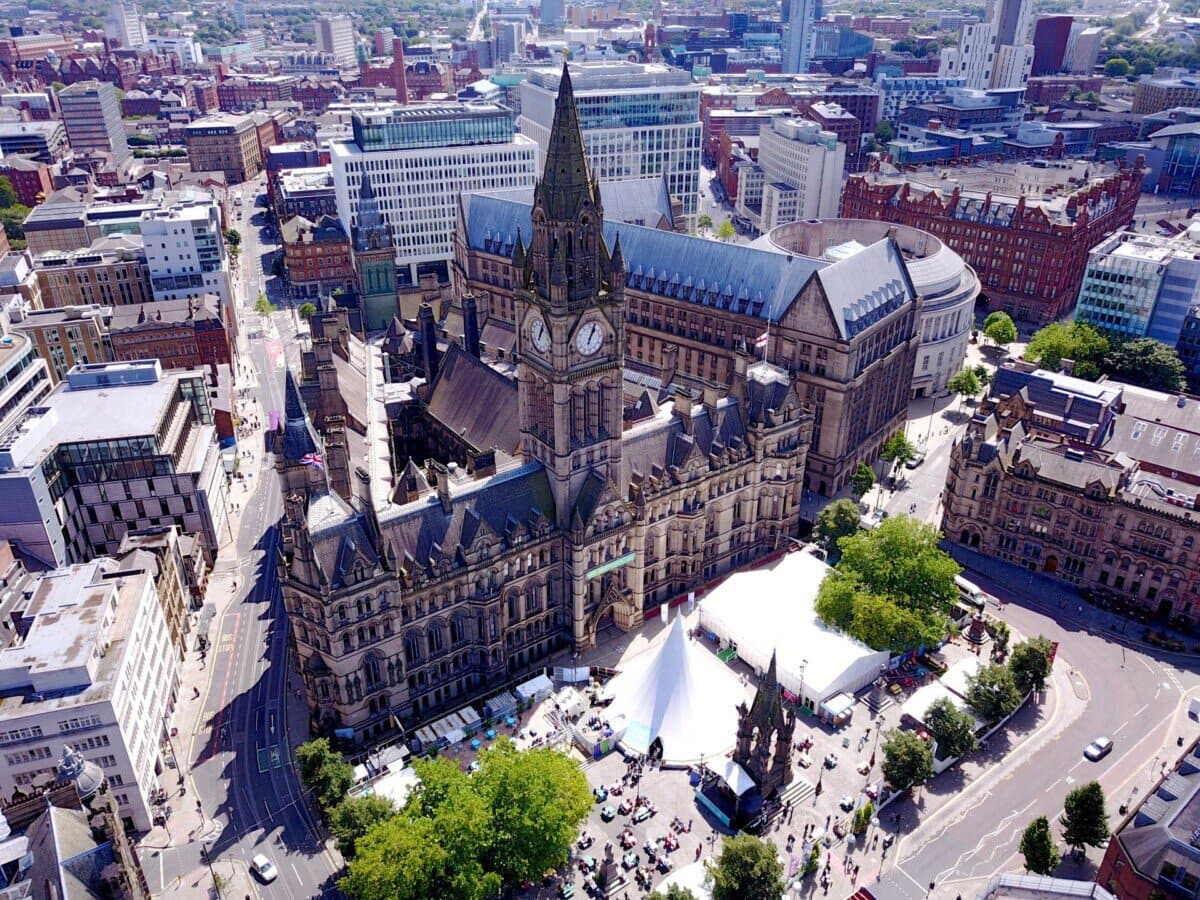
Piccadilly Gardens, St Ann’s Square and the exterior of Manchester Town Hall, currently being restored, are all free to see and sit within easy walking distance of each other in the city centre. The Northern Quarter’s street art alone is worth a dedicated free walk, and it changes often enough that repeat visits genuinely turn up something new.
For a genuinely tight budget, a day built around the John Rylands Library, Manchester Art Gallery, Manchester Museum and a walk through Chinatown and the Northern Quarter covers a huge amount of the city for the cost of transport alone.
Things to Do in Manchester When It Rains
Manchester’s weather has a reputation for a reason, and a genuinely wet day calls for a plan rather than an umbrella and hope. The city’s best indoor attractions are clustered close together and mostly free to enter, so a rainy day rarely means a wasted one.
The Science and Industry Museum, Manchester Art Gallery, the National Football Museum and Manchester Museum, all covered elsewhere in this guide, can easily fill a whole day between them without much time outside. All four have free general admission.
If the rain sets in for the day, the Trafford Centre is the obvious fallback, with shopping, a cinema and an indoor food hall under one roof reachable by tram without getting wet. Manchester’s own food halls, from Mackie Mayor to Society, work just as well as a covered lunch stop.
For something more active, HOME on First Street combines independent cinema, theatre and gallery space under one roof, while Dino Falls Adventure Golf and the Coronation Street Experience both work entirely indoors. Aviva Studios also runs daytime exhibitions needing no outdoor queuing.
Check Metrolink’s status page before travelling in heavy rain, since surface flooding occasionally disrupts some lines, and pack a proper waterproof rather than relying on taxis, which get scarce in a downpour. A wet day is the easiest excuse to linger longer in one of the museums above.
If the rain is set in for the whole day, the free museums beat every paid option on this list: the Science and Industry Museum alone can fill several hours without costing anything.
How Long Do You Need in Manchester?
A short break of two to three days comfortably covers the headline sights above: a day for the free museums and Cathedral Gardens area, a day for the Northern Quarter, Chinatown and Castlefield, and a half-day set aside for a stadium tour if football is part of the plan. Manchester’s compact centre means most of this is walkable, keeping travel time between sights to a minimum.
Travellers with a fourth day, or arriving specifically for a match or a stadium tour, gain the flexibility to add a second Premier League ground, or to take a day trip out to Liverpool, the Peak District or Jodrell Bank’s radio telescope, all realistic as a single day away from the city.
A single overnight stop is enough to see one or two headline attractions properly rather than everything on this page, so it is worth prioritising based on genuine interest, whether that is football, art and history, or the Northern Quarter’s independent scene, rather than trying to rush through all of it in one go.
Accessibility and Children
Manchester’s Metrolink tram network is genuinely well set up for accessible travel: every stop offers step-free access via a ramp, lift or escalator, platforms carry tactile edging for visually impaired passengers, and every tram has a dedicated wheelchair space alongside seating set aside for anyone who struggles to stand. Mobility scooter users need a permit to travel, which is worth arranging ahead of a visit.
The city’s major museums are generally well equipped for accessibility, with lifts between floors at the Science and Industry Museum, Manchester Museum, Manchester Art Gallery and the National Football Museum, and most offer free carer tickets on request. Older buildings, including parts of John Rylands Library and Manchester Cathedral, have some more limited step-free routes, so it is worth checking specific access details before visiting if mobility is a concern.
For families, the Science and Industry Museum and the National Football Museum both lean heavily into hands-on, interactive galleries that hold children’s attention far better than a purely look-and-read museum, and the Manchester Museum’s Vivarium is a reliable hit with younger visitors. Cobbled stretches in parts of Castlefield and the Northern Quarter can be uneven underfoot for pushchairs and wheelchairs, so it is worth building a little extra time into a walking route through those areas.

Rupert’s Handy Travel Tips
Manchester rewards a bit of planning, especially around its free museums and its two football grounds, so here’s what I’d want to know before setting off.
- Book free museums ahead anyway: The Science and Industry Museum and Manchester Museum are both free, but you still need to reserve a timed ticket online, especially at weekends and school holidays.
- Get a Bee Network account before you travel: Manchester’s Metrolink and bus network runs on contactless tap-and-go through the Bee Network app, which is usually cheaper and simpler than fumbling for a paper ticket at the machine.
- Check the fixture list before booking a stadium tour: Neither Old Trafford nor the Etihad Stadium runs its regular tour on matchdays, so a clash with the fixture list can mean rebooking.
- Save the John Rylands Library for Wednesday to Saturday: It’s currently closed Monday, Tuesday and Sunday, so it’s an easy one to accidentally miss if it’s not built into the right day of a short trip.
- Pack for rain, whatever the season: Manchester’s damp reputation is well earned, so a compact umbrella and a decent pair of shoes will get more use here than in most UK cities.
Want to meet the reindeer behind our travel tips? Find out more in our page Who is Rupert?.




Frequently Asked Questions
Are the best things to do in Manchester free?
Several of the city’s biggest draws, including the Science and Industry Museum, Manchester Art Gallery, Manchester Museum and John Rylands Library, are all free to enter, though the National Football Museum and the Old Trafford and Etihad stadium tours charge admission.
How many days do you need to see Manchester properly?
Two to three days is enough to cover the main museums, Cathedral Gardens, the Northern Quarter and a stadium tour without feeling rushed, with a fourth day useful for a day trip out to Liverpool or the Peak District.
Is Manchester city centre walkable?
Yes, most of the attractions on this page sit within a comfortable walk of each other in the city centre, with the Metrolink tram network filling in the gaps for sights further out, such as Old Trafford and the Etihad Stadium.
When do the Manchester Christmas markets run?
The markets typically open in early to mid-November and continue through to just before Christmas, with some central sites such as Albert Square and Cathedral Gardens often extending a little further into the festive period.
Can you visit both Old Trafford and the Etihad Stadium in one trip?
Yes, though the two grounds sit on opposite sides of the city, so combining both tours in a single day is tight; it is more comfortable to spread them across two days and to double-check neither falls on a matchday first.
Further Reading
Before setting off, our Manchester Travel Guide is a useful place to start for the practical side of a trip, from getting into the city to which apps make getting around easier, and anyone with extra time on either end of a city break should look at our Day Trips from Manchester guide for a full rundown of what is realistically reachable in a single day.
Two of the most popular day trips deserve their own dedicated coverage: our Manchester to Liverpool guide covers the fastest ways to reach Merseyside for the day, while our Jodrell Bank Observatory Guide covers Cheshire’s working radio telescope and Discovery Centre for a very different kind of day out from the city. For a day spent on rail and water instead, our East Lancashire Railway Guide covers the heritage line between Bury and Rawtenstall, and our Manchester River Cruise Guide covers the city’s canal and river sailings.
Football is such a central part of a Manchester visit that it earns a guide of its own: our Football in Manchester Travel Guide goes far deeper into stadium tours, matchday tickets and getting between the two grounds than this page can, our AO Arena Manchester Guide covers the city’s biggest indoor venue for anyone timing a visit around a concert or event, and our Co-op Live Manchester Guide covers the newer, even larger arena over at the Etihad Campus.
Manchester’s calendar of annual events is worth building a trip around too: our Manchester Day guide covers the city’s summer street parade, our Halloween in the City Manchester guide covers the autumn festival season, and if the trip lines up with the run-up to Christmas, our Manchester Christmas Markets guide is the complete route around the city’s ten-site festive trail.